

SUBSCRIBE TO OUR FREE NEWSLETTER
Daily news & progressive opinion—funded by the people, not the corporations—delivered straight to your inbox.
5
#000000
#FFFFFF
To donate by check, phone, or other method, see our More Ways to Give page.
Daily news & progressive opinion—funded by the people, not the corporations—delivered straight to your inbox.
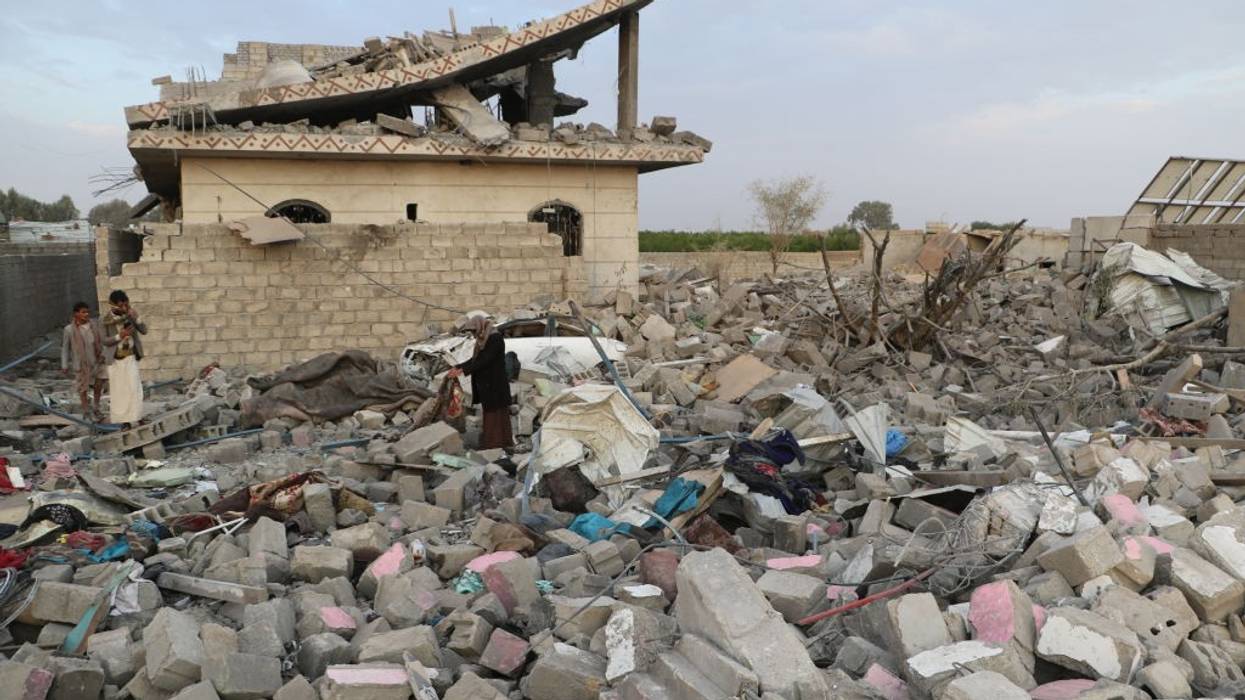
"All because Yemen refuses to let Israelis wipe Palestine out," said one critic.
The Yemeni Health Ministry said Sunday that most of the more than 50 people killed in U.S. airstrikes over the weekend were women and children as the war-torn Mideast nation braced for more "overwhelming lethal force" promised by President Donald Trump in retaliation for Houthi rebel attacks on American warships, international shipping, and Israel.
Anis al-Asbahi, a spokesperson for the Yemeni Health Ministry, said that the wave of dozens of U.S. strikes across eight provinces including the capital Sanaa killed 53 people, 31 of them civilians, and wounded more than 100 others.
"The majority of them were children and women," al-Asbhahi told Drop Site News, adding that the death toll was likely to rise, as rescue workers were still finding victims amid the rubble.
Dozens of civilians, including children and women, were killed in U.S. bombings across Yemen as Trump vows to unleash “overwhelming lethal force” to stop the Houthi naval blockade targeting Israel’s war on Gaza. Read Shuaib Almosawa's report from Yemen: www.dropsitenews.com/p/trump-mass...
[image or embed]
— Jeremy Scahill ( @jeremyscahill.com) March 17, 2025 at 3:53 AM
Yemeni journalist Shuaib Almosawa wrote for Drop Site News:
Scenes filmed inside Saada hospital revealed a chaotic environment, with medical staff rushing injured people, including children and women, on stretchers into hospitals and through corridors. Severely injured children were screaming, some with faces bloodied and burned. Others were covered with dust and blood, suggesting they had been pulled from the rubble. A few small victims were charred beyond recognition.
Nasser Mohammed Saad told Almosawa that he was at a friend's home in Sanaa on Saturday evening celebrating iftar when four U.S. airstrikes directly hit the house next door.
"The house that was hit belongs to a citizen who has nothing to do with anything," Saad said, calling the strikes "a savage and barbaric aggression targeting civilians."
"It only targeted the innocent, terrifying children, women, and the elderly," he added.
The weekend strikes sparked protests in Yemen on Monday, including a massive demonstration in Sanaa attended by at least hundreds of thousands of people, many of whom believe the bombings were carried out on behalf of U.S. allies Israel and Saudi Arabia. Some of the demonstrators held placards with slogans including "Death to America, Death to Israel!"
The Trump administration said the strikes were ordered after Houthi rebels—who are officially known as Ansar Allah and who control Sanaa and most of western Yemen—resumed attacking ships including U.S. naval vessels in the Red Sea and Gulf of Aden. The Houthis began attacking commercial and military ships in the area in response to Israel's annihilation of Gaza.
Trump wrote on his Truth Social site Saturday that he "ordered the United States Military to launch decisive and powerful Military action" against the Houthis, who "have waged an unrelenting campaign of piracy, violence, and terrorism against American, and other, ships, aircraft, and drones."
"Joe Biden's response was pathetically weak, so the unrestrained Houthis just kept going," Trump continued, referring to the series of sustained strikes carried out by his Democratic predecessor along with Britain and Israel that reportedly killed at least dozens of Houthi fighters and at least one civilian. "It has been over a year since a U.S. flagged commercial ship safely sailed through the Suez Canal, the Red Sea, or the Gulf of Aden."
"The Houthi attack on American vessels will not be tolerated," the president said. "We will use overwhelming lethal force until we have achieved our objective."
Trump also had a message for Iran, which backs the Houthis: "Support for the Houthi terrorists must end IMMEDIATELY! Do NOT threaten the American People, their President, who has received one of the largest mandates in Presidential History, or Worldwide shipping lanes. If you do, BEWARE, because America will hold you fully accountable and, we won't be nice about it!"
In response to the U.S. strikes, the Houthis said they launched a barrage of drones and missiles at the USS Harry Truman, a nuclear-powered aircraft carrier, in the Red Sea, and other ships in its carrier group. The U.S. military said that none of its warships were hit and that U.S. warplanes shot down all of the incoming drones.
"We affirm that this aggression will not deter the Yemeni people from continuing to support Palestine and fulfilling their religious and humanitarian duties in supporting the people of Gaza, their resistance, and their heroic fighters," Ansar Allah said in a statement.
U.S. forces have launched drone and other airstrikes against Yemen since the George W. Bush administration. There have also been occasional U.S. ground raids in the Middle Eastern country, including one in January 2017 that killed Nawar al-Awlaki, an 8-year-old American girl whose father and brother were killed in separate U.S. drone strikes during the administration of former President Barack Obama.
According to the U.K.-based monitor Airwars, U.S. forces have killed an estimated 175-300 Yemeni civilians in 181 declared actions since 2002. Overall, hundreds of thousands of Yemenis have died during the civil war that began in 2014, with international experts attributing more than 150,000 Yemeni deaths to U.S.-backed, Saudi-led bombing and blockade.
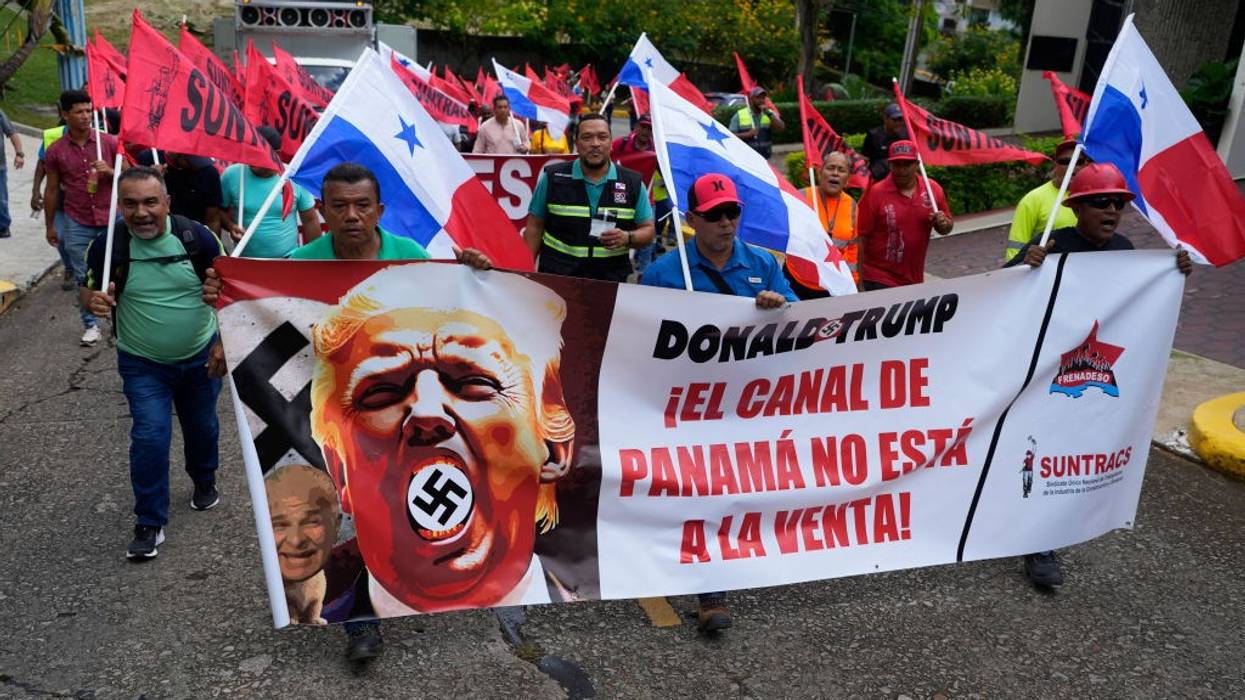
One former Swedish prime minister called the Republican president's pledge to grow U.S. territory "a recipe for global instability."
While the global far-right cheered President Donald Trump's return to the White House on Monday, world leaders, elected officials, activists, and others from across the rest of the political spectrum reacted with trepidation as the Republican vowed to expand the nation's territory for the first time in nearly 80 years and threatened the sovereignty of a U.S. trade and security partner.
In his second inaugural address, Trump promised a foreign policy that "expands our territory," as well as the renewed pursuit of "Manifest Destiny"—the 19th-century belief that God intended the United States to control the continent from coast to coast—beyond Earth by "launching American astronauts to plant the stars and stripes on the planet Mars."
"That's a dangerous statement in itself, but then others around the world might also be inspired to do the same."
In the United States, Monday's inauguration coincided with the federal holiday honoring the assassinated civil rights champion Rev. Martin Luther King Jr., whom Trump mentioned in his speech. Some observers noted the incongruity of Trump's message with King's anti-war ethos.
"How dare Donald Trump invoke Dr. King," pan-African studies professor and Black Lives Matter Los Angeles co-founder Melina Abdullah fumed on social media. "Trump IS the embodiment of the three evils that MLK warned of: racism, materialism, and militarism."
Indigenous voices reminded listeners that belief in Manifest Destiny fueled genocidal violence against Native Americans.
"Trump is really going after Native Americans with references to Manifest Destiny, the frontier, Wild West, and erasing Denali's name," attorney Brett Chapman, a direct descendant of the Ponca Cshief White Eagle, said on social media. "This anti-Indigenous inaugural address sounds like one from the 1800s when presidents deployed the U.S. military on Native Americans seeking rights."
In his speech, Trump falsely accused China of "running the Panama Canal," said that Panama—which was last invaded by American forces in 1989—is overcharging U.S. ships to use the crucial waterway, and warned that "we're taking it back."
As angry demonstrators rallied outside the U.S. Embassy in Panama City, right-wing Panamanian President José Raúl Mulino issued a statement refuting Trump's threats and accusations and declaring that "the canal is and will continue to be Panamanian."
Trump's threat follows his refusal earlier this month to rule out the use of military force in order to conquer the Panama Canal or Greenland, a territory of NATO ally Denmark.
South American progressives were left stunned by parts of Trump's address.
"In his inauguration speech, Donald Trump made it clear that reality surpasses fiction," Carol Dartora, a leftist lawmaker in the lower chamber of Brazil's National Congress, said in a video posted online. "Then the U.S. president exuded machismo, imperialism, and xenophobia, especially against immigrants."
Across the Atlantic, former center-right Swedish Prime Minister Carl Bildt said: "Now we know that President Trump wants to 'expand our territory.' That's a dangerous statement in itself, but then others around the world might also be inspired to do the same. It's a recipe for global instability."
German author, filmmaker, and journalist Annette Dittert
responded to Trump's expansionist pledge with a popular three-letter internet acronym: "'We will become a nation that expands our territory?' WTF?"
"The Western press are waxing lyrical about the new Syria being born—but not a word on the U.S. and Israeli bombs falling from the sky," said Yanis Varoufakis.
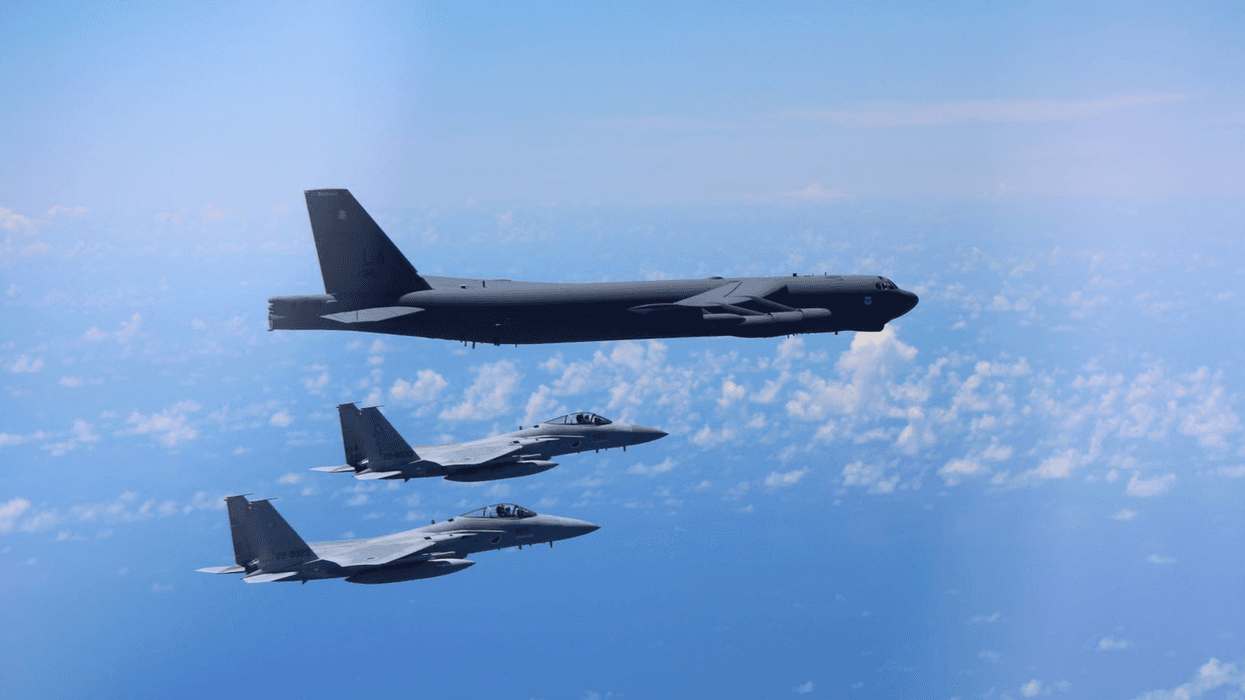
U.S. military forces launched dozens of airstrikes on more than 75 Islamic State targets in Syria on Sunday after the fall of longtime Syrian President Bashar al-Assad and amid ongoing Israeli and Turkish attacks on the war-torn Middle Eastern nation.
According to U.S. Central Command (CENTCOM), warplanes including B-52 bombers, F-15 fighters, and A-10 ground attack aircraft "conducted dozens of precision airstrikes targeting known ISIS camps and operatives in central Syria."
CENTCOM called the strikes "part of the ongoing mission to disrupt, degrade, and defeat ISIS in order to prevent the terrorist group from conducting external operations and to ensure that ISIS does not seek to take advantage of the current situation to reconstitute in central Syria."
The U.S., "together with allies and partners in the region, will continue to carry out operations to degrade ISIS operational capabilities even during this dynamic period in Syria," CENTCOM added.
"The Biden administration ordering ongoing airstrikes is a disappointing sign that they have no intent on reversing their deadly policy of interventionism."
Responding Monday to the latest attacks on Syria by U.S. forces, Danaka Katovich, national co-director of the peace group CodePink, told Common Dreams: "We condemn the U.S. airstrikes in Syria. The U.S. has sowed chaos in Syria and the entire region for years and the Biden administration ordering ongoing airstrikes is a disappointing sign that they have no intent on reversing their deadly policy of interventionism."
U.S. and coalition forces have killed and maimed at least tens of thousands of Syrians and Iraqis during the Obama, Trump, and Biden administrations as part of the anti-ISIS campaign and wider so-called War on Terror.
Commenting on the dearth of coverage of the strikes by the corporate media, prominent Greek leftist Yanis Varoufakis said on social media that "the Western press are waxing lyrical about the new Syria being born—but not a word on the U.S. and Israeli bombs falling from the sky."
"Is there no bottom to the moral void of the Western press?" he added.
Sunday's U.S. strikes came as al-Assad and relatives fled to Russia—where they have been granted asylum—amid the fall of the capital, Damascus, to rebel forces.
Also on Sunday, Israeli forces seized more territory in Syria's Golan Heights and ordered residents of five villages to "stay home and not go out until further notice" if they want to remain safe. Israel conquered the western two-thirds of the Golan Heights in 1967 and has unlawfully occupied it ever since. In 1981, Israel illegally annexed the occupied lands.
"We will not allow any hostile force to establish itself on our border," right-wing Israeli Prime Minister Benjamin Netanyahu—who is wanted by the International Criminal Court for alleged war crimes and crimes against humanity in Gaza—said in a video posted on social media.
Numerous Israelis celebrated the seizure on social media, while others cautioned against boasting about what is almost certainly an illegal conquest.
Meanwhile in northern Syria, Turkish airstrikes in support of Syrian National Army rebels—who are battling U.S.-backed Syrian Democratic Forces (SDF) fighters in and around the Kurdish-controlled city of Manbij—reportedly killed numerous civilians along with dozens of militants.
In what it called a "horrific massacre," the London-based Syrian Observatory for Human Rights said Monday that 11 civilians from the same family, including women and six children, were killed in a Turkish drone strike on the SDF-controlled village of Al-Mustariha in northern Raqqa Governate.

The United States’ best shot at peace would be insisting on an immediate and permanent cease-fire and the withdrawal of Israeli forces from Gaza.
While Secretary of State Anthony Blinken has been frantically shuttling around the Middle East trying to stop the Israeli conflict in Gaza from exploding into a regional war, the United States has also sent two aircraft carrier strike groups, a Marine Expeditionary Unit, and 1,200 extra troops to the Middle East as a “deterrent.” In plain language, the United States is threatening to attack any forces that come to the defense of the Palestinians from other countries in the region, reassuring Israel that it can keep killing with impunity in Gaza.
But if Israel persists in this genocidal war, U.S. threats may be impotent to prevent others from intervening. From Lebanon to Syria, Yemen, Iraq, and Iran, the possibilities of the conflict spreading are enormous. Even Algeria says it is ready to fight for a free Palestine, based on a unanimous vote in its parliament on November 1.
Middle Eastern governments and their people already see the United States as a party to Israel’s massacre in Gaza. So any direct U.S. military action will be seen as an escalation on the side of Israel and is more likely to provoke further escalation than to deter it.
U.S. support for Israel has already created tremendous damage to the U.S. reputation in the region and beyond, and direct U.S. involvement in the war would leave it more isolated and impotent than its previous misadventures in Vietnam, Afghanistan, and Iraq.
The United States already faces this predicament in Iraq. Despite years of Iraqi demands for the removal of U.S. forces, at least 2,500 U.S. troops remain at Al-Asad Airbase in western Anbar province, Al-Harir Airbase, north of Erbil in Iraqi Kurdistan, and another small base at the airport in Erbil. There are also “several hundred” NATO troops, including Americans, advising Iraqi forces in NATO Mission Iraq (NMI), based near Baghdad.
For many years, U.S. forces in Iraq have been mired in a low-grade war against the Popular Mobilization Forces (PMF) that Iraq formed to fight ISIS, mainly from Shia militias. Despite their links to Iran, the armed groups Kata’ib Hezbollah, Asa’ib Ahl al-Haq, and other PMFs have often ignored Iranian calls to de-escalate attacks on U.S. forces. These Iraqi groups do not respect Iran Quds Force leader General Esmail Qaani as highly as they did General Qasem Soleimani, so Soleimani’s assassination by the United States in 2020 has further reduced Iran’s ability to restrain the militias in Iraq.
After a year-long truce between U.S. and Iraqi forces, the Israeli war on Gaza has triggered a new escalation of this conflict in both Iraq and Syria. Some militias rebranded themselves as the Islamic Resistance in Iraq and began attacking U.S. bases on October 17. After 32 attacks on U.S. bases in Iraq, 34 more in Syria, and 3 U.S. airstrikes in Syria, U.S. forces conducted airstrikes against two Kata’ib Hezbollah bases in Iraq, one in Anbar province and one in Jurf Al-Nasr, south of Baghdad, on November 21, killing at least nine militiamen.
The U.S. airstrikes prompted a furious response from the Iraqi government spokesman Bassam al-Awadi. “We vehemently condemn the attack on Jurf Al-Nasr, executed without the knowledge of government agencies,” al-Awadi said. “This action is a blatant violation of sovereignty and an attempt to destabilize the security situation… The recent incident represents a clear violation of the coalition’s mission to combat Daesh (ISIS) on Iraqi soil. We call on all parties to avoid unilateral actions and to respect Iraq’s sovereignty…”
As the Iraqi government feared, the Islamic Resistance in Iraq responded to the U.S. airstrikes with two attacks on Al-Harir airbase on November 22 and several more on November 23. They attacked Al-Asad airbase with several drones, launched another drone attack on the U.S. base at Erbil airport, and their allies in Syria attacked two U.S. bases across the border in northeastern Syria.
Short of a cease-fire in Gaza or a full U.S. withdrawal from Iraq and Syria, there is no decisive action the U.S. can take that would put a stop to these attacks. So the level of violence in Iraq and Syria is likely to keep rising as long as the war on Gaza continues.
Another formidable and experienced military force opposing Israel and the United States is the Houthi army in Yemen. On November 14, Abdul-Malek al-Houthi, the leader of the Houthi government in Yemen, asked neighboring countries to open a corridor through their territory for his army to go and fight Israel in Gaza.
The Houthi Deputy Information Secretary Nasreddin Amer told Newsweek that if they had a way to enter Palestine, they would not hesitate to join the fight against Israel, “We have fighters numbering hundreds of thousands who are brave, tough, trained, and experienced in fighting,” Amer said. “They have a very strong belief, and their dream in life is to fight the Zionists and the Americans.”
Transporting hundreds of thousands of Yemeni soldiers to fight in Gaza would be nearly impossible unless Saudi Arabia opened the way. That seems highly unlikely, but Iran or another ally could help to transport a smaller number by air or sea to join the fight.
The Houthis have been waging an asymmetric war against Saudi-led invaders for many years, and they have developed weapons and tactics that they could bring to bear against Israel. Soon after al-Houthi’s statement, Yemeni forces in the Red Sea boarded a ship owned, via shell companies, by Israeli billionaire Abraham Ungar. The ship, which was on its way from Istanbul to India, was detained in a Yemeni port.
The Houthis have also launched a series of drones and missiles towards Israel. While many members of Congress try to portray the Houthis as simply puppets of Iran, the Houthis are actually an independent, unpredictable force that other actors in the region cannot control.
Even NATO ally Türkiye is finding it difficult to remain a bystander, given the widespread public support for Palestine. President Recep Tayyip Erdogan of Türkiye was among the first international leaders to speak out strongly against the Israeli war on Gaza, explicitly calling it a massacre and saying that it amounted to genocide.
Turkish civil society groups are spearheading a campaign to send humanitarian aid to Gaza on cargo ships, braving a possible confrontation like the one that occurred in 2010 when the Israelis attacked the Freedom Flotilla, killing 10 people aboard the Mavi Marmara.
On the Lebanese border, Israel and Hezbollah have conducted daily exchanges of fire since October 7, killing 97 combatants and 15 civilians in Lebanon and 9 soldiers and 3 civilians in Israel. Some 46,000 Lebanese civilians and 65,000 Israelis have been displaced from the border area. Israeli defense minister Yoav Gallant warned on November 11, “What we’re doing in Gaza, we can also do in Beirut.”
How will Hezbollah react if Israel resumes its brutal massacre in Gaza after the brief pause is over or if Israel expands the massacre to the West Bank, where it has already killed at least 237 more Palestinians since October 7?
In a speech on November 3, Hezbollah leader Hassan Nasrallah held back from declaring a new war on Israel, but warned that “all options are on the table” if Israel does not end its war on Gaza.
As Israel prepared to pause its bombing on November 23, Iranian foreign minister Hossein Amirabdollahian held meetings in Qatar, first with Nasrallah and Lebanese officials, and then with Hamas leader Ismail Haniyeh.
In a public statement, Amirabdollahian said, “The continuation of the cease-fire can prevent further expansion of the scope of the war. In the meeting with the leaders of the resistance, I found out that if Israel’s war crimes and genocide continue, a tougher and more complicated scenario of the resistance will be implemented.”
Amirabdollahian already warned on October 16 that, “The leaders of the resistance will not allow the Zionist regime to do whatever it wants in Gaza and then go to other fronts of the resistance.”
In other words, if Iran and its allies believe that Israel really intends to continue its war on Gaza until it has removed Hamas from power, and then to turn its war machine loose on Lebanon or its other neighbors, they would prefer to fight a wider war now, forcing Israel to fight the Palestinians, Hezbollah, and their allies at the same time, rather than waiting for Israel to attack them one by one.
Tragically, the White House is not listening. The next day, President Joe Biden continued to back Israel’s vow to resume the destruction of Gaza after its “humanitarian pause,” saying that attempting to eliminate Hamas is “a legitimate objective.”
America’s unconditional support for Israel and endless supply of weapons have succeeded only in turning Israel into an out-of-control, genocidal, destabilizing force at the heart of a fragile region already shattered and traumatized by decades of U.S. warmaking. The result is a country that refuses to recognize its own borders or those of its neighbors, and rejects any and all limits on its territorial ambitions and war crimes.
If Israel’s actions lead to a wider war, the U.S. will find itself with few allies ready to jump into the fray. Even if a regional conflict is avoided, the U.S. support for Israel has already created tremendous damage to the U.S. reputation in the region and beyond, and direct U.S. involvement in the war would leave it more isolated and impotent than its previous misadventures in Vietnam, Afghanistan, and Iraq.
The United States can still avoid this fate by insisting on an immediate and permanent cease-fire and the withdrawal of Israeli forces from Gaza. If Israel will not agree to that, the U.S. must back up this position with an immediate suspension of arms deliveries, military aid, Israeli access to U.S. weapons stockpiles in Israel, and diplomatic support for Israel’s war on Palestine.
The priority of U.S. officials must be to stop Israel’s massacre, avoid a regional war, and get out of the way so that other nations can help negotiate a real solution to the occupation of Palestine.
The request would remove most conditions on Israel's use of a U.S. weapons stash, including a requirement that it only use surplus or obsolete weapons and a cap on how much the U.S. can spend resupplying the stash.
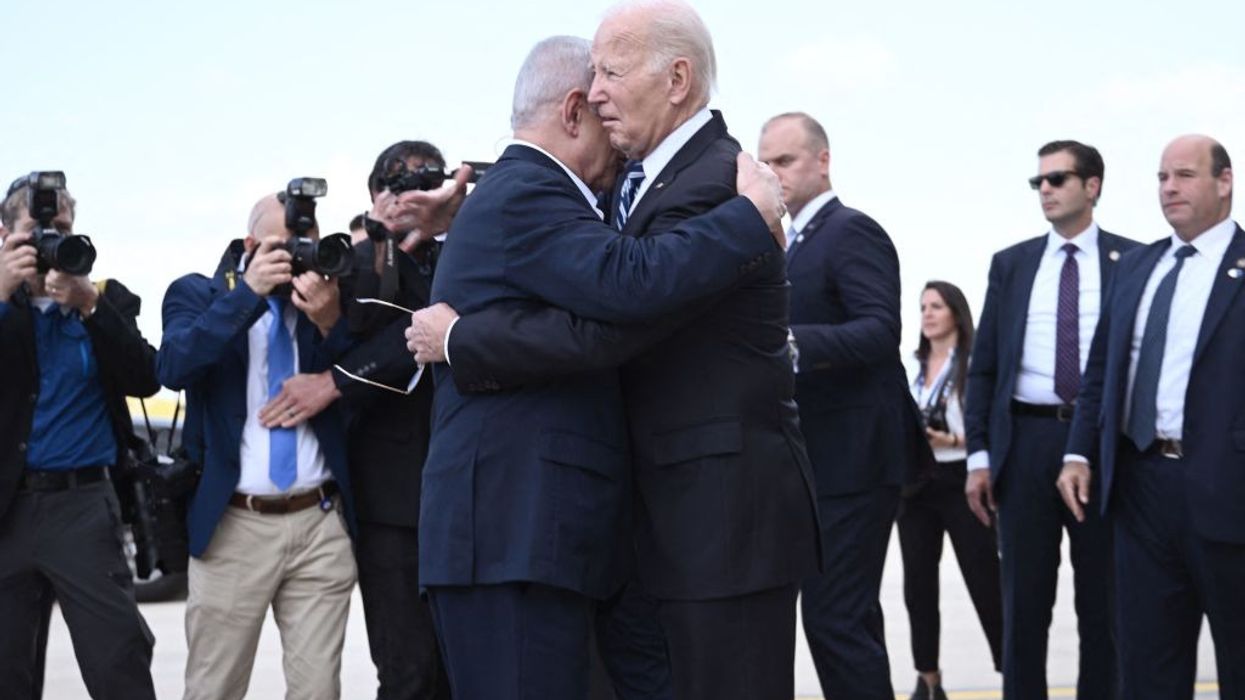
President Joe Biden has requested that Congress to lift most of the restrictions on Israel's access to a U.S. stockpile of weapons in the country, The Intercept reported Saturday.
The request came in the administration's supplemental budget request to the U.S. Senate, sent October 20. It concerns the War Reserve Stockpile Allies-Israel (WRSA-I) that the U.S. has stored in Israel since the 1980s for its own use in a potential conflict in the region. The U.S. allows Israel to access the stockpile under certain conditions, but Biden's request would remove most of these conditions, including a requirement that Israel only use surplus or obsolete weapons and a cap on how much the U.S. can spend resupplying the stash.
"The President's emergency supplemental funding request would essentially create a free-flowing pipeline to provide any defense articles to Israel by the simple act of placing them in the WRSA-I stockpile, or other stockpiles intended for Israel," Josh Paul, a former State Department official who resigned over U.S. arm transfers to Israel in the midst of its bombardment of Gaza, told The Intercept.
"The Biden administration's supplemental budget request would further undermine oversight and accountability even as U.S. support enables an Israeli campaign that has killed thousands of children."
The news comes in the midst of a four-day cease-fire between Israel and Hamas, which has given journalists and humanitarian organizations a moment to assess the extent of the death and destruction unleashed by Israel in Gaza since October 7, when Hamas attacked Israel, killing 1,200 and taking around 240 hostages. In retaliation, the Israeli military has killed more than 14,800 people in Gaza, around 10,000 of them women and children. That means the number of women and children killed in Gaza in less than two months is more than double the number confirmed killed in Ukraine in two years of fighting with Russia, The New York Times concluded Saturday. One of the reasons for the high civilian toll, the Times said, is Israel's use of 2,000-pound, U.S.-made bombs in a densely populated Gaza Strip.
Despite this, Biden's request would allow Israel to access all weapons from the WRSA-I, not just excess or obsolete ones, something that could hurt U.S. preparedness, Paul told The Intercept. The request would also remove a requirement that Israel provide concessions to the U.S. in exchange for accessing the weapons, lift the $200 million per year restocking cap, and shorten a requirement that the government inform Congress 30 days ahead of a weapons transfer under "extraordinary" circumstances.
"The Biden administration's supplemental budget request would further undermine oversight and accountability even as U.S. support enables an Israeli campaign that has killed thousands of children," John Ramming Chappell, a legal fellow with the Center for Civilians in Conflict, told The Intercept.
The U.S. typically provides Israel with $3.8 billion in military aid every year, more than it sends to any other nation, according to Al Jazeera. The House has already approved additional aid this year to the tune of $14.3 billion.
The Intercept story came the day after Biden seemed open to the idea of putting conditions on military aid to Israel while answering questions from reporters in Nantucket.
"I think that's a worthwhile thought, but I don't think if I started off with that we would have gotten where we are today," Biden said, as HuffPost reported. "We have to take this a piece at a time."
On the campaign trail in 2020, Biden said the idea of putting conditions on aid to Israel was "absolutely outrageous." But the administration's seemingly unconditional support for Israel as it carried out its siege, bombardment, and invasion of Gaza has led to backlash among progressives, who have marched for a cease-fire and carried out direct actions in several major cities. A Reuters/Ipsos poll released on November 15 found that 68% of the U.S. public backed a cease-fire.
In an appearance on NBC's Meet the Press on Sunday, National Security Adviser Jake Sullivan did not rule out the idea that Biden would sign legislation putting conditions on military aid to Israel, though he said currently what was proving effective was behind-doors diplomacy with Israel and Arab nations.
"He is going to continue to focus on what is going to generate results," Sullivan said.

No matter how many lies it tells or how many people it kills, being the United States government means never having to say you’re sorry.
When President Joe Biden flew out of Hanoi last week, he was leaving a country where U.S. warfare caused roughly 3.8 million Vietnamese deaths. But, like every other president since the Vietnam War, he gave no sign of remorse. In fact, Biden led up to his visit by presiding over a White House ceremony that glorified the war as a noble effort.
Presenting the Medal of Honor to former Army pilot Larry L. Taylor for bravery during combat, Biden praised the veteran with effusive accolades for risking his life in Vietnam to rescue fellow soldiers from “the enemy.” But that heroism was 55 years ago. Why present the medal on national television just days before traveling to Vietnam?
The timing reaffirmed the shameless pride in the U.S. war on Vietnam that one president after another has tried to render as history. You might think that—after killing such a vast number of people in a war of aggression based on continuous deceptions—some humility and even penance would be in order.
The pretenses that falsify the past are foreshadowing excuses for future warfare.
But no. As George Orwell put it, “Who controls the past controls the future: who controls the present controls the past.” And a government that intends to continue its might-makes-right use of military power needs leaders who do their best to distort history with foggy rhetoric and purposeful omissions. Lies and evasions about past wars are prefigurative for future wars.
And so, at a press conference in Hanoi, the closest Biden came to acknowledging the slaughter and devastation inflicted on Vietnam by the U.S. military was this sentence: “I’m incredibly proud of how our nations and our people have built trust and understanding over the decades and worked to repair the painful legacy the war left on both our nations.”
In the process, Biden was pretending an equivalency of suffering and culpability for both countries—a popular pretense for commanders in chief ever since the first new one after the Vietnam War ended.
Two months into his presidency in early 1977, Jimmy Carter was asked at a news conference if he felt “any moral obligation to help rebuild that country.” Carter replied firmly:
Well, the destruction was mutual. You know, we went to Vietnam without any desire to capture territory or to impose American will on other people. We went there to defend the freedom of the South Vietnamese. And I don’t feel that we ought to apologize or to castigate ourselves or to assume the status of culpability.
And, Carter added, “I don’t feel that we owe a debt, nor that we should be forced to pay reparations at all.”
In other words, no matter how many lies it tells or how many people it kills, being the United States government means never having to say you’re sorry.
When President George H.W. Bush celebrated the U.S. victory in the 1991 Gulf War, he proclaimed: “By God, we’ve kicked the Vietnam syndrome once and for all.” Bush meant that the triumphant killing of Iraqi people—estimated at 100,000 in six weeks—had ushered in American euphoria about military action that promised to wipe away hesitation to launch future wars.
From Carter to Biden, presidents have never come anywhere near providing an honest account of the Vietnam War. None could imagine engaging in the kind of candor that Pentagon Papers whistleblower Daniel Ellsberg provided when he said, “It wasn’t that we were on the wrong side. We were the wrong side.”
Mainstream political discourse has paid scant attention to the deaths and injuries of Vietnamese people. Likewise the horrendous ecological damage and effects of poisons from the Pentagon’s arsenal have gotten very short shrift in U.S. media and politics.
Does such history really matter now? Absolutely. Efforts to portray the U.S. government’s military actions as well-meaning and virtuous are incessant. The pretenses that falsify the past are foreshadowing excuses for future warfare.
Telling central truths about the Vietnam War is a basic threat to the U.S. war machine. No wonder the leaders of the warfare state would rather keep pretending.

Most of the mainstream media and the think tank world are treating the memory of the war not as a source of reflection but as an embarrassment to be forgotten as quickly and completely as possible.
On the second anniversary of the final debacle of U.S. involvement in Afghanistan, we should consider the lessons of that disaster for U.S. strategy elsewhere.
While the case of Afghanistan itself is by nature unique, Washington’s mistakes and failures reflected wider and deeper patterns—and pathologies—in U.S. policymaking and political culture. If left unaddressed, these will lead to more disasters in future.
Yet most of the mainstream media and the think tank world are treating the memory of the U.S. war in Afghanistan not as a source of reflection but as an embarrassment to be forgotten as quickly and completely as possible.
Once both political parties have committed themselves to a given strategy, the bipartisan Washington establishment finds it extremely difficult to admit mistakes and change course.
This parallels the approach to the memory of Vietnam in the U.S. mainstream—and the result was the disaster of Iraq. One of the most astonishing things about the U.S. debate—to give it that name—prior to the invasion of Iraq, was the general failure to consider, or even mention, what the experience of Vietnam might have taught. Today, this refusal to learn lessons applies above all to U.S. engagement in Ukraine.
The failure to pursue diplomacy with the Taliban prior to the U.S. invasion of Afghanistan can be explained and excused by the fury naturally felt by Americans at the terrorist attacks of 9/11, and the Taliban’s refusal immediately to hand over the al-Qaeda leadership that was clearly responsible. Nonetheless, given the appalling costs that resulted from the U.S. invasion, it is worth asking whether an approach that allowed the Taliban to save face and remain true to their own beliefs might have produced better results for both Americans and Afghans: for example, exploring the possibility that the Taliban could be persuaded to deliver the AQ leadership to another Muslim country.
In the case of Iraq, there was no sincere diplomatic effort at all, since the Bush administration had already made the decision to invade.
The second lesson of Afghanistan is as old as war itself and was emphasized by military theorist Carl von Clausewitz: that there can never be certainty of long-term victory in any war, if only because war, more than any other human activity, is liable to generate unintended ramifications and consequences.
In the case of Afghanistan, the mission to eliminate al Qaeda and remove the Taliban from power morphed into a far greater—and probably innately doomed—effort to create a modern democratic Afghan state through foreign intervention, aid, and supervision.
This in turn became related to the attempt to destroy the old and exceptionally powerful nexus between Islamic faith and Pashtun nationalism that had generated the Taliban, much of the resistance to the Communist regime and Soviet intervention in the 1980s, and numerous revolts against the British Empire before that.
Given that most Pashtuns live in Pakistan, the inevitable result was an extension of the conflict to that country, leading to a Pakistani civil war in which tens of thousands died. Pakistan’s refusal or inability to expel the Afghan Taliban led to the threat of direct U.S. intervention in Pakistan—which, if it had occurred, would have produced a catastrophe far worse than Afghanistan and Iraq put together.
The failure to anticipate consequences is worsened by conformism and careerism; not that these tendencies are any worse in the U.S. establishment than elsewhere. But America’s power and capacity to intervene across the world magnify their negative consequences. On the one hand, they mean that even experts and journalists who are in a position to know better join officials in unthinking obedience to the establishment line of the given moment, which may have only the most tangential relationship to realities in the country concerned.
Returning to Afghanistan after the fall of the Taliban, I encountered journalists whom I had known when covering the Mujahedin war against the Soviets and Communists in the 1980s. I was amused—kind of—to find them parroting a new version of the line that Moscow and Kabul had put out in the 1980s: that the Afghan resistance had no real local support and was not really Afghan, and that it was entirely the creation of outside powers (including Pakistan) and money.
This was despite the fact that the Taliban were recruiting exactly the same people from exactly the same areas as the Mujahedin, who were fighting for exactly the same reasons.
Matters are made worse by the flood of instant shake-and-bake “experts” who are generated every time the United States embarks on a new overseas venture. Selected for their connections in Washington rather than any real knowledge of the areas concerned, they could not correct the mistakes of U.S. policy even if they had the moral courage to do so. Moreover, their ignorance of local history and culture makes them dreadfully receptive to the self-interested fantasies of their local informants.
Thus I was also amused in the early 2000s to hear “advisers” on Afghanistan to the U.S. (and European) governments declare that “Afghanistan in the 1960s was a successful middle class democracy.” This U.S. syndrome could well be called Oedipal, since it is both incestuous and self-blinded.
Once both political parties have committed themselves to a given strategy, the bipartisan Washington establishment finds it extremely difficult to admit mistakes and change course—a tendency to which the U.S. military has also sometimes contributed in a disastrous fashion. This military refusal to admit defeat has its admirable sides—nobody should want U.S. generals to be quitters.
That, however, is why America needs political leaders (including ones with personal military experience, like Truman, Eisenhower, Kennedy, and Carter) with the knowledge and courage to tell the generals when it is time to call a halt.
Instead, in Afghanistan (as documented by the Special Inspector General for Afghan Reconstruction and others), generals and administration officials colluded to produce optimistic lies, which were then circulated by a credulous and subservient media. Today, this risks being the case with the Biden administration’s refusal to admit that the Ukrainian counteroffensive has failed, and that it is therefore time to start developing a political strategy to end the fighting in Ukraine and the economic and political damage this is beginning to cause to vital U.S. allies in Europe.
The last point about the U.S. record in Afghanistan should hardly need to be made, because it has been made over and over again since the 1950s by a whole succession of great American thinkers, including Reinhold Niebuhr, Hans Morgenthau, George Kennan, Richard Hofstadter, and C. Vann Woodward. This is the tendency in the U.S. political establishment to colossally exaggerate both the malignance of the enemy of the moment, and the danger it poses to the United States.
Instead of a Communist-led nationalist movement to reunify Vietnam, the Vietnamese Communists were portrayed as a force that could start toppling a row of “dominoes” that would end with Communist victory in France and Mexico. Instead of a tinpot regional dictator, Saddam Hussein became a nuclear menace to the U.S. homeland. The Taliban, an entirely Afghan force, supposedly had to be fought in Afghanistan so that we would not need to fight them in the United States.
And today, U.S. officials in their rhetoric somehow manage to combine the supposed beliefs both that Russia is so weak that Ukraine can completely defeat the Russian army and catastrophically undermine the Russian state, and that Russia is so strong that if not defeated in Ukraine it will pose a mortal threat to NATO and freedom around the world.
As Loren Baritz wrote in 1985 concerning the obliteration of the memory of Vietnam in the United States:
Our power, complacency, rigidity, and ignorance have kept us from incorporating our Vietnam experience into the way we think about ourselves and the world… But there is no need to think unless there is doubt. Freed of doubt, we are freed of thought.
It would be nice to think that on this anniversary, and faced with even greater dangers in Ukraine, the U.S. establishment and media will devote some serious thought to what happened in Afghanistan.

Given the destructiveness of U.S. militarism, a strong argument can be made that true patriotism involves preventing and stopping wars instead of starting and continuing them.
The Fourth of July—the ultimate patriotic holiday—is approaching again. Politicians orate, American Flags proliferate, and, even more than usual, many windows on the world are tinted red, white, and blue. But an important question remains unasked: Why are patriotism and war so intertwined in U.S. media and politics?
The highest accolades often go to those who died for their country. But when a war is based on deception with horrific results, as became clear during the massive bloodshed in Vietnam, realism and cynicism are apt to undermine credulity. “War’s good business so give your son,” said a Jefferson Airplane song in 1967. “And I’d rather have my country die for me.”
Government leaders often assert that participating in war is the most laudable of patriotic services rendered. And even if the fighters don’t know what they’re fighting for, the pretense from leadership is that they do. When President Lyndon Johnson delivered a speech to U.S. troops at Cam Ranh Bay in South Vietnam, he proclaimed that “you know what you are doing, and you know why you are doing it—and you are doing it.”
From Vietnam to Iraq and beyond, the patriotism of U.S. troops—and their loved ones as well as the general public back home—has been exploited and manipulated by what outgoing President Dwight Eisenhower called the “military-industrial complex.”
Five decades later, long after sending U.S. troops to invade Panama in 1989 and fight the 1991 Gulf War, former President George H.W. Bush tweeted that he was “forever grateful not only to those patriots who made the ultimate sacrifice for our Nation—but also the Gold Star families whose heritage is imbued with their honor and heroism.” Such lofty rhetoric is routine.
Official flattery elevates the warriors and the war, no matter how terrible the consequences. In March 2010, making his first presidential visit to Afghanistan, Barack Obamatold the assembled troops at Bagram Air Base that they “represent the virtues and the values that America so desperately needs right now: sacrifice and selflessness, honor and decency.”
From there, Obama went on to a theme of patriotic glory in death: “I’ve been humbled by your sacrifice in the solemn homecoming of flag-draped coffins at Dover, to the headstones in section 60 at Arlington, where the fallen from this war rest in peace alongside the fellow heroes of America’s story.” Implicit in such oratory is the assumption that “America’s story” is most heroic and patriotic on military battlefields.
A notable lack of civic imagination seems to assume that there is no higher calling for patriotism than to kill and be killed. It would be an extremely dubious notion even if U.S. wars from Vietnam to Afghanistan and Iraq had not been based on deception—underscoring just how destructive the conflation of patriotism and war can be.
From Vietnam to Iraq and beyond, the patriotism of U.S. troops—and their loved ones as well as the general public back home—has been exploited and manipulated by what outgoing President Dwight Eisenhower called the “military-industrial complex.” Whether illuminated by the Pentagon Papers in 1971 or the absence of the proclaimed Iraqi weapons of mass destruction three decades later, the falsehoods provided by the White House, State Department, and Pentagon have been lethal forms of bait-and-switch.
Often lured by genuine love of country and eagerness to defend the United States of America, many young people have been drawn into oiling the gears of a war machine—vastly profitable for Pentagon contractors and vastly harmful to human beings trapped in warfare.
Yet, according to top officials in Washington and compliant media, fighting and dying in U.S. wars are the utmost proof of great patriotism.
We’re encouraged to closely associate America’s wars with American patriotism in large part because of elite interest in glorifying militarism as central to U.S. foreign policy. Given the destructiveness of that militarism, a strong argument can be made that true patriotism involves preventing and stopping wars instead of starting and continuing them.
If such patriotism can ever prevail, the Fourth of July will truly be a holiday to celebrate.
Solomon's 13th book shows how the U.S. hides the human toll of its military machine.
Following a string of U.S. “forever wars,” a profusion of well-written, often riveting novels, memoirs, and analyses have been published. Talented authors have aimed to promote understanding about the human cost of war.
In the same period, mainstream media sources have continually developed ways to make war appear normal—something necessary, justifiable, or in some cases, “humane.”
Norm Solomon’s War Made Invisible erects an edifice of evidence showing deliberate, consistent, coordinated and well-funded efforts to squelch movements opposing the vicious consequences of war.
Solomon asks why people identify more with the bombers rather than the bombed. Then he traces the history of embedded reporters. He shows how the presence of “embeds” (journalists who live among and travel with units of the military) has changed the way wars are covered. The embeds are beholden not only to the military that protect them but also to corporate heads who collude with war profiteers and war planners.
Solomon asks why people identify more with the bombers rather than the bombed.
Militarists’ justifications for wars often emphasize the terror wielded by insurgents using bloody tactics. Solomon points out the similarities between suicide bombers causing slaughter on the ground and sophisticated warplanes maiming and killing civilians from the air.
The legendary peace activist Phil Berrigan once likened racism and threats of nuclear war to the many faces of the hydra written of in Greek mythology. Cut off one head and another appears. The many-faced hydra of racism and war now turns to all corners of the globe. Any country refusing to subordinate itself to serving U.S. national interests risks being devastated by U.S. military and economic wars. Increasingly, war planners invoke the nuclear threat.
Authors and orators who challenge the status quo of glorifying and justifying wars face well organized opponents with deep pockets and a vice like grip on mainstream media. Astonishing past efforts, in U.S. history, to outlaw war and denounce the “merchants of death” reached millions of people after the industrial slaughter of World War I.
Eugene Debs, the indefatigable campaigner imprisoned for opposing U.S. foreign policy, ran for president from his jail cell and won nearly a million votes in 1920. The Kellogg Briand pact outlawing war was written into U.S. law in August of 1928. In April of 1935, the New York Times reported that over 60,000 students went on strike, declaring they would never enlist to fight in a foreign war. Former U.S. Representative Jeanette Rankin voted against entering both World War I and World War II. Norm Solomon shares the moral compass and honorable intent of these heroic resisters. His highly worthwhile book invites readers to embrace his clarity, expose the military machine’s human toll, and campaign to end all wars.