

SUBSCRIBE TO OUR FREE NEWSLETTER
Daily news & progressive opinion—funded by the people, not the corporations—delivered straight to your inbox.
5
#000000
#FFFFFF
To donate by check, phone, or other method, see our More Ways to Give page.
Daily news & progressive opinion—funded by the people, not the corporations—delivered straight to your inbox.
Every elected Democrat should be demanding that no taxpayer dollars go to corporations that lay off taxpayers involuntarily. If they don't, what good are they?
As the Trump-Musk administration takes an axe to the federal government’s budget and personnel, the Democrats have an opening to raise an issue that Musk will hate but Trump can’t ignore—private sector mass layoffs.
Right now, as Acting President Musk goes after agency after agency in the name of cost cutting, the Democrats are focused on public sector job cuts. As they should, tens of thousands of jobs are at risk.
But those numbers pale in comparison to the 1.8 million private sector workers who lost their jobs in December of 2024 due to involuntary layoffs. For the past several decades, more than 20 million jobs per year have been taken away from workers who did nothing wrong.
It won’t be easy to convince private sector workers that cutting federal government costs is a mistake. If you’re living paycheck to paycheck, you don’t want your tax dollars squandered, and USAID., to many, sounds like a money pit.
If the Democrats act forcefully to defend working-class jobs, they should have better chance to win back Congress from Trump in 2026.
But private sector workers do care about their own job insecurity, and Donald Trump knows it. He has spoken forcefully about keeping worker jobs from migrating to Mexico and elsewhere, and he could take actual action to make that happen with one simple Executive Order:
Corporations that receive taxpayer money via federal contracts and tax subsidies shall not lay off taxpayers involuntarily.
More than $750 billion in contracts for materials and services are made each year by the federal government. Many of the corporate recipients have had no qualms about laying off workers and using the savings to enrich their investors via stock buybacks, and there have been no effective rules to prevent this. (A stock buyback is when a corporation repurchases its own shares, thereby raising the price of the stock without improving the company in any material way.)
Taxpayers know there is a great deal of waste built into federal contracts, especially those massive purchases involving defense and advanced technologies.
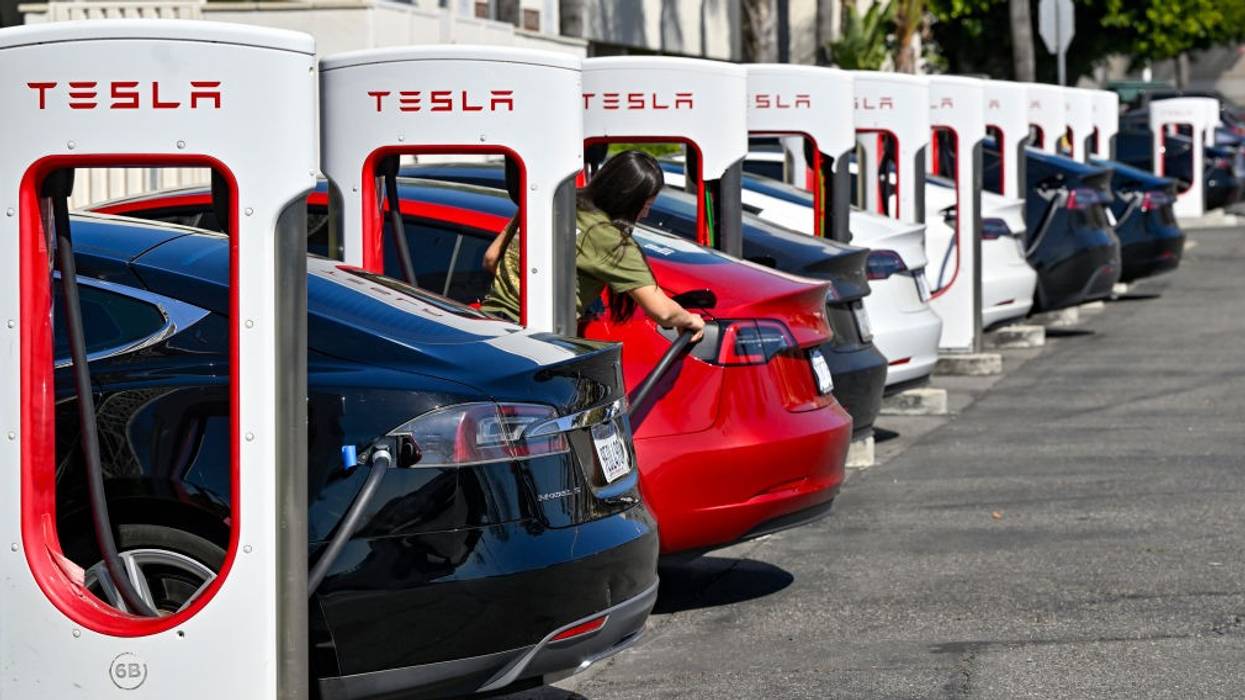
It turns out that Musk’s companies, reportedly, have received $20 billion in federal contracts, with $15.4 billion coming to Tesla and Space X in the last decade. Last year, Tesla laid off more than 14,000 workers, and Space X has announced that this year it will lay off more than 10 percent of its workforce, about 6,000 jobs. Imagine if Musk were not allowed to stuff himself with taxpayer money unless he refrained from involuntary layoffs?
To get there the Democrats, for the first time in memory, would need to care about greed-driven private sector layoffs.
That will be difficult because the Democrats are more in tune with highly educated, upper middle-class federal workers. These are the kind of voters who have been trending Democratic while the party has shed the working class. And the Democrats see the federal agencies in which these voters work as part of their legacy, often created and enhanced by legislation they spear-headed. Federal workers are their people, doing the work that the Democrats care most about.
Not so much the private sector, where voters have been drifting away from the Democrats in large numbers for decades, especially in the swing states of Michigan, Pennsylvania, and Wisconsin. As I show in Wall Street’s War on Workers, since 1992, as a county’s mass layoff rate has gone up, the Democratic vote has gone down, even as these voters have grown more liberal on social issues.
The Democrats have been losing these working-class voters because they have failed to interfere in private sector layoff decisions, even when job destruction became a campaign issue.
For example, in the run up to the 2024 election, John Deere and Company announced they were shipping more than 1,000 jobs to Mexico while recording $10 billion in profits and conducting $12.2 billion in stock buybacks. Trump immediately called for a 200-percent tariff on all Deere imported goods if they didn’t rescind their layoffs.
The Democrats didn’t say a word about how to stop this needless job destruction and instead attacked the tariffs. Deere’s stock buybacks and profits proved the company had more than enough money to offer voluntary buyout packages for all their workers, not just the executives. But the Democrats did not speak up.
During the height of the COVID-19 pandemic, the Democrats also remained silent when the Mylan Pharmaceutical plant in Morgantown, WV, moved to India. Workers there begged the Democrats to use the Defense Production Act to keep open the facility, which made generic drugs. If Biden could do it for baby formula, why not for badly needed pharmaceuticals?
But not one Democrat came out in support of these workers, and 1,500 jobs with an average wage of $70,000 per year were tossed away.
Clearly, the Democrats have been pulling away from the working class. Why help these workers, some are saying, when they’re more than likely to vote for Republicans? And why challenge corporate power when you’re trying to win over highly educated executives and financial leaders?
Democratic Senate Minority Leader Chuck Schumer, who is up and arms these days about the attacks on federal workers, was very honest about this switch in 2016. I’ve quoted him again and again because he tells us precisely what the Democratic strategy has been all about:
"For every blue-collar Democrat we lose in western Pennsylvania, we will pick up two moderate Republicans in the suburbs in Philadelphia, and you can repeat that in Ohio & Illinois & Wisconsin."
At the launch of a second Trump presidency, Schumer’s political acumen has not aged well.
Nor has Ken Martin’s, the new chair of the Democratic National Committee, who has made it clear that billionaires are welcome.
“There are a lot of good billionaires out there that have been with Democrats, who share our values, and we will take their money, but we’re not taking money from those bad billionaires,” Martin said recently.
It is doubtful that Martin ever gave one second’s thought to the fact that most, if not all, of these “good” billionaires that “share our values” have grown wealthy from, to some significant extent, stock buybacks funded through mass layoffs.
The country needs the Democrats to go from defense to offense. If the only activity is mounting a resistance movement to Trump, the odds are slim that enough new voters will be gained to win back the House or the Senate in 2026.
Every elected Democrat should be demanding that no taxpayer dollars go to corporations that lay off taxpayers involuntarily. They should put that message on social media, old media, even billboards all over the swing states. They should challenge every Republican candidate to take a stand on it. It doesn’t cost the taxpayer one dime, but it can protect the livelihoods of millions of working people every year. Or, at least, give them leverage while working out their severance.
Every day Democrats should be asking Trump to sign the order. Does he really want to be seen giving our tax dollars to corporations that lay off taxpayers and funnel the savings to the rich?
And wouldn’t it be good for our weary souls to see Musk squirm because he wouldn’t be able to sup at the federal trough while casually laying off his employees?
You have to wonder if the Democrats are capable of such a move, or anything remotely close to it. Only if they truly are willing to take on Wall Street and the billionaire class. They need to believe, not just mouth the words, that they will fight the wealthy to protect the livelihoods of working people.
If the Democrats act forcefully to defend working-class jobs, they should have better chance to win back Congress from Trump in 2026. But in the short term, pushing Trump to defend his populist flank might help put a wedge between Trump and his billionaire bros, and get some relief for workers from financialized layoffs.
But don’t hold your breath. All those “good” Democratic billionaires might get upset.

"Young people know what's at stake in this election," said one Sunrise Movement leader.
After setting out to reach 1.5 million young voters between late August and Election Day, the youth-led Sunrise Movement announced Tuesday that it made over 4 million voter contacts with a campaign targeting seven battleground states.
"Sunrise's program focused on presidential swing states where young, climate-minded voters were poised to decide the election: Michigan, Pennsylvania, Arizona, North Carolina, Wisconsin, Nevada, and Georgia," explains the group's new report. "Our voter contact universe was made up of people under the age of 35 who were very likely to be concerned about climate change."
The report lays out how Sunrise—sometimes partnering with other progressive groups—reached voters via digital advertising, phone calls, text messages, and door-knocking.
"We have six years left to stop catastrophic climate change. The next president will shape the planet for generations to come."
"I'm blown away by how many people stepped up to help us reach a record number of young voters this fall," said Sunrise communications director Stevie O'Hanlon in a statement. "We set a goal of reaching 1.5 million voters, and we blew past that goal, surpassing even our 2020 reach."
The report notes that this past spring, polls showed some young voters backing former Republican President Donald Trump over Democratic President Joe Biden—who dropped out and passed the torch to Vice President Kamala Harris this summer—but Sunrise "employed a four-part strategy to turn these numbers around."
The strategy was:
Trump made clear that he would drive up emissions with plans to "drill, baby, drill" and pledged to roll back the Biden-Harris climate policies if fossil fuel executives poured just $1 billion into his campaign. While Harris is widely endorsed by green groups, she has worried some with her embrace of hydraulic fracturing—or fracking—and promotion of "the largest increase in domestic oil production in history."
Still, many organizers for climate action and other key issues—including Israel's U.S.-backed genocidal war on the Gaza Strip—have emphasized during this cycle that Harris is the best choice and the only candidate capable of denying Trump another term.
Sunrise's report acknowledges that "from the war in Gaza to the economy, frustration and disillusionment among young people is at historic levels. This has led many young voters to consider voting for third parties or sitting out altogether."
"We held 'Beyond the Ballot' trainings to dig into our four-year plan to win bold climate action if Harris wins," the publication says. "In those sessions, we dug into how much harder these plans would be under a Trump presidency."
"Through phone and text conversations, Sunrise directly persuaded thousands of voters in this position to vote for Harris," the report continues. "Sunrise also put out social media and press content making this case. These posts reached over 1.5 million people on Instagram alone."
Sunrise campaign director Kidus Girma declared Tuesday that "young people know what's at stake in this election."
"We have six years left to stop catastrophic climate change. The next president will shape the planet for generations to come," Girma added. "No matter who wins, our movement is stronger than before and prepared to take bold action to force the next president and Congress to act."
The report followed a Monday video in which Sunrise executive director Aru Shiney-Ajay said that "one of the hardest things about this election cycle has been watching the left absolutely rip ourselves apart. If you vote for Harris, you're accused of supporting genocide, and if you vote third party or don't vote, you're accused of supporting fascism—and I wish we would just be a little bit more compassionate to ourselves because the truth is we're in a really shitty situation."
"This system was not built for everyday people to have power; it was not built for the left to be able to build power," Shiney-Ajay stressed, detailing the group's rise—from early climate strikes to Biden launching the American Climate Corps and signing the Inflation Reduction Act—and Sunrise's plans for the future.
"First we elect Kamala Harris, because frankly the terrain that we're going to be organizing under Harris is going to be a lot easier for the next few years," she said. "Then, we organize like hell, especially around school strikes and campus takeovers, and we actually use the student power that we have to be able to go on indefinite school strikes and bring society to the realization that we need dramatic change fast. We pair that with escalations in city hubs."
"All of that builds up to 2028," the movement leader continued, highlighting the United Auto Workers' call for a general strike. That nationwide action, she argued, is an opportunity to call for "big climate legislation, structural reform to our democracy, and labor protections."
Shiney-Ajay added that "we can use that organizing power that we build to call for... a Democratic primary in 2028 to actually make sure that the next candidate that we get running for president is actually going to stand up for the values and the world that we know we deserve."
"It's critically important to understand the issues confronting the news media in the places that are most pivotal in American presidential elections," said the head of Reporters Without Borders.
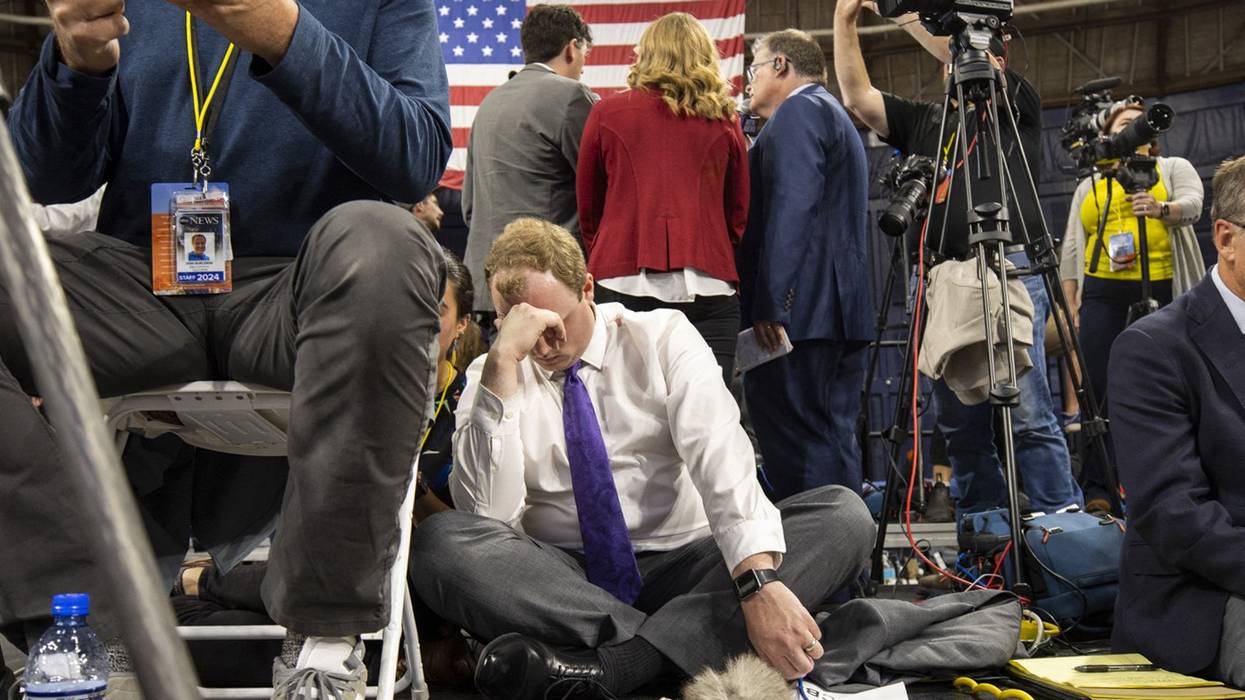
Known for its World Press Freedom Index, the global advocacy group Reporters Without Borders on Tuesday turned its attention to four U.S. states that are expected to be crucial in deciding the winner of the presidential election next week—and found that journalism is grappling with numerous crises in states where voters are especially reliant on the media in the last days of the campaign.
The group, also known by its French name, Reporters Sans Frontières (RSF), focused on Arizona, Pennsylvania, Florida, and Nevada in the report, titled Press Freedom in the Swing States: The Climate for U.S. Journalism Ahead of the 2024 Election, and found that journalists they surveyed were concerned about hostility from local and state officials as well as the "economic viability" of local newsrooms and individual reporters.
"There can be no democracy without press freedom, so it's critically important to understand the issues confronting the news media in the places that are most pivotal in American presidential elections," said Clayton Weimers, executive director of RSF USA.
Across the swing states, 94% of respondents said they have found that public officials ignore public records requests or stall in providing records, making reporting difficult and robbing news consumers of information. Arizona officials were found to be the most "egregious offenders," and the state had the lowest overall political score in the report.
The report comes days after Republican presidential candidate Donald Trump said at a rally in Arizona that the press is "the enemy of the people"—recycling comments he frequently made during his presidential term.
Eighty-five percent of journalists in Arizona reported that "leading politicians and political party leaders explicitly insult, threaten, or incite hatred against journalists" and "act in an antagonistic manner towards the media."
"The hostile political environment for the press exacerbates the economic pressures facing media outlets."
But Arizona was one of the swing states surveyed that has made an effort to protect journalistic sources, through a shield law that ensures reporters can protect their sources' identities; the Arizona Media Subpoena Law, which restricts subpoenas against journalists; and a recently strengthened anti-SLAPP (strategic lawsuits against public participation) law, which now protects free speech and press freedom.
The same cannot be said for Florida, which does not have a shield law and has only a "vaguely worded" anti-SLAPP measure.
Under Republican Gov. Ron DeSantis, Florida's government has become increasingly hostile to journalists, with DeSantis championing bills to make it easier to sue media outlets.
"The state is withholding public records about the governor's travel," said an anonymous news director interviewed by RSF. "Violent threats to journalists from the public is a weekly regularity."
The report points to attacks on the media by a number of Florida agencies under DeSantis, including a letter from the state health department to a Tampa TV station that threatened the general manager with jail time if the station aired an ad promoting an abortion rights-focused ballot initiative.
"The hostile political environment for the press exacerbates the economic pressures facing media outlets," said RSF. "It likely also contributes to Florida's serious news desert problem. Over 300,000 Floridians have no local news source, the third highest figure of any U.S. state."
Annual wage data for Florida was not available to RSF, but reporters in Pennsylvania told the group that their biggest concerns are economic and center on whether journalists in the state will be able to continue providing their audiences with news that could affect their lives.
Eight-one percent of respondents in Pennsylvania said that "the average media outlet struggles economically and that journalists are generally unable to earn a living wage." The median wage for journalists in the state is barely half Pennsylvania's living wage, according to the report.
Ninety-four percent of journalists and media experts in the Keystone State also said they were concerned about animosity from politicians and the public, with reporters facing "persistent online harassment" and some reporting a bomb threat that targeted a newsroom, "being followed by unknown agitators," and one incident in which journalists were "in the sights" of a rooftop militiaman with a rifle.
"County commissioners and much of the GOP establishment will not speak with us because they believe we are biased against them, mainly because we reported on local [January 6 rioters], on our congressman voting against certifying Pennsylvania electoral votes in 2020, and our continued reporting on religious and right-wing groups inciting hate against LGBTQ people and all the associated campaigns, such as banning books from school libraries and changing school curricula," one editor told RSF.
Nevada had the highest overall press freedom score, with strong anti-SLAPP laws, widespread news distribution and few news deserts, and a median reporter salary slightly exceeding the state's living wage.
But 80% of respondents in the state said officials stall or ignore public records requests all or most of the time.
Several of RSF's recommendations for legislators centered on increasing government transparency to better allow journalists to do their jobs and to serve the public interest. The group called on legislators to:
To help newsrooms cope with volatile economic conditions and dwindling resources, RSF said state legislatures should "innovate new models" including increased public funding, tax rebates for news subscriptions, and policies requiring social media companies to compensate the news media for using their content.
"RSF," said Weimers, "hopes that this report will provide a starting point for all Americans to demand improvements in their states' media ecosystems: greater transparency, better access to information, and a marketplace that enables journalism to thrive."

For example, where is Lebron James now? As far as I can tell, he has said little about the presidential race despite the incredibly high stakes of next week's election.
Back in 2020--during the BLM protests following the murder of George Floyd—NBA and especially WNBA support for the Biden-Harris campaign played an important role.
Now Kamala Harris—the first Black woman to run as a major candidate—has a very real chance of winning the presidency.
And she is running against a Donald Trump that is even more racist, and angry, than he was in 2020, spreading lies about the Haitian community, promising to deport 11 million undocumented immigrants, and publicly calling for a “very rough day” in which police could violently punish suspected criminals—a nod to the racist police brutality that sparked the 2020 protests. He even ranted against President Biden for rescuing WNBA star Britney Griner from Putin’s Russian prison.
This would seem to be an all-hands-on-deck moment for the NBA and WNBA, many of whom care deeply about these things and often act on their convictions. Yet little seems to be happening, especially compared to 2020.
An active campaign by top NBA and WNBA players to support Harris could have a major impact in mobilizing voters...
There are some promising signs.
Back in July many high-profile WNBA players publicly backed Harris.
Both Steve Kerr and Steph Curry publicly endorsed Harris at the DNC Convention in Chicago (both enjoy a Bay-area connection to Harris, a Golden State Warriors fan).
An Athletes for Harris group was recently formed, whose co-chairs include Earvin “Magic” Johnson, Steve Kerr, Candace Parker, Doc Rivers, Dawn Staley, and Chris Paul. Johnson spoke clearly for the group, declaring: “I’m so happy to be a part of Athletes for Harris . . . For all of the athletes out there, don’t be afraid to use your platforms – we need all of you to get involved.”
These things matter.
But there was so much more in 2020.
Back in 2018, when LeBron James was scolded by Laura Ingraham to “shut up and dribble,” he responded: "I get to sit up here and talk about social injustice. We will definitely not shut up and dribble. ... I mean too much to society, too much to the youth, too much to so many kids who feel like they don't have a way out.” In July of 2020 he joined with other players to form “More Than a Vote.” The following month he publicly praised Biden for nominating Harris as his vice-presidential candidate. In October he endorsed the ticket. And in November, he celebrated the Biden-Harris ticket victory.
But where is James now? As far as I can tell, he has said little about the presidential race.
In August, James publicly turned over leadership of “More Than a Vote” to Nneka Ogwumike--a 9-time WNBA All-Star and current president of the players union. The group pledged to focus its attention on reproductive freedom—a theme obviously resonant with the Harris campaign, as James alluded: “I started More Than a Vote to give athletes a place to educate themselves and get active authentically to who we are. It’s only right that this election be about women athletes. We’re all following their lead right now and Nneka is the perfect person for this election. I’m excited to support her vision.” But neither James nor “More Than a Vote” has publicly endorsed Harris. The group’s Instagram account features powerful posts on reproductive freedom, but nothing about the election, even though Trump opposes reproductive freedom and it is the centerpiece of the Harris campaign.
To be fair, like “More Than a Vote,” the NBA has “teamed up” with Power the Polls to promote poll worker volunteerism, and has also promoted non-partisan voter registration. But this is a far cry from making a strong political statement or endorsing the Harris-Walz campaign.
An active campaign by top NBA and WNBA players to support Harris could have a major impact in mobilizing voters, especially in large cities of hugely important swing states. Cleveland, Philadelphia, Detroit, Milwaukee, Atlanta, Charlotte, Phoenix—these are cities with major NBA and/or WNBA teams that feature some of the sport’s most revered stars.
Is there a television network in the country that would say “no” to interviews with James or Curry or A’ja Wilson or Breanna Stewart or Candace Parker? Where is the Kamala campaign ad featuring “Magic” Johnson and Kareem Abdul-Jabbar? Where is the warm-up gear with the slogan “Kamala, We Won’t Go Back?”
One very promising development: Stephen Jackson and Matt Barnes, two outspoken retired NBA champions, recently hosted Harris on their popular webcast, “All the Smoke.” The 47-minute interview has had 605,000 YouTube viewings in two weeks. It’s a great interview, highlighting Harris’s affinities with millions of NBA fans.
Professional basketball is big business, for the league and for its players. There are serious economic risks to being “too political,” as the recent controversy surrounding Celtics star Jaylen Brown’s exclusion from the U.S. Olympic team because of a dispute with Nike make clear. And NBA professionals are certainly no more “obliged” to take a stand than any other professionals or citizens.
At the same time, many NBA stars, and increasingly WNBA stars as well, are huge celebrities with their own “brands” and media companies. As James himself stated back in 2018, “the Association” furnishes a huge platform for professional athletes to promote social and racial justice. In 2020 these athletes very visibly, and heroically, used this platform at a moment of real decision.
The current moment is perhaps even more serious.
Kamala Harris represents the promise of social justice and democracy.
Donald Trump represents contempt for them and contempt for everyone who does not share his racist and xenophobic vision of “American Greatness.”
The choice is clear. And time is running out.
The policy that Harris has defended for the war on Gaza is despicable, yet she is the only candidate who can spare us from another Trump presidency, which—from all indications—would be far worse than the first one.
With Election Day just three weeks off and voting already underway in some states, the race for president is down to the wire. Progressives could make the difference.
While no one in their left mind plans to vote for the fascistic and unhinged former U.S. President Donald Trump, some say they won’t vote for Vice President Kamala Harris because of her loyalty to President Joe Biden’s support for the Israeli war on Gaza. That might enable Trump to win with enough electoral votes from swing states—Arizona, Georgia, Michigan, Nevada, North Carolina, Pennsylvania, and Wisconsin.
Those seven states are where progressives may well hold the future in their voting hands.
If it becomes a reality, the Trump-Vance administration will force progressives back on their heels, necessarily preoccupied with trying to mitigate the onslaught of massive damage being inflicted by right-wing zealots with vast government power.
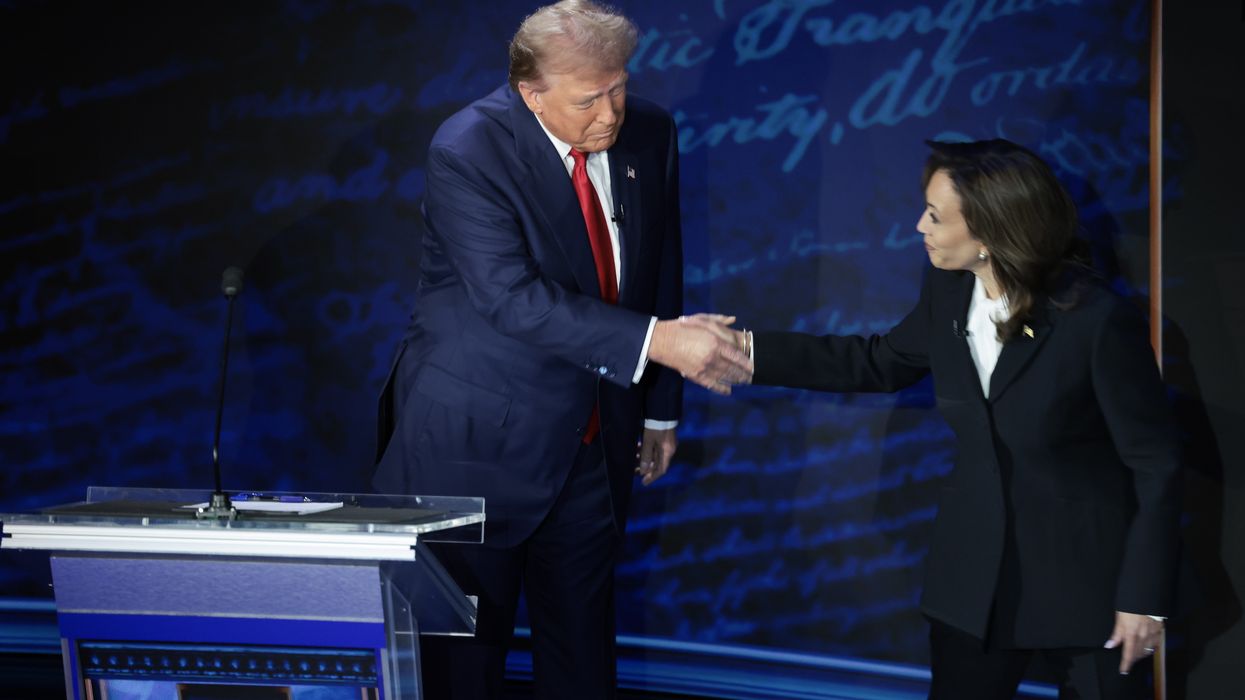
The policy that Harris has defended for the war on Gaza is despicable. At the same time, she is the only candidate who can spare us from another Trump presidency, which—from all indications—would be far worse than the first one.
The need is urgent for dialectics—“a method of examining and discussing opposing ideas in order to find the truth”—in this case, the truth of what’s most needed at this electoral crossroads of fateful history.
“The harms of the other options” mean that the best course of action is to vote for Harris, 25 Islamic clerics said in a letter released last week. They focused on an overarching truth: “Particularly in swing states, a vote for a third party could enable Trump to win that state and therefore the election.” The U.S. clerics called such a vote “both a moral and a strategic failure.”
Personally, as a resident of solid-blue California, I have no intention of voting for Harris. But if I lived in one of the seven swing states, I wouldn’t hesitate to join in voting for her as the only way to defeat Trump.
Some speak of the need to exercise conscience rather than voting for Harris. Yet in swing states, what kind of “conscience” is so self-focused that it risks doing harm to others as a result of a Trump presidency?
If it becomes a reality, the Trump-Vance administration will force progressives back on their heels, necessarily preoccupied with trying to mitigate the onslaught of massive damage being inflicted by right-wing zealots with vast government power.
On domestic policies—involving racism, reproductive rights, civil liberties, the environment, climate, labor rights, the social safety net, civil rights, voting rights, LGBTQ rights, freedom of speech and the right to organize, the judicial system, and so much more—the differences between the Trump and Harris forces are huge. To claim that those differences are insignificant is a nonsensical version of elitism, no matter how garbed in leftist rhetoric.
On foreign policy, Harris is the vice president in an administration fully on board with bipartisan militarism that keeps boosting the Pentagon budget, bypassing diplomacy for ending the Ukraine war while stoking the cold war, and—with vast arms shipments to Israel—literally making possible the ongoing genocide in Gaza.
At the same time, anyone who thinks that Trump (“finish the job”) wouldn’t be even worse for Palestinian people—hard as that is to imagine—doesn’t grasp why Israel’s Prime Minister Benjamin Netanyahu is so eager for Trump to win.
The leadership of the Uncommitted Movement has sorted out the political options. The terrain was well described by Uncommitted leader Abbas Alawieh, who said last month: “At this time, our movement opposes a Donald Trump presidency whose agenda includes plans to accelerate the killing in Gaza while intensifying the suppression of anti-war organizing. And our movement is not recommending a third-party vote in the presidential election, especially as third-party votes in key swing states could help inadvertently deliver a Trump presidency, given our country’s broken Electoral College system.”
As his frequent collaborator C.J. Polychroniou noted last month, Noam Chomsky “has repeatedly made the argument that voting for a third-party or independent candidate in a swing state would accomplish nothing but increase the possibility of the most extreme and positively nuts candidate winning the election.”
In an interview with Jacobin a few weeks ago, Alawieh had this to say:
As someone who has family who lives in South Lebanon right now—who are living under the terror of U.S. weapons raining down on them from the Israeli military—I do not have the luxury of giving up on the only one of the two major parties where there is room for this debate. To be clear, there’s room for this debate not because the Democratic Party is friendly to Palestinian human rights. There’s room for this debate because A) the Republican Party is not the party where we can have this conversation; not a single federal elected official on the Republican side even supports a cease-fire as this genocide has raged on, and B) the Democratic Party speaks of being the party of justice and inclusion, and there are more and more of us within the party who are insisting that the party change its immoral and illegal support of sending weapons to harm and kill civilians.
Similarly, another prominent Uncommitted Movement leader, Palestinian American Layla Elabed, said: “We urge Uncommitted voters to register anti-Trump votes and vote up and down the ballot. Our focus remains on building this anti-war coalition, both inside and outside the Democratic Party.”
This is certainly not the presidential election that we want, but it’s the one we have. The immediate task is to prevent a Trump victory. His defeat is essential to keep doors open for progressive change that a new Trump presidency would slam shut with extreme right-wing power.

"The polls are tight and the Electoral College is rigged to give Trump an edge, but Our Revolution can turn the tide by turning out progressive voters in key battleground states."
Just over a month away from the U.S. general election, the largest progressive political organizing group in the country announced Friday that it is aiming to encourage 5 million voters in seven battleground states to vote against former Republican President Donald Trump.
Our Revolution hopes to reach voters in Arizona, Georgia, Michigan, North Carolina, Nevada, Pennsylvania, and Wisconsin via door-knocking, phone calls, and text messages ahead of the November election, in which Trump is facing Democratic Vice President Kamala Harris.
The get-out-the-vote effort comes after surveying over 1,400 Our Revolution members who live in swing states. The results, the group said, "present worrying signs for the Harris campaign" and "suggest that the Trump campaign is actively engaging young and progressive voters."
Joseph Geevarghese is the executive director of Our Revolution, which grew out of U.S. Sen. Bernie Sanders' (I-Vt.) 2016 campaign for the Democratic presidential nomination. The group leader said Friday that "the polls are tight and the Electoral College is rigged to give Trump an edge, but Our Revolution can turn the tide by turning out progressive voters in key battleground states."
In the 2020 election, President Joe Biden "narrowly beat Trump by less than 300,000 votes in these states four years ago, which means that our 1.2 million supporters in the swing states could be the margin of victory in 2024," Geevarghese noted.
"After hearing from progressive swing state residents and our organizers on the ground, we are sounding the alarm on the lack of enthusiasm amongst this key voting bloc," he added. "In the coming weeks, Our Revolution will continue urging the Harris campaign to release bold policy plans aimed at motivating the party's progressive base, and we are committed to doing everything we can to mobilize support against another disastrous Trump presidency."
As the group detailed Friday, its polling—first reported by Semafor—found:
Since the president passed the torch to Harris this summer following a disastrous debate performance against Trump, she has racked up endorsements from leading groups, including People's Action, Popular Democracy, and the Working Families Party. Harris won the first-ever endorsement of the youth-led gun violence prevention movement March for Our Lives and has support from various reproductive rights, labor, and climate organizations—even some that declined to back Biden.
However, the International Brotherhood of Teamsters declined to endorse for the first time since 1996, and the Uncommitted National Movement—which is critical of U.S. support for Israel's annihilation of Gaza—announced last month that "Harris' unwillingness to shift on unconditional weapons policy or to even make a clear campaign statement in support of upholding existing U.S. and international human rights law has made it impossible for us to endorse her."
Uncommitted also made clear that it "opposes a Donald Trump presidency, whose agenda includes plans to accelerate the killing in Gaza while intensifying the suppression of anti-war organizing," and "is not recommending a third-party vote in the presidential election, especially as third-party votes in key swing states could help inadvertently deliver a Trump presidency given our country's broken Electoral College system."
Despite recent polling that suggests U.S. voter support for Harris would grow if she backed an arms embargo against the Israeli military, Harris is not making clear attempts to win over Uncommitted voters. Leaders from the movement told Reuters that they were not invited to her Friday meeting with Arab American and Muslim leaders in Flint, Michigan.
Efforts to convince Michigan voters to support Harris will continue this weekend. Sanders and United Auto Workers president Shawn Fain—whose union endorsed her this summer—have three events in the state in the coming days. They plan to talk about corporate greed, healthcare, and manufacturing in the state.
Meanwhile, Harris this weekend plans to head to North Carolina, which was just devastated by Hurricane Helene.
The Sunrise Movement—a youth-led climate group that launched a campaign to defeat Trump and reach 1.5 million young swing state voters in August—intends to boost efforts to elect Harris in the weeks ahead, specifically focusing on North Carolina.
"Young climate voters could decide the election in North Carolina and put Harris over the edge," Sunrise organizer Paul Campion said in a statement Friday. "We're focused on reaching a group of 84,000 young voters between the ages of 18 and 26 who are very concerned about climate change but aren't regular voters. We're talking with them about the devastation of Helene and how Donald Trump's Project 2025 agenda would worsen the climate crisis, making disasters like Helene more frequent and severe."
Shiva Rajbhandari, a North Carolina student organizer, said that "people are angry. We're watching homes be swept away, entire towns consumed by floodwaters, and Donald Trump is joking about how climate change will create more waterfront property."
"Big Oil just murdered 200 people," the 20-year-old declared. "People know who's responsible for the climate crisis, and we're going to hold them accountable in November."
"With 102 deniers on election boards in the swing states, the potential for creating chaos is enormous."
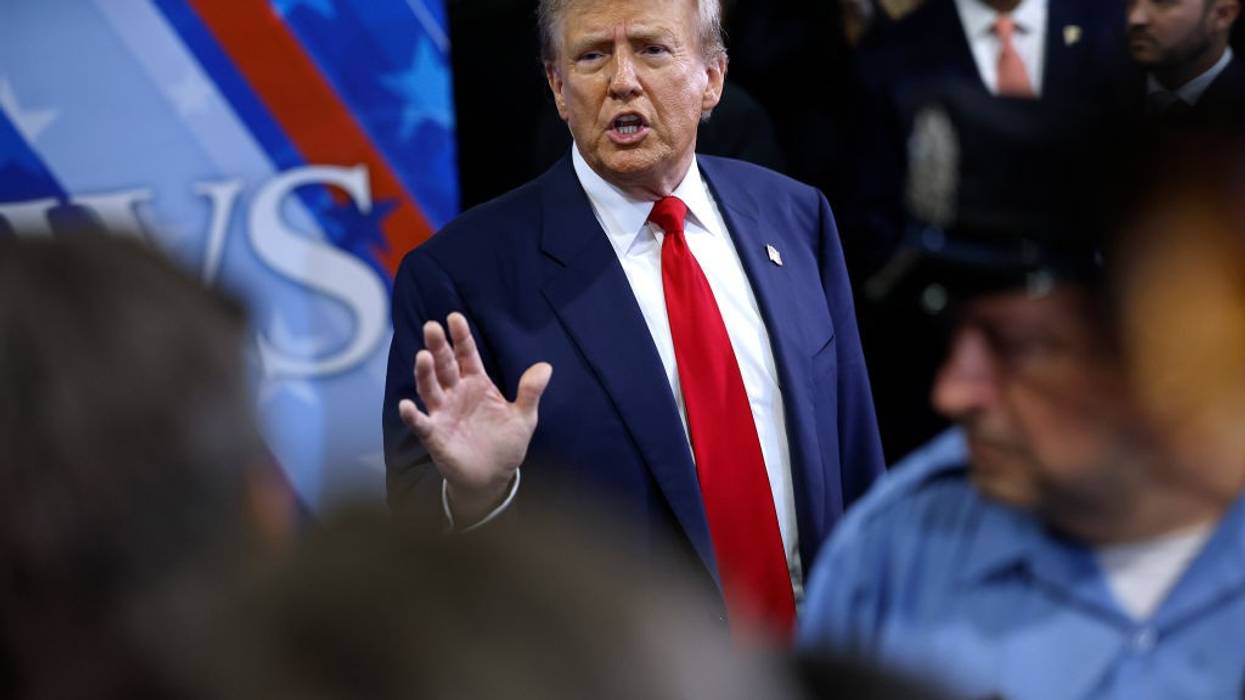
More than 100 election officials across eight swing states in the U.S. presidential race have engaged in partisan election denial in recent years, raising fears they could try to turn the November result in favor of Republican nominee Donald Trump, according to a report released Friday.
The 88-page report, produced by the Center for Media and Democracy (CMD), details the election denial history of 102 county and state election officials in Arizona, Wisconsin, Georgia, Nevada, New Mexico, North Carolina, Pennsylvania, and Michigan. The authors found that election deniers have majority control of 15 county election boards in those states and of the statewide board in Georgia.
"What was striking to us about our research is how much election denialism and the voter fraud lie have infiltrated and taken over the Republican apparatus in each of these critical states," Arn Pearson, CMD's executive director, told The Guardian.
"With 102 deniers on election boards in the swing states, the potential for creating chaos is enormous," Pearson added.
The three Republicans on the five-member Georgia state election board support Trump's baseless claims that the 2020 election was rigged. Last month, they changed the rules so that they'd have more power to refuse or delay certifying election results while conducting unspecified investigations, and they appear to be preparing more rules changes before November 5.
Trump recently commended the three Republicans by name at a rally in Atlanta, saying they were "on fire" and were "pit bulls fighting for honesty, transparency, and victory."
In 2020, Trump lost to President Joe Biden, a Democrat, by only about 12,000 votes in Georgia, one of the states expected to be closely contested again this year as the Republican former president faces off against Vice President Kamala Harris, the Democratic nominee.
Trump faces criminal charges in Georgia for trying to interfere in the 2020 presidential election. Four other defendants in the felony racketeering case have already pleaded guilty.
Marc Elias, an election lawyer who advises the Harris campaign, said the new rules in Georgia were "somewhere between insidious and insane." He and many other experts have emphasized that election boards are not meant to carry such power. Making a football analogy, Elias said that the rules gave "the scoreboard operator the opportunity to investigate for themselves whether a touchdown was scored," as he told The New Yorker Radio Hour.
Partisan conspiracy theories among election officials go well beyond Georgia, the CMD report shows. Pennsylvania has 29 election administration officials loyal to Trump—the most of any of the eight states—and they control the boards in seven counties there, the report says.
The report looks not just at election officials but also other Republican "election deniers" including U.S. congressional candidates and party officials from the eight states. The authors found 239 election deniers including the 102 election board officials.
CMD defined someone as an "election denier" if they had done any of the following: "denying that Joe Biden was the legitimate winner of the 2020 presidential election"; "espousing baseless claims or conspiracies about election and voter fraud during the 2020 election or subsequent elections"; "refusing to certify election results, or calling on others to refuse to certify, based on unfounded accusations of interference or fraud"; "expressing support for partisan or 'forensic' audits of 2020 election results"; "filing or expressing support for litigation aimed at overturning election results"; "participating in or supporting the January 6, 2021, assault on the U.S. Capitol or 'Stop the Steal' events."
Experts differ on whether Republican efforts to subvert the election, should Trump lose, will be more or less effective than in 2020.
"Our democracy's firewalls held fast in 2020, but election deniers and MAGA extremists have spent the last four years infiltrating election administration and political party positions in order to disrupt and cast doubt on the 2024 election results," Pearson said in a statement accompanying the report.
However, officials not loyal to Trump have also had more time to prepare for potential election interference, and the Electoral Count Reform Act, passed by Congress in 2022, could make it harder for Trump's efforts to succeed, experts say.
Pearson indicated that Trump's allies on election boards may not ultimately succeed at overturning the election but could sow doubt that damages democracy.
"While it is highly unlikely that these officials, along with deniers in Congress, will be able to prevent certification of the 2024 election results, they are in a prime position to force litigation and delay what should be a ministerial task while they and their allies whip up false claims of voter fraud, noncitizen voting, and a stolen election," he said.
CMD's report follows those of many other media outlets and watchdog groups in recent months, with broadly similar findings, if different exact figures. A CBS News investigation in May found 80 election-denying officials in seven battleground states. Rolling Stone and American Doom found nearly 70 in six states in July. And last month, Citizens for Responsibility and Ethics in Washington issued a detailed report identifying 35 "rogue" officials.
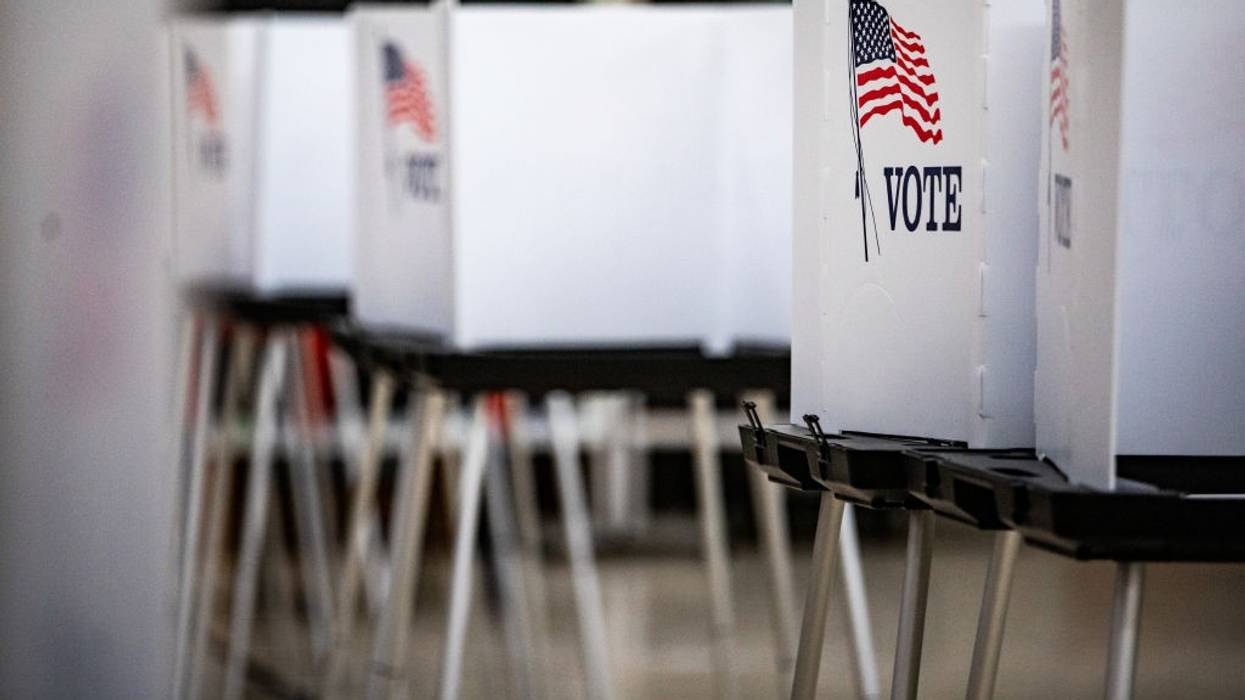
"I think there's almost no question that this is going to happen," an expert said of county official obstructionism in 2024. "And it seems to be happening in a way this year that is more systematic than it has been in the past."
Citizens for Responsibility and Ethics in Washington, a watchdog group, released a report on Monday showing that 35 county officials around the country who've previously tried to subvert election results are still in place to do so.
The 113-page report not only identifies "rogue" election officials who pose a risk of obstructing the certification process in order to help Republican nominee Donald Trump but also includes state-by-state and federal election law analysis meant to help thwart such obstructionism. CREW's state-level analysis covers eight key swing states.
CREW warned that county officials in the eight states—Arizona, Colorado, Georgia, Nevada, New Mexico, North Carolina, Pennsylvania, and Michigan—have refused to certify results in elections of relatively little consequence as a test run for obstructing the consequential 2024 election, in case they dislike the results.
"I think there's almost no question that this is going to happen," Noah Bookbinder, CREW's president, said of the obstructionism on The Rachel Maddow Show Monday night. "And it seems to be happening in a way this year that is more systematic than it has been in the past. So that's deeply, deeply concerning."
"The good news is it's clearly illegal in all of these states and there are steps that can be taken to effectively halt it," he said.
Since 2020, threats to election certification have only escalated, including in Arizona, Colorado, Georgia, Nevada, New Mexico, North Carolina, Pennsylvania and Michigan.
We broke down what can be done to protect the 2024 election in our new report: https://t.co/8tLK0D7aV3
— Citizens for Ethics (@CREWcrew) August 13, 2024
The report makes it clear, as previous nonprofit research has done, that election certification is not optional or discretionary: it is a ministerial duty. The authors wrote:
It is not an opportunity for county officials to politically grandstand, lodge protest votes against election practices they dislike or investigate suspected voter fraud," the report says. "State laws provide robust mechanisms outside of the certification process—including recounts, audits, evidentiary hearings before state election boards, and election contests in court—to investigate suspected fraud and errors. These are the legally-designated avenues for resolving the rare cases where genuine problems arise in an election, not the certification process.
The authors also explained that certification is just one stage in a multi-step process and must be done in a timely fashion to avoid disruptions, which could feed conspiracy theories.
Many of the laws pertaining to the certification role of election officials date back to the turn of the 20th century, when they were passed in order to stop partisan election deniers of that era, the report says.
Democrats have been especially concerned about election obstructionism since 2020, when then-President Trump tried to subvert and discredit the presidential election results—making false claims about voter fraud—after his reelection bid failed. That effort culminated in a violent insurrection at the U.S. Capitol on January 6, 2021, as the U.S. Congress was preparing to certify the results.
Many county officials around the country, presumably feeling they had license given Trump's rhetoric, also voted against or delayed certification in 2020, but their efforts were unsuccessful due to being outvoted or legally forced to certify.
However, Republicans intent on winning at all costs are more organized this year, and there's more emphasis on the county level, CREW warned.
"The legal ground game that was brought to bear against certifying the election in 2020 was junior varsity compared to what we are going to see this year," Joshua Matz, a lawyer on the board at CREW, told The Guardian. "There is now a much better organized, much more sophisticated, far better funded and far more intentional effort to thwart the smooth and steady certification of election results required by the law."
The CREW report includes information on each of the 35 rogue officials, including their names and their stated reasons for refusing to certify one or more elections; many of them are included on the list because they tried to obstruct elections in the past two years.
Some of the county officials who've refused to certify elections have given reasons that are "brazenly lawless," the report says. In North Carolina, two officials voted against certification as a form of protest, and in Arizona two officials voted to delay certification as a "political statement." In other cases, in Georgia and Pennsylvania, obstructionist officials have offered a "veneer" of legal justification, the report says.
Very few county officials have faced legal consequences for their efforts to subvert the election process.
The CREW authors argued that the federal government needs to be ready to step in to enforce the Voting Rights Act and other laws.
"Because the states administer elections, they are the first lines of defense against county-level certification subversion," the report says. "But the federal government also has a vital role in enforcing relevant federal statutes and constitutional provisions protecting the right to vote. Thus, if a state is unable or unwilling to take action against rogue county officials who threaten to disenfranchise voters in violation of federal law, the U.S. Department of Justice should intervene."
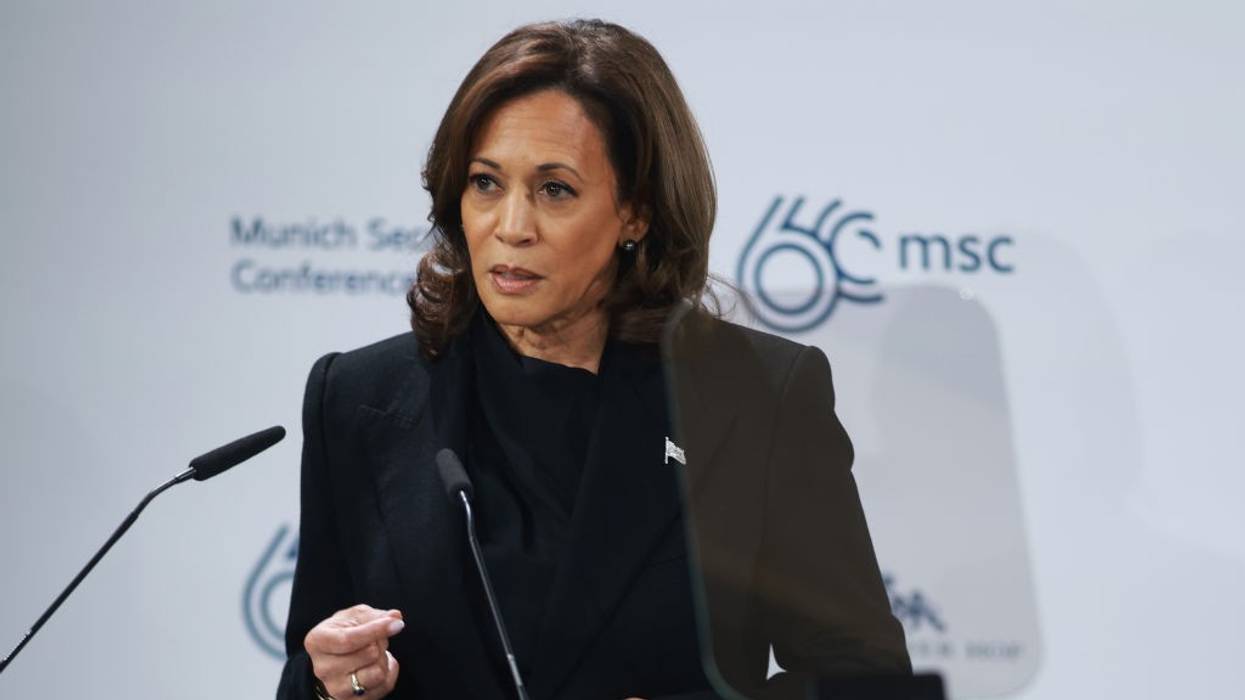
By fully charting a new course on Gaza policy, Vice President Harris can build on this goodwill, win back the support of American Muslims and other voters in key swing states and, ultimately, save the country from another Trump presidency.
In the weeks leading up to President Biden's withdrawal from the presidential race, most of the editorial boards, party activists, and elected officials calling for him to end his reelection campaign focused on only one issue: age.
But there was another reason President Biden needed to drop out: Gaza.
Long before President Biden's debate meltdown sparked panic in the Democratic establishment, his support for the Israeli government's war in Gaza sparked outrage in the Democratic base, where 56 percent of the party's supporters have described the war as a genocide.
At least half a million Democratic voters protested President Biden's support for the Gaza genocide by voting uncommitted or submitting blank ballots during the presidential primaries earlier this year, including over 100,000 people in Michigan, 88,000 in North Carolina and 46,000 in Minnesota.
Over 1 in 5 Democrats or independents in key swing states said they were less likely to vote for President Biden due to the war, according to a YouGov-AJP-Action poll in May. Over a quarter of those voters said that an immediate and lasting ceasefire, full entry of humanitarian aid to Gaza, and conditions on military aid for Israel’s war were the minimum policy changes needed to secure or solidify their votes for Biden.
Vice President Harris has already neutralized the concerns of voters worried about President Biden's age. Now she must address the concerns of voters who opposed his support for the war on Gaza.
Many Democratic voters were alienated even more by President Biden's failure to call out reports of anti-Palestinian racism and Islamophobic violence with the same fervor he uses to call out reports of antisemitic rhetoric, as well as his criticism of the diverse, overwhelmingly peaceful student protests on college campuses.
Frustrated voters included Muslim Americans, Arab Americans, Black Americans, young people and others who helped carry him to victory in 2020. If those voters ended up supporting third party candidates or boycotting the presidential race altogether in November—as some promised to do if Biden remained on the ticket and did not change course—they could have easily tipped the results in Michigan and other key swing states.
Now that President Biden has withdrawn from the presidential race, Vice President Kamala Harris has a chance to turn the page, chart a new course, and win back those voters, including American Muslims.
That's what our coalition of American Muslim political organizations is calling on her to do.
Vice President Harris has already neutralized the concerns of voters worried about President Biden's age. Now she must address the concerns of voters who opposed his support for the war on Gaza.
Many American Muslims are open to supporting Vice President Harris if she distances herself from President Biden's Gaza policy, respectfully engages with all of our community leaders, picks a vice presidential nominee who does not have a history of explicit hostility towards our community like Governor Josh Shapiro, and commits to concrete policy proposals that would stop the genocide, end the broader occupation of the Palestinian people, and establish a just peace.
Taking these steps will set her apart from not only President Biden, but also from President Trump.
Most American Muslims do not want Donald Trump to return to office for perhaps obvious reasons. The former president has made it clear that he plans to round up undocumented immigrants as part of the largest mass deportation in American history, reinstate the Muslim Ban, stack the federal civil service with political loyalists, and pursue a foreign policy just as or even more, immoral than President Biden’s foreign policy.
During the presidential debate, President Trump even said that the Israeli government should be allowed to complete its war on Gaza, ignored the question of whether he would support the recognition of a Palestinian state to achieve peace, and weaponized Palestinian identity as a racist insult.
After President Trump's speech at the RNC, Republican Jewish Coalition CEO Matt Brooks reportedly said that he believes Trump will give the Israeli government a "blank check" to “finish the job quickly” in Gaza.
“If you need to carpet bomb the area, do it," Brooks said.
Vice President Harris now has the opportunity to contrast herself with Trump on this issue in ways President Biden could not. She has already built up some goodwill in the American Muslim community by using a noticeably more humane tone when discussing Palestinian suffering compared to others in the administration.
She just took heat from the far-right Zionist Organization of America, which ridiculously accused her of embracing "Arab Islamist criminality" because she dared to express some understanding of college students protesting the war on Gaza.
This week, Vice President Harris also declined the opportunity to sit behind Benjamin Netanyahu during his controversial address to Congress. After privately meeting with him on Thursday, Harris delivered remarks about Gaza that were far more balanced and humane than anything Joe Biden has said in nine months.
By fully charting a new course on Gaza policy, Vice President Harris can build on this goodwill, win back the support of American Muslims and other voters in key swing states and, ultimately, save the country from another Trump presidency. She must not miss this opportunity.
In the wake of Super Tuesday, you can find one of two Bernie Sanders articles on the internet. You have those writing his obituary, telling voters it's over and it is time to support Hillary Clinton, no questions asked, simply fall in line with the party and obey your marching orders. Then you have the overly optimistic that wants to explain how even after losing to Clinton, somehow Sanders still won.
These are generally well-meaning exposes that focus on the states that Sanders won, which are mainly Democratic and swing states, states needed in the general election, versus Clinton's wins in conservative states, states that the Democrats won't win in the general election, making those state victories all but meaningless.
Yet, even with history on the side of Clinton, saying that every politician who wins on Super Tuesday goes on to win the nomination, this race is far from over the nomination is not yet secure. This rings true for both parties, but it is important for Sanders supporters to tune out the media telling them the race is over and to continue to show up in the over 30 remaining states that need to cast ballots in these primaries.
However, even if the race does go the way of Clinton, Sanders supporters, democrats, socialists, and democratic socialists alike should use Sander's campaign as momentum for the future. At the point where we stand now, Sander's version of a political revolution took place. Young voters, for the first time, had a candidate they could rally behind and not look at as the lesser of two evils and instead saw a candidate they can truly believe in and were shown a vision of the country that is possible if they try. While President Obama tried to do this in both 2008 and 2012, he never laid out such a revolutionary vision as Sanders has.
Tomorrow's left will not be the establishment left that continues to pander to the center-right and feels the need to give up freedoms and rights to make the establishment right satisfied. This breed of liberals would not dream of taking single-payer off the table when discussing health care reform and would never allow insurance companies to wield the kind of power they continue to have over Americans.
Win or lose, Sanders opened the floodgates that will lead to the toppling of the establishment party that is fighting tooth and nail to crown Clinton as president. Clinton and her allies in Congress should be shaking. Their days in office are numbered. Sander's shake-up of this status quo is only the beginning. Kshama Sawant, a Seattle-based socialist who was elected to the city council, will no longer be the odd person out. She will become the norm as socialists and radical leftists take office from city councils, state senates, and even Congress.
This is a dream many of never thought possible in our lifetime, yet because Bernie Sanders decided to take on the establishment like never before, we are finally seeing voters ready to enact real change. The trick now is continuing that momentum even if it has to be done without Sanders running for office. His campaign it of itself was revolutionary when compared to the campaigns of the last 20 to 30 years, and as revolutionists, it is our duty to push that revolution forward.
Even while Sanders never stood for demolishing capitalism, he shined the brightest light on its flaws and showed that there is a better way of doing things. He took the dirtiest word in American politics, socialism, and turned it back into a word with power, with vision, and with importance.
It is now up to us to stand behind the banner of socialism that has been raised above the American people and march forward and say loudly we won't support the bigoted regimes of the Republican Party and won't line up to support a war hawk-like Hillary Clinton and instead show the world we are going to shape a new future for this country and demand change and then in no uncertain terms, make it a new reality.