

SUBSCRIBE TO OUR FREE NEWSLETTER
Daily news & progressive opinion—funded by the people, not the corporations—delivered straight to your inbox.
5
#000000
#FFFFFF
To donate by check, phone, or other method, see our More Ways to Give page.
Daily news & progressive opinion—funded by the people, not the corporations—delivered straight to your inbox.
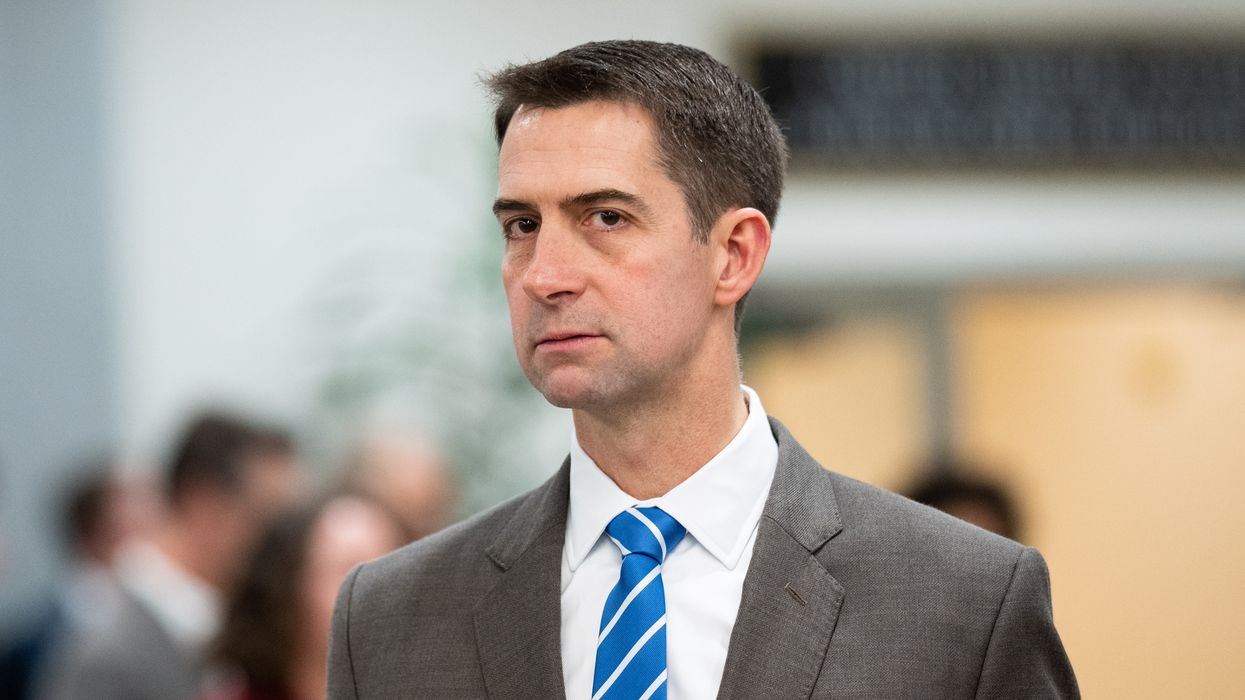
Responding to the GOP senator's latest thwarting of the PRESS Act, Democratic Sen. Ron Wyden vowed to "keep trying to get this bill across the finish line" before Republicans take control of the Senate next month.
Republican U.S. Sen. Tom Cotton of Arkansas on Tuesday again blocked the passage of House-approved bipartisan legislation meant to shield journalists and telecommunications companies from being compelled to disclose sources and other information to federal authorities.
Sen. Ron Wyden (D-Ore.) brought the Protect Reporters from Exploitative State Spying (PRESS) Act—which would prohibit the federal government from forcing journalists and telecom companies to disclose certain information, with exceptions for terroristic or violent threats—for a unanimous consent vote.
Senate Majority Leader Chuck Schumer (D-N.Y.) argued Tuesday that passing the PRESS Act is "more important now than ever before when we've heard some in the previous administration talk about going after the press in one way or another," a reference to Republican President-elect Donald Trump's threats to jail journalists who refuse to reveal the sources of leaks. Trump, who has referred to the press as the "enemy of the people," repeatedly urged Senate Republicans to "kill this bill."
Cotton, who blocked a vote on the legislation in December 2022, again objected to the bill, a move that thwarted its speedy passage. The Republican called the legislation a "threat to national security" and "the biggest giveaway to the liberal press in American history."
The advocacy group Defending Rights and Dissent lamented that "Congress has abdicated their responsibility to take substantive steps to protect the constitutional right to a free press."
However, Seth Stern, director of advocacy at the Freedom of the Press Foundation, noted ways in which Senate Democrats can still pass the PRESS Act before Republicans gain control of the upper chamber next month:
Senate Democrats had all year to move this bipartisan bill and now time is running out. Leader Schumer needs to get the PRESS Act into law—whether by attaching it to a year-end legislative package or bringing it to the floor on its own—even if it means shortening lawmakers' holiday break. Hopefully, today was a preview of more meaningful action to come.
Responding to Tuesday's setback, Wyden vowed, "I'm not taking my foot off the gas."
"I'll keep trying to get this bill across the finish line to write much-needed protections for journalists and their sources into black letter law," he added.
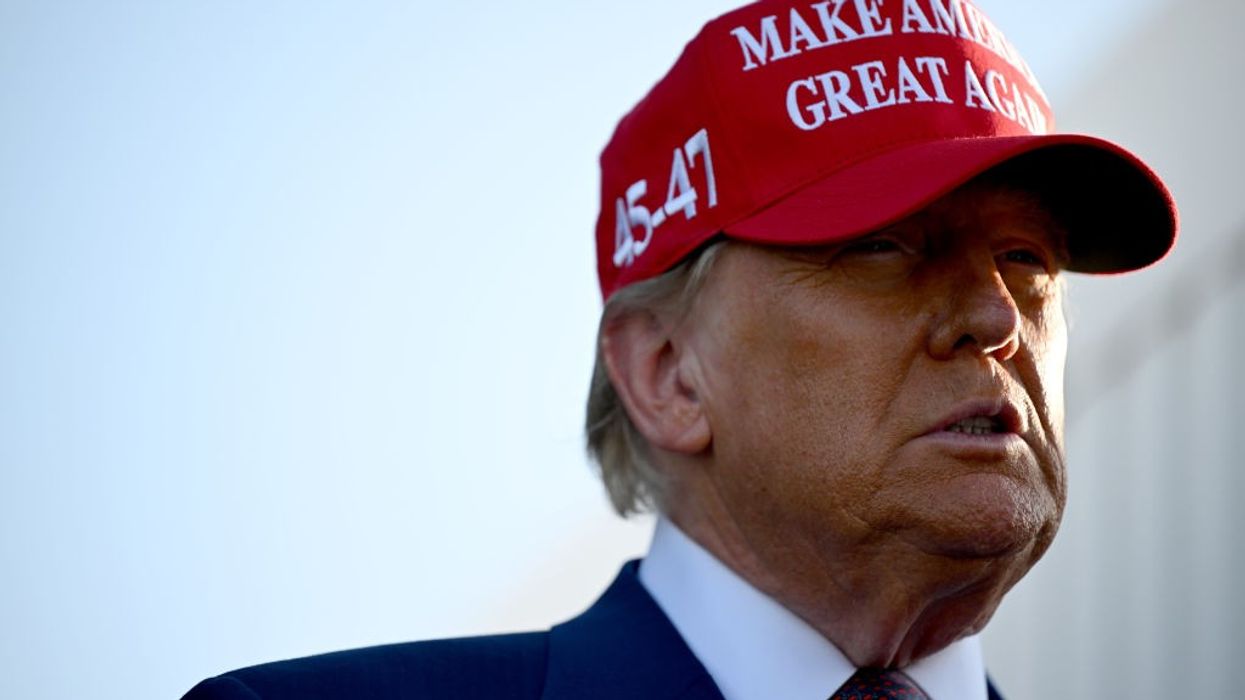
"The fact that Trump is railing against the PRESS Act tells us everything we need to know: He wants no shackles when it comes to attacking, intimidating, silencing the press," warned one legal expert.
Journalists and press freedom advocates this week responded to U.S. President-elect Donald Trump's attack on a proposed federal shield law with renewed calls for the Senate to pass the House-approved bill before he returns to office in January.
"REPUBLICANS MUST KILL THIS BILL!" Trump
said on his social media platform Wednesday, responding to a new "PBS News Hour" segment in which Jodie Ginsberg, CEO of the Committee to Protect Journalists (CPJ), discussed the proposal's importance.
The bipartisan Protect Reporters from Exploitative State Spying (PRESS) Act, which passed the House in January, would bar the federal government from forcing journalists and telecommunications companies to disclose certain information, to protect sources and reporting materials, with exceptions for threats of terrorism or imminent violence.
Several states have various shield laws, but advocates have long pushed for one at the federal level. Given Trump's long-standing hostility toward the press—which he has called "the enemy of the people"—there were fresh demands for Senate action after he won the presidential election earlier this month.
Those same voices have reacted with alarm to Trump's Truth Social post calling on the GOP to block the bill.
Noting that "Democratic administrations abused their powers to spy on journalists many times, too," Trevor Timm, executive director of Freedom of the Press Foundation, told CNN that the president-elect should reconsider his position because "the PRESS Act protects conservative and independent journalists just as much as it does anyone in the mainstream press."
"The bipartisan PRESS Act will stop government overreach and protect the First Amendment once and for all," he said. Timm also highlighted that "much of the reporting Trump likes, from the Twitter files to stories poking holes in the Russiagate conspiracy, came from confidential sources," and the bill is backed by some of the incoming president's congressional allies.
For example, Congressman Jim Jordan (R-Ohio) and Sen. Mike Lee (R-Utah) "are champions of the PRESS Act because it would protect all journalists, including many who reach primarily conservative audiences," he said. "That's good for the public, whether they voted Republican or Democrat."
Earlier this week, before Trump weighed in, Sen. Ron Wyden (D-Ore.), the bill's lead sponsor in the upper chamber, publicly said that "I'll be pushing as hard as I can these next two months to pass my PRESS Act to protect journalists from government spying and surveillance. Anyone who cares about protecting journalism and a free press should contact their senators and ask them to support the bill."
Although the bill has some Republican backers in the Senate, there are also opponents, particularly on the Senate Judiciary Committee, where it has stalled. As The New York Times detailed Wednesday:
The committee, under the leadership of its chairman, Sen. Dick Durbin, Democrat of Illinois, has primarily been focused on approving as many of President [Joe] Biden's judicial nominees as it can before the session ends and Republicans take over leadership of the chamber next year.
The bill has also run into skepticism from several Republican senators, which makes it harder to bring it up for quick passage or to attach it to some other bill, like the Annual Defense Authorization Act.
According to congressional staff, the bill's primary adversary on the Judiciary Committee has been Sen. Tom Cotton of Arkansas, a hawkish Republican who gained public attention as an Army officer in 2006 while serving in Iraq by attacking The New York Times for its publication of an investigative article about a counterterrorism finances program. Another Republican committee member, Sen. John Cornyn of Texas, is also said to have expressed some reservations.
"The fact that Trump is railing against the PRESS Act tells us everything we need to know: He wants no shackles when it comes to attacking, intimidating, silencing the press," said David Kaye, a University of California, Irvine law professor.
"No criticism. No stories of corruption. Memory hole his crimes. Nothing," stressed Kaye, a former United Nations special rapporteur on the promotion and protection of the right to freedom of opinion and expression. "DEFEND DEMOCRACY AND PASS THE PRESS ACT NOW!"
As reporters and media defenders urge passage of the PRESS Act, many are also sounding the alarm over H.R. 9495, a bill that passed the House on Thursday and would empower the Treasury Department to strip nonprofit status from various organizations—including news outlets like Common Dreams—by accusing them of supporting terrorism without due process.
"Today is a dark day for free speech rights and freedom altogether. Make no mistake: The real intention of H.R. 9495 is to give the executive branch extra powers to suppress dissent," Free Press Action policy counsel Jenna Ruddock said in a statement after the House vote on the "nonprofit killer" bill.
"If it's signed into law, the legislation would have a widespread chilling effect not only on nonprofit groups but on the millions of people across the United States who rely on these organizations to help them engage in the political process and access crucial services," she warned. "The bill has dangerously broad statutory language that would allow the incoming Trump administration to interpret its authority in any number of harmful ways."
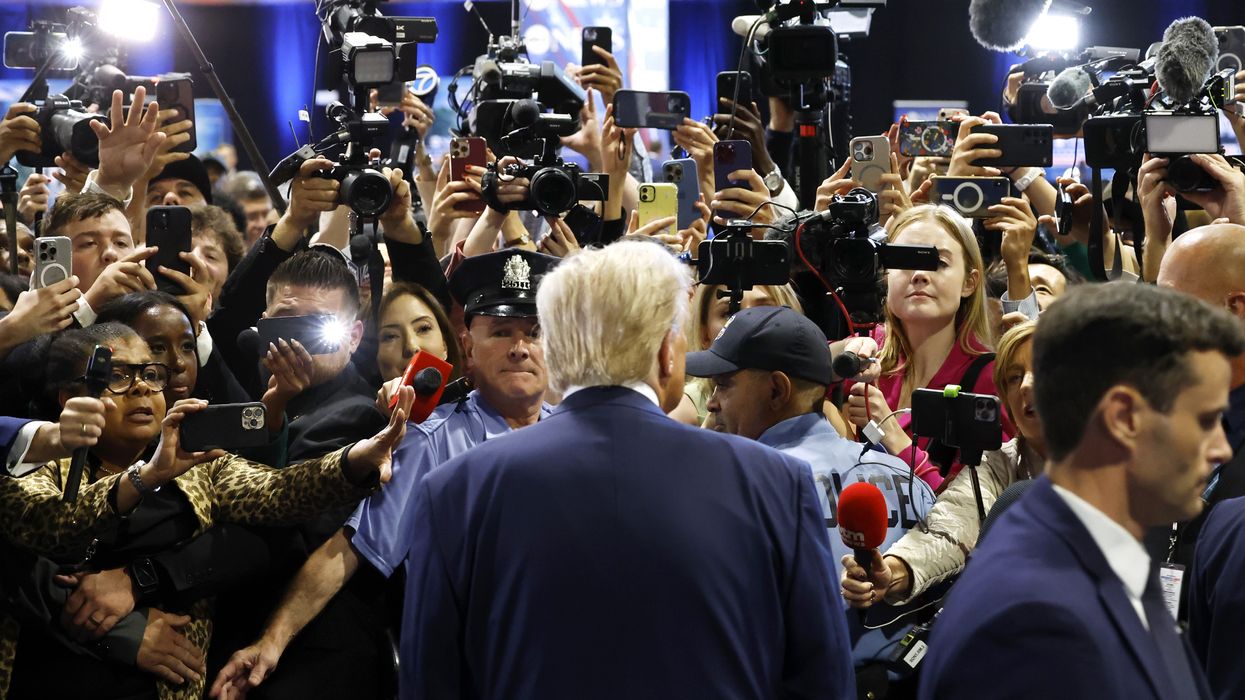
"Lawmakers and President Biden must act before it's too late," said Trevor Timm of Freedom of the Press Foundation.
Press freedom advocates on Friday called on the Senate to urgently pass a bipartisan bill aimed at protecting reporters from government overreach and spying before what one group called "an anti-press extremist obsessed with punishing journalists and news outlets who criticize him" takes office as the next president of the United States.
National civil liberties group Defending Rights & Dissent said Republican President-elect Donald Trump's hostility toward the press as well as the plans outlined in the right-wing agenda Project 2025 make it imperative for the Democratic-led Senate to pass the Protect Reporters from Exploitative State Spying (PRESS) Act.
The bill would shield reporters from surveillance aimed at finding out their sources.
"With many purportedly concerned about how Trump may impact our free press, it is unthinkable to allow a bill with as much bipartisan support as the PRESS Act to wither away and die," said Chip Gibbons, policy director for the group.
Project 2025, which was co-authored by at least 140 people who worked in the first Trump administration, calls to rescind the Department of Justice's current guidelines limiting when a journalist's communications records can be obtained by the federal government or when they can be compelled to testify.
"Trump has spent the last year on the campaign trail calling for more leak investigations, imprisoning journalists, and censoring news outlets he doesn't like."
"While administrations from both parties have made it the norm to use the Espionage Act to imprison whistleblowers, thus opening the door for surveillance of journalists," said Gibbons, "Project 2025 proposes undoing one of the only guardrails limiting this assault on democracy."
Trump has frequently expressed anger over journalists' coverage of him, and days before the election, he said he wouldn't "mind" if reporters at his rally were killed.
"Trump has spent the last year on the campaign trail calling for more leak investigations, imprisoning journalists, and censoring news outlets he doesn't like," said Trevor Timm, executive director of Freedom of the Press Foundation (FPF). "Lawmakers and President [Joe] Biden must act before it's too late."
On Friday, FPF director of advocacy Seth Stern wrote that investigative journalist Catherine Herridge would be protected from government surveillance if the PRESS Act, which was unanimously passed by the House earlier this year, were signed into law.
The federal appellate court for the D.C. Circuit is expected to hold a secret hearing on November 18 about whether Herridge can be fined $800 per day for refusing to comply with a judicial order to disclose her sources for a story about a university president's alleged ties to the Chinese military.
"If the court rules against Herridge, every potential government whistleblower in the nation's capital will think twice before talking to journalists in confidence. That means that in the second Trump administration, we'll all know less about government waste, corruption, and malfeasance," wrote Stern. "Congress could moot all of this by passing the PRESS Act, the federal shield bill that would protect journalist-source confidentiality."
Gibbons called on Senate leaders to "act now and pass this legislation before Trump can enact Project 2025’s plans to turn counter intelligence surveillance against U.S. journalists."

"Journalists must be able to freely report on government actions without fear the government will compel them to reveal their sources," said one campaigner.
Privacy and First Amendment advocates on Wednesday urged the U.S. House to pass legislation that would protect the United States' bedrock freedoms and a core tenet of journalism: the right of reporters to guard the identities of their sources.
The House Judiciary Committee advanced the Protect Reporters from Exploitative State Spying (PRESS) Act with bipartisan support, despite claims in recent months by Republican lawmakers such as Sen. Tom Cotton (R-Ark.) that the legislation would "immunize journalists and leakers alike from scrutiny and consequences for their actions."
The bill has been recognized by press freedom advocates as the most important piece of legislation in modern times regarding journalists' rights, as it would codify state protections at the federal level.
Forty-nine states already protect reporters from being compelled to reveal their confidential sources and federal abuse of subpoena power, and the PRESS Act would ensure all journalists have those protections regardless of where in the country they live and work.
"Journalists must be able to freely report on government actions without fear the government will compel them to reveal their sources. We commend the House Judiciary Committee for its bipartisan support of the PRESS Act," said Daniel Schuman, policy director at Demand Progress. "The Senate must act now to advance this important legislation."
The House previously advanced the bill with a voice vote last September, garnering support from all the Republicans in the chamber. Schuman pointed out late last year, as Cotton blocked the passage of the bill in the Senate, that the lower chamber included a number of exceptions in the law to satisfy the House GOP.
The bill includes exceptions for cases pertaining to information necessary to identify people accused of terrorist acts or involving the risk of imminent bodily harm or death, crimes unrelated to journalism, slander, libel, and defamation.
"The PRESS Act creates critical protections for the fearless journalists who act as government watchdogs and keep all of us informed," said Jenna Leventoff, senior policy counsel at the ACLU, which has long advocated for the bill. "While the majority of states already have shield laws in place that protect journalists from compelled disclosure of their sources, the PRESS Act provides uniform protections to journalists all across the country. We thank the House Judiciary Committee for protecting our constitutional right to a free press and urge the full House to swiftly pass this bipartisan legislation."
Although the U.S. Department of Justice adopted a policy in 2021 restricting subpoenas and seizures of journalists' technological devices and data, Gabriela Schneider noted at First Branch Forecast, Demand Progress Education Fund's newsletter, that the measure "could just as easily be suspended, ignored, or secretly altered."
"Importantly," Schneider wrote, "the PRESS Act would codify into law this prohibition, making it real and permanent."