

SUBSCRIBE TO OUR FREE NEWSLETTER
Daily news & progressive opinion—funded by the people, not the corporations—delivered straight to your inbox.
5
#000000
#FFFFFF
To donate by check, phone, or other method, see our More Ways to Give page.
Daily news & progressive opinion—funded by the people, not the corporations—delivered straight to your inbox.

“Polarization” cannot keep excusing a government that fails working people.
I’m tired of hearing the word “polarization.” It’s being used so much by older people that it’s starting to feel like an excuse.
An excuse for retaliation. An excuse for doing nothing. An excuse for why we should expect less from the people who ask for our votes.
Recently, while talking with someone about getting involved with my podcast, With All Due Respect, I encountered exactly that attitude. He told me he disagreed with what I was doing but would participate for a paycheck. When I pressed him about bringing people from different sides together to discuss solutions, he said the country was too polarized for it to matter.
I want this administration judged by that standard: Can people earn enough to live, and do workers have a meaningful say in the conditions of their employment?
That pissed me off.
I told him he could perhaps come back another time. That day, the disagreement wasn’t the problem. Declaring the effort pointless before we had even begun was.
Polarization may explain why a meeting is stalling. It should never explain why the conversation is over.
When people’s livelihoods, healthcare, and futures are involved, walking away has consequences. Someone still has to live with the problem after you’ve decided discussing it is a waste of time.
I’m a member of Gen Z and an Army veteran. My breaking point came when I could not afford to keep going to school while using the GI Bill.
The jobs I could reliably land were full-time. Meanwhile, taking at least one class in person could qualify me for a higher housing allowance than an online-only schedule. But those classroom hours competed with the hours I needed to work.
If I built my schedule around school, I lost work time. If I built it around work, I lost part of the housing allowance. My housing costs in Phoenix did not shrink to match. Credit cards filled the gap; interest made it deeper.
If a veteran cannot afford to use his benefit effectively, what good is the benefit to him?
The fight wasn’t with my neighbor. It was with a system whose promises did not add up to a life I could afford.
I hear older Americans talk about responsibility. I want that conversation. I want it to include responsibility for the decisions that shaped the country my generation inherited.
If your measure of success is how much your house has appreciated, what happens when the next generation cannot afford to buy it? If you tell young people to work hard, what are you prepared to change when their work still leaves them struggling?
Those questions deserve answers. Instead, I hear commentators, including on Fox News, mock my generation’s efforts at inclusion. I see those efforts as attempts to build a more perfect union. Disagree with our language or proposals, but engage with what we are trying to achieve.
Age and experience do not exempt anyone from explaining the results of their leadership.
This is why I keep thinking about Theodore Roosevelt.
Republican bosses in New York wanted Roosevelt out of the governor’s office. They helped move him into the vice presidency, where they hoped his capacity to disrupt their interests would be contained. Instead, after President William McKinley’s assassination in 1901, Roosevelt became president. He subsequently won election in 1904.
I cannot prove he would never have reached the presidency another way. He had substantial public appeal. But his story makes me ask how many capable leaders are sidelined because they threaten the people who control access to power.
America cannot afford to leave those openings to chance.
Roosevelt’s Square Deal sought fairer treatment for workers and limits on corporate power. What I admire is his willingness to use public authority when powerful interests would have preferred that government stay out of their way.
I am a democratic socialist. Roosevelt opposed socialism. My argument is that his willingness to confront concentrated power offers something we can learn from, even where our politics differ.
Bring back the Square Deal—and make the promise broader.
For me, it has to start with work. Get people into jobs that pay enough to build a life. I want this administration judged by that standard: Can people earn enough to live, and do workers have a meaningful say in the conditions of their employment?
Add healthcare people can use without financial ruin and housing working people can afford. These are the terms of the deal I am demanding.
Who creates the value at work? Who decides how it is divided? How much bargaining power does the worker actually have?
Hard work should deliver more than permission to keep struggling.
My interest in democratic socialism begins with that question of power. I want people to have more control over their work and communities. We should debate how to achieve that, what it would cost, and what could go wrong. I need to keep studying, too.
But a label should begin a discussion, not shut it down.
The same standard applies to leadership. You probably know someone closer to home who listens, shows up, and takes responsibility. It may even be you. We should help people like that learn how to organize, run, and serve.
And we should make demands concrete enough to judge. How will you help people find good-paying work? What will you do about housing and healthcare? How will workers gain a stronger voice? What can voters check a year after you take office?
A new face means little without a different standard of accountability.
That work begins before the 2028 presidential election. It belongs in local meetings, workplaces, neighborhood conversations, and every election where we can influence who exercises power.
Call your representatives. Ask specific questions. Compare their answers with their votes. Support challengers when incumbents fail. Build organizations that can keep demanding results after Election Day.
This week, talk to a neighbor. Find an organization working on something that affects your life. Attend a meeting. Take on one task. If you disagree with my politics, bring an argument and a willingness to listen.
There are already people passing out flyers, organizing meetings, and trying to bring others into this work. They need company. They need people willing to turn frustration into participation.
Roosevelt wrote that “progress is accomplished by the man who does the things”.
Today, that invitation belongs to all of us.
We must stand for ourselves. We must organize and elect people who will fight for a fairer deal, then hold them to it.
Stop using polarization to tell us why we cannot begin.
Let us begin.
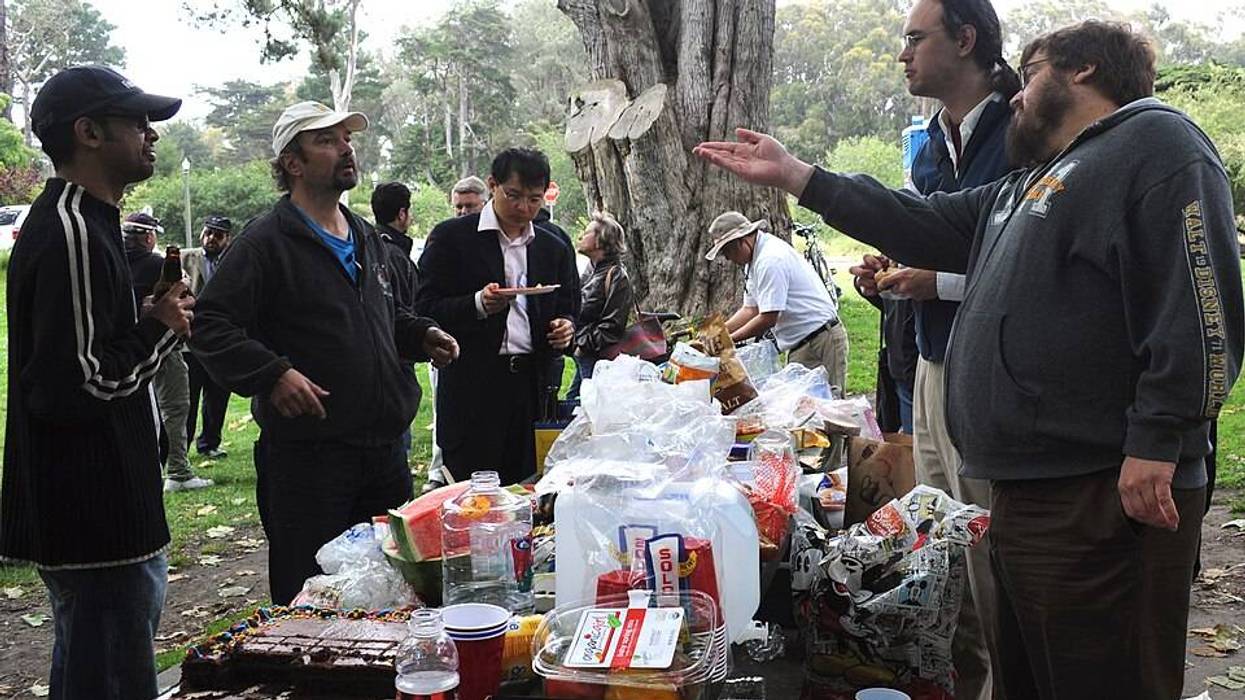
The US has become a deeply polarized nation. One idea to overcome this is to pay people to disagree.
America is a polarized nation. Recent polls find that nearly half of us consider members of the opposing party to be “downright evil.” Perhaps this helps explain why more and more of us are choosing to live in towns and cities that match our political leanings—a phenomenon known as “the Big Sort.” Adding to this split is a media landscape where we choose news outlets that confirm our views, and the feeds we scroll offer up more of the same. The result is an American public increasingly sealed off from opposing views. Think about it: When was the last time you had a political conversation where you disagreed with someone? And more importantly, how did it go? You most likely found it stressful rather than informative.
I believe this is because we have lost a core American skill: the ability to disagree well. Not the faceless, angry kind we do online, but the kind that happens when people who disagree come together with the intention to understand one another and compromise. Our country was built on this. A summer of argument produced our Constitution. Four more years of it produced the Bill of Rights. This tradition endured in the form of New England town meetings and union halls. We’ve let this tradition lapse, and it’s costing us.
So here’s a simple idea to point us back in the right direction: We should pay people to disagree.
This isn’t as strange as it sounds. Organizations like Braver Angels have already built a framework for this, borrowing techniques from family conflict resolution and applying them to a country in conflict. I (Natasha, 21) have seen it work firsthand. In high school, one of my classes partnered with a school in Louisiana to run a Red-Blue Workshop—several weeks of facilitated dialogue between my liberal classmates and our conservative counterparts. As is usual in this program, we became fast friends, comfortable talking through the very topics that were supposed to divide us.
America’s problem is not that Americans disagree. It's that we’ve stopped seeing people who disagree with us as fellow citizens with different ideas about what's best for the country and started seeing them as enemies to be vanquished.
We learned what successful dialogue looks like. We learned that the goal isn’t to change the other person’s mind or to completely humiliate them, as is often modeled online (open YouTube, click one political video, and you’ll be recommended hundreds more with titles like “liberal DESTROYS conservative” or vice versa). Instead, the goal is to explore each other’s lived experiences and backgrounds to form a deeper understanding of what our peers believe and why. We left the program with more empathy for one another. We were no longer competitors trying to “win” and prove our side was right, but fellow citizens united by the shared goal of bettering our country.
Now imagine this at scale: a national program teaching Americans how to have effective civil dialogue and demonstrating that the villainous way the other side is depicted online is largely untrue. Who’s to say what would come of this? Maybe we would realize that over 80% of us favor stock trading bans for members of Congress. Or that over 70% of us favor term limits for Supreme Court justices. Maybe we would realize that much of the anger we are taught online is convenient for people in power. Maybe we would conclude that our power lies in looking past the differences we are sold and uniting to fight for issues that matter to us.
Paying people to participate in such a program isn’t completely unheard of either. AmeriCorps has paid Americans for civic work for decades. New York recently paid its residents to shovel snow after this winter’s blizzards. No one regarded either policy as a handout. The work was viewed as an investment in what a functioning city or country needs. Structured dialogue between political opposites belongs on that list of vital infrastructure. This would likely begin as a pilot program in a few cities, but national experiments abroad prove that such dialogue is scalable.
And it would be a bargain! We are already paying a high price for polarization. The most obvious cost is to the health of our democracy. But there’s a literal price tag too. When our government can’t compromise, it shuts down: The Congressional Budget Office (CBO) estimated that in 2025, a single government shutdown cost the economy between $7 billion and $14 billion. Polarization affects the private sector, too. Research on private companies found that more polarized states see meaningfully less business investment overall. Investing in civic infrastructure would pay dividends. And the money is there. If $37 billion of our tax dollars can fund an aimless war in the Middle East, then surely a fraction of that can be used to repair our democracy at home.
America’s problem is not that Americans disagree. It's that we’ve stopped seeing people who disagree with us as fellow citizens with different ideas about what's best for the country and started seeing them as enemies to be vanquished. Of course, paying Americans to sit down together won’t fix this problem overnight. But it’s a start. With it, we can begin the slow work of democratic reconciliation. Doing so will remind us that disagreeing with one another never hurts our country. It is forgetting how to disagree well that does.

I projected my desires and perspectives onto the owl without endeavoring to understand the owl’s perspective, something all to common when we approach people with differing viewpoints from our own.
Last month I was walking through the woods by my house at sunset when a nearly fully grown juvenile barred owl swooped over my head and landed on a branch in front of me. I was awestruck by this gorgeous bird and began doing what I’ve always done with wild animals who do not flee from me: I talk to them. We looked at each other for a long time before I decided to move on. The last thing I said to the owl after a nearly 10-minute one-sided "conversation" was, “Good night. I love you.”
Moments later, I felt a blow to my head, after which the stealthy culprit swooped to another branch to stare intently at me once more. I crouched down to grab a stick to hold above me in case the owl came after me again and slowly backed up to return home, where my husband, a veterinarian, could tend to my bloody talon wounds.
I’d heard about barred owls attacking people, but I never imagined I would be a victim. After all, I’m an animal advocate and humane educator. But I had misread everything. I was chagrined to realize that I’d been under the illusion that we were enjoying each other’s company.
Just as I had misread the owl, I sometimes misread people, mistakenly assuming we’re on the same page. I often think I’m being understood, and that I’m understanding, when I’m not. This is probably true for most people. After all, it’s hard to ignore the escalating and dysfunctional levels of polarizing discourse in our culture, where mistaken assumptions and miscommunication are ubiquitous, adversely impacting our ability to come together and effectively nurture a truly healthy, inclusive, collaborative society. As playwright George Bernard Shaw once said: “The single biggest problem in communication is the illusion that it has taken place.”
Every time we make assumptions, there’s a good chance we’ll be miscommunicating and misperceiving, limiting the opportunities for real communication.
There are so many assumptions that prevent effective communication. We may assume that someone is religious because we are believers (or vice versa). Or we may inquire about someone’s astrological sign because we think astrology is a legitimate science, foisting this belief system on others without a second thought. When we meet someone who grew up in the same neighborhood we did, we may ascribe similar values and political beliefs to them. And when we meet people from different backgrounds, we may assume their values differ from ours and treat them with less openness.
I have friends who, thinking they are being generous, believe that supporters of the presidential candidate they abhor are simply “duped.” Other, less generous, friends think such supporters are either “selfish” or “stupid.” Some of my Christian friends think nonbelievers like me are “going to hell.” Some of my atheist friends think those who believe in God have a “mental disorder.” These are the actual words and phrases some have used in my presence.
Such assumptions arise effortlessly as we project our thoughts, beliefs, and emotions onto others. Unfortunately, this habit narrows our perspective and limits our ability to truly understand the complexity of others’ lives and minds. Every time we make assumptions, there’s a good chance we’ll be miscommunicating and misperceiving, limiting the opportunities for real communication. When we jump to our inevitable conclusions, we trade the possibility of true understanding for a false sense that we have communicated effectively.
There’s a way out of this failure to communicate. It starts with something so natural to humans, and so obvious, that it hardly seems worth mentioning except for our seeming unwillingness to embrace it widely. We must cultivate and act upon our innate curiosity and desire to learn. In so doing, we eclipse a darker human propensity for "us vs. them" thinking, which leads us to perceive "the other" as a threat.
To communicate effectively with people who have different perspectives and beliefs, we must be eager to learn about those perspectives and beliefs. That means asking questions with friendliness and a true desire to understand rather than debate. It means striving to understand why someone holds a belief or position. What fears, experiences, or values drive their thinking? It means that when we hear something that challenges our worldview, we resist the urge to argue or correct and instead lean in with curiosity. In this way, we become better able to cultivate empathy, a foundation for understanding. In an increasingly polarized world, understanding becomes not just a moral imperative, but a practical one. Without it, divisions are likely to grow.
One of the lovely side effects of bringing genuine curiosity and openness to others is that we are likely to discover points of agreement. As we find those places where we can agree, division dissipates and the ties that bind us strengthen so that we can find places to collaborate. Coalitions to solve problems are usually more successful when diverse groups of people come together across divides to achieve shared goals. Whenever we allow side-taking, rather than collaborative problem-solving, to be our endpoint, we miss the opportunity to make our communities, nation, and world better.
One of the obstacles to making curiosity our default mindset is fear: fear of animosity and violence; fear of what society would become if others’ perspectives took hold; and sometimes even fear that we might be persuaded by a different perspective, which could threaten our existing identity and relationships. These fears are readily fostered in our society and sometimes within our families and communities. They may also be reinforced by our experiences. Since my encounter with the owl, I now enter the woods at dusk with some trepidation. Gone is my unadulterated joy and openness in the presence of these birds. Yet, my new fear is also a reminder that curiosity is indeed the gateway to understanding.
Had I spent a little more time cultivating my curiosity to better understand barred owls, I would have learned about their territorial nature, a trait we humans share with owls. I would have known better than to talk at a bird who had just flown low over my head and was perched staring at me, less curious than baleful. I wouldn’t have made the bird feel threatened by my refusal to leave their territory. I would have understood and been able to put my empathy into action by quickly moving along.
What would putting empathy into action look like with our fellow humans? A good first step might be to stop fomenting hostility, derision, and insults, whether spoken aloud about "others" within our perceived in-groups or on our social media. Whenever we make fun of, express hatred toward, or trivialize the perspectives of others, we perpetuate polarization and reinforce divisive thinking. This is not to say that we should make nice when someone intentionally says or does sexist, racist, homophobic, xenophobic, antisemitic, Islamophobic, or bigoted things. What it means is that we demonstrate respect for others’ divergent perspectives that stem from different lived experiences, sources of information, and long-held values and beliefs.
One might think these commonsense suggestions would be widely welcomed and adopted, but we’ve become so habituated to polarization that we often unconsciously stoke it. It’s not as if most people want to offend and be subsequently attacked, but nonetheless we regularly project our beliefs onto others and fail to consider the impacts of doing so. I projected my desires and perspectives onto the owl without endeavoring to understand the owl’s perspective. Reflecting upon the experience has made me wiser about how I might show greater understanding not only in situations with wild animals but also with my own species. Perhaps we can all learn something from an owl attack.
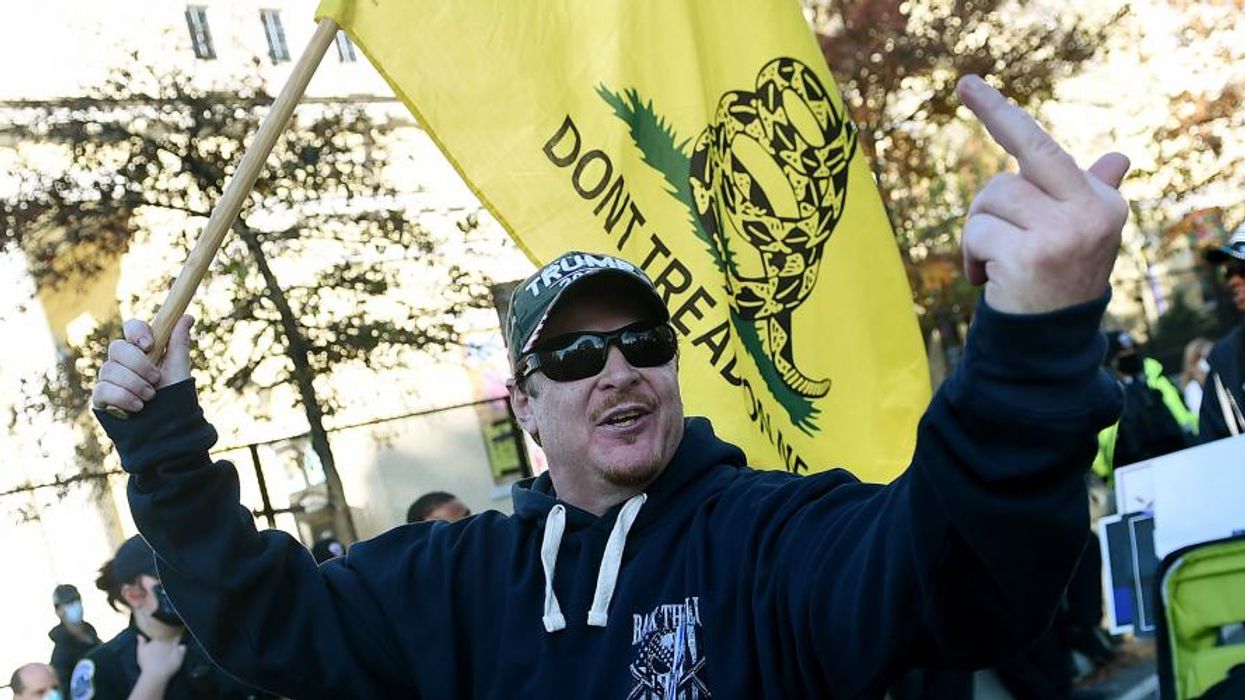
If we're not careful, expressing our strong feelings through words and actions can deepen polarization and prevent us from collaborating with others to solve the problems we care about.
Many of us are infuriated by issues in our communities, nation, and world. No matter where we stand on the political spectrum, there's a good chance we have strong feelings and opinions, whether about the war in the Middle East, the presidential election in the U.S., guns, school curricula, immigration, abortion, transgender issues, animal agriculture, or any number of topics that have inflamed and divided our citizenry. But here's the Catch-22: If we're not careful, expressing our strong feelings through words and actions can deepen polarization and prevent us from collaborating with others to solve the problems we care about.
These two realities—polarization and strongly held beliefs—exist in a state of tension. For some of us, the desire to right the wrongs we see is so strong that we don't want to self-censor our (justified) speech or modify our (righteous) actions, even if we contribute to polarization. It's also possible we don't even realize that we may be undermining our effectiveness because our language and actions have become so normalized to us that we have not examined their full impacts. We use the words and phrases we've heard and have come to embrace within our personal spheres, and we act in the ways others who share our beliefs behave, even if these undermine the likelihood of reaching solutions.
If we can identify our deepest and truest longings, our strategies to achieve them may lead to more collaborative, nuanced, and effective approaches, even across divides.
What's the solution to this Catch-22?
By carefully examining our intentions, words, and strategies, we can become more "solutionary" as we strive to achieve our goals, which is why it's useful to begin by asking ourselves to articulate those goals explicitly:
On the surface, this seems like an easy question to answer. Perhaps our goal is an end to the killing of Palestinians. Or perhaps it's the destruction of Hamas. Maybe our goal is a federal law to ensure women have the right to an abortion. Or maybe it's to make abortion illegal everywhere. We may want to advance gun control laws to help prevent gun violence and deaths. Alternatively, we may wish to protect the Second Amendment right to bear arms.
On the surface, these goals appear to be polar opposites. Still, when we engage in serious introspection beyond and below the surface, we may be able to locate deeper goals that can form even a small piece of common ground. Across a wide political and ideological spectrum lie people who want enduring peace, security, and freedom for people of all faiths and ethnicities who reside between the Jordan River and the Mediterranean Sea. Most people likely want the smallest possible number of abortions to occur. Surely, many wish to uphold constitutional rights and also see mass shootings consigned to history books. If we can identify our deepest and truest longings, our strategies to achieve them may lead to more collaborative, nuanced, and effective approaches, even across divides.
With our deepest goals in mind, we can ask ourselves the following question:
Words shape what we think and how we act. They allow us to articulate and understand important ideas and concepts, including new ways of thinking. Words can also become obstacles to understanding, especially when we use what have become charged words or phrases without carefully defining—and deeply understanding—their meanings and how they may be heard and understood by others. Many words and phrases today have become so "loaded" that speakers and hearers may have vastly different understandings of them and, thus, vastly different reactions.
As George Orwell wrote in his 1946 essay, Politics and the English Language,
The word "fascism" has now no meaning except insofar as it signifies "something not desirable." The words democracy, socialism, freedom, patriotic, realistic, justice, have each of them several different meanings which cannot be reconciled with one another.
Seventy-eight years later, Orwell's insights into these words are surprisingly prescient.
Many words and phrases today convey strong allegiances and perspectives and result in big reactions among those who embrace them as useful articulations of concepts and those who reject them as antithetical to their beliefs. It's important to note that the meaning of these words, concepts, and phrases shifts over time, sometimes due to the very polarization that this essay seeks to address.
Just think of how the word "woke" transformed from its use in the Black vernacular in the 1930s when it meant "alert to racial prejudice and discrimination," to its broad use by progressives in the 2010s to apply to awareness about and commitment to social justice issues in general, to its current pejorative use by some to criticize and diminish progressive efforts to seek greater justice and equity. As people become divided over a word like woke and use it to express their emotions (both positive or negative), those who share the deeper goal of ending inequity and injustice can become distracted from persistent problems as well as potential solutions.
What words and phrases are you currently using that could be polarizing? Might you choose different words to support your ultimate goals more strategically and build bridges toward collaborative problem-solving? As Orwell continues in his essay:
A scrupulous writer… will ask himself… What am I trying to say? What words will express it?… You can shirk [these questions] by simply throwing your mind open and letting the ready-made phrases come crowding in. They will construct your sentences for you—even think your thoughts for you, to a certain extent—and at need they will perform the important service of partially concealing your meaning even from yourself.
To be clear, I'm not suggesting that we choose language to "make nice" but instead use the most effective language to achieve our goals. Doing so will help us as we answer the third question:
Because positive change happens through a range of approaches, finding our best strategy also means identifying where the answers to the following questions meet, which will help us channel our skills toward our goals:
There are many ways to transform unjust, unsustainable, and inhumane systems. Some of our efforts may be educational. Some may be oriented toward policy and legislation. Perhaps we're inventors creating more sustainable and humane foods, products, buildings, energy sources, or transportation. Maybe we work to transform systems over which we have agency within our professions.
Whatever our approach to change, we can ask ourselves if we are being as strategic as possible. Determining whether a particular approach is strategic isn't simple. There are many factors to weigh: our time, talents, personality, likely impact, and the possible unintended negative consequences of our actions.
We certainly don't want our efforts to diminish the likelihood of achieving our desired impacts. For example, it may feel gratifying to write angry emails to our legislators, post clever but mean-spirited comments on our and others' social media, or "cancel" an opponent. Still, none of these are likely to advance our deepest goals. If we keep these goals at the forefront of our minds, our strategies can become laser-focused on achieving them, potentially through reaching across divides.
If we want to create positive change, reflecting deeply and honestly in these ways will help us become as strategic as possible. It will also increase the likelihood that we'll succeed in actually solving the problems we care about. And just maybe, we can also reduce polarization in the process.
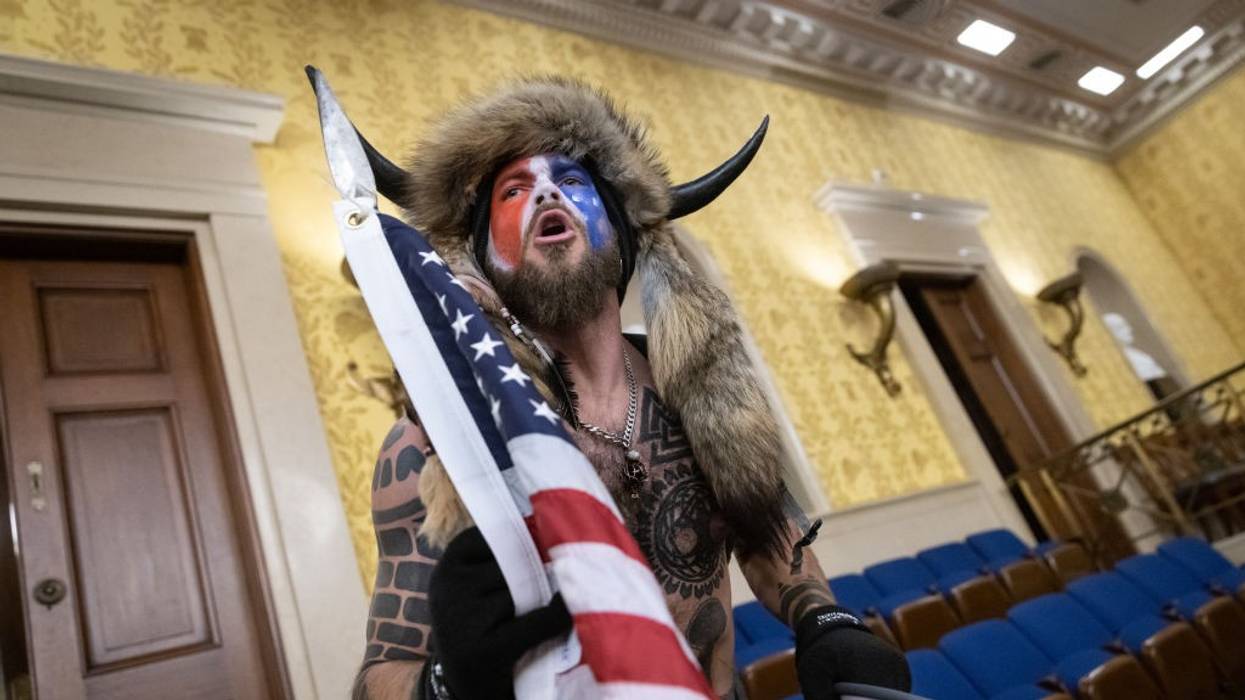
A conversation with Peter Turchin, author of End Times: Elites, Counter-Elites, and the Path of Political Disintegration, about the prognosis for social breakdown in 2020s.
Peter Turchin’s latest book, End Times: Elites, Counter-Elites, and the Path of Political Disintegration, is receiving glowing reviews. Its message is highly relevant to our collective understanding of the emerging global polycrisis and what needs to be done to minimize it.
Turchin began his career as an evolutionary biologist, analyzing large datasets to clarify patterns in population dynamics in insects and other organisms. Throughout the last 25 years, he has applied these analytical methods to questions having to do with changes in human societies over time, a study to which he and his colleagues have given the name
cliodynamics (after Clio, the Muse of history). Turchin, who now refers to himself as a complexity scientist, is an emeritus professor at the University of Connecticut, a project leader at the Complexity Science Hub in Vienna, and a research associate at the University of Oxford. I was delighted when Peter consented to engage with me in an emailed interview about his most recent book.
Richard Heinberg: Thank you, Peter, for writing this important and timely book. As you know, I’ve been following your work for several years, and I discussed it in my own recent book, Power: Limits and Prospects for Human Survival. The data-driven, mathematical methods you and your colleagues have developed for understanding patterns in history seem highly illuminating. In the U.S., rising economic inequality (since the 1970s) has immiserated the working class, while the number of elites (e.g., billionaires) and elite aspirants (e.g., people with law degrees) has skyrocketed. As you show in detail, these developments align with a historical pattern seen repeatedly in complex societies, and it never seems to end well. In End Times, you lay out clearly what your analysis means for the United States in the 2020s. It’s not a pretty picture. And indeed, we’re seeing the evidence of increasing polarization and political ill will everywhere.
Peter Turchin: Thank you for the kind words about my book, Richard!
The most important thing we need to do, in order to find a solution to the crisis in which we find ourselves, is shut down the perverse wealth pump, which has been, since the late 1970s, taking from the poor and giving to the rich.
RH: Your book reminded me of the terrible irony of the enduring worship of Ronald Reagan by populist Republicans—whose voter base now largely consists of working-class people whose prospects have been repeatedly undermined (starting in the Reagan era) by Republican-led tax cuts on high-income Americans. In effect, the U.S. economy is now a “wealth pump” that gives to the rich and takes from the poor. As you point out, Democratic leaders (with exceptions such as Elizabeth Warren) have also largely turned a blind eye to the economic interests of the working class as they align themselves increasingly with urban voters with high incomes and education levels. Due to this evolution in the two parties, there seems to be little support among government leaders for the kinds of policies that might tend to defuse the country’s political crisis—higher taxes on the rich and a higher minimum wage. According to David Leonhardt, writing in The New York Times, a few populist Republican politicians (including Marco Rubio and J. D. Vance) are now calling for higher taxes on the super-wealthy. Do you see this as a significant shift? And if it is significant, how might it help sort out (or further scramble) our country’s politics?
PT: Indeed, by 2016 the Democratic Party had largely completed its evolution from a party of the working classes to the party of the “10%”—successful, educated, urbanized Americans. As Thomas Frank wrote in Listen, Liberal (2016), with the Republicans traditionally reflecting the interest of the wealthiest 1%, 90% of Americans were left without effective representation. Popular discontent, driven by decades of stagnating—and even declining—wages, especially for workers without college education, was first harnessed by Donald Trump, which propelled him to the presidency. As you note, there are now several populist politicians, whose professed goal is to remake the Republican Party into a party of the working class. Whether they succeed in this, and how sincere they are in reversing the decades of anti-working-class policies, remain to be seen. But, in any case, this movement represents a significant shift in this country’s political landscape.
As I discuss in detail in End Times, the most important thing we need to do, in order to find a solution to the crisis in which we find ourselves, is shut down the perverse wealth pump, which has been, since the late 1970s, taking from the poor and giving to the rich. Most obviously, accomplishing this will allow wages and incomes of the majority of Americans to again increase together with economic growth, as they did during the period following the New Deal (and until the 1970s). Even more importantly, this will eventually reverse the overproduction of the uber-wealthy and elite aspirants with advanced degrees, which, as I explain in the book, are the most dangerous drivers of political instability, especially when combined with immiseration. Until the wealth pump is shut down, America will continue to experience social and political turbulence, which at any point could spiral to levels that would transform our current “cold” civil war into a hot one.
RH: End Times is all about social structures—the economy, the political system, the military, the media, and the educational system. But social dysfunction is hardly the only kind of crisis facing America, or humanity in general, this century. Most people are justifiably concerned about climate change, and many ecologists also warn about the consequences of resource depletion and continued population growth. The energy subsidy that humanity has derived from fossil fuels has enabled a massive escalation of everything we do, but the evidence (whether framed in terms of ecological footprint or planetary boundaries) suggests that we’re exceeding the planet’s long-term carrying capacity. The implications of that are frightening enough. Do you see social collapse as more imminent and therefore a more important subject of discussion—particularly in the U.S.?
Here, how to deal with global change, or even whether it is a real crisis, has become one of the divisive issues used by different political factions against each other.
PT: The ecological crises and political crises are not separate. Thus, a spike in food prices has been a common trigger of revolutions and other outbreaks of political violence. Most recently this was seen in the Arab Spring of 2010–12, and even more recently in the French riots of 2023. Conversely, solving global crises requires cooperation of humans at large scales—at the global level, in fact. Yet, political disintegration within countries undermines our ability to cooperate at needed scales. This is most obvious when we consider American politics. Here, how to deal with global change, or even whether it is a real crisis, has become one of the divisive issues used by different political factions against each other.
RH: China has seen rapid growth in wealth inequality too, especially since 1990. Does China’s elite overproduction also signal trouble? Are “end times” likely to occur later in China than in the U.S., and is that country likely to follow a different trajectory?
PT: China has emerged from its previous “age of discord” much more recently than the USA (and Western Europe). Analysis by my research group of CrisisDB, a database of more than a hundred past societies sliding into crisis (and then emerging from it), suggests that China still has time to deal with the negative trends you mention. In my opinion, thus, China is likely to enter its own End Times decades later than the U.S.. However, I should note that a proper cliodynamic analysis of contemporary China has not yet been done, and that’s what would be needed for a more solid, empirically buttressed answer to your question.
RH: The Russia-Ukraine war has already had economic and geopolitical ripple effects globally. The fact that you grew up in the USSR perhaps gives you a perspective on the conflict that’s different from most U.S. commentators. Combining that perspective with your historical analysis, is there anything on this subject you would like to impart to readers that you didn’t say in the book?
PT: As it happens, I am currently working on an article that will be posted in several installments on my blog, which will provide an answer to this question.
RH: As an American, I’m deeply saddened and concerned (though not entirely surprised) to read that you don’t see any way to fully defuse the strong likelihood of further U.S. internal political violence in the 2020s (on page 202, you write that “it is too late to avert our current crisis,” though we could “avoid the next period of social breakdown in the second half of the twenty-first century.”). You offer some advice for political elites in that regard. But is there anything ordinary citizens can do to reduce the trend toward polarization and violence over the short term?
PT: Speaking for myself, the most effective way I can help is simply continue my work as a scientist attempting to better understand societal dynamics. Although we made great steps in understanding the structural factors driving “end times” in our societies, our theories, models, and data can be greatly improved. Such understanding, in my opinion, is key for developing effective reforms and policies that can take us on a better course out of this crisis. Beyond making science better we need a broad public discussion of its implications, and of what needs to be done. Ordinary citizens can help by educating themselves on these issues, by participating in the discussion of possible remedies, and ultimately by putting pressure on our ruling elites to act in ways that benefit the people broadly, rather than (as they’ve been acting over the past few decades) in their own narrow and shortsighted personal interest.

You know what would actually benefit politics in the United States? A media system that was willing to point out who was causing demonstrable problems, rather than pretending that "both sides" are always to blame.
The Washington Post (12/16/22) had a recent headline: “Can Politics Kill You? Research Says the Answer Increasingly Is Yes.” And the lead of the article, by Akilah Johnson, told readers of two studies that reveal what it calls “an uncomfortable truth”:
The toxicity of partisan politics is fueling an overall increase in mortality rates for working-age Americans.
But when you read further into the article, you find that politics is not really the problem here. One of the studies, the Post reported, found that “people living in more conservative parts of the United States disproportionately bore the burden of illness and death linked to Covid-19.” The other found that “the more conservative a state’s policies, the shorter the lives of working-age people.”
So the problem is not so much “politics” as it is conservatism. Indeed, the article noted that one of the reports found “if all states implemented liberal policies” on the environment, guns, tobacco, and other health-related policies, 170,000 lives would be saved a year.
Still, the analysis in the piece centered around the idea that it is not right-wing ideology, but lack of bipartisanship, that is to blame—as in, “The division in American politics has grown increasingly caustic and polarized.”
You know what would actually benefit politics in the United States? A media system that was willing to point out who was causing demonstrable problems, rather than pretending that “both sides” are always to blame.
Reporting like that could actually save lives.