SUBSCRIBE TO OUR FREE NEWSLETTER
Daily news & progressive opinion—funded by the people, not the corporations—delivered straight to your inbox.
5
#000000
#FFFFFF
To donate by check, phone, or other method, see our More Ways to Give page.


Daily news & progressive opinion—funded by the people, not the corporations—delivered straight to your inbox.
The merger would allow Paramount to merge CBS’ newsroom with Warner-owned CNN, which would presumably mean arch-Trumper Bari Weiss would be in charge of CNN.
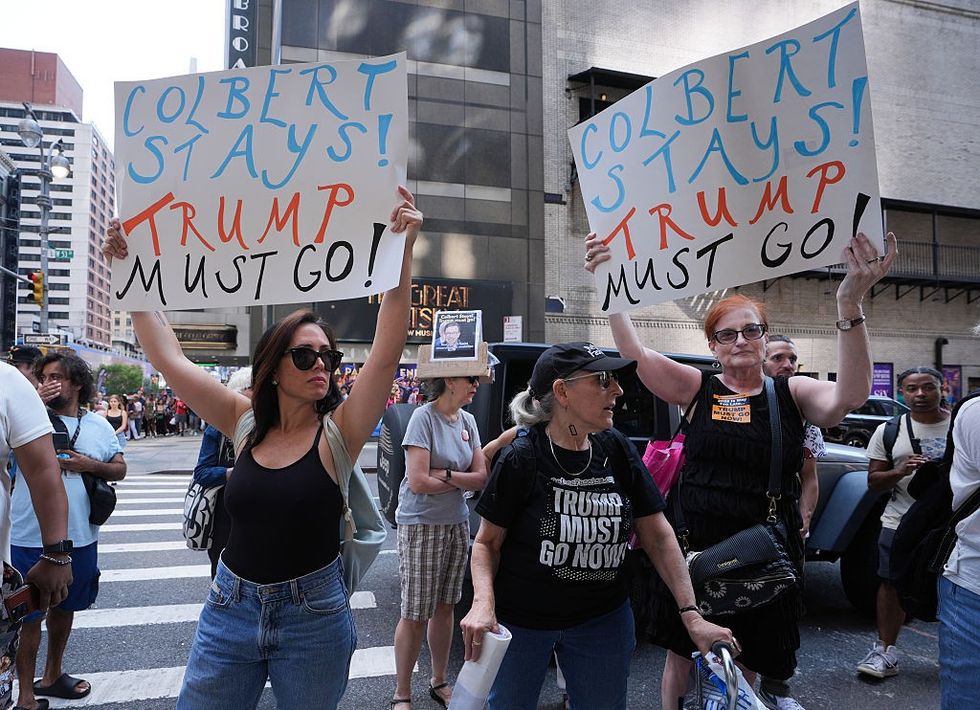
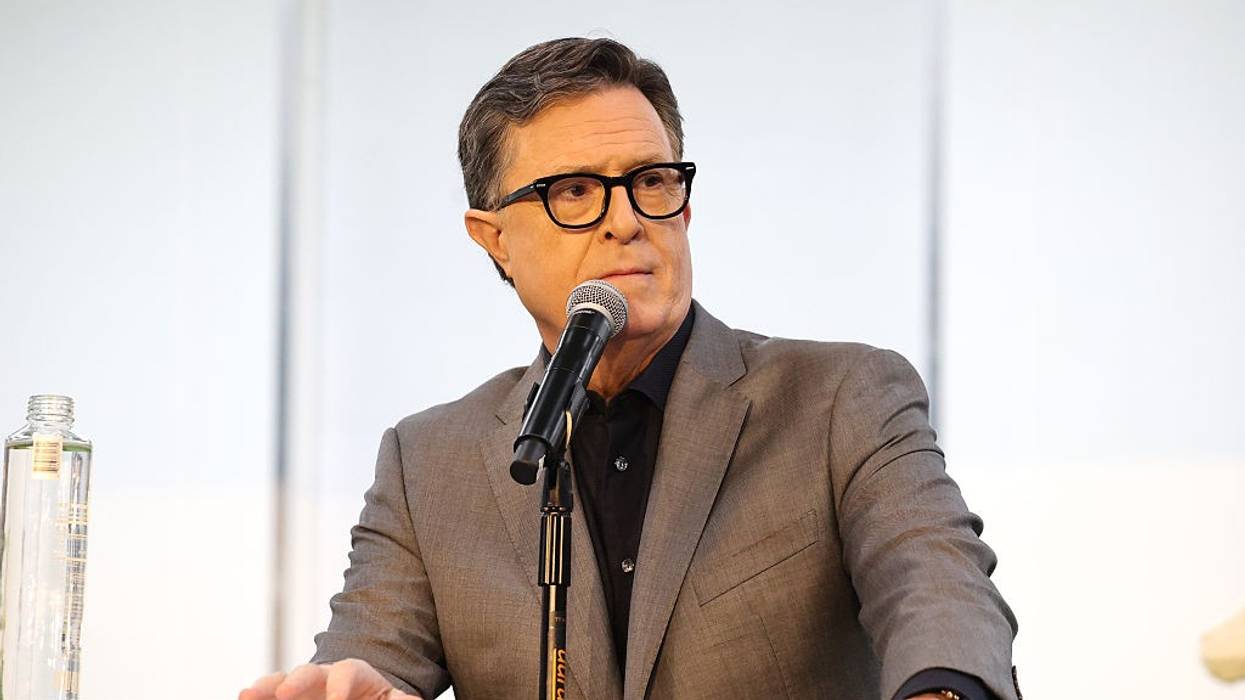
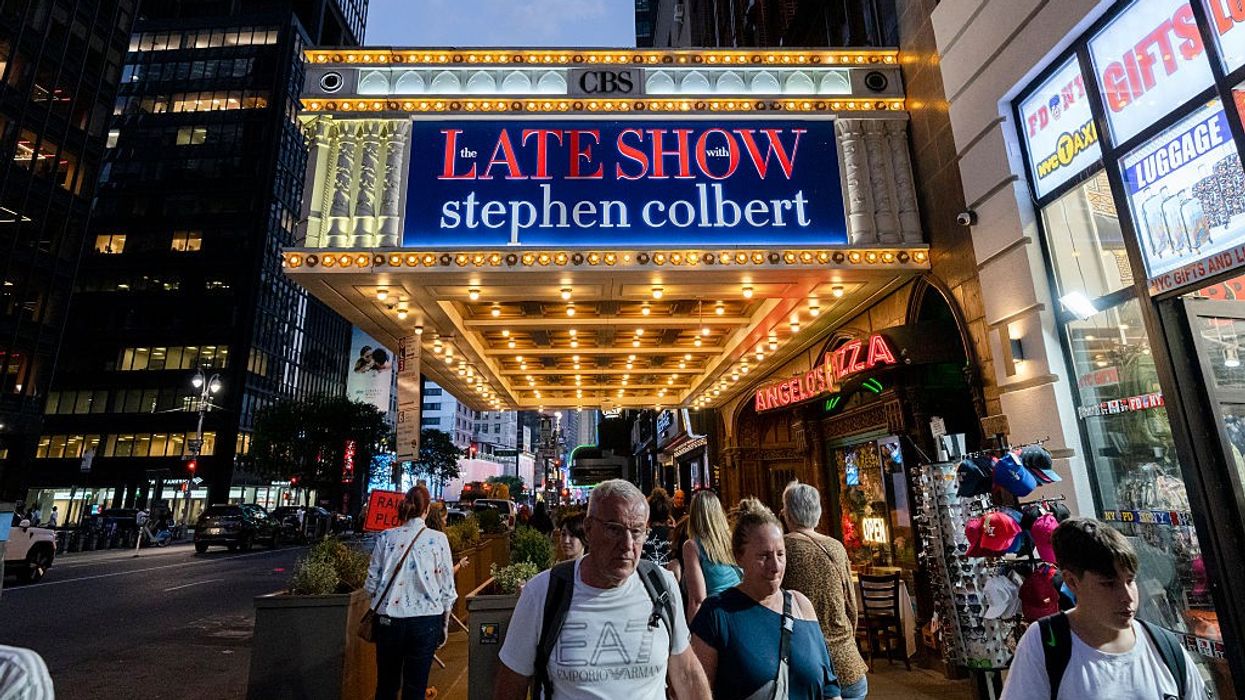
Until a couple of months ago, we could get a dose of humor to help us get through the craziness, cruelty, and corruption of the Trump administration. But CBS pulled Stephen Colbert off the air, and not because of bad ratings—he had by far the most widely viewed network show at that hour.
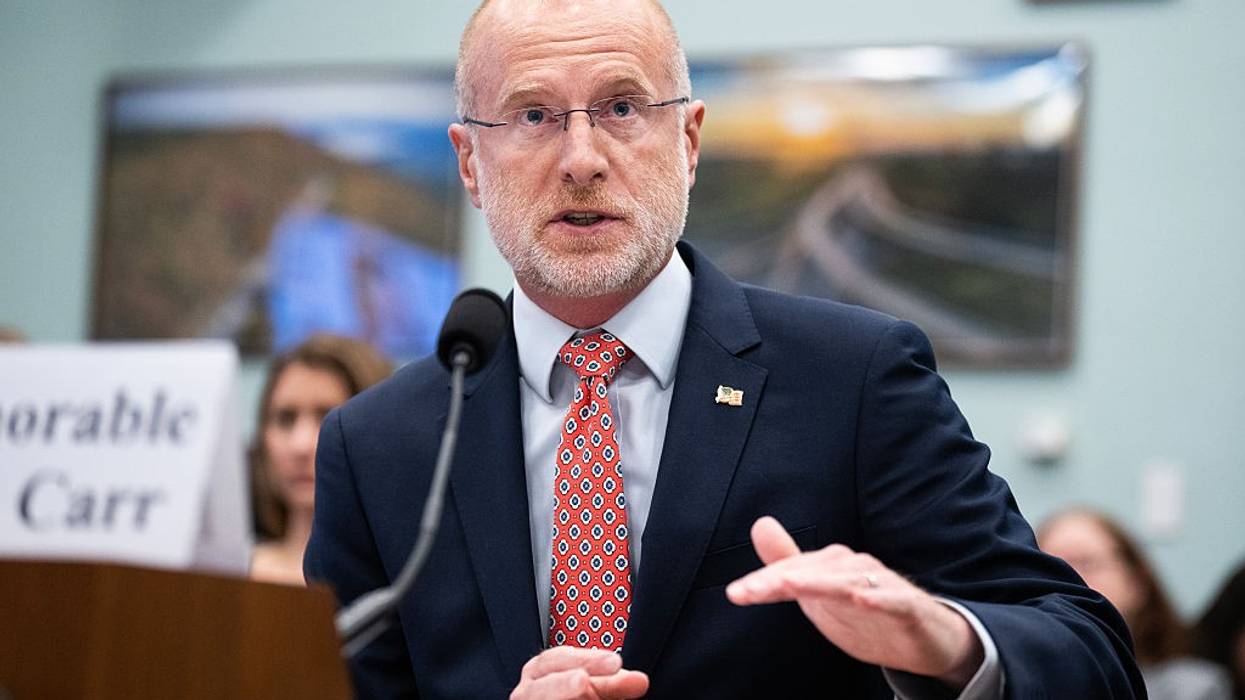
The problem was President Donald Trump is too thin-skinned to put up with a comedian poking fun at him regularly. As a result, he had Brendan Carr, his chair of the Federal Communications Commission, imply that the Ellison family’s effort to take over Paramount, CBS’ parent company, would be blocked if Colbert wasn’t fired. The Elliot family includes prominent Trumper Larry Ellison, one of the richest people in the world, and David Ellison, his equally right-wing son who most immediately controls Paramount.
But taking over one of the country’s major broadcast networks wasn’t enough for the Ellisons. They also control TikTok, the fifth most widely used social media platform, which Trump wrestled away from a Chinese company and put in Larry Ellison’s hands.
And now, Paramount is looking to take over Warner Brothers. In addition to giving them control over two major Hollywood studios, the merger would allow Paramount to merge CBS’ newsroom with Warner-owned CNN. This would presumably mean arch-Trumper Bari Weiss would be in charge of CNN.
Stories about the upward redistribution of income over the last half-century, and anti-worker practices by businesses, tend to get short shrift. But there is no doubt they would get even less attention in a Trumper-controlled media universe.
David Ellison put Weiss, who has long-established right-wing credentials, in charge of CBS News soon after taking over the network. In this role, she has already fired or driven away many serious reporters and repeatedly censored "60 Minutes," its highly regarded and widely watched investigative news show. We can expect more of the same at CNN if Paramount’s takeover of Warner is allowed to go through.
While Trump’s Justice Department’s antitrust division has green-lighted the Paramount-Warner merger, there is still a possibility it can be stopped. California and 11 other states sued to stop the merger on antitrust grounds. In addition to merging two of the major news networks, it would also consolidate two massive Hollywood studios.
An analysis by the Media and Consolidation Research Organization Lab at the University of California San Diego found that the resulting reduction in competition would almost certainly mean fewer new movies are produced and less employment in the industry. It also would likely mean higher streaming prices for consumers. This is in addition to the problem of giving Trumpers even more control of the media.
There is at least some chance that the courts will block this merger on the merits. However, if it goes through the appellate process, the Republican Supreme Court may find the opportunity to provide another gift to Trump supporters irresistible. Still, the prospect of a years-long delay could persuade Paramount to compromise and offer at least partial divestment of some of Warner Brothers holdings to facilitate the merger. In any case, the antitrust lawsuit raises the possibility of blocking the merger in its current form.
While further consolidation of the media and placing ever more of it in the hands of Trumpers is definitely bad news, it would be wrong to imagine that we previously had a golden age of media. News outlets owned and run by rich people tend to present news in a manner that is acceptable to the bosses. Stories about the upward redistribution of income over the last half-century, and anti-worker practices by businesses, tend to get short shrift. But there is no doubt they would get even less attention in a Trumper-controlled media universe.
However, we should be looking for something better. One route is a system of individual tax credits, say $100 per person, to support a person’s favorite news outlet(s). This would be a credit, not a deduction, and fully refundable, so even the poorest person would get a $100 to support the news outlet of their choice.
The model is the tax deduction for charitable contributions, except that everyone would get the same amount. There are many design issues that would have to be ironed out, but such a system could create a large pool of money to support news reporting in various forms that is not controlled by rich people.
This system also has the advantage that it can be done at the state or even local level. That means that cities run by progressives, like New York and Seattle, could pave the way by putting this sort of system in place. (Seattle’s new mayor, Katie Wilson, is a big supporter of this sort of system.)
It is hugely important to do what we can to block further consolidation of the media in the hands of the Trumpers. We also need to do other things, like reforming Section 230 to take away the special protection it gives the huge social media platforms. But the most important longer-term measure to protect a free press is to set up an alternative funding mechanism. An individual tax credit system is a promising route, but we need to get these alternatives on the table and start moving forward with them.
Too many of the president’s alleged adversaries are keeping their head down and trying to stay out of the line of fire. That has to change, and change soon, or they—and we—will all hang separately.
The appalling spectacle of some of the nation’s most prestigious law firms, media companies, and universities surrendering to bully pulpiteer Donald Trump’s extortion brings to mind that quip Benjamin Franklin made at the signing of the Declaration of Independence: “We must all hang together, or assuredly we shall all hang separately.”
Trump’s revenge campaign is just one aspect of his all-out war on democracy—and it’s easy to get distracted by his latest daily outrage—so there’s no blame for not following it closely. The gist of it is, since taking office, Trump has relentlessly attacked his perceived enemies and has brought a significant number of them to heel.
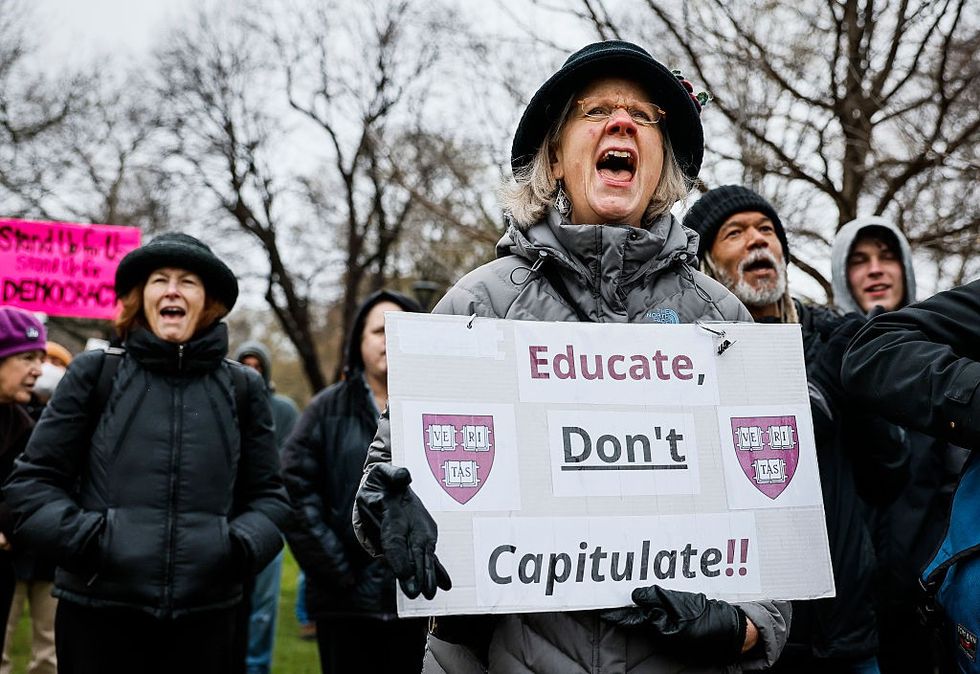
Trump’s crusade should not come as a total surprise. After all, he told his supporters at a March 2023 rally: “For those who have been wronged and betrayed… I am your retribution.” What is shocking is the capitulation rate. One by one, Trump has been picking off his alleged adversaries. To be sure, some are fighting back, but too many are keeping their head down and trying to stay out of the line of fire. That has to change, and change soon, or they—and we—will all hang separately.

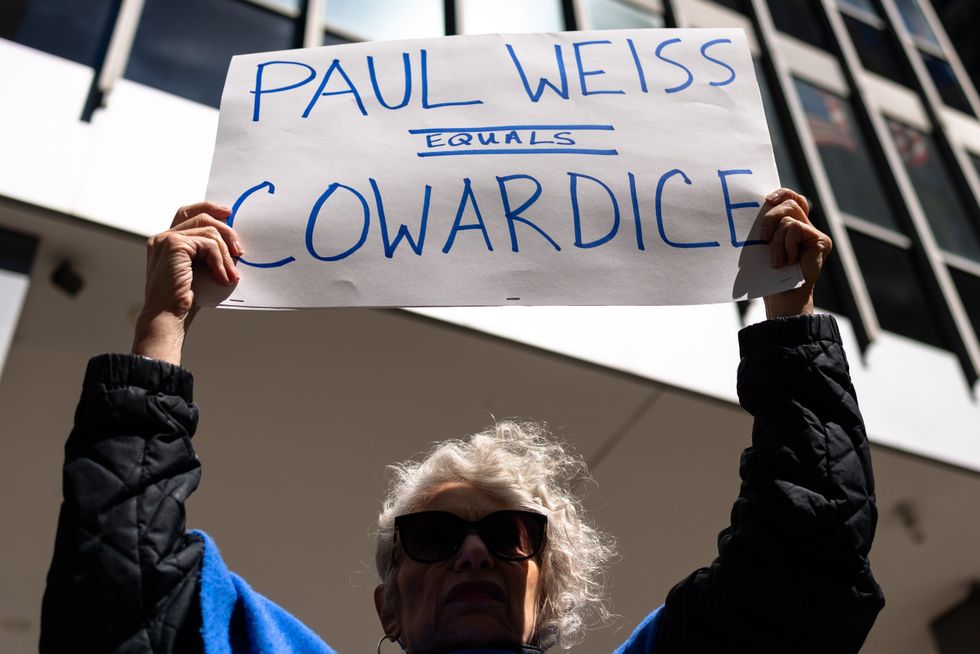
Nine prominent law firms, including Paul Weiss, Skadden Arps, and Latham & Watkins, have struck deals to avoid punitive executive orders Trump issued because they represented clients or took legal positions at odds with his administration. The orders would have revoked the firms’ security clearances, blocked their access to government buildings, and canceled their federal contracts. To get Trump to back down, they agreed to provide a total of $940 million in pro bono legal services to support Trump’s pet causes and eliminate diversity, equity, and inclusion (DEI) considerations in hiring and promotion.
At least four other major law firms, including Perkins Cole and WilmerHale, are resisting. They filed lawsuits arguing that Trump’s executive orders are unconstitutional retaliations that threaten the rule of law and violate First Amendment protections. Judges have issued temporary injunctions to block the executive orders.
Trump has not issued any executive orders against law firms since April, but the threat has had a chilling effect. “Some of the country’s largest law firms have declined to represent clients challenging the Trump administration…,” a recent ProPublica investigation found, “while others have sought to avoid any clients that Trump might perceive as his enemies.”

Both ABC News and Paramount, owner of CBS News, crumpled in the face of a meritless Trump lawsuit.
Trump’s case against Disney’s ABC News, which settled last December for $15 million for Trump’s presidential library, largely turned on semantics. Anchor George Stephanopoulos incorrectly stated on air that Trump was found civilly liable for raping writer E. Jean Carroll. In fact, he was found guilty of sexually assaulting (and defaming) Carroll. That said, the judge handling the case said the claim that Trump raped Carroll was “substantially true,” but the term “rape” is narrowly defined by New York state law. At any rate, to win the case, Trump would have had to clearly prove that Stephanopoulos’ comment was false and that he said it with “actual malice”—that he knew it was false or acted with reckless disregard of the truth. Trump would have lost.
Will news organizations now think twice before criticizing Trump? Most likely, yes.
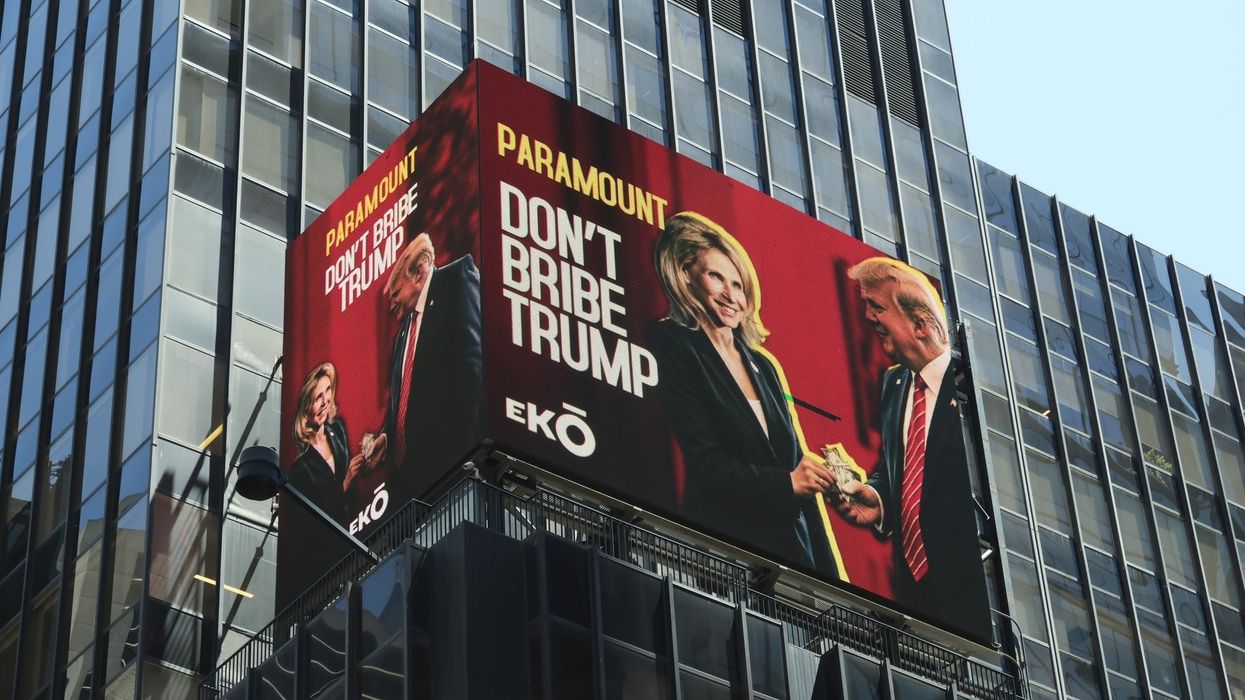
Paramount’s July 2 settlement of $16 million for Trump’s library was tantamount to bribery. Trump sued Paramount for $10 billion last October, alleging that “60 Minutes” deceptively edited an interview with presidential candidate Kamala Harris to make her look good. No matter that editing interviews for time and clarity is what broadcast news organizations do.
Trump did not have a case, but Paramount had a $8.4 billion merger with Skydance, a Hollywood studio, pending before the Federal Communications Commission (FCC)—now chaired by Project 2025 coauthor Brendan Carr—and it didn’t want to antagonize Trump. On July 14, CBS “Late Show” host Stephen Colbert called Paramount’s settlement a “big fat bribe.” The network cancelled his show three days later. On July 24, the FCC approved the merger.
Critics characterized the two settlements as acts of cowardice that threaten press freedom by emboldening frivolous lawsuits. Will news organizations now think twice before criticizing Trump? Most likely, yes.

At least a handful of news organizations, including the Associated Press and NPR, have pushed back against Trump’s bullying, but the results were hardly a victory for the First Amendment.
The Associated Press (AP) sued the White House in February for blocking its reporters from Oval Office briefings and Air Force One press pools because the news service didn’t adopt Trump’s new name for the Gulf of Mexico. AP argued banning its reporters violates its First Amendment rights. The case is still tied up in court.
In late April, the Corporation for Public Broadcasting (CPB) sued Trump for firing three of its five board members. In late May, NPR and PBS sued the Trump administration over the executive order to revoke federal funding for public broadcasting. Late last month, Trump signed a bill canceling $1.1 billion in public broadcast funding—which Congress had originally approved—in a “rescission” package, and on August 1, CPB announced it was shutting down.
More recently, Trump filed a $10 billion defamation lawsuit after the Wall Street Journal published a story on a sexually suggestive letter Trump sent to Jeffery Epstein for his 50th birthday. Denying that he had written the letter, Trump sued Rupert Murdoch; News Corp and its CEO, Robert Thomson; Dow Jones & Company; and the reporters who wrote the piece, calling the article “false, malicious, defamatory, FAKE NEWS” on Truth Social. The Journal stands by the story and is prepared to defend it in court.
“There’s nothing inherently wrong with a president bringing a libel suit,” the renowned constitutional lawyer Floyd Abrams told the AP. “But this claim [against the Wall Street Journal] certainly seems like nothing more or less than an effort to suppress speech that our president finds discomforting. That’s not why we have libel law. It’s why we have a First Amendment.”

Under the pretext of rooting out antisemitism and DEI programs on campus, Trump has been bludgeoning the most prominent American universities, threatening to cancel their federal research funding unless they change their policies.
On July 23, my alma mater Columbia University and the University of Pennsylvania were the first to capitulate. Columbia did not admit to any wrongdoing, but agreed to pay a $200 million fine; stop considering race in admissions and hiring; share with the federal government applicants’ standardized test scores, grade point averages, and race; and pay an additional $21 million to settle US Equal Employment Opportunity Commission investigations. In return, the school regains access to nearly $1.3 billion in annual federal funding that was placed on hold. Penn settled the same day but did not agree to pay anything. Among other things, it promised to align its athletic department’s policies with the Trump administration’s position banning transgender athletes.
Less than a week later, my other alma mater, Brown University, settled with the administration, agreeing to dismantle DEI programs and spend $50 million over 10 years on Rhode Island workforce development organizations. In return, the administration will reinstate $510 million in federal contracts and grants it threatened to block. Like Columbia, Brown also agreed to share details about its applicants with the federal government. Trump celebrated the agreement with a post on Truth Social proclaiming: “Woke is officially DEAD at Brown.”
In a March interview with the AP, former Trump White House lawyer Ty Cobb said giving in to a bully makes things worse by creating a snowball effect. “
Harvard University, which initially stood up for academic freedom and sued the administration, is reportedly moving toward a settlement requiring the university to pay $500 million to vocational or work force training programs instead of directly to the federal government or Trump’s presidential library. If finalized, the Trump administration would then restore billions of withheld federal dollars to the school for research and other programs.
The administration’s professed rationale for punishing universities because of antisemitism on campus doesn’t pass the smell test. It’s a ruse. It’s all about trying to stamp out perceived leftist ideology and snuff out speech it opposes, according to Trump’s education secretary, Linda McMahon.
In a July 24 interview with Fox Business, McMahon applauded the Columbia settlement as “a monumental victory for conservatives who wanted to do things on these elite campuses for a long time because we had such far left-leaning professors…” “We’re really hopeful,” she added, “this particular settlement agreement is going be a template for other universities to follow.”
Likewise, Vice President JD Vance has made it clear that, in his opinion, “professors are the enemy.” In November 2021, he delivered the keynote address at the National Conservatism Conference in Orlando. He spent 30 minutes railing about corrupt American universities and then closed by quoting Richard Nixon, who he called a “great prophet and statesman.”
“I think in this movement of national conservatism what we need more than inspiration is we need wisdom,” Vance said, “and there is a wisdom in what Richard Nixon said approximately 40 or 50 years ago. He said, and I quote: ‘The professors are the enemy.’” (During that same taped conversation, ironically with former professor Henry Kissinger, Nixon also said “the press is the enemy.”)

In a March interview with the AP, former Trump White House lawyer Ty Cobb said giving in to a bully makes things worse by creating a snowball effect. “The more of them that cave, the more extortion that that invites,” he said. “You’ll see other universities and other law firms and other ‘enemies’ of Trump assaulted and attacked into submission because of that.”
So, what is to be done?
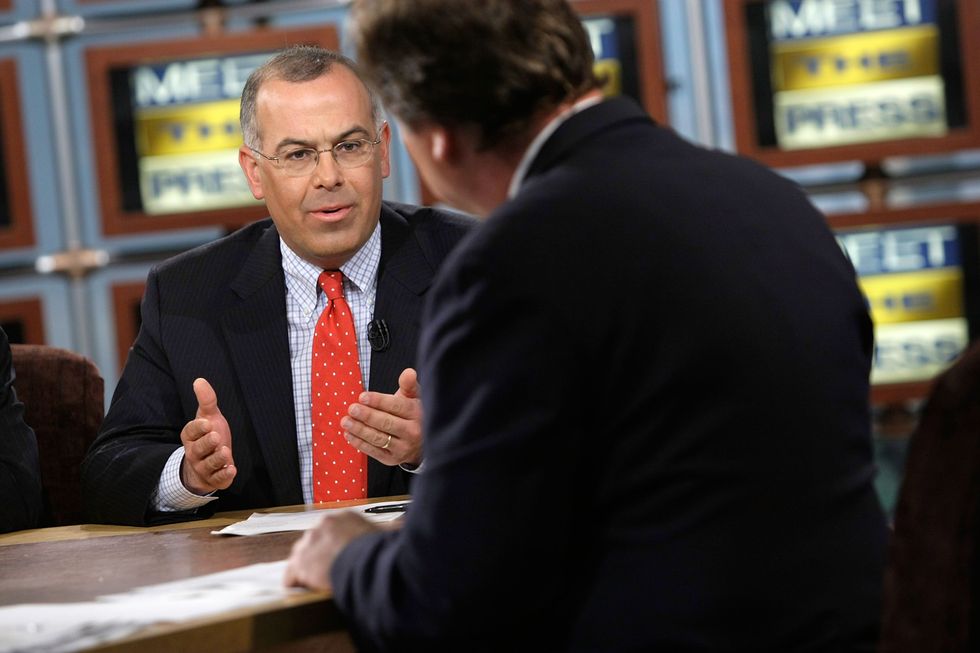
New York Times columnist David Brooks addressed this question on the “PBS News Hour” during his weekly discussion with MSNBC’s Jonathan Capehart on July 25.
“Well, there are two possible responses,” he said. “One, the one that’s being chosen by most organizational leaders right now, is lay low. It’s so, well, maybe they won’t pick on me, or maybe we will make a concession and they won’t pick on me...”
“The other option, which I thought we were going to have, is a broad coalition, not only of all universities, but all law firms, businesses, nonprofits, foundations, anybody in any sector that could be part of the extortion attempt,” he continued. “And they would say, we will band together. There’s strength of numbers. If they come for one of us, they come for all of us, sort of a domestic NATO Article 5.”
I would take Franklin’s proposition a bit further: It is the first responsibility of every citizen to defy authority when that authority is illegitimate.
I made the exact same argument in my graduation speech at Brown in 1976. I wasn’t talking about how to buck an authoritarian government, I was talking about how to challenge a top-down, undemocratic workplace, but it’s analogous.
The nation’s bicentennial year wasn’t a great time for a recent grad to be looking for a job. Industrial output had rebounded from a slump and corporate profits were up, but the recovery was jobless, and states and municipalities—and colleges—were facing major deficits. Given the scarcity of jobs in academia and the difficulty of earning a living as a solo practitioner, I warned my classmates: “More often than not we will find ourselves in basically undemocratic, hierarchical institutions that are resistant to change. These institutions are characterized by authoritarian control from above, and those who are not in the upper reaches of the hierarchy are excluded from the decision-making process.”
How did Brown prepare us for that future? By providing a taste of it. I cited examples of how, during my time there, Brown acted like any other corporation to protect its interests at the expense of its students, faculty, and workers. And then, like David Brooks, I spelled out the two ways to respond to authoritarians.
The first, I explained that June morning, is the “individual survival” response. One person alone has little chance against an institution, so it makes sense to keep your head down and accept the status quo. (By the same token, one university, one law firm, or one news organization alone has little chance against an authoritarian government.)
The second, more effective way is with a collective, community response. The civil rights, women’s, anti-war, gay, and environmental movements my generation grew up with demonstrated firsthand that united action can lead to positive change. It’s clear that strength comes in numbers, be it in school, the workplace, the voting booth, or the streets.
As mentioned above, 200 years before I gave that speech, Benjamin Franklin said: “We must all hang together, or assuredly we shall all hang separately.” He also pointed out: “It is the first responsibility of every citizen to question authority.”
I would take Franklin’s proposition a bit further: It is the first responsibility of every citizen to defy authority when that authority is illegitimate.
Certainly, there are significant risks to sticking your neck out, but the risks of doing nothing are even greater. If I learned anything during my four years at Brown—and my 40 years in Washington, DC—it’s that democracy is not a spectator sport, and we are all being tested by the worst political crisis of our lifetime.
This article first appeared at the Money Trail blog and is reposted here at Common Dreams with permission.The Trump administration is weaponizing psychological terminology to create a world where one pathetic old man can stifle all entertainment that forces him to confront his own obvious inadequacies and irrelevance.
It's remarkable how much happens that barely makes the news. While we scroll through memes and sensationalized soundbites, our attention monetized by oligarchs who profit from our stupor, democracy dies in broad daylight.
Many of us fastidiously tracking political events may have missed a chilling detail buried in the Paramount/CBS merger: a "bias monitor." The Trump administration installed this Orwellian position alongside the dismantling of diversity, equity, and inclusion at CBS and Paramount. According to Federal Communications Commission Commissioner Anna Gomez, the sole dissenting vote against the merger, this represents "just another part of this administration's campaign of censorship and control."
Commissioner Gomez explained the gravity of this so-called monitor: "What they're saying is that they are going to self-censor basically for ideological purity according to what this administration likes and to report only in the way this administration likes. Apparently, bias is anything this administration doesn't like. And that is what they're promising not to show anymore to their consumers."
This is not a threat. It is a promise being delivered.
Stephen Colbert's cancellation marks that promise in action. The highest-rated late-night host, Emmy-nominated, and like other effective comedians, someone who has pointed out the absurdities of our political system for decades. As Inae Oh of Mother Jones reported, "one could argue that [until now] Trump's attacks had yet to take down our actual culture. I'm talking about the literal content we consume—the television, art, movies, literature, music—no matter how much Trump complained. That it remained protected and free-willed, a rare area of control for a public that otherwise feels powerless to take action." The cancellation of Colbert changes this. We are witnessing the first successful assault on the cultural sphere itself.
They're not just coming for our votes or our institutions, they're coming for our imagination, our ability to envision a different world.
What does it mean to have a president who uses his enormous platform to pathetically attack performers and entertainers? Just in the last week of July, U.S. President Donald Trump personally attacked Bruce Springsteen, Beyoncé, Oprah, Bono, Taylor Swift, Trey Parker, Matt Stone, and Joy Behar. These attacks aren't just the desperate posturing of a has-been reality TV star president, they threaten to become official government-led investigations.
Of course, there's no credible evidence for any of his claims. But that hasn't prevented the capitulation of systems that could fight back. Recently, Brown, Columbia, University of Pennsylvania, University of California Los Angeles, Paramount, Disney, and Meta all paid multimillion dollar settlements ($221 million in the case of Columbia) to the Trump administration to avoid litigation. This litigation could have helped establish some balance of power in this country. Because of these capitulations, they are now all complicit in the dismantling of our democracy.
Let me be clear as a psychologist: This is not about bias. Bias is a tendency, often unconscious, that leads to preferences or disfavor of people, ideas, or beliefs, often in ways that are unfair. Real biases manifest as stereotypes, prejudices, and systematic preferences that shape how we perceive and interact with the world.
If we genuinely wanted a bias monitor at any corporation, it would require enormous funding for diversity, equity, and inclusion purposes. Actual bias monitoring would examine unconscious prejudices, systemic discrimination, and unfair treatment of marginalized groups. This is the opposite of what the Trump administration has been doing as all the policies being enacted reinforce white supremacy.
What we have instead is the Trump administration weaponizing psychological terminology to create a world where one pathetic old man can stifle all entertainment that forces him to confront his own obvious inadequacies and irrelevance.
This isn't about bias, it's about following the predictable playbook of authoritarians. This suppression of critical voices mirrors what happens in North Korea, where the government exerts near-total control over media and entertainment, allowing only content that glorifies the ruling family while strictly banning dissent or satire. There are no North Korean Stephen Colberts. Critical art is suppressed, and those attempting to create or access it face harsh punishment, including forced labor or execution.
While this moment is dire, I believe in the revolutionary power of art. History shows us that authoritarian regimes fear artists above all else because art reveals truth in ways that propaganda cannot counter.
To all who continue to create—comedians, performers, writers, artists—don't stop. Keep faith in the transformative power of art because, in Toni Morrison's words, "Art takes us and makes us take a journey beyond price, beyond cost, into bearing witness to the world as it is and as it should be."
As we navigate this slide away from democracy, we need artists to continue creating more than ever. Every joke that punctures pomposity, every song that speaks truth to power, every story that humanizes the dehumanized is an act of resistance.
The Trump administration understands something we must remember: Culture shapes consciousness. They're not just coming for our votes or our institutions, they're coming for our imagination, our ability to envision a different world.
As usual, Trump doesn't get humanity and doesn't understand that art has always thrived under oppression. The most powerful voices often emerge from the margins, from the underground, from those who refuse to be silenced.
This "bias monitor" isn't monitoring bias, it's monitoring our humanity. And that's exactly why we must not let them win.
"This capitulation is... a pervasive trend that applies to nearly all commercial media, including cable and telecommunications firms and online platforms," said Free Press.
Media advocacy organization Free Press on Tuesday unveiled an index that documents and rates major media organizations' reactions to the coercive demands being made by U.S. President Donald Trump.
As Free Press explained in a press release, its Media Capitulation Index tracks actions being taken by 35 major media conglomerates who are facing pressure from Trump and his allies to curb critical reporting and commentary on his administration.
"In this investigation, Free Press found that to varying degrees the owners of America's largest media firms are caving to pressure from an authoritarian-minded president and his captured federal agencies," the organization wrote. "This capitulation is not unique to owners of news outlets—like Paramount (which owns CBS), Disney (ABC) and Warner Bros. Discovery (CNN). Rather, it's a pervasive trend that applies to nearly all commercial media, including cable and telecommunications firms and online platforms."
Free Press argued that media companies have been bending to Trump's will through four major methods: Paying out lavish settlements in lawsuits brought by the president; rolling back their programs for enhancing diversity, equity, and inclusion; pressuring journalists and commentators to soften or even censor their criticisms of the president; and "attempting to curry favor with the president during inaugural ceremonies, private dinners at Mar-a-Lago, and meetings in the White House."
The index uses a scale to rate media organizations that range from "independent" on one end to "propaganda" on the other. Of all the media companies surveyed by Free Press, only two are rated as independent: Bloomberg Media Group and Netflix. The New York Times Company for now is the least compromised of any print media conglomerate outside of Bloomberg and is merely listed as "vulnerable," while Nant Capital, the owner of the Los Angeles Times, is the most compromised and is rated as "obeying" the Trump administration.
When it comes to broadcast media, no companies earned an "independent" ranking, and CBS owner Paramount was ranked as "obeying" the Trump administration in the wake of its decisions to give Trump a $16 million payout and then cancel the show of longtime Trump critic Stephen Colbert.
Former New York Times public editor Margaret Sullivan, a longtime critic of the American media's response to Trump, praised Free Press on her Substack page for highlighting the major problems facing the American media in the second Trump term.
"Huge, diverse corporations own news companies, and independent journalism all too often takes a back seat to corporate profits, mergers, and other forms of consolidation," she said. "Meanwhile, public media has been defunded, local journalism lacks local ownership, and partisan propaganda has found an influential home on radio and cable news."
She also interviewed Tim Karr, who works as Free Press' senior director of strategy and communications, about why her former employer did not earn an "independent" rating on the index.
"There is a tendency to 'both-sides' reporting about the Trump administration,” Karr said of The New York Times' coverage, which he added seems to give "equal weight to the forces of democracy and the forces of authoritarianism."
The silencing is happening across American media because Trump cannot stand criticism, because he’s vindictive as hell, and because he’s willing and able to use the federal government to punish media corporations.
The latest casualty of U.S. President Donald Trump’s efforts to silence media criticism is Eduardo Porter, one of the most thoughtful and intelligent critics of this heinous regime.
On Tuesday, Porter wrote his last column for The Washington Post. In it, he criticized Trump’s attempt to dismantle the global trading system.
Porter didn’t stop there. He also explained why he was leaving the Post:
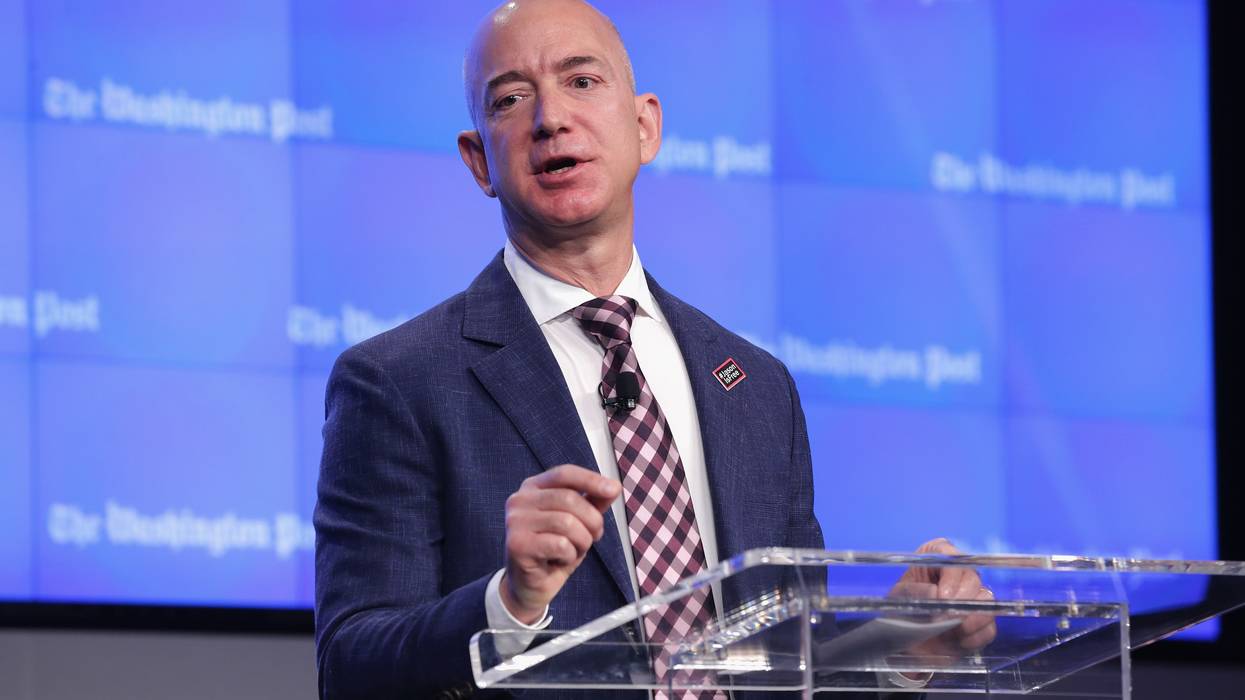
Jeff Bezos and his new head of Opinion are taking the paper down a path I cannot follow, directed toward the relentless promotion of free markets and personal liberties… I have no idea to what extent this is driven by Mr. Bezos’ fear of what Donald Trump could do to his various business interests, most of which are more valuable to him than the Post.
Well, I do have an idea. Bezos stopped the Post from endorsing former Vice President Kamala Harris. He made a huge contribution to Trump’s inauguration. And he stood directly in front of Trump at Trump’s swearing in.
Why? Because Bezos owns a bunch of mega-corporations, including Amazon, that depend on Trump’s goodwill and could be in deep trouble if Trump decided to retaliate against Bezos.
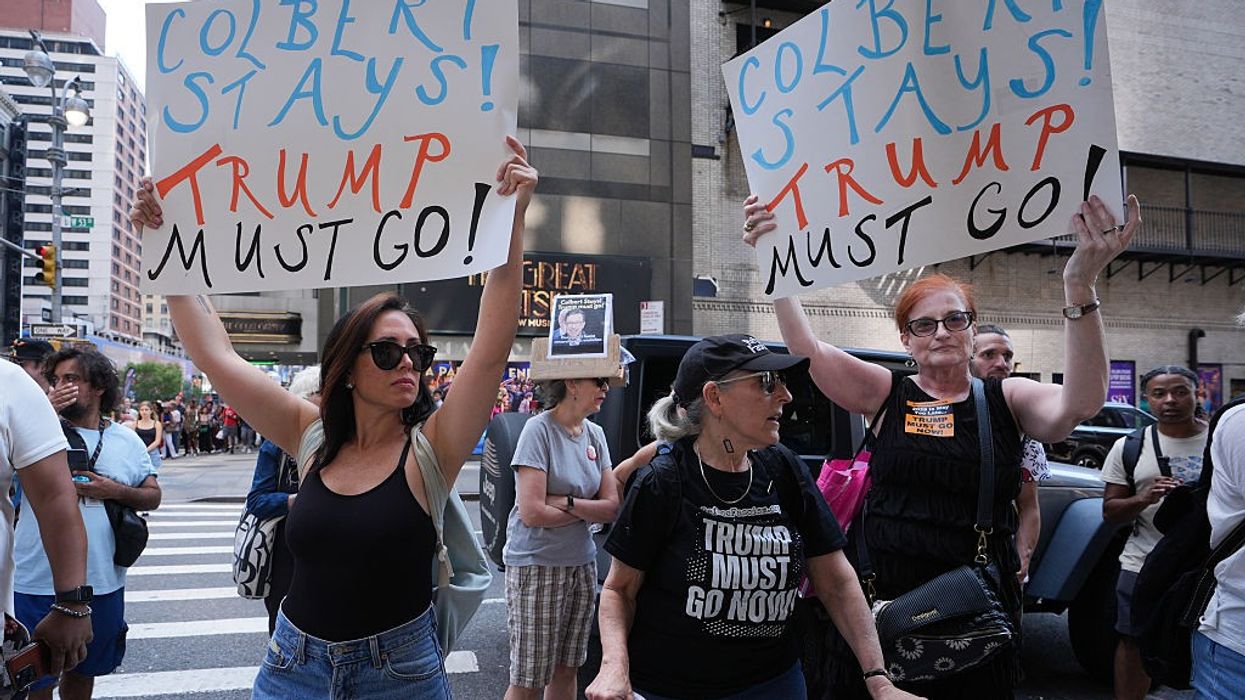
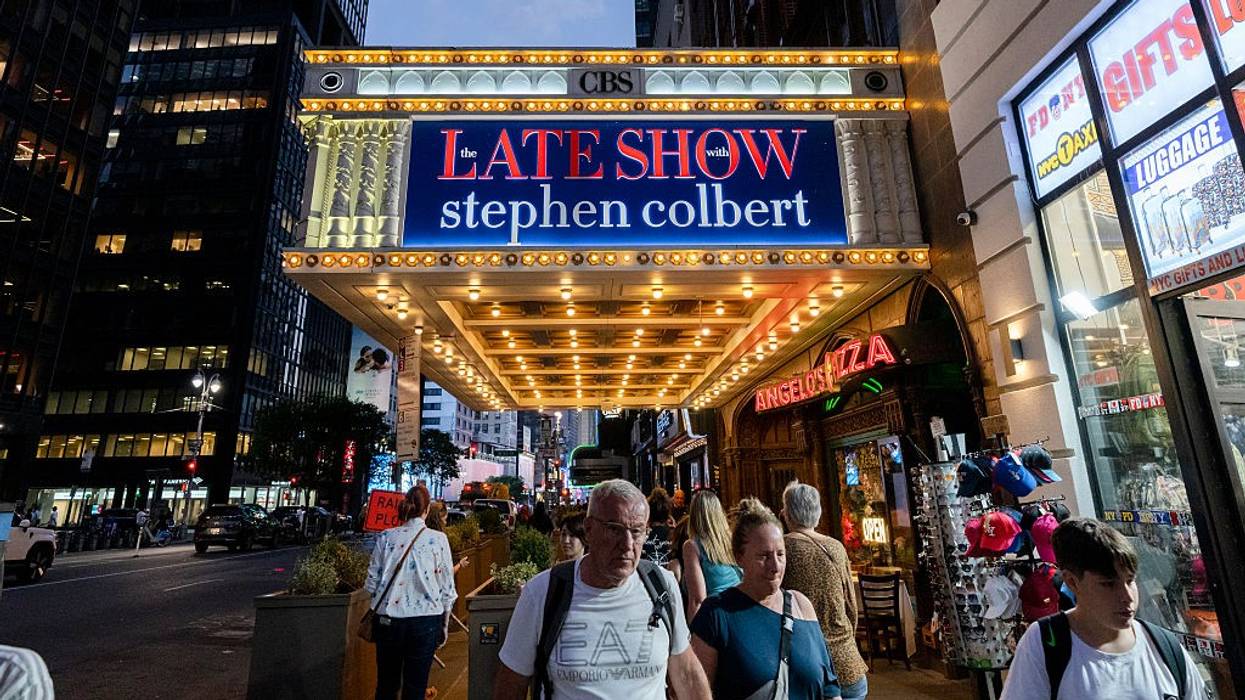
It’s much the same story with Stephen Colbert, longtime host of CBS’ “The Late Show” and the top-rated late-night talk show host in the United States.
On July 14, Colbert openly criticized CBS’ parent company, Paramount, for its $16 million settlement with Trump of his frivolous lawsuit over the routine editing of a “60 Minutes” interview with Kamala Harris that Trump claimed gave her an unfair advantage in the 2024 election.
Said Colbert in his opening monologue:
As someone who has always been a proud employee of this network, I am offended. And I don’t know if anything will ever repair my trust in this company… I believe this kind of complicated financial settlement with a sitting government official has a technical name in legal circles. It’s big fat bribe. Because this all comes as Paramount's owners are trying to get the Trump administration to approve the sale of our network to a new owner, Skydance.
Three days later, on July 17, Paramount pulled the plug on Colbert’s show, eliciting from Trump a celebratory, “I absolutely love that Colbert was fired.”
(A few days later, Colbert came out swinging, telling Trump to “go fuck yourself,” and joking that it had always been his dream to have a sitting president celebrate the end of his career.)
Yesterday, one week after Colbert’s show was cancelled, Trump’s Federal Communications Commission approved Paramount’s sale to Skydance.
To cinch the deal, Skydance CEO David Ellison promised that he’d eliminate all U.S.-based Diversity, Equity, and Inclusion programs at Paramount and CBS and create a new ombudsman to field complaints of ideological bias in news coverage.
Trump says CBS also agreed to run $20 million worth of public service announcements consistent with his ideological beliefs.
Let’s be clear. Jeff Bezos has silenced any criticism of Trump on the editorial pages of The Washington Post because Bezos fears Trump’s wrath.
CBS and its parent corporation, Paramount, has silenced criticism of Trump on Colbert’s hugely popular “Late Show” because its top corporate brass fears Trump’s wrath.
The new owner of CBS has agreed to some federal interference in the content of what it produces because he fears Trump’s wrath.
The silencing is happening across American media because Trump cannot stand criticism, because he’s vindictive as hell, and because he’s willing and able to use every department and agency of the federal government to punish any media corporations that allow its writers or hosts to criticize him.
It’s the same with American universities, whose professors have often criticized Trump’s illegal and unconstitutional actions and whose research has often yielded conclusions that contradict Trump’s lies (such as that climate change is a “hoax”).
Columbia University, Dartmouth College, and a handful of others have gone out of their way to “cooperate” with the Trump regime in order to avoid Trump’s wrath.
What does “cooperation” entail? Silencing Trump’s potential critics.
Columbia has just agreed to allow the regime to review its admissions and hiring practices in order to receive the federal research grants that the regime had held back.
Friends, this is how democracy dies.
Shame on any media outlet or university that allows Trump to silence it.
Trump is a dangerous despot. America needs its Eduardo Porters, Stephen Colberts, and all others in the media and in academia who have helped the nation understand just how truly dangerous Trump is.
The latest moves from CBS’ owners mark the latest seismic shift to the right in the U.S. media landscape.
The media production company Skydance is acquiring Paramount Global. The deal may be thought largely to be an entertainment merger, as Paramount owns Comedy Central, MTV, BET, Nickelodeon, Showtime, and the Paramount film studio. But Paramount owns broadcast network CBS and its news programming, which means that the deal has enormous implications for journalism—particularly given that it requires federal approval.
The coast certainly seems clear for the merger at this point [Editor’s Note: It was approved on Thursday]: Paramount has settled what is widely regarded as a frivolous lawsuit from U.S. President Donald Trump for $16 million over a CBS “60 Minutes” interview with former Vice President Kamala Harris; it has also canceled its highly successful and long-running “Late Show With Stephen Colbert,” whose host was critical of the settlement. Meanwhile, Paramount‘s soon-to-be-owner has met with “anti-woke” crusader Bari Weiss about a potential partnership with CBS.
U.S. President Donald Trump has used his institutional power to attack media he dislikes such as ABC and CBS, as well as to defund liberal-leaning public broadcasters NPR and PBS (FAIR.org, 4/25/25; Variety, 7/18/25; USA Today, 7/18/25). Late last year, Disney settled a similarly ludicrous Trump lawsuit over ABC‘s election coverage (FAIR.org, 12/16/24).
Trump has also used his power to take control of government broadcaster Voice of America, once a Cold War propaganda tool for U.S. power projection abroad, and fill it with content from One America News Network (AP, 5/7/25), a pro-Trump outlet FAIR founder Jeff Cohen once said “makes Fox News sound like Democracy Now!” (FAIR.org, 10/15/21).
The latest moves from CBS‘ owners mark the latest seismic shift to the right in the U.S. media landscape.
The lawsuit that Paramount settled to pave the way for the deal preposterously claimed that an interview with Democratic presidential candidate Kamala Harris on the CBS show “60 Minutes” was deceptively edited to favor her over Trump (BBC, 7/2/25). Anyone who cares about journalism or media freedom would have rooted for Paramount and CBS to fight the lawsuit, but Paramount‘s leading stockholder, Shari Redstone, apparently saw the settlement as a small price to keep Trump’s Federal Communications Commission (FCC) from standing in the way of the lucrative sale. (Trump claims that the combined company has also agreed to air $16 million more in PSAs, described as messages that will “support conservative causes supported by President Trump,” as part of the settlement, though Paramount denies such a side agreement exists—Variety, 7/4/25).
The settlement has been “broadly criticized as capitulation” by CBS staffers (Vanity Fair, 7/2/25). Reuters (7/2/25) reported that one “60 Minutes” source said:
Newsroom staff expressed “widespread distress” about the settlement and concerns about the future of the CBS News prime time news magazine and its hard-hitting brand of journalism.
A filing with the FCC (Deadline, 7/18/25) suggested that an upcoming shift in CBS’ news coverage was part of the deal to get the acquisition approved. It said that Skydance and FCC officials had “discussed Skydance’s commitment to unbiased journalism and its embrace of diverse viewpoints, principles that will ensure CBS’ editorial decision-making reflects the varied ideological perspectives of American viewers.”
Presumably those “varied ideological perspectives” will not include those offensive to Trump, since airing those resulted in Paramount paying a multi-million-dollar settlement. As I previously wrote (FAIR.org, 2/26/25), FCC chair Brendan Carr is a lieutenant in the MAGA movement, and wrote the FCC section for Project 2025, the right-wing policy roadmap for the second Trump administration. While vowing to reduce regulation, he has shown no qualms about using state power to impose ideological limits on broadcast news.
Paramount also promised to install an ombud who would investigate “any complaints of bias or other concerns” at CBS News, and to eliminate all diversity, equity, and inclusion programs (Wrap, 7/23/25).
As the deal approached, it became clear that CBS’ ability to operate as a fair news provider was slipping, as Bill Owens, the executive producer of “60 Minutes,” “announced his resignation, saying he can no longer make independent journalism decisions for the program” (NPR, 4/23/25). With Colbert’s termination, it’s unclear whether any part of the new Skydance empire will escape ideological purification.
CBS‘ announcement that it would cancel the “Late Show With Stephen Colbert” has been read as a muzzling of a prominent critic, not just of Trump, but of the Paramount settlement. The Writers Guild of America East (7/18/25) spelled out the authoritarian moment plainly:
On July 15, during a regular show of the “Late Show With Stephen Colbert,” Colbert went on-air and called the settlement a “big fat bribe” in exchange for a favorable decision on the proposed merger between Paramount and Skydance, a charge currently under investigation in California.
Less than 48 hours later, on July 17, Paramount canceled the “Late Show With Stephen Colbert,” a show currently performing first in its timeslot, giving vague references to the program’s “financial performance” as the only explanation. For 10 years, the show has been one of the most successful, beloved, and profitable programs on CBS, entertaining an audience of millions on late night television, on streaming services, and across social media.
Given Paramount’s recent capitulation to President Trump in the CBS News lawsuit, the Writers Guild of America has significant concerns that the “Late Show’s” cancellation is a bribe, sacrificing free speech to curry favor with the Trump administration as the company looks for merger approval.
In its first new episode in over a year, the Comedy Central flagship animated comedy “South Park” (7/23/25), often embraced by conservatives for its eagerness to offend liberals, attacked both Trump and the channel’s owner Paramount. In its raunchy style, USA Today (7/24/25) reported, it “referenced everything from the company’s controversial settlement with the president to its shock decision to cancel the ‘Late Show With Stephen Colbert.’” Show creators Trey Parker and Matt Stone had previously commented on X (7/2/25), “This merger is a shitshow, and it’s fucking up ‘South Park.’” It remains to be seen whether the thin-skinned Trump White House will hold up the acquisition in retaliation for the satire. [Editor’s Note: It did not.]
There are indications that more ideological restructuring at the network is on its way. CNN (7/11/25) reported that “Paramount’s owner-in-waiting, David Ellison, met with journalist entrepreneur Bari Weiss… about a possible tie-up between CBS News and her startup The Free Press.” The report added that “Ellison is said to be interested in infusing Weiss’ editorial perspective into CBS News.”
For those who are unfamiliar with Weiss, she is a former New York Times editor and writer who gained fame for attacking “wokeness” (Commentary, 11/21)—which for the right is any politics that seeks to address racial and gender inequalities—and her advocacy for Israel and against critics of its government (Intercept, 3/8/18).
While David Ellison donated to former President Joe Biden’s reelection efforts (CNBC, 4/16/24) and other Democratic campaigns, the political commitments of his father Larry Ellison may be more relevant. Larry is the cofounder of the software giant Oracle and, according to the Forbes 400 list, the fourth-richest person in the United States, behind Meta‘s Mark Zuckerberg, Amazon‘s Jeff Bezos, and X‘s Elon Musk. As The New York Times (4/2/25) noted, Larry “is putting up most of the $8 billion bid by his son, David, to buy Paramount.”
The elder Ellison is well-known for his contributions to conservative causes (Vox, 2/12/20; Washington Post, 5/20/22). He gave $4 million to a super PAC supporting Marco Rubio’s presidential bid (Politico, 2/20/16), and $15 million to one backing Sen. Tim Scott (R–S.C.) (Politico, 2/19/22).
Slate (9/14/20) called Oracle the “Trump Administration’s Favorite Tech Company,” as evidenced by the fact that Trump picked Oracle to potentially “partner” with TikTok, giving the Chinese-owned social media company a reliable ideological watchdog in order to avoid a congressionally mandated ban (FAIR.org, 12/6/24).
One thing the Ellisons agree on is wholehearted support for Zionism. In 2017, Larry Ellison gave $16.6 million to the Friends of the Israeli Defense Forces (Jewish Telegraphic Agency, 11/5/17). Two years ago, the Hollywood Reporter (10/13/23) reported that “Skydance Media, led by David Ellison, has committed $1 million to humanitarian relief efforts in Israel” in response to the October 7, 2023 Hamas attack. It quoted the company:
Skydance stands with Israel, strongly condemns the attacks against its citizens, is donating support to the victims of this tragic act of terrorism, and prays for the safe release of innocents hostages.
Last year, The Jerusalem Post (7/31/24) ran a story “written in cooperation with SkyDance” that highlighted support for Israel by David Ellison and Redstone’s son, “Brandon Korff, heir to the Paramount empire.” The article quoted a “source familiar with the details” who described Ellison and Korff sharing “Zionist values” and noted that “both quietly donate quite a bit to the state of Israel and the [Israel Defense Forces.]”
Redstone herself has been an outspoken Zionist during her time at the head of Paramount; when CBS admonished host Tony Dokoupil for his hostile interview with author Ta-Nehisi Coates, in which Dokoupil suggested that Coates was an “extremist” on Palestine, Redstone publicly criticized network management (LA Times, 10/9/24).
Given the talks with Weiss and The Free Press, one might expect CBS coverage to skew even further to the right on the Middle East, as well as on the Trump’s administration effort to clamp down on critical speech against Israel’s genocide and its support from the U.S. While Weiss’s brand is all about free speech, she got her start in politics agitating for the censorship of professors with pro-Palestinian views (Jewish Currents, 7/23/20).
"The stench of this transaction will linger over the commission for years," said a pair of Democratic senators.
The Republican-controlled Federal Communications Commission on Thursday gave formal approval to the $8 billion merger of CBS owner Paramount and the media firm Skydance, which won over the agency's Trump-appointed chairman with pledges to review CBS' content and appoint an ombudsman to evaluate claims of bias.
The FCC's two Republicans, Chairman Brendan Carr and Commissioner Olivia Trusty, supported approval of the merger, a decision that comes weeks after Paramount agreed to pay $16 million to settle President Donald Trump's lawsuit over the organization's handling of a pre-election "60 Minutes" interview with Kamala Harris.
Anna Gomez, the FCC's lone Democratic-appointed commissioner, said Thursday that "after months of cowardly capitulation to this administration, Paramount finally got what it wanted."
"Despite this regrettable outcome, this administration is not done with its assault on the First Amendment," said Gomez, who opposed the merger. "In fact, it may only be beginning. The Paramount payout and this reckless approval have emboldened those who believe the government can—and should—abuse its power to extract financial and ideological concessions, demand favored treatment, and secure positive media coverage. It is a dark chapter in a long and growing record of abuse that threatens press freedom in this country."
"The partisan vote is a dark day for independent journalism and a stain on the storied history of the Federal Communications Commission."
Democratic lawmakers responded with similar disgust and alarm. In a joint statement, Sens. Ed Markey (D-Mass.) and Ben Ray Luján (D-N.M.) said the merger approval "reeks of the worst form of corruption."
"While we're glad that the commission took a vote on the deal, as we have repeatedly called for, the partisan vote is a dark day for independent journalism and a stain on the storied history of the Federal Communications Commission," the senators added. "The stench of this transaction will linger over the commission for years."
Sen. Elizabeth Warren (D-Mass.) said that "this merger must be investigated for any criminal behavior."
"It's an open question whether the Trump administration’s approval of this merger was the result of a bribe," said Warren.
BREAKING NEWS: Trump's government just approved Paramount's merger with Skydance.
Sure looks like they paid Donald Trump $36 MILLION for this merger.
Bribery is illegal no matter who is president. pic.twitter.com/DE7LPRjT6X
— Elizabeth Warren (@SenWarren) July 24, 2025
Under the publicly available terms of the Paramount settlement, the company agreed to put $16 million toward Trump's future presidential library. But Trump has claimed that the deal is actually worth more than twice the publicly reported figure, asserting that Skydance agreed to spend $20 million on "advertising, PSAs, or similar programming."
Earlier this week, Warren and two other senators demanded answers from Skydance CEO David Ellison about the purported side deal, which the lawmakers described as a "potential secret Trump payoff."
Conor Gaffney and Janine Lopez, attorneys at the nonprofit group Protect Democracy, wrote Thursday that "no doubt the boards of Paramount and Skydance are hoping this saga ends today—now that they've appeased the FCC and cleared merger review."
"But as we've seen time and again, businesses that capitulate to the Trump administration find themselves captured rather than in the clear—with the president quick to change his mind and come back for more," they wrote. "The costs of capitulation are higher than they might initially seem, and the business calculation that Paramount and many others have made may be wrong. The price of protection only goes up, and the mob keeps coming around."
The Democratic senators pushed Skydance CEO David Ellison for answers on reports suggesting the existence of a side deal with the president that includes advertising for right-wing causes.
A trio of Democratic U.S. senators on Monday launched a probe into reports that President Donald Trump's legal team struck a secretive side deal with Skydance—the prospective owner of CBS—that includes millions of dollars worth of "broadcast transmissions" supporting right-wing causes.
In a letter to Skydance CEO David Ellison, Sens. Elizabeth Warren (D-Mass.), Ron Wyden (D-Ore.), and Bernie Sanders (I-Vt.) wrote that Trump himself appeared to confirm the existence of the side deal in comments to reporters about his $16 million settlement with Paramount, the current owner of CBS that is seeking federal approval for its pending merger with Skydance.
Trump suggested the settlement was worth twice as much as the publicly reported figure, saying, "We did a deal for about $16 million plus $16 million—or maybe more than that in advertising... So it's like $32 to maybe $35 million. I think that's what they did."
The senators described the alleged side deal as a "potential secret Trump payoff."
"This admission appears to corroborate reporting that claims you reached a 'side deal' with the president, the terms of
which involve CBS airing public service announcements 'and other broadcast transmissions' worth between $15 million and $20 million that 'support conservative causes supported by President Trump.' The nature and existence of this arrangement are uncertain, with at least one anonymous source calling the reports 'false.'"
The president's comments aligned with a New York Post story published earlier this month alleging that Ellison vowed to "run between $15 million and $20 million of public service ads to promote causes supported by the president" once the Skydance CEO takes over CBS.
Paramount denied having any knowledge of a side deal.
Did Skydance make a secret side deal with Donald Trump so he’d approve its $8 BILLION merger with Paramount?
This could be bribery in plain sight. I'm pushing for answers NOW. https://t.co/UMSf84Cx7h
— Elizabeth Warren (@SenWarren) July 21, 2025
The Democratic senators wrote in their letter to Ellison that the president's comments and related reporting "raise fresh questions about corruption in the Trump administration and President Trump's willingness to accept payments from entities with significant policy interests before agencies he controls."
The senators demanded that Ellison provide answers to seven questions, including whether there is "currently any arrangement under which you or Skydance will provide compensation, advertising, or promotional activities that in any way assist President Trump, his family, his presidential library, or other administration officials" and whether Ellison has "personally discussed with President Trump, any of his family members, any Trump administration officials, or presidential library fund personnel any matters related to the Paramount-Skydance transaction."
The letter was sent days after Ellison met with Federal Communications Commission Chair Brendan Carr—a Trump loyalist—to discuss the pending merger with Paramount.
The meeting, according to Skydance's counsel, included a discussion of "Skydance's commitment to unbiased journalism and its
embrace of diverse viewpoints, principles that will ensure CBS' editorial decision-making reflects the varied ideological perspectives of American viewers."
As Variety noted, "That's significant because Carr, appointed by Trump, had reopened an agency probe into a 'news distortion' complaint against CBS over the allegedly deceptive editing of a '60 Minutes' interview with Kamala Harris segment—the same interview that Trump sued Paramount and CBS over."
"The application of the FCC's 'news distortion' policy in this way was highly unusual, according to former agency officials," Variety reported.
The Writers Guild of America voiced concern that Paramount is "sacrificing free speech to curry favor with the Trump administration as the company looks for merger approval."
The Writers Guild of America is calling on New York's attorney general to launch a bribery investigation into Paramount Global following the cancellation of "The Late Show With Stephen Colbert."
WGA, some of whose members worked on the CBS show, said in a statement that while "cancellations are part of the business," a "corporation terminating a show in bad faith due to explicit or implicit political pressure is dangerous and unacceptable in a democratic society."
"Paramount's decision comes against a backdrop of relentless attacks on a free press by President Trump, through lawsuits against CBS and ABC, threatened litigation of media organizations with critical coverage, and the unconscionable defunding of PBS and NPR," the union said.
WGA noted that the show's cancellation—which CBS insisted was a "purely financial" decision—came after Colbert criticized Paramount's $16 million settlement of a lawsuit brought by President Donald Trump.
In a July 15 segment, aired 48 hours prior to his show's cancellation, Colbert called the settlement with Trump a "big, fat bribe" aimed at greasing federal approval of Paramount's pending merger with the entertainment company Skydance. Paramount owns CBS, and Paramount's controlling shareholder, Shari Redstone, has reportedly been monitoring the network's coverage of the president.
The day of the Colbert segment, the CEO of Skydance met with Federal Communications Commission Chair Brendan Carr to discuss the pending merger.
In its statement, WGA urged New York Attorney General Letitia James to investigate "potential wrongdoing" at Paramount, which is headquartered in New York City.
"Given Paramount's recent capitulation to President Trump in the CBS News lawsuit, the Writers Guild of America has significant concerns that 'The Late Show' cancellation is a bribe, sacrificing free speech to curry favor with the Trump administration as the company looks for merger approval," the union said. "We call on our elected leaders to hold those responsible to account, to demand answers about why this beloved program was canceled, and to assure the public that Colbert and his writers were not censored due to their views or the whims of the president."
Ahead of the official settlement announcement, California's Senate launched an investigation into whether Paramount "violated state laws against bribery and unfair competition" by offering Trump $15 million to end the legal fight, Semafor reported.
After news of the settlement deal broke earlier this month, Democratic U.S. senators called for a federal investigation.
"With Paramount folding to Donald Trump at the same time the company needs his administration's approval for its billion-dollar merger, this could be bribery in plain sight," Sen. Elizabeth Warren (D-Mass.) said in a statement. "Paramount has refused to provide answers to a congressional inquiry, so I'm calling for a full investigation into whether or not any anti-bribery laws were broken."
The conglomerates that dominate our media and our society have one and only one value: profit-maximization.
When media critic A.J. Liebling wrote in The New Yorker 65 years ago that “freedom of the press is guaranteed only to those who own one,” he might have glimpsed a media system dangerously dominated by a small number of companies.
But it’s unlikely he could have foreseen a president as authoritarian as Donald Trump, and media conglomerates eager to capitulate to him.
Thanks to the Paramount conglomerate and its greed-fueled boss, Shari Redstone, the “Late Show with Stephen Colbert” will vanish next year. After the Trump administration responds by approving the Paramount merger with Skydance, Redstone will be roughly $2 billion richer than she is today, and Paramount/CBS may become even more Trump-friendly.
Months ago, when I predicted the demise of Colbert or “The Daily Show,” another Paramount property, it sounded paranoid. But now it’s reality. (“The Daily Show” may be next on the chopping block.)
In recent months, we’ve seen one media conglomerate after another offer what amounted to multimillion-dollar bribes to Trump by settling frivolous Trump lawsuits that these companies could not possibly have lost in court.
Last December, the Disney Company paid Trump a thinly-disguised bribe—$15 million to Trump’s future presidential library—to settle a harassment lawsuit against ABC News over a segment mentioning E. Jean Carroll’s victorious case against Trump.
In January, Mark Zuckerberg’s Meta made a bribe-like payment of $25 million to Trump to settle a ridiculous lawsuit after the company followed its own well-understood guidelines and suspended Trump from Facebook and Instagram for inciting violence on January 6, 2021 at the Capitol. (Zuckerberg dined with Trump at Mar-a-Lago in November and Meta donated $1 million to Trump’s 2025 inaugural fund.)
But there was a snag in settlement negotiations between Paramount and Trump over an even more laughable suit he could never win in court. This one concerned how CBS “60 Minutes” had edited an interview with Kamala Harris, a suit that Paramount had called “meritless.”
During negotiations, respected executive producer of “60 Minutes” Bill Owens resigned over Paramount meddling, soon followed by the resignation of the CEO of CBS News. But that wasn’t enough to get the suit settled, and it was far from sufficient to get the Trump administration to approve the Paramount merger. That’s when I worried that Colbert or Jon Stewart would have to be sacrificed to placate the authoritarian-in-chief and get Paramount and Redstone the riches that a merger would bring.
Three weeks ago, Paramount agreed to pay Trump $16 million to settle the suit, amid rumors of side deals that content would shift at the new Paramount. And now Colbert, one of Trump’s most effective critics, is being shown the door. On Monday’s show, Colbert carried on at length, making fun of what he called Paramount’s “big, fat bribe.”
Colbert is funny.
What’s not funny is that our country’s democratic experiment is on the verge of collapse—and it has less to do with Trump than with the capitulation of corporate liberals and corporate centrist institutions to Trump.
Big universities have capitulated. Big law firms have capitulated. Big media companies have capitulated.
The lesson to be learned from today’s political reality is that big corporate institutions don’t care about democracy or free speech. They will bend the political system toward their own economic benefit—and be complicit with authoritarianism if it keeps getting them wealthier.
The conglomerates that dominate our media and our society have one and only one value: profit-maximization. This was pretty much admitted by Shari Redstone’s late father, Sumner, who built the Viacom (now Paramount) media conglomerate. Sumner Redstone was considered a liberal, a son of Massachusetts who’d been friendly with Massachusetts Sen. John Kerry, the 2004 Democratic candidate for president. But Redstone famously endorsed George W. Bush for president in 2004.
As Redstone explained: “I vote for what’s good for Viacom. I vote, today, Viacom... I don’t want to denigrate Kerry, but from a Viacom standpoint, the election of a Republican administration has stood for many things we believe in, deregulation and so on.”
I know I’m not the only progressive who has survived the Trump years with my sanity intact thanks in large part to TV comedians employed by media conglomerates: Colbert (Paramount), Jon Stewart and team (Paramount), Jimmy Kimmel (Disney), Seth Meyers (Comcast); and the best investigative journalist on mainstream TV, John Oliver (Warner Discovery).
There’s a quote usually attributed—perhaps inaccurately—to George Orwell: “In a time of universal deceit, telling the truth is a revolutionary act.”
I’ve offered a twist on this quote for the Trump era: “In a time of political craziness, keeping one’s sanity is a revolutionary act.”
It’s hard to stay sane without laughter, and the comedians listed above are often uplifting. But just as we’ve moved to independent news outlets out of distrust for corporate news, we’re likely to be looking outside the media conglomerates for our comedy when many a truth is truly spoken in jest.