SUBSCRIBE TO OUR FREE NEWSLETTER
Daily news & progressive opinion—funded by the people, not the corporations—delivered straight to your inbox.
5
#000000
#FFFFFF
To donate by check, phone, or other method, see our More Ways to Give page.
Daily news & progressive opinion—funded by the people, not the corporations—delivered straight to your inbox.
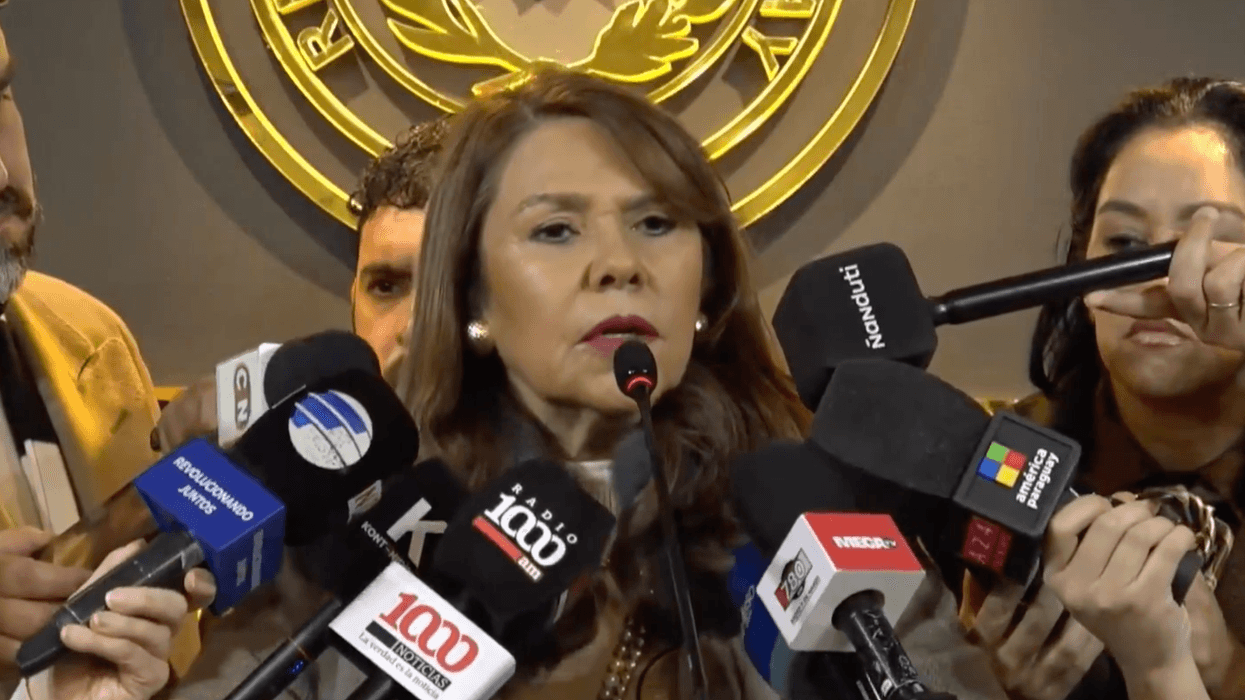
"I will not apologize," said 62-year-old Sen. Celeste Amarilla. "I come from a generation when gays were beaten up and calling someone a little Black shit was common."
A Paraguayan senator on Tuesday partially retracted her racist rant against French soccer superstar Kylian Mbappé but refused to apologize as French prosecutors weigh hate crime charges and officials in both countries condemned her remarks.
Prosecutors in Paris are considering charges of incitement to hatred or violence, or aggravated public insult, against right-wing Paraguayan opposition Sen. Celeste Amarilla, after the French Football Federation filed a complaint calling the "racist remarks" of the lawmaker "totally abject and unacceptable."
France eliminated Paraguay from the FIFA World Cup on Saturday, beating the South American side 1-0 in the Round of 16 match in Philadelphia, with Mbappé scoring a game-winning penalty kick in the 70th minute.
Following the unusually physical match—some observers accused Paraguay of being sore losers and playing dirty—Mbappé refused to shake Paraguayan goalkeeper Orlando Gill's hand.
An incensed Amarilla then took to X to call Mbappé a "colonized Cameroonian, pretending hard to be French, resentful, newly rich, arrogant, and ugly."
In a second post, the senator said Mbappé "didn't even learn to write; instead of mother's milk, he suckled on coconuts, and the most educated things he heard were the chimpanzees."
Mbappé was born in Paris and grew up just outside the French capital in Bondy.
Amarilla also cheered racist posts by other X users and asked "permission" to use one comment asking, "What kind of 'dark' thing can you ask someone who ran from lions so as not to be eaten?"
While many Paraguayans rushed to Amarilla's defense in the name of their national, sporting, and even racial honor, the country's Foreign Ministry released a statement saying the nation's government "deplores and rejects" her remarks, which it said are "contrary to the values and principles that inspire peaceful coexistence and respect for the human dignity that our country promotes."
Paraguayan Vice President Pedro Alliana also weighed in, asserting Monday that "football is an expression of fraternity" that "should unite people," and "there is no room for any type of discrimination" in the sport.
Mbappé responded directly to Amarilla on social media, saying, "You are a despicable woman and unworthy of your position."
"You do not represent Paraguay, that country which has sweated passion and honor throughout the competition," the French captain and Real Madrid superstar wrote. "Through your recklessness and your brazen racism, the entire world has already forgotten the journey and the historic effort that your players accomplished during this World Cup, making way for an incompetent woman who gives the worst possible image of her country."
French President Emmanuel Macron posted on social media: "Another goal for Kylian Mbappé. Against racism this time. All my support. When words defile, our values respond—dignity, respect, fraternity."
Amarilla subsequently posted a screed attacking what she called Mbappé's "arrogance" and "contempt."
"My posts were written in the heat of the moment," she claimed. "That mixed-race blood—a beautiful blend of Indigenous and Spanish blood flowing through my veins—was boiling while you mocked those great Paraguayan players who fought as equals until the very end of the match, and that's why I wrote those messages."
During Amarilla's youth, Paraguay committed genocide against the Aché, Ayoreo, Guaraní, and other Indigenous peoples under the US-backed dictatorship of Gen. Alfredo Stroessner.
"Soon afterward, however, I regretted responding with the same insults that I myself receive," Amarilla continued in a conciliatory twist. "I, too am looked down upon for being brown-skinned and Latina; they call us 'sudacas.' I regretted it and deleted the post. I realized I was repeating patterns that I hate. I understand that it may have hurt you, because it is humiliating."
"Now I demand that you also retract your words and apologize to me," she added.
Speaking at a Tuesday morning press conference, Amarilla again defended her actions, which she said were rooted in her Generation X upbringing, declaring, "I will not apologize."
🗣️ Celeste Amarilla: “I come from a generation where calling someone a “little Black sh*t” was common.
Watch out for Paraguayans. We put Dinho behind bars for corruption.
Don't underestimate me, I can file charges against you.”
She’s disgusting, bro. 🤮 pic.twitter.com/yAw55G0hSP
— 10 (@Kylian) July 7, 2026
"I'm nearly 62 years old and grew up in a society where gays were beaten and where calling someone a little Black shit was the most common thing," the senator said. "I come from that generation, so now I'm trying to build a different Celeste Amarilla, that's capable of co-existing with others."
"Have patience," she added. "I'm trying."
Climate finance must be redirected away from greenwashing and towards real solutions like a just transition, helping frontline communities, conservation, protection of land and forests, and reforestation.
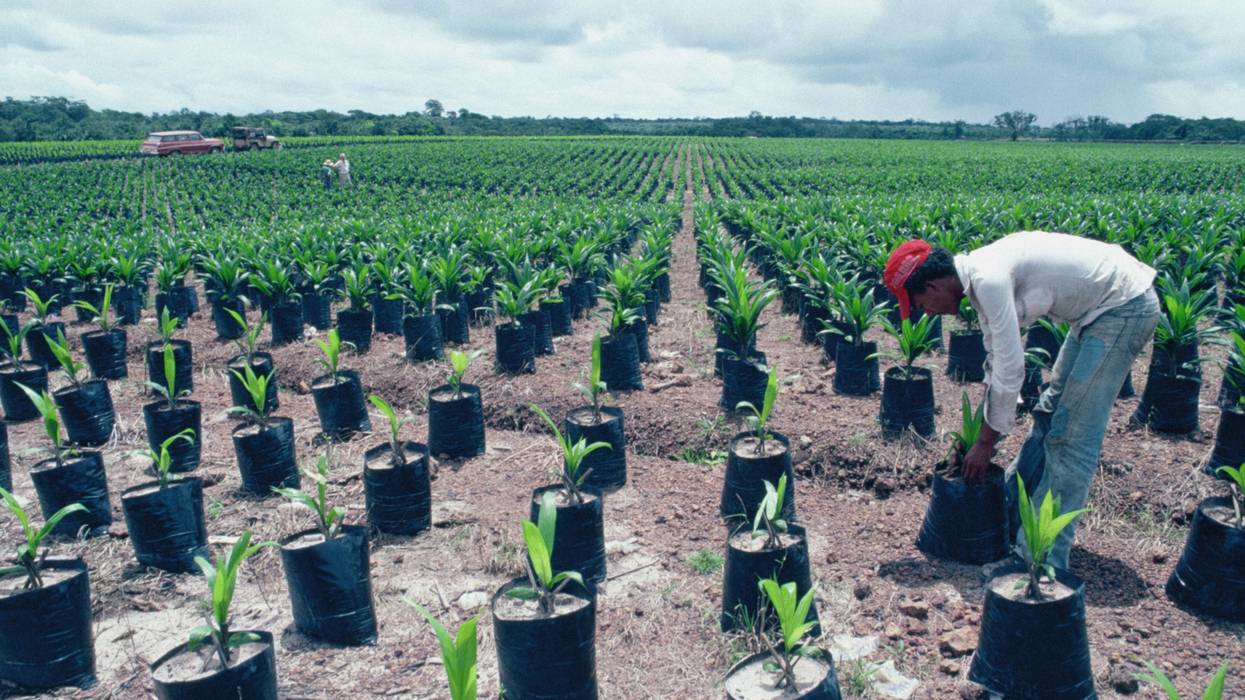
On July 12, 2023, the United Nations Framework Convention on Climate Change’s Green Climate Fund, the largest global fund dedicated to combating climate change, approved a funding proposal by the &Green Fund for more than $189.3 million for monoculture plantations of oil palm, cocoa, and rubber, and for unsustainable industrial cattle farming. It was passed during the fund’s 36th Board Meeting, held in the Republic of Korea.
Civil society organizations had earlier raised concerns that the Green Climate Fund (GCF) was considering more investments in false climate change solutions such as monoculture plantations and intensive livestock farming, which exacerbate the impacts of climate change. The GCF Observer Network had put forward their concerns prior to and during the board meeting outlining why &Green Fund’s proposal should not be approved. Despite strong opposition that the project—which has the Dutch Development Bank (FMO) as the accredited entity—would further undermine the rights of Indigenous Peoples and enable greenwashing, the proposal was passed.
The &Green portfolio includes agribusiness such as the multinational food processing company Marfrig from Brazil, which has been accused of repeatedly being involved in illegal tree cutting, “cattle laundering,” and extensive palm oil monoculture tree plantations in Indonesia.
The GCF, established in 2010, is mandated by the U.N. Framework Convention on Climate Change and the Paris agreement to support countries of the Global South in countering the impacts of climate change. However, the GCF has historically approved and funded other highly-controversial projects, such as a $25 million equity agreement with the Arbaro Fund, a Germany-based private equity investment firm, for monoculture tree plantations that have led to devastating social, environmental, and economic harm particularly in the Global South, to Indigenous peoples, local communities, and women in all their diversities.
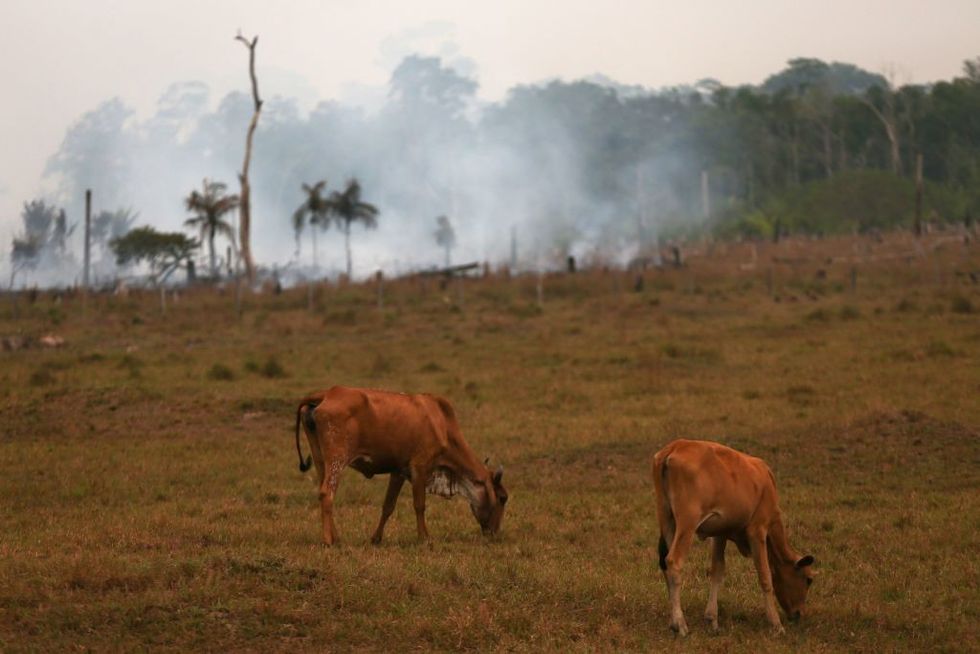
Cattle graze amongst the hazy smoke caused by fires along the BR-230 (Transamazonica) highway in Manicoré, in Amazonas, Brazil on September 22, 2022.
(Photo: Michael Dantas /AFP via Getty Images)
The &Green Fund has been fully operational since 2017 and currently has a portfolio of seven ongoing projects, mainly consisting of intensive cattle farming and monocultures. The funding proposal submitted to the GCF basically consisted of a request for public finance to de-risk private sector investments in “deforestation-free and socially inclusive commodity supply chains”—in other words, for monoculture plantations of oil palm, cocoa, and rubber, and unsustainable industrial cattle farming. The &Green portfolio includes agribusiness such as the multinational food processing company Marfrig from Brazil, which has been accused of repeatedly being involved in illegal tree cutting, “cattle laundering,” and extensive palm oil monoculture tree plantations in Indonesia.
The funding proposal had many other concerning aspects such as a very complex financing structure, overly optimistic claims of CO2 reduction, and the fact that their projects could include GMO seeds. It demands public climate finance to support agribusinesses that already have access to large amounts of finance. If this funding proposal is approved, we will very likely see some of the same impacts and mistakes that are being reported in the sub-projects part of the Arbaro Fund.
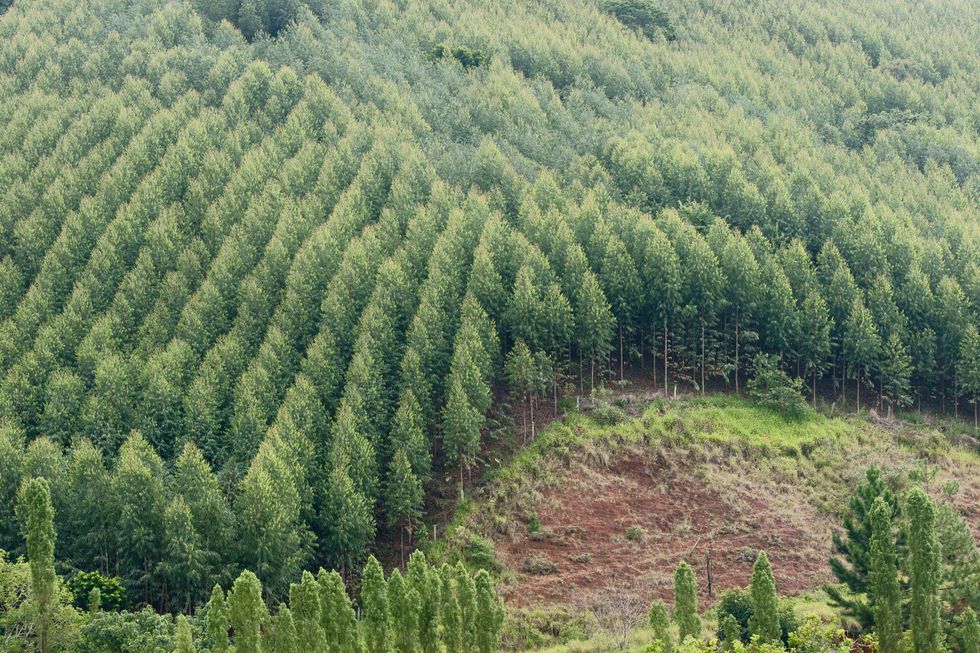
A eucalyptus plantation is seen in Sao Luis do Paraitinga, Brazil on January 1, 2015.
(Photo: Laurent Guerinaud/AGB Photo Library/Universal Images Group via Getty Images)
The Arbaro Fund proposal approved by the GCF in 2020 led to the establishment of 75,000 hectares of new tree plantations across seven target countries in Latin America and sub-Saharan Africa. Since its creation, the Arbaro Fund has been critiqued by more than 100 civil society organizations due to the negative social, environmental, and economic impacts of extensive monoculture tree plantations for industrial purposes. These include the displacement of local communities from their traditional land and livelihoods, increasing insecurity in land tenure, a disruption in the local peasant economy, the worsening of economic difficulties, rising divisions within the communities, and the further erosion of the rights and agency of women in all their diversities.
These impacts have been documented in studies and reports by the World Rainforest Movement, the Global Forest Coalition, and Centro de Estudios Heñói. More recently, an investigation led by Lighthouse Reports showed how European development finance institutions, including the FMO, where the Dutch state is the bank's largest shareholder, fund forestry businesses that use agrochemicals that are banned by the European Union itself.
As the studies show, the territorialization of agribusiness and, in recent years, of eucalyptus plantations, has led to the large-scale displacement of communitie
False promises of development and mitigation of climate change and the expansion of industrial monoculture tree plantations have been a common pattern in the countries where Arbaro operates. The Centro de Estudios Heñói has highlighted the tendency of the forestry industry to reproduce the predominant agro-export model in Paraguay. Quite contrary to the declarations of good intentions and the greenwashed claims of carbon capture and greenhouse gas reduction, these eucalyptus trees end up as charcoal to dry soybeans, corn, wheat, and others.
As the studies show, the territorialization of agribusiness and, in recent years, of eucalyptus plantations, has led to the large-scale displacement of communities. The inhabitants also experience biodiversity loss, as animals, food crops, water, and soil are affected. There are cases of overt and potential land conflicts with the companies (in Santaní, area of influence of Forestal Apepú, a timber production business fully owned by Arbaro) and other historical cases such as the case of Barbero Kue (area of influence of Forestal San Pedro). Contrary to the companies’ claims about their social commitment to the communities, the inhabitants report that they do not receive any type of assistance. Most jobs are temporary and dangerous and disassociate the workers from their peasant culture.
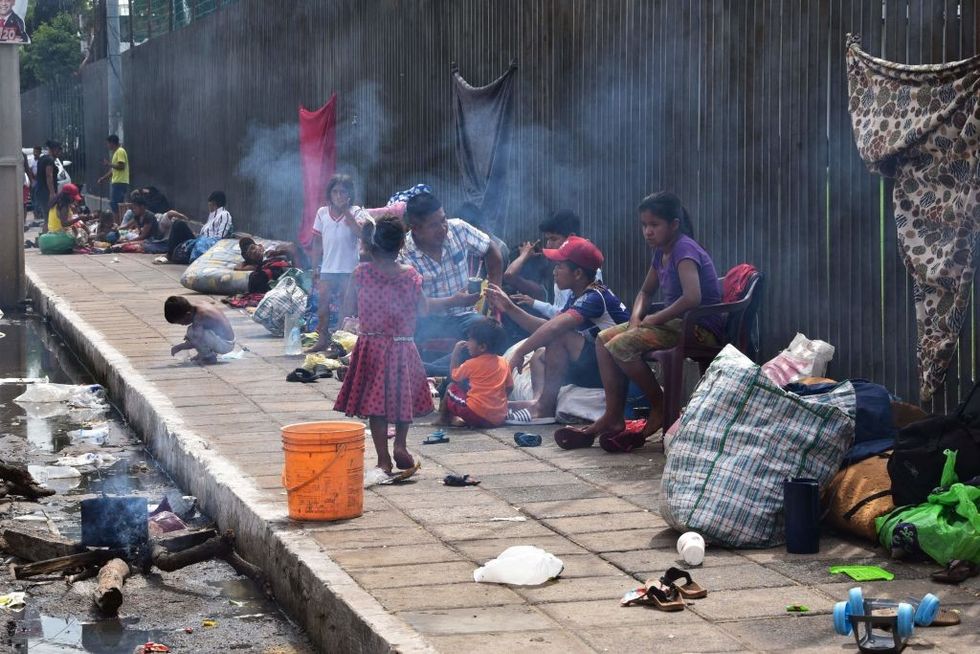
Indigenous people camp outside the National Institute of the Indigenous headquarters during a protest asking assistance for agricultural production, land purchase and better health service in Asunción, Paraguay, on January 23, 2023.
(Photo: Norberto Duarte/AFP via Getty Images)
In June 2023, Heñói Centro de Estudios conducted field visits to communities near Apepú Forestry. The villagers told Heñói that they were economically impoverished and that the rural youth are being forced to relocate to other regions for work. They also noted that there were threats looming over the Indigenous Peoples and the local communities, owing to the interests of big businesses and large-scale landowners. They stated that they have been dispossessed of their lands, and were going to starve in the cities.
A farmer stated: "The eucalyptus plantations have ruined the water and the soil. Nothing grows here anymore, no beans, cassava, corn, nothing. Before the eucalyptus, our corn was big and beautiful, and we had bountiful harvests. We have lost everything, even after all the sacrifices we have made.”
The weakening food security in the region also impacts the culinary culture of the region. Villagers reported that it is no longer possible to make Vorí vorí, Paraguay soup, or chipa guasú. Food is fundamental to primary socialization, and the communal binding of the peasantry is being lost.
"Though we are the ones who produce food for everyone, farmers are not prioritized by the state or by the companies."
The peasants receive no assistance from the state. "Though we are the ones who produce food for everyone, farmers are not prioritized by the state or by the companies. If food production ends, what will happen to all of us? They do not value us," said another peasant farmer. The local community has been discussing the importance of working together to find a resolution and to demand technical assistance for small producers.
To honor the pledge and recognize the Paris Agreement benchmark of 1.5°C, climate finance must be redirected away from greenwashing and towards real solutions—just transition, climate resilience of frontline communities, conservation, protection of land and forests, and reforestation—and provide direct funding access to Indigenous Peoples, women from frontlines communities, and local communities. Their land rights must be secured, as must their rights to resources, their territories, and their right to govern. Real solutions that are rights-based and gender-just do exist, and they are the only way to prevent catastrophic global climate change.
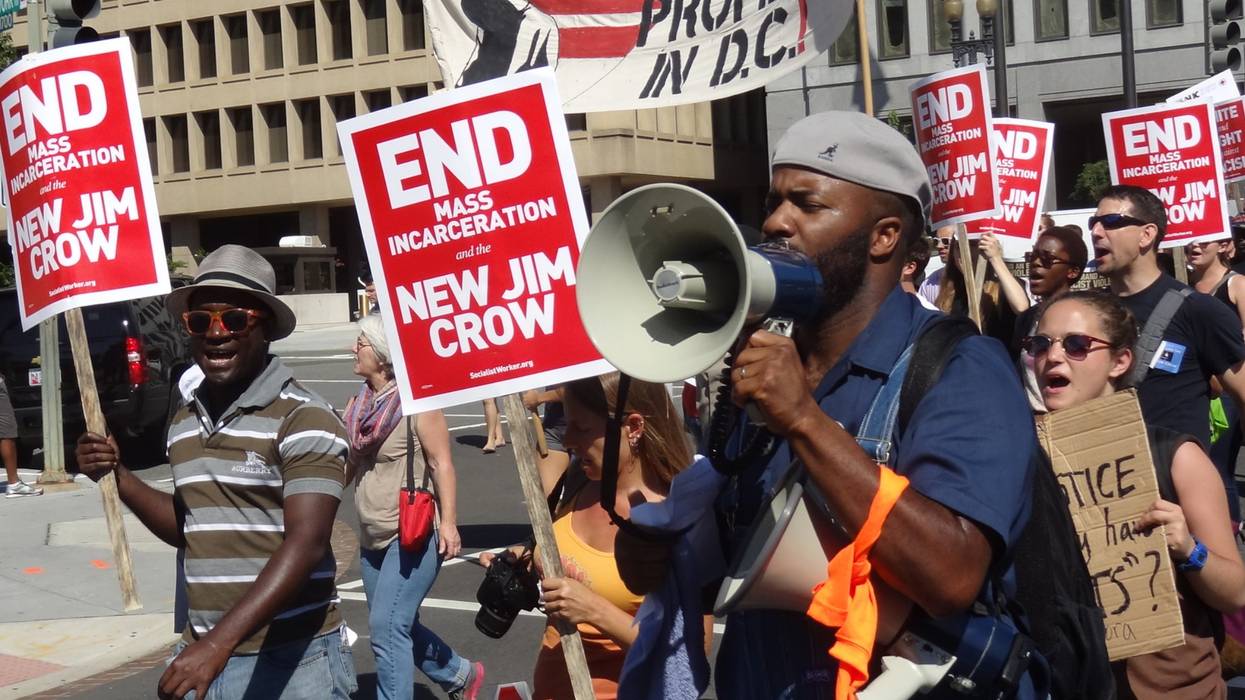
"Obtaining a proportional, fair system of justice will take more than just shortening sentences, but it is integral to a wholesale reimagining of public safety," says the Sentencing Project.
Policymakers should take steps to limit prison sentences in the United States—which incarcerates far more people than any other country and where the imprisoned population has soared 500% in recent decades—to 20 years for all crimes, a report published Wednesday by a leading criminal justice reform group argues.
"As the United States marks 50 years of mass incarceration, dramatic change is necessary to ensure another 50 do not follow," asserts the Sentencing Project report, entitled Counting Down: Paths to a 20-Year Maximum Prison Sentence. "In no small part due to long sentences, the United States has one of the world’s highest incarceration rates, with nearly two million people in prisons and jails."
The report continues:
The destabilizing force of mass incarceration deepens social and economic inequity—families lose not only a loved one, but income and childcare. By age 14, 1 in 14 children in the United States experiences a parent leaving for jail or prison. Individuals returning to the community face profound barriers to employment and housing. Meantime the communities most impacted by crime—poor communities and communities of color—disproportionately bear the burden of incarceration's impacts. Long sentences affect young Black men disproportionately compared to every other race and age group. Twice as many Black children as white children have experienced parental incarceration. Mass incarceration entrenches cycles of harm, trauma, and disinvestment and consumes funds that might support investment in interventions that empower communities and create lasting safety.
"In the United States, over half of people in prison are serving a decade or longer and 1 in 7 incarcerated people are serving a life sentence," the publication states. "To end mass incarceration, the United States must dramatically shorten sentences. Capping sentences for the most serious offenses at 20 years and shifting sentences for all other offenses proportionately downward, including by decriminalizing some acts, is a vital decarceration strategy to arrive at a system that values human dignity and prioritizes racial equity."
The report notes that "in countries such as Germany and Norway, periods of incarceration rarely exceed 20 years, including for homicide offenses."
While no country has yet implemented a 20-year incarceration limit, Russia caps women's imprisonment at 20 years. In Norway, prison terms are limited to 21 years, with the possibility of extensions if the inmate is deemed to pose a continued danger to society. Anders Behring Breivik, the Norwegian white supremacist who massacred 77 people and injured hundreds more in a pair of 2011 attacks, was sentenced to 21 years behind bars. His first parole bid was denied last year.
"In countries such as Germany and Norway, periods of incarceration rarely exceed 20 years, including for homicide offenses."
Cape Verde, Paraguay, and Portugal limit imprisonment to 25 years. Countries including Brazil, Nicaragua, Congo, Uruguay, and Venezuela have 30-year maximum sentences.
The report also aims to dispel fears that releasing violent offenders would lead to a surge in recidivism.
"Research shows that, while very serious, committing homicide is typically an isolated offense," the report states. "When individuals who commit homicides return to the community, their likelihood of committing another homicide is extremely low, typically 1-3%."
Liz Komar, sentencing reform counsel at the Sentencing Project and co-author of the report, said in a statement that "to end mass incarceration, the U.S. must dramatically shorten sentences. Lawmakers can do this by capping sentences for the most serious offenses at 20 years and shifting sentences for all other offenses proportionately downward, including by decriminalizing some acts."
Sentencing Project co-director of research Ashley Nellis, who also authored the new report, said that "in large part due to long prison sentences, we have one of the highest incarceration rates in the world."
"The destabilizing force of mass incarceration deepens social and economic inequity, while entrenching cycles of harm, trauma, and disinvestment," Nellis added. "Mass incarceration also consumes funds that could instead support investments in the types of interventions that empower communities and create lasting safety."
The report recommends seven legislative reforms "to cap sentences at 20 years and right-size the sentencing structure":
"Capping all sentences at 20 years is a challenging but feasible policy goal, as demonstrated by its success in other countries and a project worthy of advocates' and policymakers' attention," the report concludes. "The path to a 20-year cap will be different in every jurisdiction, but all steps offer vital hope to people serving lengthy sentences and their loved ones."
"Of course," the authors added, "obtaining a proportional, fair system of justice will take more than just shortening sentences, but it is integral to a wholesale reimagining of public safety that focuses on healthy and empowered communities, transforming prisons, investing in evidence-based prevention, and pursuing restorative alternatives to the carceral system."
A separate report published this month by the reform group Vera Institute of Justice also recommends capping U.S. prison sentences at 20 years.
"Severe sentences do not deter crime, retribution often does not help survivors of crime heal, and the U.S. sentencing system overestimates who is a current danger to the community and when incarceration is needed for public safety," the authors argued. "Instead, we need a system that privileges liberty while creating real safety and repairing harm."
"The United States must move away from sentencing policy rooted in retribution, deterrence, incapacitation, and rehabilitation, which the evidence shows do not deliver safety and satisfaction," the report asserts. "To reduce mass incarceration, prison sentences should be capped at 20 years for adults convicted of the most serious crimes and 15 years for young people up to age 25."
"Other sentencing reforms should include removing prior conviction sentencing enhancements, abolishing mandatory minimums, and creating second-look resentencing options for those currently behind bars," the paper adds.
In what one leading advocate called "a failure by the international community," the number of journalists murdered in retaliation for their work more than doubled in 2020, according to a report published Tuesday by the Committee to Protect Journalists.
"It's appalling that the murders of journalists have more than doubled in the last year, and this escalation represents a failure of the international community to confront the scourge of impunity."
--Joel Simon, CPJ
CPJ's annual report contains a database of 30 journalists who were killed in 15 countries during the course of the year. Of these, six died while working "dangerous assignments," three were caught in the crossfire during the ongoing Syrian civil war, and 21 were murdered.
Afghanistan and Mexico suffered the most journalist murders in 2020, with four each. Illegal firearms--many trafficked from the United States--have reportedly been used to kill reporters in Mexico, where drug war violence has fueled a nearly doubling of the nation's overall homicide rate over the past five years.
These two countries are followed by the Philippines with three murdered journalists; India and Honduras with two; and one each in Bangladesh, Iran, Paraguay, Somalia, Syria, and Yemen.
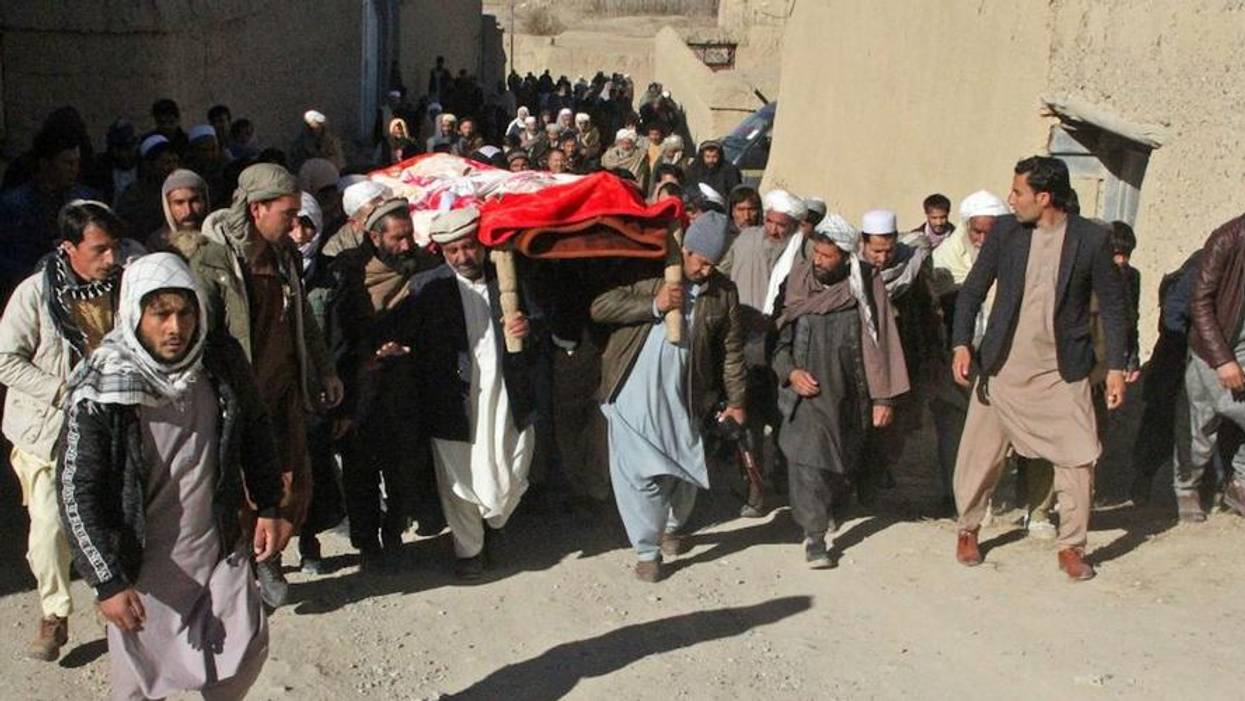
The death of a fifth Afghan journalist, Rahmatullah Nekzad--who was gunned down as he left his Ghazni home to attend mosque on Monday--did not make the list, as it is still under investigation.
CPJ said that all 21 murdered journalists were slain in targeted killings it called "direct reprisals" for their work, an increase from 10 such murders in 2019.
"It's appalling that the murders of journalists have more than doubled in the last year, and this escalation represents a failure of the international community to confront the scourge of impunity," CPJ executive director Joel Simon said in a statement accompanying the report's publication.
The most recent murders listed on CPJ database are those of Hussein Khattab, a Syrian reporter for the Turkish state-owned broadcaster TRT Arabic who was assassinated by masked men on a motorcycle in Al-Bab, Syria on December 12; Roohollah Zam, who was executed in Iran on December 12 for covering anti-government protests; and Malala Maiwand, who along with her driver Mohammad Tahir was shot dead on her way to work at Enikass TV and Radio in Jalalabad, Afghanistan earlier this month.
CPJ said it is currently investigating the killings of 15 other journalists this year to determine whether they were slain for reasons related to their work.
Last week, CPJ also reported that a record number of journalists are being jailed around the world, many for reporting on the Covid-19 pandemic or political uprisings.
"The fact that murder is on the rise and the number of journalists imprisoned around the world hit a record is a clear demonstration that press freedom is under unprecedented assault in the midst of a global pandemic, in which information is essential," Simon said. "We must come together to reverse this terrible trend."
If there is a silver lining to the latest CPJ report, it is that the number of journalists killed covering wars and other military conflicts fell to its lowest level of the century, although at least four reporters died in war-torn Afghanistan and Syria.
Five of the 24 men sentenced last week by an Italian court to life in prison for their roles in a brutal and bloody U.S.-backed Cold War campaign against South American dissidents graduated from a notorious US Army school once known for teaching torture, assassination, and democracy suppression.
On July 8 judges in Rome's Court of Appeals sentenced the former Bolivian, Chilean, Peruvian and Uruguayan government and military officials after they were found guilty of kidnapping and murdering 23 Italian nationals in the 1970s and 1980s during Operation Condor, a coordinated effort by right-wing military dictatorships in Chile, Argentina, Uruguay, Bolivia, Paraguay, Brazil--and, later, Peru and Ecuador--against perceived leftist threats. The campaign, which was characterized by kidnappings, torture, disappearances and murder, claimed an estimated 60,000 lives, according to human rights groups. Victims included leftists and other dissidents, clergy, intellectuals, academics, students, peasant and trade union leaders, and indigenous peoples.
The United States government--including military and intelligence agencies--supported Operation Condor with military aid, planning, and technical support as well as surveillance and torture training during the Johnson, Nixon, Ford, Carter and Reagan administrations. Much of this support, which the U.S. attempted to justify within the context of the global Cold War struggle against communism, was based at U.S. military installations in Panama. It was there that the US Army opened the School of the Americas in 1946, which would graduate 11 Latin American heads of state over the following decades. None of them became their country's leader by democratic means, leading critics to dub the SOA "School of Assassins" and "School of Coups" because it produced so many of both.
SOA's most notorious graduates include narco-trafficking Panamanian dictator Manuel Noriega, the genocidal Guatemalan military dictator Efrain Rios Montt, Bolivian despot Hugo Banzer (known for sheltering Nazi war criminal Klaus Barbie), Haitian death squad commander and military dictator Raoul Cedras and Argentine strongman Leopoldo Galtieri, who presided during a period of his country's "Dirty War" in which tens of thousands of innocent men and women were disappeared. Countless other war criminals have studied at the SOA, sometimes using U.S. manuals that taught kidnapping, torture, assassination, and democracy suppression techniques.
Some of the worst massacres and other atrocities perpetrated by U.S.-backed forces during the civil wars in El Salvador and Guatemala during the 1980s, including the slaughter of 900 villagers--mostly women and children--at El Mozote, the assassination of Salvadoran archbishop Oscar Romero and the rape and murder of four U.S. churchwomen who worked with him, were planned, committed or covered up by SOA graduates. So were a series of chainsaw massacres in Colombia, the murder of four Dutch journalists in El Salvador, the assassination of a former Chilean official and his U.S. aide in a 1976 car bombing in Washington, D.C. and many other atrocities.
It can now be revealed that several men sentenced to life in prison in Rome last week are also SOA graduates. According to a database of over 60,000 SOA alumni compiled from U.S. military records by School of the Americas Watch (SOAW), a Georgia-based activist group founded by Father Roy Bourgeois in 1990, five SOA trainees are among the 24 men found guilty by the Italian court. Two of them are named among SOAW's "most notorious SOA graduates": former Bolivian interior minister Luis Arce Gomez, who is currently serving a 30-year prison term for genocide, assassination and drug trafficking, and Luis Alfredo Maurente, a Uruguayan captain implicated in the torture and disappearance of nearly 100 people in Uruguay and Argentina. Arce Gomez completed communications, tactical officer and radio repair courses at SOA in 1958; Maurente attended SOA in 1969 and 1976, studying military intelligence. The three other SOA graduates uncovered among the 24 defendants are: Hernan Ramirez Ramirez (Chile; command course, 1970), Ernesto Avelino Ramas Pereira (Uruguay; motor officer course, 1962) and Pedro Antonio Mato Narbondo (Uruguay; unspecified, 1970).
SOA operated in Panama from 1946 until 1984, when it was relocated to Fort Benning, Georgia. In a bid to rebrand itself amid growing public outcry over graduate atrocities, SOA changed its named to the Western Hemisphere Institute for Security Cooperation (WHINSEC) in 2000, with a greater emphasis on human rights. However, the school's alumni continue to make dubious headlines to this day, with four of the six generals behind the 2009 Honduran coup and former Mexican commandos now employed as mercenaries for international drug cartels among its more notorious recent alumni.
It is unclear whether many of the defendants in the Rome case will face justice, as all but one of the 24 were tried in absentia under the legal concept of universal jurisdiction. Uruguay, which does not allow for life sentences, has previously jailed people convicted of similar crimes. A January 2017 ruling by an Italian court had sentenced eight of the defendants, including the late former Bolivian dictator Luis Garcia Meza, former Peruvian president Francisco Morales Bermudez, and former Uruguayan foreign minister Juan Carlos Blanco-- who is now under house arrest in Montevideo--to life behind bars, while acquitting 19 others due to statutes of limitations. Those acquittals were reversed by Monday's appellate decision.
More than 100,000 people have been evacuated throughout the bordering areas of Paraguay, Uruguay, Argentina, and Brazil as severe flooding continued to batter the South American region this weekend.
According to new figures released Sunday by the Municipal Emergencies office, as many as 160,000 people fled their homes due to the flooding that began on December 18. This flooding is a devastating result of this season's El Nino storms.
Many of those impacted are low-income families living along the River Paraguay.
The office said, "[The flooding] was directly influenced by the El Nino phenomenon, which has intensified the frequency and intensity of rains. "
The United Nations weather agency, the World Meteorological Organization, warned last month that this year's storm season is the worst in more than 15 years. It will likely bring more flooding and droughts to the tropics and subtropics.
The flooding in South America follows recent severe storms in Yemen and Mexico. In October, after Hurricane Patricia made landfall in Puerto Vallarta and Manzanillo and forced the evacuation of 50,000 people, meteorologist Eric Holthaus wrote at Slate that, due to climate change, it was "exactly the kind of terrifying storm we can expect to see more frequently in the decades to come."
Paraguay has been the hardest hit, with an estimated 100,000 displaced, while 20,000 have been left homeless in Argentina and 9,000 in Uruguay. At least eight people have been killed across the region, according to local media.
Paraguay's emergency office also said the river will likely rise in the coming days and may not subside until January.
Paraguay has reportedly declared a state of emergency in Asuncion. On Sunday, Corrientes governor Ricardo Colombi said in Argentina that "the consequences [of the flooding] will be serious."