

SUBSCRIBE TO OUR FREE NEWSLETTER
Daily news & progressive opinion—funded by the people, not the corporations—delivered straight to your inbox.
5
#000000
#FFFFFF
To donate by check, phone, or other method, see our More Ways to Give page.
Daily news & progressive opinion—funded by the people, not the corporations—delivered straight to your inbox.

Macklemore's Free Palestine Tour helped create something that is often missing from the way Palestine is discussed: a space where people could encounter Palestinian culture and voices and turn their concern into action.
Macklemore says he is struggling to find arenas willing to host the US leg of his Free Palestine Tour. The news is a jarring contrast to the packed arenas I have just returned from across Dublin, Paris, and London—and a reminder of how contested the space for Palestinian expression remains in the United States.
That contrast is familiar to Palestinians. For years, being Palestinian in public has felt like an exercise in bracing. You stand in the cold behind barricades, and you wait to see who's going to get filmed, flagged, or fired just for asserting that children deserve to live. Your advocacy is routinely treated as a crime or a threat, until the anxiety of speaking out feels like the baseline cost of caring that children shouldn't be killed.
Then, in the space of one week, I stepped out of that cold and into three roaring arenas for the Free Palestine tour. For once, we weren't at the periphery asking to be heard. We were right in the middle of it, surrounded by joyous sound and a sea of keffiyehs. Palestine wasn’t an uncomfortable subject being squeezed into the conversation. It was the reason 20,000 people turned up in London, night after night.
We’ve seen an entire people be reduced to the images of their suffering. Humanitarian aid and bearing witness to those atrocities is essential. But Palestinians are not simply people to be rescued or mourned.
When the tour was announced, I was excited because I knew what it could mean for the cause that I've dedicated my life to. I work with UNRWA USA, and I co-founded Gaza Soup Kitchen, two of the organizations that the shows were raising money for. We all got an early heads-up, and the excitement was real. Part of it was the proceeds; part of it was finally being attached to something culturally relevant, exciting, and, I'll be honest, cool. After years of working to keep Gaza in the conversation, it was extraordinary to see what happened when a musician with a mic and a genuine willingness to take a risk brought that conversation into the center of popular culture.
Macklemore’s own story is part of why the tour mattered. He was dropped from Ed Sheeran's US tour after he'd spoken up for the Palestinians on stage. Rather than retreat, Macklemore built his own stage, invited others onto it, and sold out shows in cities worldwide. That's the power of solidarity.
In Dublin, Palestinian flags, keffiyehs, and an Irish audience with a long tradition of standing with those fighting for their freedom filled the room. In Paris, some of the people from the day's street protests spilled into the arena. Francesca Albanese, the United Nations special rapporteur on the occupied Palestinian territory, spoke to a room of music fans. That combination was part of what made the tour so unusual. Music wasn’t simply the entertainment between political speeches. It was what brought people together in the first place. It created a space where political engagement didn’t have to feel like an obligation or an argument. You could participate, learn, listen, and celebrate at the same time.
This is also the thinking behind UNRWA USA's upcoming What We Carry: Music, Memory, Home tour. This month, we’re bringing Palestinian music and storytelling to Los Angeles, New York, and Washington, DC. The events will feature artists including MC Abdul and Alana Hadid, with comedian Mo Amer being honored at the New York show for using his platform to transform how audiences see Palestinians, refugees, and immigrants. The tour is designed to do more than tell people about the emergency in Gaza. It invites them to encounter Palestinian stories through music, memory, and lived experience, and then gives them a direct way to support UNRWA's humanitarian relief.
That connection between culture and action is deliberate. Humanitarian organizations are often asked to make the case for support through statistics, urgent appeals, and descriptions of need. Those things matter. But people also need to encounter the human beings behind the numbers: their voices, their humor, their music, their memories, and their determination to remain connected to home. Culture can open a door that an appeal for donations alone might not. And once people walk through it, there must be a meaningful way to turn solidarity into support.
At the Gaza Soup Kitchen table in London, I handed out stickers until we ran out. People kept coming up to ask how they could donate. They came from all walks of life and different generations. They wanted to do something, and suddenly a door opened. This is what cultural moments can do that traditional advocacy sometimes struggles to achieve. They can take people from feeling something to doing something. A concert can bring people into the work of activism that might never otherwise have found their way there. And it can give them a community in which to stay.
We’ve seen an entire people be reduced to the images of their suffering. Humanitarian aid and bearing witness to those atrocities is essential. But Palestinians are not simply people to be rescued or mourned. We are people with a culture, a history, a future, and a right to live full lives. Our children deserve to see that reflected back at them.
I pulled my daughter into the arena through a video call. She's 12, into music, and into advocacy work. She's hardly ever seen those two things in one place. She was taking every second in, her all-caps reaction to everything telling me I'm officially cool now.
She's the reason I went, and a night like that gave us something to share that wasn't just grief. I want Palestinian kids to grow up seeing their identity in the music, the art, the clothes, and the humor they already have. Palestine can be edgy. Palestine can be rebellious. It can be funny, creative, and joyful. It doesn't have to be seen through rubble.
Macklemore didn't solve Palestine's problems. No concert will. But he helped create something that is often missing from the way Palestine is discussed: a space where people could encounter Palestinian culture and voices and turn their concern into action. At a time when even finding a venue for that kind of expression in the United States is proving difficult, the importance of creating and protecting these spaces feels even greater.
That’s what I want my daughter, and all Palestinian children, to remember—the sound of thousands of people singing, dancing, and celebrating alongside them. The knowledge that their identity belongs in the world and they have every right to take up space in it.
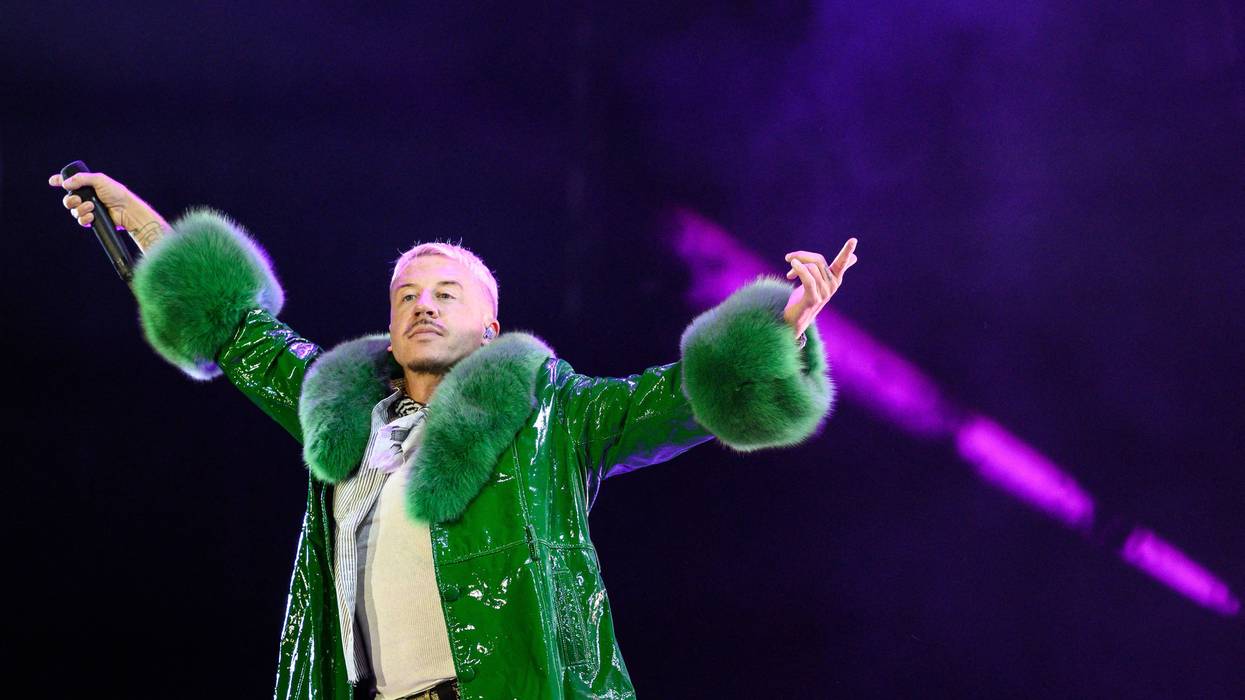
The concert garnered rave reviews, with The Guardian calling it a five-star "triumph," and The Irish Times praising the “courage of Macklemore's convictions.”
In a metaphorical middle finger to billionaire NFL owner Robert Kraft's effort to get Macklemore booted from Ed Sheeran’s US stadium tour over his outspoken support for Palestinian liberation, the rapper opened his "Free Palestine" benefit tour Monday with a critically acclaimed sold-out show in Dublin.
More than 13,000 fans packed Dublin's 3Arena, waving Palestinian flags and wearing keffiyehs as the crowd repeatedly chanted “Free Palestine" throughout the show.
“I am proud to stand here on stage in solidarity with the Palestinian people,” Macklemore told the audience. “We will continue to fight for collective liberation until our last breath."
"Six weeks ago, it was two words. Two words is all that it took. Two words that are rooted in love and liberation. Not against anybody, not divisive, not a call for hatred, but a call to recognize our shared humanity. 'Free Palestine.' I said 'Free Palestine,'" the Seattle native said.
He was referring to his removal from Sheeran's Loop Tour amid pressure from Kraft—who owns the New England Patriots and Gillette Stadium in Foxborough, Massachusetts—after the rapper condemned Israel's genocidal assault on Gaza and illegal occupation and apartheid in the West Bank during a September performance at MetLife Stadium in New Jersey.
"While the world debates those words, we see the videos, we see the footage, we see parents pulling their children out of the rubble, families erased, devastation beyond our imagination," Macklemore, whose real name is Benjamin Hammond Haggerty, continued.
"And somehow," he added, "those words have become more controversial than the suffering that made them necessary."
Kraft's pressure backfired spectacularly as every other opening artist on Sheeran's tour withdrew in solidarity with Macklemore, while the rapper launched his own benefit shows in larger European venues than he had played on his previous tour.
In addition to Macklemore—who rose to prominence in 2012 with his multiplatinum hit "Thrift Shop"—the concert featured performances by Irish artist Hozier, trio Kneecap, and folk band Beoga; Palestinian singer Lina Makoul; Palestinian American DJ Habibeats; and US political hip-hop duo Dead Prez.d
Actors Mark Ruffalo and Cynthia Nixon and Strokes frontman Julian Casablancas also appeared via video messages.
Macklemore has paid more than just lip service to the Palestinian cause, pledging $1 million to aid groups. Children's educator and YouTube star Ms. Rachel subsequently vowed to match the donation, declaring, “We have a moral obligation to use our privilege and platforms to protect children and human rights.”
The proceeds of the "Free Palestine" tour—which also has scheduled shows in London and Paris—will support organizations providing Palestinians with medical care, humanitarian assistance, education, and community services.
The tour's opening show garnered rave reviews, with The Guardian calling it a five-star "triumph," and The Irish Times giving the concert four stars and praising the “courage of Macklemore's convictions.”
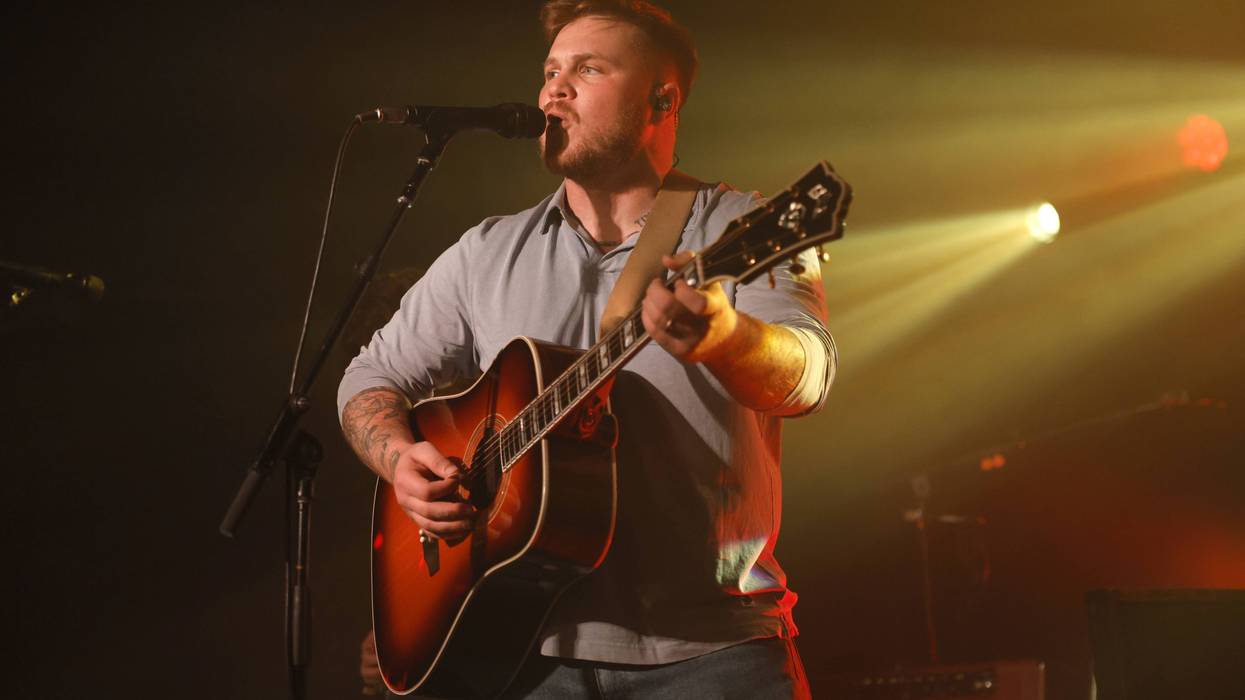
Weeks earlier, Kraft pushed for NFL stadiums to ban Macklemore over his pro-Palestine comments.
Country music star Zach Bryan wore a "Free Palestine" T-shirt during a performance at Gillette Stadium on Friday night in what was widely interpreted as a gesture of defiance against the venue's pro-Israel owner Robert Kraft.
Weeks earlier, the New England Patriots owner drew international backlash when he banned the rapper Macklemore from his venue over his pro-Palestine comments onstage and rallied other NFL owners to do the same, a campaign that led to Macklemore's ouster from Ed Sheeran's US tour.
Sheeran—one of the world's most recognizable pop stars—was branded a spineless coward by many critics and faced a mutiny from his fellow touring acts after caving to the billionaire Kraft's heavy-handed censorship tactics. Sheeran's vague statement denying that he was "complicit" with Israel's genocidal assault on Gaza—which has killed more than 74,000 people, including over 21,000 children over nearly three years, according to official numbers—did little to quiet them.
In sharp contrast, Bryan and his band made their position clear as they performed before a sold-out crowd in Foxborough, Massachusetts on Friday.
Drummer Nate Head wore a cream-colored "Palestine" baseball jersey bearing the name Hind Rajab and the number 5 on the back—a reference to the 5-year-old Palestinian girl killed by Israeli forces in 2024. Macklemore had similarly referenced Rajab in the song that led to his ban.
Guitarist Noah Le Gros wore a green "Palestine" jersey onstage. After the show, he posted a photo of himself wearing the jersey in front of a Kraft Sports & Entertainment sign, making the message unmistakable.
The company behind the jerseys, Wear the Peace—which donates all profits to organizations providing food, water, medical care, and other aid in Gaza—praised Bryan and his band for having "stood for Palestine tonight on a stage that tried to ban the simple mention of it."
Bryan, who served eight years in the US Navy, has a history of taking political stances that run counter to the conservatism long associated with mainstream country music. He has defended transgender people against public attacks and last year wrote lyrics criticizing US Immigration and Customs Enforcement's aggressive deportation tactics.
But the “I Remember Everything” singer does not map cleanly onto either side of the political spectrum. In the past, he has described himself as a "total libertarian" and more recently stressed political unity: "Left wing or right wing we’re all one bird and American," he said in an interview last year.
The shirt he wore on Friday night also raised questions: Beneath the phrase "Free Palestine," the shirt featured a pine tree emblem and the phrase "An Appeal to Heaven"—iconography associated with George Washington's army in the Revolutionary War and later adopted by some far-right Christian nationalists.
Bryan has not yet publicly commented on what he intended to convey with his shirt on Friday night. Nor has Kraft—who previously referred to pro-Palestine comments on his stage as "hate speech"—publicly responded to Bryan's display.
The band is scheduled to perform another show at Gillette Stadium on Saturday night, and it remains to be seen whether they will face any pressure to back down.
In the meantime, Bryan has drawn praise from commentators who contrasted his display with Sheeran's response to Kraft.
Idrees Ahmad, the associate editor of New Lines Magazine, called it "a real Spartacus moment in music."
"All true artists resist conformity and control," he said. "Trying to tell the most recalcitrant people what they can or can't say was always going to backfire. This trend will only grow the more there is an attempt to censor."
Shaiel Ben-Ephraim, an Israeli-born foreign policy analyst who has become an outspoken critic of Israel's wars, celebrated it as yet another sign of how dramatically public opinion had shifted against the country over the past few years.
“We got the country singers. We won the culture wars," he said. "Break out the moonshine."
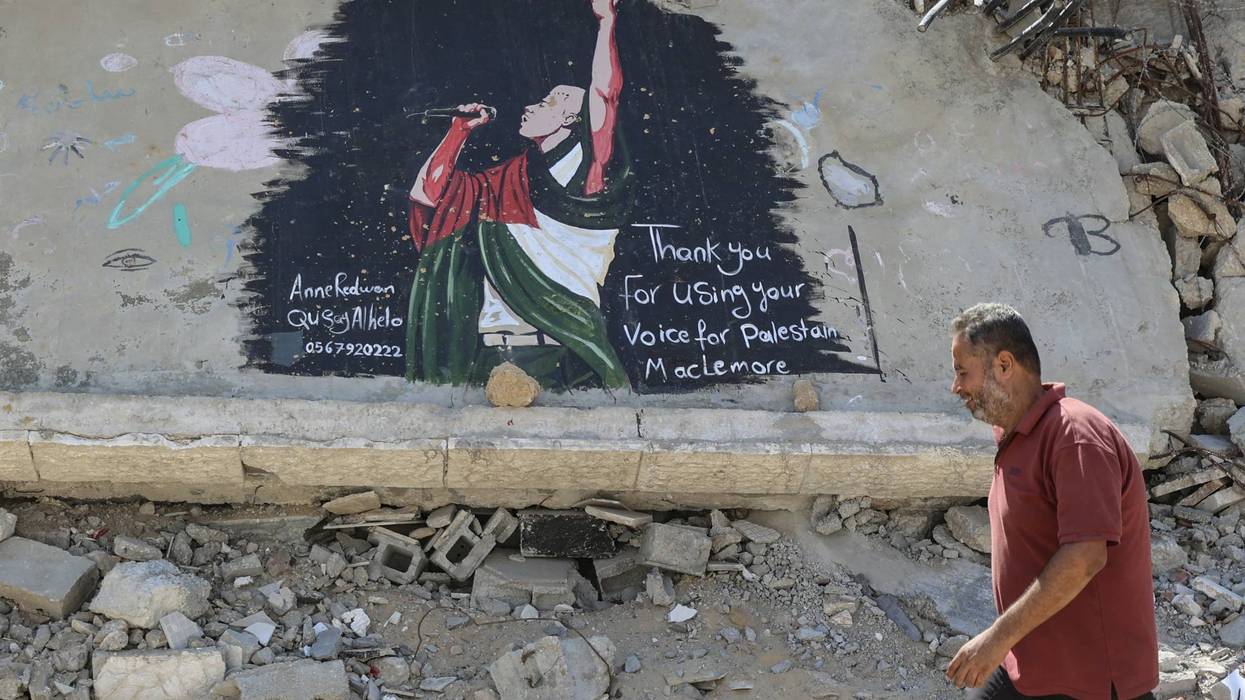
The attempt to punish Macklemore ultimately placed Robert Kraft, Ed Sheeran, and the entertainment establishment itself under unprecedented scrutiny. Far from silencing the message of Palestinian freedom, their actions amplified it.
Page Six Hollywood recently declared: “War of Open Letters Erupts Between Pro-Israel and Pro-Palestine Factions in Hollywood.” Only a few years ago, a headline like this would have seemed unthinkable.
The article described an increasingly open struggle between pro-Palestine and pro-Israel forces within the entertainment industry. On one side are artists and other industry figures taking a clear stand against Israel’s genocide in Gaza; on the other are defenders of Israel attempting to deny that genocide in the face of irrefutable evidence.
Yet even this framing failed to tell the whole story. What is unfolding is far more consequential than a quarrel among celebrities or a “war of open letters.” It is part of a brewing cultural revolution in American society—one that has now reached the highest echelons of the country’s cultural establishment. And in that struggle, Israel is losing—and losing badly.
When the pendulum swings this far, neither Kraft’s money nor the stadiums he controls can stop the movement.
Though the article acknowledged that support for Palestine has become powerful enough to divide Hollywood openly, it concealed the scale of the transformation underway by presenting the moment as a "war" between two factions.
Long before Israeli filmmakers, production companies, and actors established a significant presence in Hollywood, the industry’s cultural infrastructure routinely elevated Israel at every opportunity. Film and television constructed a glossy image of a heroic nation whose establishment and continued survival were portrayed as miraculous, while the dispossession and violence underpinning that narrative were largely erased from view.
Palestinians, Arabs, and Muslims, meanwhile, were almost invariably cast in a negative light: the uncultured and menacing "other," supposedly possessing no legitimate claim to civilization, no recognizable morality, and no history or identity worthy of serious consideration.
Indeed, Hollywood played a central role in the systematic dehumanization of Palestinians in Western popular culture. When thousands of actors, filmmakers, producers, and artists begin taking principled public stands for Palestine—often at considerable professional risk—we can therefore speak confidently of a cultural shift of historic proportions.
Susan Sarandon, Mark Ruffalo, Penélope Cruz, Javier Bardem, Joaquin Phoenix, Tilda Swinton, Olivia Colman, Emma Stone, Cynthia Nixon, and Riz Ahmed are only some of the most visible names on an ever-expanding list of morally driven and courageous artists confronting an archaic industry establishment.
The story, however, extends far beyond Hollywood. Consider the major controversy that recently erupted in the US following Macklemore’s removal from the remaining dates of Ed Sheeran’s Loop Tour.
Macklemore is far more than a pro-Palestine singer. The Grammy-winning rapper and songwriter is a gifted political storyteller whose career has combined mainstream artistic success with an enduring commitment to social causes. Since the beginning of the genocide, he has emerged as one of the most powerful voices of Palestinian solidarity in the US and beyond.
During Sheeran’s recent concerts at MetLife Stadium in New Jersey, Macklemore expressed solidarity with Palestinians in Gaza and the occupied West Bank, called for a "free Palestine," and performed "Hind’s Hall," his protest anthem honoring Hind Rajab, the Palestinian child killed by Israeli forces in Gaza.
The response to Macklemore’s courageous stand was immediate, but also predictable. The billionaires who controlled the venues reached for the weapon still at their disposal: financial power. Robert Kraft, the owner of Gillette Stadium, refused to allow Macklemore to perform there.
Sheeran, who appeared to underestimate the gravity of the moment, went on the defensive. “I am not complicit,” he declared, insisting that Macklemore’s removal had been the promoter’s decision rather than his own. But such a weak response by one of the world’s most influential musicians, particularly while an artist on his own tour was being punished for speaking out, could hardly be presented as a politically "neutral" position.
In the past, the story might have ended there. Macklemore would have been isolated and his career placed in jeopardy, while Sheeran, the promoters, and the stadium owners continued largely untouched.
Those days are gone. Global solidarity with Macklemore—and, by extension, with Palestine—spread so rapidly that the people responsible for his removal were forced to issue a succession of defensive and sometimes contradictory explanations.
By then, however, the damage had been done. Sheeran faced mounting boycott calls, protests, and even the suspension of his music by an Irish radio station. Finneas, Lukas Graham, and Aaron Rowe withdrew from the tour, while Beoga, Sheeran’s backing band, also pulled out. Artists and public figures began speaking openly about the genocide, freedom of expression, and the power of billionaires to dictate the political boundaries of art.
Podcasters and social-media commentators also mobilized, reaching audiences of millions and digging deeper into the controversy. They began asking who Kraft was, examining his longstanding relationship with Israel; his campaign against Boycott, Divestment, Sanctions; and the enormous financial machinery behind his political advocacy.
The attempt to punish Macklemore ultimately placed Kraft, Sheeran, and the entertainment establishment itself under unprecedented scrutiny. Far from silencing the message of Palestinian freedom, their actions amplified it.
Ultimately, this is not a story about two feuding artists, just as Hollywood’s transformation cannot be reduced to two camps trading open letters. Both are manifestations of a much larger cultural upheaval rooted in grassroots American society, where people from diverse backgrounds are finally opening their eyes to Israeli crimes and to the extraordinary influence Tel Aviv has long exercised over their country.
Beyond the occasional opinion poll, that story rarely makes headlines. But when the pendulum swings this far, neither Kraft’s money nor the stadiums he controls can stop the movement.
Nor can they silence Macklemore’s cry of "Free Palestine"—a cry now echoed by millions of people throughout the world.
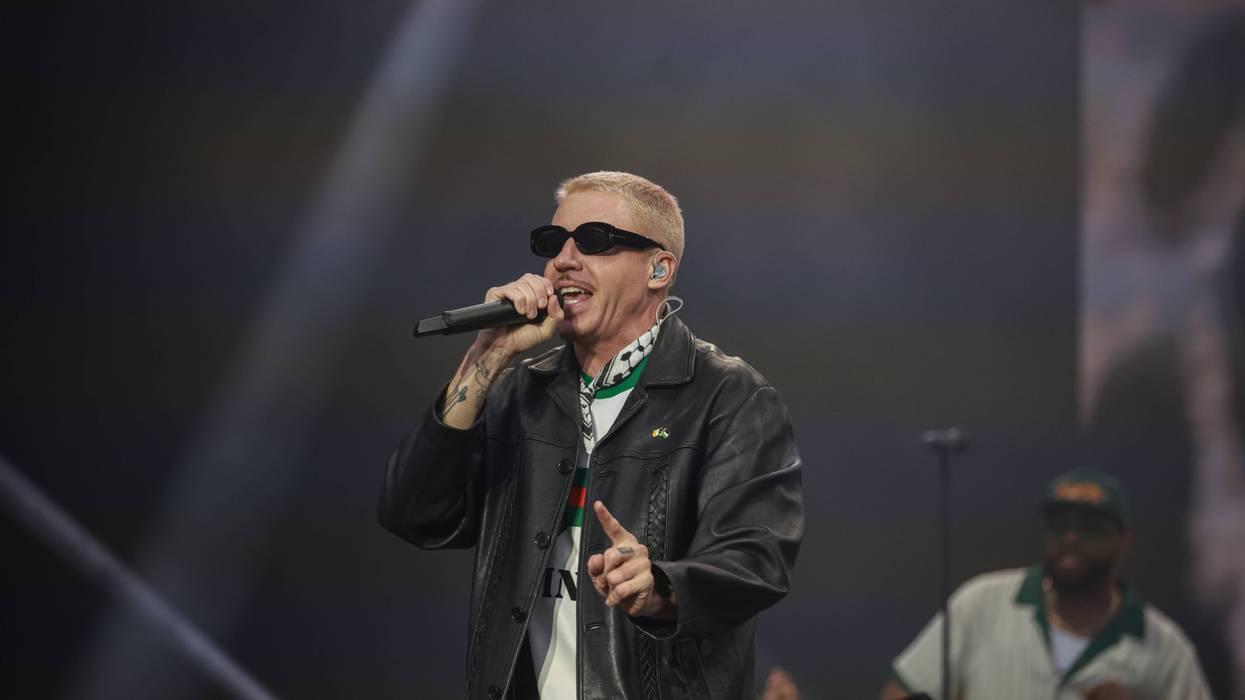
"When the billionaire class can decide which voices are allowed on stage and which ones are too dangerous to hear, everyone should be paying attention."
Rapper Macklemore on Thursday revealed a new phase in his campaign to raise awareness of the plight of Palestinians.
Macklemore, whose pro-Palestinian statements got him removed as a supporting act for fellow musician Ed Sheeran’s stadium tour, announced a series of live shows aimed at raising money for organizations that provide aid to Palestinian civilians suffering under Israeli military occupation and assault.
Several other opening acts for Sheeran subsequently quit the tour in solidarity with Macklemore.
"What happened to me is bigger than one artist or one stage," Macklemore wrote. "When the billionaire class can decide which voices are allowed on stage and which ones are too dangerous to hear, everyone should be paying attention. So we're going on tour. All proceeds will benefit organizations supporting the Palestinian people and movement."
The "Free Palestine Tour" so far has concerts scheduled in London, Dublin, and Paris, and Macklemore said that additional musical guests would be revealed at a later date.
Earlier this month, Macklemore pledged to donate $1 million to six organizations who were aiding Palestinians: HEAL Palestine, Gaza Soup Kitchen, Medical Aid for Palestinians, the United Nations Relief and Works Agency for Palestine Refugees in the Near East (UNRWA), and American Near East Refugee Aid.
Those groups will also be beneficiaries of the upcoming tour, as will organizations such as Jewish Voice for Peace and the Institute for Middle East Understanding.
Rachel Griffin Accurso, the YouTube star and child educator known popularly as Ms. Rachel, last week pledged to match Macklemore's $1 million donation to Palestinian aid groups, and encouraged "every wealthy white celebrity to match it and speak out against the genocide in Gaza."
“Over 20,000 precious Palestinian children have been killed and children continue to be killed every day,” Ms. Rachel said. “We have a moral obligation to use our privilege and platforms to protect children and human rights.”