

SUBSCRIBE TO OUR FREE NEWSLETTER
Daily news & progressive opinion—funded by the people, not the corporations—delivered straight to your inbox.
5
#000000
#FFFFFF
To donate by check, phone, or other method, see our More Ways to Give page.
Daily news & progressive opinion—funded by the people, not the corporations—delivered straight to your inbox.
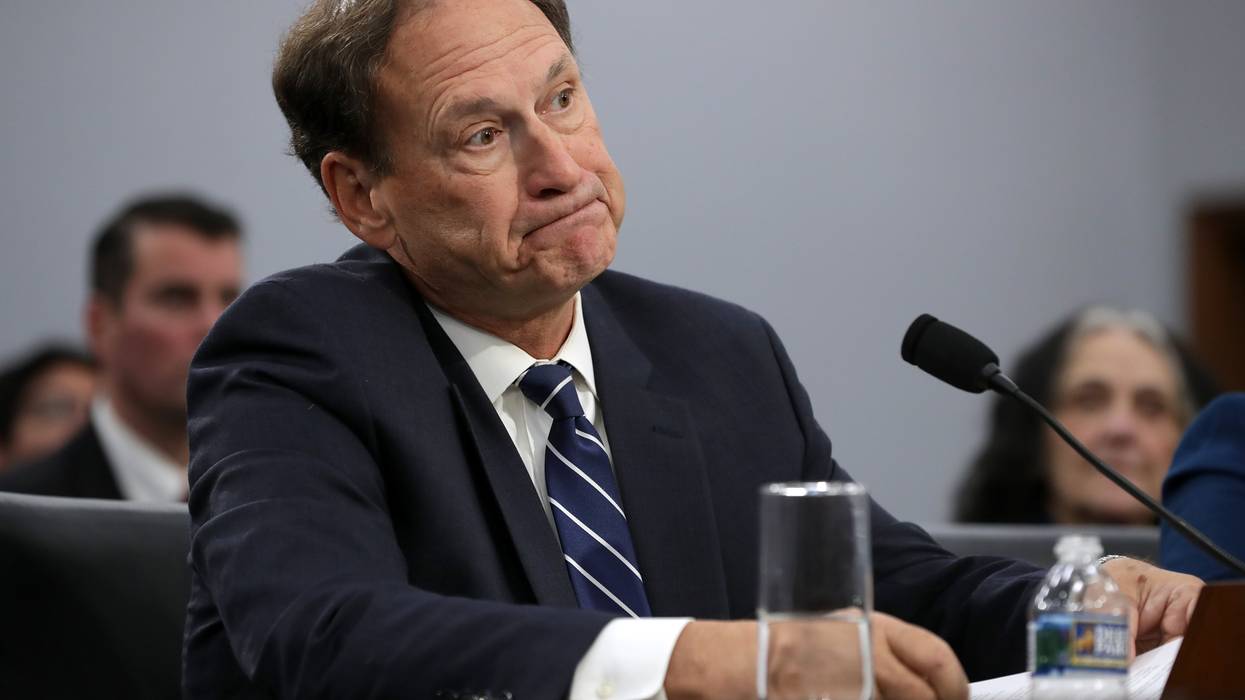
“A reasonable person would think if you’re invested in the industry that could benefit from the outcome of a lawsuit, then you could personally stand to benefit from the outcome," said one critic.
Calls for US Supreme Court Justice Samuel Alito to recuse himself from a major climate case mounted Tuesday after an analysis found that he made as much as $2.9 from oil and gas stocks from roughly the time he joined the nation's highest court in 2005 through 2024.
The analysis by judicial watchdog Court Accountability, reviewed exclusively by The Guardian, found that Alito earned between around $390,000 and $2.9 million from fossil fuel interests during his tenure as a justice.
"Between 2005 and 2024, Alito’s assets—not including his personal residence or other personal property not required to be reported on his financial disclosure—grew from a nominal value of $1.1 million to a value somewhere between $3.4 million and $8.4 million," the analysis states.
"Importantly, much of the Alitos’ oil- and gas-related wealth in this estimate comes from a single asset: a Grady County, Oklahoma property in which Martha-Ann Alito holds a 'mineral interest,'" the publication notes, referring to the right-wing justice's wife. It adds that "divergent values" on his financial disclosures apparently "indicate that Alito has significantly understated the value of the Grady County property."
These revelations come just weeks before the Supreme Court is scheduled to hear Suncor Energy (USA) Inc. v. County Commissioners of Boulder County, a potentially consequential case over whether federal law bars state and local governments from holding fossil fuel companies accountable for climate-related harms.
Progressive watchdogs say Alito's participation presents an obvious appearance of conflict—even though the justice does not currently own shares of either ExxonMobil or Suncor, the companies directly involved in the case. His disclosures show realized gains of between $105,004 and $216,000 from shares of ExxonMobil he owned and sold, and no previous ownership of Suncor shares. The records also show Alito has invested in around a dozen fossil fuel industry companies during his Supreme Court tenure.
“His impartiality may be reasonably questioned in terms of his affinity towards the industry that has helped build his nest egg,” Lisa Graves, co-founder of the judicial ethics watchdog Court Accountability, told The Guardian's Dharna Noor.
“A reasonable person would think if you’re invested in the industry that could benefit from the outcome of a lawsuit, then you could personally stand to benefit from the outcome, even if you don’t hold the stock in the specific company that happens to be the named plaintiff," Graves added.
“His impartiality may be reasonably questioned in terms of his affinity towards the industry that has helped build his nest egg."
Alito has repeatedly ruled in favor of the fossil fuel companies. He also recused himself in this year's Chevron USA v. Plaquemines Parish due to his stock in ConocoPhillips, one of whose subsidiaries is involved in the case.
Court Accountability and other groups recently called on the US Senate to investigate "Alito’s inconsistent history of recusals from cases from which he should be compelled to recuse under long-standing federal law, given his substantial holdings in individual oil and gas companies and other personal ties."
"His irregular recusal practice in oil and gas industry-related cases is undermining public confidence in the impartiality of the court," the groups warned in a May letter to Senate leaders. "They could not occur were he compelled to adhere to enforceable ethics standards against adjudicating cases where he has financial interests or the appearance of a conflict of interest where his impartiality might reasonably be questioned."
Alito has also come under fire for his relationship with Leonard Leo, a key architect of the conservative judicial movement who helped arrange a 2008 Alaska fishing trip for Alito involving billionaire donor Paul Singer, who later had business before the court. Alito did not disclose the private jet travel.
In 2023, the Supreme Court unveiled a code of conduct that was derided by the watchdog group Revolving Door Project (RDP) as a "toothless PR stunt."
“This unenforceable public relations document serves absolutely no purpose other than to permit the media to revert to pretending that our unaccountable and unethical Supreme Court retains legitimacy,” RDP founder and executive director Jeff Hauser said at the time.
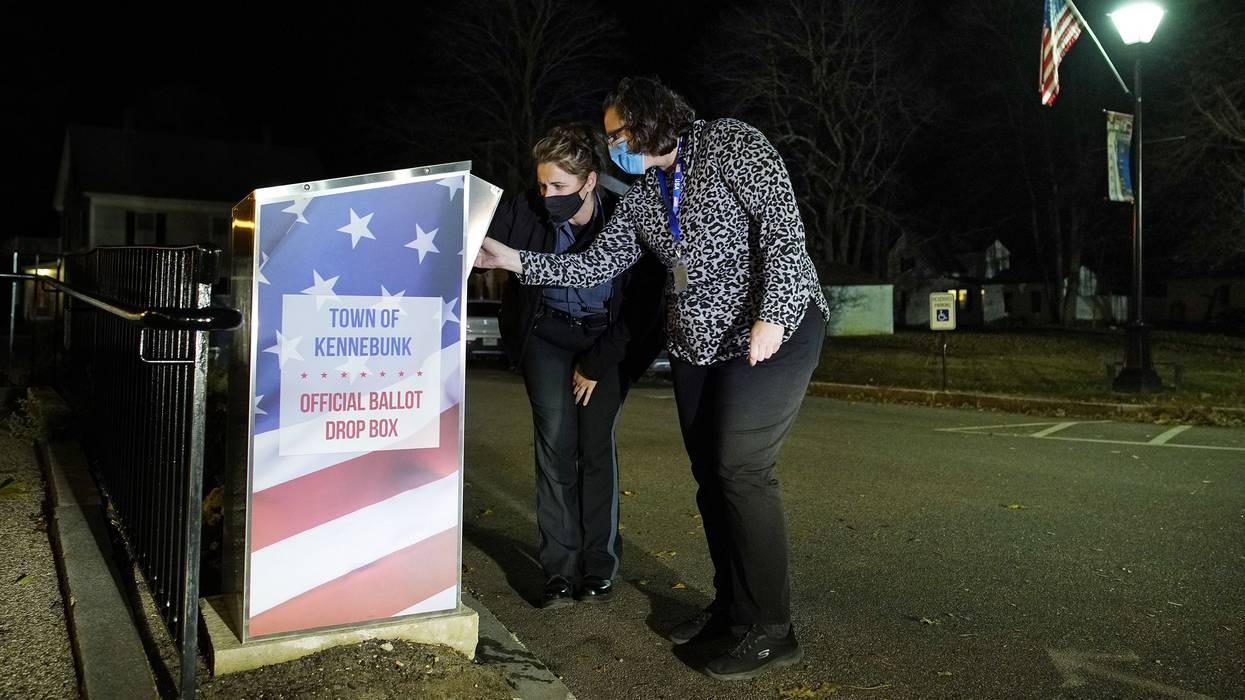
"Right-wing billionaire Leonard Leo is pouring money into Question 1, which would shred absentee voting in Maine. But our movement is fighting back."
Graham Platner isn't on the ballot until next year, but while campaigning across Maine for the June Democratic primary, the US Senate candidate is rallying opposition to Question 1, which state voters are set to decide on in Tuesday's election.
If approved, the ballot measure would "eliminate two days of absentee voting, prohibit requests for absentee ballots by phone or family members, end ongoing absentee voter status for seniors and people with disabilities, ban prepaid postage on absentee ballot return envelopes, limit the number of drop boxes, require voters to show certain photo ID before voting, and make other changes" to state elections.
Platner is running against multiple Democrats, including term-limited Gov. Janet Mills, for the opportunity to try to oust longtime Republican Sen. Susan Collins by railing against the oligarchy and prioritizing the needs of the working class. On Thursday, he released a 30-second animated advertisement against Question 1.
"I work on the water, so November can be a very busy time of year for me," Platner, a military veteran who now works as an oyster farmer and harbormaster, explains in the ad. "That's why sometimes, I vote absentee."
Platner then takes aim at Leonard Leo, an island-dwelling "right-wing billionaire" spending big on Question 1. The candidate didn't name Leo in the ad, but made clear in a related social media post that he was the target.
As Maurice T. Cunningham, a retired politics professor who authored Dark Money and the Politics of School Privatization, wrote for CentralMaine.com earlier this month, "Concealed behind layers of dark money fronts funding Question 1 are the far-right billionaires and Christian nationalists who fueled the rise of President Donald Trump and MAGA." Among them is Leo, the lawyer and activist who masterminded Trump's effort to shift the federal judiciary to the right. He has a house on Mount Desert Island, known for Acadia National Park and Bar Harbor.
"He wants to make it harder for students to vote, for members of our tribes to vote, harder for those who serve our country. Question 1 will make it harder for all of us to vote," Platner warns in the ad. "Don't let a right-wing billionaire on Mount Desert Island screw up absentee voting in Maine. Vote no on Question 1."
As the Maine People's Alliance Beacon reported Thursday, "Platner will also host a 'Save Absentee Voting' concert and rally featuring Griffin William Sherry and The Ballroom Thieves in Portland on Sunday, November 2 at 1:00 pm at the State Theatre."
Last year, more than 370,000 Mainers sent in absentee ballots. This year, early voter turnout "is outpacing the last off-year election," with over 76,000 voters having turned in ballots as of Tuesday afternoon, according to the Maine Morning Star.
Organizations from across Maine "who believe that fair, open, and accessible elections are the cornerstone of our democracy" have come together to form the Save Maine Absentee Voting Coalition. They include the state chapters of the ACLU, AFL-CIO, and League of Women Voters as well as Maine Conservation Voters, Maine Education Association, Maine Equal Justice, Maine People's Alliance, Natural Resources Council of Maine, Planned Parenthood Maine Action Fund, and more.
"This measure isn't right for Maine," says the coalition's website. "We all want our elections to be as secure as possible. Instead of making it harder for Maine citizens to vote and tying the hands of our town clerks, we should focus on giving state and local elections officials the resources they need."
"Americans deserve a legal system that isn't influenced by billionaires and special interest backers pushing an agenda at the expense of working families," said a watchdog group leader.
Ahead of U.S. Supreme Court arguments next week, a watchdog group asserted Wednesday that right-wing Justices Samuel Alito and Clarence Thomas must recuse themselves from a case "whose outcome could have sweeping consequences," citing "significant conflicts of interest" due to their relationships with "conservative kingpin Leonard Leo."
In Federal Communications Commission v. Consumers' Research, a right-wing group is challenging the constitutionality of the FCC's Universal Service Fund program.
Vox's Ian Millhiser reported Wednesday that "if the Supreme Court accepts an argument raised by a federal appeals court, which struck down the federal program, it would bring about one of the biggest judicial power grabs in American history, and hobble the government's ability to do, well, pretty much anything."
In the new report about Alito and Thomas, the watchdog Accountable.US issued a similar warning about the case's potential impacts: "Effectively defunct for almost a century, the nondelegation doctrine prohibits Congress from passing off its legislative power to federal agencies... Reviving the doctrine would cripple agencies' ability to govern consumer safeguards, social security, Medicare, and more during a time when the Trump administration has begun to slash federal agencies."
"Now before the high court, the case presents an obvious conflict of interest for many of the justices who are personally tied to (and in some cases, friends of) the conservative activist Leonard Leo, who is closely connected to Consumers' Research," the analysis explains, pointing to reporting that Leo is the group's "main backer."
While "all six conservatives now sitting on the Supreme Court can credit Leo with helping to shepherd their confirmations," the watchdog's report states, the right-wing legal activist is "close personal friends" with Alito and Thomas.
According to the report:
"Americans deserve a legal system that isn't influenced by billionaires and special interest backers pushing an agenda at the expense of working families. Justices Thomas and Alito's cozy ties to Leonard Leo and thereby Consumers' Research fly straight in the face of that, and present a clear conflict of interest impeding their ability to rule impartially on the case," said Accountable.US president Caroline Ciccone in a statement.
"Public trust in the Supreme Court is already at an all-time low because of misguided conduct by justices–this case threatens to degrade it further," Ciccone continued. "The Supreme Court simply cannot be trusted to defend the Constitution if it doesn't adopt an obligatory, enforceable code of conduct that cleans up the impropriety that's existed on the court for years. Thomas and Alito must recuse themselves and restore a semblance of integrity to the highest court."
In addition to releasing the report, Accountable.US and two other groups, Take Back the Court and United for Democracy, argued for Alito and Thomas' recusal in a letter to Chief Justice John Roberts—who on Tuesday publicly condemned right-wing attacks on the federal judiciary.
"The Supreme Court has been engulfed by corruption scandals, many of which centering around the right-wing justices' overly friendly relationships with powerful billionaires and special interests," United for Democracy senior adviser Meagan Hatcher-Mays said Wednesday. "At the same time that Justices Thomas and Alito were accepting lavish gifts and trips from billionaires, they were hearing cases with those same billionaires' legal interests at stake."
"It's impossible for the American public to trust in Supreme Court rulings when this kind of glad-handing is taking place," she added. "The appearance of impropriety is clear in FCC v. Consumers' Research given Leonard Leo's long-time friendship with Justices Thomas and Alito and his financial entanglements with Consumers’ Research. Justices Thomas and Alito must recuse themselves immediately."
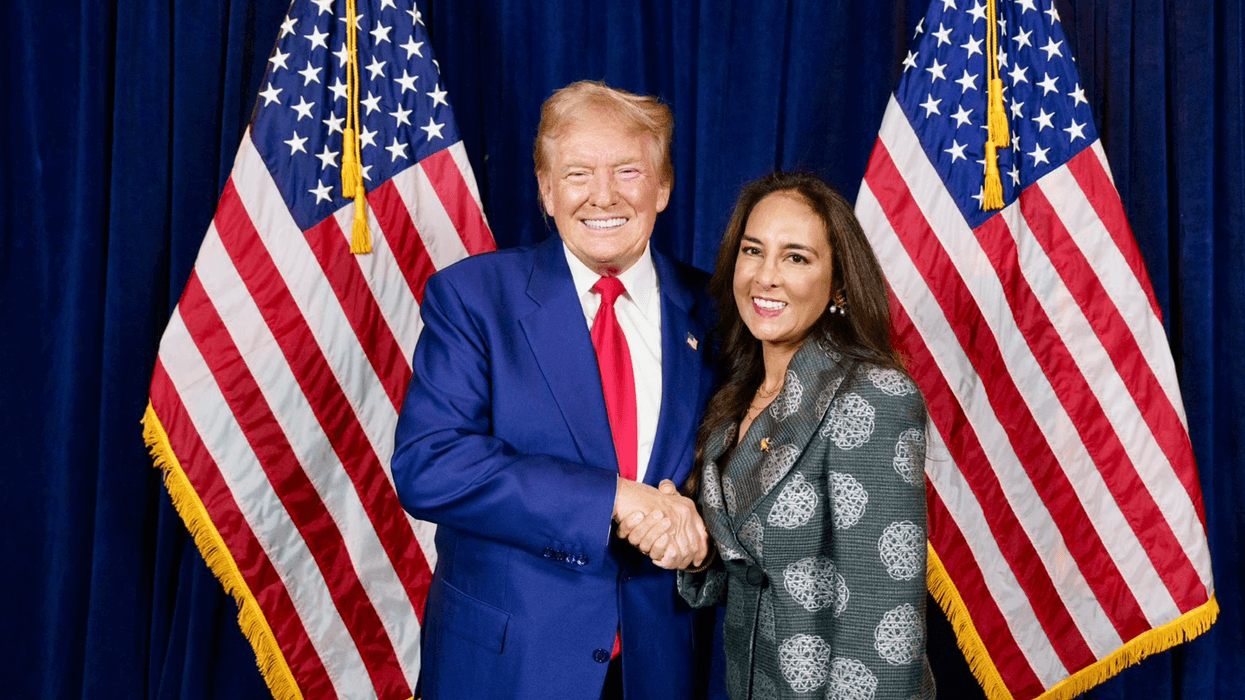
"Dhillon has focused her career on diminishing civil rights, rather than enforcing or protecting them," argued one critic.
LGBTQ+ and voting rights defenders were among those who sounded the alarm Tuesday over Republican President-elect Donald Trump's selection of a San Francisco attorney known for fighting against transgender rights and for leading a right-wing lawyers' group that took part in Trump's effort to overturn the 2020 presidential election to oversee the U.S. Department of Justice Civil Rights Division.
On Monday, Trump announced his nomination of Harmeet Dhillon to head the key civil rights office, claiming on his Truth Social network that the former California Republican Party vice-chair "has stood up consistently to protect our cherished Civil Liberties, including taking on Big Tech for censoring our Free Speech, representing Christians who were prevented from praying together during COVID, and suing corporations who use woke policies to discriminate against their workers."
"In her new role at the DOJ, Harmeet will be a tireless defender of our Constitutional Rights, and will enforce our Civil Rights and Election Laws FAIRLY and FIRMLY," Trump added.
However, prominent trans activist Erin Reed warned on her Substack that Dhillon's nomination—which requires Senate confirmation—"signals an alarming shift that could make life increasingly difficult for transgender people nationwide, including those who have sought refuge in blue states to escape anti-trans legislation."
Trump has picked Harmeet Dhillon as Assistant Attorney General for Civil Rights. She has stated that it must be "made unsafe" for hospitals to provide trans care, and frequently shares Libs of TikTok posts. She intends to target trans people in blue states. Subscribe to support my journalism.
[image or embed]
— Erin Reed (@erininthemorning.com) December 10, 2024 at 8:14 AM
Reed continued:
Dhillon's most prominent work includes founding the Center for American Liberty, a legal organization that focuses heavily on anti-transgender cases in blue states. The organization's "featured cases" section highlights several lawsuits, such as Chloe Cole's case against Kaiser Permanente; a lawsuit challenging a Colorado school's use of a transgender student's preferred name; a case against a California school district seeking to implement policies that would forcibly out transgender students; and a lawsuit against Vermont for denying a foster care license to a family unwilling to comply with nondiscrimination policies regarding transgender youth.
Reed also highlighted Dhillon's attacks on state laws protecting transgender people, as well as her expression of "extreme anti-trans views" on social media—including calling gender-affirming healthcare for trans children "child abuse."
Last year, The Guardian's Jason Wilson reported that the Center for American Liberty made a six-figure payment to a public relations firm that represented Dhillion in both "her capacity as head of her own for-profit law firm and Republican activist."
Writing for the voting rights platform Democracy Docket, Matt Cohen on Tuesday accused Dhillon of being "one of the leading legal figures working to roll back voting rights across the country."
"In the past few years, Dhillon—or an attorney from her law firm—has been involved in more than a dozen different lawsuits in Arizona, Colorado, Georgia, Maine, Michigan, North Carolina, Virginia, and Washington, D.C. challenging voting rights laws, redistricting, election processes, or Trump's efforts to appear on the ballot in the 2024 election," Cohen noted.
As Maya Wiley, president and CEO of the Leadership Conference on Civil and Human Rights, said in a statement Tuesday, "The Department of Justice's Civil Rights Division has the critical responsibility of enforcing our nation's federal civil rights laws and ensuring equal justice under the law on behalf of all of our communities."
"That means investigating police departments that have a pattern of police abuse, protecting the right to vote, and ensuring schools don't discriminate against children based on who they are," Wiley noted. "The nomination of Harmeet Dhillon to lead this critical civil rights office is yet another clear sign that this administration seeks to advance ideological viewpoints over the rights and protections that protect every person in this country."
"Dhillon has focused her career on diminishing civil rights, rather than enforcing or protecting them," she asserted. "Rather than fighting to expand voting access, she has worked to restrict it."
A staunch Trump loyalist, Dhillon has also embraced conspiracy theories including the former president's "Big Lie" that the 2020 presidential election was stolen, and has accused Democrats of "conspiring to commit the biggest election interference fraud in world history."
She was co-chair of the Republican National Lawyers Association when it launched Lawyers for Trump, a group that urged the U.S. Supreme Court to intervene on behalf of the former president after he lost the 2020 election.
Cohen also highlighted Dhillon's ties to right-wing legal activist and Federalist Society co-chair Leonard Leo, described by Sen. Sheldon Whitehouse (D-R.I.) as a "lawless con man and crook" for his refusal to comply with a Senate subpoena and his organization of lavish gifts to conservative U.S. Supreme Court justices.
"We need a leader at the Civil Rights Division who understands that civil rights protections are not partisan or political positions open to the ideological whims of those who seek to elevate a single religion or to protect political allies or particular groups over others," Wiley stressed. "We need a leader who will vigorously enforce our civil rights laws and work to protect the rights of all of our communities—including in voting, education, employment, housing, and public accommodations—without fear or favor."
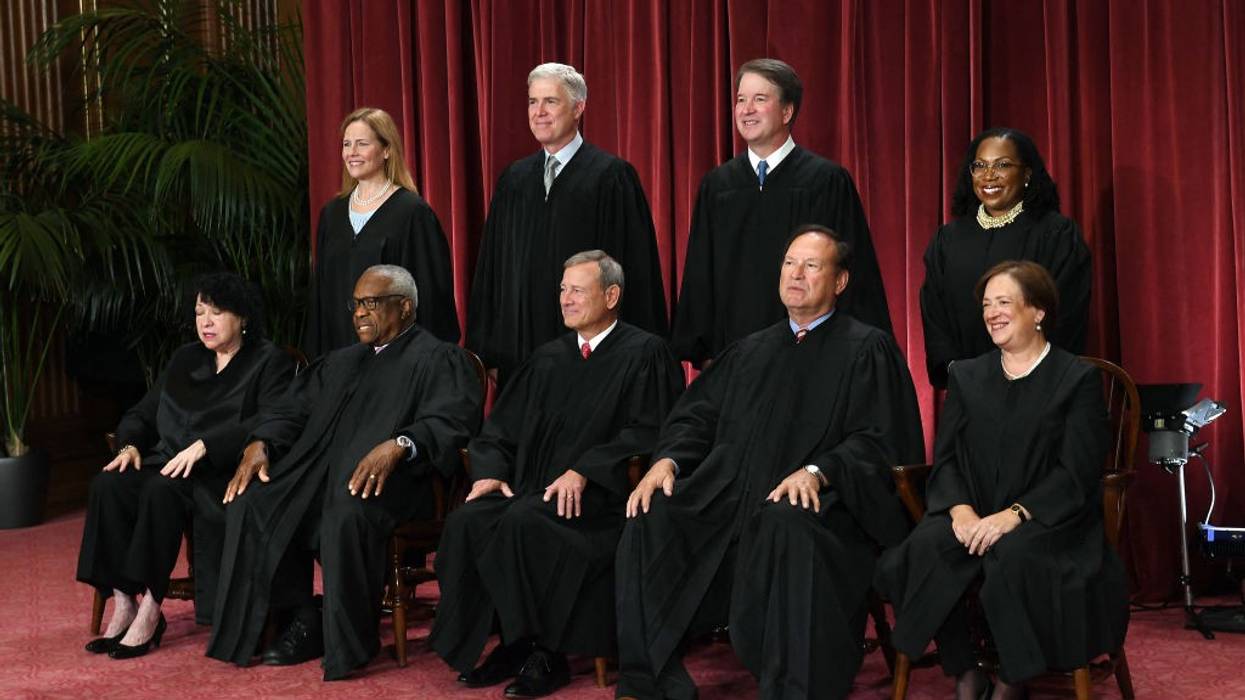
The nine justices of the nation's highest court are powerful government officials with a duty to stand up against abuse and for the rule of law. They claim they are independent. Will they act?
FBI director nominee-in-waiting Kash Patel writes children’s books in which his character, a wizard, vows to protect “King Donald.” (Patel also peddled pills to reverse the Covid-19 vaccine and produced a song recorded by imprisoned January 6 insurrectionists called “Justice for All.”) Ominous credentials to head the nation’s most powerful law enforcement agency, one with a history of abuse.
We’ve been vocal about what’s gone wrong at the Supreme Court. It has been captured by a faction of a faction. But if we’ve ever needed an independent judiciary, we need it now. If guardrails crumble and the powerful quail before Donald Trump, the high court may be one of the last — indeed, at times, the only — protectors of the Constitution.
All of which makes the latest revelations about the Court so dismaying — the inside story of how the justices adopted an ethics code that is more loophole than law.
In the past two years, ProPublica and other news outlets have revealed startling misconduct. Justice Clarence Thomas for years had his lifestyle secretly subsidized by billionaire Harlan Crow. The billionaire provided lavish vacations, paid for the education of Thomas’s surrogate son, and even bought and renovated the justice’s mother’s house (with her living in it). If this happened with state legislators in Albany or Sacramento, we’d call it corruption. Justice Samuel Alito, too, took luxury travel from yet another billionaire, also without disclosing it. Leonard Leo of the Federalist Society played matchmaker between the judges and the billionaires. ProPublica won the Pulitzer Prize for its exposés.
Public outcry was loud enough that the Court last year felt compelled to issue a first-ever code of conduct. The justices explained that this was only to clear up a “misunderstanding” by citizens. Instead of being the only judges with no ethics code, they now had the weakest.
Now The New York Times has revealed the fevered deliberations that produced this result. It reads like the doings of sneaky pols on House of Cards. Justices sent each other memos in sealed envelopes because they were so fearful of leaks. Thomas and Alito “wrote off the Court’s critics as politically motivated and unappeasable,” write Jodi Kantor and Abbie VanSickle. The liberal justices pushed for a strong code with an enforcement mechanism, such as a panel of retired judges, to no avail.
Justice Neil Gorsuch, the newspaper reported, was most vocal in opposition and judicial self-regard. “The justices’ strength was their independence, he said, and he vowed to have no part in diminishing it,” the article reports. Gorsuch wrote a long memo of complaint as the rules were being drafted.
The result was a tepid code that did little to boost public confidence. It violates a core principle: Nobody is so wise that they should be the judge in their own case. The justices decide on their own when they must “recuse,” or refrain from hearing a case. Nor must they explain why they stepped back, though some justices have begun to do that. Most important, there is no mechanism for enforcement.
So the Court has served up mush. But the story need not end there. Congress has set rules for the federal courts throughout history, as envisioned by the Constitution. Samuel Alito has waxed indignant about this. “I know this is a controversial view, but I’m willing to say it. No provision in the Constitution gives [Congress] the authority to regulate the Supreme Court — period,” he told The Wall Street Journal. Justice Elena Kagan felt compelled to respond publicly. “It just can’t be that the Court is the only institution that somehow is not subject to checks and balances from anybody else,” she said. “We’re not imperial.”
This again shows why the Court needs fundamental reform. An 18-year term limit for justices would make the Court much more accountable. It accords with a fundamental American precept: Nobody should hold too much power for too long. It’s also widely popular. The most recent Fox News poll on the issue showed that 78 percent of respondents backed term limits — in other words, strong majorities of Republicans and independents as well as Democrats.
In recent years, congressional Republicans have been hostile to Supreme Court reform. With Congress in Republican hands for the next two years at least, there’s an opportunity to deepen support among conservatives and liberals, legal scholars, bar leaders, and others. It’s an idea whose time has come.
We need a strong, independent, principled Supreme Court. The ruling last summer granting vast criminal immunity empowers the president to law-break with impunity. Major rulings are due on vital issues — including the oral arguments today on state laws banning gender-affirming medical care for transgender minors. Civil liberties violations likely to accompany mass deportation of noncitizens will surely reach the justices. This term will test whether this is a principled Court or, as seems increasingly likely, a MAGA Court.
No, Kash Patel is not a wizard. The justices wear robes, but they aren’t either. They are powerful government officials with a duty to stand up against abuse and for the rule of law. They claim they are independent. Will they act? The backstage saga of their ethics code doesn’t augur well.
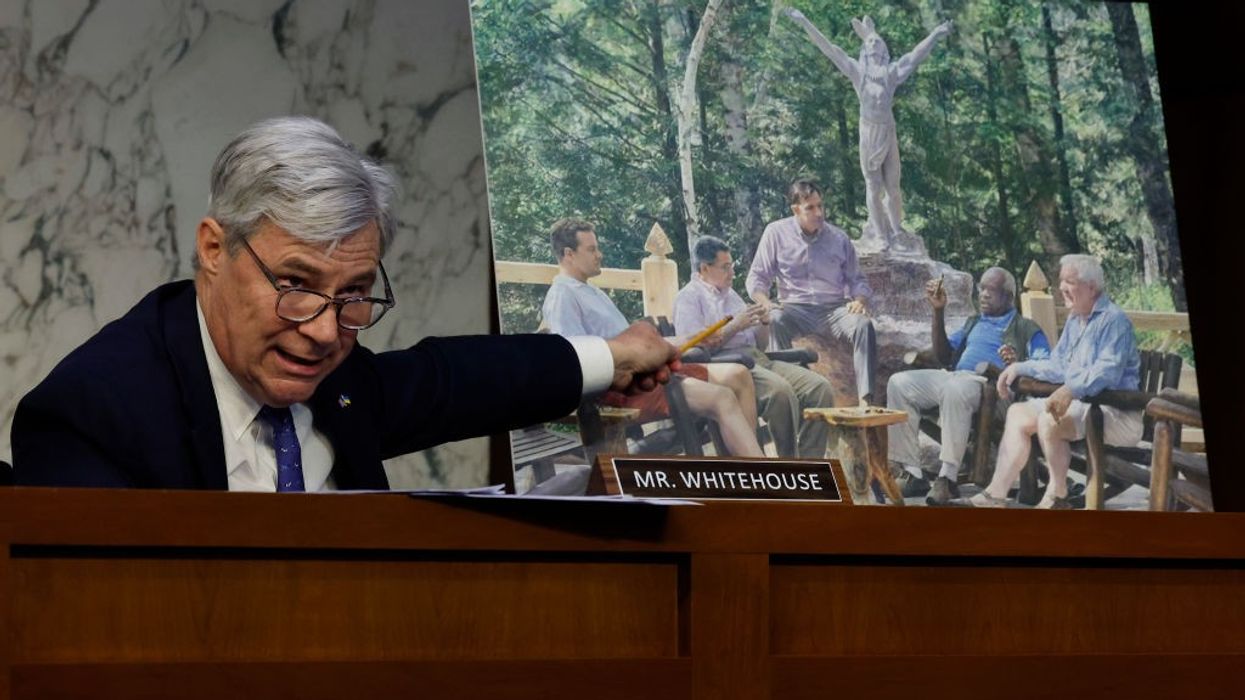
The assault by the six right-wing justices on the Chevron doctrine is an assault on everyday people, carried out on behalf of corporations and the Court’s wealthy benefactors.
Last month, the Supreme Court broke with four decades of precedent and overturned Chevron deference, a cornerstone of administrative law that has been cited by federal courts over 18,000 times. The 6-3 ruling, handed down on party lines in the cases Loper Bright Enterprises v. Raimondo and Relentless Inc. v. Department of Commerce, eliminated a judicial doctrine that had long instructed federal courts to defer to federal agencies’ interpretations of ambiguous or unclear laws passed by Congress, rather than have judges act as regulatory policy-makers.
Chevron deference was established in the 1984 Supreme Court case Chevron v. Natural Resources Defense Council for two main reasons. First, because federal agencies are staffed with career civil servants and subject matter experts like scientists, researchers, and data analysts who understand the nitty-gritty details of regulatory policy-making far better than any given judge. Second was the importance of democratic accountability and the separation of powers, with Justice John Paul Stevens writing in the Chevron decision that “federal judges—who have no constituency—have a duty to respect legitimate policy choices made by those who do.”
In her blistering dissent for Loper Bright, Justice Elena Kagan excoriated the Court’s right-wing majority for “giv[ing] itself exclusive power over every open issue—no matter how expertise-driven or policy-laden—involving the meaning of regulatory law.” The Court itself had inadvertently showcased the danger of having judges act as regulatory experts a day earlier, when Justice Neil Gorsuch repeatedly confused the air pollutant nitrogen oxide with the anesthetic nitrous oxide (more commonly known as “laughing gas”).
But Chevron’s repeal is no laughing matter. Allowing unelected, lifetime-appointed federal judges to invalidate countless regulatory protections based purely on their own political preferences will open the floodgates to a corporate legal assault on crucial regulatory protections—from clean air and water, to food and drug safety, to labor and civil rights.
Curiously, Chevron was once celebrated by conservatives (including the late Antonin Scalia), as it allowed the Reagan administration to continue its industry-friendly regulatory approach unimpeded by the more liberal federal courts at the time (the DC Circuit ruling overturned by SCOTUS in Chevron was written by then-circuit judge Ruth Bader Ginsburg). But over the past decade, as Democrats regained control of the executive branch and used Chevron deference to check corporate power, conservatives have changed their tune. Aided by the GOP’s packing of the courts with Federalist Society alumni, the conservative legal movement and Big Business now see the unelected judiciary as the best long-term venue for dismantling the administrative state.
Allowing unelected, lifetime-appointed federal judges to invalidate countless regulatory protections based purely on their own political preferences will open the floodgates to a corporate legal assault on crucial regulatory protections—from clean air and water, to food and drug safety, to labor and civil rights.
Their most powerful ally in this effort has been Justice Clarence Thomas, a former supporter of Chevron doctrine whose about-face has been equally opportunistic. According to The Lever, Thomas—who wrote a landmark opinion upholding Chevron in 2005—began working to overturn the doctrine after he and his wife received lavish undisclosed gifts and financial support from wealthy conservative benefactors, including real estate mogul Harlan Crow and Federalist Society leader Leonard Leo. Records unearthed by ProPublica have also revealed that Thomas was invited to fundraising events held by fossil fuel billionaire Charles Koch, whose donor network has long sought the overturning of Chevron.
These wealthy benefactors played a hidden role in the successful overturning of Chevron this term by using the disputes about federal fishing fees in the Loper Bright and Relentless cases as stalking horses against the doctrine. Petitioners in both cases were represented pro bono by lawyers with close ties to the Koch network. In Loper Bright, herring fisherman Bill Bright was represented by three lawyers who also work for Americans for Prosperity, one of the Koch Network’s most prominent organizations. In Relentless, the petitioners were likewise represented free of charge by the New Civil Liberties Alliance (NCLA), a right-wing litigation group that has received over $5 million from Koch-affiliated organizations and $4 million from Leonard Leo’s dark money groups.
The Court’s power brokers have also used amicus curiae (“friend of the court”) briefs to engage in judicial lobbying. In Loper Bright and Relentless, we found 19 examples of this practice. Right-wing think tanks Cato Institute, Competitive Enterprise Institute, and Texas Public Policy Foundation—who all filed anti-Chevron doctrine amicus briefs in Loper Bright—have received millions in donations from Koch organizations. The Board of Trustees for the Manhattan Institute, another Koch-funded Loper Bright amicus filer, is chaired by Justice Samuel Alito’s wealthy fishing buddy Paul Singer and counts Harlan Crow’s wife Kathy among its members. Leonard Leo has similarly bankrolled several amicus filers, including the Mike Pence-led Advancing American Freedom, the anti-abortion group Students for Life of America, and (conspicuously) the recently-launched fishing industry lobby group NEFSA.
Despite these flagrant conflicts of interest, neither Justice Thomas nor Justice Alito recused themselves from Loper Bright or Relentless. In fact, the only Justice to recuse from either Chevron case was Ketanji Brown Jackson, who had participated in oral arguments for Loper Bright while serving as a circuit judge.
The devastating impact of Chevron repeal has been compounded by other radical party-line power-grabs made by the Court this term.
The Loper Bright decision is already bearing fruit for its corporate supporters. Just hours after the decision, Eastern District of Texas Judge Sean D. Jordan cited it in his decision to partially block a Department of Labor rule that would have made over 4 million workers eligible for overtime pay. Loper Bright has also been cited in at least four other legal challenges against the DOL’s protections for tipped and gig workers, as well as a new lawsuit filed by three New Jersey hospitals against HHS rules governing Medicare reimbursement. Experts at the Center for American Progress have outlined the many other regulatory protections that could be at risk post-Chevron, including fair housing and anti-discrimination rules, relief for student borrowers, the EPA’s new vehicle and power plant emissions standards, and the CFPB’s crackdown on predatory junk fees.
The devastating impact of Chevron repeal has been compounded by other radical party-line power-grabs made by the Court this term. In SEC v. Jarkesy, the conservative majority made it much harder for the federal government to prosecute white collar criminals, while also threatening the structure of many administrative agencies. And in Corner Post v. Board of Governors of the Federal Reserve System, the Justices functionally eliminated the statute of limitations for challenging new federal regulations. In her dissent for the latter, Justice Jackson warned that “the tsunami of lawsuits against agencies that the Court's holdings in this case and Loper Bright have authorized has the potential to devastate the functioning of the Federal Government.”
Of course for the right-wing, devastation is the goal. The Court’s dismantling of the administrative state follows Donald Trump’s own attempt to do so in the waning days of his presidency through the short-lived Schedule F scheme, which would have empowered the president to fire thousands of career civil servants at will and replace them with political loyalists. Though repealed by the Biden administration, restoring Schedule F remains a central plank of both Trump’s 2024 campaign and the Heritage Foundation’s Project 2025.
Corporate actors and right-wing activists are attacking the administrative state because they know how important it is for protecting the public from unchecked corporate power.
If nothing else, the end of Chevron should end debate among court-watchers as to whether any of the Roberts Court’s six conservative members (including Loper Bright author John Roberts himself) are “moderate.” Loper Bright is one more example in a series of landmark rulings— including Citizens United v. FEC, Janus v. AFSCME, Dobbs v. Jackson Women’s Health, and the recent Trump v. United States—which reveal what John Roberts and his Court actually care about. They have no regard for long-held precedent or for the rule of law, only far-reaching power-grabs that benefit the Federalist Society and Big Business. Their flagrant disregard for judicial ethics and the separation of powers should compel Congress to rein in the Court’s unchecked power by codifying Chevron deference into law, enacting a binding and enforceable Supreme Court ethics code, impeaching Justices Thomas and Alito, and expanding the Supreme Court.
Corporate actors and right-wing activists are attacking the administrative state because they know how important it is for protecting the public from unchecked corporate power. So long as the Supreme Court retains its corrupt right-wing majority, the future looks bright for Big Business. For the rest of us, the Court’s relentless power-grabs will make everyday life much worse.

A monumental case against Big Oil could go to a jury trial. But the industry has undertaken a "stunning and unprecedented campaign" to have the case dismissed, according to the The Guardian.
The U.S. Supreme Court on Monday asked the Biden administration for its position on a climate lawsuit against Big Oil following a pressure campaign the industry has mounted to have the court dismiss it.
The case, brought by the city and county of Honolulu, is one of dozens of state and local lawsuits seeking to hold Big Oil to account for the climate impact that its products have had and for the deception and disinformation used to sell them. The industry could be found liable for many billions of dollars if such cases reach jury trials, and so a group of companies has filed a petition, supported by legal briefs and a public advertising campaign, to the Supreme Court to hear their case for dismissal.
The Center for Climate Integrity (CCI) wrote Monday that the solicitor general, the administration lawyer who will handle the request, should advise the Supreme Court that states and municipalities can file these cases in state courts—to ignore Big Oil's petition, effectively.
"Big Oil companies are fighting desperately to avoid trial in lawsuits like Honolulu's, which would expose the evidence of the fossil fuel industry's climate lies for the entire world to see," Richard Wiles, the group's president, said in a statement. "Communities everywhere are paying dearly for the massive damages caused by Big Oil's decadeslong climate deception. The people of Honolulu and other communities across the country deserve their day in court to hold these companies accountable."
In November, the Hawaii Supreme Court rejected a previous Big Oil effort to stop the case, which set the table for a potentially momentous jury trial—none of the climate lawsuits have yet reached that stage, and City and County of Honolulu v. Sunoco et al. could be the first. The industry had tried to argue that the lawsuit sought to regulate interstate and international carbon emissions, which states don't have the right to do, and thus the case couldn't be brought in state court. The court ruled the case wasn't about the regulation of carbon emissions.
Big Oil then filed its Supreme Court petition, backed by a major campaign: right-wing groups have not only filed amicus briefs with the court but also mounted an unusually public campaign calling for the court to dismiss Honolulu and other such cases.
"This looks to be the most aggressive campaign yet to influence the court on behalf of Big Oil," Kert Davies, CCI's director of special investigations, told E&E News. "The fossil fuel industry and its allies are clearly threatened by these legal efforts to hold them accountable, and they're going to unprecedented lengths to send out distress signals in the hope they'll be rescued from standing trial."
"Far-right fossil fuel allies have launched a stunning and unprecedented campaign pressuring the Supreme Court to shield fossil fuel companies from litigation that could cost them billions of dollars," according to The Guardian, which tied the campaign to Leonard Leo, the so-called architect of the Supreme Court, thanks to his influence in conservative legal circles and over Donald Trump, who appointed three of the current justices as president.
An ad produced by the Alliance for Consumers, a nonprofit that has ties to Leo, posits the Supreme Court as the "solution" to the overreach of "left-wing officials" who are pushing a political agenda through the courts by misusing public nuisance lawsuits.
Progressive activists, backed by the liberal dark money machine, are weaponizing a form of legal case (that was intended for use strictly on small, local issues) to advance their agenda nationwide.
Here’s how their scheme operates ⬇️https://t.co/Cix47F15I1 pic.twitter.com/hUxLNpWJYf
— Alliance For Consumers (@for_consumers) May 1, 2024
Conservatives have also published opinion pieces in favor of the Big Oil petition in outlets such as Bloomberg Law, The Hill, National Review, and The Wall Street Journal, which titled its piece "Honolulu Tries to Mug Energy Companies."
"I have never, ever seen this kind of overt political campaign to influence the court like this," Patrick Parenteau, a professor at Vermont Law School, told The Guardian.
The fact that the Supreme Court asked the solicitor general for the administration's position indicates that some justices are interested in the case—the court throws out thousands of petitions a year without asking for such input.
CCI, like the Hawaii Supreme Court, finds no merit in the industry's legal argument that Honolulu is an attempt to regulate emissions.
"Lawsuits like Honolulu's are not seeking to solve climate change or regulate emissions—these plaintiffs simply want Big Oil to stop lying and pay their fair share of the damages they knowingly caused," Alyssa Johl, the group's vice president of legal and general counsel. "The solicitor general should make clear that federal laws don't preempt the ability of communities to hold companies accountable for their deceptive claims under state law."
In a similar case last year, Biden's solicitor general sided with Colorado municipalities that had filed suit and rejected the arguments in a Big Oil petition, urging the Supreme Court not to take up Big Oil's petition. The court followed the administration's advice on that and a few related cases. Roughly 40 states and municipalities have filed such suits since 2017.
President Biden has pledged to "strategically support" climate lawsuits against polluters, and last year the Justice Department filed a Supreme Court brief in support of communities seeking to hold Big Oil accountable in state court.
https://t.co/yw1YulU9fM
— Center for Climate Integrity (@climatecosts) June 10, 2024
There remains the possibility that the federal government itself could bring a case against Big Oil for propagating disinformation and blocking a green transition. Last month, Sen. Sheldon Whitehouse (D-R.I.) and Rep. Jamie Raskin (D-Md.) called on the U.S. Department of Justice to investigate the industry for those alleged crimes, following a three-year probe that their congressional committees had conducted.
Monday's Supreme Court request of the solicitor general notes that Justice Samuel Alito didn't take part in the considerations of the case—"probably because he owned stock in ConocoPhillips, a defendant in the case," according to The Guardian.
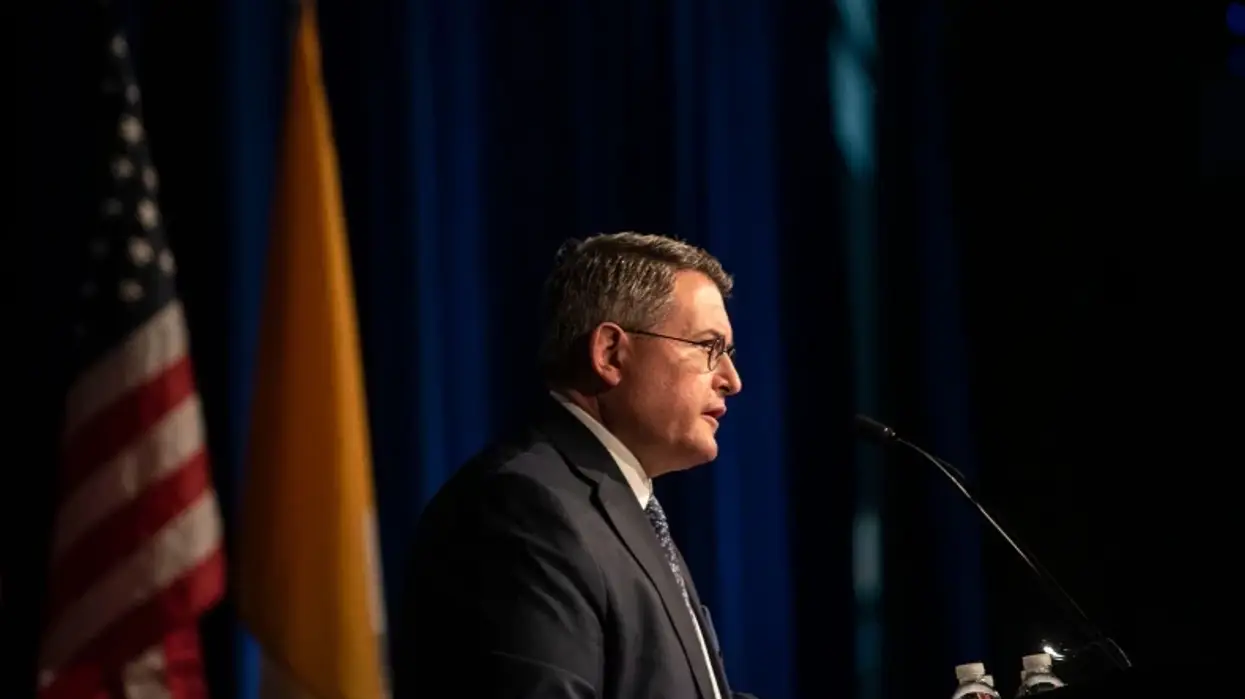
"This subpoena is a direct result of Mr. Leo's own actions and choices," said Judiciary Committee Chair Dick Durbin.
"Incredible," said one journalist on Friday of right-wing legal activist Leonard Leo's reasons for refusing to comply with a subpoena from the Senate Judiciary Committee as the panel investigates conservative Supreme Court justices' relationships with Leo and other Republican operatives and donors.
The Federalist Society co-chairman told The Washington Post that the subpoena was "politically motivated."
"I am not capitulating to [committee Chair Dick Durbin's (D-Ill.)] lawless support of Sen. Sheldon Whitehouse and the left's dark money effort to silence and cancel political opposition," said Leo, who has lobbied for the appointments of far-right judges to federal benches, in a statement.
The subpoena came over four months after the committee voted along party lines to subpoena Leo and billionaire GOP donor Harlan Crow following numerous reports about luxury travel and gifts they and others bestowed on Justices Clarence Thomas and Samuel Alito.
ProPublica revealed last June that Leo organized a luxury fishing trip to Alaska for Alito, with lodging and private jet travel paid for, in 2008. The trip was not included on Alito's federally required financial disclosure forms, continuing a pattern that ProPublica first reported on last April with several luxury vacations, real estate transactions, and other financial gifts to Thomas that were paid for by Crow.
Durbin said Thursday that the subpoena was issued because of the "blanket refusal to cooperate" with the investigation that Leo has displayed since last July.
"His outright defiance left the committee with no other choice but to move forward with compulsory process. For that reason, I have issued a subpoena to Mr. Leo," said Durbin. "Mr. Leo has played a central role in the ethics crisis plaguing the Supreme Court and, unlike the other recipients of information requests in this matter, he has done nothing but stonewall the committee. This subpoena is a direct result of Mr. Leo's own actions and choices."
The ethics violations revealed by ProPublica's reporting forced the Supreme Court last fall to adopt a code of conduct for the first time, modeled on the rules followed by judges on lower federal courts.
But ethics watchdogs labeled the code a "toothless PR stunt" and a "cover-up for Clarence Thomas," as it did not include an enforcement mechanism and provided the justices with discretion over recusal decisions.
Debt relief advocates called on Alito to recuse himself last year from two cases pertaining to Biden's student debt cancellation program, citing the reporting on Leo's gifts to the justice. The plane Alito took to Alaska was owned by billionaire investor Paul Singer, who has financially backed groups that lobbied the court to overturn Biden's plan.
The court struck down the debt relief program last June.
Like former President Donald Trump, said Alex Aronson, former chief counsel for Judiciary Committee senior member Sen. Sheldon Whitehouse (D-R.I.), "the other man most responsible for shaping our Supreme Court's runaway majority is a lawless con man and crook."
Caroline Ciccone, president of government watchdog Accountable.US, said Friday that "Supreme Court billionaire matchmaker Leonard Leo" is the force behind "a full-blown corruption crisis has plagued the high court for over a year, undermining its credibility and plummeting public trust in the court to record lows."
"Today's subpoena is a critical step toward accountability, and toward ensuring that our high court adheres to the highest possible ethics standards," said Ciccone. "As a result of the strong leadership of Chairman Durbin and the Judiciary Committee, we can now begin to get to the bottom of the corruption crisis pervading the Supreme Court."
With Leo refusing to comply with the subpoena, Democrats would need to hold a vote in the closely divided Senate to seek enforcement.
Former Trump aide Peter Navarro was found guilty of contempt of Congress for defying a subpoena from the committee that investigated the January 6, 2021 insurrection, and reported to a federal prison last month to serve his four-month sentence.
"Leonard Leo thinks he's above the law just like Navarro did," said one attorney. "We'll see if he's right."
A legal clinic at University of Notre Dame has helped represent the school while its officials have maintained ties to right-wing Supreme Court justices.
Oklahoma's newly approved religious charter school, which proponents hope will serve as the basis of a legal test case before the U.S. Supreme Court that could alter the principle of separation of church and state, is being boosted by a number of right-wing groups with ties to Federalist Society co-chair Leonard Leo, according to new reporting—including a legal clinic with links to some of the high court's most conservative justices.
As Common Dreams reported in July, the Oklahoma Statewide Virtual Charter School Board earlier this year gave preliminary approval for St. Isidore of Seville Catholic Virtual School, which would be the country's first publicly funded religious school if it survives legal challenges. The school board also approved a contract with the institution in October.
Politico on Friday detailed groups that are aiding the effort to open St. Isidore, including a legal clinic at the University of Notre Dame that was announced shortly before Supreme Court Justice Amy Coney Barrett was confirmed.
At the Notre Dame Religious Liberty Initiative (RLI), law professor Nicole Stelle Garnett is representing St. Isidore in a case before the Oklahoma Supreme Court, which was initiated by state Republican Attorney General Gentner Drummond. The state argues that the establishment of St. Isidore violates both the Oklahoma and U.S. constitutions; the state requires charters schools to be nonsectarian by statute.
Since representing the school, Garnett has also joined the board of the right-wing Federalist Society, which has ties to the Supreme Court's conservative justices and which has helped reshape the federal court system, pushing for the confirmations of far-right judges.
Garnett is close personal friends with Barrett and has hosted Justice Clarence Thomas at her home in South Bend, while Brendan Wilson, a corporate attorney who joined the clinic's legal team in 2021, purchased Barrett's home for nearly $1 million around the time that the RLI began advocating for right-wing causes at the Supreme Court by filing amicus briefs.
That real estate deal drew scrutiny from ethics watchdogs earlier this year, as reports surfaced of Thomas and Justice Samuel Alito accepting luxury trips and other financial gifts from Republican donors.
The RLI also announced in 2020 that its director, Stephanie Barclay, would take a leave of absence to serve as a clerk for another conservative Supreme Court justice, Neil Gorsuch—during the same period that the clinic was working with St. Isidore.
In 2022, the clinic funded a trip to Rome for Alito.
Paul Collins, a legal studies professor at the University of Massachusetts Amherst, told Politico that St. Isidore's work with the Leo-linked RLI shows that "the Christian conservative legal movement... has its fingerprints all over what's going on in Oklahoma."
"They recognize the opportunity to get a state to fund a religious institution is a watershed moment," Collins told the outlet. "They have a very, very sympathetic audience at the Supreme Court. When you have that on the Supreme Court you're going to put a lot of resources into bringing these cases quickly."
A spokesperson for Leo declined to comment for Politico's article. A spokesperson for RLI declined to tell the outlet whether Barclay had been involved in work on behalf of St. Isidore before, during, or after she worked with Gorsuch, and whether Garnett and Wilson had discussed the school's case with any justices.
Alliance Defending Freedom, the right-wing group that has lobbied to curtail reproductive and LGBTQ+ rights through the courts, is representing the Oklahoma Statewide Virtual Charter School Board, and counts among its financial benefactors the Donors Trust, a group that government watchdog Accountable.US called the "'Dark Money ATM' for Hate Groups" last month.
Leo's Judicial Education Project, which pushes for the appointment of conservative Supreme Court justices and promoted views that deny the scientific consensus on climate change, has counted Donors Trust as its main beneficiary.
Peter Greene, a retired teacher and blogger who focuses on education issues, said the push for a publicly funded Christian school "has attracted all the usual Christianist power."
Changing the Supreme Court's interpretation of separation of church and state, said progressive news outlet The Tennessee Holler, "has always been their goal."
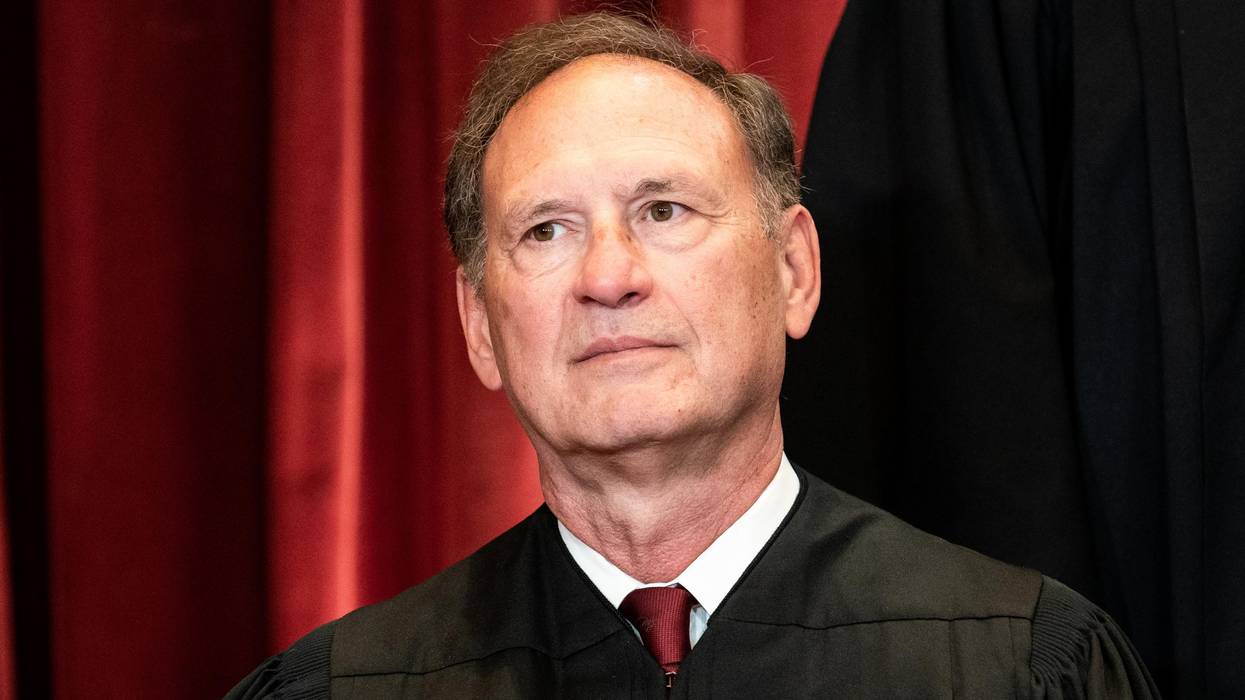
The case before the U.S. Supreme Court, Moore vs. the United States, could increase federal debt by trillions of dollars by making it impossible to tax the rich for unrealized gains.
The U.S. Supreme Court heard oral arguments on Tuesday in Moore v. the United States, a case that could upend the tax system, raise the deficit by hundreds of billions of dollars, increase economic inequality, and prevent the enactment of a wealth tax on billionaires like Jeff Bezos or Elon Musk as proposed by Sen. Elizabeth Warren (D-Mass.), or in a modified form by Sen. Ron Wyden (D-Or.), and endorsed, at least in general principle, by President Joe Biden.
“This could have the biggest fiscal policy effects of any court decision in the modern era,” according to Matt Gardner, of the Institute on Taxation and Economic Policy (ITEP). Gardner's ITEP colleague Steve Wamhoff, wrote last week that Moore "could become the most important tax case of the century," warning that a "broad ruling could destabilize the tax system, enrich many profitable corporations and widen existing economic and racial inequalities.”
“Entire sections of the tax code are unconstitutional if this is unconstitutional,” Sen. Wyden said in a statement. “I can’t imagine the Supreme Court wants to give the wealthiest people on earth billions in tax cuts, particularly at a time when so many Americans are losing faith in the Supreme Court.”
Thanks for your optimism Sen. Wyden, but I can well imagine it. A case like this is the real reason billionaires like Harlan Crow and right-wing operatives like Leonard Leo have plied Justices like Clarence Thomas and Samuel Alito with lavish gifts. It’s not about saving the plaintiffs in this case less than $15,000 in taxes. It’s about potentially saving multi-billionaires like Jeff Bezos and Elon Musk tens of millions of dollars.
Indeed many Congress people have demanded that Alito recuse himself from the case after being interviewed by David B. Rifkin Jr., one of the lead attorneys for the Moore's, for Wall Street Journal articles published in which Alito argued that his lavish billionaire-funded gifts were just peachy.
Oral arguments do not always accurately predict how the Court will rule. But after listening to this week’s oral arguments, there seems at least a reasonable chance that the Court will issue a limited ruling on this case that does not necessarily set a precedent blocking in advance some kind of wealth tax or tax on unrealized capital gains. Some of the conservative Republican Justices like Brett Kavanaugh seemed to be searching for a middle ground that would not upset much of the existing tax code.
The case arises from Donald Trump’s 2017 tax “reform” which included a one-time “Mandatory Repatriation Tax” (“MRT”) on U.S. taxpayers’ retained earnings from their holdings in foreign corporations, to help fund Trump’s other tax cuts. Most of the estimated $338 billion in revenue from the MRT is payable by large corporations like Apple and Microsoft. But it also applies to individuals who own more than 10% of a foreign corporation.
Small investors Charles and Kathleen Moore had invested in an India-based company that could not be taxed in the U.S. but were charged $14,729 under the MRT. The Moores sued the U.S. government for a refund, claiming the MRT was unconstitutional because income must be “realized” before it can be taxed. Their suit was backed by right-wing legal organizations like the Koch’s Americans for Tax Reform and the U.S. Chamber of Commerce. If the Court finds the MRT unconstitutional, it could cost the U.S. government an estimated $338 billion in lost revenue, further increasing annual deficits and the nation's overall debt. Indeed experts estimate a sweeping ruling in the Moore's favor could cost the government trillions over the next decade.
The case is complicated and too much detail on tax law might put many readers to sleep. Suffice it to say that the issue dates back to the original 1789 Constitution which states that “direct taxes” must be “apportioned among the several states.” Historically, this was a sop to slave-owning states who could count slaves as 3/5 of a person when calculating how much money could be raised from each state. In the 19th century, The Supreme Court held that income taxes were unconstitutional unless equally apportioned among each state which was practically impossible.
In response, the 16th Amendment was enacted in 1909 providing that Congress may tax “income” from “whatever source derived.” The 16th Amendment did not define “income” or “source.” The attorneys for the Moore’s argue that money is not income until it is “realized”—i.e. the asset is sold, not just when it increases in value. A number of court decisions since passage of the 16th Amendment have undermined that theory. As one of plaintiffs’ lead lawyers, David Rifkin argued, “It’s a classic example of taxing something that is not income. Unrealized gains are not income by any stretch of the imagination.”
As Justice Sotomayor explained to the Moore’s attorney during oral arguments, “You're asking us to just announce what realization is out of context. And for the last hundred years, we've been studiously avoiding doing that because we recognize that it's dangerous to do that. To a word like "realization," we then have to come up with a working definition that applies to every piece of property and every way in which people gain wealth. It doesn't seem logical to me.”
Justice Jackson added a simple way for the Court to make a limited ruling upholding the MRT without addressing larger constitutional or philosophical questions: “The Court doesn't actually need to resolve any fundamental questions in this case about whether the Sixteenth Amendment requires realization. The MRT taxes income that was actually realized by the foreign corporations, and Congress permissibly attributed the tax on that realized income to U.S. shareholders just as it has done in any number of pass-through taxes throughout our nation's history. The Court could say only that and affirm.”
Justice Kavanaugh and perhaps Justice Barrett seemed sympathetic to a limited ruling. Perhaps Justice Jackson’s approach could command a voting majority, uphold the MRT, leave untouched prior Court rulings, and kick the can on a wealth tax and/or unrealized capital gains tax on the wealthy down the road.