

SUBSCRIBE TO OUR FREE NEWSLETTER
Daily news & progressive opinion—funded by the people, not the corporations—delivered straight to your inbox.
5
#000000
#FFFFFF
To donate by check, phone, or other method, see our More Ways to Give page.
Daily news & progressive opinion—funded by the people, not the corporations—delivered straight to your inbox.

One campaigner said the cancellation "marks another monumental victory for our planet and future generations, a victory where Indigenous peoples' resistance has been central."
Environmental and Indigenous activists declared Thursday that "geoengineering fails again," welcoming the shutdown of a project that aimed to use "a reflective material to protect and restore Arctic sea ice," which is rapidly disappearing as humanity's reliance on fossil fuels heats the planet.
Noting that "we committed to moving forward only if we could conclusively demonstrate both the safety and effectiveness of our approach," the Arctic Ice Project team confirmed in an online statement that it "will be concluding its research and winding down the organization."
"While our climate impact simulations have shown promising results (with a new scientific paper forthcoming), recent ecotoxicological tests have revealed potential risks to the Arctic food chain," the team said. "Our initial approach was to continue research aimed at addressing these concerns. Upon further reflection, however, the board decided that the combination of these new test results with broad skepticism toward geoengineering, resistance to introducing new materials into the Arctic Ocean, and the increasingly challenging funding environment (and paucity of federal research dollars), the most realistic path was to conclude our research."
"Nature is not a laboratory; it is a living entity we are in relationship with."
Responding in a Thursday statement, Hands Off Mother Earth Alliance global coordinator Coraina de la Plaza said that "the cancellation of the Arctic Ice Project marks another monumental victory for our planet and future generations, a victory where Indigenous peoples' resistance has been central. This outcome reflects the power of community advocacy, and while the fight against geoengineering is far from over, this is a significant step to continue protecting the Arctic against industry greed and vested interests."
Panganga Pungowiyi, climate geoengineering organizer at Indigenous Environmental Network, called the decision "long overdue."
"We are concerned for the community members in Utqiaġvik who were made to spread football fields of this material onto their frozen lake. For years, we stood in defense of Indigenous lands and the sacred ice that has sustained our communities for generations," Pungowiyi explained. "Our concerns about the reckless use of harmful materials were dismissed, yet we knew that the health of our ecosystems and the wisdom of our people must not be overlooked. We continually showed up in defense of free prior and informed consent, and made our presence known."
"We continue to state firmly that nature is not a laboratory; it is a living entity we are in relationship with," the organizer added. "While we find relief in this victory, we remain vigilant against other forms of geoengineering that threaten our sacred spaces. Together, we will continue to educate and empower our communities, standing with our lands, waters, and air for the generations to come."
Silvia Ribeiro, Latin America director at ETC Group, said that "today we celebrate the wisdom, experience, and work of Indigenous peoples and organizations in Alaska that stopped this project and stand in solidarity with their vigilance against similar experiments that are planned in Arctic regions."
Mary Church, geoengineering campaign manager at the Center for International Environmental Law, also framed the development as "a huge victory for the Indigenous communities at the forefront of resistance to the industries and vested interests that are polluting the planet and gambling with our collective future."
"Geoengineering approaches do nothing to address the root causes of the climate crisis and instead delay real solutions, offering a free pass to polluters," she stressed. "Following the recent reaffirmation of the global moratorium on geoengineering at the U.N. biodiversity summit in Colombia, governments need to act to prevent harmful outdoor experiments and the slippery slope to legitimizing deployment. Instead of betting on highly speculative techno-fixes, governments must prioritize an urgent and just transition away from fossil fuels to protect vital Arctic ecosystems."
Benjamin Day, a senior campaigner for climate and energy justice at Friends of the Earth U.S., also looked to the fight ahead.
"The decision to shut down the Arctic Ice Project completes the Geoengineering Hype Cycle that we now see so often: Entrepreneurs swoop into local communities claiming they have a solution to global warming, assuring everyone it's completely safe and ignoring the red flags raised by those with deep knowledge of local ecosystems," Day said. "After countless wasted dollars and press attention, it's revealed the community was right and geoengineering is not a safe or responsible way to address climate change."
"Collectively," he argued, "we must stop enabling this cycle and work towards rapidly and equitably transitioning our communities to sustainable energy and land-use practices."
The winding down of the Arctic Ice Project comes amid global fears about what the recent return of Republican U.S. President Donald Trump—who cozied up to Big Oil executives on the campaign trail and promised to "drill, baby, drill," despite the devastating impacts of fossil fuels—will mean for the future of a planet that last year saw record-shattering temperatures.
Already, Trump has
ditched the Paris climate agreement (again), lifted a freeze on new liquefied natural gas exports, declared a "national energy emergency," and named various fossil fuel allies to key positions. Environmental Protection Agency Administrator Lee Zeldin and Transportation Secretary Sean Duffy took their posts earlier this week, Interior Secretary Doug Burgum was confirmed by the Republican-controlled Senate Thursday evening, and Chris Wright, Trump's pick for energy secretary, awaits confirmation.

"'Thanksgiving' is a white-washed holiday designed to conceal its true origins of violence, genocide, land theft, and forced assimilation," said the Indigenous Environmental Network.
In contrast with Thanksgiving celebrations across the United States on Thursday, Native Americans held a National Day of Mourning, promoted accurate history, and championed Indigenous voices and struggles.
Despite rainy conditions, the United American Indians of New England held its 55th annual National Day of Mourning at Cole's Hill in Plymouth, Massachusetts. Kisha James, who is an enrolled member of the Wampanoag Tribe of Gay Head (Aquinnah) and also Oglala Lakota, shared how her grandfather founded the event in 1970 and pledged to continue to "tear down the Thanksgiving mythology."
"The past influences the present" and "the settler project" continues with racism, misogyny, and anti-LGBTQ+ discrimination, James told the crowd. "The Pilgrims are not ancient history."
James took aim at fossil fuel pipelines, oil rigs, skyscrapers, corporations, the U.S. military, mass incarceration, and the criminalization of immigrants, and declared that "no one is illegal on stolen on land."
Jean-Luc Pierite, a member of the Tunica-Biloxi Tribe of Louisiana and president of the board of directors of the North American Indian Center of Boston who helped organize this year's gathering, told USA Today that "while we are mourning some tragic history but also contemporary issues, we are also expressing gratitude for each [other] and building this community space."
"Coming together as a community for a feast and to express gratitude—that's not something that was imported to this continent because of colonization," Pierite said. "Indigenous peoples have had these practices going back beyond, beyond colonial contact."
This year's event in Plymouth included speeches about the suffering of Palestinians—as Israel wages a U.S. government-backed war on the Gaza Strip that has killed at least 44,330 people, injured 104,933, and led to a genocide case at the International Court of Justice—and of people impacted by extractive industries.
"The message from Indigenous peoples internationally has been consistent: that we need to center the development of traditional ecological knowledge, Indigenous knowledge, and move away from fossil fuel extractive economies," said Pierite. "At this time the world needs Indigenous peoples."
In New York City, police
arrested 21 pro-Palestinian protesters who blocked the Macy's Thanksgiving Day Parade route.
According to ABC 7:
For the second year in a row, the group ran in front of the Ronald McDonald float to briefly stop the parade.
This year, they jumped the barricades at West 55th Street just after 9:30 am.
Many sat on the ground, locking arms and chanting "Free, free Palestine!"
Others held a banner behind them, reading "Don't celebrate genocide! Arms embargo now."
Video footage shared on social media shows members of the New York Police Department grabbing protesters and their banner, and throwing at least one person face-first into the road.
Multiple Indigenous groups circulated messages about Thanksgiving on social media Thursday.
NDN Collective said that "as Indigenous peoples, we reject colonial holidays rooted in the genocidal erasure of our existence. We demand #LANDBACK to reclaim sovereignty, repair ties with Mother Earth, and protect Indigenous ways of life—honoring them for generations to come."
The Indigenous Environmental Network similarly
highlighted that "'Thanksgiving' is a white-washed holiday designed to conceal its true origins of violence, genocide, land theft, and forced assimilation."
"We must re-evaluate what we've been taught about the history of this land and recognize that genocide, extraction, and exploitation of our lands and communities continue today," the group argued.
Brenda Beyal, an enrolled member of the Diné Nation and program coordinator of the Brigham Young University ARTS Partnership's Native American Curriculum Initiative, wrote about the history of Thanksgiving on Wednesday for The Salt Lake Tribune.
"Our history books mark 'the first Thanksgiving' in 1621 when at least 90 Wampanoag men, led by Massasoit, walked in on a Puritan harvest feast," Beyal detailed. "Approximately 150 years later, all 13 colonies celebrated a day of solemn Thanksgiving to celebrate the win of the Battle of Saratoga in December of 1777. [U.S. President] George Washington called for a day of thanksgiving and prayer in 1789 to give gratitude for the end of the Revolutionary War."
"Then, in 1863, [President] Abraham Lincoln proclaimed Thanksgiving a national holiday to be held in November of every year," she continued. "During the same year that Lincoln canonized Thanksgiving, the Shoshone experienced the worst slaughter of Native Americans in U.S. history while winter camped on the Boa Ogoi (Bear River) near what is now Preston, Idaho. More than 400 men, women and children were massacred."
"This Thursday, my family and I will gather for a meal of thanksgiving. I have extended an invitation to whomever needs a place to rest, feast, and give gratitude. There is room at my table," she explained. "Ultimately, it is my hope that we as a nation can continue to consecrate days of remembrance, where we can both celebrate and mourn, acknowledge and repair, and find ways to be thankful, even with a wounded heart."
Writing for the San Francisco Chronicle on Thursday, Diné/Dakota writer Jacqueline Keeler addressed the future under U.S. President-elect Donald Trump, who won another term in the White House this month.
"In my book Standoff: Standing Rock, the Bundy Movement, and the American Story of Sacred Lands, which was published after Trump's first term, I delved into the settler colonial mindset that the Pilgrims landed with on these shores, and contrasted it with the perspective of the Indigenous people of the United States," Keeler noted.
"Origin stories define people by articulating the terms of their relationships with our Mother, the Earth, as well as other living beings, and each other. In my book, I proposed that these stories could act as algorithms," she continued. "The 'origin story' algorithm for settler colonists was straightforward; they came to other people's lands, occupied them, and sent the wealth back to their ruling 1%. Based on that origin story, you can predict what Trump and his base will do next."
"My question at Thanksgiving time," she concluded, is "how do we create a new origin story that includes everyone and puts us on a path to come together as a people—in harmony with each other and the Earth, our Mother."
Lakota historian Nick Estes, a citizen of the Lower Brule Sioux Tribe and co-founder of the Indigenous group the Red Nation, appeared on Democracy Now! on Thursday to discuss the origins of Thanksgiving and his book Our History Is the Future, which focuses on seven historical moments of resistance that form a road map for collective liberation.
Estes examined the Standing Rock Sioux Tribe's battle against the climate-wrecking Dakota Access Pipeline. "I actually look at a physical map that was handed out to water protectors who came to the camp. And on that map there was, you know, where to find food, where to find the clinics," he said. "To me, that provided, you know, a kind of interesting parallel to the world that surrounded the camps."
"You had the North Dakota National Guard, the world of cops, the world of the militarized sort of police state. And in the camps themselves you had sort of the primordial sort of beginnings of what a world premised on Indigenous justice might look like. And in that world, you know, everyone got free food. There was a place for everyone," Estes noted. "The housing... obviously, was transient housing and teepees and things like that, but then also there was health clinics to provide healthcare, alternative forms of healthcare, to everyone. And so, if we look at that, it's housing, education—all for free, right?—a strong sense of community."
"Given the opportunity to create a new world in that camp, centered on Indigenous justice and treaty rights, society organized itself according to need and not to profit. And so, where there was, you know, the world of settlers, settler colonialism, that surrounded us, there was the world of Indigenous justice that existed for a brief moment in time," he said. "And in that world, instead of doing to settler society what they did to us—genociding, removing, excluding—there's a capaciousness to Indigenous resistance movements that welcomes in non-Indigenous peoples into our struggle, because that's our primary strength, is one of relationality, one of making kin."
"Carbon offset trading is reckless and irresponsible," said one campaigner.
A coalition of climate groups had a message for world leaders on Monday, Finance Day at the United Nations Climate Change Conference: "Stop carbon offsetting now!"
The conference, COP28, is hosted in Dubai by the United Arab Emirates—which, as the coalition highlighted in a joint statement, is set to "hold numerous promotional thematic events," despite two decades of negative impacts from carbon offset schemes.
"Carbon offset trading is reckless and irresponsible," declared Jutta Kill of the World Rainforest Movement—part of the coalition that includes ETC Group, Focus on the Global South, GRAIN, Indigenous Environmental Network, Just Transition Alliance, and the Oakland Institute.
"Throughout 2023, academic research, media, and civil society investigations have exposed how these projects routinely generate phantom offsets and result in land grabbing and human and Indigenous rights violations," the organizations noted, pointing to "the forced relocation of Ogiek Peoples in Kenya's Mau Forest" and "extensive sexual abuse at a Kenyan offset project."
"Over the past months, Kenya, along with Liberia, Tanzania, Zambia, and Zimbabwe, have signed deals with Dubai-based Blue Carbon
covering a total of over 24 million hectares of community lands," the coalition continued. "Carbon offset project developers, standards bodies, auditors, and credit providers have pocketed millions from churning out carbon credits that have failed to reduce emissions and exacerbated the climate crisis."
One "damning" probe from September found that nearly 80% of the top carbon offset schemes be deemed "likely junk or worthless." Another study from that month, focused on Reducing Emissions from Deforestation and Forest Degradation (REDD+) projects, similarly concluded that reductions were dramatically exaggerated.
"At COP28, world leaders and climate negotiators need to recognize once and for all that carbon markets are a failed source of climate finance. They are volatile and unstable, marked by fraud, incapable of reducing emissions, and actually harm communities," Oakland Institute executive director Anuradha Mittal said Monday.
The coalition pointed out that in addition to impacts such as relocations and abuse, "these projects, many of which are repackaged as so-called 'nature-based solutions' or 'natural climate solutions' or, when done at coastal and marine areas, as 'blue carbon,' have also drawn peasant and Indigenous communities into costly and complicated legal battles in their effort to affirm their rights and reclaim community territories and in their fights to resist the projects."
The Kichwa communities in the Peruvian Amazon, Dayak communities in Indonesia, and Aka Indigenous communities and Bantu farmers in the Republic of Congo's Bateke Plateau are among those negatively affected by carbon offsetting schemes.
"Over 20 years of history with offsets have resulted in the rights of Indigenous peoples being violated, increased land grabbing, and disproportionate impacts on Indigenous environmental defenders," stressed Indigenous Environmental Network executive director Tom Goldtooth. "The false solutions will become a crime against humanity and Mother Earth."
GRAIN's Devlin Kuyek said that "they prop up a system that has enabled corporate polluters and rich countries to delay action and profit from the crisis. Whether unregulated or with a U.N. seal of approval, carbon offsetting in all its shapes and forms, including REDD or so-called 'nature-based solutions' and 'blue carbon,' is a fraud that must be immediately scrapped."
The coalition asserted that rather than carbon offsetting, "what is urgently needed is renewed focus on keeping fossil fuels in the ground and commitments to real climate action based on equity and justice."
As Friends of the Earth International's Kirtana Chandrasekaran put it: "What we need are real emissions reductions and real climate finance. Anything less is failure."
The coalition's demands contrasted sharply with Sunday comments from Sultan Ahmed Al Jaber, COP28 president and Abu Dhabi National Oil Company CEO, who claimed there is "no science" behind the push to rapidly phase out planet-heating fossil fuels—which one leading expert said "dismisses decades of work" by global scientists.
Going into COP28, a U.N. analysis warned that countries' currently implemented policies put the world on track for 3°C of warming by 2100, or double the Paris agreement's 1.5°C target. Already, the planet has warmed about 1.1°C relative to preindustrial levels.
Even though the international community is way off track in terms of meeting its climate goals, Bronwen Tucker, global public finance lead at Oil Change International, pointed out Monday that "on Finance Day at COP28, instead of rich country governments committing to pay their fair share for a fossil fuel phaseout, they tried to shirk their responsibilities."
The biggest historical contributor to planet-heating pollution, the United States, and foundation partners on Sunday announced the Energy Transition Alliance. Rachel Cleetus, the policy director and a lead economist for the Union of Concerned Scientists' Climate and Energy Program, said the offset initiative "is still very much a work-in-progress, and the details shared thus far raise a fair degree of skepticism about its ability to meaningfully contribute to addressing the climate crisis."
"Richer nations and large corporations should have no claim over monetizing the scarce remaining carbon budget and yet this program is premised on that unjust idea," Cleetus added. "At COP28, the primary focus should be on securing an agreement among nations for a fast, fair fossil fuel phaseout and ramping up public finance."

"We hope this move locks in real action on ending the era of fossil fuels in California, and spurs other regions, states, and countries to join forces in tackling the root cause of the climate crisis," said one activist.
Climate campaigners in California and beyond celebrated on Friday after the state Legislature affirmed its support for a resolution that urges the U.S. government to join a worldwide effort to develop "a fossil fuel nonproliferation treaty as an international mechanism to manage a global transition away from coal, oil, and gas."
Senate Joint Resolution 2 also endorses what advocates call a "just transition," stating that "California affirms the need for a plan to phase out existing fossil fuel production that prioritizes the most impacted workers and local government services with short- and long-term investments that include enforceable labor standards, such as prevailing wages, apprenticeship opportunities, and project labor agreements, to protect workers and communities."
California Senate Majority Whip Lena Gonzalez (D-33), who spearheaded SJR 2, declared Friday that "it is essential that we commit once and for all to ending our reliance on fossil fuels. People around the world, especially low-income people of color, are suffering the adverse health impacts of fossil fuel pollution, from asthma to cancer. The recent devastating fires and hurricanes emphasize the urgency of taking action, to prevent further extreme weather changes."
"The science has been clear for decades—fossil fuels are responsible for the climate crisis," she added. "We can prevent further harm to our communities, and that is why I am proud that California has now been added to the growing list of governments endorsing the fossil fuel nonproliferation treaty. It is time for our nation to be a part of the solution, to forge strong unity and commitment to phasing out the use of fossil fuels."
According to its text, SJR 2 will be sent to Democratic U.S. President Joe Biden and Vice President Kamala Harris—who are seeking reelection next year—as well as the top Democrats and Republicans in Congress, California's congressional delegation, Democratic Gov. Gavin Newsom, every mayor in the state, the United Nations secretary-general, and the U.N. high commissioner for human rights.
The resolution was sponsored by the Stand.earth initiative Stand Against Fossil Fuel Expansion (SAFE) Cities and the Indigenous Environmental Network, whose executive director, Tom Goldtooth, said in a statement Friday that "this decision of the state of California is a commitment to take down the single biggest contributor to the climate crisis: the fossil fuel industry."
"California joins the millions of voices across Turtle Island and Mother Earth calling on Biden to follow in the footsteps of our Pacific Island brothers and sisters from the small island states and negotiate a mandate for a fossil fuel nonproliferation treaty," he noted. "As the state with the highest population of Indigenous peoples in the country, it is important to pass legislation that would put a halt to the devastation and destruction of the compounding effects of climate change caused by fossil fuels."
"This decision of the state of California is a commitment to take down the single biggest contributor to the climate crisis: the fossil fuel industry."
Along with other local, regional, and national governments, the demand for such a treaty is backed by the European Parliament, the World Health Organization, faith and civil society groups, and individuals across the globe, including Nobel laureates, scientists, and youth leaders.
If California were a country, it would be the fifth-largest economy in the world in terms of gross domestic product, after the full United States, China, Japan, and Germany. The U.S. state is the largest economy to embrace the treaty call so far, according to Alex Rafalowicz, executive director of the Fossil Fuel Nonproliferation Treaty Initiative.
Rafalowicz said in a statement Friday that by supporting the treaty proposal, "California sets a powerful example to the international community, underscoring the urgency of fast-tracking an equitable transition away from oil, gas, and coal. This move will catalyze a ripple effect that reaches far beyond state borders."
"By aligning its immense economic and cultural influence with the fossil fuel treaty proposal, California can accelerate its own energy transition, inspiring global cooperation to safeguard our planet and communities," the campaigner continued. "We hope this move locks in real action on ending the era of fossil fuels in California, and spurs other regions, states, and countries to join forces in tackling the root cause of the climate crisis: the production of coal, oil, and gas."
Last December, California regulators approved a blueprint to cut planet-heating emissions by 85% and get the state to carbon neutrality by 2045. Newsom said at the time that "California is leading the world's most significant economic transformation since the Industrial Revolution—we're cutting pollution, turning the page on fossil fuels, and creating millions of new jobs." However, activists have called on him and other state leaders to go further.
Nathan Taft, a California resident and senior digital campaigner for SAFE Cities, said Friday that "Los Angeles was one of the first cities in the world to endorse the fossil fuel treaty, and it's great to see California following its lead by becoming one of the first subnational governments joining this movement to address the climate crisis with the scale and urgency required."
"At the same time, California must follow this historic resolution with concrete policies that protect its residents and the climate from fossil fuels," Taft asserted. "At a bare minimum, California should stop issuing new fossil fuel permits, divest its massive pensions from fossil fuels, and implement all-electric building codes."
Central California Environmental Justice Network oil and gas director Cesar Aguirre similarly argued that the state's support for the treaty "only holds weight if we see meaningful protections come from it" and "no new neighborhood drilling should be the first priority."
The vote in California comes as much of the Northern Hemisphere has endured a summer of extreme heat connected to human-caused global warming and as parties to the 2015 Paris agreement prepare for COP28, a U.N. climate summit hosted by the United Arab Emirates in November.
As Common Dreams reported last November, during COP27 in Egypt, Kausea Natano, prime minister of the Pacific nation Tuvalu, proposed a fossil fuel nonproliferation treaty, telling those gathered that "we all know that the leading cause of climate crisis is fossil fuels."
"The climate crisis is escalating but so is the global movement for climate justice. We need all hands on deck to win this fight."
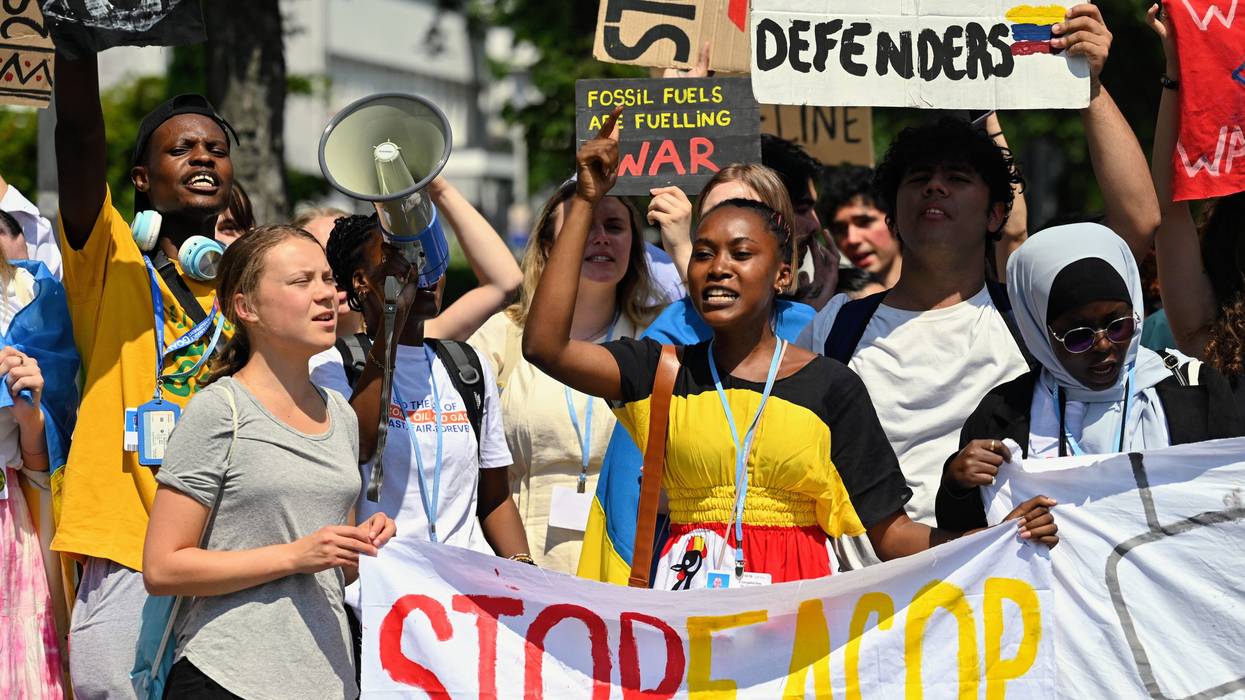
As the United Nations climate talks in Bonn, Germany became the latest in a string of high-profile negotiations to end with little substantive progress, a coalition of environmental groups on Thursday announced plans for a global mobilization that organizers say will bring millions into the streets to demand an end to planet-wrecking fossil fuel production.
The worldwide protests are set to take place on September 15 and 17, days ahead of U.N. Secretary-General António Guterres' September 20 Climate Ambition Summit in New York City and weeks before the crucial COP28 talks in the United Arab Emirates, which will be overseen by the CEO of one of the world's largest oil companies.
"The launch of today's escalation campaign to fight back against fossil fuels builds on the legacy of a diversity of resistance movements from across the world who have been leading the fight against the fossil industry and its pernicious influence," said Tasneem Essop, executive director of the Climate Action Network. "We expect all governments to implement a rapid, just, and equitable phaseout of fossil fuels together with a scaled-up phase-in of renewables."
"They have to signal that this is the end of the fossil fuel era," Essop added. "COP28 is a good place to start."
"We expect all governments to implement a rapid, just, and equitable phaseout of fossil fuels together with a scaled-up phase-in of renewables."
The coalition behind the mass mobilization invited people around the world to register local events and issued a list of straightforward demands that they say political leaders must embrace if there's to be any hope of curbing runaway warming.
"The climate crisis is escalating but so is the global movement for climate justice," the coalition says on its website. "We need all hands on deck to win this fight."
The six demands are as follows:
1. No new fossil fuels—no new finance public or private, no new approvals, licenses, permits, or extensions. The provision of sufficient, consensual climate funding to realize this commitment everywhere.
2. A rapid, just, and equitable phaseout of existing fossil fuel infrastructure in line with the 1.5°C temperature limit and a global plan, like a Fossil Fuel Treaty, to ensure that each country does its part.
3. New commitments for international cooperation to drastically scale up financial and technology transfers to ensure renewable energy access, economic diversification plans, and Just Transition processes so that every country and community can phase out fossil fuels.
4. Stop greenwashing and claiming that offsets, carbon capture and storage, or geoengineering are solutions to the climate crisis.
5. Hold polluters responsible for the damage they've caused and make sure it's coal, oil, and gas corporations that pay reparations for climate loss and damage and for local rehabilitation, remediation, and transition.
6. End fossil fuel corporate capture. No to corporations writing the rules of climate action, bankrolling climate talks, or undermining the global response to climate change.
Brenna TwoBears, coordinator of the Indigenous Environmental Network, said in a statement Thursday that "the time is now to end fossil fuels."
"This has been centuries in the making, when colonizers brought the first extractive systems to Turtle Island and commodified the land," she added. "But shutting down fossil fuels is only one strand among many to weave a basket to hold up the next seven generations. We need a just and equitable transition, where Indigenous people are leading. We need a culture shift to live in balance with our sky and land relatives. We need real solutions that address the problem at its root, not after the fact. A fossil fuel non-proliferation treaty is that real solution."
Plans for the global days of action come amid growing frustration and alarm among climate advocates and scientists over world leaders' continued failure to deliver any meaningful action to phase out fossil fuel use and production—the central driver of the planetary emergency—even as carbon emissions keep rising at a record pace and extreme weather wreaks havoc across the globe.COP27 in Egypt late last year did not yield any meaningful progress toward a global fossil fuel phaseout, and campaigners feel COP28 is also poised to fail given the still-pervasive influence of the oil and gas industry and rich nations' refusal to act.
Sultan Ahmed al-Jaber, COP28's president-designate, is the CEO of the UAE's state-owned Abu Dhabi National Oil Company.
The Guardian reported last week that "Majid Al Suwaidi, director-general of the COP28 climate talks for its host nation... said governments were not in agreement over whether the phaseout of fossil fuels should be on the agenda for the conference, which begins in November."
"Al Suwaidi said fossil fuels would form a key part of the discussions at COP28," the newspaper added, "but whether a phaseout would be discussed as part of the official agenda of the talks was still up for grabs."
Romain Ioualalen, the global policy lead for Oil Change International, emphasized Thursday that "there is no room for additional fossil fuel expansion while limiting global temperature rise to 1.5°C" and implored world leaders to "urgently lay the path for the end of oil, gas, and coal" at COP28.
"People around the world have been fighting against the fossil fuel industry for years and will escalate this fight this September at the United Nations in New York and beyond to secure a full, fair, fast, and funded fossil fuel phaseout and massive expansion of renewable energy," said Ioualalen.
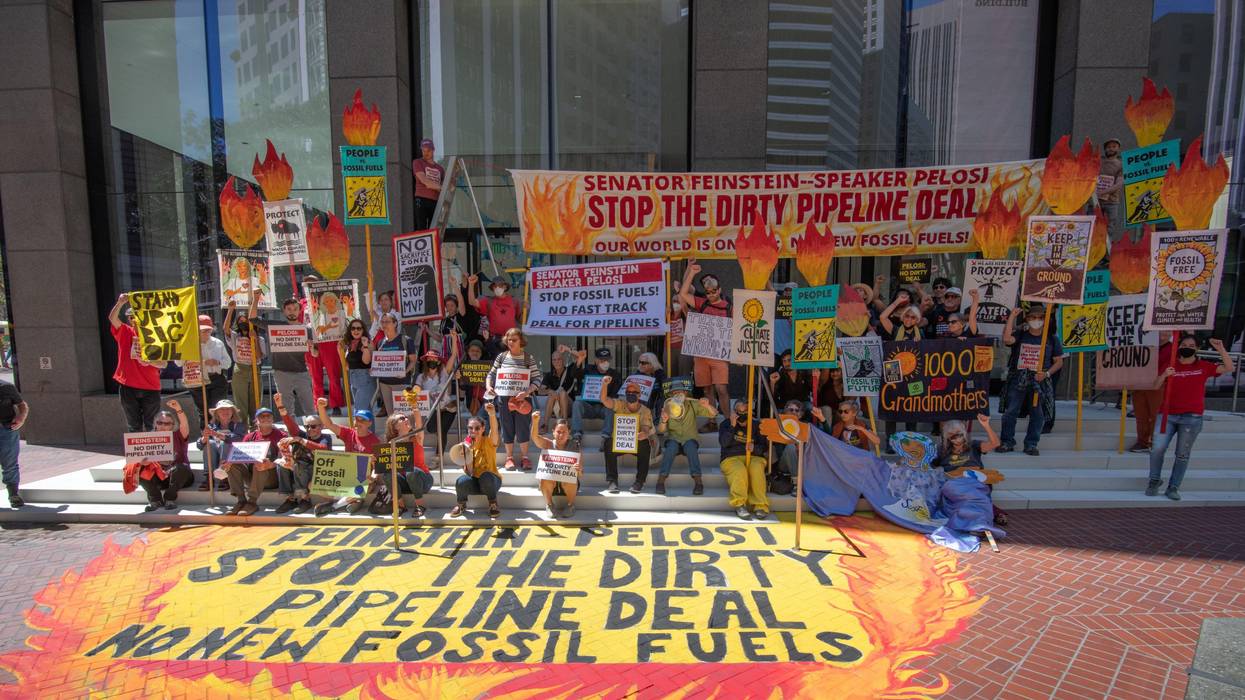
Frontline organizers and community members fighting against U.S. Sen. Joe Manchin's proposed federal permitting reforms that would benefit the fossil fuel industry are set to descend on Washington, D.C. Thursday.
"We want Democrats in Congress to understand that Manchin's side deal is using people as sacrifice zones and it is unacceptable."
Since Senate Majority Leader Chuck Schumer (D-N.Y.) agreed behind closed doors to push through a permitting measure in order to secure support from Manchin (D-W.Va.) for the Inflation Reduction Act, signed last month by President Joe Biden, campaigners across the country have been organizing against the deal--including with arrests at congressional offices.
Despite pressure from campaigners and dozens of Democrats led by Rep. Raul Grijalva (Ariz.), chair of the House Natural Resources Committee, Schumer confirmed Wednesday that he plans to pair the "dirty side deal" with a continuing resolution that members of Congress must pass this month to prevent a government shutdown.
After weeks of virtually lobbying lawmakers, campaigners intend to have in-person conversations about the permit policies and Mountain Valley Pipeline (MVP) on Thursday. Naadiya Hutchinson of WE ACT for Environmental Justice told Common Dreams that "the goal of these meetings is to really showcase people's stories."
"There are Indigenous folks and frontline folks that are deeply, deeply concerned about what further construction of the Mountain Valley Pipeline would do to their health, well-being, and livelihood," she said. "So this is really an opportunity for grassroots and community voices to be heard in person, face-to-face, with many of the people that will be in many ways determining the difference between life and death for some of our communities."
The mobilization, "No Sacrifice Zones: Appalachian Resistance Comes to D.C.," is being organized by the People vs. Fossil Fuels and Stop MVP coalitions. After meeting with lawmakers, the groups plan to hold a 5:00 pm rally at the Robert A. Taft Memorial and Carillon, at the intersection of New Jersey and Constitution avenues.
As frontline activists mobilize in D.C., the Democratic National Committee is scheduled to vote on a resolution opposing the deal. The Washington Post reported that "although the resolution is not expected to pass, it highlights a growing rift in the Democratic Party over permitting reform, a critical issue on the congressional agenda this fall."
One of the rally speakers, Cheyenna Morgan of the frontline-led group Ikiya Collective, told Common Dreams that "we want Democrats in Congress to understand that Manchin's side deal is using people as sacrifice zones and it is unacceptable."
"We know that those that hold the power will never be impacted the way we will, the way our future generations, cultures, and languages are being affected," Morgan said. "We need real climate solutions, not false compromises to line pockets, threaten tribal sovereignty, and weaken our already lacking environmental protections. People are not sacrifice zones."
Manchin's demands include prioritizing projects of "strategic national importance," setting time limits for permit reviews, making changes to clean water rules, restricting court challenges, enhancing federal authority for certain projects, and completing the MVP--a fracked gas pipeline that would run through his state.
A Wednesday letter from 80 groups to Schumer and House Speaker Nancy Pelosi (D-Calif.) argues that the MVP "is an ecological and climate disaster that threatens one of the largest remaining wild landscapes in the Eastern United States," and including support for it in the bill "would send a clear message that Congress is willing to ignore climate science when it is inconvenient, and species can go written off to the dustbin of extinction when it is politically expedient to do so."
Though a draft bill leaked to the Post last month did not mention the MVP by name, the newspaper noted that "a person familiar with the matter said the permitting package would still help the pipeline, which has been mired in litigation and other delays, by expediting permitting and licensing under the Clean Water Act."
Referencing the draft reported by the Post in August, which had a watermark of a key fossil fuel trade group, Louisiana Bucket Brigade director Anne Rolfes said in a statement Wednesday that "we have seen this too often: Industry ghostwrites a bill, and a politician eager for campaign contributions does its bidding."
"This time it is the polluter loophole bill, a cynical and greedy play by Sen. Manchin and his backers, the American Petroleum Institute, that will not only exacerbate the effects of climate change, but will also sacrifice generations of Louisianans, especially Louisianans of color," she continued. "And for what? For money."
Joye Braun of the Cheyenne River Sioux Tribe and the Indigenous Environmental Network told Common Dreams that a main message of Thursday's mobilization is that Manchin and Schumer's deal "is not flying and is not going to fly with frontline leaders, Indigenous communities, BIPOC communities, especially along the Mountain Valley Pipeline or any other extractive industry that threatens our communities and ties us into worsening and hastening climate catastrophe."
"They're calling it a permitting deal but we don't need to reform permitting. Permitting is actually working," she emphasized. "What isn't working is industry forcing their way through our communities, forcing their way into polluting our waters, lands, and the air that we breathe, and putting people's lives in jeopardy--and even killing some people."
"This is our environment--all of our environment. This isn't a free-for-all for extractive industry."
"This is a threat to our democracy," according to Braun, who also highlighted concerns about tribal sovereignty. "This is a threat to the right [of] the people to have a say in our laws and in the way that we protect our environment. This is our environment--all of our environment. This isn't a free-for-all for extractive industry."
Hutchinson similarly stressed that "we do not believe that the permit side deal should be connected to the continuing resolution because the permit side deal should go through the full legislative process. This side deal was a deal between a select few and doesn't reflect the wider needs of our constituencies. It doesn't respect the work of environmental justice communities and, honestly, it undermines in many ways our democracy."
With the mobilization, she said, "I think one of the core messages that we want to send to members of Congress is that we need a just transition, which requires full participation of communities in permitting."
"When communities come together and dream and envision a future for ourselves, that has created legislation like the Environmental Justice for All Act, which is in direct opposition with what this permit side deal is leading us toward," Hutchinson said, referencing a bill sponsored by Grijalva and passed by his committee in July.
Given the recent attacks on American democracy, "I think we should be uplifting" it, she added. "The Environmental Justice for All Act is one of those ways that we uplift democracy, and the permitting side deal is sadly a reinforcement of the direction we don't want to be going in."

A broad coalition of more than 650 climate and progressive advocacy groups Wednesday called on congressional Democratic leaders to reject Sen. Joe Manchin's "alarming" demands for U.S. fossil fuel projects contained in a "dirty" side deal that the West Virginia Democrat secretly negotiated to gain his support for his own party's historic but watered-down package on climate, taxes, and drug price reforms.
"After the IRA paved the way for another decade of fracking and pipelines, we have no choice but to fight this dirty deal with everything we've got."
"We are writing to express our strenuous opposition to any additional fossil fuel giveaways," states the coalition's letter to Senate Majority Leader Chuck Schumer (D-N.Y.) and House Speaker Nancy Pelosi (D-Calif.), noting that the Inflation Reduction Act (IRA) signed by President Joe Biden last week "already included large giveaways to polluters."
"We call on you to unequivocally reject any effort to promote fossil fuels, advance unproven technologies, and weaken our core environmental laws," the letter adds. "You must stand with the communities who continue to bear the brunt of harm from fossil fuels and act to prevent wholesale climate disaster."
According to a leaked one-page summary of what critics have called "the ultimate devil's bargain," the proposal would prioritize approval of projects with "strategic national importance," set time restrictions for reviewing permits, alter federal water rules, limit lawsuits, and increase federal authority for certain facilities. Manchin is also pushing for the completion of the Mountain Valley Pipeline (MVP), a fracked gas project that runs through his home state but is opposed by many of his constituents.
"This fossil fuel wish list is a cruel and direct attack on environmental justice communities and the climate," the new letter argues. "Prolonging the fossil fuel era perpetuates environmental racism, is wildly out of step with climate science, and hamstrings our nation's ability to avert a climate disaster. Supporting this legislation would represent a profound betrayal of frontline communities and constituents across the country who have called on you to prevent the multitude of harms of fossil fuels and advance a just, renewable energy future."
The groups--including the Center for Popular Democracy, Climate Justice Alliance, Green New Deal Network, Indivisible, Oil Change International, MoveOn, NAACP, Oxfam America, People's Action, Public Citizen, Sierra Club, and Sunrise Movement--are demanding "bold congressional action to address the existential threat of climate chaos."
Such action "requires limiting the production of oil, gas, and coal, which are responsible for 85% of greenhouse emissions and are the root driver of the climate crisis," the letter states. "Relying only on large-scale investments in renewable energy and environmental justice alone will not stave off climate disaster if Congress simultaneously puts its legislative foot on the gas to expand fossil fuel production and false solutions like carbon capture, hydrogen, biomass, biofuels, factory farm gas, and nuclear power."
The letter acknowledges that Manchin wants to tie his dirty deal--which is already facing opposition from some progressives in the House--to legislation to fund the federal government after the end of next month. The right-wing Democrat has even threatened a government shutdown if members of both parties don't back his proposal.
The coalition's letter charges that "tethering this legislation to any must-pass legislation including a continuing resolution to fund the federal government is morally abhorrent. Holding the funding of the entire federal government hostage to satiate one senator with a heavy financial self-interest in fossil fuels is beyond irresponsible."
"Sacrificing the health and prosperity of communities in Appalachia, the Gulf Coast, Alaska, the Midwest, the Southwest, and other frontline communities around the country makes this side-deal profoundly disgraceful," the documents adds. "Our communities and our collective future require the political courage to stop the fossil fuel stranglehold once and for all."
Representatives of groups that signed the letter echoed its urgent tone.
"This dirty side deal is nothing short of a wholesale giveaway to the fossil fuel industry to the detriment of frontline communities, tribal nations, and Mother Earth," said Joye Braun, national pipelines organizer of the Indigenous Environmental Network. "The world is on fire and negotiating the amount of fuel for those flames is not acceptable. Congress needs to understand that there is no compromise when it comes to protecting the next seven generations of life and beyond."
According to Brett Hartl, government affairs director at the Center for Biological Diversity, "it's atrocious that Congress is even considering dismantling bedrock environmental protections just to please one senator." He called the effort a "poisonous plan" that "must be stopped."
"The grassroots climate movement is fired up to stop this fossil fuel expansion deal, and the sit-ins at Sen. Schumer and Murray's offices last week are just the beginning."
The letter follows protests against the deal and resulting arrests last week at the offices of both Schumer and Sen. Patty Murray (D-Wash.), the party's third-ranked member in the Senate.
Thomas Meyer, national organizing manager at Food & Water Watch, told Common Dreams that "Manchin and Schumer are in for a rude awakening if they thought they could slip this deal through without a fuss."
"The grassroots climate movement is fired up to stop this fossil fuel expansion deal, and the sit-ins at Sen. Schumer and Murray's offices last week are just the beginning," Meyer added. "After the IRA paved the way for another decade of fracking and pipelines, we have no choice but to fight this dirty deal with everything we've got."
The Stop MVP and People vs. Fossil Fuels coalitions are planning a public demonstration against Manchin's deal in the nation's capital next month. "No Sacrifice Zones: Appalachian Resistance Comes to D.C." is set to kick off at 5:00 pm local time on September 8 at the Robert A. Taft Memorial and Carillon.
"We are done being sacrifice zones, and we must stop this bill and MVP!" organizers said in a statement Tuesday. "We want to build community between intersectional Appalachian resistance organizations and have their voices heard! We must protect bedrock environmental laws and public input. We are in solidarity with all frontlines of the climate crisis."
The Federal Energy Regulatory Commission (FERC) on Tuesday granted MVP's request to extend its certificate of public convenience and necessity by four years--a move that Russell Chisholm of the Protect Our Water, Heritage, Rights (POWHR) Coalition said "emphasizes the brutal length and uncertainty of the project."
"This project should never be built and this decision subjects our communities to prolonged harm," he added. "That's why tens of thousands of people submitted comments to stop FERC from granting this extension. Now we're taking our growing movement to D.C. to demand decision-makers stop MVP and all pro-fossil fuel legislation."

A climate justice coalition sent a letter Friday imploring President Joe Biden and Senate Majority Leader Chuck Schumer to reject any proposed fossil fuel expansion during negotiations over the latest iteration of the Democratic Party's reconciliation bill.
"The unnecessary fracked gas Mountain Valley Pipeline and further drilling in Alaska and the Gulf are not foregone conclusions."
"Permitting new fossil fuel projects will further entrench us in a fossil fuel economy for decades to come--and constitutes a violent betrayal of your pledge to combat environmental racism and destruction," more than 350 organizations representing millions of people wrote to Biden and Schumer, the powerful Democrat from New York.
Any new fossil fuel projects, the groups added, will "lock workers into a dying industry and delay the growth in sectors that will support jobs of the future."
The letter calling on Biden and Schumer to "hold the line against fossil fuel expansion" comes in the wake of this week's surprise announcement that conservative Democratic Sen. Joe Manchin (W-Va.) has agreed to support a filibuster-proof economic and climate package known as the Inflation Reduction Act (IRA).
While the IRA would unleash $369 billion in climate-related public funding over the next decade in the form of subsidies for clean energy production and tax incentives for carbon capture and other contentious technologies--an unprecedented sum yet a miniscule fraction of the nation's annual military spending--it also includes significant giveaways to Manchin's allies and financial backers in the oil and gas industry.
Some progressive campaigners have cautiously welcomed news of the spending deal that Manchin and Schumer say would reduce peak U.S. carbon emissions by 40% by 2030 while others have been more critical and vowed to fight the bill's most harmful provisions.
The Center for Biological Diversity, Climate Justice Alliance, Food & Water Watch, Greenpeace USA, Indigenous Environmental Network, Our Revolution, the Sunrise Movement, and other groups behind Friday's letter to Biden and Schumer wrote that "any approval of new fossil fuel projects or fast-tracking of fossil fuel permitting is incompatible with climate leadership."
"Oil, gas, and coal production are the core drivers of the climate and extinction crises," states the letter. "There can be no new fossil fuel leases, exports, or infrastructure if we have any hope of preventing ever-worsening climate crises, catastrophic floods, deadly wildfires, and more--all of which are ripping across the country as we speak," the letter continues, echoing numerous expert warnings about the need to keep polluting fuels in the ground to have a chance of averting the planetary emergency's most dire impacts.
"We are out of time," the letter adds. "Therefore, we're calling on you to fulfill your promise to lead on climate, starting with denying approvals for the Mountain Valley Pipeline, rejecting all new federal fossil fuel leases onshore, in the Gulf of Mexico, in Alaska, and everywhere else, and preventing any fast-tracked permits for fossil fuel projects."
"Lawmakers who support real climate solutions should reject this deal until the fossil fuel handouts are removed."
Some of the IRA's most egregious "poison pills" would mandate oil and gas leasing in the Gulf of Mexico and off the coast of Alaska, reinstate the 2021 Gulf lease sale that was deemed illegal, and require that millions more acres of public lands be auctioned for drilling before any new solar or wind energy projects could be constructed on public lands or waters, the coalition explained in a statement.
"This compromise," said John Beard, founder and CEO of Port Arthur Community Action Network, "uses people as pawns in a high-stakes political gamble involving our lives, health, and the climate."
Brett Hartl, government affairs director at the Center for Biological Diversity, emphasized that "we can't let the renewable energy transition be held hostage by fossil fuel companies."
"The Manchin bill is a devil's bargain that ignores science and locks us into at least a decade of new oil and gas extraction," said Hartl. "There's a way forward that doesn't spew more greenhouse gas pollution into the air and harm frontline communities, and it means eliminating these giveaways to the fossil-fuel industry."
Food & Water Watch policy director Jim Walsh said that "locking in more drilling and fracking on public lands and waters, billions in subsidies for the myth of carbon capture, and fast-tracking permit approvals for gas pipelines and exports are exactly the policies fueling the climate crisis and harming public health with increasing pollution in our air and water."
"Lawmakers who support real climate solutions," he added, "should reject this deal until the fossil fuel handouts are removed."
The IRA is "a far cry from what's actually needed to address the climate crisis," said Erich Pica, president of Friends of the Earth. "The investments in renewables, energy efficiency, and Superfund clean-ups will make a difference, but communities and the climate continue to be sacrificed to Sen. Manchin's fossil fuel demands."
The climate justice coalition told Biden and Schumer that "you cannot address the climate emergency by sacrificing communities."
"Here in Appalachia, we refuse to be sacrificed for political gain or used as concessions to the fossil fuel industry in this so-called deal," said Grace Tuttle of the Protect Our Water, Heritage, Rights Coalition. "The unnecessary fracked gas Mountain Valley Pipeline and further drilling in Alaska and the Gulf are not foregone conclusions. There's no effective climate legislation that allows for new fossil fuel infrastructure, period."
The signatories to Friday's letter, like other advocates this week, also stressed that the deal struck with Manchin does not negate progressives' longstanding demand for Biden to use his existing executive authority to reject new fossil fuel projects and to declare a climate emergency, which proponents say would open up additional lifesaving powers.
"You cannot address the climate emergency by sacrificing communities."
"Declaring a climate emergency will unlock President Biden's full set of powers to not only release Defense funding to build renewable and just energy systems, but also confront fossil fuels head-on by stopping crude oil exports," the groups wrote.
"With non-emergency powers, President Biden can reject new oil and gas leases, and deny all fossil fuel infrastructure that harms countless communities across the country," the coalition continued. "Unleashing executive powers should be pursued in concert with--and not instead of--passing critical climate legislation, and vice versa."
The letter concludes with an urgent plea for Biden and Schumer "to hold the line against any new fossil fuel projects, reject handouts to oil and gas companies, and use every tool available to advance a truly just, renewable energy future that does not sacrifice our communities."

While another United Nations meeting focused on a global biodiversity framework kicked off in Geneva on Monday, hundreds of groups and people urged negotiators to avoid so-called "nature-based solutions" that corporations push so they can keep polluting the planet.
"What corporations and big conservation groups call 'nature-based solutions' is a dangerous distraction."
Ahead of a press conference planned for Tuesday, 364 organizations, networks, and movements along with 128 individuals from 69 countries circulated a joint statement that has gained more support since circulating during a major climate summit late last year.
"Planting trees, protecting forests, and tweaking industrial farming practices, they claim, will store enough extra carbon in plants and the soil to cancel out the greenhouse gas emissions they pump into the atmosphere," the statement says of corporate polluters. "What corporations and big conservation groups call 'nature-based solutions' is a dangerous distraction."
The statement continues:
When corporations and big conservation groups talk about "nature," they mean enclosed spaces devoid of people. They mean protected areas guarded by armed rangers, tree plantations, and large monoculture farms. Their "nature" is incompatible with nature understood as territory, as a life space inseparable from the cultures, food systems, and livelihoods of the communities who care for it and who see themselves as intrinsic parts of it. What's more, behind a marketing front of genuine agroecology and natural regeneration initiatives, backers of "nature-based solutions" are preparing to advance yet more harmful practices such as monoculture tree plantations and industrial agriculture.
"Nature-based solutions" are thus not a solution, they are a scam. The purported solutions will result in "nature-based dispossessions" because they will enclose the remaining living spaces of Indigenous peoples, peasants, and other forest-dependent communities and reduce "nature" to a service provider for offsetting corporations' pollution and to protect the profits of those corporations most responsible for climate chaos. Indigenous peoples, peasants, and other forest-dependent communities whose territories are being enclosed will face more violence, more restrictions on their use of their land, and more outside control over their territories.
Rather than relying on a "false corporate solution," the international community must swiftly end destructive practices driving the related climate and biodiversity crises, the statement asserts, calling for a "rapid, time-bound plan" to keep coal, oil, and gas reserves in the ground and overhaul industrial agriculture to "avert catastrophic climate chaos."
Related Content

Representatives of groups backing the statement echoed its messages Monday.
"'Nature-based solutions' has Big Ag, Big Oil, and Big Pharma behind it," said Tom B.K. Goldtooth of Indigenous Environmental Network. "We are seeing a huge push for policies that falsely claim to save Mother Earth--the planet. The reality will be more land grabbing from Indigenous peoples' lands and territories."
"'Nature-based solutions' has Big Ag, Big Oil, and Big Pharma behind it."
Henk Hobbelink of GRAIN similarly warned that "if we let Big Oil, agribusiness, and other giant corporations offset their emissions with what they call 'nature-based solutions,' we will not only allow them to continue polluting the atmosphere but also to create a giant new farmland grab at the cost of small-scale farmers and global food production."
"We need to promote food sovereignty instead, which is the best way to keep farmers on their land while fighting the climate crisis," argued Hobbelink.
Kirtana Chandrasekaran of Friends of the Earth International said that "in crucial Convention on Biological Diversity meetings this week, 'nature-based solutions' is being presented as necessary for biodiversity, but really, all NBS does is use nature to offset ever-growing carbon emissions, at the expense of the rights of Indigenous peoples and local communities, who are biodiversity's true custodians."
"Commercializing biodiversity and offsetting are not the answer to the climate or biodiversity crises," she added. "Corporations and governments must cut carbon emission at source, rather than use NBS for greenwashing."
The discussions being held over the next two weeks follow the "Kunming Declaration" that over 100 countries issued in October. Nations that have signed on to the Convention on Biological Diversity plan to finalize the framework at a summit in China, scheduled for April and May.
In anticipation of the ongoing event, top environmental groups declared earlier this month that the rich countries most responsible for the global biodiversity crisis should pour at least $60 billion per year into addressing the destruction of nature in developing nations.

In the wake of Sen. Joe Manchin's repudiation of the Build Back Better climate and social investment bill, campaigners on Monday implored President Joe Biden to take executive action to meaningfully address the planetary emergency.
"At the end of the day, Manchin cares less about his constituents than he does about the fossil fuel industry."
Climate, environmental, Indigenous, and other activists joined progressive U.S. lawmakers in condemning Manchin over his announcement Sunday on Fox News that he would oppose his own party's flagship legislation.
Greenpeace USA climate campaign director Janet Redman said that "Manchin is a fossil-fueled sociopath on a Maserati joy-ride while he lets the world burn," a reference to the lawmaker's family ties to the coal industry and his Italian sport-utility vehicle.
"When negotiations got tough, Manchin chose to walk away rather than pass a bill that would help millions of families put food on the table, make life-saving medicine affordable, and build a livable future because it threatened the fossil fuel industry that sends him dividend checks," she continued.
"The reasons for which Manchin claims he does not support the Build Back Better Act don't add up. West Virginians support the legislation," Redman added. "At the end of the day, Manchin cares less about his constituents than he does about the fossil fuel industry."
"President Biden now has a mandate to pull out all the stops to confront a rogue fossil fuel industry in 2022," she asserted. "We expect a full-court press of executive actions to end fossil fuel expansion-- the source of the industry's power in Washington, D.C."
"While disappointing, Manchin laying his cards on the table is also a liberating force," Redman insisted. "Biden must go all-in with executive authority to address the climate emergency and do what he promised."
Jennifer K. Falcon, communications coordinator for the Indigenous Environmental Network, said that "if the Biden administration wants to achieve anything to tackle the climate crisis, they must stop capitulating to the fossil fuel industry's favorite senator and take urgent executive action now."
"If Biden wants to be the 'climate president' he told us he would be, he needs to actually take climate action."
"The administration," she said, "has spent a year putting the priorities of fossil fuel executives first, hurting the Black, Indigenous, and communities of color that are already shouldering the unjust burden of pollution and the climate crisis."
"Our communities are dying from the impacts of climate chaos every day, we will not wait," Falcon declared. "If Biden wants to be the 'climate president' he told us he would be, he needs to actually take climate action by using his executive authority to reject new fossil fuel infrastructure and rapidly deploy renewable energy."
"Taking executive action is the only path he has left," she added. "Use it or lose it."