
SUBSCRIBE TO OUR FREE NEWSLETTER
Daily news & progressive opinion—funded by the people, not the corporations—delivered straight to your inbox.
5
#000000
#FFFFFF
To donate by check, phone, or other method, see our More Ways to Give page.


Daily news & progressive opinion—funded by the people, not the corporations—delivered straight to your inbox.
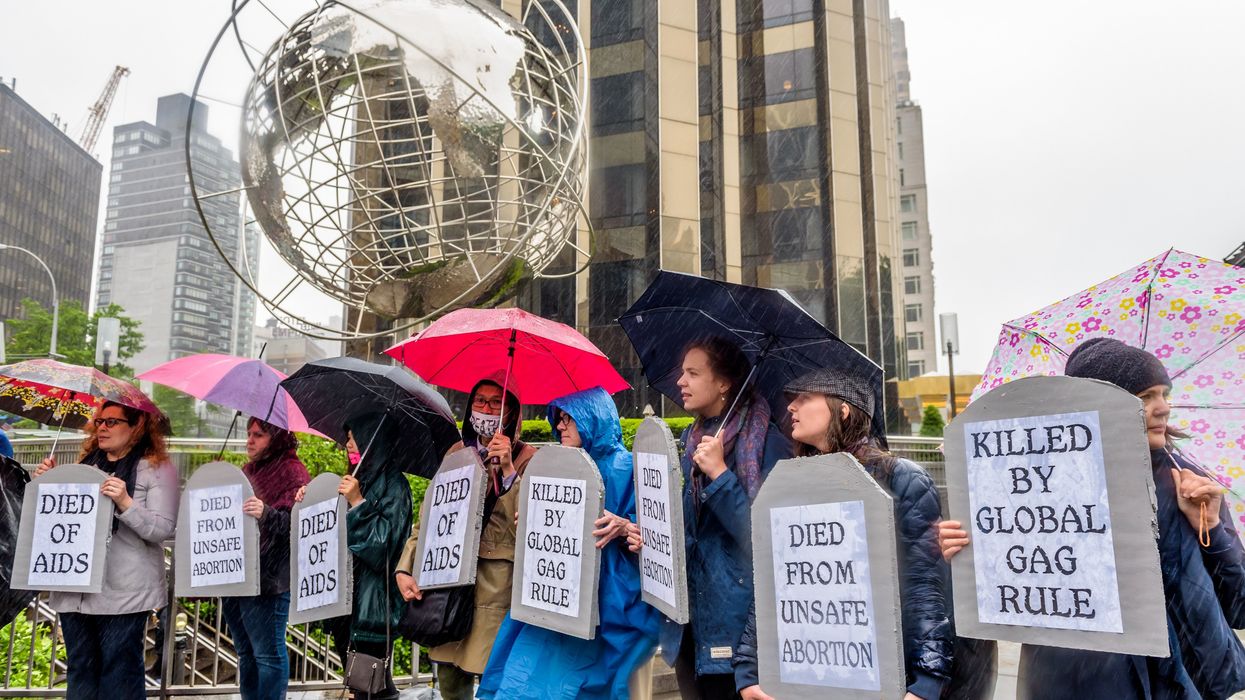
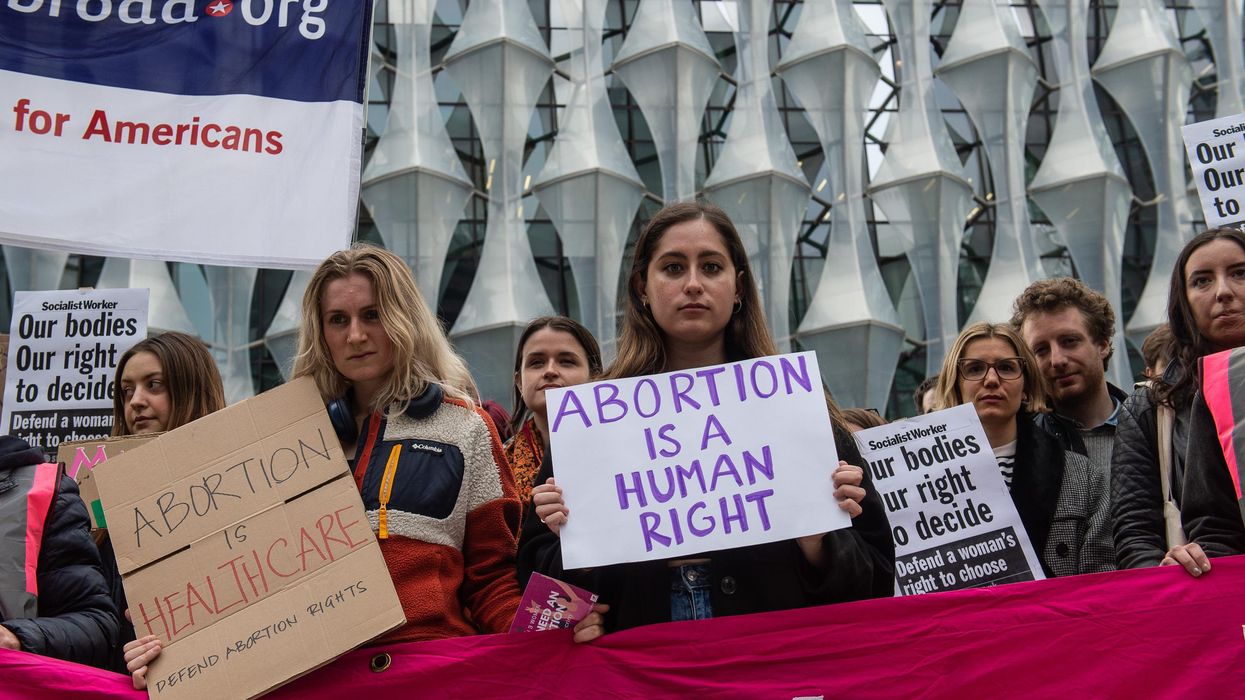
As US Vice President JD Vance on Friday addressed anti-abortion activists at the March for Life, public health and reproductive rights advocates decried the Trump administration's expansion of the Mexico City Policy, which critics call the global gag rule.
Since the Reagan administration, Democrats have repealed and Republicans have reimposed the policy, which bans nongovernmental organizations that perform or promote abortion from receiving federal funding. While President Donald Trump reinstated it as expected after returning to office last year, multiple media outlets revealed the expansion plans on Thursday.
A spokesperson confirmed to NBC News on Friday that the US Department of State will release three final rules expanding the foreign assistance prohibition to include "gender ideology," and diversity, equity, and inclusion (DEI), or what the administration is calling "discriminatory equity ideology," in line with various other Trump policies.
"President Trump and his anti-abortion administration would rather let people starve to death in the wake of famine and war than let anyone in the world get an abortion—or even receive information about it," Rachana Desai Martin, chief US program officer at the Center for Reproductive Rights, said in a Friday statement.
"People are already dying because of this administration's slashing of foreign assistance," she noted. "Now, they're making it harder for doctors and aid workers to provide food, water, and lifesaving medical care. This isn't about saving lives—it's a stunning abdication of basic human decency."
Guttmacher Institute director of federal policy Amy Friedrich-Karnik similarly called out not only the new "supercharged global gag rule" but also the second Trump administration's "unprecedented actions like the dismantling of the US Agency for International Development (USAID) and rescission of US foreign assistance for family planning services around the world."
"Guttmacher research estimates that almost 50 million women and girls have already been denied contraceptive care in low- and middle-income countries due to these draconian actions," she explained. "This new radical policy threatens to aggravate the cumulative harms of earlier administration actions, undermining decades of bipartisan investment in global health and gender equality, and stripping resources from the world's most vulnerable populations, including LGBTQ+ communities around the world."
Amnesty International's senior director for research, advocacy, policy, and campaigns, Erika Guevara-Rosas, blasted the expansion as "an assault on human rights" that will be "disastrous and deadly."
"It strangles healthcare systems, censors information, and violates the rights to health, information, and free expression," she stressed. "It forces frontline providers and many struggling organizations that depend on US funding into an impossible choice: limit essential healthcare for the most vulnerable populations or shut their doors."
"Doubling down on this policy is cruel, reckless, and ideologically driven," she continued. "Expanding it to international and US-based organizations will impact the poorest and marginalized first and hardest, denying people the chance to live full, healthy, autonomous lives where they are able to access rights and services. It is further proof of this US administration's blatant disregard for international law, universal rights, and the rules-based international order."
Dr. Anu Kumar, president and CEO of Ipas, which works to increase access to abortion and contraception around the world, declared that "this radically expanded global gag rule is nothing short of a regressive, harmful policy that puts the United States even further out of step with our global counterparts."
"Bullying individual countries' governments into complying with anti-rights and extremist ideology held by the current US administration is despicable and unacceptable," Kumar asserted. "It will wreak havoc on global efforts to improve health, uphold human rights, and achieve gender equality."
The broadening of the global gag rule comes as survivors and US lawmakers continue to fight for the release of files from the federal trafficking investigation into deceased sex offender Jeffrey Epstein, a former friend of Trump. Mina Barling, the International Planned Parenthood Federation's global director of external relations, said that "in an age of Epstein scandals and hocus-pocus designed to undermine science and medicine, the Trump administration has read the room."
"He knows his obsession with women's bodies is viewed cynically, so he has utilized the man-made panic funded by the fossil fuel industry to shift the focus of his policy against trans people," Barling said of the president. "The global gag rule is hate-bait designed to keep his donors happy and export more division to countries reliant on US aid, in the absence of economic justice."
"We stand in solidarity with women and trans people in all their diversity," she added. "We demand debt relief, and we support national sovereignty. We want to see a new global health architecture that is less susceptible to the whims of American politicians."

"People worldwide will have fewer points of service," said Doctors Without Borders. "It means fewer safe places to talk about their health options, and fewer providers to go to for help during medical emergencies."
Reproductive rights and medical experts on Monday continued to warn that U.S. President Donald Trump's highly anticipated reinstatement of the Mexico City Policy, which bans nongovernmental organizations that perform or promote abortion from receiving federal funding, will cause "devastating damage" for people around the world.
The global gag rule (GGR), as it is called by critics, has been imposed by every Republican president for decades, including Trump during his first term. After returning to office a week ago, Trump on Friday signed an executive order "to end the use of federal taxpayer dollars to fund or promote elective abortion" and revived the controversial rule with a presidential memorandum.
"As the single largest funder of international aid, the U.S. plays a powerful role in shaping the global health landscape—and women's and girls' lives are being used as pawns in this political game," Dr. Carole Sekimpi wrote Monday for the British journal The BMJ. "My work overseeing reproductive health programs in Africa for MSI Reproductive Choices gives me an understanding of the profound consequences that this will have on communities that Trump will never set foot in."
"It's prudent to first understand that the U.S. government never funds abortions," Sekimpi stressed, noting the rule punishes groups that participate in anything abortion-related with separate funding. "Last time Trump was in power, MSI was among those that refused to accept the terms of this policy. The U.S. funding we lost would have allowed us to serve 8 million women, preventing 6 million unintended pregnancies, 1.8 million unsafe abortions, and 20,000 maternal deaths. And that was just one organization."
Ibis Reproductive Health president Kelly Blanchard and Evelyne Opondo, an Ibis board member and the International Center for Research on Women's Africa director, also emphasized in a Monday Medium post that the rule's impact "is felt keenly by organizations that provide comprehensive sexual and reproductive healthcare—including contraception and abortion care—around the world," such as MSI and International Planned Parenthood Federation, "who refuse to abide by the terms because they support the human rights of all people and will not withhold information or critical reproductive healthcare from individuals who need it."
"The GGR flies in the face of both human rights and evidence-based public health," the pair asserted. "The GGR does not prevent abortion from happening but rather increases barriers to abortion access, reduces access to contraception increasing risk of unintended pregnancy, and could actually increase unsafe abortion, a key driver of maternal deaths around the world."
Melanie Nezer, vice president for advocacy and external relations at the Women's Refugee Commission, similarly declared in a Monday statement denouncing the GGR, "Let us be clear: this policy will not protect lives—it will endanger them."
"The goal of the global gag rule is to curtail access to safe sexual and reproductive healthcare, including access to safe abortion," she said. "The result is more suffering from the consequences of conflict-related sexual violence, more unintended pregnancies, more unsafe abortions, and more maternal death that would otherwise be entirely preventable."
Reproductive rights groups worldwide were similarly critical of the decision on Friday and throughout the weekend, with Planned Parenthood Federation of America president and CEO Alexis McGill Johnson calling it "dangerous" and arguing that "elected officials should not be interfering in personal medical decisions, in this country or anywhere in the world."
Like the critics on Monday, Rachana Desai Martin, chief government and external relations officer at the Center for Reproductive Rights, pointed to the fallout from GGR during the Republican's first term and said that "the reinstatement and expansion of President Trump's global gag rule is a direct assault on the health and human rights of millions of people around the world."
Also recalling the first Trump administration, Guttmacher Institute acting co-CEO Destiny Lopez highlighted how her group's "research has documented its severe ripple effects, including stalling and even reversing progress in expanding access to modern contraception in countries like Ethiopia and Uganda."
"Now history will sadly and shamefully repeat itself, and people in many countries will find it harder to access safe abortion, contraception, and other critical health services," she said, vowing to track the impacts and work to repeal the harmful policy.
Reproductive Freedom for All president and CEO Mini Timmaraju also pledged to battle the GGR and other Republican attacks on choice, saying that "these policies inflict harm on those who need access to reproductive healthcare, including abortion, in our country, and around the world—and we will fight back."
Previewing the fight ahead, National Abortion Federation president and CEO Brittany Fonteno warned that the GGR "will not be the last" attack on reproductive healthcare, adding that "for nearly a decade now, Donald Trump has shown us just how dangerous he is for abortion access, and it is clear that over the next four years, the anti-abortion movement will take every opportunity to strip away our fundamental right to reproductive freedom—both here and abroad."
RealClearPolitics, the first to report the rule's revival, noted that "the president timed the release of his executive actions to coincide with the annual March for Life on Friday when some of his most ardent supporters rallied on the National Mall. Vice President JD Vance addressed the march in person, while Trump recorded a video message Thursday to be played at the Friday rally."
Although Trump said on the campaign trail that he thinks abortion policies should be decided at the state level, rights advocates have cited his extensive record of dishonesty and bragging about the role he played in overturning Roe v. Wade, and expressed fear that the Republican-controlled Congress will send a national abortion ban to his desk.
"We cannot quit. We cannot be silent. If we quit, we lose more women," said one mother whose daughter died after being denied care under Georgia's six-week ban.
Congresswoman Nikema Williams joined patients, healthcare providers, and activists—including the mother of a woman who died after being refused abortion care in Georgia—at a Tuesday press conference held a day before what would have been the 52nd anniversary of Roe v. Wade, and amid fears of a national abortion ban during U.S. President Donald Trump's second term.
"I refuse to stand by while extremist politicians attack our freedoms, our health, and our future," Williams (D-Ga.) told attendees of the virtual press conference, which was hosted by the abortion rights group Free & Just. "Reproductive freedom is about healthcare, it's about dignity, it's about autonomy. It's about ensuring that everyone, every person, has the ability to make the best decisions for themselves and their families without government interference."
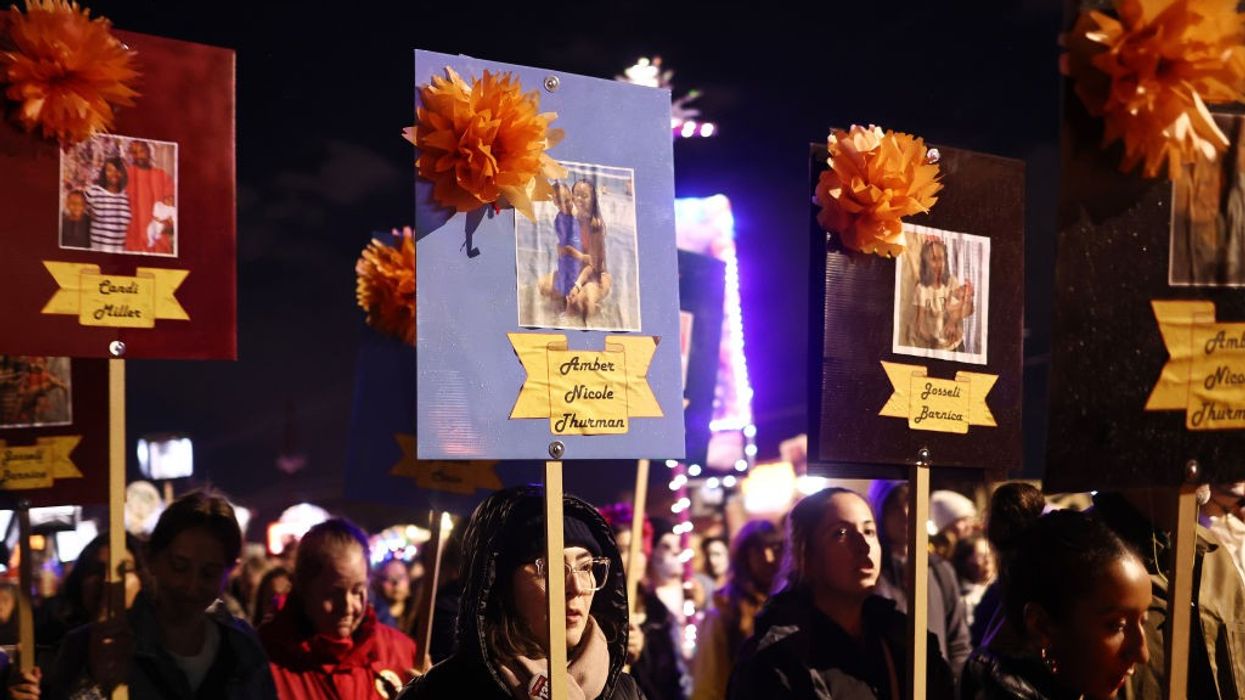
Speakers at Tuesday's event included Shanette Williams, whose 28-year-old daughter Amber Nicole Thurman died in 2022 after being forced to travel out of state to seek care due to a recently passed Georgia law banning almost all abortions after six weeks of pregnancy, a period during which many people don't even know they're pregnant.
"I want to send a clear message to men to get off the sidelines and enter the fight for reproductive justice."
Thurman, who was the single mother of a young son, is one of at least several U.S. women—most of them Black or brown—whose deaths have been attributed to draconian anti-abortion laws.
"She left a son, who every day is confused by why his mother is not here," Williams said of her daughter. "I'm here to be that voice, to fight, to push, to do whatever I need to do to help save another life. Because I never want a mother to feel what I feel today."
"We cannot quit. We cannot be silent. If we quit, we lose more women," Williams added. "In November, following reporting from ProPublica, officials in Georgia dismissed all members of the state's Maternal Mortality Review Committee, which investigates the deaths of pregnant women across the state."
Last September, Fulton County Judge Robert McBurney struck down the state's six-week abortion ban as a violation of "a woman's right to control what happens to and within her body," a decision that made the procedure legal up to approximately 22 weeks of pregnancy. Republican Georgia Attorney General Chris Carr appealed the ruling to the state Supreme Court.
Avery Davis Bell, a Savannah mother who had to travel out of Georgia for care after her fetus was diagnosed with a fatal condition that threatened her own life as well, said during Tuesday's press conference: "I could have been Amber Nicole Thurman. It is important for me to continue sharing my story and advocating for us to be able to build the families we want, protect our lives, and be here for our living children."
Atlanta-area ultrasound technician and abortion care provider Suki O. said during the event that Georgia's ban "has been in place for three years now and it doesn't get any easier."
"To turn women away is the hardest thing for me to do," she added. "How many Black women will die, have died, and will continue to die due to these abortion bans?"
Davan'te Jennings, president of Young Democrats of Georgia and youth organizing director at Men4Choice, told the press conference that abortion "is not just a women's issue, this is a man's issue as well."
"I want to send a clear message to men to get off the sidelines and enter the fight for reproductive justice," Jennings added. "What would it look like for you to have to watch your mother go through this? To watch your sister go through this?"
While Trump has said he would veto any national abortion ban passed by the Republican-controlled Congress, reproductive rights advocates have expressed doubt that the president—a well-documented liar—would actually do so, and warned that his administration could use a 151-year-old law known as the Comstock Act to outlaw the procedure without needing congressional approval.
Critics also note that Trump has repeatedly bragged about appointing three of the U.S. Supreme Court justices who voted to overturn Roe in Dobbs v. Jackson Women's Health Organization, the 2022 decision that canceled nearly a half-century of federal abortion rights.
The Trump administration is also widely expected to revive the so-called Global Gag Rule, which bans foreign nongovernmental organizations from performing or promoting abortion care using funds from any source, if they receive funds from the U.S. government for family planning activities.
Conservative groups, including the Heritage Foundation-led coalition behind Project 2025—a blueprint for a far-right overhaul of the federal government—have proposed policies including a national abortion ban, restricting access to birth control, defunding Planned Parenthood, monitoring and tracking pregnancy and abortion data, and eviscerating federal protections for lifesaving emergency abortion care.
While campaigning for president, Trump said he would allow states to monitor women's pregnancies and prosecute anyone who violates an abortion ban. According to the Guttmacher Institute, 12 states currently have near-total abortion bans, and 29 states have enacted prohibitions based on gestational duration.