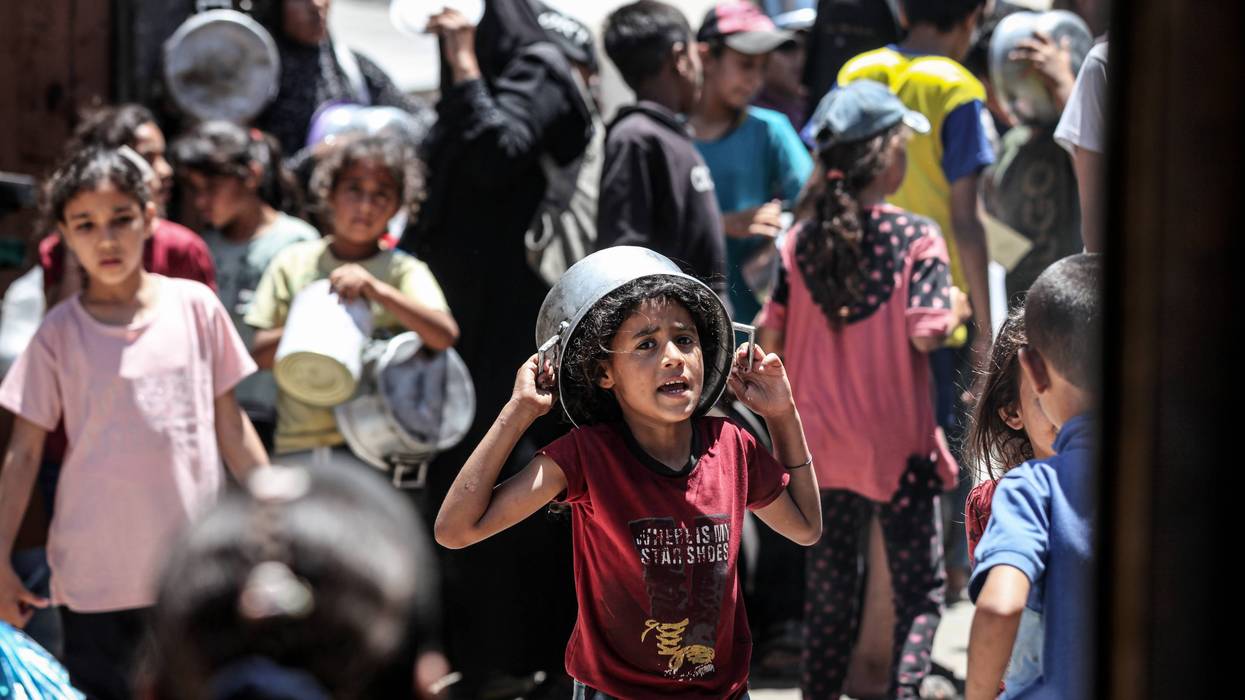
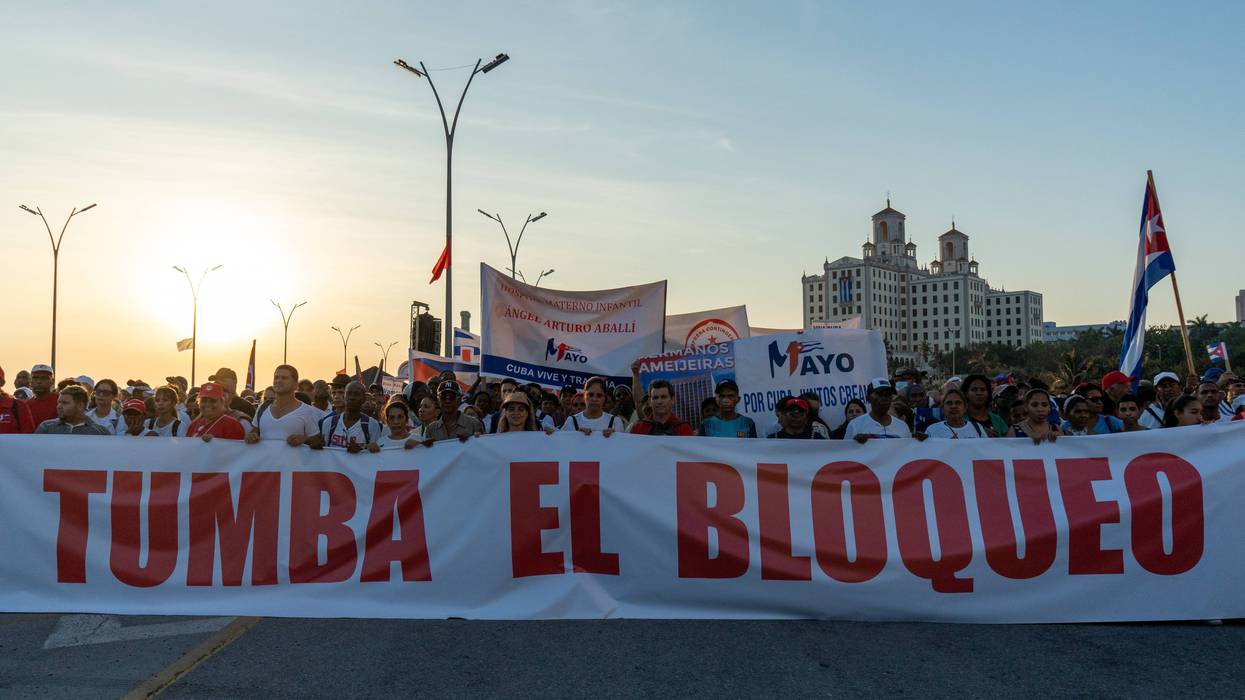
This economic weapon, wielded by the ruling elites of the world’s largest financial and military power, has exacted particularly devastating consequences on mothers and children. During this period, the infant mortality rate rose from 4 deaths per 1,000 live births in 2018 to 9.9 in 2025. Put plainly, an estimated 1,800 Cuban infants died during these years who would have survived absent Washington’s intensified criminal sanctions. This is but one stark measure of the blockade’s profound brutality and inhumanity.
The only “crime” of these children, like that of countless other Cubans, was being born in a country that continues to insist on its right to determine its own political and economic future outside the structures of hemispheric domination the United States has sought to impose across Latin America, the Caribbean, and the wider world. The infliction of such suffering has never been incidental to such policies. It has been, and remains, a central feature.
It is time to end the madness of US policy toward Cuba and recognize that Cuba is not a failed state, but a state subjected to a criminal siege.
The same has been true since 1959, as Washington has pursued a singular, near-fanatical obsession with reversing the Cuban Revolution and restoring the neocolonial shackles it once imposed on the island. Its aim has been not only to undermine Cuba’s social transformation and internationalist commitments, but to extinguish the example the revolution represented: that an alternative to US hegemony and capitalist underdevelopment was possible.
So despite recent threats to “take” Cuba, such rhetoric cannot be understood in isolation, nor should it obscure a fundamental reality: A US invasion would hardly inaugurate a new conflict. It would instead mark the bloodiest phase in a long, bipartisan war against Cuba for the “sin” of reclaiming national sovereignty from a Washington-backed lawless order that has sought to punish Cuba for its defiance and refusal to submit meekly to the dictates of empire.
Cuba Under the Shadow of US Empire
Cuba’s independence has long been imperiled by its proximity to and economic entanglement with the United States. Situated 90 miles off the coast of Florida, the island occupied a central place within the US imperial imagination. Throughout the 19th century, Washington elites viewed Cuba not as a to-be sovereign nation, but as an inevitable extension of their commercial and geopolitical ambitions, a “crown jewel” destined to be drawn into Washington’s orbit.
The opportunity arrived in 1898. Seizing upon Cuba’s nearly victorious war for independence from Spain, the US intervened not to end empire in the hemisphere, but rather to inherit it. Washington presented its action as a selfless mission to secure Cuban liberation. But for many across the region, the contradictions were unmistakable. The US, itself forged in the crucible of empire, with all the violence and exploitation that project entailed, went to Cuba not to secure freedom, but to replace Madrid with Washington as the imperial metropole of the Americas.
As early as 1829, Simón Bolívar warned that “the United States seemed destined by Providence to plague America with misery in the name of freedom.” Decades later, Cuban revolutionary José Martí issued a similar denunciation. In his 1891 essay "Our America," he called for “common cause” among oppressed peoples and warned against the threat of subordination to the rising power to the north. Martí also championed self-sufficiency over integration into an unequal global capitalist system, insisting that Cuba must “make wine from plantains. It may be sour, but it is our wine!” Having spent years in exile in New York, Martí sharpened that critique shortly before his death in 1895, writing “I lived in the monster and I know its entrails.”
History would soon vindicate these words. As the United States extended its “Manifest Destiny” to foreign shores, it repeatedly intervened across the hemisphere, seeking to transform it into a de facto protectorate. In doing so, Washington consistently sided with the interests of capital and local elites over the demands for popular sovereignty. In the decades that followed, the US invaded countries throughout the region, overthrowing democratic governments, crushing revolutionary movements, and backing brutal dictatorships.
In Cuba, this took the form of three lengthy military occupations spanning half of the island’s first 24 years of “independence,” from 1898-1902, 1906-1909, and 1917-1922. In each case, the objective was to uphold the neocolonial order established during the first occupation and rooted in US economic interests. Under this restrictive framework, the Cuban government was denied control over its foreign relations and domestic economic policy, compelled to cede territory to the US military, and forced to accept Washington’s unilateral right of intervention.
By the 1920s, this relationship had produced a profound dependence on exports, mainly sugar, to the United States while fostering a deeply corrupt system incapable of responding to the needs and aspirations of the Cuban people. The island’s land remained concentrated in the hands of American corporations and a domestic collaborationist aristocracy, while the state invested more heavily in repression than social development, constructing more barracks than schools. With the onset of the Great Depression and the collapse of the sugar economy upon which the country had been made dependent, popular discontent only intensified.
By 1933, the government of Gerardo Machado, which promised to transform Cuba into an island of stability for American investment while violently suppressing nationalist and anti-imperialist currents in Cuban society, had become untenable. Amid mounting unrest, Machado was deposed, and a revolutionary coalition under Ramón Grau San Martín emerged, seeking to challenge Cuba’s semi-colonial status. But the United States refused to recognize it. The resulting instability created conditions for the rise of one of the more conservative figures within the anti-Machado coalition, army officer Fulgencio Batista, who in 1934 deposed the short-lived government and consolidated de facto power in his own hands with the backing of Washington.
The Roots of the Cuban Revolution
Batista would directly or indirectly pull the political strings in Cuba for much of the next quarter century. Though his earlier rule adopted a more populist posture, culminating in his election to the presidency from 1940 to 1944, life improved little for Cubans. Corruption and dependence on foreign capital remained entrenched. And by 1952, Batista had seized power outright in a military coup, inaugurating an authoritarian regime backed by increased state violence.
It was Batista’s rise, coupled with decades of economic disparities, political repression, and social neglect, that created conditions that were ripe for revolution. Among those preparing to contest the suspended elections that year was a young lawyer named Fidel Castro. Batista’s closure of even the limited avenues for democratic change lent weight to John F. Kennedy’s later observation that “those who make peaceful revolution impossible will make violent revolution inevitable.”
For more than six decades then, Cuba has represented the “threat” of example: the possibility of building a more just and humane society in which the state serves the people and not the other way around.
Castro’s first revolutionary assault came soon after, with the attack on the Moncada Barracks on July 26, 1953. Though the attack failed, Castro’s arrest and trial gave him the opportunity to defend not his innocence, but the legitimacy of and need for revolution, delivering a two-hour speech that condemned the island’s entrenched inequalities and the regime that sustained them.
The state imprisoned Castro and his fellow revolutionaries before commuting their sentences under popular pressure in 1955, after which they went into exile. From Mexico, joined by Che Guevara, they began plotting their return to Cuba and the overthrow of the regime. By late 1956, they had landed in Cuba and launched their insurgency from the Sierra Maestra mountains. Just two years later, Batista fled the country on New Year’s Day 1959, carrying with him as much as $300 million in siphoned state funds and ill-gotten gains amassed at the expense of the Cuban people, while leaving behind the ruins of a regime stained with the blood of as many as 20,000 Cubans.
Counterrevolution in the Caribbean
In 1959, the new leadership inherited a desiccated country picked over by the buzzards of foreign capital and a corrupted local elite. The Cuban revolutionaries set out to overcome these conditions and construct a more just social order, one capable of guaranteeing a basic standard of living long denied to the Cuban population through the misappropriation of the island’s wealth and resources.
The earliest measures included agrarian reform, universal education, a national literacy campaign, expanded healthcare, urban reforms that opened pathways to homeownership for working-class Cubans, and anti-discrimination laws aimed at dismantling entrenched racial hierarchies. Crucially for the trajectory of US-Cuban relations, the revolution also nationalized parasitic foreign-owned and privatized industries.
The new Cuban government was initially met with a degree of popular appeal and favorable media coverage in the United States, further amplified by Fidel Castro’s April 1959 visit to the country, during which he sought to explain the revolution to American audiences. While in Washington, Castro even met with Vice President Richard Nixon, but the Eisenhower administration quickly soured on the revolutionary government and soon resolved to see it fail.
The concern was not Cuba itself, but what the revolution might represent. As State Department official J.C. Hill warned that year, “there are indications that if the Cuban Revolution is successful other countries in Latin America and perhaps elsewhere will use it as a model and we should decide whether or not we wish to have the Cuban Revolution succeed.”
By October 1960, that decision had effectively been made with the imposition of a blockade on the island. The logic underpinning this economic declaration of war was made explicit in a memo by State Department official Lester Mallory. Recognizing that Castro retained widespread popular support, Mallory concluded that the most effective means of undermining him was the deliberate immiseration of the Cuban people. The memo called for the denial of “money and supplies” to the island in order to produce “hunger, desperation, and overthrow of government.”
In April 1961, Washington escalated its campaign by backing a direct military assault on the island. Yet the failure of the Bay of Pigs invasion did little to temper the obsession with unseating Castro. In the aftermath, consensus hardened across the Kennedy administration that “US policy toward Cuba should aim at the downfall of Castro.” What followed was an expansive campaign of covert warfare involving sabotage, assassination plots, and support for anti-communist exiles.
Among the proposals considered were plans to manufacture consent for military escalation through false provocations. One suggestion was to “develop a Communist Cuban terror campaign in the Miami area… pointed at Cuban refugees seeking haven in the United States… [which] would be helpful in projecting the idea of an irresponsible government.” Other proposals called for false flag attacks on the US navy and the shooting down of a civilian airliner that would then be blamed on the Cuban government.
This single-minded fixation did little to advance US objectives. Instead, it pushed Cuba further toward the Soviet Union, which offered the island an economic and political lifeline in the face of Washington’s blockade and escalating campaign of destabilization. It was within this context that Castro declared the Marxist-Leninist character of the Cuban Revolution in 1961. The relentless threats to the island also fostered a profound and understandable sense of siege within the Cuban government itself.
Ultimately, Washington’s Cuba policy, combined with what Kennedy privately described as the “goddamned dangerous” deployment of US missiles in Turkey, helped create the conditions for the 1962 Cuban Missile Crisis, bringing the world to the brink of a nuclear holocaust and revealing the extent to which the US was willing to risk a senseless, largely self-imposed global catastrophe in defense of the maintenance of its empire.
The Persistent “Threat” of Example
Despite this long war against Cuba, the Cuban government and people have not abandoned their revolutionary project. They have continued to build socialism and a new social order toward what Che Guevara described as the construction of “new [people]”: human beings whose motivations, commitments, and social relations are not governed by opportunistic self-interest at the expense of others, but by solidarity and a shared sense of collective humanity.
Cuba has consistently sought to demonstrate this commitment on the world stage. One of Fidel Castro’s earliest acts of foreign policy was the support of those seeking to liberate the Dominican Republic from the brutal US-backed dictatorship of Rafael Trujillo. In the decades that followed, Cuban soldiers and advisers would play major roles in liberation struggles across Africa, including in Algeria, the Congo, Angola, Mozambique, and Guinea-Bissau.
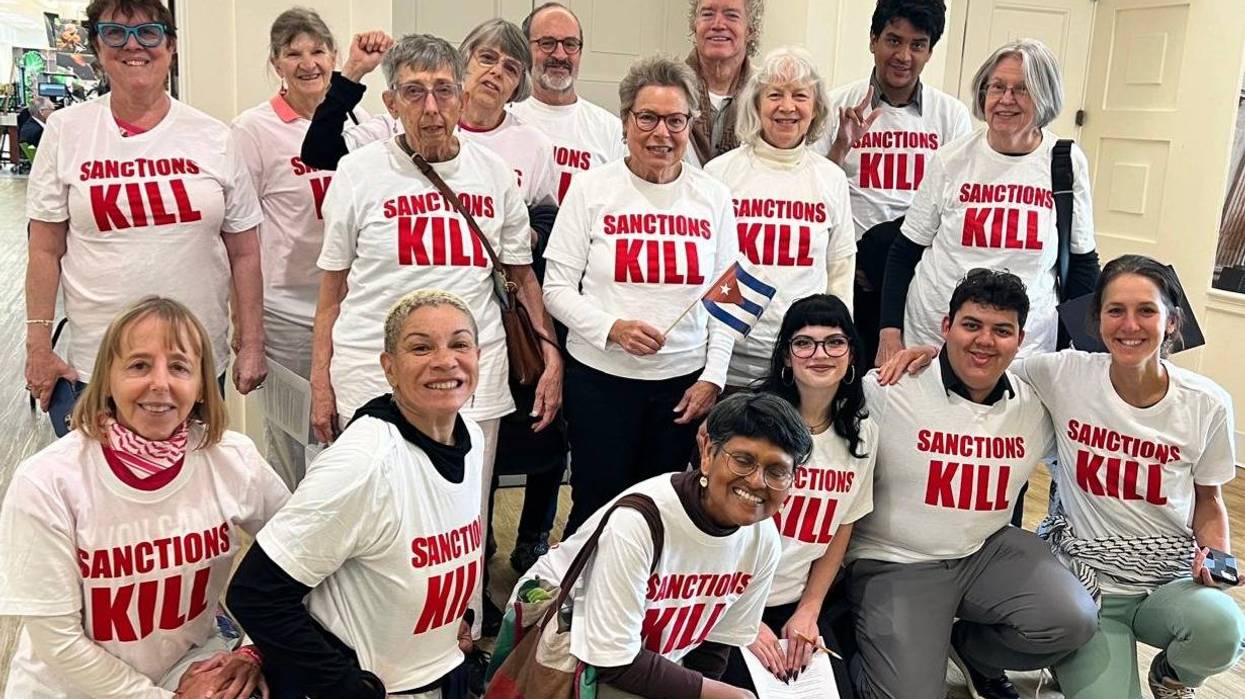
For those living in the belly of the beast, we bear a clear moral and political responsibility to stand alongside the Cuban people, those on the island, to oppose the violence being carried out in our name.
Cuba’s foreign interventions proved especially consequential in the struggle against South African apartheid and white minority rule in Southern Africa. It was this material solidarity that led Nelson Mandela to declare during his 1991 visit to Havana that “the Cuban people hold a special place in the hearts of the peoples of Africa,” traveling to Cuba shortly after his release from prison.
But Cuba’s principal export to the Third World has not been bombs to take lives, as in the case of the United States. It has sent doctors to provide life. Since 1960, Cuba has dispatched more than 600,000 medical professionals to over 160 countries. In doing so, Cuba has advanced not only the principle and practice that healthcare is a human right, but a vision of education and foreign policy rooted in both science and conscience.
For more than six decades then, Cuba has represented the “threat” of example: the possibility of building a more just and humane society in which the state serves the people and not the other way around. It is time to end the madness of US policy toward Cuba and recognize that Cuba is not a failed state, but a state subjected to a criminal siege. It is not a sponsor of terrorism, but the victim of sustained US aggression.
For those living in the belly of the beast, we bear a clear moral and political responsibility to stand alongside the Cuban people, those on the island, to oppose the violence being carried out in our name. Cuba, like all those confronting US empire, deserves not the “freedom” of the grave that Washington has so often offered the world, but a true freedom rooted in justice, self-determination, and respect for human life and dignity.
We must therefore demand an end to the blockade on Cuba. We must reject any further military escalation. We must call for Cuba’s removal from the state sponsors of terrorism list. And we must support the restoration of Cuban sovereignty over the occupied territory at Guantánamo Bay.