SUBSCRIBE TO OUR FREE NEWSLETTER
Daily news & progressive opinion—funded by the people, not the corporations—delivered straight to your inbox.
5
#000000
#FFFFFF
To donate by check, phone, or other method, see our More Ways to Give page.
Daily news & progressive opinion—funded by the people, not the corporations—delivered straight to your inbox.
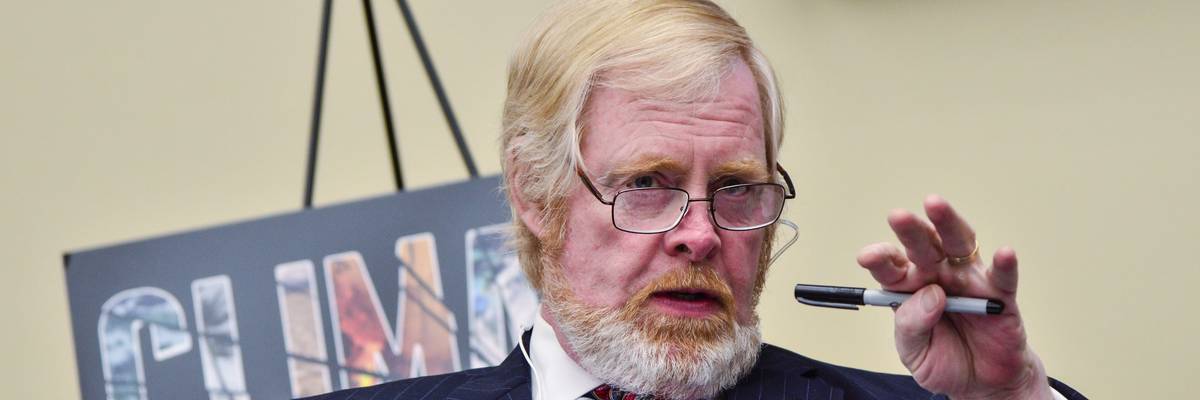
Brent Bozell, founder and president of the Media Research Center, speaks during the "Climate Hustle" panel discussion on April 14, 2016 in Washington, DC.
"A window into the truly radical nature of the people Trump is nominating."
President Donald Trump's nominee to be ambassador to South Africa this week refused to say whether he would support or oppose repealing laws allowing Black Americans to vote.
During a Thursday Senate confirmation hearing, Sen. Chris Murphy (D-Conn.) asked Trump nominee Brent Bozell, a right-wing media critic and founder of the conservative Media Research Center, about his support for Trump administration plans that limit refugee admissions almost exclusively to white Afrikaners.
"Senator, I don't make that policy," Bozell replied.
Murphy, however, did not accept this attempt at evasion.
"If I were to ask this question of virtually any nominee to be an ambassador, prior to this panel, that would be an easy layup answer: 'No, no, of course we don't support having a refugee policy where we only admit white people,'" said Murphy. "So why can't you give me your personal view on that?"
"Because, senator, I am here to serve America and to do what the president is asking me to do," Bozell said.
Murphy then asked him if he would support bringing back "laws in this country to only allow white people to vote."
Bozell again refused to answer.
"Senator, I'm going to serve as ambassador to South Africa, and I'm going to focus on that," he said.
So you should really watch this. Just 2 minutes. But a window into the truly radical nature of the people Trump is nominating.
When pressed today, the nominee to be Ambassador to South Africa refuses to oppose reinstituting laws to prevent black people from voting in America. pic.twitter.com/byetPqJPqU
— Chris Murphy 🟧 (@ChrisMurphyCT) October 23, 2025
"You will not share your personal views on whether it is right or wrong to reinstitute discriminatory policies in this country to prevent Black people from voting?" Murphy pressed.
"Senator, my personal views are irrelevant," Bozell insisted. "I am serving here to do what the president is asking me to do in South Africa."
Murphy rejected this premise, however, and informed Bozell that the entire point of the Senate confirmation process was to learn more about a nominee's personal views so that senators can make informed decisions about their qualifications.
"We wouldn't have this process if your personal views were not relevant," Murphy said. "That is pretty stunning that you will not share your views, not only on whether we should have a refugee admissions process that is race-based, but you won't share your personal views on whether we should reimpose discriminatory treatment against Black Americans. That is absolutely relevant to your qualifications to serve. And your refusal to answer it, I hope, is something that every member of this committee will think about."
Commenting on the exchange afterward, Murphy wrote on Bluesky that Bozell's answers to his questions offer "a window into the truly radical nature of the people Trump is nominating."
Trump has falsely accused the South African government of committing "genocide" against its white citizens, and his administration has given white South Africans priority for resettlement in the US.
South Africa has a long history of racial injustice, as the apartheid system that lasted for more than four decades in the country brutally oppressed its majority Black population to ensure white minority rule.
Several wealthy Trump backers, including Tesla CEO Elon Musk, Palantir founder Peter Thiel, and venture capitalist David Sacks, were all either born in or spent time growing up in South Africa when it was still under the apartheid regime.
Dear Common Dreams reader, It’s been nearly 30 years since I co-founded Common Dreams with my late wife, Lina Newhouser. We had the radical notion that journalism should serve the public good, not corporate profits. It was clear to us from the outset what it would take to build such a project. No paid advertisements. No corporate sponsors. No millionaire publisher telling us what to think or do. Many people said we wouldn't last a year, but we proved those doubters wrong. Together with a tremendous team of journalists and dedicated staff, we built an independent media outlet free from the constraints of profits and corporate control. Our mission has always been simple: To inform. To inspire. To ignite change for the common good. Building Common Dreams was not easy. Our survival was never guaranteed. When you take on the most powerful forces—Wall Street greed, fossil fuel industry destruction, Big Tech lobbyists, and uber-rich oligarchs who have spent billions upon billions rigging the economy and democracy in their favor—the only bulwark you have is supporters who believe in your work. But here’s the urgent message from me today. It's never been this bad out there. And it's never been this hard to keep us going. At the very moment Common Dreams is most needed, the threats we face are intensifying. We need your support now more than ever. We don't accept corporate advertising and never will. We don't have a paywall because we don't think people should be blocked from critical news based on their ability to pay. Everything we do is funded by the donations of readers like you. When everyone does the little they can afford, we are strong. But if that support retreats or dries up, so do we. Will you donate now to make sure Common Dreams not only survives but thrives? —Craig Brown, Co-founder |
President Donald Trump's nominee to be ambassador to South Africa this week refused to say whether he would support or oppose repealing laws allowing Black Americans to vote.
During a Thursday Senate confirmation hearing, Sen. Chris Murphy (D-Conn.) asked Trump nominee Brent Bozell, a right-wing media critic and founder of the conservative Media Research Center, about his support for Trump administration plans that limit refugee admissions almost exclusively to white Afrikaners.
"Senator, I don't make that policy," Bozell replied.
Murphy, however, did not accept this attempt at evasion.
"If I were to ask this question of virtually any nominee to be an ambassador, prior to this panel, that would be an easy layup answer: 'No, no, of course we don't support having a refugee policy where we only admit white people,'" said Murphy. "So why can't you give me your personal view on that?"
"Because, senator, I am here to serve America and to do what the president is asking me to do," Bozell said.
Murphy then asked him if he would support bringing back "laws in this country to only allow white people to vote."
Bozell again refused to answer.
"Senator, I'm going to serve as ambassador to South Africa, and I'm going to focus on that," he said.
So you should really watch this. Just 2 minutes. But a window into the truly radical nature of the people Trump is nominating.
When pressed today, the nominee to be Ambassador to South Africa refuses to oppose reinstituting laws to prevent black people from voting in America. pic.twitter.com/byetPqJPqU
— Chris Murphy 🟧 (@ChrisMurphyCT) October 23, 2025
"You will not share your personal views on whether it is right or wrong to reinstitute discriminatory policies in this country to prevent Black people from voting?" Murphy pressed.
"Senator, my personal views are irrelevant," Bozell insisted. "I am serving here to do what the president is asking me to do in South Africa."
Murphy rejected this premise, however, and informed Bozell that the entire point of the Senate confirmation process was to learn more about a nominee's personal views so that senators can make informed decisions about their qualifications.
"We wouldn't have this process if your personal views were not relevant," Murphy said. "That is pretty stunning that you will not share your views, not only on whether we should have a refugee admissions process that is race-based, but you won't share your personal views on whether we should reimpose discriminatory treatment against Black Americans. That is absolutely relevant to your qualifications to serve. And your refusal to answer it, I hope, is something that every member of this committee will think about."
Commenting on the exchange afterward, Murphy wrote on Bluesky that Bozell's answers to his questions offer "a window into the truly radical nature of the people Trump is nominating."
Trump has falsely accused the South African government of committing "genocide" against its white citizens, and his administration has given white South Africans priority for resettlement in the US.
South Africa has a long history of racial injustice, as the apartheid system that lasted for more than four decades in the country brutally oppressed its majority Black population to ensure white minority rule.
Several wealthy Trump backers, including Tesla CEO Elon Musk, Palantir founder Peter Thiel, and venture capitalist David Sacks, were all either born in or spent time growing up in South Africa when it was still under the apartheid regime.
President Donald Trump's nominee to be ambassador to South Africa this week refused to say whether he would support or oppose repealing laws allowing Black Americans to vote.
During a Thursday Senate confirmation hearing, Sen. Chris Murphy (D-Conn.) asked Trump nominee Brent Bozell, a right-wing media critic and founder of the conservative Media Research Center, about his support for Trump administration plans that limit refugee admissions almost exclusively to white Afrikaners.
"Senator, I don't make that policy," Bozell replied.
Murphy, however, did not accept this attempt at evasion.
"If I were to ask this question of virtually any nominee to be an ambassador, prior to this panel, that would be an easy layup answer: 'No, no, of course we don't support having a refugee policy where we only admit white people,'" said Murphy. "So why can't you give me your personal view on that?"
"Because, senator, I am here to serve America and to do what the president is asking me to do," Bozell said.
Murphy then asked him if he would support bringing back "laws in this country to only allow white people to vote."
Bozell again refused to answer.
"Senator, I'm going to serve as ambassador to South Africa, and I'm going to focus on that," he said.
So you should really watch this. Just 2 minutes. But a window into the truly radical nature of the people Trump is nominating.
When pressed today, the nominee to be Ambassador to South Africa refuses to oppose reinstituting laws to prevent black people from voting in America. pic.twitter.com/byetPqJPqU
— Chris Murphy 🟧 (@ChrisMurphyCT) October 23, 2025
"You will not share your personal views on whether it is right or wrong to reinstitute discriminatory policies in this country to prevent Black people from voting?" Murphy pressed.
"Senator, my personal views are irrelevant," Bozell insisted. "I am serving here to do what the president is asking me to do in South Africa."
Murphy rejected this premise, however, and informed Bozell that the entire point of the Senate confirmation process was to learn more about a nominee's personal views so that senators can make informed decisions about their qualifications.
"We wouldn't have this process if your personal views were not relevant," Murphy said. "That is pretty stunning that you will not share your views, not only on whether we should have a refugee admissions process that is race-based, but you won't share your personal views on whether we should reimpose discriminatory treatment against Black Americans. That is absolutely relevant to your qualifications to serve. And your refusal to answer it, I hope, is something that every member of this committee will think about."
Commenting on the exchange afterward, Murphy wrote on Bluesky that Bozell's answers to his questions offer "a window into the truly radical nature of the people Trump is nominating."
Trump has falsely accused the South African government of committing "genocide" against its white citizens, and his administration has given white South Africans priority for resettlement in the US.
South Africa has a long history of racial injustice, as the apartheid system that lasted for more than four decades in the country brutally oppressed its majority Black population to ensure white minority rule.
Several wealthy Trump backers, including Tesla CEO Elon Musk, Palantir founder Peter Thiel, and venture capitalist David Sacks, were all either born in or spent time growing up in South Africa when it was still under the apartheid regime.