SUBSCRIBE TO OUR FREE NEWSLETTER
Daily news & progressive opinion—funded by the people, not the corporations—delivered straight to your inbox.
5
#000000
#FFFFFF
To donate by check, phone, or other method, see our More Ways to Give page.
Daily news & progressive opinion—funded by the people, not the corporations—delivered straight to your inbox.
Former Rep. Tom Malinowski also decried the influence of AIPAC “dark money” on the Democratic primary process.
Former Rep. Tom Malinowski on Tuesday conceded the 2026 Democratic primary race to represent New Jersey's 11th Congressional District to progressive challenger Analilia Mejía, whom he vowed to back in the general election.
In a statement posted on social media, Malinowski praised Mejía for "running a positive campaign and for inspiring so many voters," while also emphasizing that "it is essential that we send a Democrat to Washington to fill this seat, not a rubber stamp" for President Donald Trump.
Malinowski then unloaded on the American Israel Public Affairs Committee (AIPAC), the largest pro-Israel lobbying group in the US. Through its super PAC, the United Democracy Project, AIPAC spent a significant sum hammering the former Democratic congressman with negative ads that accused him of supporting Trump and US Immigration and Custom Enforcement (ICE) operations.
"The outcome of this race cannot be understood without also taking into account the massive flood of dark money that AIPAC spent on dishonest ads," he said. "I wish I could say today that this effort, which was meant to intimidate Democrats across the country, failed in NJ-11. But it did not. I met several voters in the final days of the campaign who had seen the ads and asked me, sincerely, 'Are you MAGA? Are you for ICE?'"
During his previous tenure serving in Congress from 2019 to 2023, Malinowski was a reliable vote in favor of sending military aid to Israel. However, AIPAC and some associated political action committees decided to target the New Jersey Democrat when he suggested putting conditions on future aid packages to Israel.
Malinowski said that no Democrat should accept support from AIPAC, which he described as a pernicious influence on US elections.
"Our Democratic Party should have nothing to do with a pro-Trump-billionaire-funded organization," he said, "that demands absolute fealty to positions that are outside of the American pro-Israel community, then smears those who don't fall in line."
Malinowski vowed to oppose any candidate that AIPAC backs "openly or surreptitiously" in future contests in the district.
"The threat unlimited dark money poses to our democracy," he emphasized, "is far more significant than the views of a single member of Congress on Middle East policy."
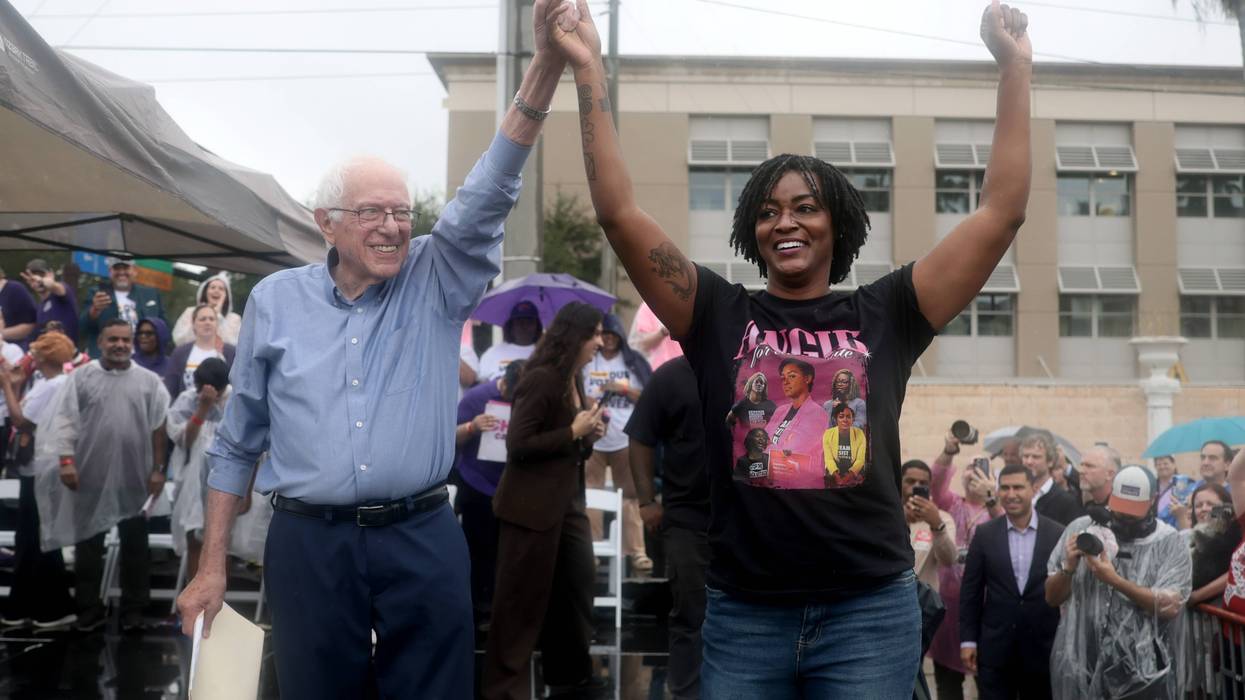
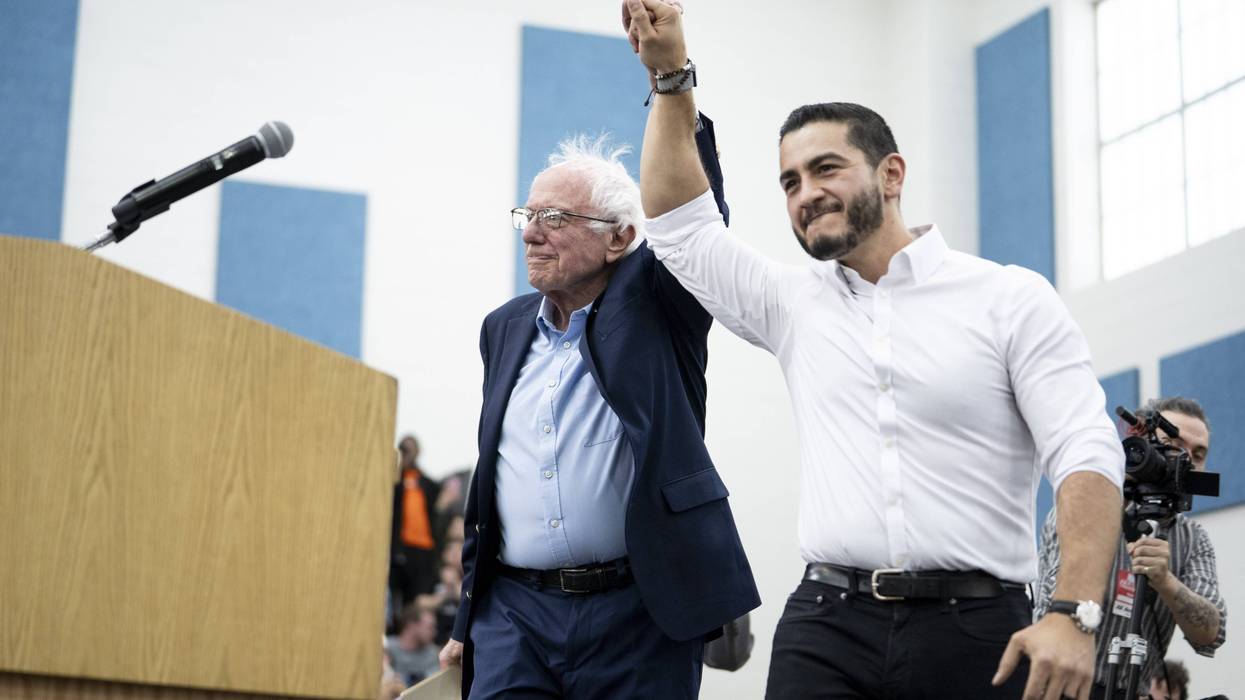
Sen. Bernie Sanders (I-Vt.), who also endorsed Mejía in the Democratic primary, also congratulated her on her win, emphasizing the significant number of obstacles she needed to overcome before emerging victorious.
"Starting with almost no name recognition, Analilia Mejía took on the oligarchs, the Republican establishment and Democratic establishment—and WON," Sanders wrote on social media. "The American people want leaders who stand up to the billionaire class and fight for working families."
The progressive advocacy organization Our Revolution praised Mejía for beating New Jersey machine politics, and pointed to her past campaign work as a sign of what she could do if she wins the April general election and is sworn in as a congresswoman.
"As a grassroots organizer, she helped win a $15 minimum wage and paid sick days," Our Revolution wrote. "As national political director for Bernie 2020, she's built movements to un-rig the economy. Now, she's ready to take this fight to Washington. When we organize, we win!"
"Our country needs access to hospitals and emergency rooms, not more tax breaks for billionaires."
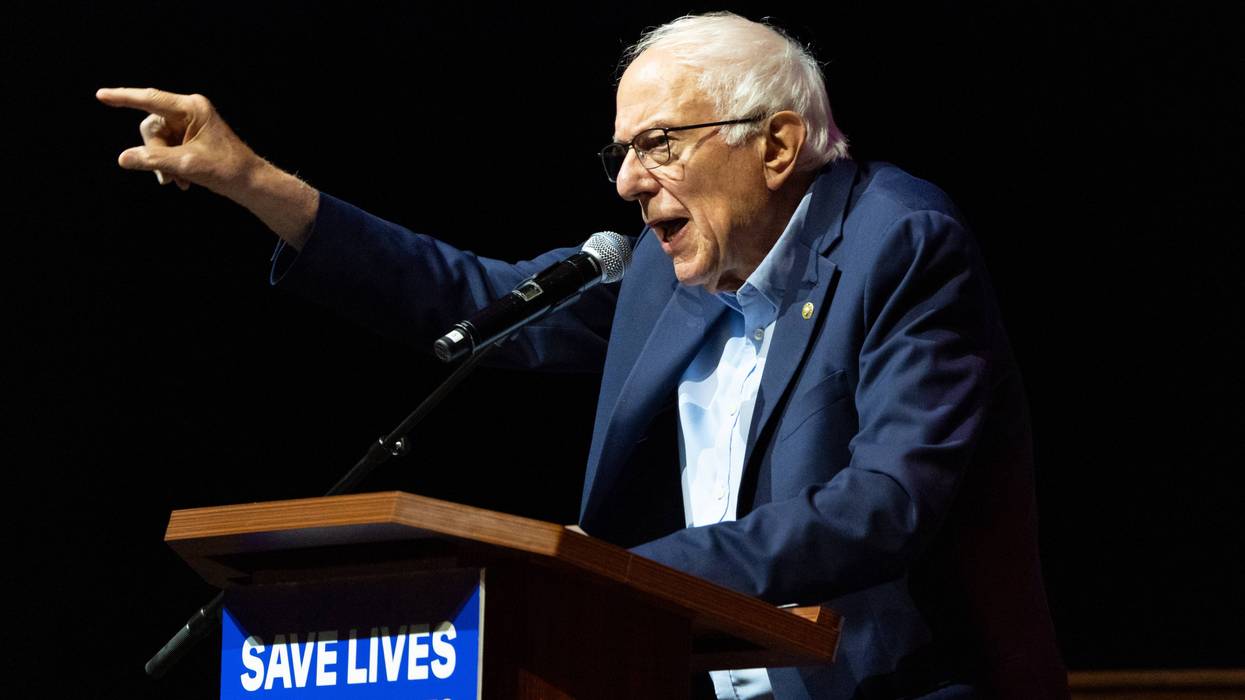
US Sen. Bernie Sanders is headed to Los Angeles next week to lead a campaign kickoff for a bill that would impose a one-time 5% tax on the assets of California's billionaires to support the state's healthcare system, including by keeping hospitals and emergency departments open.
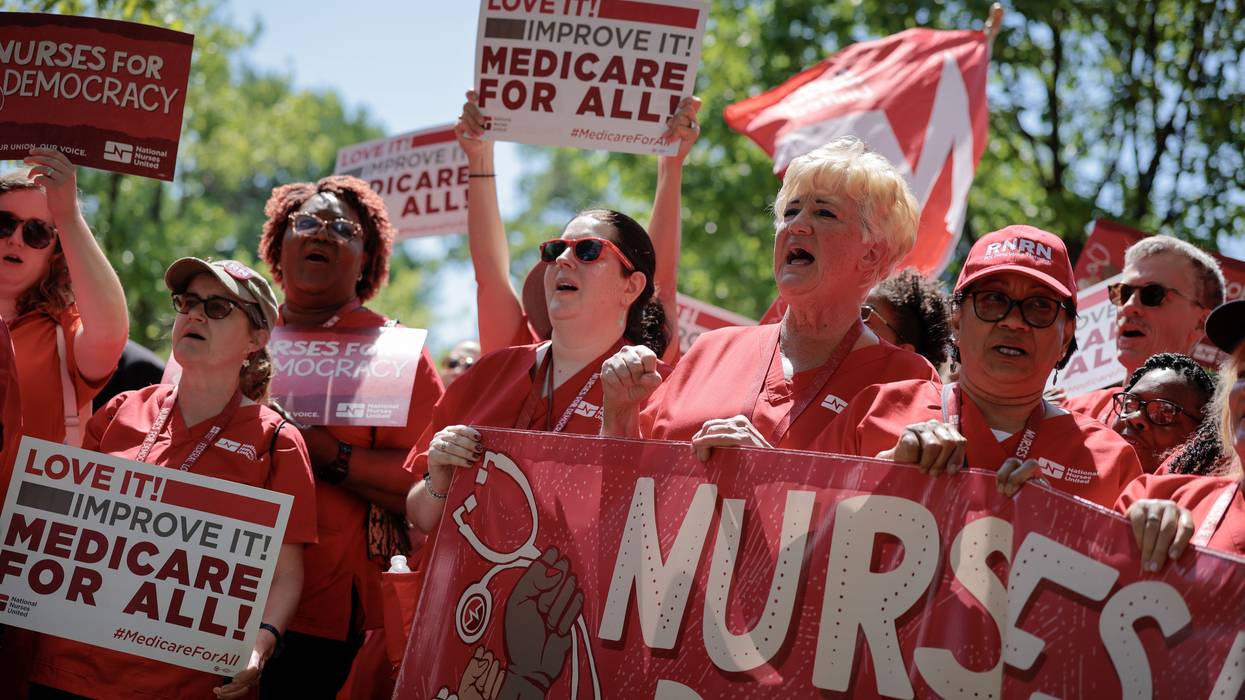
Economists, healthcare workers, and unions launched the fight for the tax last year, after Republicans in Congress and President Donald Trump enacted a budget package that included massive Medicaid cuts. Service Employees International Union-United Healthcare Workers West (SEIU-UHW) is spearheading the battle for the California Billionaire Tax Act.
Sanders (I-Vt.) endorsed the proposal in December, calling it "a model that should be emulated throughout the country." He is now set to appear at the Wiltern in Los Angeles alongside musical acts and other supporters of the ballot measure for the bill on Wednesday, February 18.
"At a time of unprecedented and growing wealth consolidation and income inequality, I strongly support the grassroots effort in California to impose this reasonable and necessary 5% wealth tax on about 200 California billionaires," Sanders said in a Tuesday statement.
"This initiative would provide the necessary funding to prevent over 3 million working-class Californians from losing the healthcare they currently have—and would help prevent the closures of California hospitals and emergency rooms," noted the senator, a longtime leading advocate of higher taxes for the ultrarich and Medicare for All.
"It should be common sense that the billionaires pay just slightly more so that entire communities can preserve access to lifesaving medical care," he added. "Our country needs access to hospitals and emergency rooms, not more tax breaks for billionaires."
Mayra Castaneda, an ultrasound technologist at St. Francis Medical Center in Lynwood, said that "we are very grateful for the support of US Sen. Sanders, who for years has been telling the truth about the threat that income inequality poses to our nation—and to working people."
"If we let these healthcare cuts stand, my patients will suffer," Castaneda stressed. "Hospitals and ERs will close, others will be strained by taking on more patients, and people will lose access to lifesaving care."
"This is all avoidable if billionaires just pay their fair share in California, so I'm going to do whatever is in my power to see this proposal pass in November," Castaneda continued. "I'll be telling my story alongside Sen. Sanders and urging my fellow Californians to take action to save lives."
Healthcare experts warn a crisis is here. Congress’s “Big, Beautiful Bill” cuts $100B from CA healthcare. LA Times: “People will die.” A one-time 5% billionaire tax can backfill the cuts and protect care.https://lat.ms/4amFfYK
[image or embed]
— SEIU-United Healthcare Workers West (@seiu-uhw.bsky.social) February 4, 2026 at 7:00 PM
According to the Los Angeles Times, which first reported on the upcoming event: "The supporters need to gather the signatures of nearly 875,000 registered voters and submit them to county elections officials by June 24 for the measure to qualify for the November ballot. They began gathering signatures in January."
While the bill targeting the state's billionaires is backed by Sanders—who caucuses with Democrats in Congress and twice sought the party's presidential nomination—its opponents include Democratic California Gov. Gavin Newsom, who is expected to run for president in 2028.
"Gavin Newsom is on the side of the billionaires, not the millions of working people who stand to lose healthcare because of the Trump cuts," progressive organizer Jonathan Rosenblum said after the governor made his position clear last month. "Shamefully typical of the Democratic establishment."
The Times noted Tuesday that other opponents include "San Jose Mayor Matt Mahan, who is among a dozen candidates running in November to replace the termed-out governor."
"Working families continue to struggle with unprecedented credit card debt and deserve to see Congress take legislative action to address this growing crisis."
As polling continues to show US consumers are pessimistic about an economy in which they face rising costs for everything from groceries to healthcare and housing under President Donald Trump, a "historic and diverse coalition" this week called on Congress to pass a bipartisan bill that would cap credit card interest rates at 10%.
The current average credit card interest rate is nearly double that, at 19.61%, according to Bankrate. It was even higher, over 20%, when US Sens. Bernie Sanders (I-Vt.) and Josh Hawley (R-Mo.) introduced the bill a year ago. Reps. Alexandria Ocasio-Cortez (D-NY) and Anna Paulina Luna (R-Fla.) lead the legislation in the House of Representatives.
Their push came in response to an unfulfilled pledge from Trump, whose campaign said in September 2024 that he "has promised to cap interest rates at 10% to provide temporary and immediate relief for hardworking Americans who are struggling to make ends meet and cannot afford hefty interest payments on top of the skyrocketing costs of mortgages, rent, groceries, and gas."
The Thursday letter to congressional leaders—signed by dozens of civil rights, consumer protection, labor, veteran, and other groups—points to that promise, as well as Trump's January social media post calling for a one-year 10% cap. It also notes that "in response to widespread Wall Street opposition to the president's recent announcement, Trump officials have begun to backtrack—instead promoting 'Trump Cards' that banks could voluntarily offer with temporary 10% interest rates."
"While the Trump administration appears to be twisting itself into knots to appease Wall Street bankers, working families continue to struggle with unprecedented credit card debt and deserve to see Congress take legislative action to address this growing crisis," the coalition stressed. "We urge your offices/committees to advance these bipartisan bills immediately and make this policy a reality."
Illustrating the need for the policy, the letter states that "Americans owe $1.21 trillion in aggregate credit card debt," "groceries now make up the majority of credit card purchases for most Americans," and "older Americans are charging everyday purchases like gas, food, healthcare expenses, and even utilities on their credit cards."
"Not only are more Americans having to lean on their credit cards to make ends meet, but more are falling behind. Today, more than 12% of credit card debt is 90 days or more past due," the letter continues. "As Americans find themselves deeper in debt, credit card companies have been raking in record profits."
The federal bill would "save families $100 billion per year and provide interest savings of $899 per person on average per year," but also "not restrict most Americans' access to credit—directly refuting common banking lobbyist talking points," the coalition explained, citing research from Vanderbilt University. "Instead, banks would absorb the rate cut through a combinationof reduced profits, reduced advertising expenses, and reduced rewards to customers with lower credit scores (who would benefit more from the rate cuts)."
It also cites a recent analysis by the letter's lead group, Protect Borrowers, showing that "credit card delinquency rates in states that President Trump won are nearly 5 percentage points higher than in other states—with states like Mississippi, Louisiana, Alabama, Arkansas and South Carolina having the highest credit card delinquency rates."
When big banks charge 24% or 30% interest on credit cards, they are not engaged in the business of "making credit available." They are involved in extortion and loan sharking.Yes, we need to cap credit card interest rates at 10% and stop Wall Street from ripping off Americans.
[image or embed]
— Senator Bernie Sanders (@sanders.senate.gov) February 2, 2026 at 4:36 PM
"By providing billions of dollars in economic relief to working families, this legislation directly responds to the promises that candidate Donald Trump made to the American people last year," the groups wrote. "Recent polling has found that it is also incredibly popular by a jaw-dropping 8-to-1 margin among American voters across all political parties, spanning age, gender, race, and education level."
"It is clear: the American people support policymakers taking action to address the growing credit card crisis that is drowning millions of American families across the country in debt," the coalition concluded. "We stand ready to work with your offices to ensure that this bill becomes law and that working families get the economic relief they were promised and deserve."
Sanders and Hawley have similarly highlighted Trump's calls for the 10% rate cap in Fox News op-eds pushing for their legislation. In a Monday piece, Sanders wrote that "when Wall Street's greed and recklessness brought the economy to the verge of collapse in 2008, causing millions of Americans to lose their homes, jobs, and life savings, the taxpayers came to the rescue."
"The Federal Reserve gave these huge banks trillions of dollars in emergency loans at virtually zero interest. We bailed out the banks," he added. "Now it's time for Congress to stand with working families, end Wall Street greed, and pass legislation that caps credit card interest rates at 10%."