SUBSCRIBE TO OUR FREE NEWSLETTER
Daily news & progressive opinion—funded by the people, not the corporations—delivered straight to your inbox.
5
#000000
#FFFFFF
To donate by check, phone, or other method, see our More Ways to Give page.
Daily news & progressive opinion—funded by the people, not the corporations—delivered straight to your inbox.
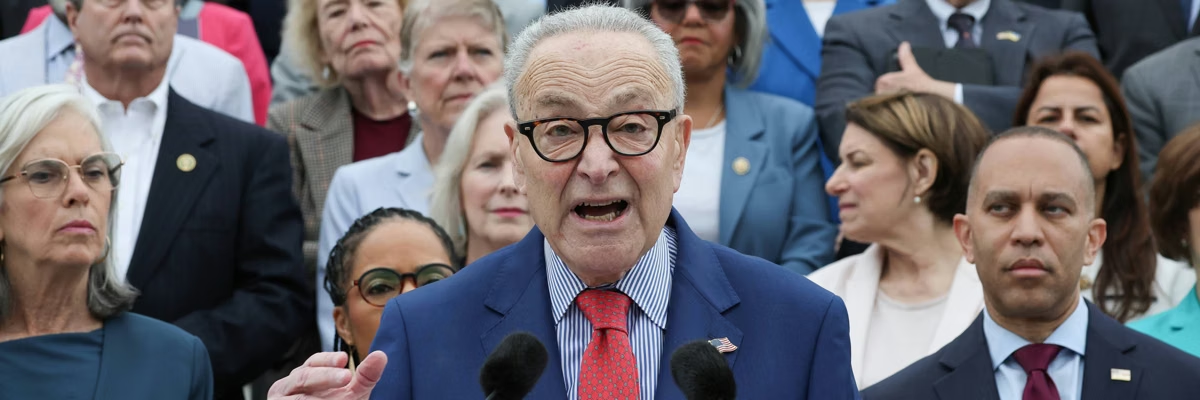
Senate Democratic Leader Chuck Schumer (D-NY) speaks on the steps of the US Senate during an event with congressional Democrats on May 21, 2026 in Washington, DC. Schumer and other Democratic leaders spoke out against rising prices, the war in Iran, and the recently announced $1.7 billion "anti-weaponization fund" during the event.
For the better part of a decade, progressives have heard some version of the same argument every election cycle: Fight as hard as you want in the primary. Organize. Debate. Challenge the establishment. But when Democratic voters make their choice, the fight is over. You rally behind the nominee because defeating Republicans matters more than whatever divided us in the primary. “Vote Blue No Matter Who.”
Progressives have not always embraced that bargain enthusiastically, but we have largely honored it. Now the Democratic Party is confronting a question it has rarely had to answer: What happens when the candidates progressives fought for are the ones Democratic voters choose?
That is no longer hypothetical. Abdul El-Sayed is the Democratic nominee for Senate in Michigan. Angie Nixon is the nominee in Florida. Troy Jackson is carrying the Democratic banner in Maine. William Lawrence and other progressives have won House primaries across the country. They are entering November not as protesters outside the Democratic coalition, but as Democratic nominees. And something more consequential is happening alongside those victories: Progressives are no longer simply asking Democratic leadership to respect the results. We are accumulating enough political infrastructure to make ignoring them more difficult.
Voters are demanding a Democratic Party that offers a real alternative to Trumpism, one willing to take on oligarchs, corporate power, and endless blank checks for war.
Florida offers an early glimpse of what that looks like. For weeks, progressives pressed national Democrats to invest in Nixon. She said she asked Senate Democratic leader Chuck Schumer directly for help and got a “we’ll see.” Then Sen. Bernie Sanders of Vermont announced that he would put his own campaign resources behind Nixon and other progressive nominees.
That commitment has since become tangible. Sanders has contributed directly to Nixon's campaign and is heading to Florida for a series of campaign events alongside her, with other progressive leaders, including Sen. Chris Murphy of Connecticut and Rep. Ro Khanna of California, also joining the effort.
That matters for reasons larger than the money. Bernie is putting resources behind the same principle Democrats have spent years demanding progressives honor: The primary is where we fight over the direction of the party. When voters decide, we fight for the nominee. But he was also demonstrating something new. If the existing Democratic infrastructure is reluctant to invest in candidates emerging from the progressive movement, the movement is increasingly capable of deploying infrastructure of its own.
Since then, Nixon says Schumer has stepped up his support for her campaign. While the shift cannot be attributed to progressive pressure alone, it reflects a larger reality after a decade of organizing: What began as an insurgency has become infrastructure, and infrastructure creates leverage.
With just 20 days until Election Day, the question is no longer whether progressives can win Democratic primaries.
We have.
The question now is whether Democratic leadership will invest in those nominees with the same urgency it demands from progressive voters, and what happens when those candidates arrive in Washington with a mandate of their own. The decisions Schumer and Jeffries make between now and November 3 will help determine not only who wins, but who has the power to shape what comes next.
And that question has immediate implications for Schumer, who has made clear he intends to seek another term as Senate Democratic leader after November. His political future is already the subject of renewed scrutiny, with some Democratic Senate nominees unwilling to commit to supporting him for another term.
If Schumer wants to lead a coalition increasingly shaped by candidates emerging from the progressive movement, that relationship cannot begin with a leadership vote after Election Day. It is being shaped RIGHT NOW through decisions about where Democrats invest, which nominees receive institutional support and whether progressive victories are treated as opportunities to build upon or problems to manage.
If Schumer wants to lead a coalition increasingly shaped by candidates emerging from the progressive movement, that relationship cannot begin with a leadership vote after Election Day.
The same test is playing out in the House. William Lawrence, now the Democratic nominee in Michigan’s 7th District, declined during the primary to commit to supporting Hakeem Jeffries for speaker.
But the challenge for Jeffries goes deeper than whether he supports individual progressive nominees. It is about recognizing what is changing underneath the Democratic coalition. The primary results and the organizing now underway across the country make clear that much of the energy, infrastructure and voter mobilization powering the next Democratic majority is coming from the progressive movement. Jeffries cannot watch that wave build, retreat on Medicare for All, keep courting money from Big Tech, crypto and AIPAC, and then expect progressives to rubber-stamp the old order after Election Day.
Voters are demanding a Democratic Party that offers a real alternative to Trumpism, one willing to take on oligarchs, corporate power, and endless blank checks for war. Schumer and Jeffries cannot spend the final weeks before Election Day asking progressive organizers to deliver votes, volunteers and resources, only to treat their priorities as negotiable once the ballots are counted.
Dear Common Dreams reader, It’s been nearly 30 years since I co-founded Common Dreams with my late wife, Lina Newhouser. We had the radical notion that journalism should serve the public good, not corporate profits. It was clear to us from the outset what it would take to build such a project. No paid advertisements. No corporate sponsors. No millionaire publisher telling us what to think or do. Many people said we wouldn't last a year, but we proved those doubters wrong. Together with a tremendous team of journalists and dedicated staff, we built an independent media outlet free from the constraints of profits and corporate control. Our mission has always been simple: To inform. To inspire. To ignite change for the common good. Building Common Dreams was not easy. Our survival was never guaranteed. When you take on the most powerful forces—Wall Street greed, fossil fuel industry destruction, Big Tech lobbyists, and uber-rich oligarchs who have spent billions upon billions rigging the economy and democracy in their favor—the only bulwark you have is supporters who believe in your work. But here’s the urgent message from me today. It's never been this bad out there. And it's never been this hard to keep us going. At the very moment Common Dreams is most needed, the threats we face are intensifying. We need your support now more than ever. We don't accept corporate advertising and never will. We don't have a paywall because we don't think people should be blocked from critical news based on their ability to pay. Everything we do is funded by the donations of readers like you. When everyone does the little they can afford, we are strong. But if that support retreats or dries up, so do we. Will you donate now to make sure Common Dreams not only survives but thrives? —Craig Brown, Co-founder |
Joseph Geevarghese is the executive director of Our Revolution, the nation’s largest grassroots-funded progressive organization.
For the better part of a decade, progressives have heard some version of the same argument every election cycle: Fight as hard as you want in the primary. Organize. Debate. Challenge the establishment. But when Democratic voters make their choice, the fight is over. You rally behind the nominee because defeating Republicans matters more than whatever divided us in the primary. “Vote Blue No Matter Who.”
Progressives have not always embraced that bargain enthusiastically, but we have largely honored it. Now the Democratic Party is confronting a question it has rarely had to answer: What happens when the candidates progressives fought for are the ones Democratic voters choose?
That is no longer hypothetical. Abdul El-Sayed is the Democratic nominee for Senate in Michigan. Angie Nixon is the nominee in Florida. Troy Jackson is carrying the Democratic banner in Maine. William Lawrence and other progressives have won House primaries across the country. They are entering November not as protesters outside the Democratic coalition, but as Democratic nominees. And something more consequential is happening alongside those victories: Progressives are no longer simply asking Democratic leadership to respect the results. We are accumulating enough political infrastructure to make ignoring them more difficult.
Voters are demanding a Democratic Party that offers a real alternative to Trumpism, one willing to take on oligarchs, corporate power, and endless blank checks for war.
Florida offers an early glimpse of what that looks like. For weeks, progressives pressed national Democrats to invest in Nixon. She said she asked Senate Democratic leader Chuck Schumer directly for help and got a “we’ll see.” Then Sen. Bernie Sanders of Vermont announced that he would put his own campaign resources behind Nixon and other progressive nominees.
That commitment has since become tangible. Sanders has contributed directly to Nixon's campaign and is heading to Florida for a series of campaign events alongside her, with other progressive leaders, including Sen. Chris Murphy of Connecticut and Rep. Ro Khanna of California, also joining the effort.
That matters for reasons larger than the money. Bernie is putting resources behind the same principle Democrats have spent years demanding progressives honor: The primary is where we fight over the direction of the party. When voters decide, we fight for the nominee. But he was also demonstrating something new. If the existing Democratic infrastructure is reluctant to invest in candidates emerging from the progressive movement, the movement is increasingly capable of deploying infrastructure of its own.
Since then, Nixon says Schumer has stepped up his support for her campaign. While the shift cannot be attributed to progressive pressure alone, it reflects a larger reality after a decade of organizing: What began as an insurgency has become infrastructure, and infrastructure creates leverage.
With just 20 days until Election Day, the question is no longer whether progressives can win Democratic primaries.
We have.
The question now is whether Democratic leadership will invest in those nominees with the same urgency it demands from progressive voters, and what happens when those candidates arrive in Washington with a mandate of their own. The decisions Schumer and Jeffries make between now and November 3 will help determine not only who wins, but who has the power to shape what comes next.
And that question has immediate implications for Schumer, who has made clear he intends to seek another term as Senate Democratic leader after November. His political future is already the subject of renewed scrutiny, with some Democratic Senate nominees unwilling to commit to supporting him for another term.
If Schumer wants to lead a coalition increasingly shaped by candidates emerging from the progressive movement, that relationship cannot begin with a leadership vote after Election Day. It is being shaped RIGHT NOW through decisions about where Democrats invest, which nominees receive institutional support and whether progressive victories are treated as opportunities to build upon or problems to manage.
If Schumer wants to lead a coalition increasingly shaped by candidates emerging from the progressive movement, that relationship cannot begin with a leadership vote after Election Day.
The same test is playing out in the House. William Lawrence, now the Democratic nominee in Michigan’s 7th District, declined during the primary to commit to supporting Hakeem Jeffries for speaker.
But the challenge for Jeffries goes deeper than whether he supports individual progressive nominees. It is about recognizing what is changing underneath the Democratic coalition. The primary results and the organizing now underway across the country make clear that much of the energy, infrastructure and voter mobilization powering the next Democratic majority is coming from the progressive movement. Jeffries cannot watch that wave build, retreat on Medicare for All, keep courting money from Big Tech, crypto and AIPAC, and then expect progressives to rubber-stamp the old order after Election Day.
Voters are demanding a Democratic Party that offers a real alternative to Trumpism, one willing to take on oligarchs, corporate power, and endless blank checks for war. Schumer and Jeffries cannot spend the final weeks before Election Day asking progressive organizers to deliver votes, volunteers and resources, only to treat their priorities as negotiable once the ballots are counted.
Joseph Geevarghese is the executive director of Our Revolution, the nation’s largest grassroots-funded progressive organization.
For the better part of a decade, progressives have heard some version of the same argument every election cycle: Fight as hard as you want in the primary. Organize. Debate. Challenge the establishment. But when Democratic voters make their choice, the fight is over. You rally behind the nominee because defeating Republicans matters more than whatever divided us in the primary. “Vote Blue No Matter Who.”
Progressives have not always embraced that bargain enthusiastically, but we have largely honored it. Now the Democratic Party is confronting a question it has rarely had to answer: What happens when the candidates progressives fought for are the ones Democratic voters choose?
That is no longer hypothetical. Abdul El-Sayed is the Democratic nominee for Senate in Michigan. Angie Nixon is the nominee in Florida. Troy Jackson is carrying the Democratic banner in Maine. William Lawrence and other progressives have won House primaries across the country. They are entering November not as protesters outside the Democratic coalition, but as Democratic nominees. And something more consequential is happening alongside those victories: Progressives are no longer simply asking Democratic leadership to respect the results. We are accumulating enough political infrastructure to make ignoring them more difficult.
Voters are demanding a Democratic Party that offers a real alternative to Trumpism, one willing to take on oligarchs, corporate power, and endless blank checks for war.
Florida offers an early glimpse of what that looks like. For weeks, progressives pressed national Democrats to invest in Nixon. She said she asked Senate Democratic leader Chuck Schumer directly for help and got a “we’ll see.” Then Sen. Bernie Sanders of Vermont announced that he would put his own campaign resources behind Nixon and other progressive nominees.
That commitment has since become tangible. Sanders has contributed directly to Nixon's campaign and is heading to Florida for a series of campaign events alongside her, with other progressive leaders, including Sen. Chris Murphy of Connecticut and Rep. Ro Khanna of California, also joining the effort.
That matters for reasons larger than the money. Bernie is putting resources behind the same principle Democrats have spent years demanding progressives honor: The primary is where we fight over the direction of the party. When voters decide, we fight for the nominee. But he was also demonstrating something new. If the existing Democratic infrastructure is reluctant to invest in candidates emerging from the progressive movement, the movement is increasingly capable of deploying infrastructure of its own.
Since then, Nixon says Schumer has stepped up his support for her campaign. While the shift cannot be attributed to progressive pressure alone, it reflects a larger reality after a decade of organizing: What began as an insurgency has become infrastructure, and infrastructure creates leverage.
With just 20 days until Election Day, the question is no longer whether progressives can win Democratic primaries.
We have.
The question now is whether Democratic leadership will invest in those nominees with the same urgency it demands from progressive voters, and what happens when those candidates arrive in Washington with a mandate of their own. The decisions Schumer and Jeffries make between now and November 3 will help determine not only who wins, but who has the power to shape what comes next.
And that question has immediate implications for Schumer, who has made clear he intends to seek another term as Senate Democratic leader after November. His political future is already the subject of renewed scrutiny, with some Democratic Senate nominees unwilling to commit to supporting him for another term.
If Schumer wants to lead a coalition increasingly shaped by candidates emerging from the progressive movement, that relationship cannot begin with a leadership vote after Election Day. It is being shaped RIGHT NOW through decisions about where Democrats invest, which nominees receive institutional support and whether progressive victories are treated as opportunities to build upon or problems to manage.
If Schumer wants to lead a coalition increasingly shaped by candidates emerging from the progressive movement, that relationship cannot begin with a leadership vote after Election Day.
The same test is playing out in the House. William Lawrence, now the Democratic nominee in Michigan’s 7th District, declined during the primary to commit to supporting Hakeem Jeffries for speaker.
But the challenge for Jeffries goes deeper than whether he supports individual progressive nominees. It is about recognizing what is changing underneath the Democratic coalition. The primary results and the organizing now underway across the country make clear that much of the energy, infrastructure and voter mobilization powering the next Democratic majority is coming from the progressive movement. Jeffries cannot watch that wave build, retreat on Medicare for All, keep courting money from Big Tech, crypto and AIPAC, and then expect progressives to rubber-stamp the old order after Election Day.
Voters are demanding a Democratic Party that offers a real alternative to Trumpism, one willing to take on oligarchs, corporate power, and endless blank checks for war. Schumer and Jeffries cannot spend the final weeks before Election Day asking progressive organizers to deliver votes, volunteers and resources, only to treat their priorities as negotiable once the ballots are counted.