SUBSCRIBE TO OUR FREE NEWSLETTER
Daily news & progressive opinion—funded by the people, not the corporations—delivered straight to your inbox.
5
#000000
#FFFFFF
To donate by check, phone, or other method, see our More Ways to Give page.
Daily news & progressive opinion—funded by the people, not the corporations—delivered straight to your inbox.
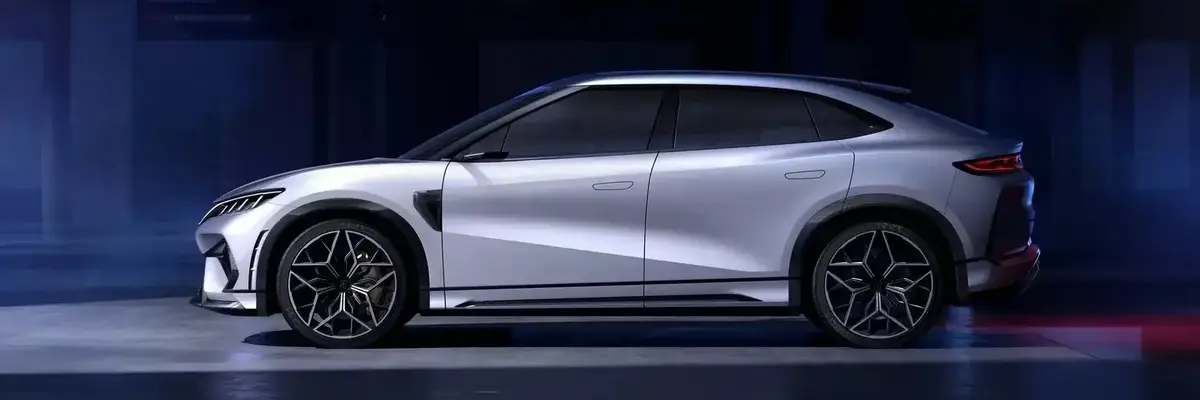
A BYD Birdsong L luxury EV sedan is shown.
With one of the world’s major superpowers run by a person who apparently gives no consideration to the impact his actions have on the world economy, driving a gas-powered car looks like a much riskier proposition.
China exported 435,000 electric vehicles in May, a 100% increase from its exports in 2025. Its total exports of cars was 809,000, an increase of 73% from last year. By comparison, domestic US vehicle sales in May were 1,470,000. That means China’s exports of cars were equal to 55% of US purchases in the month, while its EV exports were almost 30%.
President Donald Trump can legitimately take credit for the surge in China’s EV exports. As he might say, “Frankly, if it wasn’t for me, their EV exports would not be growing like that.”
Trump has lit a rocket under China’s EV industry. While EV sales by producers worldwide are rising, no one was better situated to benefit from the surge in demand created by Trump’s war on Iran than China’s producers. Chinese producers account for more than 70% of global EV sales. That share is likely to rise, even as the market expands rapidly.
Trump’s war helped to boost sales not only by raising the price of gas, it also created enormous uncertainty about future prices. With one of the world’s major superpowers run by a person who apparently gives no consideration to the impact his actions have on the world economy, driving a gas-powered car looks like a much riskier proposition.
The bottom line is that Donald Trump’s war in Iran has done far more to jump start the green transition that almost any conceivable policy than a Biden-Harris administration might have put in place.
What is neat about this surge in EVs is that it is irreversible. People who buy EVs rarely switch back to gas-powered cars, especially in countries that have the infrastructure and charging stations to support EVs. And more EVs on the road create political and economic pressure to upgrade the infrastructure to facilitate their use.
EVs can be thought of as being like a virus; the more that get sold, the more they spread. When a large segment of car users has EVs, governments and businesses set up charging stations and repair shops. Also, when people see their co-workers, friends, and neighbors driving EVs, and saving a fortune on gas and maintenance, they become interested in owning one themselves. Once EVs get a big foot in the door, their spread is pretty much impossible to stop.
That is one reason why some of us have argued for allowing at least some number of high-quality, low-cost Chinese EVs into the US market. People could then see the benefits of EVs. Ideally, we would work out an arrangement where China transferred the technology so that the cars could be produced here, with union labor.
Unfortunately, the Trump administration has zero interest in going this route. It would rather double down on archaic technology.
The story is actually getting worse. There has been legislation introduced in Congress that would prohibit Chinese cars from even entering the United States. This would prevent someone from Canada or Mexico from driving their car over the border for a visit.
Apparently, the bill’s sponsors, Sen. Elissa Slotkin and Rep. Haley Stevens, both from Michigan, are worried about allowing people in this country to even see Chinese cars. This shows that not all whack job stuff in US politics originates with Donald Trump.
But getting back to Trump and the green transition, it’s not just China’s EV exports that Trump sent skyrocketing. Its exports of solar panels are up 60% year-over-year. China’s exports of wind turbines to the European Union rose 66% over 2025, and its battery exports worldwide were up 42%.
The bottom line is that Donald Trump’s war in Iran has done far more to jump start the green transition that almost any conceivable policy than a Biden-Harris administration might have put in place. That is great news. The unfortunate part is that China is at the center of it, and that it had to come about through war.
Dear Common Dreams reader, It’s been nearly 30 years since I co-founded Common Dreams with my late wife, Lina Newhouser. We had the radical notion that journalism should serve the public good, not corporate profits. It was clear to us from the outset what it would take to build such a project. No paid advertisements. No corporate sponsors. No millionaire publisher telling us what to think or do. Many people said we wouldn't last a year, but we proved those doubters wrong. Together with a tremendous team of journalists and dedicated staff, we built an independent media outlet free from the constraints of profits and corporate control. Our mission has always been simple: To inform. To inspire. To ignite change for the common good. Building Common Dreams was not easy. Our survival was never guaranteed. When you take on the most powerful forces—Wall Street greed, fossil fuel industry destruction, Big Tech lobbyists, and uber-rich oligarchs who have spent billions upon billions rigging the economy and democracy in their favor—the only bulwark you have is supporters who believe in your work. But here’s the urgent message from me today. It's never been this bad out there. And it's never been this hard to keep us going. At the very moment Common Dreams is most needed, the threats we face are intensifying. We need your support now more than ever. We don't accept corporate advertising and never will. We don't have a paywall because we don't think people should be blocked from critical news based on their ability to pay. Everything we do is funded by the donations of readers like you. When everyone does the little they can afford, we are strong. But if that support retreats or dries up, so do we. Will you donate now to make sure Common Dreams not only survives but thrives? —Craig Brown, Co-founder |
China exported 435,000 electric vehicles in May, a 100% increase from its exports in 2025. Its total exports of cars was 809,000, an increase of 73% from last year. By comparison, domestic US vehicle sales in May were 1,470,000. That means China’s exports of cars were equal to 55% of US purchases in the month, while its EV exports were almost 30%.
President Donald Trump can legitimately take credit for the surge in China’s EV exports. As he might say, “Frankly, if it wasn’t for me, their EV exports would not be growing like that.”
Trump has lit a rocket under China’s EV industry. While EV sales by producers worldwide are rising, no one was better situated to benefit from the surge in demand created by Trump’s war on Iran than China’s producers. Chinese producers account for more than 70% of global EV sales. That share is likely to rise, even as the market expands rapidly.
Trump’s war helped to boost sales not only by raising the price of gas, it also created enormous uncertainty about future prices. With one of the world’s major superpowers run by a person who apparently gives no consideration to the impact his actions have on the world economy, driving a gas-powered car looks like a much riskier proposition.
The bottom line is that Donald Trump’s war in Iran has done far more to jump start the green transition that almost any conceivable policy than a Biden-Harris administration might have put in place.
What is neat about this surge in EVs is that it is irreversible. People who buy EVs rarely switch back to gas-powered cars, especially in countries that have the infrastructure and charging stations to support EVs. And more EVs on the road create political and economic pressure to upgrade the infrastructure to facilitate their use.
EVs can be thought of as being like a virus; the more that get sold, the more they spread. When a large segment of car users has EVs, governments and businesses set up charging stations and repair shops. Also, when people see their co-workers, friends, and neighbors driving EVs, and saving a fortune on gas and maintenance, they become interested in owning one themselves. Once EVs get a big foot in the door, their spread is pretty much impossible to stop.
That is one reason why some of us have argued for allowing at least some number of high-quality, low-cost Chinese EVs into the US market. People could then see the benefits of EVs. Ideally, we would work out an arrangement where China transferred the technology so that the cars could be produced here, with union labor.
Unfortunately, the Trump administration has zero interest in going this route. It would rather double down on archaic technology.
The story is actually getting worse. There has been legislation introduced in Congress that would prohibit Chinese cars from even entering the United States. This would prevent someone from Canada or Mexico from driving their car over the border for a visit.
Apparently, the bill’s sponsors, Sen. Elissa Slotkin and Rep. Haley Stevens, both from Michigan, are worried about allowing people in this country to even see Chinese cars. This shows that not all whack job stuff in US politics originates with Donald Trump.
But getting back to Trump and the green transition, it’s not just China’s EV exports that Trump sent skyrocketing. Its exports of solar panels are up 60% year-over-year. China’s exports of wind turbines to the European Union rose 66% over 2025, and its battery exports worldwide were up 42%.
The bottom line is that Donald Trump’s war in Iran has done far more to jump start the green transition that almost any conceivable policy than a Biden-Harris administration might have put in place. That is great news. The unfortunate part is that China is at the center of it, and that it had to come about through war.
China exported 435,000 electric vehicles in May, a 100% increase from its exports in 2025. Its total exports of cars was 809,000, an increase of 73% from last year. By comparison, domestic US vehicle sales in May were 1,470,000. That means China’s exports of cars were equal to 55% of US purchases in the month, while its EV exports were almost 30%.
President Donald Trump can legitimately take credit for the surge in China’s EV exports. As he might say, “Frankly, if it wasn’t for me, their EV exports would not be growing like that.”
Trump has lit a rocket under China’s EV industry. While EV sales by producers worldwide are rising, no one was better situated to benefit from the surge in demand created by Trump’s war on Iran than China’s producers. Chinese producers account for more than 70% of global EV sales. That share is likely to rise, even as the market expands rapidly.
Trump’s war helped to boost sales not only by raising the price of gas, it also created enormous uncertainty about future prices. With one of the world’s major superpowers run by a person who apparently gives no consideration to the impact his actions have on the world economy, driving a gas-powered car looks like a much riskier proposition.
The bottom line is that Donald Trump’s war in Iran has done far more to jump start the green transition that almost any conceivable policy than a Biden-Harris administration might have put in place.
What is neat about this surge in EVs is that it is irreversible. People who buy EVs rarely switch back to gas-powered cars, especially in countries that have the infrastructure and charging stations to support EVs. And more EVs on the road create political and economic pressure to upgrade the infrastructure to facilitate their use.
EVs can be thought of as being like a virus; the more that get sold, the more they spread. When a large segment of car users has EVs, governments and businesses set up charging stations and repair shops. Also, when people see their co-workers, friends, and neighbors driving EVs, and saving a fortune on gas and maintenance, they become interested in owning one themselves. Once EVs get a big foot in the door, their spread is pretty much impossible to stop.
That is one reason why some of us have argued for allowing at least some number of high-quality, low-cost Chinese EVs into the US market. People could then see the benefits of EVs. Ideally, we would work out an arrangement where China transferred the technology so that the cars could be produced here, with union labor.
Unfortunately, the Trump administration has zero interest in going this route. It would rather double down on archaic technology.
The story is actually getting worse. There has been legislation introduced in Congress that would prohibit Chinese cars from even entering the United States. This would prevent someone from Canada or Mexico from driving their car over the border for a visit.
Apparently, the bill’s sponsors, Sen. Elissa Slotkin and Rep. Haley Stevens, both from Michigan, are worried about allowing people in this country to even see Chinese cars. This shows that not all whack job stuff in US politics originates with Donald Trump.
But getting back to Trump and the green transition, it’s not just China’s EV exports that Trump sent skyrocketing. Its exports of solar panels are up 60% year-over-year. China’s exports of wind turbines to the European Union rose 66% over 2025, and its battery exports worldwide were up 42%.
The bottom line is that Donald Trump’s war in Iran has done far more to jump start the green transition that almost any conceivable policy than a Biden-Harris administration might have put in place. That is great news. The unfortunate part is that China is at the center of it, and that it had to come about through war.