SUBSCRIBE TO OUR FREE NEWSLETTER
Daily news & progressive opinion—funded by the people, not the corporations—delivered straight to your inbox.
5
#000000
#FFFFFF
To donate by check, phone, or other method, see our More Ways to Give page.
Daily news & progressive opinion—funded by the people, not the corporations—delivered straight to your inbox.
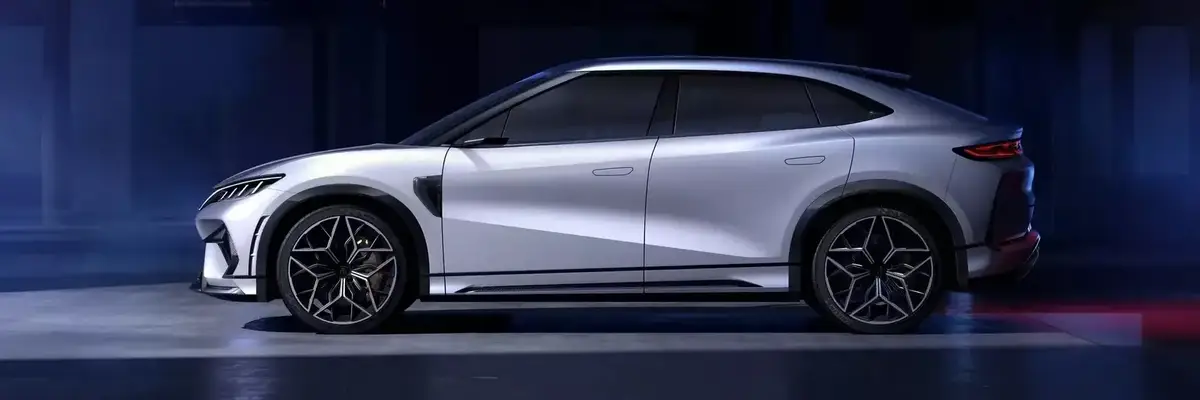
A BYD Birdsong L luxury EV sedan. "Wang Chuanfu, the CEO of BYD, the largest EV company in the world, is the Henry Ford of the 21st century, not an American," writes Cole.
The dirty fossil fuel industry keeping gas-powered vehicles on the road are like the horse-and-buggy companies of 1902, which laughed at Henry Ford’s Model T for a while before being put out of business by it.
Euan Gregor at the Ember energy think tank makes a novel argument: The adoption of electric vehicles has spread in a major way to the Global South and is no longer only a Chinese, European and American phenomenon. By EVs Ember means both hybrid and pure battery electric cars.
But it certainly is a Chinese phenomenon, since in that country nearly half of new car sales were electric this year. That is an incredible statistic.
Globally, Yale Climate Connections says, 25% of new car sales were electric of some sort. Road transportation, this site says, accounts for 12% of global carbon emissions.
When we say that people in the Global South are buying EVs hand over fist, alas, we aren’t saying that they are buying Chevy Bolts or Nissan Leafs or Teslas. They are mostly buying BYDs, Geelys, BWMs and other Chinese makes, which are 65% the price of a Tesla. Since automobile transportation will be electrified over the next 30 years, the country that makes all those EVs will become the industrial powerhouse of the 21st Century. Most of the growth in Chinese EV exports, Ember says, has come in countries outside the relatively wealthy 38 nations that belong to the Organization for Economic Co-Operation and Developmentnon (OECD).
Backward American capitalism has been captured by dirty petroleum interests and is like the horse-and-buggy companies of 1902, which laughed at Henry Ford’s Model T for a while before being put out of business by it. (They started by saying that automobiles were impractical because they would scare the horses).
The petroleum industry and the dirty oil countries are aware that China and Europe are electrifying transport, but they had pinned their hopes on a continued demand for internal combustion engine vehicles (ICEV) in Africa, Asia and Latin America. Ember is saying that that hope is a pipe dream (pun intended). Exhibit A: Ethiopia has banned the importation of gasoline cars.
Wang Chuanfu, the CEO of BYD, the largest EV company in the world, is the Henry Ford of the 21st century, not an American. America is a sinking ship under the anti-science, anti-technology, anti-greeen Trump administration, which is more likely to kill off the population with preventable diseases by halting vaccinations than to dominate the world economically.
Ember says, “39 countries have reached an EV sales share larger than 10% in 2025, a third of which are outside Europe.” In 2019, all countries with substantial EV sales had been in Europe.
In particular, the Association of Southeast Asian Nations (ASEAN) has emerged in 2025 as a major adopter of EVs. Nearly 40% of new vehicle registrations in Vietnam were electric, more than in the European Union and more than the UK, and the electric vehicle industry could generate 6.5 million jobs there over the next 30 years. In Singapore 43% of new car sales were electric in the first nine months of this year. More than 20% of new cars bought in Thailand were electric this year, again more than in the EU or Britain. In Indonesia, about 18% of new vehicle registrations were electric this year, an increase of 49% over 2024. In Malaysia, EV sales were up 74%, and in the Philippines they increased a whopping 656%. Because they started from a low base, however, these two countries are still seeing only 5-6% of new car sales as electric.
India, Mexico and Brazil, two of them BRICS countries, are also emerging as significant EV markets. In Brazil EVs made up 9-10% of new passenger car sales. Since Brazil has an exceptionally clean grid, EVs are almost carbon-free there. In Mexico 8-9% of new vehicle registrations were electric. I visited Mexico twice this year, and noticed the BYD dealerships. In India, about 5% of new passenger car sales were electric this year, a big increase over the past. Five percent doesn’t sound like much, but Indians buy about 4.5 million new cars every year, so that was 225,000 EVs this year. In Turkiye 17% of new car sales are EVs, most of them battery electric. That country makes its own EV, the Togg, but also has attracted Chinese investment for a BYD manufacturing plant.
Dear Common Dreams reader, It’s been nearly 30 years since I co-founded Common Dreams with my late wife, Lina Newhouser. We had the radical notion that journalism should serve the public good, not corporate profits. It was clear to us from the outset what it would take to build such a project. No paid advertisements. No corporate sponsors. No millionaire publisher telling us what to think or do. Many people said we wouldn't last a year, but we proved those doubters wrong. Together with a tremendous team of journalists and dedicated staff, we built an independent media outlet free from the constraints of profits and corporate control. Our mission has always been simple: To inform. To inspire. To ignite change for the common good. Building Common Dreams was not easy. Our survival was never guaranteed. When you take on the most powerful forces—Wall Street greed, fossil fuel industry destruction, Big Tech lobbyists, and uber-rich oligarchs who have spent billions upon billions rigging the economy and democracy in their favor—the only bulwark you have is supporters who believe in your work. But here’s the urgent message from me today. It's never been this bad out there. And it's never been this hard to keep us going. At the very moment Common Dreams is most needed, the threats we face are intensifying. We need your support now more than ever. We don't accept corporate advertising and never will. We don't have a paywall because we don't think people should be blocked from critical news based on their ability to pay. Everything we do is funded by the donations of readers like you. When everyone does the little they can afford, we are strong. But if that support retreats or dries up, so do we. Will you donate now to make sure Common Dreams not only survives but thrives? —Craig Brown, Co-founder |
Euan Gregor at the Ember energy think tank makes a novel argument: The adoption of electric vehicles has spread in a major way to the Global South and is no longer only a Chinese, European and American phenomenon. By EVs Ember means both hybrid and pure battery electric cars.
But it certainly is a Chinese phenomenon, since in that country nearly half of new car sales were electric this year. That is an incredible statistic.
Globally, Yale Climate Connections says, 25% of new car sales were electric of some sort. Road transportation, this site says, accounts for 12% of global carbon emissions.
When we say that people in the Global South are buying EVs hand over fist, alas, we aren’t saying that they are buying Chevy Bolts or Nissan Leafs or Teslas. They are mostly buying BYDs, Geelys, BWMs and other Chinese makes, which are 65% the price of a Tesla. Since automobile transportation will be electrified over the next 30 years, the country that makes all those EVs will become the industrial powerhouse of the 21st Century. Most of the growth in Chinese EV exports, Ember says, has come in countries outside the relatively wealthy 38 nations that belong to the Organization for Economic Co-Operation and Developmentnon (OECD).
Backward American capitalism has been captured by dirty petroleum interests and is like the horse-and-buggy companies of 1902, which laughed at Henry Ford’s Model T for a while before being put out of business by it. (They started by saying that automobiles were impractical because they would scare the horses).
The petroleum industry and the dirty oil countries are aware that China and Europe are electrifying transport, but they had pinned their hopes on a continued demand for internal combustion engine vehicles (ICEV) in Africa, Asia and Latin America. Ember is saying that that hope is a pipe dream (pun intended). Exhibit A: Ethiopia has banned the importation of gasoline cars.
Wang Chuanfu, the CEO of BYD, the largest EV company in the world, is the Henry Ford of the 21st century, not an American. America is a sinking ship under the anti-science, anti-technology, anti-greeen Trump administration, which is more likely to kill off the population with preventable diseases by halting vaccinations than to dominate the world economically.
Ember says, “39 countries have reached an EV sales share larger than 10% in 2025, a third of which are outside Europe.” In 2019, all countries with substantial EV sales had been in Europe.
In particular, the Association of Southeast Asian Nations (ASEAN) has emerged in 2025 as a major adopter of EVs. Nearly 40% of new vehicle registrations in Vietnam were electric, more than in the European Union and more than the UK, and the electric vehicle industry could generate 6.5 million jobs there over the next 30 years. In Singapore 43% of new car sales were electric in the first nine months of this year. More than 20% of new cars bought in Thailand were electric this year, again more than in the EU or Britain. In Indonesia, about 18% of new vehicle registrations were electric this year, an increase of 49% over 2024. In Malaysia, EV sales were up 74%, and in the Philippines they increased a whopping 656%. Because they started from a low base, however, these two countries are still seeing only 5-6% of new car sales as electric.
India, Mexico and Brazil, two of them BRICS countries, are also emerging as significant EV markets. In Brazil EVs made up 9-10% of new passenger car sales. Since Brazil has an exceptionally clean grid, EVs are almost carbon-free there. In Mexico 8-9% of new vehicle registrations were electric. I visited Mexico twice this year, and noticed the BYD dealerships. In India, about 5% of new passenger car sales were electric this year, a big increase over the past. Five percent doesn’t sound like much, but Indians buy about 4.5 million new cars every year, so that was 225,000 EVs this year. In Turkiye 17% of new car sales are EVs, most of them battery electric. That country makes its own EV, the Togg, but also has attracted Chinese investment for a BYD manufacturing plant.
Euan Gregor at the Ember energy think tank makes a novel argument: The adoption of electric vehicles has spread in a major way to the Global South and is no longer only a Chinese, European and American phenomenon. By EVs Ember means both hybrid and pure battery electric cars.
But it certainly is a Chinese phenomenon, since in that country nearly half of new car sales were electric this year. That is an incredible statistic.
Globally, Yale Climate Connections says, 25% of new car sales were electric of some sort. Road transportation, this site says, accounts for 12% of global carbon emissions.
When we say that people in the Global South are buying EVs hand over fist, alas, we aren’t saying that they are buying Chevy Bolts or Nissan Leafs or Teslas. They are mostly buying BYDs, Geelys, BWMs and other Chinese makes, which are 65% the price of a Tesla. Since automobile transportation will be electrified over the next 30 years, the country that makes all those EVs will become the industrial powerhouse of the 21st Century. Most of the growth in Chinese EV exports, Ember says, has come in countries outside the relatively wealthy 38 nations that belong to the Organization for Economic Co-Operation and Developmentnon (OECD).
Backward American capitalism has been captured by dirty petroleum interests and is like the horse-and-buggy companies of 1902, which laughed at Henry Ford’s Model T for a while before being put out of business by it. (They started by saying that automobiles were impractical because they would scare the horses).
The petroleum industry and the dirty oil countries are aware that China and Europe are electrifying transport, but they had pinned their hopes on a continued demand for internal combustion engine vehicles (ICEV) in Africa, Asia and Latin America. Ember is saying that that hope is a pipe dream (pun intended). Exhibit A: Ethiopia has banned the importation of gasoline cars.
Wang Chuanfu, the CEO of BYD, the largest EV company in the world, is the Henry Ford of the 21st century, not an American. America is a sinking ship under the anti-science, anti-technology, anti-greeen Trump administration, which is more likely to kill off the population with preventable diseases by halting vaccinations than to dominate the world economically.
Ember says, “39 countries have reached an EV sales share larger than 10% in 2025, a third of which are outside Europe.” In 2019, all countries with substantial EV sales had been in Europe.
In particular, the Association of Southeast Asian Nations (ASEAN) has emerged in 2025 as a major adopter of EVs. Nearly 40% of new vehicle registrations in Vietnam were electric, more than in the European Union and more than the UK, and the electric vehicle industry could generate 6.5 million jobs there over the next 30 years. In Singapore 43% of new car sales were electric in the first nine months of this year. More than 20% of new cars bought in Thailand were electric this year, again more than in the EU or Britain. In Indonesia, about 18% of new vehicle registrations were electric this year, an increase of 49% over 2024. In Malaysia, EV sales were up 74%, and in the Philippines they increased a whopping 656%. Because they started from a low base, however, these two countries are still seeing only 5-6% of new car sales as electric.
India, Mexico and Brazil, two of them BRICS countries, are also emerging as significant EV markets. In Brazil EVs made up 9-10% of new passenger car sales. Since Brazil has an exceptionally clean grid, EVs are almost carbon-free there. In Mexico 8-9% of new vehicle registrations were electric. I visited Mexico twice this year, and noticed the BYD dealerships. In India, about 5% of new passenger car sales were electric this year, a big increase over the past. Five percent doesn’t sound like much, but Indians buy about 4.5 million new cars every year, so that was 225,000 EVs this year. In Turkiye 17% of new car sales are EVs, most of them battery electric. That country makes its own EV, the Togg, but also has attracted Chinese investment for a BYD manufacturing plant.