

SUBSCRIBE TO OUR FREE NEWSLETTER
Daily news & progressive opinion—funded by the people, not the corporations—delivered straight to your inbox.
5
#000000
#FFFFFF
To donate by check, phone, or other method, see our More Ways to Give page.
Daily news & progressive opinion—funded by the people, not the corporations—delivered straight to your inbox.

With one of the world’s major superpowers run by a person who apparently gives no consideration to the impact his actions have on the world economy, driving a gas-powered car looks like a much riskier proposition.
China exported 435,000 electric vehicles in May, a 100% increase from its exports in 2025. Its total exports of cars was 809,000, an increase of 73% from last year. By comparison, domestic US vehicle sales in May were 1,470,000. That means China’s exports of cars were equal to 55% of US purchases in the month, while its EV exports were almost 30%.
President Donald Trump can legitimately take credit for the surge in China’s EV exports. As he might say, “Frankly, if it wasn’t for me, their EV exports would not be growing like that.”
Trump has lit a rocket under China’s EV industry. While EV sales by producers worldwide are rising, no one was better situated to benefit from the surge in demand created by Trump’s war on Iran than China’s producers. Chinese producers account for more than 70% of global EV sales. That share is likely to rise, even as the market expands rapidly.
Trump’s war helped to boost sales not only by raising the price of gas, it also created enormous uncertainty about future prices. With one of the world’s major superpowers run by a person who apparently gives no consideration to the impact his actions have on the world economy, driving a gas-powered car looks like a much riskier proposition.
The bottom line is that Donald Trump’s war in Iran has done far more to jump start the green transition that almost any conceivable policy than a Biden-Harris administration might have put in place.
What is neat about this surge in EVs is that it is irreversible. People who buy EVs rarely switch back to gas-powered cars, especially in countries that have the infrastructure and charging stations to support EVs. And more EVs on the road create political and economic pressure to upgrade the infrastructure to facilitate their use.
EVs can be thought of as being like a virus; the more that get sold, the more they spread. When a large segment of car users has EVs, governments and businesses set up charging stations and repair shops. Also, when people see their co-workers, friends, and neighbors driving EVs, and saving a fortune on gas and maintenance, they become interested in owning one themselves. Once EVs get a big foot in the door, their spread is pretty much impossible to stop.
That is one reason why some of us have argued for allowing at least some number of high-quality, low-cost Chinese EVs into the US market. People could then see the benefits of EVs. Ideally, we would work out an arrangement where China transferred the technology so that the cars could be produced here, with union labor.
Unfortunately, the Trump administration has zero interest in going this route. It would rather double down on archaic technology.
The story is actually getting worse. There has been legislation introduced in Congress that would prohibit Chinese cars from even entering the United States. This would prevent someone from Canada or Mexico from driving their car over the border for a visit.
Apparently, the bill’s sponsors, Sen. Elissa Slotkin and Rep. Haley Stevens, both from Michigan, are worried about allowing people in this country to even see Chinese cars. This shows that not all whack job stuff in US politics originates with Donald Trump.
But getting back to Trump and the green transition, it’s not just China’s EV exports that Trump sent skyrocketing. Its exports of solar panels are up 60% year-over-year. China’s exports of wind turbines to the European Union rose 66% over 2025, and its battery exports worldwide were up 42%.
The bottom line is that Donald Trump’s war in Iran has done far more to jump start the green transition that almost any conceivable policy than a Biden-Harris administration might have put in place. That is great news. The unfortunate part is that China is at the center of it, and that it had to come about through war.
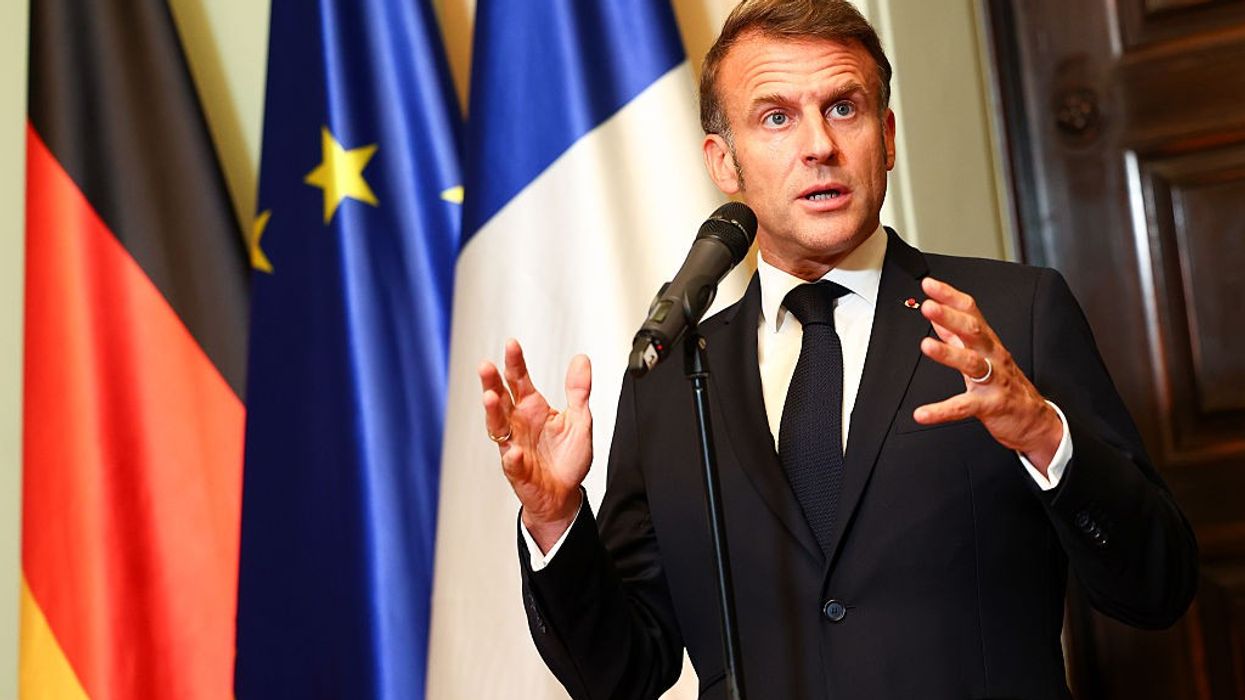
As Macron launches his "green" charm offensive in Nairobi, Africa must move beyond being a passive host.
In a maneuver dripping with historical irony and geopolitical desperation, French President Emmanuel Macron is set to land in Nairobi on May 11. He will be in Kenya to co-host the “Africa Forward Summit: Africa-France Partnership for Innovation and Growth.” To the uninitiated, the title suggests a progressive leap into a shared future.
However, to those who have watched the sun set on Françafrique in the West, the subtext is clear: Having been unceremoniously evicted from its traditional "stomping grounds" in the Sahel, Paris is pitching its tent in East Africa, hunting for new deals to cover the hemorrhaging fortunes of a dying empire. Ahead of his arrival—incidentally on the Ides of March—three French warships docked at the port of Mombasa, carrying with them over 800 military personnel. They were riding on the wave of newfound defense cooperation between the governments of Kenya and France.
The pact focused on maritime security, intelligence cooperation, peacekeeping, humanitarian assistance, disaster relief, and “any other defense or security-related areas of cooperation defined by mutual agreement between parties.” Through this pact, France now has a new hunting ground in East Africa, complete with boots on the ground, sea, and air. Kenya’s 142,400 square kilometers of Exclusive Economic Zone in the Indian Ocean, reputed for riches in fish, oil and gas, is in for a rude shock.
The irony is almost pathological. For over a century, France treated West Africa as a private warehouse. It did not merely colonize; it plundered, looted, and systematically attempted to dismantle the resilient African civilizations that predated its arrival. Its "assimilation" policy remains the most abhorrent, ignoble of colonial concepts; a cultural and political mis-philosophy designed to supplant African languages, customs, and identities with French surrogates.
Africa must stay circumspect. The convergence of military signalling and corporate presence must worry all countries participating in Nairobi. They must watch out for unequal relationships under new language.
When other colonial powers were loosening—however reluctantly—their grip, France was tightening its hold through a web of lopsided financial and military pacts.
With the rising tide of political "wokeness" across the continent, however, France now finds itself sorely ostracized, and endangered. Yet, rather than offering atonement, the French leadership has chosen to grandstand. The mask slipped definitively earlier this year when Macron, frustrated by the anti-French revolts sweeping through former colonies, dropped the pretense of diplomacy. “I think someone forgot to say thank you,” he remarked, with the chilling entitlement of a landlord demanding gratitude for a house he broke into.
Fast forward five months, and this same "savior" is now knocking on East Africa’s door, hat in hand, seeking a "new partnership built on equal ground."
The sudden pivot is driven by a cold reality: France’s "green" future is powered by African minerals. While the lights of Paris stayed bright on the back of Niger’s uranium, Africa remained in the dark.
But as the Nairobi summit approaches, Africa must move beyond being a passive host. If Macron and his European contemporaries truly seek a partnership of equals, they must meet a set of nonnegotiable demands that protect African interests, specifically within the environment and energy sectors.
First, a mandate for local beneficiation and value addition. Africa will no longer be a mere pit stop for raw material extraction. The Nairobi summit must establish a framework where no critical mineral—lithium, cobalt, or uranium—leaves the continent in its raw state.
Africans must demand that French and European companies invest in local processing plants and refineries. If the "Green Transition" requires African minerals, then the "Green Industrialization" must happen on African soil, creating African jobs and keeping the value chain within our borders.
Second, total reform of the financial architecture and the CFA Franc. For a nation that has enforced financial slavery through the CFA Franc since 1945, Macron’s talk of "financial reform" must be met with skepticism.
Africa must demand the total dismantling of the colonial financial umbilical cord. Africa requires a global financial system that does not penalize African nations with "sovereign risk" premiums that make green energy projects three times more expensive here than in Europe. It must demand the unconditional return of foreign reserves held in Paris and a shift toward independent, African-led monetary policies.
Third, energy sovereignty over "green exportation." France proposes to "decarbonize" Africa, yet many of our nations have barely "carbonized" to begin with. African “partners” must demand energy justice. This means the right to achieve universal electrification. Africa must reject a "Green Deal" that forces Africa to export its renewable energy (like green hydrogen) to Europe while her own hospitals and schools remain off the grid.
African energy needs must be met first; European exports come second.
Fourth, technology transfer, not just licensing. True innovation is not found in buying French software; it is found in owning the source code. The Nairobi summit must secure commitments for the unconditional transfer of green technologies. Africa should not be a "market" for European patents; it must be a co-owner of the intellectual property that will define the 21st century.
Fifth, climate reparations and debt cancellation. Already, France is active in "debt-for-development" swaps. Africa must demand that these are not treated as "gifts" but as partial down payments on a century of ecological and economic debt. Africa should also insist on total cancellation of debts that were accrued through colonial-era structures. Climate finance must be provided as grants, not loans that further burden Africa’s children for a climate crisis they did not create.
Sixth, accountability for multinational conglomerates. Total Energies, Orano, and Eramet—over 60 CEOs from French corporations will be attending—must answer tough questions at the summit. They ought to answer for their extractive interests that have historically disadvantaged the continent. Across Africa, communities have borne the environmental, social, and economic costs of such operations, with countries like Mozambique offering stark reminders of the consequences.
The companies must agree to be held to African environmental standards, not just French ones. Africa should pitch for a legal framework that allows communities to sue French corporations in both African and French courts for environmental degradation and human rights abuses.
There can be no "partnership" where companies operate with impunity in the Global South while preaching "environmental and social governance" values in the North.
Seventh, an end to paternalistic "security" pacts. Finally, Africa demands an end to the "policing" of the continent. True peace and security come from economic dignity, not from the over 60 military interventions France has conducted since 1960 to protect its interests. Africa must demand the closure of foreign military bases that serve extractive interests and a shift toward supporting African-led, autonomous security architectures. If partnership means equality, then reciprocity is simple—every French troop granted access and immunity in Africa should be matched by an African troop with the same rights in France
The "New Scramble" is couched in the language of "climate resilience" and "debt-for-development swaps." But beneath these green platitudes lie a hidden quest: to re-establish unfettered access to Africa’s critical minerals.
Africa must stay circumspect. The convergence of military signalling and corporate presence must worry all countries participating in Nairobi. They must watch out for unequal relationships under new language.
What France and its European partners fail to realize is that the "disinherited" continent has found its voice. Africa is no longer interested in being a marginal chapter in a European story, not even with a thousand summits. If President Macron wants a "thank you," he should start by returning what was stolen from Africa and respecting the sovereignty he so arrogantly claimed to have authored. The era of the "political orchestra" directed from Paris is over. The music has changed, and Africa is finally playing its own tune.
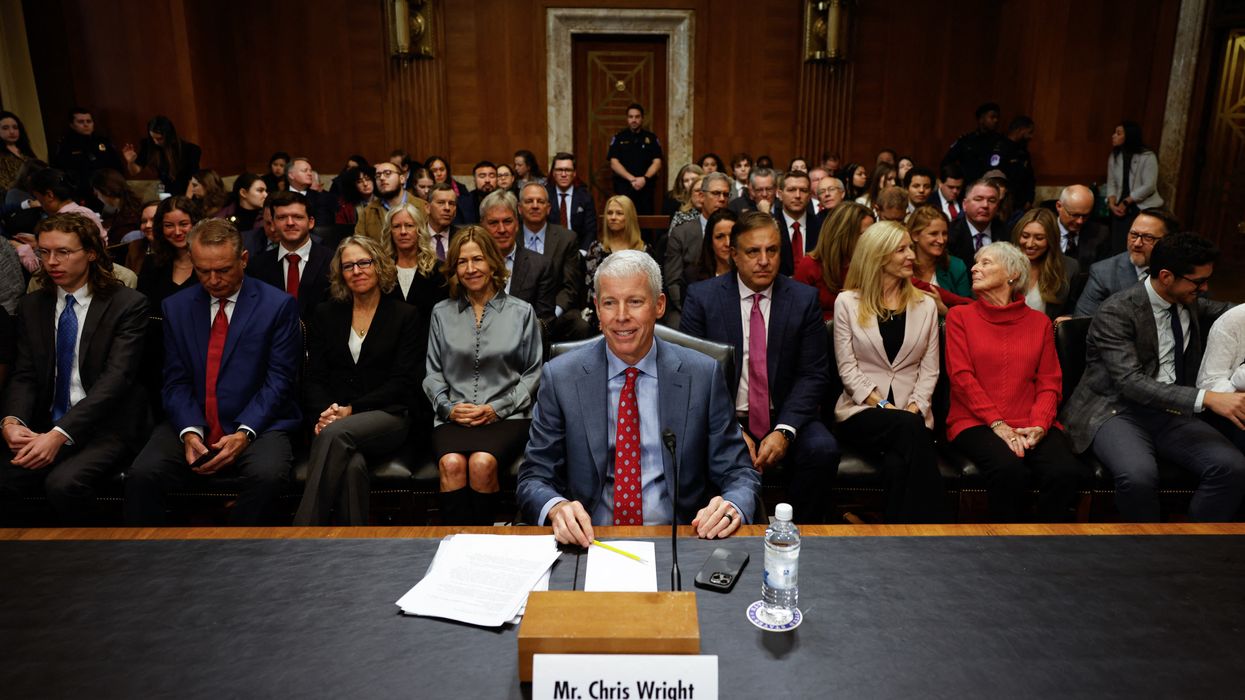
Trump’s new energy secretary would like you to believe that “Zero Energy Poverty” and Net Zero emissions by 2050 are incompatible goals, but this could not be further from the truth.
Chris Wright, who was recently confirmed as the new secretary of energy, has been famous for years as one of the more unapologetic proponents of fossil fuels. In 1992, Wright founded Pinnacle Technologies, an early leader in the hydraulic fracking business, and later made his fortune as the CEO of Liberty Energy, one of the largest oilfield service firms in North America. In 2023, he made headlines for a series of inflammatory statements disputing the science of climate change.
Now Wright has taken a different tack on climate—less outrageous, but no less dangerous. At his Senate confirmation hearing last week, Wright claimed that he didn’t deny the existence of anthropogenic climate change; he only denied that climate change warranted any reductions in fossil fuel production. To make his case, Wright spoke in abstractions about “tradeoffs” and “complicated dialogue.”
Then came the doozy: Poor countries like Kenya suffered from sparse access to propane fuel, Wright said, and only fracking could deliver the low prices to make up for those shortfalls.
Wright claims to be working on behalf of the global poor, but if he were, he might heed their repeated calls for emission reductions in the United States and other wealthy countries.
Wright has been quietly developing this specious argument for years: that addressing energy poverty, especially in the Global South, requires untrammeled fossil fuel production, no matter the damage to the planet. In Liberty Energy’s 2024 annual report, Bettering Human Lives, Wright laid out his case for hydrocarbon extraction. “Only a billion people today enjoy the full benefits of a highly energized lifestyle,” Wright wrote, while “7 billion striv[e] to achieve the lifestyles of the more fortunate 1 billion.” Without access to reliable natural gas, “over 2 billion people still cook their daily meals and heat their homes with traditional fuels, [including] wood, dung, agricultural waste, or charcoal,” putting them at risk of acute respiratory disease from air pollution. The only remedy, according to Wright, is more fossil fuels like gas.
This weaponization of global energy poverty is so insidious because it takes a legitimate issue—inadequate access to reliable energy for billions of people around the world—and turns it into a neat talking point for the destruction of the planet. Energy insecurity is a real challenge for the Global South, with over 3 billion people estimated to suffer from energy poverty of some kind. But so is climate change, which the World Bank projects will push up to 135 million people into poverty by 2030, and which is already fueling extreme weather, conflict, and migration, from Micronesia to the Sahel.
Wright would like you to believe that “Zero Energy Poverty” and Net Zero emissions by 2050 are incompatible goals. According to Wright, “solar, wind, and batteries… will not, and cannot replace most of the energy services and raw materials provided by hydrocarbons.”
But this could not be further from the truth.
In a 2021 report, the Rockefeller Foundation report found that renewable energy could end energy poverty worldwide at a cost of just $130 billion a year, less than a sixth of what the United States currently spends on defense each year. Moreover, the report found that such a transformation would create 25 million jobs across Africa and Asia, more than 30 times the number of jobs created by a comparable investment in fossil fuels.
Wright’s case for hydrocarbons is based on a bad faith conflation of existing realities with possible futures. In Bettering Human Lives, Wright claims that electricity currently “delivers only 20% of total primary energy consumption” in order to challenge clean energy’s viability as a substitute for hydrocarbons. But as Wright himself knows, a central feature of the green transition will be the electrification of everything, from transportation to home heating to heavy industry. Present shares of energy usage for electricity do not provide an accurate picture of future consumption patterns .
In the case of the Global South, where energy poverty is most acute, the key will be the implementation and scaling of distributed renewable energy (DRE) systems. Unlike traditional grids, which often carry power over vast distances, DREs generate electricity from clean energy sources close to home. With the cost of batteries and solar PV both falling over 90% in the past decade, these systems are more affordable than ever. The Roosevelt Foundation sees DREs driving the clean energy transition across Sub-Saharan Africa and South Asia, with mini-grids providing power for a dizzying array of technologies: “solar lanterns, ice-making factories used by fishing communities, milk chillers and irrigation pumps for farmers, refrigerators and life-saving medical equipment in clinics and hospitals, and more.”
Some elements of the climate movement have pushed a degrowth agenda that fails to reckon with the energy needs of many countries in the Global South. Calls for developing nations to abruptly cut off coal consumption, for example, ring hollow if they are not accompanied by meaningful assistance to pay for more expensive alternatives. But for the most part, the climate movement has recognized the inequities in historical development and emissions patterns, and placed the burden squarely on the Global North to drive the decarbonization process.
Wright claims to be working on behalf of the global poor, but if he were, he might heed their repeated calls for emission reductions in the United States and other wealthy countries. For years now, developing countries have been asking the nations most responsible for the climate crisis to decarbonize fastest, in order to buy time for poorer countries to catch up. They have also called for additional climate finance to assist with mitigation and adaptation efforts. At COP29 in November, rich countries pledged $300 billion a year in climate finance by 2035, but research suggests developing nations need closer to $1 trillion a year to protect their most vulnerable populations. If Wright were sincere in his concern for the plight of the global energy poor, he would support these initiatives.
Of course, he will do no such thing. Wright’s patron in the White House has already made the new administration’s policy clear. On his first day back in office, President Donald Trump pulled out of the Paris climate accords—and froze all foreign aid for 100 days. Now Trump appears to have shuttered USAID entirely. To those observing from abroad, Wright’s bad faith appeals to global poverty must appear as one more indignity from an administration inclined to offer little else.
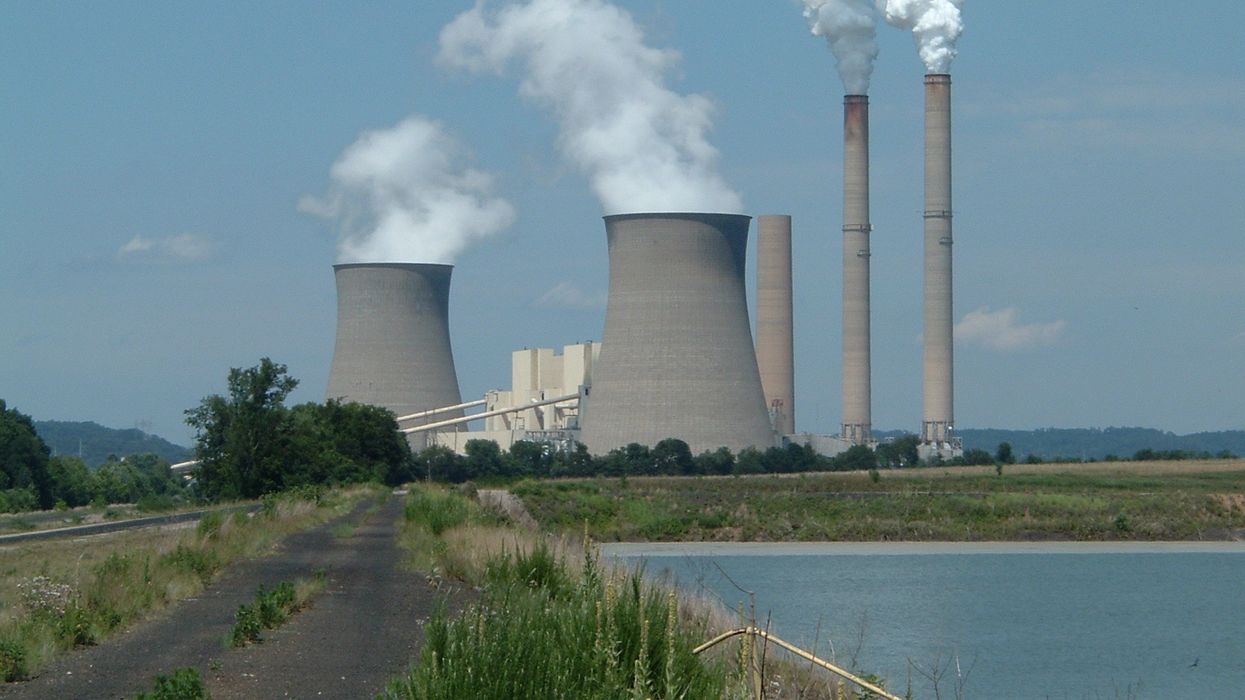
Blackstone has the opportunity to cement itself as a leader in the green transition by continuing to invest in clean energy solutions and closing the deadly General J Gavin Coal Plant in Ohio.
Private equity giant Blackstone is invested in one of the largest and dirtiest coal plants in the United States, the General J Gavin Coal Plant in Ohio. Despite Blackstone’s commitments to reducing carbon emissions in new assets, various investments in renovating and constructing energy efficient buildings, and a $100 million investment in businesses that support the energy transition, the firm remains invested in this aging, polluting coal plant. As the Gavin Coal Plant celebrates its 50th birthday this year, it’s time for Blackstone to start planning the plant’s retirement.
Contradicting their corporate commitments to emissions reduction, Blackstone’s Gavin coal plant has emitted 106 million metric tons of CO2 into the atmosphere since the firm acquired the plant in 2016. These emissions impact communities well beyond Cheshire, Ohio. Because of its location, the Gavin Coal Plant is upwind of several major areas across the Eastern Seaboard such as Pittsburgh, Buffalo, and Baltimore, meaning the health impacts stretch across the country as well in a widespread plume of toxins. Sierra Club modeling found Gavin to be the nation’s deadliest coal plant as of February 2023, causing an estimated 244 premature deaths each year from particulate emissions.
Not only is Gavin deadly, it’s old and expensive. As the plant turns 50 this year, Gavin is an outlier among other coal plants slated for closure. Since 2000, the average age of retirement for coal-fired generating units has been 50 years. And, as coal plants age, operations and maintenance costs increase while performance decreases. In 2020, 46% of global coal plants were running at a loss, and Carbon Tracker estimates this rising to 52% by 2030 . Yet, Blackstone has not announced a retirement date for this old, inefficient asset.
Blackstone is in danger of missing this brief opportunity to leverage this program to repurpose an old, dirty, and inefficient coal plant while delivering returns for investors.
Blackstone has the opportunity to cement itself as a leader in the green transition by continuing to invest in clean energy solutions and closing the General J Gavin Coal Plant in Ohio. There’s extra funding for that green transition through the Inflation Reduction Act (IRA,) but the window of opportunity for that financing is closing. Blackstone should close the Gavin Coal Plant and repurpose the site for the renewable energy transition, and the IRA funding provides a unique financial opportunity for the firm to do just that.
Blackstone executives are well aware of the investment opportunities that exist in the clean energy transition. In fact, in Blackstone’s 2023 Q2 earnings call, President and Chief Operating Officer Jon Gray stated that the IRA would be helpful in spurring investments in the energy transition. Gray said:
The IRA in the U.S. has made a big difference. I mean, there was $250 billion of large-scale renewable projects announced in the last seven years. And there was an equal amount announced in the last year basically since the IRA passing. So, we would say very large scale opportunity and should result in a new area for us to grow and generate incremental fees and returns for investors.
By Blackstone’s own calculus, the IRA is a critical tool for spurring investments and generating returns for investors. Blackstone should get an application in for the Energy Infrastructure Reinvestment Program by the end of the year to ensure the firm is in the running for favorable financing terms to retool, repurpose, or replace the Gavin Coal Plant.
As of March 2024, there were 203 active applications in the Department of Energy’s Loan Programs Office which oversees the Energy Infrastructure Reinvestment Program. Over $262.2 billion in loans have been requested, and the program budget is only $250 billion. Blackstone is in danger of missing this brief opportunity to leverage this program to repurpose an old, dirty, and inefficient coal plant while delivering returns for investors. Blackstone must act now and retire the Gavin Coal Plant.
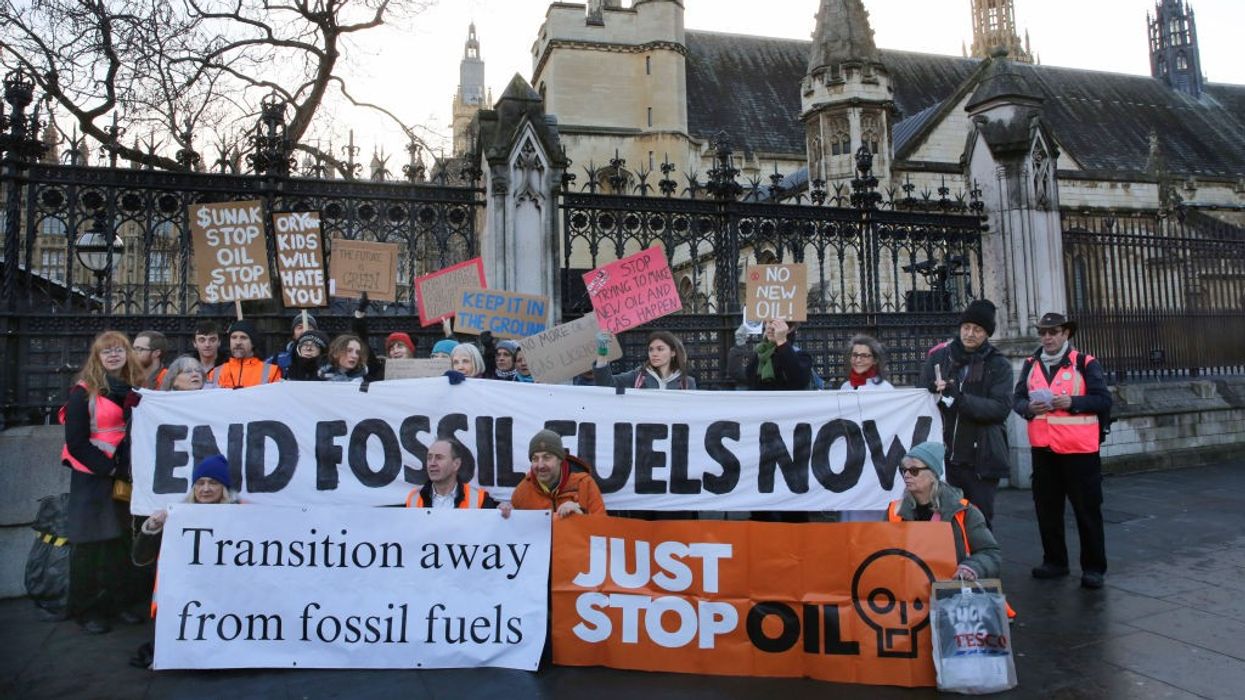
"There can be no doubt that citizens across the world are saying to their leaders, you have to act and, above all, have to act faster," a U.N. official said. "This is an issue that almost everyone, everywhere, can agree on."
A large majority of the global population, including people who live in oil, gas, and coal producing countries, supports a fast transition to clean energy and a phaseout of fossil fuels, a poll released Thursday showed.
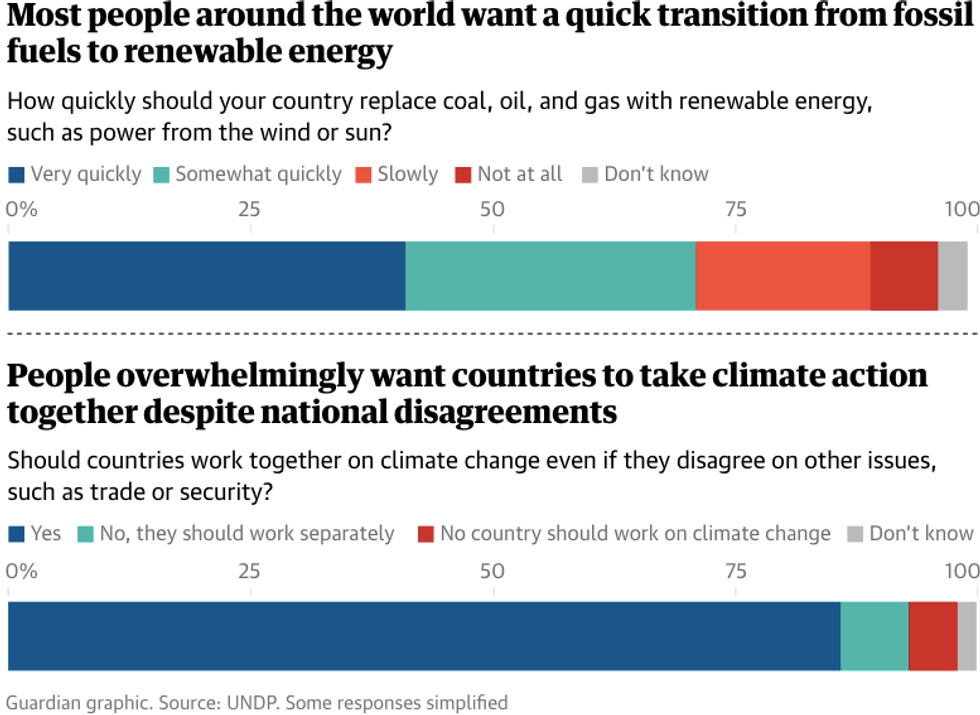
Across 77 countries, 72% of those surveyed supported a quick fossil fuel phaseout, while an even higher percentage, 80%, supported stronger climate action in general, according to the poll, called Peoples' Climate Vote and conducted for the United Nations Development Program (UNDP) with the University of Oxford and GeoPoll.
"There can be no doubt that citizens across the world are saying to their leaders, you have to act and, above all, have to act faster," UNDP Administrator Achim Steiner told The Guardian. "This is an issue that almost everyone, everywhere, can agree on."
📣 Our #PeoplesClimateVote 2024 results are live! The world’s largest standalone public opinion survey on #ClimateChange.
The results are clear. People want more #ClimateAction, and they want it now.
Explore a world of views on the climate crisis: https://t.co/mJsEzN3NGy pic.twitter.com/2kwA4KcPnn
— UN Development (@UNDP) June 20, 2024
People in most major fossil fuel producing nations support a quick energy transition in their own countries, the poll showed. In the United States, the world's largest oil and gas producer, 53% supported either a "very" or "somewhat" quick phaseout; in Saudi Arabia, the second largest, 75% did so; and in China and India, the leading coal producers, the figures were 80% and 76%, respectively.
The poll also showed overwhelming support for transnational cooperation, even if it requires setting aside other differences: 86% of those surveyed said want countries to tackle climate change together. Steiner called this a "stunning" level of consensus.
Steiner noted that fossil fuel subsidies distort the market and subvert the public will for change.
"There are very narrow, self-interested agendas that maintain artificially inflated [profits] for fossil fuel-based industries that ultimately are coming at the cost of everyone," he said.
The poll—the largest standalone public opinion survey on climate change to date, building on a first edition that was run in 2021—clarifies the will of the global public and strengthens the moral case for climate action, commentators said.
"Brilliant to see clear, credible evidence that the overwhelming majority of people across the world—oil rentier economy or not—want to see transition from fossil fuels to renewable energy 'quickly,'" X user Dave Drabble wrote. "Let's not let oil and gas interests determine our fate."
Similarly rejecting the influence of fossil fuel interests, Steiner said, "It is so important we let the people speak for themselves."
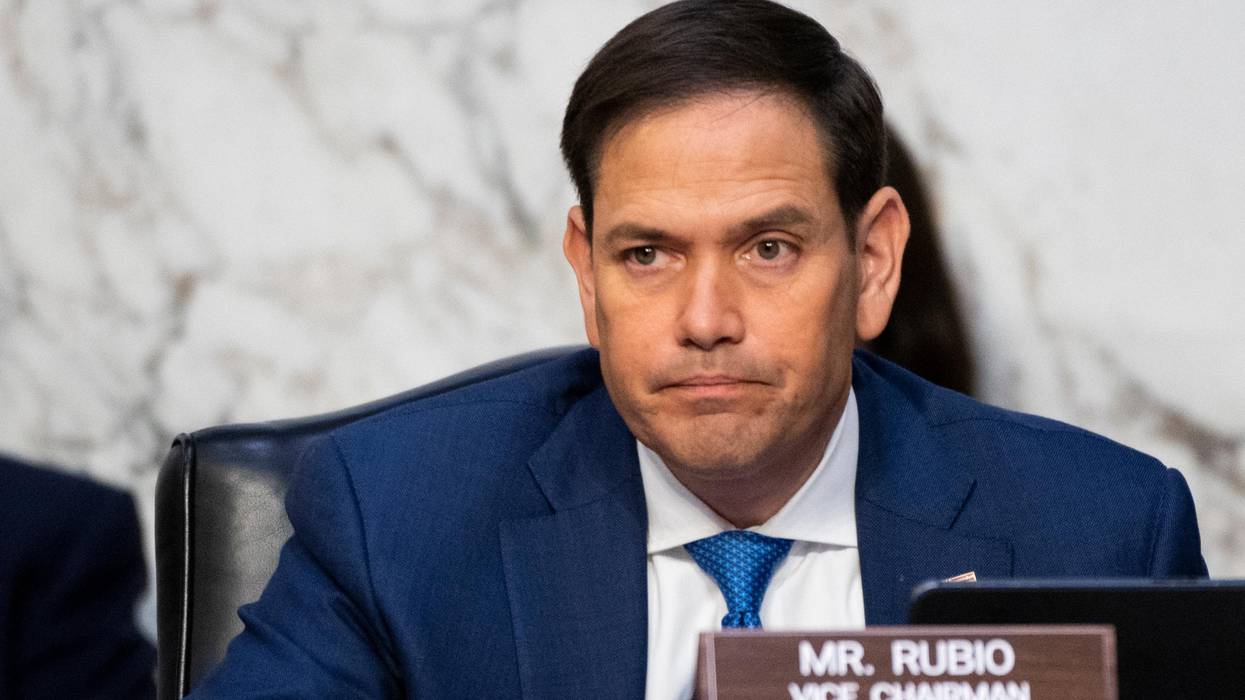
A Rubio-sponsored bill would have effectively removed requirements to source EV chargers from U.S. manufacturers—though Rubio would have you believe otherwise.
Recently, the U.S. Congress passed a wildly misrepresented measure related to making electric vehicle, or EV, chargers in the United States. While the bill’s sponsors and supporters pitched the measure as protecting manufacturing workers in the United States, the effort would have effectively removed requirements that EV chargers purchased with federal dollars be made here.
The bill’s sponsor, Sen. Marco Rubio (R-Fla.) and the other members of the GOP who backed this effort hoped that misleading rhetoric and outright lies would trick U.S. auto workers and their supporters. But the measure was never about supporting auto workers, it was about jeopardizing and slowing the transition to clean vehicles at their expense. Workers deserve more respect than that.
President Joe Biden cut through this façade and put workers first by quickly vetoing the bill. But this isn’t the first—and won’t be the last—time that the GOP tries to co-opt the fight for workers’ rights to advance its own agenda.
Many of these lies to workers are based on the same premise: Investing in the clean economy somehow means sending all our jobs and money to China—no matter how we do it.
We live in strange times. Politicians gleefully vote against bills that will lift up their communities to satisfy their big money donors, while happily cheering clean economy projects funded by the bills they voted against and bragging about investments in the electric vehicle technologies they have fought tooth and nail to derail. They defend U.S. auto manufacturing workers from one side of their mouth, while fighting against the policies that will keep our auto industry competitive in the global market from the other side.
Across the nation, working people are joining together—supported by allies in the environmental movement—to stand up for a better world for themselves, their communities, and for future generations. During its historic Stand Up Strike, the United Auto Workers (UAW) refused to fall for former President Donald Trump’s insincere attempts to court the union, seeing right through his “rally” at a non-union facility. Meanwhile, the UAW concentrated on getting the best deal for their workers and they were able to do just that—right in the face of Trump’s attempts to distract and divide.
Many of these lies to workers are based on the same premise: Investing in the clean economy somehow means sending all our jobs and money to China—no matter how we do it. We know that the opposite is true. Investing in a clean economy is our only shot at keeping jobs here.
The Biden administration and Democrats in Congress have carefully written infrastructure, manufacturing, and clean energy laws that create jobs and investments here in the United States—particularly in low-income and underserved communities. That means these laws will greatly benefit blue AND red states, which is why you see a lot of Republicans running to embrace the very projects they voted against.
Requirements in laws enacted by the Biden administration specifically call for sourcing materials from U.S. manufacturers and building out the U.S. supply chain, which will create good, union jobs across the nation. And yet, the GOP rails against these investment and laws, even voting to repeal them. For example, the Rubio bill mentioned above would have effectively removed requirements to source EV chargers from U.S. manufacturers—though Rubio would have you believe otherwise.
This sort of dishonest rhetoric is only going to ramp up throughout this election year. We’ve seen it before and we’ll see it far into the future, but workers in the United States are sick and tired of this dog and pony show. There are real-world impacts from the damaging policies the Republicans are hawking. Politicians should give workers in the United States the respect they deserve and stop with the lies.
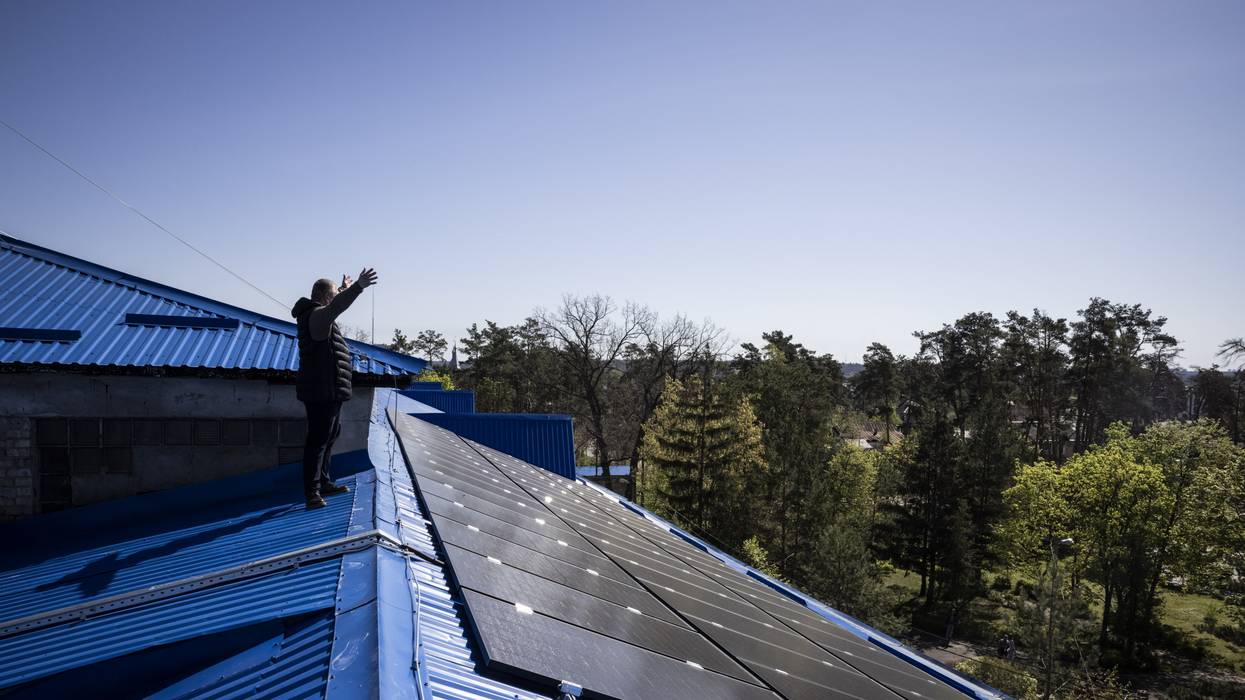
In the face of full-scale conflict, climate-friendly renewable energy projects have emerged as a ray of light, showcasing Ukraine's innovative spirit and determination.
As we mark the two-year anniversary of the devastating war in Ukraine that has taken thousands of innocent lives, the crisis has also led to some positive changes in terms of clean energy independence.
Having to quickly adapt to targeted Russian attacks, which damaged 50% of its dated energy infrastructure, Ukraine has rapidly embarked on a journey toward climate-friendly renewable decentralised energy. This is not only a testament to Ukraine's resilience but also to the rapid clean energy transformation that offers economic benefits and can be a model for all of Europe.
Historically, Ukraine imported much of its fossil fuel resources from Russia, but since Russia's first invasion in 2014, Ukraine has been expanding its efforts in renewable energy. The aim is to reduce its dependence on imported energy, improve energy security, and create high-quality jobs in the booming renewables sector. After two years of fighting for survival, Ukraine's commitment to clean energy has only strengthened. Even Ukrainian President Volodymyr Zelenskyy has noted that green energy guarantees real energy stability, and Ukraine could be one of the key suppliers of clean electricity to Europe. The potential of this industry alone is about $400 billion.
Ukraine's new energy strategy demonstrates the nation's commitment to renewable energy development and aligns with the latest European Union Governance and climate requirements. New legislation, such as the Law on Alternative Energy Sources, is integral to cooperation with international partners such as the European Bank for Reconstruction and Development (EBRD). This close collaboration with Europe has helped Ukraine launch several ambitious new renewable energy projects.
Before the Russian invasion on February 24, 2022, Ukraine already had ambitious renewable energy targets, aiming to increase its share in the overall energy mix to 25% by 2035. According to the National Energy and Utilities Regulatory Commission (NEURC), as of December 31, 2021, the installed capacity of Ukraine's renewable energy sector had already reached impressive levels, including growth in solar installations for private households. But since the 2022 war started, Ukraine has pledged to radically increase the share of renewable energy in its energy mix to increase collaboration with the E.U.
Ukraine synchronised its power grid with continental Europe during wartime, presenting opportunities for green transition and clean energy exchange with the E.U. The European REPowerE.U. plan aims to increase the E.U.'s target for renewables in its electricity balance to 45% by 2030. Ukraine has enacted laws to develop energy storage systems and allowed the sale of renewable electricity directly on the markets. The government is actively working on 'Green' auctions for new solar and wind capacities, showcasing a strategic vision for the energy sector's recovery.
As a result of Russia's ongoing war, a significant part of the energy infrastructure, including renewable energy facilities, was damaged or located in the occupied territories. This reduced the country's total installed capacity of renewable energy sources and provided a further need to rapidly create replacement energy sources for people.
Such situations stress the critical need to accelerate the transition to decentralised clean energy for energy independence and sustainable development. Renewable energy emerges as a key player in economic recovery, job creation, and providing clean, affordable energy for all. During 2022-23, more than 660 megawatts of new renewable energy capacity was commissioned in Ukraine.
Ukraine's strides in transitioning to clean energy and enhancing energy efficiency have already yielded significant economic and social benefits.
Despite massive challenges, Ukraine has demonstrated innovation and resilience in adopting renewable energy solutions. Solar power plants (SPPs) were built for vital needs: schools, hospitals, and water utilities. Collaborative efforts between state-owned companies, private enterprises, and international firms highlight the nation's successes with green energy.
State-owned Ukrnafta, in cooperation with the City Council, lit up Boryslav Hospital by installing a 30 kilowatt solar power plant on the roof. Aurora invested in a rooftop solar power plant in Vinnytsia, and the city of Kyiv plans to install solar power plants to supply energy to medical facilities, reinforcing social responsibility through green energy. Scatec, an international company, is developing a project called "mobile SPP plus batteries". The city of Nizhyn, in cooperation with the German Society for International Cooperation (GIZ), will build an SPP to provide electricity to the water utility.
Wind farms in southern and western Ukraine have been significantly expanded, along with bioenergy projects like biogas plants, contributing to reducing greenhouse gas emissions and solving waste disposal challenges while generating energy.
Amid the relentless challenges posed by Putin's brutal war, Ukraine's unwavering commitment to clean energy stands as a beacon of resilience. In the face of full-scale conflict, climate-friendly renewable energy projects have emerged as a ray of light, showcasing Ukraine's innovative spirit and determination. These initiatives fortify the nation's economic growth and energy independence and chart new horizons for green energy.
Ukraine's strides in transitioning to clean energy and enhancing energy efficiency have already yielded significant economic and social benefits. Investment in renewables and efficiency have spurred job creation, reduced dependency on imported energy, and slashed energy costs. Beyond the economic impact, these efforts have elevated the quality of life, fostered a cleaner environment, mitigated health risks, and contributed significantly to winning the war. We in Ukraine stand strong, and despite our tough situation, we are rising to our challenges and creating a clean energy revolution that Europe would do well to follow.
Latin America as a whole needs to transition from fossil fuels, and the United States could speed that process by supporting a regional Green infrastructure fund.
Gustavo Petro doesn’t just want to transform his own country; he wants to change the world. The new leader of Colombia, who took office last August, is targeting what he calls his nation’s “economy of death.” That means pivoting away from oil, natural gas, coal, and narcotics toward more sustainable economic activities. Given that oil and coal make up half his country’s exports — and Colombia is the world’s leading cocaine producer — that’s not going to be easy.
Still, if Colombia were to undertake such a pivot, it would prove to other countries similarly addicted to such powerful substances — including the United States — that radical change is possible. With the latest news that the international community will almost certainly fall short of its carbon reduction target for 2030, Colombia’s pathbreaking detox effort has become more urgent and significant than ever.
Not surprisingly, Petro and Francia Marquez, his environmentalist vice president, have encountered significant resistance to their plans, even from within their own ranks. Although they immediately declared a moratorium on new oil and gas drilling as part of a bid to phase out the country’s fossil-fuel industry, their own finance and energy ministries, fearing the moratorium’s effect on the economy, refused to rule out such future contracts. The government also proposed a major new tax on oil exports, only to quickly scale it back in the face of widespread industry resistance, including from the state-owned oil company Ecopetrol.
An even bigger challenge comes from the monstrous debt problem the Petro administration faces. Fully one-third of government revenues flow toward servicing Columbia’s huge foreign debt. Similarly shackled to onerous interest payments, much of the Global South has been forced to extract ever more resources simply to pay the never-ending bills from international banks.
Still, whatever problems he faces, Petro represents something new. After all, the Latin American left has long favored more mining and drilling to boost exports, trade, and government revenues. Mexican President Andres Manuel Lopez Obrador (AMLO) has typically pursued the renationalization of the oil industry to (yes!) boost production. That’s also been the strategy of Luiz Inácio Lula da Silva (Lula) in Brazil, while the Peronist government in Argentina has focused on an attempt to significantly increase offshore oil drilling. Progressivism in Latin America, as in many other parts of the world, has long been inextricably linked to raw material extraction designed to distribute more wealth to the poor, while closing the gap with the richer North.
Sadly, however, despite similar growth strategies pursued by left, right, and center governments, the countries of the region have collectively failed to achieve either of those goals. Latin America remains the most economically unequal region on the planet. Instead of beginning to catch up to the North, it has fallen ever further behind. In 1980, per capita gross domestic product (GDP) on that continent was 42% of the G7’s, the world’s most industrialized countries. By 2022 — notwithstanding all the wealth scratched from the ground and the sea, the promises of the advocates of free trade, and the efforts of progressive politicians who won power — the region’s GDP per capita had fallen dramatically to 29% of the G7 countries.
Now, Colombia is trying something different. The electoral victory of Petro and Francia has been hailed — or derided — as part of a new “pink wave” in Latin America that’s brought Gabriel Boric to power in Chile, Xiomara Castro to the top spot in Honduras, and Lula back to the presidency of Brazil.
But given what Petro and Francia are attempting, simply identifying them with that pink wave would be misleading. They are, after all, offering a fundamentally different paradigm of economic development, one that’s more green than pink.
Perhaps you’re familiar with the first rule of holes: if you find yourself in one, stop digging. For decades, Latin American countries have tried to dig themselves out of poverty — drilling for oil, mining for lithium — only to find themselves in an ever-deeper pit.
Colombia is the first country to declare that it wants to stop digging. Will the world, and particularly the United States, now lend a hand in pulling it out of its economic hole?
The Pink Wave That Isn’t
The left might seem to be on the march in Latin America, but a closer look at recent election results reveals a somewhat different picture.
In Brazil, right-wing incumbent Jair Bolsonaro should have been defeated in a landslide in last year’s presidential election. After all, the “Trump of the tropics” had presided over a Covid-19 catastrophe that left Brazil in second place globally (after the United States) in the number of deaths from that pandemic. He had initially run on an anticorruption platform, but his administration was so rife with economic misrule that it may, in the end, leave Bolsonaro behind bars. And far from reassuring Brazilians that he was committed to democracy, he repeatedly praised the country’s long-gone military dictatorship, even reinstating commemorations of the day the armed forces took over in 1964.
Not only did Bolsonaro almost beat Lula — the margin of victory was less than 2% — his Liberal Party expanded its already impressive power base in the country’s bicameral Congress. And Brazil wasn’t the only country in the region where the far right came close to victory. Right-wing parties nearly won last year’s elections in Chile and Colombia, too.
Nor is the rest of the region anything like a pink paradise. In El Salvador, right-wing populist Nayib Bukele has pulled a Putin by expanding his control over all three branches of government. Uruguay, once a leftist enclave, shifted to the right in the 2020 elections, as did Ecuador in 2021. And left populist Pedro Castillo, elected president of Peru in that year, now sits in prison after his ouster following an attempted coup. Meanwhile, according to the latest polls, the most likely politician to replace the current right-wing government in Guatemala, Zury Rios, the daughter of legendary dictator Rios Montt, is even further to the right.
In addition, three supposedly leftist governments — Cuba, Nicaragua, and Venezuela — are actually despotic regimes that have imprisoned dissenters, left and right. Other leftist governments are gesturing in that direction as well, with Bolivia’s Luis Arce recently arresting his chief rival and Mexico’s AMLO defunding an electoral oversight body.
Meanwhile, in Argentina, President Alberto Fernandez, who heads a center-left Peronist coalition with former president Cristina Kirchner, has seen his popularity drop precipitously. His party, in fact, lost big time in midterm elections in 2021, and 67% of Argentines now have unfavorable views of him in the run-up to the next election in October.
The Argentine case is a reminder that what might look like either a “pink wave” or a “counter-pink wave” is just rage against incumbents. Latin Americans have “thrown the bums out” in 15 of the last 15 elections. As elsewhere in the world, a significant portion of the electorate holds incumbents across the board responsible for the failure of economic reforms to deliver prosperity. Right-wing populists have also used the politics of hate — against immigrants, the LGBT community, women, the indigenous, and people of African descent — to speed their ascent, with a big assist from social networks and right-wing media. As in the United States, this White, male, homophobic backlash has begun to merge with the economic resentment felt by all those globalization has left behind.
That’s what makes the Colombian example so precious: it’s the exception, not the rule. The only other leader who comes close is Gabriel Boric in Chile. Having appointed a climatologist to be his environmental minister, Boric is committed to reducing carbon emissions and finding new, sustainable livelihoods for those in the country’s “sacrifice zones.” But he’s no less committed to positioning Chile as a leading exporter of lithium, a key component in rechargeable ion batteries, whose extraction nonetheless poses serious environmental and social risks. In Latin America, after all, commodities like lithium are king. Between 2000 and 2014, its countries enjoyed a commodity boom that lifted exports and spurred growth (though not enough to bridge the economic gap with the richer North).
China, which absorbed only 1% of Latin America’s exports back in 2000, but now takes almost 15% of them, has been encouraging the region to ramp up extraction. Currently, South America’s leading trade partner — and number two for Latin America overall — China wants raw materials like oil, copper, and soybeans to feed both its industries and its people. It has also boosted imports of materials critical for renewable energy products like lithium for batteries and balsa for wind-turbine blades.
The “open veins of Latin America” that Uruguayan writer Eduardo Galeano eloquently chronicled so long ago are increasingly being bled by China.
Green Good Neighbor?
Latin America is not simply a supplier of raw materials for the energy transitions of China and the global North. It’s in the midst of a transition of its own. In fact, it’s currently building four times more solar capacity than the European Union and so creating a basic new energy infrastructure that should boost by 70% the amount of electricity solar power will provide to the region. Add in wind power and renewable capacity is set to increase by a startling 460% by 2030.
Most of this capacity is, however, concentrated in a handful of countries led by Brazil, Colombia, and Chile. To date, those three, along with Mexico and Peru, are responsible for 97% of added solar capacity. The sustainable energy transition, in other words, threatens to divide the region into a rising clean bloc and a still all-too-dirty one.
This is where the United States could come in.
"It's time for the Biden administration to introduce a Green Good Neighbor Policy aimed at making Colombia the rule, not the exception."
In the 1930s, President Franklin Delano Roosevelt’s administration unveiled a new approach to Latin America: the Good Neighbor Policy. Reversing a century of U.S. meddling, that new policy stressed nonintervention and noninterference in the region, while encouraging more trade and tourism. There was, however, nothing altruistic about it. Roosevelt wanted to open Latin America to U.S. exports, gain access to critical resources, and later secure its support in World War II.
Today, a different challenge requires the United States to link arms far more strongly with its neighbors to the south. European countries are pulling together to fight climate change with a European Green Deal. Washington needs to attempt to do the same with Latin America.
After all, China is challenging the U.S. for economic predominance in its own backyard, while expanding trade there at an astounding pace. It sent billions of dollars in aid and loans to the region at the height of the Covid pandemic and directly invested as much capital as it has in the European Union.
To enlist Latin Americans in a common struggle — or even just to remain minimally relevant — Washington needs to offer something different. So far, the Biden administration’s moves have been frustratingly modest. True, it has requested $2.4 billion in aid for the region in 2023, the most in a decade. Still, compare that to the $3.3 billion in annual military assistance the U.S. sends to Israel alone or the $75 billion in assistance dispatched to Ukraine last year.
It’s time for the Biden administration to introduce a Green Good Neighbor Policy aimed at making Colombia the rule, not the exception. Latin America as a whole needs to transition from fossil fuels, and the United States could speed that process by supporting a regional Green infrastructure fund. Call it the Green Road Initiative (in contrast to China’s Belt and Road Initiative).
So far, the administration has made some promises. Secretary of State Antony Blinken pledged last year that the United States would help the region achieve “growth with equity.” According to a recent report, a sustainable energy transition in Latin America could create over 10% more jobs by 2030, turning Blinken’s words into reality. The administration has also promised that future trade agreements won’t have provisions — found in most current ones — that allow corporations to sue governments over regulations that affect their bottom lines. An important region-wide bank, meanwhile, is starting to support more Green infrastructure projects.
But all of these are, at best, half-steps. If the Biden administration truly wanted to make a difference, it would create a Green Bank to help fund that Latin American energy transition, while restructuring — or better yet, canceling — the debts that have so crippled efforts like Colombia’s to finance a serious economic transformation. This regional plan could even include illiberal outliers like Cuba, El Salvador, Nicaragua, and Venezuela. As with China, green cooperation doesn’t require agreement on a checklist of issues any more than arms control deals with the Soviet Union required a consensus on human rights during the Cold War.
This is not altruism. As in Roosevelt’s era, a more prosperous and environmentally sustainable Latin America would be less likely to send waves of immigrants to the United States, while creating more markets for U.S. goods. Oh, and it would also ensure a further reduction of carbon emissions globally so that maybe, just maybe, Florida won’t disappear into the ocean.
Colombia is a small, scrappy country that faces long odds like the little engine that thinks it can, thinks it can, thinks it can…
But to ensure that it indeed can, that such a monumental transition will ever take place, help is needed and soon. That’s especially true given the second law of holes: even when you stop digging, you’re still at the bottom.
A strong push from a green good neighbor could help Columbia — and the rest of us — begin to climb out and scale new heights.