SUBSCRIBE TO OUR FREE NEWSLETTER
Daily news & progressive opinion—funded by the people, not the corporations—delivered straight to your inbox.
5
#000000
#FFFFFF
To donate by check, phone, or other method, see our More Ways to Give page.
Daily news & progressive opinion—funded by the people, not the corporations—delivered straight to your inbox.
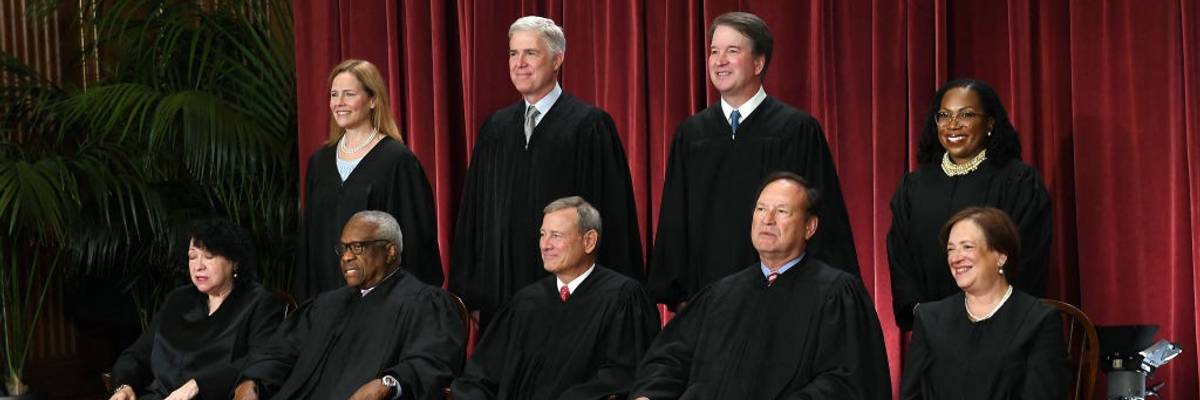
"We need a strong, independent, principled Supreme Court," writes Waldman, but that's not what we have.
The nine justices of the nation's highest court are powerful government officials with a duty to stand up against abuse and for the rule of law. They claim they are independent. Will they act?
FBI director nominee-in-waiting Kash Patel writes children’s books in which his character, a wizard, vows to protect “King Donald.” (Patel also peddled pills to reverse the Covid-19 vaccine and produced a song recorded by imprisoned January 6 insurrectionists called “Justice for All.”) Ominous credentials to head the nation’s most powerful law enforcement agency, one with a history of abuse.
We’ve been vocal about what’s gone wrong at the Supreme Court. It has been captured by a faction of a faction. But if we’ve ever needed an independent judiciary, we need it now. If guardrails crumble and the powerful quail before Donald Trump, the high court may be one of the last — indeed, at times, the only — protectors of the Constitution.
All of which makes the latest revelations about the Court so dismaying — the inside story of how the justices adopted an ethics code that is more loophole than law.
In the past two years, ProPublica and other news outlets have revealed startling misconduct. Justice Clarence Thomas for years had his lifestyle secretly subsidized by billionaire Harlan Crow. The billionaire provided lavish vacations, paid for the education of Thomas’s surrogate son, and even bought and renovated the justice’s mother’s house (with her living in it). If this happened with state legislators in Albany or Sacramento, we’d call it corruption. Justice Samuel Alito, too, took luxury travel from yet another billionaire, also without disclosing it. Leonard Leo of the Federalist Society played matchmaker between the judges and the billionaires. ProPublica won the Pulitzer Prize for its exposés.
Public outcry was loud enough that the Court last year felt compelled to issue a first-ever code of conduct. The justices explained that this was only to clear up a “misunderstanding” by citizens. Instead of being the only judges with no ethics code, they now had the weakest.
Now The New York Times has revealed the fevered deliberations that produced this result. It reads like the doings of sneaky pols on House of Cards. Justices sent each other memos in sealed envelopes because they were so fearful of leaks. Thomas and Alito “wrote off the Court’s critics as politically motivated and unappeasable,” write Jodi Kantor and Abbie VanSickle. The liberal justices pushed for a strong code with an enforcement mechanism, such as a panel of retired judges, to no avail.
Justice Neil Gorsuch, the newspaper reported, was most vocal in opposition and judicial self-regard. “The justices’ strength was their independence, he said, and he vowed to have no part in diminishing it,” the article reports. Gorsuch wrote a long memo of complaint as the rules were being drafted.
The result was a tepid code that did little to boost public confidence. It violates a core principle: Nobody is so wise that they should be the judge in their own case. The justices decide on their own when they must “recuse,” or refrain from hearing a case. Nor must they explain why they stepped back, though some justices have begun to do that. Most important, there is no mechanism for enforcement.
So the Court has served up mush. But the story need not end there. Congress has set rules for the federal courts throughout history, as envisioned by the Constitution. Samuel Alito has waxed indignant about this. “I know this is a controversial view, but I’m willing to say it. No provision in the Constitution gives [Congress] the authority to regulate the Supreme Court — period,” he told The Wall Street Journal. Justice Elena Kagan felt compelled to respond publicly. “It just can’t be that the Court is the only institution that somehow is not subject to checks and balances from anybody else,” she said. “We’re not imperial.”
This again shows why the Court needs fundamental reform. An 18-year term limit for justices would make the Court much more accountable. It accords with a fundamental American precept: Nobody should hold too much power for too long. It’s also widely popular. The most recent Fox News poll on the issue showed that 78 percent of respondents backed term limits — in other words, strong majorities of Republicans and independents as well as Democrats.
In recent years, congressional Republicans have been hostile to Supreme Court reform. With Congress in Republican hands for the next two years at least, there’s an opportunity to deepen support among conservatives and liberals, legal scholars, bar leaders, and others. It’s an idea whose time has come.
We need a strong, independent, principled Supreme Court. The ruling last summer granting vast criminal immunity empowers the president to law-break with impunity. Major rulings are due on vital issues — including the oral arguments today on state laws banning gender-affirming medical care for transgender minors. Civil liberties violations likely to accompany mass deportation of noncitizens will surely reach the justices. This term will test whether this is a principled Court or, as seems increasingly likely, a MAGA Court.
No, Kash Patel is not a wizard. The justices wear robes, but they aren’t either. They are powerful government officials with a duty to stand up against abuse and for the rule of law. They claim they are independent. Will they act? The backstage saga of their ethics code doesn’t augur well.
Dear Common Dreams reader, It’s been nearly 30 years since I co-founded Common Dreams with my late wife, Lina Newhouser. We had the radical notion that journalism should serve the public good, not corporate profits. It was clear to us from the outset what it would take to build such a project. No paid advertisements. No corporate sponsors. No millionaire publisher telling us what to think or do. Many people said we wouldn't last a year, but we proved those doubters wrong. Together with a tremendous team of journalists and dedicated staff, we built an independent media outlet free from the constraints of profits and corporate control. Our mission has always been simple: To inform. To inspire. To ignite change for the common good. Building Common Dreams was not easy. Our survival was never guaranteed. When you take on the most powerful forces—Wall Street greed, fossil fuel industry destruction, Big Tech lobbyists, and uber-rich oligarchs who have spent billions upon billions rigging the economy and democracy in their favor—the only bulwark you have is supporters who believe in your work. But here’s the urgent message from me today. It's never been this bad out there. And it's never been this hard to keep us going. At the very moment Common Dreams is most needed, the threats we face are intensifying. We need your support now more than ever. We don't accept corporate advertising and never will. We don't have a paywall because we don't think people should be blocked from critical news based on their ability to pay. Everything we do is funded by the donations of readers like you. When everyone does the little they can afford, we are strong. But if that support retreats or dries up, so do we. Will you donate now to make sure Common Dreams not only survives but thrives? —Craig Brown, Co-founder |
FBI director nominee-in-waiting Kash Patel writes children’s books in which his character, a wizard, vows to protect “King Donald.” (Patel also peddled pills to reverse the Covid-19 vaccine and produced a song recorded by imprisoned January 6 insurrectionists called “Justice for All.”) Ominous credentials to head the nation’s most powerful law enforcement agency, one with a history of abuse.
We’ve been vocal about what’s gone wrong at the Supreme Court. It has been captured by a faction of a faction. But if we’ve ever needed an independent judiciary, we need it now. If guardrails crumble and the powerful quail before Donald Trump, the high court may be one of the last — indeed, at times, the only — protectors of the Constitution.
All of which makes the latest revelations about the Court so dismaying — the inside story of how the justices adopted an ethics code that is more loophole than law.
In the past two years, ProPublica and other news outlets have revealed startling misconduct. Justice Clarence Thomas for years had his lifestyle secretly subsidized by billionaire Harlan Crow. The billionaire provided lavish vacations, paid for the education of Thomas’s surrogate son, and even bought and renovated the justice’s mother’s house (with her living in it). If this happened with state legislators in Albany or Sacramento, we’d call it corruption. Justice Samuel Alito, too, took luxury travel from yet another billionaire, also without disclosing it. Leonard Leo of the Federalist Society played matchmaker between the judges and the billionaires. ProPublica won the Pulitzer Prize for its exposés.
Public outcry was loud enough that the Court last year felt compelled to issue a first-ever code of conduct. The justices explained that this was only to clear up a “misunderstanding” by citizens. Instead of being the only judges with no ethics code, they now had the weakest.
Now The New York Times has revealed the fevered deliberations that produced this result. It reads like the doings of sneaky pols on House of Cards. Justices sent each other memos in sealed envelopes because they were so fearful of leaks. Thomas and Alito “wrote off the Court’s critics as politically motivated and unappeasable,” write Jodi Kantor and Abbie VanSickle. The liberal justices pushed for a strong code with an enforcement mechanism, such as a panel of retired judges, to no avail.
Justice Neil Gorsuch, the newspaper reported, was most vocal in opposition and judicial self-regard. “The justices’ strength was their independence, he said, and he vowed to have no part in diminishing it,” the article reports. Gorsuch wrote a long memo of complaint as the rules were being drafted.
The result was a tepid code that did little to boost public confidence. It violates a core principle: Nobody is so wise that they should be the judge in their own case. The justices decide on their own when they must “recuse,” or refrain from hearing a case. Nor must they explain why they stepped back, though some justices have begun to do that. Most important, there is no mechanism for enforcement.
So the Court has served up mush. But the story need not end there. Congress has set rules for the federal courts throughout history, as envisioned by the Constitution. Samuel Alito has waxed indignant about this. “I know this is a controversial view, but I’m willing to say it. No provision in the Constitution gives [Congress] the authority to regulate the Supreme Court — period,” he told The Wall Street Journal. Justice Elena Kagan felt compelled to respond publicly. “It just can’t be that the Court is the only institution that somehow is not subject to checks and balances from anybody else,” she said. “We’re not imperial.”
This again shows why the Court needs fundamental reform. An 18-year term limit for justices would make the Court much more accountable. It accords with a fundamental American precept: Nobody should hold too much power for too long. It’s also widely popular. The most recent Fox News poll on the issue showed that 78 percent of respondents backed term limits — in other words, strong majorities of Republicans and independents as well as Democrats.
In recent years, congressional Republicans have been hostile to Supreme Court reform. With Congress in Republican hands for the next two years at least, there’s an opportunity to deepen support among conservatives and liberals, legal scholars, bar leaders, and others. It’s an idea whose time has come.
We need a strong, independent, principled Supreme Court. The ruling last summer granting vast criminal immunity empowers the president to law-break with impunity. Major rulings are due on vital issues — including the oral arguments today on state laws banning gender-affirming medical care for transgender minors. Civil liberties violations likely to accompany mass deportation of noncitizens will surely reach the justices. This term will test whether this is a principled Court or, as seems increasingly likely, a MAGA Court.
No, Kash Patel is not a wizard. The justices wear robes, but they aren’t either. They are powerful government officials with a duty to stand up against abuse and for the rule of law. They claim they are independent. Will they act? The backstage saga of their ethics code doesn’t augur well.
FBI director nominee-in-waiting Kash Patel writes children’s books in which his character, a wizard, vows to protect “King Donald.” (Patel also peddled pills to reverse the Covid-19 vaccine and produced a song recorded by imprisoned January 6 insurrectionists called “Justice for All.”) Ominous credentials to head the nation’s most powerful law enforcement agency, one with a history of abuse.
We’ve been vocal about what’s gone wrong at the Supreme Court. It has been captured by a faction of a faction. But if we’ve ever needed an independent judiciary, we need it now. If guardrails crumble and the powerful quail before Donald Trump, the high court may be one of the last — indeed, at times, the only — protectors of the Constitution.
All of which makes the latest revelations about the Court so dismaying — the inside story of how the justices adopted an ethics code that is more loophole than law.
In the past two years, ProPublica and other news outlets have revealed startling misconduct. Justice Clarence Thomas for years had his lifestyle secretly subsidized by billionaire Harlan Crow. The billionaire provided lavish vacations, paid for the education of Thomas’s surrogate son, and even bought and renovated the justice’s mother’s house (with her living in it). If this happened with state legislators in Albany or Sacramento, we’d call it corruption. Justice Samuel Alito, too, took luxury travel from yet another billionaire, also without disclosing it. Leonard Leo of the Federalist Society played matchmaker between the judges and the billionaires. ProPublica won the Pulitzer Prize for its exposés.
Public outcry was loud enough that the Court last year felt compelled to issue a first-ever code of conduct. The justices explained that this was only to clear up a “misunderstanding” by citizens. Instead of being the only judges with no ethics code, they now had the weakest.
Now The New York Times has revealed the fevered deliberations that produced this result. It reads like the doings of sneaky pols on House of Cards. Justices sent each other memos in sealed envelopes because they were so fearful of leaks. Thomas and Alito “wrote off the Court’s critics as politically motivated and unappeasable,” write Jodi Kantor and Abbie VanSickle. The liberal justices pushed for a strong code with an enforcement mechanism, such as a panel of retired judges, to no avail.
Justice Neil Gorsuch, the newspaper reported, was most vocal in opposition and judicial self-regard. “The justices’ strength was their independence, he said, and he vowed to have no part in diminishing it,” the article reports. Gorsuch wrote a long memo of complaint as the rules were being drafted.
The result was a tepid code that did little to boost public confidence. It violates a core principle: Nobody is so wise that they should be the judge in their own case. The justices decide on their own when they must “recuse,” or refrain from hearing a case. Nor must they explain why they stepped back, though some justices have begun to do that. Most important, there is no mechanism for enforcement.
So the Court has served up mush. But the story need not end there. Congress has set rules for the federal courts throughout history, as envisioned by the Constitution. Samuel Alito has waxed indignant about this. “I know this is a controversial view, but I’m willing to say it. No provision in the Constitution gives [Congress] the authority to regulate the Supreme Court — period,” he told The Wall Street Journal. Justice Elena Kagan felt compelled to respond publicly. “It just can’t be that the Court is the only institution that somehow is not subject to checks and balances from anybody else,” she said. “We’re not imperial.”
This again shows why the Court needs fundamental reform. An 18-year term limit for justices would make the Court much more accountable. It accords with a fundamental American precept: Nobody should hold too much power for too long. It’s also widely popular. The most recent Fox News poll on the issue showed that 78 percent of respondents backed term limits — in other words, strong majorities of Republicans and independents as well as Democrats.
In recent years, congressional Republicans have been hostile to Supreme Court reform. With Congress in Republican hands for the next two years at least, there’s an opportunity to deepen support among conservatives and liberals, legal scholars, bar leaders, and others. It’s an idea whose time has come.
We need a strong, independent, principled Supreme Court. The ruling last summer granting vast criminal immunity empowers the president to law-break with impunity. Major rulings are due on vital issues — including the oral arguments today on state laws banning gender-affirming medical care for transgender minors. Civil liberties violations likely to accompany mass deportation of noncitizens will surely reach the justices. This term will test whether this is a principled Court or, as seems increasingly likely, a MAGA Court.
No, Kash Patel is not a wizard. The justices wear robes, but they aren’t either. They are powerful government officials with a duty to stand up against abuse and for the rule of law. They claim they are independent. Will they act? The backstage saga of their ethics code doesn’t augur well.