SUBSCRIBE TO OUR FREE NEWSLETTER
Daily news & progressive opinion—funded by the people, not the corporations—delivered straight to your inbox.
5
#000000
#FFFFFF
To donate by check, phone, or other method, see our More Ways to Give page.
Daily news & progressive opinion—funded by the people, not the corporations—delivered straight to your inbox.
"Americans deserve a Supreme Court that upholds our fundamental freedoms—not one that consistently sides with billionaire donors and diminishes the power of everyday citizens," said one democracy defender.
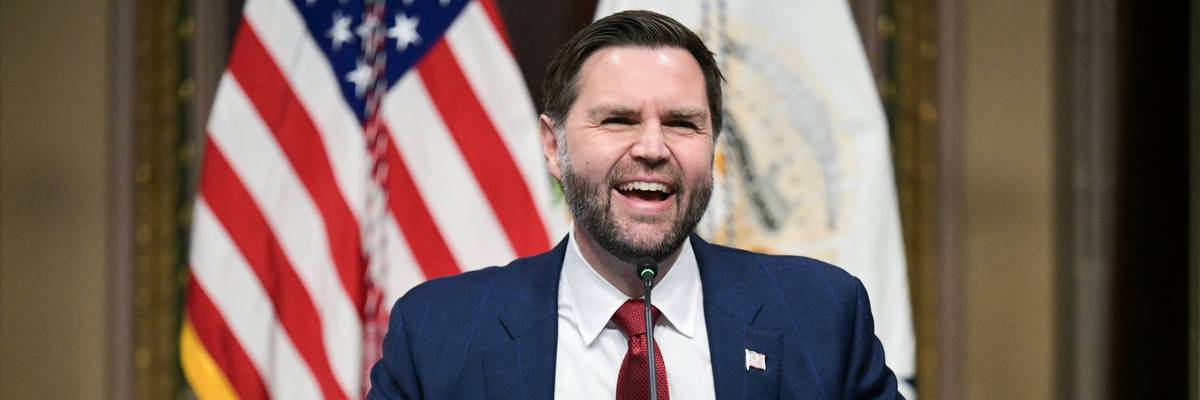
Just days after Vice President JD Vance suggested that if Watergate happened today, it would barely make the news, let alone end a presidency, the US Supreme Court's right-wing supermajority on Tuesday embraced the Republican's argument against a 1974 campaign finance rule that Congress passed in response to the seismic scandal.
Specifically, the court struck down restrictions on political parties coordinating campaign spending with candidates. The ruling is the result of a 2022 lawsuit filed by Vance, then a Republican Senate candidate in Ohio; Steve Chabot, then a GOP congressman from the same state; and the National Republican Senatorial Committee (NRSC) and its House counterpart.
The high court had previously upheld the rule in 2021, but as with the 2010 ruling in Citizens United v. Federal Election Commission, which opened the floodgates to unlimited campaign spending by corporations and ultrarich individuals via super political action committees (PACs), the majority cited the First Amendment to the US Constitution in its 6-3 decision in NRSC v. FEC. The three liberals dissented.
Michael Beckel, director of money in politics reform at the group Issue One, stressed that Tuesday's decision opening up "a new avenue for wealthy donors and special interests to buy favor with political candidates" is part of "a string of disastrous campaign finance rulings from the Roberts Court that began with Citizens United and have left our political system awash in large contributions that most Americans could never dream of giving."
Brett Edkins, managing director of policy and political affairs for the progressive advocacy group Stand Up America, similarly declared that "the right-wing supermajority on the Supreme Court thinks Citizens United didn't go far enough. Today they gave their blessing for billionaires to buy even more influence over the politicians who represent us."
"Americans deserve a Supreme Court that upholds our fundamental freedoms—not one that consistently sides with billionaire donors and diminishes the power of everyday citizens in our democracy," Edkins asserted, calling on Congress to add more members to the court once President Donald Trump finishes his second term in 2029.
"Congress should rein in this rogue court once Trump leaves office by enacting major reforms, including term limits, an enforceable code of ethics, and expanding the court with justices who will defend our democracy and our fundamental freedoms," he said.
In the meantime, Americans will have to contend with the new ruling in the November midterms as well as the next presidential cycle in 2028.
Along with calling out a high court that yet again "twisted the First Amendment to help billionaires and corporations buy our elections and bend our government to their will," Public Citizen democracy advocate Jon Golinger argued Tuesday that "we have to combat this outcome by increasing transparency so voters know who’s paying for election ads, empowering small donors and public matching funds, and passing the Democracy For All Amendment to empower Congress, the states, and the voters to put in place reasonable protections to guard against campaign finance corruption."
The ruling came as Public Citizen released a report documenting the historic $517 million in corporate spending on the 2026 cycle so far—money that has largely gone to "industry-prioritizing super PACs" and the Trump-aligned MAGA Inc.
Democratic Party leaders, who hope to reclaim majorities in both chambers of Congress this November, also ripped the new ruling.
In a joint statement, Democratic National Committee Chair Ken Martin, as well as Sen. Kirsten Gillibrand (D-NY) and Rep. Suzan DelBene (D-Wash.), who lead the party's campaign arms for each chamber, called it "a win for billionaire donors and special interests who want more influence over the GOP agenda and an invitation for corruption."
"Republicans have failed the American people with a record that has ripped away healthcare and raised costs on families, and they know voters will hold them accountable in November—which is exactly why they are rewriting the rules in an effort to drown out the will of the voters by flooding elections with more money from their billionaire backers," they said.
"Democrats are fighting back for the American people," the trio added, "and in November, voters will reject Republicans' toxic agenda and efforts to rig the system and weaken our democracy by electing a Democratic House and Senate majority."
Dear Common Dreams reader, It’s been nearly 30 years since I co-founded Common Dreams with my late wife, Lina Newhouser. We had the radical notion that journalism should serve the public good, not corporate profits. It was clear to us from the outset what it would take to build such a project. No paid advertisements. No corporate sponsors. No millionaire publisher telling us what to think or do. Many people said we wouldn't last a year, but we proved those doubters wrong. Together with a tremendous team of journalists and dedicated staff, we built an independent media outlet free from the constraints of profits and corporate control. Our mission has always been simple: To inform. To inspire. To ignite change for the common good. Building Common Dreams was not easy. Our survival was never guaranteed. When you take on the most powerful forces—Wall Street greed, fossil fuel industry destruction, Big Tech lobbyists, and uber-rich oligarchs who have spent billions upon billions rigging the economy and democracy in their favor—the only bulwark you have is supporters who believe in your work. But here’s the urgent message from me today. It's never been this bad out there. And it's never been this hard to keep us going. At the very moment Common Dreams is most needed, the threats we face are intensifying. We need your support now more than ever. We don't accept corporate advertising and never will. We don't have a paywall because we don't think people should be blocked from critical news based on their ability to pay. Everything we do is funded by the donations of readers like you. When everyone does the little they can afford, we are strong. But if that support retreats or dries up, so do we. Will you donate now to make sure Common Dreams not only survives but thrives? —Craig Brown, Co-founder |
Just days after Vice President JD Vance suggested that if Watergate happened today, it would barely make the news, let alone end a presidency, the US Supreme Court's right-wing supermajority on Tuesday embraced the Republican's argument against a 1974 campaign finance rule that Congress passed in response to the seismic scandal.
Specifically, the court struck down restrictions on political parties coordinating campaign spending with candidates. The ruling is the result of a 2022 lawsuit filed by Vance, then a Republican Senate candidate in Ohio; Steve Chabot, then a GOP congressman from the same state; and the National Republican Senatorial Committee (NRSC) and its House counterpart.
The high court had previously upheld the rule in 2021, but as with the 2010 ruling in Citizens United v. Federal Election Commission, which opened the floodgates to unlimited campaign spending by corporations and ultrarich individuals via super political action committees (PACs), the majority cited the First Amendment to the US Constitution in its 6-3 decision in NRSC v. FEC. The three liberals dissented.
Michael Beckel, director of money in politics reform at the group Issue One, stressed that Tuesday's decision opening up "a new avenue for wealthy donors and special interests to buy favor with political candidates" is part of "a string of disastrous campaign finance rulings from the Roberts Court that began with Citizens United and have left our political system awash in large contributions that most Americans could never dream of giving."
Brett Edkins, managing director of policy and political affairs for the progressive advocacy group Stand Up America, similarly declared that "the right-wing supermajority on the Supreme Court thinks Citizens United didn't go far enough. Today they gave their blessing for billionaires to buy even more influence over the politicians who represent us."
"Americans deserve a Supreme Court that upholds our fundamental freedoms—not one that consistently sides with billionaire donors and diminishes the power of everyday citizens in our democracy," Edkins asserted, calling on Congress to add more members to the court once President Donald Trump finishes his second term in 2029.
"Congress should rein in this rogue court once Trump leaves office by enacting major reforms, including term limits, an enforceable code of ethics, and expanding the court with justices who will defend our democracy and our fundamental freedoms," he said.
In the meantime, Americans will have to contend with the new ruling in the November midterms as well as the next presidential cycle in 2028.
Along with calling out a high court that yet again "twisted the First Amendment to help billionaires and corporations buy our elections and bend our government to their will," Public Citizen democracy advocate Jon Golinger argued Tuesday that "we have to combat this outcome by increasing transparency so voters know who’s paying for election ads, empowering small donors and public matching funds, and passing the Democracy For All Amendment to empower Congress, the states, and the voters to put in place reasonable protections to guard against campaign finance corruption."
The ruling came as Public Citizen released a report documenting the historic $517 million in corporate spending on the 2026 cycle so far—money that has largely gone to "industry-prioritizing super PACs" and the Trump-aligned MAGA Inc.
Democratic Party leaders, who hope to reclaim majorities in both chambers of Congress this November, also ripped the new ruling.
In a joint statement, Democratic National Committee Chair Ken Martin, as well as Sen. Kirsten Gillibrand (D-NY) and Rep. Suzan DelBene (D-Wash.), who lead the party's campaign arms for each chamber, called it "a win for billionaire donors and special interests who want more influence over the GOP agenda and an invitation for corruption."
"Republicans have failed the American people with a record that has ripped away healthcare and raised costs on families, and they know voters will hold them accountable in November—which is exactly why they are rewriting the rules in an effort to drown out the will of the voters by flooding elections with more money from their billionaire backers," they said.
"Democrats are fighting back for the American people," the trio added, "and in November, voters will reject Republicans' toxic agenda and efforts to rig the system and weaken our democracy by electing a Democratic House and Senate majority."
Just days after Vice President JD Vance suggested that if Watergate happened today, it would barely make the news, let alone end a presidency, the US Supreme Court's right-wing supermajority on Tuesday embraced the Republican's argument against a 1974 campaign finance rule that Congress passed in response to the seismic scandal.
Specifically, the court struck down restrictions on political parties coordinating campaign spending with candidates. The ruling is the result of a 2022 lawsuit filed by Vance, then a Republican Senate candidate in Ohio; Steve Chabot, then a GOP congressman from the same state; and the National Republican Senatorial Committee (NRSC) and its House counterpart.
The high court had previously upheld the rule in 2021, but as with the 2010 ruling in Citizens United v. Federal Election Commission, which opened the floodgates to unlimited campaign spending by corporations and ultrarich individuals via super political action committees (PACs), the majority cited the First Amendment to the US Constitution in its 6-3 decision in NRSC v. FEC. The three liberals dissented.
Michael Beckel, director of money in politics reform at the group Issue One, stressed that Tuesday's decision opening up "a new avenue for wealthy donors and special interests to buy favor with political candidates" is part of "a string of disastrous campaign finance rulings from the Roberts Court that began with Citizens United and have left our political system awash in large contributions that most Americans could never dream of giving."
Brett Edkins, managing director of policy and political affairs for the progressive advocacy group Stand Up America, similarly declared that "the right-wing supermajority on the Supreme Court thinks Citizens United didn't go far enough. Today they gave their blessing for billionaires to buy even more influence over the politicians who represent us."
"Americans deserve a Supreme Court that upholds our fundamental freedoms—not one that consistently sides with billionaire donors and diminishes the power of everyday citizens in our democracy," Edkins asserted, calling on Congress to add more members to the court once President Donald Trump finishes his second term in 2029.
"Congress should rein in this rogue court once Trump leaves office by enacting major reforms, including term limits, an enforceable code of ethics, and expanding the court with justices who will defend our democracy and our fundamental freedoms," he said.
In the meantime, Americans will have to contend with the new ruling in the November midterms as well as the next presidential cycle in 2028.
Along with calling out a high court that yet again "twisted the First Amendment to help billionaires and corporations buy our elections and bend our government to their will," Public Citizen democracy advocate Jon Golinger argued Tuesday that "we have to combat this outcome by increasing transparency so voters know who’s paying for election ads, empowering small donors and public matching funds, and passing the Democracy For All Amendment to empower Congress, the states, and the voters to put in place reasonable protections to guard against campaign finance corruption."
The ruling came as Public Citizen released a report documenting the historic $517 million in corporate spending on the 2026 cycle so far—money that has largely gone to "industry-prioritizing super PACs" and the Trump-aligned MAGA Inc.
Democratic Party leaders, who hope to reclaim majorities in both chambers of Congress this November, also ripped the new ruling.
In a joint statement, Democratic National Committee Chair Ken Martin, as well as Sen. Kirsten Gillibrand (D-NY) and Rep. Suzan DelBene (D-Wash.), who lead the party's campaign arms for each chamber, called it "a win for billionaire donors and special interests who want more influence over the GOP agenda and an invitation for corruption."
"Republicans have failed the American people with a record that has ripped away healthcare and raised costs on families, and they know voters will hold them accountable in November—which is exactly why they are rewriting the rules in an effort to drown out the will of the voters by flooding elections with more money from their billionaire backers," they said.
"Democrats are fighting back for the American people," the trio added, "and in November, voters will reject Republicans' toxic agenda and efforts to rig the system and weaken our democracy by electing a Democratic House and Senate majority."