5
#000000
#FFFFFF
To donate by check, phone, or other method, see our More Ways to Give page.
Daily news & progressive opinion—funded by the people, not the corporations—delivered straight to your inbox.

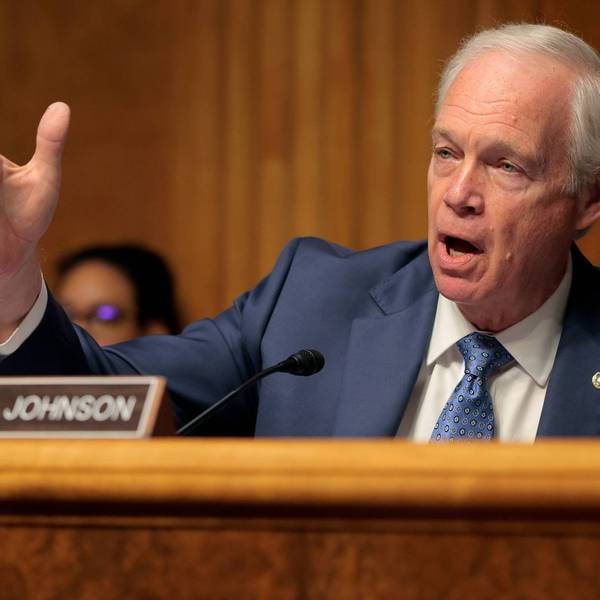
U.S. Sen. Ron Johnson (R-WI) speaks to reporters as he departs a meeting with Senate Republicans at the U.S Capitol Building on November 10, 2026 in Washington, DC. Senate Republicans ended their morning meeting and will return later in the day to continue discussing leadership roles within the party ahead of the new congress.
Does Johnson speak for his fellow Republicans? If he doesn’t, they need to make that clear—and not just by saying they don’t want to shut down Social Security.
Republicans tend to be quiet about their plans for Social Security’s future. But Senator Ron Johnson (R-Wis.) just said the quiet part out loud. In a FOX Business interview this week, Johnson called Social Security “grotesque” and a “Ponzi scheme.” He claimed “you can't fix it, you just shut it down and hope that you can recover some of your money."
Johnson isn’t just any Republican Senator. He is the chair of the Senate Budget Committee, a member of the Senate Committee on Finance, which has jurisdiction over Social Security, and a member of the Senate Select Committee on Aging.
Just hours after the FOX interview, Johnson chaired a hearing on Social Security’s future—where he doubled down on slandering the nation’s most popular and effective program as a “Ponzi scheme.”
Ron Johnson has very little company: Only two percent of Americans support any benefit cuts, let alone shutting down Social Security.
Republican President Dwight Eisenhower would not recognize his party. A true supporter of Social Security, he would have been horrified at Johnson’s rhetoric. Indeed, in 1954, Eisenhower wrote to his brother:
“There is a tiny splinter group… that believes you can [abolish Social Security]. Among them are H. L. Hunt (you possibly know his background), a few other Texas oil millionaires, and an occasional politician or business man from other areas. Their number is negligible and they are stupid.”
Unfortunately, that “tiny splinter group” whose “number is negligible” and who are “stupid” now control the Republican Party. They generally are too smart to show their disdain for a program that is so essential to the economic security of their constituents. But Johnson can’t keep his hostility from showing.
Does Johnson speak for his fellow Republicans? If he doesn’t, they need to make that clear—and not just by saying they don’t want to shut down Social Security. Republicans need to explain what their plan is to prevent an automatic cut of over 20 percent when Social Security faces a shortfall around 2032.
Democrats have a solution, which is overwhelmingly supported by voters of all political views and all demographics: Make the wealthiest Americans, who currently stop paying into Social Security after their first $184,500 in income, pay in on all their income—including unearned investment income.
This would allow us to not just avert Social Security cuts, but expand its modest benefits for everyone. The Social Security Expansion Act, sponsored by Senators Bernie Sanders (I-Vt.) and Elizabeth Warren (D-Mass.), would increase benefits across the board by $200 a month, with additional targeted increases for vulnerable groups. So far, it does not have a single Republican co-sponsor.
In recent months, a few Republicans like Senator Bernie Moreno (R-Ohio) have started expressing openness to modifying the cap on contributions. That is a first step. But to truly show they are on the side of the American people, and not Eisenhower’s “tiny splinter group,” they need to go further and make a promise: Not one penny of cuts for current or future Social Security beneficiaries.
That is the will of the American people. Regardless of age, race, political affiliation, gender, or education level, Americans want to expand benefits—not cut them. Ron Johnson has very little company: Only two percent of Americans support any benefit cuts, let alone shutting down Social Security.
It is no surprise that Johnson faced a day of massive backlash, both online and from Democrats at the Budget Committee hearing. My colleague at Social Security Works, Alex Lawson, confronted Johnson outside the hearing. Johnson doubled down, again calling Social Security’s earned benefits a "Ponzi scheme.”
By the end of the day, Johnson changed tactics. He told Americans not to believe their lying ears, insisting he had never said he wanted to shut down Social Security. And he introduced the so-called “Stop Scaring Seniors Act,” which would authorize the government to use general government revenue to fund Social Security.
Johnson is the one scaring seniors. His bill is a gimmick designed to distract from what Johnson told us all he really believes: That Social Security shouldn't exist.
One of Social Security's greatest political protections is that it doesn't add even a penny to the deficit. Johnson's bill would undercut that protection and make Social Security easier to cut in the future. Given Johnson's longstanding hostility to Social Security, it is likely that paving the ground for future cuts is half the point.
Now that Democrats are in control, they should bring the Social Security Expansion Act to a vote next year.
Tellingly, back in 2022, Johnson proclaimed that Social Security spending should be moved to the discretionary budget—meaning it would be subjected to annual government funding fights. This bill serves the same purpose.
The other half of the story is that Johnson, who is worth a reported $40 million, is desperate for a solution that protects himself and his ultra-wealthy friends from paying their fair share.
Here’s the bottom line: In no more than six years, Congress must bring more money into Social Security, in order to avoid benefit cuts. The Democrats have proposed that the wealthiest should contribute their fair share into Social Security.
Now that Democrats are in control, they should bring the Social Security Expansion Act to a vote next year. Republicans can vote for it or offer an alternative.
If they instead kill it with the filibuster, that will make Social Security a front-and-center issue for the 2028 election. Because even MAGA Republicans oppose cutting Social Security, the election will likely be another Blue Tsunami. It will show that Eisenhower was right: those who hate Social Security are stupid and their number is indeed negligible.
This country and this world are at a monumental crossroads. US voters have an opportunity to beat back the forces of fascism and confront the billionaires who are rigging the economy, our media system, and our democracy, making it increasingly impossible for ordinary people to get by. We’re not just talking about the election. We’re talking about what must be done once these fascist elements are vanquished from power. We need a bolder set of solutions than what either major party has so far been willing to offer and a working-class movement ready to fight like hell for it. Trump didn't emerge from nowhere. The conditions that fueled MAGA authoritarianism were created by decades of radical neoliberal economic policies and a corrupt political system dominated by corporate interests. They slashed taxes on the super-rich, promising that the benefits would trickle down. They said giveaways to the corporate titans would make life more affordable for the rest of us. It was all bullshit. And when a bitter, betrayed populace searches for someone to blame, right-wing demagogues have little trouble finding scapegoats. People know when they're being lied to, but you won't hear any of this from the corporate media. Only independent journalism—powered and funded by people who believe in building a better world—can deliver truly trustworthy daily news. If you share our vision, please contribute whatever you can to sustain our work. |
Nancy Altman is president of Social Security Works and chair of the Strengthen Social Security Coalition. She is co-author of two books and author of three, including her most recent, The Road to Medicare for All: A Call to Action.
Republicans tend to be quiet about their plans for Social Security’s future. But Senator Ron Johnson (R-Wis.) just said the quiet part out loud. In a FOX Business interview this week, Johnson called Social Security “grotesque” and a “Ponzi scheme.” He claimed “you can't fix it, you just shut it down and hope that you can recover some of your money."
Johnson isn’t just any Republican Senator. He is the chair of the Senate Budget Committee, a member of the Senate Committee on Finance, which has jurisdiction over Social Security, and a member of the Senate Select Committee on Aging.
Just hours after the FOX interview, Johnson chaired a hearing on Social Security’s future—where he doubled down on slandering the nation’s most popular and effective program as a “Ponzi scheme.”
Ron Johnson has very little company: Only two percent of Americans support any benefit cuts, let alone shutting down Social Security.
Republican President Dwight Eisenhower would not recognize his party. A true supporter of Social Security, he would have been horrified at Johnson’s rhetoric. Indeed, in 1954, Eisenhower wrote to his brother:
“There is a tiny splinter group… that believes you can [abolish Social Security]. Among them are H. L. Hunt (you possibly know his background), a few other Texas oil millionaires, and an occasional politician or business man from other areas. Their number is negligible and they are stupid.”
Unfortunately, that “tiny splinter group” whose “number is negligible” and who are “stupid” now control the Republican Party. They generally are too smart to show their disdain for a program that is so essential to the economic security of their constituents. But Johnson can’t keep his hostility from showing.
Does Johnson speak for his fellow Republicans? If he doesn’t, they need to make that clear—and not just by saying they don’t want to shut down Social Security. Republicans need to explain what their plan is to prevent an automatic cut of over 20 percent when Social Security faces a shortfall around 2032.
Democrats have a solution, which is overwhelmingly supported by voters of all political views and all demographics: Make the wealthiest Americans, who currently stop paying into Social Security after their first $184,500 in income, pay in on all their income—including unearned investment income.
This would allow us to not just avert Social Security cuts, but expand its modest benefits for everyone. The Social Security Expansion Act, sponsored by Senators Bernie Sanders (I-Vt.) and Elizabeth Warren (D-Mass.), would increase benefits across the board by $200 a month, with additional targeted increases for vulnerable groups. So far, it does not have a single Republican co-sponsor.
In recent months, a few Republicans like Senator Bernie Moreno (R-Ohio) have started expressing openness to modifying the cap on contributions. That is a first step. But to truly show they are on the side of the American people, and not Eisenhower’s “tiny splinter group,” they need to go further and make a promise: Not one penny of cuts for current or future Social Security beneficiaries.
That is the will of the American people. Regardless of age, race, political affiliation, gender, or education level, Americans want to expand benefits—not cut them. Ron Johnson has very little company: Only two percent of Americans support any benefit cuts, let alone shutting down Social Security.
It is no surprise that Johnson faced a day of massive backlash, both online and from Democrats at the Budget Committee hearing. My colleague at Social Security Works, Alex Lawson, confronted Johnson outside the hearing. Johnson doubled down, again calling Social Security’s earned benefits a "Ponzi scheme.”
By the end of the day, Johnson changed tactics. He told Americans not to believe their lying ears, insisting he had never said he wanted to shut down Social Security. And he introduced the so-called “Stop Scaring Seniors Act,” which would authorize the government to use general government revenue to fund Social Security.
Johnson is the one scaring seniors. His bill is a gimmick designed to distract from what Johnson told us all he really believes: That Social Security shouldn't exist.
One of Social Security's greatest political protections is that it doesn't add even a penny to the deficit. Johnson's bill would undercut that protection and make Social Security easier to cut in the future. Given Johnson's longstanding hostility to Social Security, it is likely that paving the ground for future cuts is half the point.
Now that Democrats are in control, they should bring the Social Security Expansion Act to a vote next year.
Tellingly, back in 2022, Johnson proclaimed that Social Security spending should be moved to the discretionary budget—meaning it would be subjected to annual government funding fights. This bill serves the same purpose.
The other half of the story is that Johnson, who is worth a reported $40 million, is desperate for a solution that protects himself and his ultra-wealthy friends from paying their fair share.
Here’s the bottom line: In no more than six years, Congress must bring more money into Social Security, in order to avoid benefit cuts. The Democrats have proposed that the wealthiest should contribute their fair share into Social Security.
Now that Democrats are in control, they should bring the Social Security Expansion Act to a vote next year. Republicans can vote for it or offer an alternative.
If they instead kill it with the filibuster, that will make Social Security a front-and-center issue for the 2028 election. Because even MAGA Republicans oppose cutting Social Security, the election will likely be another Blue Tsunami. It will show that Eisenhower was right: those who hate Social Security are stupid and their number is indeed negligible.