

SUBSCRIBE TO OUR FREE NEWSLETTER
Daily news & progressive opinion—funded by the people, not the corporations—delivered straight to your inbox.
5
#000000
#FFFFFF
To donate by check, phone, or other method, see our More Ways to Give page.
Daily news & progressive opinion—funded by the people, not the corporations—delivered straight to your inbox.
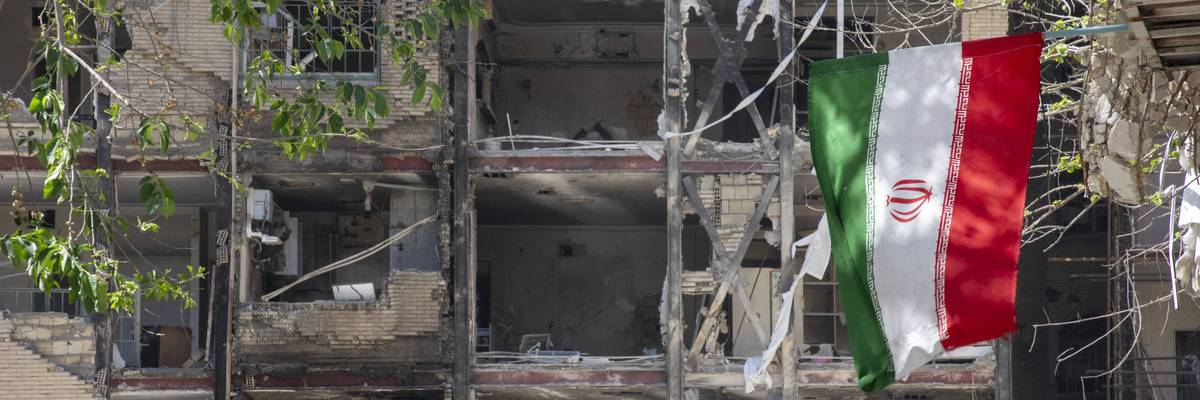
A flag of Iran hangs from a damaged residential building that, according to Iranian authorities, was hit by a strike on March 4 during the US-Israeli military campaign on April 14, 2026 in southeastern Tehran, Iran.
As difficult as it may be to imagine it now, what will be required is to work toward a regional security framework built on non-aggression, non-interference, and respect for the sovereignty of all states, and an end to the Israeli occupation and denial of Palestinian rights.
Back when the Obama administration was negotiating a nuclear agreement with Iran, I asked National Security Council officials, “Why are you expending all of your economic leverage, and political and diplomatic resources on stopping Iran from developing a bomb they don’t have (and even if they did, could never use), while these same resources could be mobilized to pressure Iran to end its meddlesome behaviors that are destabilizing countries across the region?”
Despite this reservation, when the Joint Comprehensive Plan of Action was announced, I supported it for three reasons. First, “the nuclear deal” was a negotiated settlement, which is always better than conflict. And despite White House spokespeople saying otherwise, Catherine Ashton, a top British diplomat involved in the negotiations, offered assurances that the deal was only a first step and that Iran’s behaviors would be next on the agenda. My hope was that sane minds would prevail and the initiated process might lead to a regional security compact and framework for peace.
The second reason was the way Republicans were working overtime to sabotage the agreement. It was unconscionable that they invited a foreign leader, Israeli Prime Minister Benjamin Netanyahu, to address a joint session of Congress to urge members of Congress to vote against their own president. That was unacceptable interference in US politics.
The third (and maybe most unexpected) reason was the reaction to the JCPOA inside Iran. In a poll we conducted months after the deal was announced, we found a significant change in Iranian public opinion. Our earlier polls had demonstrated Iranians largely in favor of the regime’s spending money on allies in Lebanon, Syria, Iraq, and Yemen. With the hint of peace, Iranians turned their priorities inward, with declining support for the regime’s foreign involvements. Instead of resources going abroad, Iranians wanted them to be used at home to create employment and opportunity. They also elevated their demands for greater personal freedom and political rights.
A decade after the JCPOA, the Middle East and the Gulf region are in a more precarious place than ever.
When, after Donald Trump’s election, he cancelled the Iran deal and began threatening the regime, we repeated the poll. The results had reverted. When citizens feel their country is being threatened, they tend to be less critical or to “rally around the flag.”
In the ensuing years, amid continuing signs of hostility from all sides—US, Israel, and Iran—the situation has shown no promise of improvement. Despite promising a better agreement, Trump did nothing more than deepen the animosity. The Biden administration was handed the thankless task of bringing a dead deal back to life—a task to which they never appeared to be fully committed. For its part, Iran continued to behave as a bad regional actor, all the while making threats and building its military capabilities.
Left on their own, the Arab Gulf states sought to create stability out of the possibility of chaos with which they were forced to contend. Unlike Iran, which had decided to use its wealth to export its influence and its anti-Western ideology, the Arab Gulf states had taken a different path, focusing on development, tourism, and trade. Their continued prosperity required a stable regional environment. And so, amid the tensions between the US and Israel and Iran, these Arab states made diplomatic and economic overtures to Iran, hoping for a more secure environment in the Gulf. They even hoped that the lure of joint prosperity and security might move the Iranians to join them in pursuing a more stable and prosperous future and convince the Israelis to resolve the longstanding wound of Palestinian dispossession and occupation, fostering conditions for regional peace. There was to be no such luck!
Israel wanted the economic benefits of regional peace but was unwilling to play its part. It intensified its occupation and the repression and strangulation of Palestinians. Then came October 7, and the region exploded. In short order, as Israel was pursuing a genocidal war in Gaza, Iran’s ally in Lebanon became engaged in a fateful and costly exchange with Israel in the north, a miscalculation with devastating consequences. The Israelis launched a deadly bombing campaign killing thousands of Lebanese, including Hezbollah’s leader. Months later, Israel and the US attacked Iran and killed Iran’s spiritual leader. Iran returned fire setting off a broader confrontation.
Negotiations produced what were called “cease fires” during which Palestinian and Lebanese death tolls continued to mount. When, egged on by Israel and Republican neocons, President Trump decided to “finish the job” by defeating the Iranian regime, the conflict took on a new character. Iran intensified its attacks on neighboring Arab Gulf states that housed US bases and closed the Straits of Hormuz, cutting off 20% of the world’s oil and gas supplies and negatively impacting the Gulf region’s economies.
Reading some of the Israeli, Arab, and US press is enough to make one pull out one’s hair. Some Israeli commentators from the far-right (and their American neocon acolytes) remain convinced that all that’s needed is another massive bombing campaign, coupled with yet a few more “targeted assassinations”—as if those tactics, which Israel has used repeatedly, will be any more successful than they’ve been in the past.
Meanwhile, hard-line Arab opinion writers celebrate the “brilliance” of Iranian tactics. It’s hard to see how incurring the enmity of their neighbors and putting their own and the region’s economic futures at risk can be construed as anything but reckless.
The US media is even more confounding, with its apparent addiction to breathlessly and uncritically following the barrage of confusing and contradictory posts coming from the president.
And so, a decade after the JCPOA, the Middle East and the Gulf region are in a more precarious place than ever. Although the situation is far more complicated than a decade ago, and the enmity on all sides so much deeper, the way forward is recognition that piecemeal approaches to the region, playing whack-a-mole, have only made the region less secure.
As difficult as it may be to imagine it now, what will be required is to work toward a regional security framework built on non-aggression, non-interference, and respect for the sovereignty of all states, and an end to the Israeli occupation and denial of Palestinian rights. This entails the recognition that there are no military solutions to the region’s political issues. In fact, each round of violence only exacerbates existing problems. It’s a tall order requiring leadership that is smart, courageous, and visionary. That may not exist today, but it’s necessary—and it’s the goal toward which we must direct our efforts.
Dear Common Dreams reader, It’s been nearly 30 years since I co-founded Common Dreams with my late wife, Lina Newhouser. We had the radical notion that journalism should serve the public good, not corporate profits. It was clear to us from the outset what it would take to build such a project. No paid advertisements. No corporate sponsors. No millionaire publisher telling us what to think or do. Many people said we wouldn't last a year, but we proved those doubters wrong. Together with a tremendous team of journalists and dedicated staff, we built an independent media outlet free from the constraints of profits and corporate control. Our mission has always been simple: To inform. To inspire. To ignite change for the common good. Building Common Dreams was not easy. Our survival was never guaranteed. When you take on the most powerful forces—Wall Street greed, fossil fuel industry destruction, Big Tech lobbyists, and uber-rich oligarchs who have spent billions upon billions rigging the economy and democracy in their favor—the only bulwark you have is supporters who believe in your work. But here’s the urgent message from me today. It's never been this bad out there. And it's never been this hard to keep us going. At the very moment Common Dreams is most needed, the threats we face are intensifying. We need your support now more than ever. We don't accept corporate advertising and never will. We don't have a paywall because we don't think people should be blocked from critical news based on their ability to pay. Everything we do is funded by the donations of readers like you. When everyone does the little they can afford, we are strong. But if that support retreats or dries up, so do we. Will you donate now to make sure Common Dreams not only survives but thrives? —Craig Brown, Co-founder |
Back when the Obama administration was negotiating a nuclear agreement with Iran, I asked National Security Council officials, “Why are you expending all of your economic leverage, and political and diplomatic resources on stopping Iran from developing a bomb they don’t have (and even if they did, could never use), while these same resources could be mobilized to pressure Iran to end its meddlesome behaviors that are destabilizing countries across the region?”
Despite this reservation, when the Joint Comprehensive Plan of Action was announced, I supported it for three reasons. First, “the nuclear deal” was a negotiated settlement, which is always better than conflict. And despite White House spokespeople saying otherwise, Catherine Ashton, a top British diplomat involved in the negotiations, offered assurances that the deal was only a first step and that Iran’s behaviors would be next on the agenda. My hope was that sane minds would prevail and the initiated process might lead to a regional security compact and framework for peace.
The second reason was the way Republicans were working overtime to sabotage the agreement. It was unconscionable that they invited a foreign leader, Israeli Prime Minister Benjamin Netanyahu, to address a joint session of Congress to urge members of Congress to vote against their own president. That was unacceptable interference in US politics.
The third (and maybe most unexpected) reason was the reaction to the JCPOA inside Iran. In a poll we conducted months after the deal was announced, we found a significant change in Iranian public opinion. Our earlier polls had demonstrated Iranians largely in favor of the regime’s spending money on allies in Lebanon, Syria, Iraq, and Yemen. With the hint of peace, Iranians turned their priorities inward, with declining support for the regime’s foreign involvements. Instead of resources going abroad, Iranians wanted them to be used at home to create employment and opportunity. They also elevated their demands for greater personal freedom and political rights.
A decade after the JCPOA, the Middle East and the Gulf region are in a more precarious place than ever.
When, after Donald Trump’s election, he cancelled the Iran deal and began threatening the regime, we repeated the poll. The results had reverted. When citizens feel their country is being threatened, they tend to be less critical or to “rally around the flag.”
In the ensuing years, amid continuing signs of hostility from all sides—US, Israel, and Iran—the situation has shown no promise of improvement. Despite promising a better agreement, Trump did nothing more than deepen the animosity. The Biden administration was handed the thankless task of bringing a dead deal back to life—a task to which they never appeared to be fully committed. For its part, Iran continued to behave as a bad regional actor, all the while making threats and building its military capabilities.
Left on their own, the Arab Gulf states sought to create stability out of the possibility of chaos with which they were forced to contend. Unlike Iran, which had decided to use its wealth to export its influence and its anti-Western ideology, the Arab Gulf states had taken a different path, focusing on development, tourism, and trade. Their continued prosperity required a stable regional environment. And so, amid the tensions between the US and Israel and Iran, these Arab states made diplomatic and economic overtures to Iran, hoping for a more secure environment in the Gulf. They even hoped that the lure of joint prosperity and security might move the Iranians to join them in pursuing a more stable and prosperous future and convince the Israelis to resolve the longstanding wound of Palestinian dispossession and occupation, fostering conditions for regional peace. There was to be no such luck!
Israel wanted the economic benefits of regional peace but was unwilling to play its part. It intensified its occupation and the repression and strangulation of Palestinians. Then came October 7, and the region exploded. In short order, as Israel was pursuing a genocidal war in Gaza, Iran’s ally in Lebanon became engaged in a fateful and costly exchange with Israel in the north, a miscalculation with devastating consequences. The Israelis launched a deadly bombing campaign killing thousands of Lebanese, including Hezbollah’s leader. Months later, Israel and the US attacked Iran and killed Iran’s spiritual leader. Iran returned fire setting off a broader confrontation.
Negotiations produced what were called “cease fires” during which Palestinian and Lebanese death tolls continued to mount. When, egged on by Israel and Republican neocons, President Trump decided to “finish the job” by defeating the Iranian regime, the conflict took on a new character. Iran intensified its attacks on neighboring Arab Gulf states that housed US bases and closed the Straits of Hormuz, cutting off 20% of the world’s oil and gas supplies and negatively impacting the Gulf region’s economies.
Reading some of the Israeli, Arab, and US press is enough to make one pull out one’s hair. Some Israeli commentators from the far-right (and their American neocon acolytes) remain convinced that all that’s needed is another massive bombing campaign, coupled with yet a few more “targeted assassinations”—as if those tactics, which Israel has used repeatedly, will be any more successful than they’ve been in the past.
Meanwhile, hard-line Arab opinion writers celebrate the “brilliance” of Iranian tactics. It’s hard to see how incurring the enmity of their neighbors and putting their own and the region’s economic futures at risk can be construed as anything but reckless.
The US media is even more confounding, with its apparent addiction to breathlessly and uncritically following the barrage of confusing and contradictory posts coming from the president.
And so, a decade after the JCPOA, the Middle East and the Gulf region are in a more precarious place than ever. Although the situation is far more complicated than a decade ago, and the enmity on all sides so much deeper, the way forward is recognition that piecemeal approaches to the region, playing whack-a-mole, have only made the region less secure.
As difficult as it may be to imagine it now, what will be required is to work toward a regional security framework built on non-aggression, non-interference, and respect for the sovereignty of all states, and an end to the Israeli occupation and denial of Palestinian rights. This entails the recognition that there are no military solutions to the region’s political issues. In fact, each round of violence only exacerbates existing problems. It’s a tall order requiring leadership that is smart, courageous, and visionary. That may not exist today, but it’s necessary—and it’s the goal toward which we must direct our efforts.
Back when the Obama administration was negotiating a nuclear agreement with Iran, I asked National Security Council officials, “Why are you expending all of your economic leverage, and political and diplomatic resources on stopping Iran from developing a bomb they don’t have (and even if they did, could never use), while these same resources could be mobilized to pressure Iran to end its meddlesome behaviors that are destabilizing countries across the region?”
Despite this reservation, when the Joint Comprehensive Plan of Action was announced, I supported it for three reasons. First, “the nuclear deal” was a negotiated settlement, which is always better than conflict. And despite White House spokespeople saying otherwise, Catherine Ashton, a top British diplomat involved in the negotiations, offered assurances that the deal was only a first step and that Iran’s behaviors would be next on the agenda. My hope was that sane minds would prevail and the initiated process might lead to a regional security compact and framework for peace.
The second reason was the way Republicans were working overtime to sabotage the agreement. It was unconscionable that they invited a foreign leader, Israeli Prime Minister Benjamin Netanyahu, to address a joint session of Congress to urge members of Congress to vote against their own president. That was unacceptable interference in US politics.
The third (and maybe most unexpected) reason was the reaction to the JCPOA inside Iran. In a poll we conducted months after the deal was announced, we found a significant change in Iranian public opinion. Our earlier polls had demonstrated Iranians largely in favor of the regime’s spending money on allies in Lebanon, Syria, Iraq, and Yemen. With the hint of peace, Iranians turned their priorities inward, with declining support for the regime’s foreign involvements. Instead of resources going abroad, Iranians wanted them to be used at home to create employment and opportunity. They also elevated their demands for greater personal freedom and political rights.
A decade after the JCPOA, the Middle East and the Gulf region are in a more precarious place than ever.
When, after Donald Trump’s election, he cancelled the Iran deal and began threatening the regime, we repeated the poll. The results had reverted. When citizens feel their country is being threatened, they tend to be less critical or to “rally around the flag.”
In the ensuing years, amid continuing signs of hostility from all sides—US, Israel, and Iran—the situation has shown no promise of improvement. Despite promising a better agreement, Trump did nothing more than deepen the animosity. The Biden administration was handed the thankless task of bringing a dead deal back to life—a task to which they never appeared to be fully committed. For its part, Iran continued to behave as a bad regional actor, all the while making threats and building its military capabilities.
Left on their own, the Arab Gulf states sought to create stability out of the possibility of chaos with which they were forced to contend. Unlike Iran, which had decided to use its wealth to export its influence and its anti-Western ideology, the Arab Gulf states had taken a different path, focusing on development, tourism, and trade. Their continued prosperity required a stable regional environment. And so, amid the tensions between the US and Israel and Iran, these Arab states made diplomatic and economic overtures to Iran, hoping for a more secure environment in the Gulf. They even hoped that the lure of joint prosperity and security might move the Iranians to join them in pursuing a more stable and prosperous future and convince the Israelis to resolve the longstanding wound of Palestinian dispossession and occupation, fostering conditions for regional peace. There was to be no such luck!
Israel wanted the economic benefits of regional peace but was unwilling to play its part. It intensified its occupation and the repression and strangulation of Palestinians. Then came October 7, and the region exploded. In short order, as Israel was pursuing a genocidal war in Gaza, Iran’s ally in Lebanon became engaged in a fateful and costly exchange with Israel in the north, a miscalculation with devastating consequences. The Israelis launched a deadly bombing campaign killing thousands of Lebanese, including Hezbollah’s leader. Months later, Israel and the US attacked Iran and killed Iran’s spiritual leader. Iran returned fire setting off a broader confrontation.
Negotiations produced what were called “cease fires” during which Palestinian and Lebanese death tolls continued to mount. When, egged on by Israel and Republican neocons, President Trump decided to “finish the job” by defeating the Iranian regime, the conflict took on a new character. Iran intensified its attacks on neighboring Arab Gulf states that housed US bases and closed the Straits of Hormuz, cutting off 20% of the world’s oil and gas supplies and negatively impacting the Gulf region’s economies.
Reading some of the Israeli, Arab, and US press is enough to make one pull out one’s hair. Some Israeli commentators from the far-right (and their American neocon acolytes) remain convinced that all that’s needed is another massive bombing campaign, coupled with yet a few more “targeted assassinations”—as if those tactics, which Israel has used repeatedly, will be any more successful than they’ve been in the past.
Meanwhile, hard-line Arab opinion writers celebrate the “brilliance” of Iranian tactics. It’s hard to see how incurring the enmity of their neighbors and putting their own and the region’s economic futures at risk can be construed as anything but reckless.
The US media is even more confounding, with its apparent addiction to breathlessly and uncritically following the barrage of confusing and contradictory posts coming from the president.
And so, a decade after the JCPOA, the Middle East and the Gulf region are in a more precarious place than ever. Although the situation is far more complicated than a decade ago, and the enmity on all sides so much deeper, the way forward is recognition that piecemeal approaches to the region, playing whack-a-mole, have only made the region less secure.
As difficult as it may be to imagine it now, what will be required is to work toward a regional security framework built on non-aggression, non-interference, and respect for the sovereignty of all states, and an end to the Israeli occupation and denial of Palestinian rights. This entails the recognition that there are no military solutions to the region’s political issues. In fact, each round of violence only exacerbates existing problems. It’s a tall order requiring leadership that is smart, courageous, and visionary. That may not exist today, but it’s necessary—and it’s the goal toward which we must direct our efforts.

