SUBSCRIBE TO OUR FREE NEWSLETTER
Daily news & progressive opinion—funded by the people, not the corporations—delivered straight to your inbox.
5
#000000
#FFFFFF
To donate by check, phone, or other method, see our More Ways to Give page.
Daily news & progressive opinion—funded by the people, not the corporations—delivered straight to your inbox.
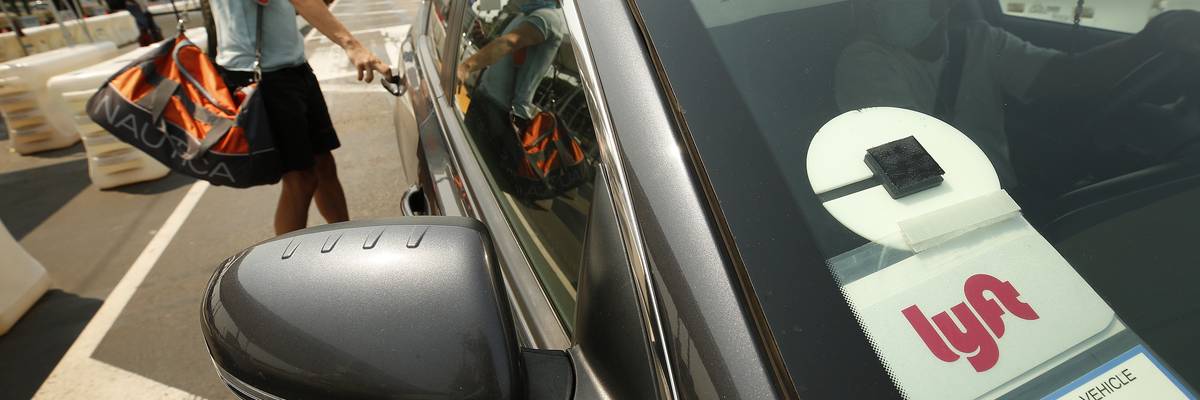
Kasey St. John connects with a driver at the Rideshare Lot at LAX as Uber and Lyft drivers held a moving rally as part of a statewide day of action to demand that both ride-hailing companies follow California law and grant drivers basic employee rights and to denounce the corporations efforts to avoid their responsibilities to workers on Thursday, August 20, 2020.
Strong International Labour Organization standards should start from a basic principle: If a company controls the worker, it should bear the responsibilities that come with that control.
Most discussion of artificial intelligence and work is about the future: which jobs may disappear, which skills may lose value, which workers may be replaced. But for millions of gig workers, who work for online platforms such as Uber, this future is already here.
Algorithms set their pay, assign their tasks, monitor their performance, and determine whether they can keep working at all. The issue is not just that technology may someday replace workers. It is that companies are already using it to control them while shirking the responsibilities that normally come with that kind of control. This leaves many workers with unstable pay, dangerous conditions, and little recourse when something goes wrong. But this could be about to change.
From June 1 to 12 in Geneva, governments will enter a final round of negotiations at the International Labour Organization (ILO), the United Nations agency dedicated to labor rights, over the first binding global standard for what is called platform work. This new treaty would regulate jobs managed through apps and websites, from taxis and delivery to home care, cleaning, and online piecework. Governments will decide whether companies that control this work should be required to treat workers as employees and comply with labor protections.
The stakes go well beyond the gig economy. Increasingly, workers report to an algorithmic boss in hospitals, care work, domestic labor, and beyond. The question is whether governments will set rules for how companies use these systems to manage work or let companies keep writing the terms themselves.
If a business model works only because it evades workers’ rights, that is an argument for regulation, not against it.
Gig work today offers a preview of what happens when they do. These companies promise flexibility and independence. For many workers, the reality is low and unstable pay; dangerous conditions; and no sick leave, unemployment insurance, or retirement benefits.
This isn’t a flaw in the system. It is the system. Companies use software to manage workers closely, then contracts to deny responsibility for them. The result is familiar cost-shifting in a new technological form: Workers absorb the risks while companies maintain control.
And it is scaling fast. DoorDash, which now operates in 30 countries, reported global revenue growth of 38% from the same period the previous year in the fourth quarter of 2025, and Uber, operational in about 70 countries, ranked ninth on Fortune’s 2025 list of the 100 fastest-growing public companies, with earnings per share growing 445% over three years. These companies create value by shifting costs off the company’s books and onto everyone else.
In recent months, Human Rights Watch spoke with workers in 10 countries. They described the same kinds of abuse everywhere.
In Beirut, we spoke with Apraham Orfalian, 74, who has worked for Uber since 2015. In October 2024, a passenger held a knife to his throat, forced him out of his car, and stole his vehicle and his phone. Without the car, he lost his income. Without sick leave, workers’ compensation, or support from Uber, he had to rely on his siblings to get by. “We are workers for Uber,” he said. “We generate income for them. At least they should show responsibility.”
In Gulf countries, delivery workers described cycling in extreme heat because they felt they could not afford to refuse orders, even when conditions were unsafe. In India, a worker injured on the job was left to cover his own medical costs. In the UK, another went months without income or injury compensation after being attacked while working.
Some governments have started to act. Mexico adopted legislation extending social security and labor protections to some full-time platform workers. In India, worker protests pushed the government to restrict 10-minute delivery promises that put dangerous pressure on delivery workers. Courts in the UK, France, Spain, and Italy have recognized rights that companies tried hard to avoid. But these gains are uneven and fragile. Without global standards, companies can keep exploiting gaps.
Strong ILO standards should start from a basic principle: If a company controls the worker, it should bear the responsibilities that come with that control. That means a presumption of employment in which companies exercise employer-like power; pay for all working time, which often includes waiting for assignments; safety protections; social security; protection from arbitrary deactivation; and a meaningful right to understand and challenge algorithmic decisions that shape pay, ratings, and access to work.
Some governments are trying to weaken those protections before they are written. They want standards that simply defer to weak national laws and define workers narrowly, and promise transparency without giving workers real power to challenge the decisions that shape their livelihoods.
Companies that depend on gig workers will say stronger rules would destroy flexibility. But that flexibility doesn’t really exist for many workers. Even if a worker can choose when to log on, they deserve protection from poverty wages, arbitrary dismissal, and uncompensated injury. If a business model works only because it evades workers’ rights, that is an argument for regulation, not against it.
This is about more than how companies that use gig workers operate. It is about whether labor law can keep pace with the way companies now organize labor. If workers cannot understand or challenge the systems that govern their work, software will become an efficient way to exercise control without accountability.
Governments meeting in Geneva can still set limits and protect workers’ rights. They should use that power before exploitation becomes the blueprint.
Dear Common Dreams reader, It’s been nearly 30 years since I co-founded Common Dreams with my late wife, Lina Newhouser. We had the radical notion that journalism should serve the public good, not corporate profits. It was clear to us from the outset what it would take to build such a project. No paid advertisements. No corporate sponsors. No millionaire publisher telling us what to think or do. Many people said we wouldn't last a year, but we proved those doubters wrong. Together with a tremendous team of journalists and dedicated staff, we built an independent media outlet free from the constraints of profits and corporate control. Our mission has always been simple: To inform. To inspire. To ignite change for the common good. Building Common Dreams was not easy. Our survival was never guaranteed. When you take on the most powerful forces—Wall Street greed, fossil fuel industry destruction, Big Tech lobbyists, and uber-rich oligarchs who have spent billions upon billions rigging the economy and democracy in their favor—the only bulwark you have is supporters who believe in your work. But here’s the urgent message from me today. It's never been this bad out there. And it's never been this hard to keep us going. At the very moment Common Dreams is most needed, the threats we face are intensifying. We need your support now more than ever. We don't accept corporate advertising and never will. We don't have a paywall because we don't think people should be blocked from critical news based on their ability to pay. Everything we do is funded by the donations of readers like you. When everyone does the little they can afford, we are strong. But if that support retreats or dries up, so do we. Will you donate now to make sure Common Dreams not only survives but thrives? —Craig Brown, Co-founder |
Most discussion of artificial intelligence and work is about the future: which jobs may disappear, which skills may lose value, which workers may be replaced. But for millions of gig workers, who work for online platforms such as Uber, this future is already here.
Algorithms set their pay, assign their tasks, monitor their performance, and determine whether they can keep working at all. The issue is not just that technology may someday replace workers. It is that companies are already using it to control them while shirking the responsibilities that normally come with that kind of control. This leaves many workers with unstable pay, dangerous conditions, and little recourse when something goes wrong. But this could be about to change.
From June 1 to 12 in Geneva, governments will enter a final round of negotiations at the International Labour Organization (ILO), the United Nations agency dedicated to labor rights, over the first binding global standard for what is called platform work. This new treaty would regulate jobs managed through apps and websites, from taxis and delivery to home care, cleaning, and online piecework. Governments will decide whether companies that control this work should be required to treat workers as employees and comply with labor protections.
The stakes go well beyond the gig economy. Increasingly, workers report to an algorithmic boss in hospitals, care work, domestic labor, and beyond. The question is whether governments will set rules for how companies use these systems to manage work or let companies keep writing the terms themselves.
If a business model works only because it evades workers’ rights, that is an argument for regulation, not against it.
Gig work today offers a preview of what happens when they do. These companies promise flexibility and independence. For many workers, the reality is low and unstable pay; dangerous conditions; and no sick leave, unemployment insurance, or retirement benefits.
This isn’t a flaw in the system. It is the system. Companies use software to manage workers closely, then contracts to deny responsibility for them. The result is familiar cost-shifting in a new technological form: Workers absorb the risks while companies maintain control.
And it is scaling fast. DoorDash, which now operates in 30 countries, reported global revenue growth of 38% from the same period the previous year in the fourth quarter of 2025, and Uber, operational in about 70 countries, ranked ninth on Fortune’s 2025 list of the 100 fastest-growing public companies, with earnings per share growing 445% over three years. These companies create value by shifting costs off the company’s books and onto everyone else.
In recent months, Human Rights Watch spoke with workers in 10 countries. They described the same kinds of abuse everywhere.
In Beirut, we spoke with Apraham Orfalian, 74, who has worked for Uber since 2015. In October 2024, a passenger held a knife to his throat, forced him out of his car, and stole his vehicle and his phone. Without the car, he lost his income. Without sick leave, workers’ compensation, or support from Uber, he had to rely on his siblings to get by. “We are workers for Uber,” he said. “We generate income for them. At least they should show responsibility.”
In Gulf countries, delivery workers described cycling in extreme heat because they felt they could not afford to refuse orders, even when conditions were unsafe. In India, a worker injured on the job was left to cover his own medical costs. In the UK, another went months without income or injury compensation after being attacked while working.
Some governments have started to act. Mexico adopted legislation extending social security and labor protections to some full-time platform workers. In India, worker protests pushed the government to restrict 10-minute delivery promises that put dangerous pressure on delivery workers. Courts in the UK, France, Spain, and Italy have recognized rights that companies tried hard to avoid. But these gains are uneven and fragile. Without global standards, companies can keep exploiting gaps.
Strong ILO standards should start from a basic principle: If a company controls the worker, it should bear the responsibilities that come with that control. That means a presumption of employment in which companies exercise employer-like power; pay for all working time, which often includes waiting for assignments; safety protections; social security; protection from arbitrary deactivation; and a meaningful right to understand and challenge algorithmic decisions that shape pay, ratings, and access to work.
Some governments are trying to weaken those protections before they are written. They want standards that simply defer to weak national laws and define workers narrowly, and promise transparency without giving workers real power to challenge the decisions that shape their livelihoods.
Companies that depend on gig workers will say stronger rules would destroy flexibility. But that flexibility doesn’t really exist for many workers. Even if a worker can choose when to log on, they deserve protection from poverty wages, arbitrary dismissal, and uncompensated injury. If a business model works only because it evades workers’ rights, that is an argument for regulation, not against it.
This is about more than how companies that use gig workers operate. It is about whether labor law can keep pace with the way companies now organize labor. If workers cannot understand or challenge the systems that govern their work, software will become an efficient way to exercise control without accountability.
Governments meeting in Geneva can still set limits and protect workers’ rights. They should use that power before exploitation becomes the blueprint.
Most discussion of artificial intelligence and work is about the future: which jobs may disappear, which skills may lose value, which workers may be replaced. But for millions of gig workers, who work for online platforms such as Uber, this future is already here.
Algorithms set their pay, assign their tasks, monitor their performance, and determine whether they can keep working at all. The issue is not just that technology may someday replace workers. It is that companies are already using it to control them while shirking the responsibilities that normally come with that kind of control. This leaves many workers with unstable pay, dangerous conditions, and little recourse when something goes wrong. But this could be about to change.
From June 1 to 12 in Geneva, governments will enter a final round of negotiations at the International Labour Organization (ILO), the United Nations agency dedicated to labor rights, over the first binding global standard for what is called platform work. This new treaty would regulate jobs managed through apps and websites, from taxis and delivery to home care, cleaning, and online piecework. Governments will decide whether companies that control this work should be required to treat workers as employees and comply with labor protections.
The stakes go well beyond the gig economy. Increasingly, workers report to an algorithmic boss in hospitals, care work, domestic labor, and beyond. The question is whether governments will set rules for how companies use these systems to manage work or let companies keep writing the terms themselves.
If a business model works only because it evades workers’ rights, that is an argument for regulation, not against it.
Gig work today offers a preview of what happens when they do. These companies promise flexibility and independence. For many workers, the reality is low and unstable pay; dangerous conditions; and no sick leave, unemployment insurance, or retirement benefits.
This isn’t a flaw in the system. It is the system. Companies use software to manage workers closely, then contracts to deny responsibility for them. The result is familiar cost-shifting in a new technological form: Workers absorb the risks while companies maintain control.
And it is scaling fast. DoorDash, which now operates in 30 countries, reported global revenue growth of 38% from the same period the previous year in the fourth quarter of 2025, and Uber, operational in about 70 countries, ranked ninth on Fortune’s 2025 list of the 100 fastest-growing public companies, with earnings per share growing 445% over three years. These companies create value by shifting costs off the company’s books and onto everyone else.
In recent months, Human Rights Watch spoke with workers in 10 countries. They described the same kinds of abuse everywhere.
In Beirut, we spoke with Apraham Orfalian, 74, who has worked for Uber since 2015. In October 2024, a passenger held a knife to his throat, forced him out of his car, and stole his vehicle and his phone. Without the car, he lost his income. Without sick leave, workers’ compensation, or support from Uber, he had to rely on his siblings to get by. “We are workers for Uber,” he said. “We generate income for them. At least they should show responsibility.”
In Gulf countries, delivery workers described cycling in extreme heat because they felt they could not afford to refuse orders, even when conditions were unsafe. In India, a worker injured on the job was left to cover his own medical costs. In the UK, another went months without income or injury compensation after being attacked while working.
Some governments have started to act. Mexico adopted legislation extending social security and labor protections to some full-time platform workers. In India, worker protests pushed the government to restrict 10-minute delivery promises that put dangerous pressure on delivery workers. Courts in the UK, France, Spain, and Italy have recognized rights that companies tried hard to avoid. But these gains are uneven and fragile. Without global standards, companies can keep exploiting gaps.
Strong ILO standards should start from a basic principle: If a company controls the worker, it should bear the responsibilities that come with that control. That means a presumption of employment in which companies exercise employer-like power; pay for all working time, which often includes waiting for assignments; safety protections; social security; protection from arbitrary deactivation; and a meaningful right to understand and challenge algorithmic decisions that shape pay, ratings, and access to work.
Some governments are trying to weaken those protections before they are written. They want standards that simply defer to weak national laws and define workers narrowly, and promise transparency without giving workers real power to challenge the decisions that shape their livelihoods.
Companies that depend on gig workers will say stronger rules would destroy flexibility. But that flexibility doesn’t really exist for many workers. Even if a worker can choose when to log on, they deserve protection from poverty wages, arbitrary dismissal, and uncompensated injury. If a business model works only because it evades workers’ rights, that is an argument for regulation, not against it.
This is about more than how companies that use gig workers operate. It is about whether labor law can keep pace with the way companies now organize labor. If workers cannot understand or challenge the systems that govern their work, software will become an efficient way to exercise control without accountability.
Governments meeting in Geneva can still set limits and protect workers’ rights. They should use that power before exploitation becomes the blueprint.