5
#000000
#FFFFFF
To donate by check, phone, or other method, see our More Ways to Give page.
Daily news & progressive opinion—funded by the people, not the corporations—delivered straight to your inbox.
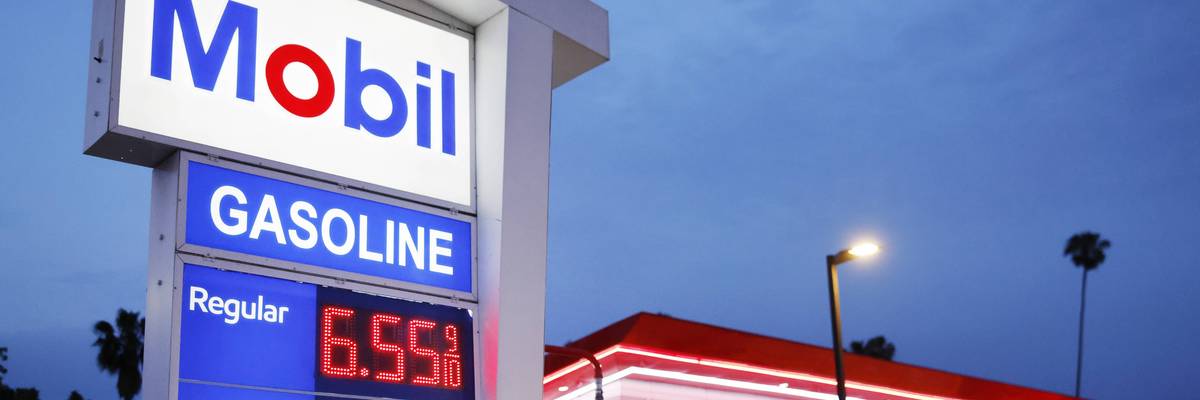
Gas prices are displayed at a Mobil gas station on March 30, 2026 in Pasadena, California.
You can vote for or against the people in charge without having had real control over decisions they already made. The decision comes first. The costs spread through society. Only later do voters get to judge the officials still managing the consequences.
On September 29, the Energy Department said it would make up to 40 million barrels of crude from the Strategic Petroleum Reserve available through an exchange intended to stabilize oil supply. The move was a reminder of something easy to miss in debates over the Iran war: Its costs do not stay on the battlefield. American households can start paying them well before voters get a chance to judge the decisions behind them.
War is usually pictured through missiles, airstrikes, casualties, and ruined cities. Yet some of the burden can surface thousands of miles from the fighting—in gas prices, shipping costs, grocery bills, and whatever is left in a family’s bank account at the end of the month.
The war with Iran has made that connection hard to ignore. When oil flows through the Strait of Hormuz are disrupted, the shock moves through global energy markets and reaches the United States. In September, the International Energy Agency reported that US diesel-gasoil prices had surpassed $200 a barrel in early September, 94% above prewar levels. The US Energy Information Administration (EIA) later put average retail diesel at $6.29 a gallon on September 14.
Someone carrying the cost in a gas bill, heating bill, or grocery receipt did not necessarily have any meaningful say in the decision that created it.
Diesel is more than another number at the pump. Trucks run on it. Farms rely on it. Factories and shipping companies use it. The EIA notes that diesel prices reflect crude oil costs, refining margins, distribution expenses, taxes, and global supply conditions. It also warns that disruptions to major oil trade routes can bring shortages, shipping delays, and higher petroleum prices. Once fuel gets more expensive, the increase moves through the supply chain.
For some families, the effect is more direct. If your home is heated with fuel, the war can appear on the heating bill. A household with no one fighting—and no direct voice in the decision to go to war—can still pay part of the price from its own paycheck.
Those costs are not shared evenly. A higher energy bill may be manageable for one household and a serious strain for another. Department of Energy data show that the national average energy burden for low-income households is about three times that of non-low-income households. Families already spending most of their income on housing, food, and transportation have much less room to absorb another increase.
This is part of war’s cost that a military budget does not capture. Brown University’s Costs of War project estimated in May that higher gasoline and diesel prices since the start of the Iran War had already imposed more than $40 billion in additional costs on American consumers—more than $300 per household.
The burden takes different forms, but it runs through ordinary society. Soldiers pay with their bodies. Taxpayers finance military operations. Workers face higher living costs. Consumers spend more on energy, transportation, and goods. The home front becomes part of the resource base on which war depends—for people, money, labor, and purchasing power.
Once the costs of a political decision begin falling on ordinary citizens, a harder question follows: Who is accountable for that decision?
In a democracy, elections are supposed to provide an answer. Voters can look at what governments and representatives have done and decide whether to keep them in office. The problem is timing: There is often a gap between a major decision and the public’s next chance to respond at the ballot box.
A decision can be made today and its costs can begin tomorrow. Voters may wait months or years before they can judge the people responsible. By then, much of the bill has already been paid, and some of it cannot be recovered.
That delay changes what accountability means. Voting after a decision has already produced consequences is not the same as having a voice before it is made. Elections let citizens respond, but they do not always let them prevent the original decision or recover what was lost because of it.
The 2026 midterms bring that tension into focus. All 435 House seats and roughly one-third of the Senate are up for election. How voters judge the war and the economic pressure around it may shape their judgment of those in power. But someone carrying the cost in a gas bill, heating bill, or grocery receipt did not necessarily have any meaningful say in the decision that created it.
This is the narrower sense in which the idea of a “powerless ballot” matters. It does not mean voting is useless. It points to the distance between the right to vote and the ability to stop a major decision before its costs begin to accumulate.
You can vote for or against the people in charge without having had real control over decisions they already made. The decision comes first. The costs spread through society. Only later do voters get to judge the officials still managing the consequences.
So the cost of war cannot be measured only in military spending, missiles, or battlefield casualties. Some of it is scattered across millions of ordinary lives—in fuel prices, shipping costs, energy bills, food prices, and household budgets.
The fighting may be thousands of miles away, but the bill can still reach your front door. And when you enter the voting booth carrying that same bill, the question is not simply who should run the country. It is how much power the ballot really gives you to hold anyone accountable for a decision whose cost you have already paid.
Dear Common Dreams reader, It’s been nearly 30 years since I co-founded Common Dreams with my late wife, Lina Newhouser. We had the radical notion that journalism should serve the public good, not corporate profits. It was clear to us from the outset what it would take to build such a project. No paid advertisements. No corporate sponsors. No millionaire publisher telling us what to think or do. Many people said we wouldn't last a year, but we proved those doubters wrong. Together with a tremendous team of journalists and dedicated staff, we built an independent media outlet free from the constraints of profits and corporate control. Our mission has always been simple: To inform. To inspire. To ignite change for the common good. Building Common Dreams was not easy. Our survival was never guaranteed. When you take on the most powerful forces—Wall Street greed, fossil fuel industry destruction, Big Tech lobbyists, and uber-rich oligarchs who have spent billions upon billions rigging the economy and democracy in their favor—the only bulwark you have is supporters who believe in your work. But here’s the urgent message from me today. It's never been this bad out there. And it's never been this hard to keep us going. At the very moment Common Dreams is most needed, the threats we face are intensifying. We need your support now more than ever. We don't accept corporate advertising and never will. We don't have a paywall because we don't think people should be blocked from critical news based on their ability to pay. Everything we do is funded by the donations of readers like you. When everyone does the little they can afford, we are strong. But if that support retreats or dries up, so do we. Will you donate now to make sure Common Dreams not only survives but thrives? —Craig Brown, Co-founder |
On September 29, the Energy Department said it would make up to 40 million barrels of crude from the Strategic Petroleum Reserve available through an exchange intended to stabilize oil supply. The move was a reminder of something easy to miss in debates over the Iran war: Its costs do not stay on the battlefield. American households can start paying them well before voters get a chance to judge the decisions behind them.
War is usually pictured through missiles, airstrikes, casualties, and ruined cities. Yet some of the burden can surface thousands of miles from the fighting—in gas prices, shipping costs, grocery bills, and whatever is left in a family’s bank account at the end of the month.
The war with Iran has made that connection hard to ignore. When oil flows through the Strait of Hormuz are disrupted, the shock moves through global energy markets and reaches the United States. In September, the International Energy Agency reported that US diesel-gasoil prices had surpassed $200 a barrel in early September, 94% above prewar levels. The US Energy Information Administration (EIA) later put average retail diesel at $6.29 a gallon on September 14.
Someone carrying the cost in a gas bill, heating bill, or grocery receipt did not necessarily have any meaningful say in the decision that created it.
Diesel is more than another number at the pump. Trucks run on it. Farms rely on it. Factories and shipping companies use it. The EIA notes that diesel prices reflect crude oil costs, refining margins, distribution expenses, taxes, and global supply conditions. It also warns that disruptions to major oil trade routes can bring shortages, shipping delays, and higher petroleum prices. Once fuel gets more expensive, the increase moves through the supply chain.
For some families, the effect is more direct. If your home is heated with fuel, the war can appear on the heating bill. A household with no one fighting—and no direct voice in the decision to go to war—can still pay part of the price from its own paycheck.
Those costs are not shared evenly. A higher energy bill may be manageable for one household and a serious strain for another. Department of Energy data show that the national average energy burden for low-income households is about three times that of non-low-income households. Families already spending most of their income on housing, food, and transportation have much less room to absorb another increase.
This is part of war’s cost that a military budget does not capture. Brown University’s Costs of War project estimated in May that higher gasoline and diesel prices since the start of the Iran War had already imposed more than $40 billion in additional costs on American consumers—more than $300 per household.
The burden takes different forms, but it runs through ordinary society. Soldiers pay with their bodies. Taxpayers finance military operations. Workers face higher living costs. Consumers spend more on energy, transportation, and goods. The home front becomes part of the resource base on which war depends—for people, money, labor, and purchasing power.
Once the costs of a political decision begin falling on ordinary citizens, a harder question follows: Who is accountable for that decision?
In a democracy, elections are supposed to provide an answer. Voters can look at what governments and representatives have done and decide whether to keep them in office. The problem is timing: There is often a gap between a major decision and the public’s next chance to respond at the ballot box.
A decision can be made today and its costs can begin tomorrow. Voters may wait months or years before they can judge the people responsible. By then, much of the bill has already been paid, and some of it cannot be recovered.
That delay changes what accountability means. Voting after a decision has already produced consequences is not the same as having a voice before it is made. Elections let citizens respond, but they do not always let them prevent the original decision or recover what was lost because of it.
The 2026 midterms bring that tension into focus. All 435 House seats and roughly one-third of the Senate are up for election. How voters judge the war and the economic pressure around it may shape their judgment of those in power. But someone carrying the cost in a gas bill, heating bill, or grocery receipt did not necessarily have any meaningful say in the decision that created it.
This is the narrower sense in which the idea of a “powerless ballot” matters. It does not mean voting is useless. It points to the distance between the right to vote and the ability to stop a major decision before its costs begin to accumulate.
You can vote for or against the people in charge without having had real control over decisions they already made. The decision comes first. The costs spread through society. Only later do voters get to judge the officials still managing the consequences.
So the cost of war cannot be measured only in military spending, missiles, or battlefield casualties. Some of it is scattered across millions of ordinary lives—in fuel prices, shipping costs, energy bills, food prices, and household budgets.
The fighting may be thousands of miles away, but the bill can still reach your front door. And when you enter the voting booth carrying that same bill, the question is not simply who should run the country. It is how much power the ballot really gives you to hold anyone accountable for a decision whose cost you have already paid.
On September 29, the Energy Department said it would make up to 40 million barrels of crude from the Strategic Petroleum Reserve available through an exchange intended to stabilize oil supply. The move was a reminder of something easy to miss in debates over the Iran war: Its costs do not stay on the battlefield. American households can start paying them well before voters get a chance to judge the decisions behind them.
War is usually pictured through missiles, airstrikes, casualties, and ruined cities. Yet some of the burden can surface thousands of miles from the fighting—in gas prices, shipping costs, grocery bills, and whatever is left in a family’s bank account at the end of the month.
The war with Iran has made that connection hard to ignore. When oil flows through the Strait of Hormuz are disrupted, the shock moves through global energy markets and reaches the United States. In September, the International Energy Agency reported that US diesel-gasoil prices had surpassed $200 a barrel in early September, 94% above prewar levels. The US Energy Information Administration (EIA) later put average retail diesel at $6.29 a gallon on September 14.
Someone carrying the cost in a gas bill, heating bill, or grocery receipt did not necessarily have any meaningful say in the decision that created it.
Diesel is more than another number at the pump. Trucks run on it. Farms rely on it. Factories and shipping companies use it. The EIA notes that diesel prices reflect crude oil costs, refining margins, distribution expenses, taxes, and global supply conditions. It also warns that disruptions to major oil trade routes can bring shortages, shipping delays, and higher petroleum prices. Once fuel gets more expensive, the increase moves through the supply chain.
For some families, the effect is more direct. If your home is heated with fuel, the war can appear on the heating bill. A household with no one fighting—and no direct voice in the decision to go to war—can still pay part of the price from its own paycheck.
Those costs are not shared evenly. A higher energy bill may be manageable for one household and a serious strain for another. Department of Energy data show that the national average energy burden for low-income households is about three times that of non-low-income households. Families already spending most of their income on housing, food, and transportation have much less room to absorb another increase.
This is part of war’s cost that a military budget does not capture. Brown University’s Costs of War project estimated in May that higher gasoline and diesel prices since the start of the Iran War had already imposed more than $40 billion in additional costs on American consumers—more than $300 per household.
The burden takes different forms, but it runs through ordinary society. Soldiers pay with their bodies. Taxpayers finance military operations. Workers face higher living costs. Consumers spend more on energy, transportation, and goods. The home front becomes part of the resource base on which war depends—for people, money, labor, and purchasing power.
Once the costs of a political decision begin falling on ordinary citizens, a harder question follows: Who is accountable for that decision?
In a democracy, elections are supposed to provide an answer. Voters can look at what governments and representatives have done and decide whether to keep them in office. The problem is timing: There is often a gap between a major decision and the public’s next chance to respond at the ballot box.
A decision can be made today and its costs can begin tomorrow. Voters may wait months or years before they can judge the people responsible. By then, much of the bill has already been paid, and some of it cannot be recovered.
That delay changes what accountability means. Voting after a decision has already produced consequences is not the same as having a voice before it is made. Elections let citizens respond, but they do not always let them prevent the original decision or recover what was lost because of it.
The 2026 midterms bring that tension into focus. All 435 House seats and roughly one-third of the Senate are up for election. How voters judge the war and the economic pressure around it may shape their judgment of those in power. But someone carrying the cost in a gas bill, heating bill, or grocery receipt did not necessarily have any meaningful say in the decision that created it.
This is the narrower sense in which the idea of a “powerless ballot” matters. It does not mean voting is useless. It points to the distance between the right to vote and the ability to stop a major decision before its costs begin to accumulate.
You can vote for or against the people in charge without having had real control over decisions they already made. The decision comes first. The costs spread through society. Only later do voters get to judge the officials still managing the consequences.
So the cost of war cannot be measured only in military spending, missiles, or battlefield casualties. Some of it is scattered across millions of ordinary lives—in fuel prices, shipping costs, energy bills, food prices, and household budgets.
The fighting may be thousands of miles away, but the bill can still reach your front door. And when you enter the voting booth carrying that same bill, the question is not simply who should run the country. It is how much power the ballot really gives you to hold anyone accountable for a decision whose cost you have already paid.