5
#000000
#FFFFFF
To donate by check, phone, or other method, see our More Ways to Give page.
Daily news & progressive opinion—funded by the people, not the corporations—delivered straight to your inbox.
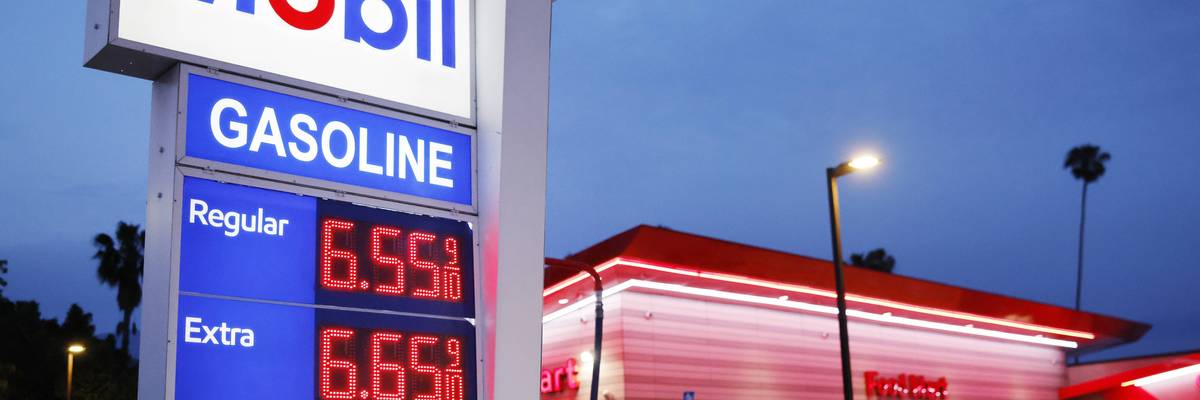
Gas prices are displayed at a Mobil gas station on March 30, 2026 in Pasadena, California.
Military operations, the consumption of munitions, the deployment of forces, equipment losses, and economic consequences do not disappear because of a change in terminology.
The Trump administration does not call it a war. But a recent estimate of the operation’s costs shows that the US military campaign against Iran has already generated at least $38 billion in Department of Defense expenses, with additional costs continuing to accumulate. While officials have avoided using the term “war,” the financial consequences increasingly resemble those of a prolonged military campaign.
Vice President JD Vance has said he does not describe the situation as a war, and President Donald Trump himself, responding to the same question on September 4, 2026, referred to it as a “military conflict” rather than “a big deal” for America. This is despite the fact that Trump has at other times explicitly used the word “war.”
But the issue is not merely a matter of wording. What is unfolding in Washington is the gap between the name the administration chooses for the operation and its real costs. Military operations, the consumption of munitions, the deployment of forces, equipment losses, and economic consequences do not disappear because of a change in terminology.
A conflict without a name can still produce a bill. Part of that bill is paid through public spending; part through higher energy and consumer costs; and part through long-term consequences for equipment, military stockpiles, and the economy.
The operation known as “Operation Epic Fury,” from February 2026 through August 1, has already cost the Department of Defense at least about $38 billion, according to a recent cost assessment. However, this figure does not represent the full cost of the conflict.
The estimate covers only operational, logistical, and support expenses and does not include costs from other parts of the government or certain expenses already included in existing military budgets. It also projects that if the conflict continues at a relatively low intensity, approximately $2 billion more will be added to military costs each month, while a return to a higher operational tempo could increase that figure to about $3 billion per month.
The broader cost, however, extends beyond government accounts. A recent analysis of energy costs estimates that additional gasoline and diesel expenses paid by American consumers from the beginning of the conflict on February 28, 2026 through Labor Day on September 7, exceeded $100 billion. These costs were driven by higher energy prices following disruptions to oil and gas flows and shipping routes in the region.
In practical terms, Americans with no direct connection to foreign policy or military operations still experience part of the cost of the conflict through higher fuel prices, transportation expenses, and the broader cost of goods. The additional cost of gasoline and diesel alone since the beginning of the conflict has surpassed $100 billion.
Beyond energy markets, economists have also attempted to measure how these broader costs affect household finances. One estimate places the combined effects of military spending, higher energy prices, increased food and transportation costs, and interest-rate pressures at approximately $1,200 per typical American household by late July. This figure is not an official bill for individual households, but an estimate of the direct and indirect economic effects of the conflict.
The importance of this issue grows because these economic pressures have emerged while the Trump administration continues to emphasize maintaining its policy toward Iran. The same cost assessment notes that one of the conflict’s most significant economic effects comes from inflationary pressure caused by reduced oil and gas transit through the Strait of Hormuz and disruptions to shipping routes. The consequences of the operation have therefore extended beyond the battlefield and into key areas of the US economy, including energy prices, inflation, and transportation costs.
This is where the question of naming becomes politically significant. When an administration avoids using the term “war,” the public may perceive the operation as limited, temporary, and low-cost, while available data show a more complicated picture. The distinction between “war” and “military conflict” does not change the financial burden created by military operations or their economic effects.
A substantial portion of the costs associated with the operation also remains uncertain and continues to accumulate. In June, the US government requested a supplemental appropriation of approximately $87.6 billion, including $67.1 billion for the Department of Defense, while future costs are expected to depend on the duration and intensity of the conflict. The uncertainty remains significant because the Defense Department did not provide all requested information.
Ultimately, the central question is not only what word the administration chooses for this operation. The larger issue is whether a military campaign can be separated from its real consequences. For service members involved in the operation, the difference between “war” and “military conflict” does not change the risks they face. For the Pentagon, the cost of weapons, logistics, and deployments remains. And for American households, higher prices remain higher prices regardless of the terminology used.
A conflict without a name can still produce a bill. Part of that bill is paid through public spending; part through higher energy and consumer costs; and part through long-term consequences for equipment, military stockpiles, and the economy. The name a government chooses may shape political debate, but the financial consequences ultimately appear in budgets and everyday life.
Dear Common Dreams reader, It’s been nearly 30 years since I co-founded Common Dreams with my late wife, Lina Newhouser. We had the radical notion that journalism should serve the public good, not corporate profits. It was clear to us from the outset what it would take to build such a project. No paid advertisements. No corporate sponsors. No millionaire publisher telling us what to think or do. Many people said we wouldn't last a year, but we proved those doubters wrong. Together with a tremendous team of journalists and dedicated staff, we built an independent media outlet free from the constraints of profits and corporate control. Our mission has always been simple: To inform. To inspire. To ignite change for the common good. Building Common Dreams was not easy. Our survival was never guaranteed. When you take on the most powerful forces—Wall Street greed, fossil fuel industry destruction, Big Tech lobbyists, and uber-rich oligarchs who have spent billions upon billions rigging the economy and democracy in their favor—the only bulwark you have is supporters who believe in your work. But here’s the urgent message from me today. It's never been this bad out there. And it's never been this hard to keep us going. At the very moment Common Dreams is most needed, the threats we face are intensifying. We need your support now more than ever. We don't accept corporate advertising and never will. We don't have a paywall because we don't think people should be blocked from critical news based on their ability to pay. Everything we do is funded by the donations of readers like you. When everyone does the little they can afford, we are strong. But if that support retreats or dries up, so do we. Will you donate now to make sure Common Dreams not only survives but thrives? —Craig Brown, Co-founder |
The Trump administration does not call it a war. But a recent estimate of the operation’s costs shows that the US military campaign against Iran has already generated at least $38 billion in Department of Defense expenses, with additional costs continuing to accumulate. While officials have avoided using the term “war,” the financial consequences increasingly resemble those of a prolonged military campaign.
Vice President JD Vance has said he does not describe the situation as a war, and President Donald Trump himself, responding to the same question on September 4, 2026, referred to it as a “military conflict” rather than “a big deal” for America. This is despite the fact that Trump has at other times explicitly used the word “war.”
But the issue is not merely a matter of wording. What is unfolding in Washington is the gap between the name the administration chooses for the operation and its real costs. Military operations, the consumption of munitions, the deployment of forces, equipment losses, and economic consequences do not disappear because of a change in terminology.
A conflict without a name can still produce a bill. Part of that bill is paid through public spending; part through higher energy and consumer costs; and part through long-term consequences for equipment, military stockpiles, and the economy.
The operation known as “Operation Epic Fury,” from February 2026 through August 1, has already cost the Department of Defense at least about $38 billion, according to a recent cost assessment. However, this figure does not represent the full cost of the conflict.
The estimate covers only operational, logistical, and support expenses and does not include costs from other parts of the government or certain expenses already included in existing military budgets. It also projects that if the conflict continues at a relatively low intensity, approximately $2 billion more will be added to military costs each month, while a return to a higher operational tempo could increase that figure to about $3 billion per month.
The broader cost, however, extends beyond government accounts. A recent analysis of energy costs estimates that additional gasoline and diesel expenses paid by American consumers from the beginning of the conflict on February 28, 2026 through Labor Day on September 7, exceeded $100 billion. These costs were driven by higher energy prices following disruptions to oil and gas flows and shipping routes in the region.
In practical terms, Americans with no direct connection to foreign policy or military operations still experience part of the cost of the conflict through higher fuel prices, transportation expenses, and the broader cost of goods. The additional cost of gasoline and diesel alone since the beginning of the conflict has surpassed $100 billion.
Beyond energy markets, economists have also attempted to measure how these broader costs affect household finances. One estimate places the combined effects of military spending, higher energy prices, increased food and transportation costs, and interest-rate pressures at approximately $1,200 per typical American household by late July. This figure is not an official bill for individual households, but an estimate of the direct and indirect economic effects of the conflict.
The importance of this issue grows because these economic pressures have emerged while the Trump administration continues to emphasize maintaining its policy toward Iran. The same cost assessment notes that one of the conflict’s most significant economic effects comes from inflationary pressure caused by reduced oil and gas transit through the Strait of Hormuz and disruptions to shipping routes. The consequences of the operation have therefore extended beyond the battlefield and into key areas of the US economy, including energy prices, inflation, and transportation costs.
This is where the question of naming becomes politically significant. When an administration avoids using the term “war,” the public may perceive the operation as limited, temporary, and low-cost, while available data show a more complicated picture. The distinction between “war” and “military conflict” does not change the financial burden created by military operations or their economic effects.
A substantial portion of the costs associated with the operation also remains uncertain and continues to accumulate. In June, the US government requested a supplemental appropriation of approximately $87.6 billion, including $67.1 billion for the Department of Defense, while future costs are expected to depend on the duration and intensity of the conflict. The uncertainty remains significant because the Defense Department did not provide all requested information.
Ultimately, the central question is not only what word the administration chooses for this operation. The larger issue is whether a military campaign can be separated from its real consequences. For service members involved in the operation, the difference between “war” and “military conflict” does not change the risks they face. For the Pentagon, the cost of weapons, logistics, and deployments remains. And for American households, higher prices remain higher prices regardless of the terminology used.
A conflict without a name can still produce a bill. Part of that bill is paid through public spending; part through higher energy and consumer costs; and part through long-term consequences for equipment, military stockpiles, and the economy. The name a government chooses may shape political debate, but the financial consequences ultimately appear in budgets and everyday life.
The Trump administration does not call it a war. But a recent estimate of the operation’s costs shows that the US military campaign against Iran has already generated at least $38 billion in Department of Defense expenses, with additional costs continuing to accumulate. While officials have avoided using the term “war,” the financial consequences increasingly resemble those of a prolonged military campaign.
Vice President JD Vance has said he does not describe the situation as a war, and President Donald Trump himself, responding to the same question on September 4, 2026, referred to it as a “military conflict” rather than “a big deal” for America. This is despite the fact that Trump has at other times explicitly used the word “war.”
But the issue is not merely a matter of wording. What is unfolding in Washington is the gap between the name the administration chooses for the operation and its real costs. Military operations, the consumption of munitions, the deployment of forces, equipment losses, and economic consequences do not disappear because of a change in terminology.
A conflict without a name can still produce a bill. Part of that bill is paid through public spending; part through higher energy and consumer costs; and part through long-term consequences for equipment, military stockpiles, and the economy.
The operation known as “Operation Epic Fury,” from February 2026 through August 1, has already cost the Department of Defense at least about $38 billion, according to a recent cost assessment. However, this figure does not represent the full cost of the conflict.
The estimate covers only operational, logistical, and support expenses and does not include costs from other parts of the government or certain expenses already included in existing military budgets. It also projects that if the conflict continues at a relatively low intensity, approximately $2 billion more will be added to military costs each month, while a return to a higher operational tempo could increase that figure to about $3 billion per month.
The broader cost, however, extends beyond government accounts. A recent analysis of energy costs estimates that additional gasoline and diesel expenses paid by American consumers from the beginning of the conflict on February 28, 2026 through Labor Day on September 7, exceeded $100 billion. These costs were driven by higher energy prices following disruptions to oil and gas flows and shipping routes in the region.
In practical terms, Americans with no direct connection to foreign policy or military operations still experience part of the cost of the conflict through higher fuel prices, transportation expenses, and the broader cost of goods. The additional cost of gasoline and diesel alone since the beginning of the conflict has surpassed $100 billion.
Beyond energy markets, economists have also attempted to measure how these broader costs affect household finances. One estimate places the combined effects of military spending, higher energy prices, increased food and transportation costs, and interest-rate pressures at approximately $1,200 per typical American household by late July. This figure is not an official bill for individual households, but an estimate of the direct and indirect economic effects of the conflict.
The importance of this issue grows because these economic pressures have emerged while the Trump administration continues to emphasize maintaining its policy toward Iran. The same cost assessment notes that one of the conflict’s most significant economic effects comes from inflationary pressure caused by reduced oil and gas transit through the Strait of Hormuz and disruptions to shipping routes. The consequences of the operation have therefore extended beyond the battlefield and into key areas of the US economy, including energy prices, inflation, and transportation costs.
This is where the question of naming becomes politically significant. When an administration avoids using the term “war,” the public may perceive the operation as limited, temporary, and low-cost, while available data show a more complicated picture. The distinction between “war” and “military conflict” does not change the financial burden created by military operations or their economic effects.
A substantial portion of the costs associated with the operation also remains uncertain and continues to accumulate. In June, the US government requested a supplemental appropriation of approximately $87.6 billion, including $67.1 billion for the Department of Defense, while future costs are expected to depend on the duration and intensity of the conflict. The uncertainty remains significant because the Defense Department did not provide all requested information.
Ultimately, the central question is not only what word the administration chooses for this operation. The larger issue is whether a military campaign can be separated from its real consequences. For service members involved in the operation, the difference between “war” and “military conflict” does not change the risks they face. For the Pentagon, the cost of weapons, logistics, and deployments remains. And for American households, higher prices remain higher prices regardless of the terminology used.
A conflict without a name can still produce a bill. Part of that bill is paid through public spending; part through higher energy and consumer costs; and part through long-term consequences for equipment, military stockpiles, and the economy. The name a government chooses may shape political debate, but the financial consequences ultimately appear in budgets and everyday life.