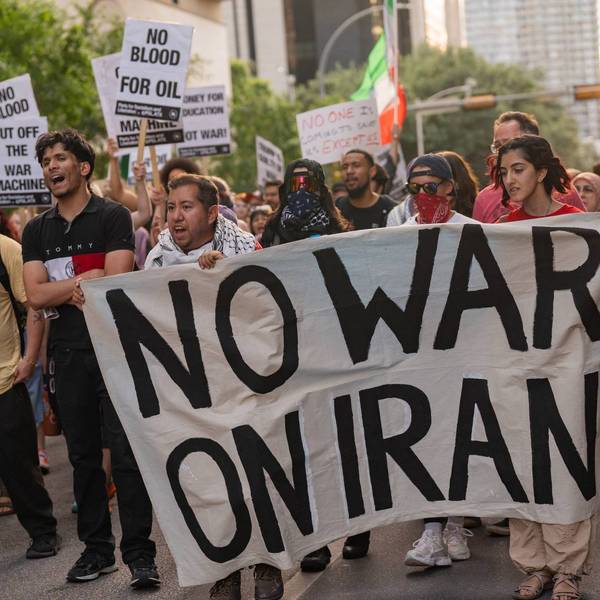
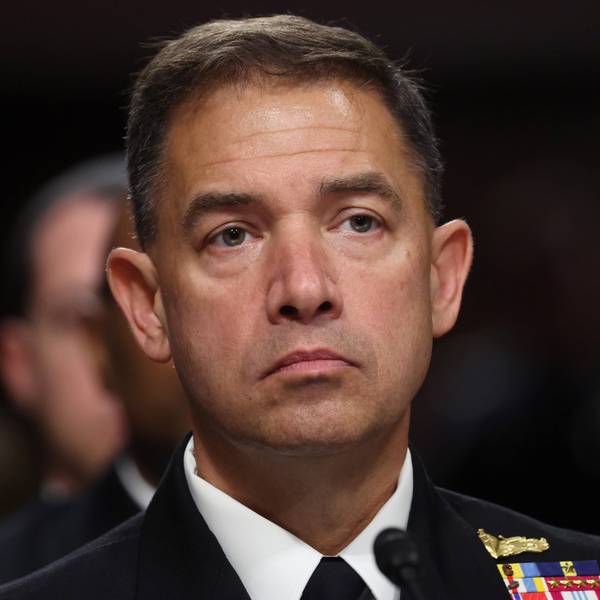
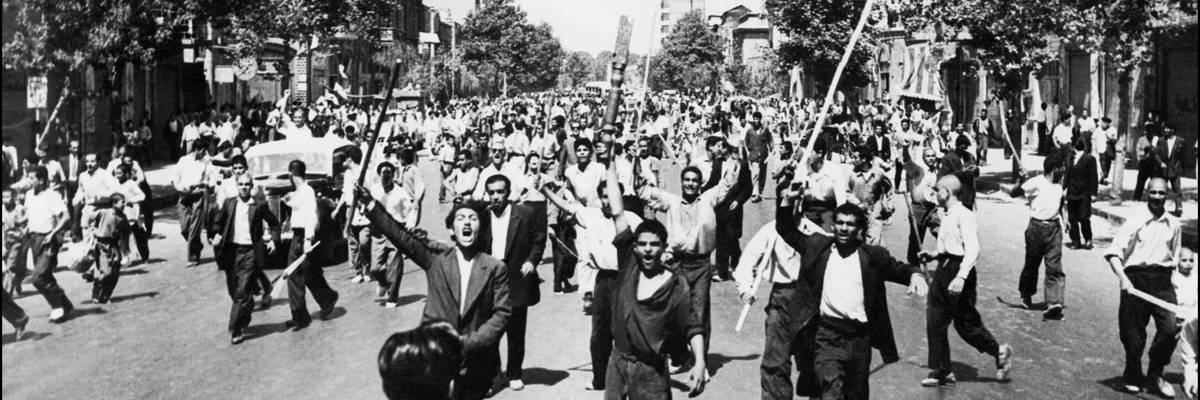
Rioters armed with staves shout slogans, during riots in Tehran, August 1953; on August 19, 1953, democratically-elected Iranian Prime Minister Mohammad Mossadegh was overthrown in a coup orchestrated by the CIA and British intelligence, after having nationalized the oil industry.
The Price of Not Knowing: Iran, Corporate Interests, and America's Cycle of Violence
Why did the United States help topple a democratic government in Iran some 70 years ago—and how did that decision create the conditions we’re seeing today?
Every war of choice depends on public complicity.
Fifty-nine percent of Americans disapprove, but what can we do to stop this war? The justifications coming from the Trump administration are, by any honest accounting, muddled, contradictory, and changing by the day. There are so many unanswered questions, but a good place to start would be by asking how did Iran become our enemy in the first place? Why did the United States help topple a democratic government in Iran some 70 years ago—and how did that decision create the conditions we’re seeing today?
When Iran Was a Democracy
To understand how Iran became an adversary, we can start by returning to the decision made by the United States and Britain to overthrow Iran’s Prime Minister, Mohammad Mosaddegh.
Mosaddegh was the sort of leader the US should have loved. He was anti-communist, at a time when containing the Soviet Union was the paramount US foreign policy aim. He pursued reforms that expanded the rights of women, and the political and economic conditions of the poor. He was widely respected internationally, and was named Time magazine’s Man of the Year in 1951.
Few Americans know this history. In Iran, though, it is remembered as the moment when the United States claimed the country’s petroleum wealth for itself and crushed a democratic government that sought to make life better for ordinary people.
His fatal crime in the eyes of Western powers, was nationalizing Iran’s oil production, which had been controlled by the British-owned Anglo-Iranian Oil Company.
“With the oil revenues, we could meet our entire budget and combat poverty, disease, and backwardness among our people,” Mosaddegh said in a 1951 speech to the United Nations. “By the elimination of the power of the British company, we would also eliminate corruption and intrigue.”
For British and US leaders, a sovereign nation asserting control over its own resources, rather than bowing to a foreign corporation, was intolerable. Likewise, battling the corrupting influences of a foreign company.
The intelligence agencies of the two nations launched a campaign to destabilize the Mosaddegh government, with media disinformation, targeted bribery, harrassment, lies to religious and political leaders, and orchestrated riots.
Finally, on August 19, 1953, Mosaddegh was overthrown in a coup backed by the CIA and Britain’s MI6.
The Shah of Iran, Mohammad Reza Pahlavi, was restored to power, and he appointed the CIA’s choice, General Fazlollah Zahedi, as prime minister.
The government outlawed Mosaddegh's National Front and arrested most of its leaders. The SAVAK secret police force, with funding and training from the US, conducted widespread repression. Over 130,000 were arrested, and thousands were tortured and executed. The Shah’s policies furthered the wealth and landownings of his own family and friends, while many farmers couldn't get access to land and were forced to migrate to cities and live in shanty towns.
Yet the US built warm relations with the new regime as US corporations gained control of 40% of the country’s oil fields along with access to much of the remaining output.
Blowback
By the late 1970s, resentment toward the Shah’s authoritarian rule exploded into revolution. In 1979, the Shah was overthrown and the Islamic Republic was born. The new government defined itself partly in opposition to the United States—an enemy that many Iranians believed had stolen their democracy a generation earlier.
From that moment on, relations between Washington and Tehran were marked by mistrust, hostility, and periodic confrontation.
Few Americans know this history. In Iran, though, it is remembered as the moment when the United States claimed the country’s petroleum wealth for itself and crushed a democratic government that sought to make life better for ordinary people.
A Pattern of Military Interference
The overthrow of Mosaddegh was not an isolated episode. The United States has a long history of undermining governments that put their own citizens ahead of US economic interests.
In 1954, the CIA helped engineer the overthrow of Guatemala’s elected president, Jacobo Árbenz. His crime? Land reforms that would have given poor farmers opportunities for a livelihood while taking, and paying for, land unused by the United Fruit Company.
The result of the coup was a series of dictatorships. Political opponents, labor unions leaders, farmers, and human rights activists were imprisoned, “disappeared,” and executed. Wave after wave of genocidal massacres targeted Indigenous villagers. Land reform was reversed and poverty deepened.
We set up the next war when we fail to reckon with choices made in previous conflicts that created instability, oppression, abuses, poverty, and resentment.
Many Americans enjoy visiting this beautiful Central American country, but few know the role the US government played in impoverishing this small nation. Likewise, those calling for the deporting of Guatemalans rarely acknowledge the reasons these refugees are fleeing their communities.
Two decades later, the United States helped destabilize the democratically elected government of Salvador Allende in Chile, culminating in the US-supported military coup in 1973 led by Augusto Pinochet. The resulting dictatorship lasted for 17 years, leading to the exile of an estimated 200,000, the torture of tens of thousands, and the death of some 3,000 Chileans. The regime’s extreme economic policies brought about cuts in the safety net, a massive buildup in military spending, and high unemployment.
US copper mining companies benefited from the coup, receiving compensation for the nationalizations that had taken place under the Allende government. More importantly, international mining companies were permitted to extract enormous profits from subsequent mining operations.
In addition to enriching these foreign corporations, the coup prevented Allende from leading a successful socialist government that might have inspired others across the Americas to mobilize for more egalitarian governments.
Each case had its own circumstances. But the pattern is unmistakable: When governments around the world pursue policies perceived as threatening US corporate interests, Washington all too often resorts to clandestine interference or military attacks. And all too often, the justifications and patriotic propaganda is all that Americans learn about what took place.
There have been important exceptions to the widespread ignorance. US Marine Smedley Butler, who at the time of his death was the most decorated Marine in US history, saw firsthand who benefited from US wars. He wrote this in a 1935 magazine article:
I spent 33 years and four months in active military service and during that period I spent most of my time as a high class muscle man for Big Business, for Wall Street and the bankers. In short, I was a racketeer; a gangster for capitalism. I helped make Mexico and especially Tampico safe for American oil interests in 1914. I helped make Haiti and Cuba a decent place for the National City Bank boys to collect revenues in. I helped in the raping of half a dozen Central American republics for the benefit of Wall Street. I helped purify Nicaragua for the International Banking House of Brown Brothers in 1902–1912. I brought light to the Dominican Republic for the American sugar interests in 1916. I helped make Honduras right for the American fruit companies in 1903.
For many Americans, these episodes remain obscure chapters of history. Yet, in much of the world, these events set the stage for decades of poverty and political repression.
The Choice to Support War
Wars are often described as tragic inevitabilities—conflicts that somehow spiral beyond anyone’s understanding. In reality, we set up the next war when we fail to reckon with choices made in previous conflicts that created instability, oppression, abuses, poverty, and resentment.
- Well-connected corporations who insist on military support for their control of resources abroad, even when this means undermining another country’s sovereignty, economy, and political stability.
- Political leaders who put Americans in uniform in harms way and spend trillions in taxpayer dollars to support corporate interests abroad, instead of looking out for the well-being of ordinary people.
- Apologists for violence abroad, who generate anti-communist, anti-Islamic, or other propaganda instead of honest analysis.
- Media outlets that repeat official narratives without scrutiny, and downplay the harms caused by US foreign policy choices, especially when those impacted are of different races or religions.
- Defense contractors who profit from excessive military spending. (US defense stocks have been on the upswing as a $50 billion supplemental defense spending package looms, according to Bloomberg.)
- And US citizens who buy the war propaganda, look away from the suffering, and disregard the reasons refugees may be fleeing the chaos and violence.
Each group occupies its own circle of complicity, and each gains in a different way. Some may claim ignorance and others may argue that they were powerless to intervene. But history suggests that silence and complacency can be powerful enablers of atrocities.
What We Pay for Not Knowing
After disastrous wars in Afghanistan and Iraq, there are signs that this time might be different. A majority of Americans disapprove of the US bombing of Iran, according to a CNN poll taken immediately following the launch of the war. American service members have begun paying with their lives. The Center for American Progress estimates the war’s price tag already exceeds $5 billion—with safety-net programs in free fall and gas prices rising.
But it will take more than passive disapproval to stop yet another war of choice.
Reckoning with the abuses of the powerful and naming those profiting from the willful blindness in the face of atrocities are first steps toward ending the cycles of violence. All of us pay for these wars, whether through lives lost, democracies imperiled, excessive public spending on a bloated military-industrial complex, or through the neglect of needed investments at home.
An informed public—asking questions and refusing complicity—is the first step to stopping this and future wars of choice.
We are at a crossroads
This country and this world are at a monumental crossroads. In a few short weeks, US voters will have an opportunity to beat back the forces of fascism and confront the billionaires who are rigging the economy, our media system, and our democracy, making it increasingly impossible for ordinary people to get by. We’re not just talking about the election. We’re talking about what must be done once these fascist elements are vanquished from power. We need a bolder set of solutions than what either major party has so far been willing to offer and a working-class movement ready to fight like hell for it. Trump didn't emerge from nowhere. The conditions that fueled MAGA authoritarianism were created by decades of radical neoliberal economic policies and a corrupt political system dominated by corporate interests. They slashed taxes on the super-rich, promising that the benefits would trickle down. They said giveaways to the corporate titans would make life more affordable for the rest of us. It was all bullshit. And when a bitter, betrayed populace searches for someone to blame, right-wing demagogues have little trouble finding scapegoats. People know when they're being lied to, but you won't hear any of this from the corporate media. Only independent journalism—powered and funded by people who believe in building a better world—can deliver truly trustworthy daily news. Our Fall Campaign is underway, and we need your help. To power our newsroom through the rest of the year, we need to raise $125,000 by midnight on October 31. So if you share our vision, please contribute whatever you can to sustain our work. |
Every war of choice depends on public complicity.
Fifty-nine percent of Americans disapprove, but what can we do to stop this war? The justifications coming from the Trump administration are, by any honest accounting, muddled, contradictory, and changing by the day. There are so many unanswered questions, but a good place to start would be by asking how did Iran become our enemy in the first place? Why did the United States help topple a democratic government in Iran some 70 years ago—and how did that decision create the conditions we’re seeing today?
When Iran Was a Democracy
To understand how Iran became an adversary, we can start by returning to the decision made by the United States and Britain to overthrow Iran’s Prime Minister, Mohammad Mosaddegh.
Mosaddegh was the sort of leader the US should have loved. He was anti-communist, at a time when containing the Soviet Union was the paramount US foreign policy aim. He pursued reforms that expanded the rights of women, and the political and economic conditions of the poor. He was widely respected internationally, and was named Time magazine’s Man of the Year in 1951.
Few Americans know this history. In Iran, though, it is remembered as the moment when the United States claimed the country’s petroleum wealth for itself and crushed a democratic government that sought to make life better for ordinary people.
His fatal crime in the eyes of Western powers, was nationalizing Iran’s oil production, which had been controlled by the British-owned Anglo-Iranian Oil Company.
“With the oil revenues, we could meet our entire budget and combat poverty, disease, and backwardness among our people,” Mosaddegh said in a 1951 speech to the United Nations. “By the elimination of the power of the British company, we would also eliminate corruption and intrigue.”
For British and US leaders, a sovereign nation asserting control over its own resources, rather than bowing to a foreign corporation, was intolerable. Likewise, battling the corrupting influences of a foreign company.
The intelligence agencies of the two nations launched a campaign to destabilize the Mosaddegh government, with media disinformation, targeted bribery, harrassment, lies to religious and political leaders, and orchestrated riots.
Finally, on August 19, 1953, Mosaddegh was overthrown in a coup backed by the CIA and Britain’s MI6.
The Shah of Iran, Mohammad Reza Pahlavi, was restored to power, and he appointed the CIA’s choice, General Fazlollah Zahedi, as prime minister.
The government outlawed Mosaddegh's National Front and arrested most of its leaders. The SAVAK secret police force, with funding and training from the US, conducted widespread repression. Over 130,000 were arrested, and thousands were tortured and executed. The Shah’s policies furthered the wealth and landownings of his own family and friends, while many farmers couldn't get access to land and were forced to migrate to cities and live in shanty towns.
Yet the US built warm relations with the new regime as US corporations gained control of 40% of the country’s oil fields along with access to much of the remaining output.
Blowback
By the late 1970s, resentment toward the Shah’s authoritarian rule exploded into revolution. In 1979, the Shah was overthrown and the Islamic Republic was born. The new government defined itself partly in opposition to the United States—an enemy that many Iranians believed had stolen their democracy a generation earlier.
From that moment on, relations between Washington and Tehran were marked by mistrust, hostility, and periodic confrontation.
Few Americans know this history. In Iran, though, it is remembered as the moment when the United States claimed the country’s petroleum wealth for itself and crushed a democratic government that sought to make life better for ordinary people.
A Pattern of Military Interference
The overthrow of Mosaddegh was not an isolated episode. The United States has a long history of undermining governments that put their own citizens ahead of US economic interests.
In 1954, the CIA helped engineer the overthrow of Guatemala’s elected president, Jacobo Árbenz. His crime? Land reforms that would have given poor farmers opportunities for a livelihood while taking, and paying for, land unused by the United Fruit Company.
The result of the coup was a series of dictatorships. Political opponents, labor unions leaders, farmers, and human rights activists were imprisoned, “disappeared,” and executed. Wave after wave of genocidal massacres targeted Indigenous villagers. Land reform was reversed and poverty deepened.
We set up the next war when we fail to reckon with choices made in previous conflicts that created instability, oppression, abuses, poverty, and resentment.
Many Americans enjoy visiting this beautiful Central American country, but few know the role the US government played in impoverishing this small nation. Likewise, those calling for the deporting of Guatemalans rarely acknowledge the reasons these refugees are fleeing their communities.
Two decades later, the United States helped destabilize the democratically elected government of Salvador Allende in Chile, culminating in the US-supported military coup in 1973 led by Augusto Pinochet. The resulting dictatorship lasted for 17 years, leading to the exile of an estimated 200,000, the torture of tens of thousands, and the death of some 3,000 Chileans. The regime’s extreme economic policies brought about cuts in the safety net, a massive buildup in military spending, and high unemployment.
US copper mining companies benefited from the coup, receiving compensation for the nationalizations that had taken place under the Allende government. More importantly, international mining companies were permitted to extract enormous profits from subsequent mining operations.
In addition to enriching these foreign corporations, the coup prevented Allende from leading a successful socialist government that might have inspired others across the Americas to mobilize for more egalitarian governments.
Each case had its own circumstances. But the pattern is unmistakable: When governments around the world pursue policies perceived as threatening US corporate interests, Washington all too often resorts to clandestine interference or military attacks. And all too often, the justifications and patriotic propaganda is all that Americans learn about what took place.
There have been important exceptions to the widespread ignorance. US Marine Smedley Butler, who at the time of his death was the most decorated Marine in US history, saw firsthand who benefited from US wars. He wrote this in a 1935 magazine article:
I spent 33 years and four months in active military service and during that period I spent most of my time as a high class muscle man for Big Business, for Wall Street and the bankers. In short, I was a racketeer; a gangster for capitalism. I helped make Mexico and especially Tampico safe for American oil interests in 1914. I helped make Haiti and Cuba a decent place for the National City Bank boys to collect revenues in. I helped in the raping of half a dozen Central American republics for the benefit of Wall Street. I helped purify Nicaragua for the International Banking House of Brown Brothers in 1902–1912. I brought light to the Dominican Republic for the American sugar interests in 1916. I helped make Honduras right for the American fruit companies in 1903.
For many Americans, these episodes remain obscure chapters of history. Yet, in much of the world, these events set the stage for decades of poverty and political repression.
The Choice to Support War
Wars are often described as tragic inevitabilities—conflicts that somehow spiral beyond anyone’s understanding. In reality, we set up the next war when we fail to reckon with choices made in previous conflicts that created instability, oppression, abuses, poverty, and resentment.
- Well-connected corporations who insist on military support for their control of resources abroad, even when this means undermining another country’s sovereignty, economy, and political stability.
- Political leaders who put Americans in uniform in harms way and spend trillions in taxpayer dollars to support corporate interests abroad, instead of looking out for the well-being of ordinary people.
- Apologists for violence abroad, who generate anti-communist, anti-Islamic, or other propaganda instead of honest analysis.
- Media outlets that repeat official narratives without scrutiny, and downplay the harms caused by US foreign policy choices, especially when those impacted are of different races or religions.
- Defense contractors who profit from excessive military spending. (US defense stocks have been on the upswing as a $50 billion supplemental defense spending package looms, according to Bloomberg.)
- And US citizens who buy the war propaganda, look away from the suffering, and disregard the reasons refugees may be fleeing the chaos and violence.
Each group occupies its own circle of complicity, and each gains in a different way. Some may claim ignorance and others may argue that they were powerless to intervene. But history suggests that silence and complacency can be powerful enablers of atrocities.
What We Pay for Not Knowing
After disastrous wars in Afghanistan and Iraq, there are signs that this time might be different. A majority of Americans disapprove of the US bombing of Iran, according to a CNN poll taken immediately following the launch of the war. American service members have begun paying with their lives. The Center for American Progress estimates the war’s price tag already exceeds $5 billion—with safety-net programs in free fall and gas prices rising.
But it will take more than passive disapproval to stop yet another war of choice.
Reckoning with the abuses of the powerful and naming those profiting from the willful blindness in the face of atrocities are first steps toward ending the cycles of violence. All of us pay for these wars, whether through lives lost, democracies imperiled, excessive public spending on a bloated military-industrial complex, or through the neglect of needed investments at home.
An informed public—asking questions and refusing complicity—is the first step to stopping this and future wars of choice.
- Unrest in Iran, Plausible Deniability, and the Ghosts of 1953 ›
- US Commanders Want to Make War With Iran as ‘Bloody’ as Possible to Bring About Biblical End Times, Officers Report ›
- For a Different Kind of Apocalypse—From LA to Tehran ›
- Conflict With Iran Portends World War III ›
- The Cost of War: Iran's Strategy to Make Trump Pay ›
- The Invention of the Iranian Threat ›
Every war of choice depends on public complicity.
Fifty-nine percent of Americans disapprove, but what can we do to stop this war? The justifications coming from the Trump administration are, by any honest accounting, muddled, contradictory, and changing by the day. There are so many unanswered questions, but a good place to start would be by asking how did Iran become our enemy in the first place? Why did the United States help topple a democratic government in Iran some 70 years ago—and how did that decision create the conditions we’re seeing today?
When Iran Was a Democracy
To understand how Iran became an adversary, we can start by returning to the decision made by the United States and Britain to overthrow Iran’s Prime Minister, Mohammad Mosaddegh.
Mosaddegh was the sort of leader the US should have loved. He was anti-communist, at a time when containing the Soviet Union was the paramount US foreign policy aim. He pursued reforms that expanded the rights of women, and the political and economic conditions of the poor. He was widely respected internationally, and was named Time magazine’s Man of the Year in 1951.
Few Americans know this history. In Iran, though, it is remembered as the moment when the United States claimed the country’s petroleum wealth for itself and crushed a democratic government that sought to make life better for ordinary people.
His fatal crime in the eyes of Western powers, was nationalizing Iran’s oil production, which had been controlled by the British-owned Anglo-Iranian Oil Company.
“With the oil revenues, we could meet our entire budget and combat poverty, disease, and backwardness among our people,” Mosaddegh said in a 1951 speech to the United Nations. “By the elimination of the power of the British company, we would also eliminate corruption and intrigue.”
For British and US leaders, a sovereign nation asserting control over its own resources, rather than bowing to a foreign corporation, was intolerable. Likewise, battling the corrupting influences of a foreign company.
The intelligence agencies of the two nations launched a campaign to destabilize the Mosaddegh government, with media disinformation, targeted bribery, harrassment, lies to religious and political leaders, and orchestrated riots.
Finally, on August 19, 1953, Mosaddegh was overthrown in a coup backed by the CIA and Britain’s MI6.
The Shah of Iran, Mohammad Reza Pahlavi, was restored to power, and he appointed the CIA’s choice, General Fazlollah Zahedi, as prime minister.
The government outlawed Mosaddegh's National Front and arrested most of its leaders. The SAVAK secret police force, with funding and training from the US, conducted widespread repression. Over 130,000 were arrested, and thousands were tortured and executed. The Shah’s policies furthered the wealth and landownings of his own family and friends, while many farmers couldn't get access to land and were forced to migrate to cities and live in shanty towns.
Yet the US built warm relations with the new regime as US corporations gained control of 40% of the country’s oil fields along with access to much of the remaining output.
Blowback
By the late 1970s, resentment toward the Shah’s authoritarian rule exploded into revolution. In 1979, the Shah was overthrown and the Islamic Republic was born. The new government defined itself partly in opposition to the United States—an enemy that many Iranians believed had stolen their democracy a generation earlier.
From that moment on, relations between Washington and Tehran were marked by mistrust, hostility, and periodic confrontation.
Few Americans know this history. In Iran, though, it is remembered as the moment when the United States claimed the country’s petroleum wealth for itself and crushed a democratic government that sought to make life better for ordinary people.
A Pattern of Military Interference
The overthrow of Mosaddegh was not an isolated episode. The United States has a long history of undermining governments that put their own citizens ahead of US economic interests.
In 1954, the CIA helped engineer the overthrow of Guatemala’s elected president, Jacobo Árbenz. His crime? Land reforms that would have given poor farmers opportunities for a livelihood while taking, and paying for, land unused by the United Fruit Company.
The result of the coup was a series of dictatorships. Political opponents, labor unions leaders, farmers, and human rights activists were imprisoned, “disappeared,” and executed. Wave after wave of genocidal massacres targeted Indigenous villagers. Land reform was reversed and poverty deepened.
We set up the next war when we fail to reckon with choices made in previous conflicts that created instability, oppression, abuses, poverty, and resentment.
Many Americans enjoy visiting this beautiful Central American country, but few know the role the US government played in impoverishing this small nation. Likewise, those calling for the deporting of Guatemalans rarely acknowledge the reasons these refugees are fleeing their communities.
Two decades later, the United States helped destabilize the democratically elected government of Salvador Allende in Chile, culminating in the US-supported military coup in 1973 led by Augusto Pinochet. The resulting dictatorship lasted for 17 years, leading to the exile of an estimated 200,000, the torture of tens of thousands, and the death of some 3,000 Chileans. The regime’s extreme economic policies brought about cuts in the safety net, a massive buildup in military spending, and high unemployment.
US copper mining companies benefited from the coup, receiving compensation for the nationalizations that had taken place under the Allende government. More importantly, international mining companies were permitted to extract enormous profits from subsequent mining operations.
In addition to enriching these foreign corporations, the coup prevented Allende from leading a successful socialist government that might have inspired others across the Americas to mobilize for more egalitarian governments.
Each case had its own circumstances. But the pattern is unmistakable: When governments around the world pursue policies perceived as threatening US corporate interests, Washington all too often resorts to clandestine interference or military attacks. And all too often, the justifications and patriotic propaganda is all that Americans learn about what took place.
There have been important exceptions to the widespread ignorance. US Marine Smedley Butler, who at the time of his death was the most decorated Marine in US history, saw firsthand who benefited from US wars. He wrote this in a 1935 magazine article:
I spent 33 years and four months in active military service and during that period I spent most of my time as a high class muscle man for Big Business, for Wall Street and the bankers. In short, I was a racketeer; a gangster for capitalism. I helped make Mexico and especially Tampico safe for American oil interests in 1914. I helped make Haiti and Cuba a decent place for the National City Bank boys to collect revenues in. I helped in the raping of half a dozen Central American republics for the benefit of Wall Street. I helped purify Nicaragua for the International Banking House of Brown Brothers in 1902–1912. I brought light to the Dominican Republic for the American sugar interests in 1916. I helped make Honduras right for the American fruit companies in 1903.
For many Americans, these episodes remain obscure chapters of history. Yet, in much of the world, these events set the stage for decades of poverty and political repression.
The Choice to Support War
Wars are often described as tragic inevitabilities—conflicts that somehow spiral beyond anyone’s understanding. In reality, we set up the next war when we fail to reckon with choices made in previous conflicts that created instability, oppression, abuses, poverty, and resentment.
- Well-connected corporations who insist on military support for their control of resources abroad, even when this means undermining another country’s sovereignty, economy, and political stability.
- Political leaders who put Americans in uniform in harms way and spend trillions in taxpayer dollars to support corporate interests abroad, instead of looking out for the well-being of ordinary people.
- Apologists for violence abroad, who generate anti-communist, anti-Islamic, or other propaganda instead of honest analysis.
- Media outlets that repeat official narratives without scrutiny, and downplay the harms caused by US foreign policy choices, especially when those impacted are of different races or religions.
- Defense contractors who profit from excessive military spending. (US defense stocks have been on the upswing as a $50 billion supplemental defense spending package looms, according to Bloomberg.)
- And US citizens who buy the war propaganda, look away from the suffering, and disregard the reasons refugees may be fleeing the chaos and violence.
Each group occupies its own circle of complicity, and each gains in a different way. Some may claim ignorance and others may argue that they were powerless to intervene. But history suggests that silence and complacency can be powerful enablers of atrocities.
What We Pay for Not Knowing
After disastrous wars in Afghanistan and Iraq, there are signs that this time might be different. A majority of Americans disapprove of the US bombing of Iran, according to a CNN poll taken immediately following the launch of the war. American service members have begun paying with their lives. The Center for American Progress estimates the war’s price tag already exceeds $5 billion—with safety-net programs in free fall and gas prices rising.
But it will take more than passive disapproval to stop yet another war of choice.
Reckoning with the abuses of the powerful and naming those profiting from the willful blindness in the face of atrocities are first steps toward ending the cycles of violence. All of us pay for these wars, whether through lives lost, democracies imperiled, excessive public spending on a bloated military-industrial complex, or through the neglect of needed investments at home.
An informed public—asking questions and refusing complicity—is the first step to stopping this and future wars of choice.
- Unrest in Iran, Plausible Deniability, and the Ghosts of 1953 ›
- US Commanders Want to Make War With Iran as ‘Bloody’ as Possible to Bring About Biblical End Times, Officers Report ›
- For a Different Kind of Apocalypse—From LA to Tehran ›
- Conflict With Iran Portends World War III ›
- The Cost of War: Iran's Strategy to Make Trump Pay ›
- The Invention of the Iranian Threat ›