

SUBSCRIBE TO OUR FREE NEWSLETTER
Daily news & progressive opinion—funded by the people, not the corporations—delivered straight to your inbox.
5
#000000
#FFFFFF
To donate by check, phone, or other method, see our More Ways to Give page.
Daily news & progressive opinion—funded by the people, not the corporations—delivered straight to your inbox.
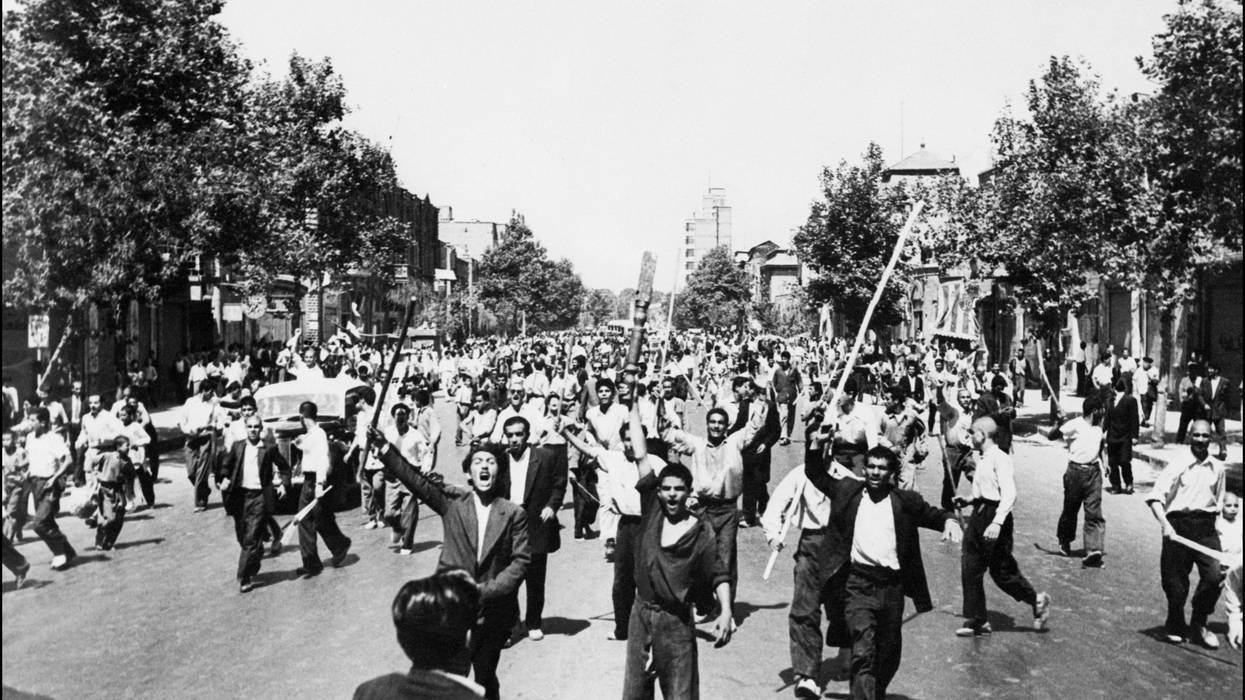
Why did the United States help topple a democratic government in Iran some 70 years ago—and how did that decision create the conditions we’re seeing today?
Every war of choice depends on public complicity.
Fifty-nine percent of Americans disapprove, but what can we do to stop this war? The justifications coming from the Trump administration are, by any honest accounting, muddled, contradictory, and changing by the day. There are so many unanswered questions, but a good place to start would be by asking how did Iran become our enemy in the first place? Why did the United States help topple a democratic government in Iran some 70 years ago—and how did that decision create the conditions we’re seeing today?
To understand how Iran became an adversary, we can start by returning to the decision made by the United States and Britain to overthrow Iran’s Prime Minister, Mohammad Mosaddegh.
Mosaddegh was the sort of leader the US should have loved. He was anti-communist, at a time when containing the Soviet Union was the paramount US foreign policy aim. He pursued reforms that expanded the rights of women, and the political and economic conditions of the poor. He was widely respected internationally, and was named Time magazine’s Man of the Year in 1951.
Few Americans know this history. In Iran, though, it is remembered as the moment when the United States claimed the country’s petroleum wealth for itself and crushed a democratic government that sought to make life better for ordinary people.
His fatal crime in the eyes of Western powers, was nationalizing Iran’s oil production, which had been controlled by the British-owned Anglo-Iranian Oil Company.
“With the oil revenues, we could meet our entire budget and combat poverty, disease, and backwardness among our people,” Mosaddegh said in a 1951 speech to the United Nations. “By the elimination of the power of the British company, we would also eliminate corruption and intrigue.”
For British and US leaders, a sovereign nation asserting control over its own resources, rather than bowing to a foreign corporation, was intolerable. Likewise, battling the corrupting influences of a foreign company.
The intelligence agencies of the two nations launched a campaign to destabilize the Mosaddegh government, with media disinformation, targeted bribery, harrassment, lies to religious and political leaders, and orchestrated riots.
Finally, on August 19, 1953, Mosaddegh was overthrown in a coup backed by the CIA and Britain’s MI6.
The Shah of Iran, Mohammad Reza Pahlavi, was restored to power, and he appointed the CIA’s choice, General Fazlollah Zahedi, as prime minister.
The government outlawed Mosaddegh's National Front and arrested most of its leaders. The SAVAK secret police force, with funding and training from the US, conducted widespread repression. Over 130,000 were arrested, and thousands were tortured and executed. The Shah’s policies furthered the wealth and landownings of his own family and friends, while many farmers couldn't get access to land and were forced to migrate to cities and live in shanty towns.
Yet the US built warm relations with the new regime as US corporations gained control of 40% of the country’s oil fields along with access to much of the remaining output.
By the late 1970s, resentment toward the Shah’s authoritarian rule exploded into revolution. In 1979, the Shah was overthrown and the Islamic Republic was born. The new government defined itself partly in opposition to the United States—an enemy that many Iranians believed had stolen their democracy a generation earlier.
From that moment on, relations between Washington and Tehran were marked by mistrust, hostility, and periodic confrontation.
Few Americans know this history. In Iran, though, it is remembered as the moment when the United States claimed the country’s petroleum wealth for itself and crushed a democratic government that sought to make life better for ordinary people.
The overthrow of Mosaddegh was not an isolated episode. The United States has a long history of undermining governments that put their own citizens ahead of US economic interests.
In 1954, the CIA helped engineer the overthrow of Guatemala’s elected president, Jacobo Árbenz. His crime? Land reforms that would have given poor farmers opportunities for a livelihood while taking, and paying for, land unused by the United Fruit Company.
The result of the coup was a series of dictatorships. Political opponents, labor unions leaders, farmers, and human rights activists were imprisoned, “disappeared,” and executed. Wave after wave of genocidal massacres targeted Indigenous villagers. Land reform was reversed and poverty deepened.
We set up the next war when we fail to reckon with choices made in previous conflicts that created instability, oppression, abuses, poverty, and resentment.
Many Americans enjoy visiting this beautiful Central American country, but few know the role the US government played in impoverishing this small nation. Likewise, those calling for the deporting of Guatemalans rarely acknowledge the reasons these refugees are fleeing their communities.
Two decades later, the United States helped destabilize the democratically elected government of Salvador Allende in Chile, culminating in the US-supported military coup in 1973 led by Augusto Pinochet. The resulting dictatorship lasted for 17 years, leading to the exile of an estimated 200,000, the torture of tens of thousands, and the death of some 3,000 Chileans. The regime’s extreme economic policies brought about cuts in the safety net, a massive buildup in military spending, and high unemployment.
US copper mining companies benefited from the coup, receiving compensation for the nationalizations that had taken place under the Allende government. More importantly, international mining companies were permitted to extract enormous profits from subsequent mining operations.
In addition to enriching these foreign corporations, the coup prevented Allende from leading a successful socialist government that might have inspired others across the Americas to mobilize for more egalitarian governments.
Each case had its own circumstances. But the pattern is unmistakable: When governments around the world pursue policies perceived as threatening US corporate interests, Washington all too often resorts to clandestine interference or military attacks. And all too often, the justifications and patriotic propaganda is all that Americans learn about what took place.
There have been important exceptions to the widespread ignorance. US Marine Smedley Butler, who at the time of his death was the most decorated Marine in US history, saw firsthand who benefited from US wars. He wrote this in a 1935 magazine article:
I spent 33 years and four months in active military service and during that period I spent most of my time as a high class muscle man for Big Business, for Wall Street and the bankers. In short, I was a racketeer; a gangster for capitalism. I helped make Mexico and especially Tampico safe for American oil interests in 1914. I helped make Haiti and Cuba a decent place for the National City Bank boys to collect revenues in. I helped in the raping of half a dozen Central American republics for the benefit of Wall Street. I helped purify Nicaragua for the International Banking House of Brown Brothers in 1902–1912. I brought light to the Dominican Republic for the American sugar interests in 1916. I helped make Honduras right for the American fruit companies in 1903.
For many Americans, these episodes remain obscure chapters of history. Yet, in much of the world, these events set the stage for decades of poverty and political repression.
Wars are often described as tragic inevitabilities—conflicts that somehow spiral beyond anyone’s understanding. In reality, we set up the next war when we fail to reckon with choices made in previous conflicts that created instability, oppression, abuses, poverty, and resentment.
Each group occupies its own circle of complicity, and each gains in a different way. Some may claim ignorance and others may argue that they were powerless to intervene. But history suggests that silence and complacency can be powerful enablers of atrocities.
After disastrous wars in Afghanistan and Iraq, there are signs that this time might be different. A majority of Americans disapprove of the US bombing of Iran, according to a CNN poll taken immediately following the launch of the war. American service members have begun paying with their lives. The Center for American Progress estimates the war’s price tag already exceeds $5 billion—with safety-net programs in free fall and gas prices rising.
But it will take more than passive disapproval to stop yet another war of choice.
Reckoning with the abuses of the powerful and naming those profiting from the willful blindness in the face of atrocities are first steps toward ending the cycles of violence. All of us pay for these wars, whether through lives lost, democracies imperiled, excessive public spending on a bloated military-industrial complex, or through the neglect of needed investments at home.
An informed public—asking questions and refusing complicity—is the first step to stopping this and future wars of choice.
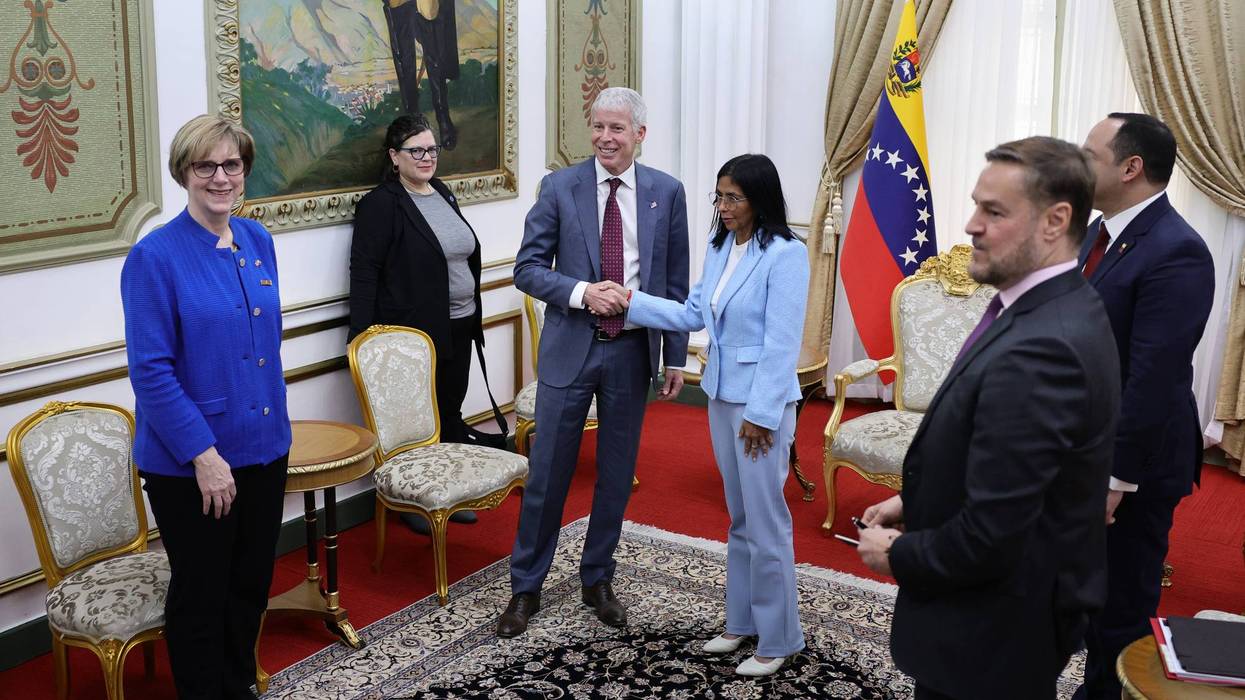
Dogu’s appointment ultimately signals not innovation but continuity: a recalibration of tactics in pursuit of the same objective that has defined US policy toward the Bolivarian Revolution for decades—regime change.
Laura Dogu, newly appointed US envoy to Venezuela, is described by the Los Angeles Times as an appropriate choice because she “navigated crises” in Nicaragua and Honduras during periods of “social and political volatility.” What the LA Times fails to add is that it was precisely Dogu’s job to create crisis and volatility in both countries.
In Latin America she is widely regarded, for good reason, as the “US ambassador of interventions and coups.”
The LA Times appears entirely relaxed about a US diplomat’s job being to meddle in the internal politics of a country whose president the US has just kidnapped in an operation resulting in the murder over 100 people and involving the bombing of key public buildings and health facilities.
Dogu enters the fray “leveraging her experience with authoritarian regimes” and her “deep Latin American expertise.” The LA Times implies that her job is likely to be proactive, looking for ways to ease out the Chavista government and replace it with one more to Washington’s liking, even if that takes a while.
Signaling that this is the case, the LA Times reporter asked right-wing opposition figures from Nicaragua for their opinions of Dogu, presumably on the basis that she is charged with working with similar quislings in her new role. Predictably, they praised her, admitting to having had clandestine meetings with her when she was based in the country and noting her public support for opposition groups.
Dogu was US ambassador in Managua from 2015 until October 2018, a period coinciding with the preparations and then the coup attempt that began in April 2018 and was defeated in July. At the start of her term, she had relatively cordial relations with the government. That changed after President Daniel Ortega was reelected in 2016 with an increased popular mandate. It became clear to Washington that electoral means to oust the Sandinistas lacked sufficient public support.
Instead, as the State Department admitted, the US concentrated their efforts on “civil society” groups led by opposition figures, “limiting their contact” with the elected government. It later emerged that, in the run-up to the April 2018 insurrection, millions of dollars were spent promoting such groups.
When the coup attempt fizzled, President Ortega explicitly identified Laura Dogu, as Washington’s representative, of being “the leader and financier of this conspiracy, the destruction, the fires, the torture, the disrespect for human dignity, the desecration of corpses, and other acts carried out with cruelty against all Nicaraguans marked by the great sin of being Sandinistas.” Within three months, Washington replaced her.
In Honduras, Xiomara Castro of the progressive Libre Party became president in January 2022. Laura Dogu arrived in Tegucigalpa as US ambassador just three months later.
The Center for Political and Economic Research (CEPR) catalogued some of her egregious interferences including with energy and tax reforms, creation of a Constitutional Tribunal, replacement of the attorney general, and the building of a prison.
By 2023, Dogu was already drawing criticism from the Honduran foreign minister, who asked her to “stop commenting on internal Honduran matters.” He criticized her again for similar reasons, in December 2024, after she held a series of meetings with NGOs critical of the government.
In August 2024, President Castro complained about Dogu, after the US diplomat criticized Honduran officials for meeting with their counterparts in Caracas. The ambassador characterized this meeting as “sitting next to a drug trafficker."
Then after a conflict with Dogu over Honduras’s extradition treaty with the US in September 2024 and a spate of rumors about the president’s family, Castro warned that a coup attempt was underway. Dogu concluded her term in Honduras before the presidential elections at the end of 2025, where the US did, in fact, decisively interfere.
The LA Times ingenuously commented that Dogu was “an unusual pick signaling a strategic shift in US policy.” It was neither. US policy remains regime change, but the tactics have shifted in response to the successful and unified resistance of the Bolivarian Revolution.
Venezuelan analyst Francisco Rodriguez noted: “Laura Dogu presented credentials as diplomatic representative of the US to the government of [acting President] Delcy Rodríguez today, that would count as an act of formal recognition.”
As for Dogu being “an unusual pick,” her record, as shown above, suggests a continuation of business as usual. CEPR put it bluntly: “Dogu’s appointment suggests that the administration sought someone with experience in aggressively interfering in a host country’s domestic affairs.”
There is nothing unusual about that. Between 1898 and 1994, the US perpetrated coups and government changes in Latin America at least 41 times. Dogu now presides over just another such attempt. The only reasons Washington itself hasn’t suffered a coup, Latin Americans quip, is because there is no US embassy there.
Far from breaking with the past, Dogu actually invokes it: “We never left the Cold War in Latin America,” she said.
Dogu recently tweeted: “Today I met with Delcy Rodríguez and Jorge Rodríguez to reiterate the three phases that @SecRubio has outlined regarding Venezuela: stabilization, economic recovery and reconciliation, and transition.”
The comment drew an immediate repudiation from the aforementioned Jorge Rodríguez, president of Venezuela’s National Assembly. The failure by Dogu to refer to him and acting President Delcy Rodríguez by their formal titles is a disrespectful snub. He characterized her remarks as “diplomatic blackmail” and a “colonial roadmap.” The Venezuelan leadership may have a gun held to their heads, but they continue to respond militantly.
For now, Dogu is concentrating on the “stabilization and economic recovery” phases of the Rubio dictate. The more contentious third phase will be “transition.”
In a telling pivot from its previous myth-making that the “opposition [is] more unified than ever,” the LA Times now admits that Dogu is just the right official to be foisted on Venezuela because of her experience navigating “fragmented opposition movements.” The opposition to the Chavista government has long been fractious despite hundreds of millions of dollars pumped into “democracy promotion” by the US.
Contrary to the myths in the corporate press, María Corina Machado and her hand-picked surrogate Edmundo González Urrutia may not be the people’s choice in Venezuela. No lesser authority than Donald Trump himself commented that Machado “doesn’t have the support within or the respect within the country.”
If the claims that the opposition won the July 2024 presidential by a 70% landslide were credible, why didn’t González present his evidence when summoned by Venezuela’s supreme court? Failing to do so left no constitutional basis for him to be declared the winner.
But that was the whole point of the Washington’s interference in backing an astroturf opposition with more traction inside the Beltway than in Caracas. The US objective was not to win the contest but to delegitimize Venezuelan President Nicolás Maduro. The deadly sanctions—illegal unilateral coercive measures—were explicitly designed as collective punishment to erode Maduro’s authority with his compatriots.
And when that failed and the Bolivarian Revolution prevailed, Washington escalated further, culminating in the January 3 kidnapping of a constitutional head of state. That military action formed part of its hybrid war, accompanied by sustained demonization of Maduro before the US public.
Laura Dogu’s appointment ultimately signals not innovation but continuity: a recalibration of tactics in pursuit of the same objective that has defined US policy toward the Bolivarian Revolution for decades—regime change through pressure, attrition, and delegitimization. Whether branded as “stabilization,” “economic recovery,” or “transition,” the underlying premise remains that Venezuela’s political future should be shaped in Washington, not Caracas.
Yet the record in Nicaragua, Honduras, and Venezuela itself suggests that external coercion has limits. Dogu’s mission will test not only Venezuela’s resilience but also the durability of the unremitting US strategy of Latin American interventions.
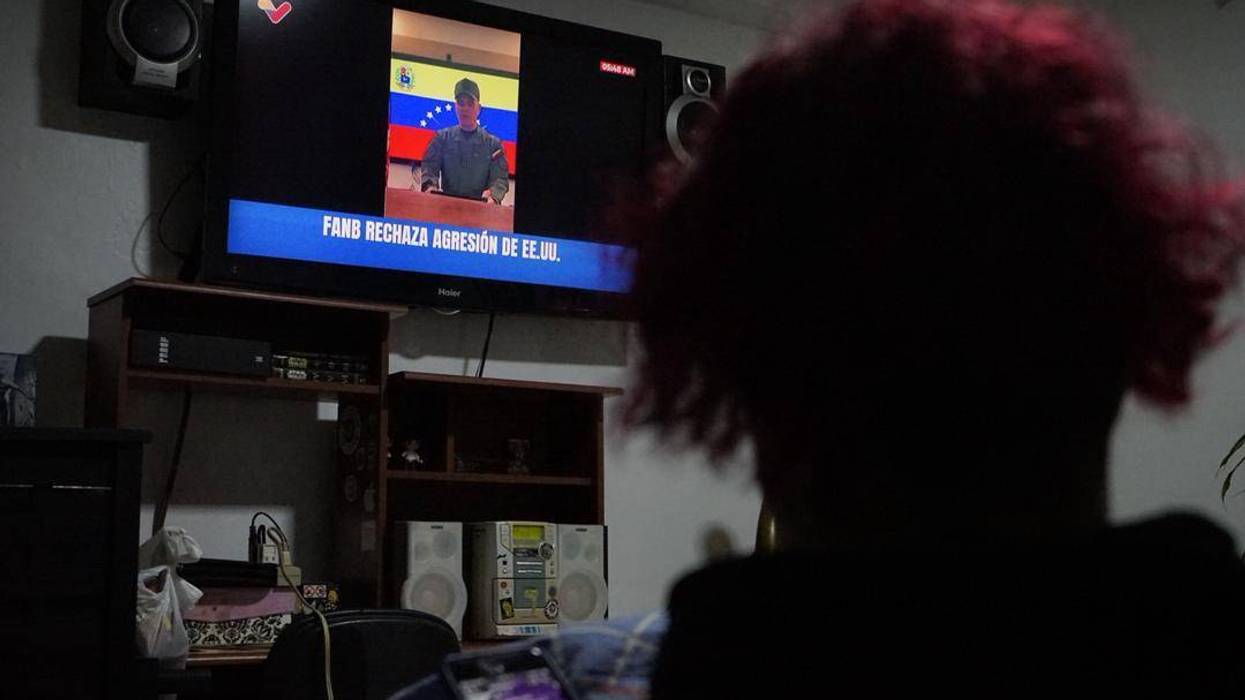
The chaos, suffering, and violence about to unfold will be a reminder of why coups are so destructive. Whoever celebrates this should own whatever is coming.
After a series of strikes in the last few days, and more than two decades of attempted coups (in 2002, 2019, and 2020), warfare, sanctions, and a “Maximum Pressure Campaign,” the United States has just toppled Venezuelan President Nicolás Maduro.
Maduro and his wife are standing trial for “narco-terrorism” charges, a cover to extend the War on Terror without congressional authorization, in New York, with members of his security team, along with several civilians, dead.
Far-right hardliner María Corina Machado, the leader of the opposition who has longstanding ties to the White House and even went on Donald Trump Jr.’s podcast to justify a coup based on oil wealth, was expected to be put in power. She promised to implement a vision of deep privatization under “Popular Capitalism,” modeled on Augusto Pinochet, Margaret Thatcher, and Ronald Reagan. However, President Donald Trump has said she “doesn’t have the support or the respect within the country,” with Vice President Delcy Rodriguez assuming the presidency, governing alongside the cabinet members remaining alive. With a CIA-imposed power vacuum and so many lingering questions, it is unclear who will govern in the near future.
In a sweeping slash, the coup took the air out of the revolutionary fervor that had carried the spirit of the Venezuelan free people since Simón Bolívar’s stunning victory against the Spanish in New Granada in 1811.
The US is now a mafia state, where oligarchs and extremists run foreign policy.
This coup is also a nod to the Kirkpatrick Doctrine, named after Reagan’s United Nations Ambassador and close foreign policy adviser, Jeane Kirkpatrick, who decreed that the US should support right-wing authoritarian or fascist regimes over democratically elected left-wing governments so long as they remain pro-capitalist and geopolitically aligned with Washington.
Meanwhile, Machado’s family were oligarchs, she helped briefly put an oligarch into power through a coup against Chávez in 2002, and she is still expected to govern following the edicts of the American oligarchical class.
The 48-hour 2002 coup, it is worth mentioning, produced the Carmona Decree, which dissolved the National Assembly, suspended the Constitution, purged democratic institutions, and appointed an oligarch-dictator, Pedro Carmona, openly revealing the anti-democratic nature of Venezuela’s far-right opposition when backed by Washington. It was never a fight for democracy and freedom, then or now.
The Trump administration just committed one of the greatest crimes in its history, in violation of democracy, sovereignty, and international laws, including Articles 1 and 2 of the Charter of the United Nations (which, by the way, was written primarily by the United States). This is a regime, not a democracy, led by a war president.
This is not about drugs; the US has created many of the very drug cartels it is fighting, while the president embraces and pardons drug traffickers like former President of Honduras, Juan Orlando Hernández, who was convicted in a US court of helping traffic more than 400 tons of cocaine into the United States, killing more Americans than on 9/11.
This coup, and the preceding drone strikes, were likely directed by the same CIA that, during the Cold War, worked directly with drug traffickers to advance US geopolitical goals, most infamously facilitating the flow of narcotics through Los Angeles, devastating Black communities with heroin and crack, while the proceeds were used to arm the Contras in Nicaragua, who committed atrocious war crimes.
It was also the same CIA that helped prop up the brutal far-right paramilitaries in Colombia, borne out of a war against left-wing guerrillas, paramilitaries which are now among the largest cocaine traffickers on Earth and committed various crimes against humanity including the False Positives Scandal.
There is no evidence for any of the claims the administration has been making on its drug strikes, and all evidence points to the dead being fishermen, blown up in international waters, another war crime. Even if they were traffickers, Trump has cajoled traffickers who kiss the ring and add to his family's billions.
It would have taken the small motorboats at least 10 refuelings to get to US shores; they were never going to the US. And should pharmaceutical company CEOs, or street-drug peddlers, get killed by missiles in Manhattan? This is ridiculous on its face.
This coup is also the death blow to the liberal order the US helped create with the Allies after the Second World War.
The administration is claiming that everyone is celebrating this coup, but support for this war is nil, both among Americans and Venezuelans. Western media coverage has overwhelmingly elevated Venezuelans who support the US-backed coup not because they are representative, but because they are disproportionately wealthy, urban, English-speaking, and geographically accessible to foreign journalists—often living in elite neighborhoods or abroad—while Chavismo’s base is concentrated in marginalized urban peripheries, rural zones, factories, and barrios that Western reporters rarely enter or even attempt to understand. Highlighting their support also helps manufacture support for the coup in the name of “balance,” while serving the corporate interests that fund most of Western media.
Moreover, following Covid-19, Venezuela'a economy, thanks to the relaxation of sanctions, had been faring better, while most of the population, though, yes, governed by a brutal dictatorship, were given public healthcare, education, literacy, roads, transportation, medicine, and food baskets, thanks to left-wing reforms (called Misiones).
The US is about to put in another brutal dictatorship, but one that cuts all these programs, selling the country away to American capitalists while obnoxiously screaming about freedom and democracy. When US Secretary of State Marco Rubio was arguing that countries in “our hemisphere” can’t be governed by "hostile regimes" or trade with US adversaries (a line that has been repeated by others in the administration), he was revealing that this isn’t actually about self-government or democracy.
Washington is refusing to acknowledge that it helped produce Venezuela’s highly authoritarian “Apertura” (Opening) era, following Venezuela’s discoveries of vast oil reserves, where the overwhelming majority of the resulting wealth was given to the very rich and Western energy companies. Those protesting were brutally repressed, jailed, tortured, or killed. It is against the backdrop of this inequality and repression that Hugo Chávez was elected. Chávez was a reaction, and the US, through this coup, is ensuring a repeat of those very conditions.
Toppling Maduro is about natural resources, of which Venezuela has trillions of dollars worth, and geopolitical dominance, in a region where US “adversaries” are increasingly popular. There is a strong indication that Cuba might be next, something that Marco Rubio has wanted for a very long time. Trump has already threatened Colombia, Mexico, Panama, and others.
This kind of arm-flexing destroys any kind of rules or credibility around sovereignty and democracy. Now, when the Western democracies claim to oppose Israel, Russia, or China’s wars of civilizational rejuvenation, whether in Gaza, Ukraine, or Taiwan, their moral and legal complaints will be utterly and completely indefensible.
I'm sure the military-industrial complex is elated at its added power and wealth, which will, just like in Iraq, win out on trillions of dollars of contracts and stock valuation. The chaos, suffering, and violence about to unfold will be a reminder of why coups are so destructive. Whoever celebrates this should own whatever is coming.
The US is now a mafia state, where oligarchs and extremists run foreign policy, much like Russia and Iran. Companies and billionaires, not the people, determine US foreign policy interests.
This coup is also the death blow to the liberal order the US helped create with the Allies after the Second World War. The US is handing a victory over to the very forces it claims to topple; it is just too short-sighted to know it yet.
There are hundreds of thousands of dissenting troops, guerrillas, cartels, colectivos, and Chavistas, whose wealth and power depended on this government. Expect blowback soon, and then inhumane repression by occupying forces.
Also expect goalpost-moving; make them own it, and never let them move it. The media, including the New York Times, Wall Street Journal, Miami Herald, New York Post, and all the right-wing imperial propaganda mills parading as journalists, have attempted to manufacture consent for this war. They have repeated the Trump regime’s propaganda, unchallenged, conflating neutrality for objectivity.
CNN’s Erin Burnett, whose husband’s Citigroup stock is up almost 5% since the coup, said that Venezuela’s 30 million people were now “owned by the United States.” That’s the quality of supposedly critical media in the United States at the moment.
Meanwhile, CBS News’ Maggie Brennan even pressed Marco Rubio on whether the socialist regime was really gone, given that they only took out Maduro (making Rubio seem like the dove, in that scenario). On far-right media, including Fox News, pundits have casually floated more US interventions for natural resources, claimed that Latin America “belongs to the United States,” argued for the US to have “subordinate vassals,” and mentioned using Venezuela as a prison and labor colony.
These outlets ran multiple stories running cover for the Trump administration's crimes, or platformed "experts" backed by oil and defense companies, and elevated “dissidents”—many of whom come from the old oligarchical families, the same whose wealth was redistributed to the poor under Chavismo, indistinguishable from the Cuban dissidents from the Batista era who helped launder support for the Bay of Pigs invasion—repeatedly supporting crimes against humanity.
The same can be said of supposedly nonpartisan think tanks that, backed by money from energy companies and defense contractors, have run favorable “analyses” of US coups in Latin America and platformed corrupt Latin American leaders whitewashing US crimes. They are, now and forever, stenographers of power.
They will attempt to spin the motives, intentions, and consequences of this horrific coup and conveniently throw them onto scapegoats. We should not let them. Whenever anyone tries to spin this war, remember this context.
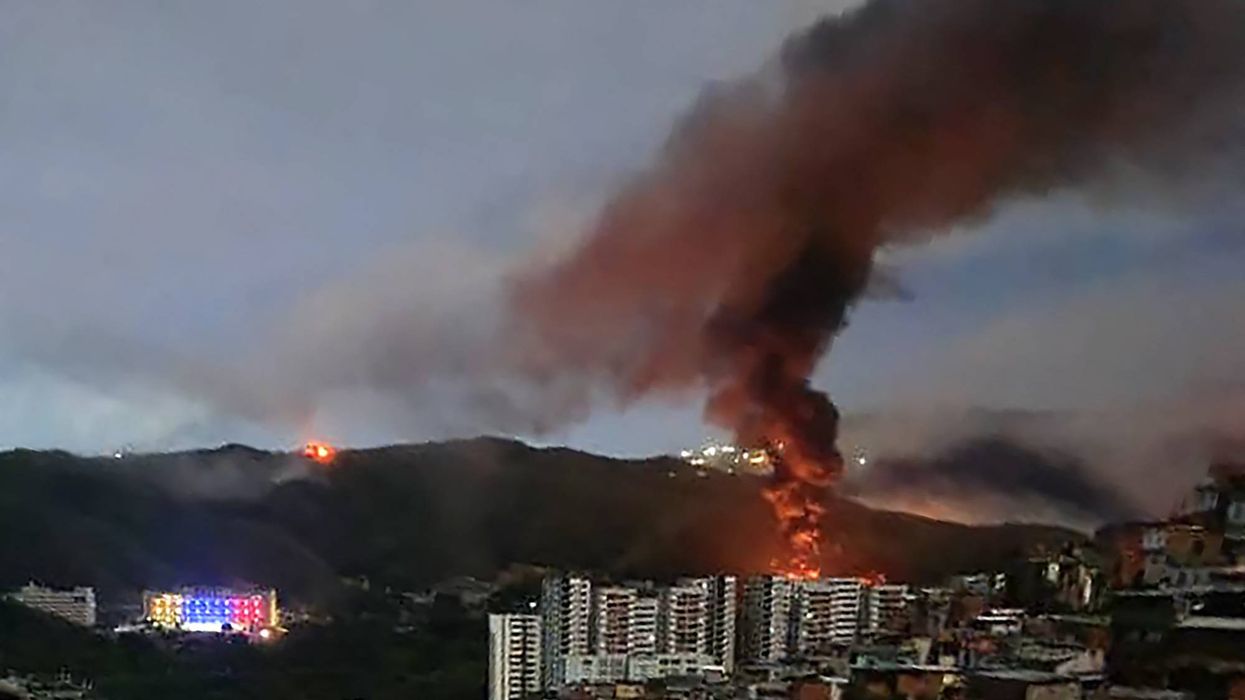
"This goes beyond broken promises of peacemaking," said one expert. "Trump is launching an illegal assault on Venezuela."
US President Donald Trump claimed early Saturday that Venezuelan President Nicolás Maduro was "captured and flown out of the country" after American forces bombed Venezuela's capital.
Maduro's alleged capture came after multiple explosions and sounds of aircraft were reported in Caracas, including at a military base at the center of the capital. Following the explosions, Maduro declared a state of emergency and accused the US of "military aggression." The Trump administration has accused Maduro, without evidence, of heading a drug cartel.
Vladimir Padrino, Venezuela's defense minister, said the US attacked both civilian and military sites, and that authorities are gathering information on casualties. Padrino said Venezuela would resist the presence of foreign troops and denounced US "imperialism" and "greed for our natural resources."
Venezuela’s attorney general, Tarek William Saab, said in televised remarks that "innocent victims have been mortally wounded and others killed by this criminal terrorist attack," and demanded proof that Maduro and his wife, who was also reportedly captured by the US, are alive.
Trump—who in recent months has repeatedly threatened to attack Venezuela, oust its president, and seize the nation's vast oil reserves—provided few details about the military assault, which followed a monthslong boat-bombing spree in international waters.
The US president did not receive congressional authorization for any of the strikes, and he said Saturday's operation was carried out in collaboration with American law enforcement. In 2020, during Trump's first White House term, Maduro was indicted on narcoterrorism charges by the US Justice Department, which at the time offered rewards up to $15 million for information leading to his arrest.
Trump said a press conference would be held at his Mar-a-Lago resort at 11 am ET on Saturday.
News of the US attack on Venezuela was met with immediate outrage.
"This goes beyond broken promises of peacemaking," said Nancy Okail, president and CEO of the Center for International Policy. "Trump is launching an illegal assault on Venezuela, pulling the US into another military adventure without authorization or a credible national security threat. Congress must act now to halt further military escalations."
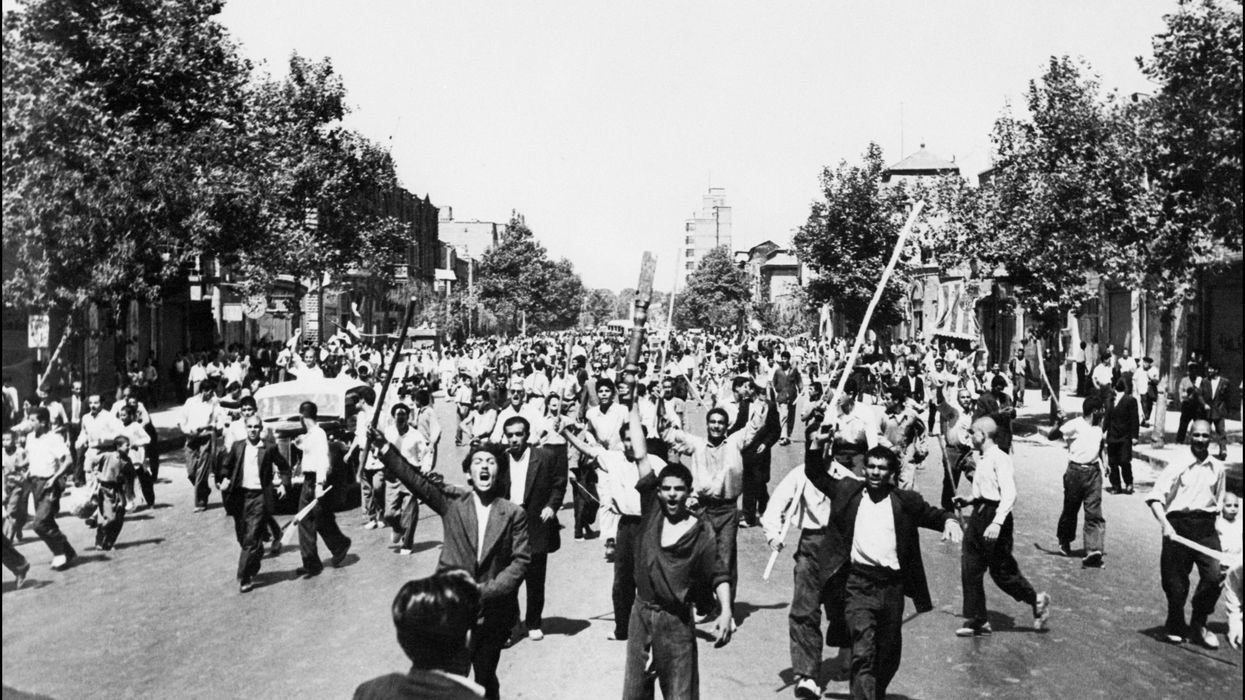
In a world where information warfare blurs fact and narrative, we must resist the temptation to treat capability as conspiracy. But we must also resist the delusion that the absence of evidence today means an absence of action.
Speculation about covert operations tends to rise with geopolitical heat, and few places are as historically charged as Iran when it comes to foreign interference. The memory of the 1953 CIA-backed coup remains vivid in Tehran’s political consciousness, shaping both internal paranoia and external discourse. In today’s climate of US-Iran hostility—marked by sanctions, nuclear disputes, and regional proxy conflicts—whispers of destabilization efforts inevitably resurface. But plausibility should not be mistaken for proof.
Yet there are ghosts worth heeding…
In 1953, the CIA executed Operation TPAJAX—a covert operation that overthrew Iran’s democratically elected Prime Minister Mohammad Mossadegh, reinstating the autocratic Shah. This operation was denied, downplayed, and hidden for decades. It wasn’t until 2017—64 years later—that the US government officially declassified key documents from the Foreign Relations of the United States (FRUS) series detailing the planning and implementation of the coup. The materials that confirmed America’s role in the 1953 coup were not fully acknowledged through official channels until generations had passed, long after their geopolitical consequences had reshaped the Middle East.
Given that historical precedent, it’s not unreasonable to wonder: If something like that were happening today, would we know?
If the CIA is involved in orchestrating unrest in Iran today, we may not know until 2089.
Currently, Iran is again roiled by protests. Slogans like “Death to the Dictator” echo in the streets. Western headlines frame this as grassroots unrest, and it may well be. But for a country with a long and painful history of foreign interference cloaked in democracy rhetoric, the line between internal dissent and external orchestration is never clean.
From a strategic standpoint, the United States clearly possesses the capacity to conduct covert influence operations. Legal mechanisms for such actions exist under US law, with covert operations authorized by the president and subject to congressional oversight. The intelligence community, with decades of institutional experience, is equipped with modern tools ranging from cyber operations to narrative influence and financial pressure. These capabilities are real. But capacity alone tells us nothing about intent.
Public policy statements from the US government consistently emphasize deterrence and nonproliferation, not regime change. While tensions are undeniable, open endorsement of covert destabilization would carry significant political and legal costs. Congress, the media, and public opinion create substantial friction for any administration considering escalation by clandestine means. Adversarial relationships can foster suspicion, but they do not constitute motive.
Environmental conditions further complicate the picture. Iran, despite internal pressures and unrest, retains a strong security apparatus and hardened counter-intelligence services. Regional dynamics—involving militias, proxies, and overlapping crises—do not create the same permissive environment that existed in the early Cold War. On the contrary, they elevate the risks of blowback and exposure. Modern operations would need to be diffuse, multi domain, and plausibly deniable—relying on soft pressure through economic levers, information warfare, and alliances rather than the heavy-handed political interventions of the past.
And yet, these more nuanced forms of influence are precisely what make attribution difficult. In a world of cyber shadows, targeted sanctions, and disinformation, it’s easy to see ghosts. But serious allegations require serious evidence. Credible investigative reporting, declassified documents, congressional disputes, or allied intelligence consensus are necessary to move the needle from theoretical possibility to actionable suspicion—let alone attribution.
That’s where Dan Kovalik’s The Plot to Attack Iran enters the conversation. Kovalik draws clear lines from historical US interventions—including the CIA's own admission of past regime change—to present-day provocations and misinformation. He details a long history of fabricated threats, from nonexistent Iraqi WMDs to exaggerated fears about Iran’s nuclear program. He argues that current rhetoric and actions—sanctions, assassinations, drone incursions, proxy pressures—form a consistent pattern of provocation meant to destabilize Iran under the guise of security policy.
Kovalik also reminds us that accusations of terrorism, often leveled at Iran, are selectively applied. While Iran is listed as a state sponsor of terrorism, US allies like Saudi Arabia—implicated in exporting Wahhabi extremism—are exempt from such labels. Groups like Hezbollah, which Iran supports, are framed by the US as terroristic, while Kovalik argues they act in regional resistance to Israeli occupation. This asymmetry of language is not just semantic—it builds the ideological scaffolding for war.
Legal oversight, international norms, and the specter of asymmetric retaliation all serve as meaningful deterrents. A misstep in this space could trigger regional escalation, damage US credibility, or backfire diplomatically. These are not trivial constraints. They are built-in brakes against rash or covert adventurism. And yet, none of them prevented the 1953 coup. Nor did they stop covert operations in Iraq, Libya, or Syria. History shows us that legal deterrents and political norms often collapse under the weight of perceived strategic necessity.
Bottom line: While it is analytically sound to say the United States could conduct covert operations against Iran under the right conditions, there is no defensible basis to assert that such actions are underway without evidence. Plausibility is not a claim—it is a lens for understanding risk, not a substitute for proof.
But perhaps the more sobering truth is this: If the CIA is involved in orchestrating unrest in Iran today, we may not know until 2089. Sixty-four years is a long time to wait for the truth. In that gap, entire wars can be fought, nations broken, and histories rewritten. The ghosts of TPAJAX aren’t just historical—they’re prophetic. And Iran, perhaps more than any other nation, knows that ghosts have long memories.
In a world where information warfare blurs fact and narrative, we must resist the temptation to treat capability as conspiracy. But we must also resist the delusion that the absence of evidence today means an absence of action. The stakes—diplomatic, strategic, and human—are far too high for anything less than disciplined analysis and historical awareness.
The past may not repeat, but it whispers—and in Iran, it is whispering loudly.

It makes perfect sense that the current chief betrayer of the ideals of our nation would brag to a group of American soldiers that he’s going to rename a military base after Robert E. Lee.
Robert E. Lee killed more Americans than Hitler. More than Khruschev. More than King George III, Ho Chi Mihn, or Kim Il Sung. He killed more Americans than we’ve lost in every war since the American Revolution, combined. He was the largest mass murderer of Americans in our nation’s history.
General Lee was not a good man: He was a morbidly rich oligarch who not only bought and sold enslaved human beings but delighted in whipping and torturing them.
Three of the 200-plus enslaved people he held at his plantation—Wesley Norris, his sister Mary, and their cousin George Parks—escaped and were captured in nearby Maryland. The report in the March 26, 1866 edition of The New York Daily Tribune, quoting Wesley Norris at length, tells us all about Lee’s proclivities:
He then ordered us to the barn, where, in his presence, we were tied firmly to posts by a Mr. Gwin, our overseer, who was ordered by Gen. Lee to strip us to the waist and give us 50 lashes each, excepting my sister, who received but 20; …
Gen. Lee, in the meantime, stood by, and frequently enjoined Williams to “lay it on well,” an injunction which he did not fail to heed; not satisfied with simply lacerating our naked flesh, Gen. Lee then ordered the overseer to thoroughly wash our backs with [excruciatingly painful saltwater] brine, which was done.
Fearing President Abraham Lincoln might end slavery in America, Lee raised an army and tried to use it to end democracy in the United States; he thus committed treason in a way that exceeded even Benedict Arnold’s wildest fantasies. His war killed almost 750,000 men, women, and children, all Americans.
No American has ever betrayed or visited as much violence on this country as severely as did Robert E. Lee.
And so, when Lee lost the war that he’d started against us, the federal government seized his slave plantation and turned it into a cemetery for the Civil War dead. It’s today named Arlington National Cemetery.
So, perhaps it makes perfect sense that the current chief betrayer of the ideals of our nation, convicted felon and Putin toady Donald Trump, would brag to a group of American soldiers that he’s going to rename a military base after Robert E. Lee.
Even more shocking, in what’s an astonishing indictment of how our educational system has deemphasized civics in the years since Presidents Ronald Reagan and George W. Bush both took an axe to civics education, the assembled soldiers cheered the news that Lee’s name would again desecrate a military facility.
Trump then went on to repeatedly lie to our soldiers, falsely claiming that:
And even more disgusting than that, Trump was nakedly using those soldiers he was lying to as political props to massage his own ego and provide a made-for-Fox-“News” clip, as Military.com pointed out yesterday:
Internal 82nd Airborne Division communications reviewed by Military.com reveal a tightly orchestrated effort to curate the optics of Trump's recent visit, including handpicking soldiers for the audience based on political leanings and physical appearance. The troops ultimately selected to be behind Trump and visible to the cameras were almost exclusively male. One unit-level message bluntly said, “no fat soldiers.” [emphasis added]
This is the exact opposite of the instructions to keep the military nonpartisan that President George Washington gave future generations in his farewell address:
The alternate domination of one faction over another, sharpened by the spirit of revenge, natural to party dissension, which in different ages and countries has perpetrated the most horrid enormities, is itself a frightful despotism. But this leads at length to a more formal and permanent despotism.
The disorders and miseries, which result, gradually incline the minds of men to seek security and repose in the absolute power of an individual; and sooner or later the chief of some prevailing faction, more able or more fortunate than his competitors, turns this disposition to the purposes of his own elevation, on the ruins of Public Liberty.
That the Secretary of Defense, “Kegger” Pete Hegseth, would not just allow but intentionally facilitate such an offensive display of partisanship is particularly troubling when compared to the military’s actual policies in Directive 1344.10, put into place years ago to respect Washington’s advice:
In keeping with the traditional concept that members on active duty should not engage in partisan political activity, and that members not on active duty should avoid inferences that their political activities imply or appear to imply official sponsorship, approval, or endorsement, the following policy shall apply:…
A member of the Armed Forces on active duty shall not: …
Participate in partisan political fundraising activities, rallies, conventions, management of campaigns, or debates, either on one’s own behalf or on that of another, without respect to uniform or inference or appearance of official sponsorship, approval, or endorsement…
Attend partisan political events as an official representative of the Armed Forces…
This is a lawful general regulation. Violations of paragraphs 4.1. through 4.5. of this Directive by persons subject to the Uniform Code of Military Justice are punishable under Article 92, “Failure to Obey Order or Regulation.”
When Trump blurs this line designed to keep our military nonpartisan, he’s imitating the behavior of dictators like Russian President Vladimir Putin, Turkish President Recep Tayyip Erdoğan, and Hungarian Prime Minister Viktor Orbán who cultivate personal loyalty within the military, rather than respect for constitutional processes.
Trump’s and “Kegger’s” move is apparently designed to test whether rank-and-file troops will go along with his political agenda and to build a foundation for future actions in which military force can be used domestically to defend his regime rather than the Constitution (e.g., suppressing protests, enforcing disputed election outcomes, defending the suspension of elections, etc.).
This is deeply dangerous to any democracy, which is why such behavior is not allowed by the military or executive of any other advanced democracy in the world. When military loyalty becomes politicized, the risk of coups, unlawful orders, or martial law rises dramatically.
Which—given the fact that Trump’s already tried once to stage a coup against the United States—makes this all the more alarming.
But Trump didn’t stop there. He next attacked the media filming the event, saying to more applause from the troops:
And for a little news, for the fake news back there, the fake news, ladies and gentlemen, look at them, look at them, aye yai yai, what I have to put up with. Fake news. What I have to put up with.
In fascist regimes, the press is always one of their first targets, typically labeled as “enemies of the people,” blamed for national problems, and ultimately silenced or co-opted. Trump using such rhetoric normalizes contempt for independent journalism among armed agents of the state while it suggests the possibility of state-aligned force being turned against critical media or dissenters.
Nazi Germany, Mussolini's Italy, Putin’s Russia, and more recently Orbán’s Hungary all followed this script. By repeating it, Trump is conditioning our soldiers to follow him rather than the Constitution and the law of the land.
He even brought along a vendor of Trump merchandise in violation of military policy, including MAGA hats, T-shirts, and cards that read, “White Privilege Card: Trumps Everything.”
Historically, when democracies have slid into dictatorship, there’s a moment when the military is required to choose sides, the press is cast as a threat, and loyalty to the regime is demanded and rewarded, rather than loyalty to the law.
We’re there now. Today.
Every American, particularly those who’ve served in the military, should be outraged by Trump’s fascist performance in front of our troops. That the only senior active duty military officer who spoke to the press did so anonymously (he said, “This has been a bad week for the Army for anyone who cares about us being a neutral institution; this was shameful.”) is a damning indictment of how far away from American values we’ve let Trump drag our country.

We are now in the midst of a outright coup against the Constitution, against the United States, and against our founding ideals. If we don't fight for and win the release of Kilmar Abrego Garcia, our democracy is dead.
Yesterday was the day democracy in our nation officially died.
We no longer live in the America we grew up in: “The land of the free and the home of the brave.” The country the rest of the world looked up to and depended on. The country that claimed to follow the rule of law, and valued compassion and the protection of its most vulnerable people.
We are now in the midst of a outright coup against the Constitution, against the United States, and against our founding ideals: Donald Trump proclaimed it yesterday when he openly defied the Supreme Court and our founding documents with a sneer, and his neofascist sycophants chuckled and giggled in the Oval Office.
When Marco Rubio claimed that arresting and deporting a man legally living in the US was “foreign policy” that can’t be overseen by the Supreme Court and then congratulated himself on his cleverness.
Trump’s response to the ruling was a resounding, “Fuck you” to our courts, our Constitution, and our laws.
Kilmar Abrego Garcia, a legal U.S. resident who committed no crime, is now held in El Salvador’s most notorious concentration camp, where as many as 75 men are packed into cells designed for a fraction of that number.
Prisoners are not allowed outside — not for fresh air, not for exercise — and the fluorescent lights never go off. Food is minimal: plain rice or beans twice a day, with water. There is no possibility of appeal for him or the other 75,000 people El Salvadoran dictator Bukele has arrested and imprisoned without due process.
This father of three US citizens, this husband of a US citizen, who had been in the US with the permission of our government, is today packed in with savage gang members — literally murderers and rapists — in one of the most infamous and violent prisons in the world.
He has is no access to legal counsel, no information about charges or release, and medical care is often denied except in extreme emergencies. Days blur into nights as men lie on concrete floors or sit in silence, many carving repetitive paths along the walls to stay sane.
Kilmar may be doing the same, clinging to routine, to hope, to anything that reminds him he once belonged to a country that promised justice.
But then came the most lawless president in the history of America, who yesterday all but declared that we are no longer a constitutional democratic republic as long as he is president.
Article I, Section 9 of the United States’ Constitution is unambiguous about habeas corpus, Latin for “produce the body,” which means no person can be imprisoned without first knowing the charges against them, being able to challenge those charges, and having a court of law decide their fate.
This right embraced by our Founders and written into our Constitution literally dates back to the year 1215 when King John signed the Magna Carta at Runnymede, as Article I Section 9 clearly states:
“The Privilege of the Writ of Habeas Corpus shall not be suspended, unless when in Cases of Rebellion or Invasion the public Safety may require it.”
(Trump is falsely and cynically claiming in an illegal Executive Order that the government ofVenezuela has sent gang members to “invade” the US. Bizarrely, even if a court were to uphold this “invasion” gimmick, Kilmar Abrego Garcia is neither a gang member nor even a Venezuelan; he’s a citizen of El Salvador who’s lived in the US since he was 16, is a union worker and beloved member of his community, and was here legally.)
Fifth Amendment to the Constitution:
“No person shall be held to answer for a capital, or otherwise infamous crime, unless on a presentment or indictment of a Grand Jury… nor be deprived of life, liberty, or property, without due process of law…”
Sixth Amendment to the Constitution:
“In all criminal prosecutions, the accused shall enjoy the right to a speedy and public trial, by an impartial jury of the State and district wherein the crime shall have been committed, which district shall have been previously ascertained by law, and to be informed of the nature and cause of the accusation; to be confronted with the witnesses against him; to have compulsory process for obtaining witnesses in his favor, and to have the Assistance of Counsel for his defence.”
Seventh Amendment to the Constitution:
“[T]he right of trial by jury shall be preserved…”
Eighth Amendment to the Constitution:
“Excessive bail shall not be required, nor excessive fines imposed, nor cruel and unusual punishments inflicted.”
Please point out to me where, in our Constitution, it says that the President of the United States or the Secretary of State can simply order a “person” (see 5th Amendment; nowhere does the word “citizen” appear) to be arrested and transported to a foreign hellhole concentration camp without a warrant, without an attorney, without a trial, and without even advance notice that might give him a chance to protest his innocence.
An unanimous Supreme Court ruled last week that our Constitution, as quoted above, says exactly what it means and Trump must “facilitate” the return of Kilmar Abrego Garcia, who is not a criminal and has been denied all of the due process provisions detailed above in our Constitution and its amendments.
Justice Sotomayor was explicit:
“The Government’s argument, moreover, implies that it could deport and incarcerate any person, including U. S. citizens, without legal consequence, so long as it does so before a court can intervene. …
“[T]he proper remedy is to provide Abrego Garcia with all the process to which he would have been entitled had he not been unlawfully removed to El Salvador. That means the Government must comply with its obligation to provide Abrego Garcia with ‘due process of law,’ including notice and an opportunity to be heard…
“It must also comply with its obligations under the Convention Against Torture.”
Trump’s response to the ruling was a resounding, “Fuck you” to our courts, our Constitution, and our laws. And to the millions of American citizens who are frightened by his systematic dismantling of our legal system.
It was an open assertion by Trump that he can do anything he wants, no matter how unlawful or unconstitutional, without fear of consequences. That he has successfully staged a coup against the government of the United States and her laws and has every intention of running this country like Russia or Hungary.
And not only that, he told El Salvador’s authoritarian president Bukele that the people he next wants to send to his slave labor camp are American citizens like you and me:
“Home grown criminals. Home growns are next. You gotta build about five more places. It’s not big enough.”
Which brings us to a frightening echo of Jefferson’s objections to the “tyranny” of King George II, as outlined in the Declaration of Independence he authored and was signed on July 4, 1776:
“We hold these truths to be self-evident, that all men are created equal, that they are endowed by their Creator with certain unalienable Rights, that among these are Life, Liberty and the pursuit of Happiness.--That to secure these rights, Governments are instituted among Men, deriving their just powers from the consent of the governed…
“The history of the present King of Great Britain is a history of repeated injuries and usurpations, all having in direct object the establishment of an absolute Tyranny over these States. To prove this, let Facts be submitted to a candid world.
“He has refused his Assent to Laws, the most wholesome and necessary for the public good. …
“He has obstructed the Administration of Justice, by refusing his Assent to Laws for establishing Judiciary powers. …
“He has made Judges dependent on his Will alone…
“He has combined with others to subject us to a jurisdiction foreign to our constitution, and unacknowledged by our laws…
“For depriving us in many cases, of the benefits of Trial by Jury:
“For transporting us beyond Seas to be tried for pretended offences: …
“For taking away our Charters, abolishing our most valuable Laws, and altering fundamentally the Forms of our Governments: …
“In every stage of these Oppressions We have Petitioned for Redress in the most humble terms: Our repeated Petitions have been answered only by repeated injury. A Prince, whose character is thus marked by every act which may define a Tyrant, is unfit to be the ruler of a free people.” (emphasis added)
If Trump and his ass-kissing lackeys aren’t stopped by public outrage, our courts, and our Constitution and laws, then America has ceased to be a functioning republic and the future is unknowable but certainly grim.
If Trump and his ass-kissing lackeys aren’t stopped by public outrage, our courts, and our Constitution and laws, then America has ceased to be a functioning republic and the future is unknowable but certainly grim.
That would be, the Declaration says, the very definition of tyranny. As Senator Chris Murphy just posted to Bluesky:
“You may not think this case matters to you. But Abrego Garcia was legally in the U.S., just like all the rest of us. His status as an immigrant doesn't matter as a matter of law. If Trump can lock up or remove ANYONE — no matter what the courts say — we are all at grave risk.”
Trump should be impeached for his defiance of the Supreme Court and our Constitution. For spitting in the face of our Founders and every American veteran who has ever fought (or died) for this country and it’s ideals. For using foreign concentration camps.
Tragically, however, Republicans in Congress and across the country are now fully in on the coup. They have chosen an egomaniacal, self-centered narcissist and his billionaire friends over their integrity, country, and their oath of office.
Show up in the streets this coming Saturday and reach out to your elected representatives to demand a return to the rule of law.
The number for Congress is 202-224-3121, at least for the moment; like with Social Security, Trump may cut that phone number off any day now, too.
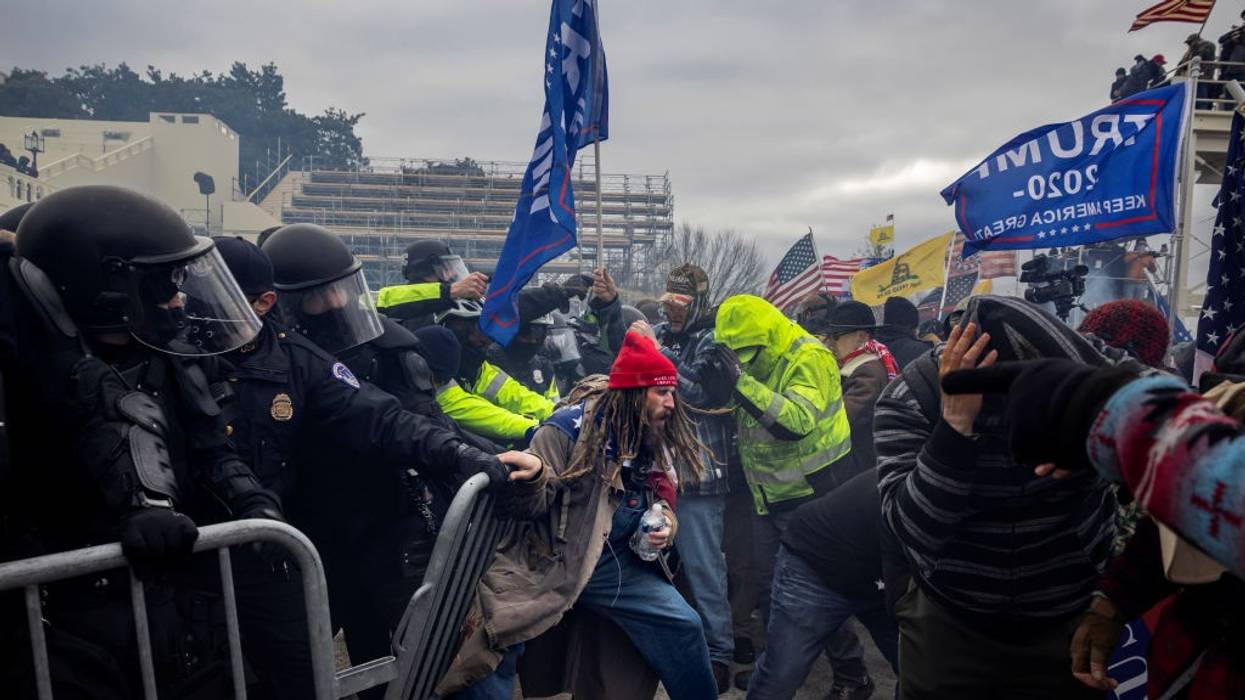
We don't need to call it a coup, but a sinister advance of authoritarianism in the United States it certainly would be.
There seems to be quite a bit of confusion as to what a Trump victory in the November election portends. There has been talk of a Trump coup since the 2020 election, with January 6th serving as one of the main events in that narrative. In their efforts to understand and explain, observers have called that event an attempted coup. Recently, Donald Trump referred to the effort to get Biden to step aside as a coup. Such confusion.
In a recent Portside article, Jonathan Winer, a former U.S. deputy assistant secretary of state for international law enforcement, details three phases of mischief-making on the part of Trump and his minions. Winer characterizes the MAGA effort to implement Project 2025, should Trump win, as a "coup." However, most activities that Winer discusses in his article take place before the winner is certified. All that pre-certification activity involves legislative, electoral, and judicial maneuvering and mischief—but precedes actual office holding. It seeks to influence who wins electorally and that is not the process that one follows in a coup.
A coup is a militarized assault on the institutions of power. It seeks to overthrow through violent means what is recognized as a legitimate government. It involves organized force, capture of key institutions, including the military, security establishment, Information institutions, media outlets, executive); and removing incumbent officials (legislators, judges, administrative personnel, military, and security leaders). These are summary dismissals; they do not come about through an orderly process. Some come with additional burdens that might include imprisonment, exile, or execution. It also involves suspension and/or rejection of the existing constitution and governing structure. It usually results in a military-led administration and governance by decree. That is not what we are considering here.
The mob on January 6th did not seem to have meaningful plans to take over the government, or much of an idea of what they would do on day two. Nothing they did extended beyond Congress. What little coordination there was did not include mobilizing an armed force to overthrow the government, nor did they have any plan for governing. They clearly did not have the support of the military leadership and, bluster and bravado aside, they did not have the wherewithal to withstand a frontal military assault. Their main goal seems to have been to disrupt the legislative process which was to confirm the winner of the election. It was disruptive of congressional business. It was, no doubt, an insurrection, which is a violent uprising against the government. That concept suffices to characterize the January 6th events.
Once the authoritarians have taken power, they use their democratic legitimacy to justify a series of restrictions on democratic forms of governance, such as voter and polling restrictions.
With the coming election we are hearing commentators refer to the Project 2025 document as a prescription for a coup. I find this conceptualization to be problematic. We are witnessing political developments that may have never occurred before in this country. We have no ready ways of conceptualizing those events, so, like Procrustes, we fit them into preexisting conceptual categories. This is what I see happening with the effort to understand what a second Trump administration might portend.
If Trump wins the election and proceeds to implement Project 2025 it will be via the existing political process, even if they massage, manipulate, misinterpret, and cajole to get the results they seek. And they will. Observers cannot accept that the political system can produce outcomes such as those that Project 2025 promises because that would require condemning a flawed process—one that is open to manipulation. This would be a process that can produce an elected administration, however controversial, with a different (and dangerous) policy agenda. Understanding this process requires seeing that such a power grab can happen in the system through its normal workings.
So long as they stay within the operational framework that requires Congress to codify and fund their initiatives, and a Supreme Court to sanction what they do, they will be a legitimate, if not popular, government. We might not like what they do but it will fall within the framework of the American constitutional order.
It is important to be clear about what we are confronting—which is an attempt to consolidate Authoritarianism through the mechanism of State Capture.
We are witnessing an attempt to capture the instruments of the government to institute policy and personnel changes that will resonate for decades.
Contemporary Authoritarian regimes concentrate power in a leader or an elite to undermine democratic institutions to the extent that those institutions become more performative than substantive. Once the authoritarians have taken power, they use their democratic legitimacy to justify a series of restrictions on democratic forms of governance, such as voter and polling restrictions. They neuter the political order while allowing a level of social and economic freedom. These regimes will tolerate social and economic institutions not directly under governmental control so long as they stay in line. The practice of authoritarian regimes is to rely on resignation in the face of lawful, though repulsive measures, and passive mass acceptance rather than active popular support. So long as Trump is in play, authoritarianism will have a populist cast. Thereafter, right-wing Authoritarian forces expect to have their dominance institutionalized through State Capture.
A simple definition of State Capture assumes that elections occur, and officials hold office. It is a matter of how and who. State Capture is a systematic process to advance narrow group interests by taking control of the institutions and processes that produce and implement public policy. Once in control they proceed to direct policy away from the public interest and instead begin to shape policy to serve their own interests more effectively.
We are dealing with a process that has antecedents in Hungary, Türkiye, India, and elsewhere where an authoritarian regime captures the government through formal channels and then begins to populate the administrative structure with partisans, preferably in secure civil service positions. They then implement policies that further consolidate their power. We are witnessing an attempt to capture the instruments of the government to institute policy and personnel changes that will resonate for decades.
The make-up and character of these “narrow interest groups” can differ from case to case. So, in India it can be Hindu nationalists, capitalists, and the landed gentry. In Türkiye, Islamists, and capitalists. In South Africa party cadre, domestic and international capitalists and landed interests. The one thing they all have in common is that capitalists always factor. The narrow interests served by a Trump presidency includes the monopoly sector, neoconservatives, white nationalists, Christian evangelicals, and isolationists. Regimes on the right exist, as in this case, to advance the interests of Capital.
The make-up and character of these “narrow interest groups” can differ from case to case... The one thing they all have in common is that capitalists always factor.
We see the phenomenon of winning elections to legitimize authoritarian regimes on both the right and the left. The difference being that the regimes on the left are doing so under extreme duress from covert destabilizing forces, in the face of punishing international sanctions, and as acts of survival. It does not excuse them, but it does place them in a different context. Among them are regimes that came to power through other means such as coups and revolutions. In those cases, they already have control of the state. The goal is to continue in power.
The main similarity is that State Capture regimes deploy the electoral process to maintain their positions and power. The process of gaining and staying in power involves winning elections. Much can be said about the veracity of those elections. No matter how flawed they may be, though, the regime still gets to check the Democracy box. That is what will happen with Trump if he wins- they will modify the instruments of the state to remain in power and serve capital...forever, if possible. That plan can be delayed but not derailed by the outcome of the November election.
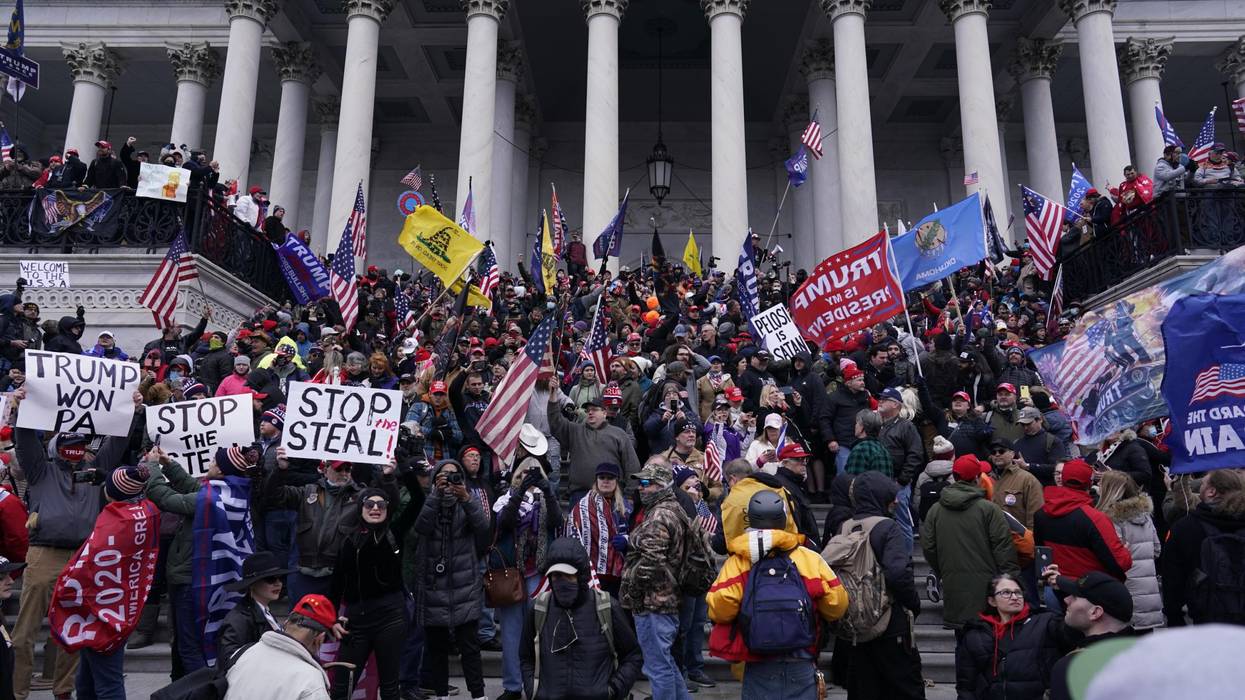
The authoritarian, dystopian settings that the U.S. created in so many places across the world are being reconceived by ultra-conservative forces affiliated with Trump for the purpose of introducing them here.
Since the rise of the United States into a global power, U.S. policymakers have been keen on halting the spread of popular government abroad by undermining democratic institutions; overthrowing or assassinating elected leaders; and installing brutal, vicious military dictatorships. Indeed, the fact of the matter is that the United States has invaded more countries, organized more coups, and installed more military dictatorships than any other imperialist power in the course of history. During the Cold War alone, Washington staged dozens of invasions, orchestrated or sponsored numerous coups that installed subservient governments, and engaged in total in over 70 attempts at regime change.
U.S. involvement in foreign coups was so widespread that a common joke was that there has never been a coup d’état in the United States because there is no U.S. Embassy there. Of course, the joke was before the political era of former U.S. President Donald J. Trump and thus has lost some of its sting. Because what happened at the U.S. Capitol on January 6, 2021 was a coup attempt incited by the rhetoric of an outgoing president as part of his effort to overturn the results of the 2020 presidential election. Moreover, Trump has warned voters of a “ bloodbath” for the country if he is not elected in November 2024.
The roosters have come home to roost. The U.S. is sleepwalking toward democratic collapse and into a Trump proto-fascist dictatorship. If Donald Trump gets elected in November, “ the gloves are off… its four years of scorched earth,” as Republican National Committee boss Lara Trump proudly announced to an audience a few months ago. Never mind people like John Bolton who tried to make the argument that Trump did not attempt a coup on January 6 because he is not competent enough to have done so. Those who entertain such thoughts seem to imply that it takes brilliance to destroy democracy. Yet, a reactionary revolt against democracy (or what’s left of it in the U.S.) has been underway since Trump gained control of the GOP. Trump encouraged violence during his 2016 campaign and levied harsh attacks against his opponents. Upon assuming office as president, he exhibited blunt authoritarian tendencies and levied attacks against the press. And when he lost a free and fair election in 2020, he tried to block a peaceful transfer of power.
There should be little doubt in any concerned citizen’s mind that the reactionary forces in this country, led by one of the most authentic con artists in political history, are as close as they have ever been to dismantling U.S. democracy.
But even if Trump isn’t capable enough to draw up a plan on his own for the dismantling of our democracy from within, there are plenty of extreme right-wingers able and willing to show him how it can be done. Indeed, the authoritarian, dystopian settings that the U.S. created in so many places across the world from the end of the Second World War to the present—through Washington’s support of oppressive political regimes that committed massive violations of human rights against their own citizens and forced them to live under constant threat—are being reconceived by ultra-conservative forces affiliated with Trump for the purpose of introducing them here inside the United States. This is precisely the aim of Project 2025, a Heritage Foundation plan to reshape the United States in a manner consistent with the ideology and vision of neoliberal proto-fascism.
Project 2025 is not Trump’s plan, but a plan for Trump. It’s also fair to point out that Trump has publicly denied knowing anything about the dystopian Project 2025. Yet, many of the people who worked in high-level positions during his presidency served as authors of the project. In fact, CNN reported finding some 240 people “with ties to both Project 2025 and to Trump.” It is thus ludicrous for Trump to claim ignorance of this extreme far-right agenda and having “no idea who is behind it.” Also, Paul Dans, director of the 2025 Presidential Transition Project at The Heritage Foundation and who had previously served in the Trump administration as the chief of staff at the Office of Personnel Management, said on a radio show during the Republican primary race last year that “Trump’s very brought in with this.” Last week, the same person suddenly claimed that the idea that Trump is attached to Project 2025 is a “hoax.”
More important, while Trump and his campaign staff have pointed out that Agenda 47 is their official policy platform for the 2024 presidential election, Project 2025 and Agenda 47 have a lot of overlap in terms of ideas and policy plans. They both contain plans for the reshaping of U.S. government and civil society that can only be described as “fascist.” They both assert that the mission they serve is to rescue the country from the influence of the radical left.
Project 2025 envisions the end of the administrative state by placing the entire federal bureaucracy under direct presidential control. In other words, the plan is for Trump to rule as a Unitary Executive, long considered a pathway for autocracy. Likewise, Trump’s plan in Agenda 47 is to dismantle what it calls the “deep state” by firing thousands of civil servants and replacing them with party hacks (though in Agenda 47 they are called “patriots who love America”). In doing so, Trump claims, federal bureaucrats and politician will be “ held accountable to the American people.” Not to the president, mind you, who will now have complete control of the federal bureaucracy, but to the American people. Of course, not a single word is mentioned in Agenda 47 about how the “people” even enter the power equation of holding bureaucrats and politicians accountable to the popular will. But authoritarian leaders and wannabe dictators have always been masters of propaganda who engineer techniques of mass manipulation through the politics of illusion. And no propaganda tool is more effective in the authoritarian playbook than the one that justifies the dismantling of checks and balances as “corrupt obstacles to the popular will.”
State control over public education and teachers has always been an integral component of fascist ideology and strategy. In the neoliberal proto-fascist mentality that guides the thinking of the architects of Project 2025, the contention made however is that federal intervention in education should be severely limited and that, ultimately, the federal Department of Education should be eliminated. This is because their reactionary vision for the future of the United States would not object to the conversion of public schools into religious zones and calls for the rejection of “gender ideology” and the banning of “critical race theory.” Thus, it is of paramount importance that complete authority over primary and secondary education, including funding, transfers to the state and local level. Likewise, Project 2025 also endorses universal school choice and allowing families to access public funds to pay for private school tuition. Moreover, Project 2025 wants to ban any public education employee or institution from using a pronoun in addressing a student that does not “ match a person’s biological sex” without the written permission of a student’s parents or guardians.
The call for the banning of “critical race theory” is utterly revealing of the ideological underpinnings of the architects of Project 2025. They want to see “critical race theory” forced out of classrooms because, they argue, its emphasis on the racist history of the United States “disrupts the values that hold communities together.” It’s rather shameful though that they omitted mentioning slavery as one of the values that should “hold communities together.”
As for higher education, which comes under severe attack by the reactionary minds behind Project 2025 for being “hostile to free expression” and “American exceptionalism,” student loans and grants should be placed into the hands of the private sector. They also call on the next president to downplay the value of a bachelor’s degree by removing it as a requirement for any federal job unless it is specifically demanded.
Agenda 47 is an even more extreme version of Project 2025 on the issue of education and comes much closer to authentic fascism. Trump’s proposals for K-12 schools call for, among other things, ending federal funding to any school teaching “critical race theory,” certifying only teachers who embrace “patriotic values,” firing Department of Education employees deemed radical zealots and Marxists, pushing prayer in public schools, and abolishing teacher tenure.
Trump’s Agenda 47 and Project 2025 also share the same extremist views on immigration and climate change. Project 2025 wants to demolish the entire U.S. immigration system while Trump wants to engage in draconian measures against undocumented immigrants, which includes a pledge to deport millions of undocumented immigrants living in the United States.
Regarding climate change, Project 2025 is all about a project that backs a fossil fuel agenda and wants to go so far as to eliminate the National Oceanic and Atmospheric Administration because it’s “ one of the main drivers of the climate change alarm industry.” Trump’s stance on energy and climate as expressed in Agenda 47 is in full alignment with Project 2025 and can be summarized by three words: “DRILL, BABY, DRILL.”
Finally, both the Heritage Foundation’s Project 2025 and Trump’s Agenda 47 (along with his already established record on the matter) make abundantly clear that serving the interests of a plutocracy is of equal importance to them as destroying the environment and turning back the clock on social and cultural progress through the implementation of extreme authoritarian measures. Among other major changes to the tax system, Project 2025 calls for reducing the corporate tax to 18% and cementing the tax on capital gains and dividends at 15%. A second Trump presidency would most certainly also see another round of tax cuts targeted at the very rich.
In sum, there should be little doubt in any concerned citizen’s mind that the reactionary forces in this country, led by one of the most authentic con artists in political history, are as close as they have ever been to dismantling U.S. democracy and replacing it in turn with a dystopian setting guided by the very same vision, values, and even tactics that have been the hallmark of U.S. imperialist efforts to install and support neo-fascist regimes around the globe.

"We need a coordinated strategy to save America and stop this coup before it's too late," said Rep. Jared Huffman, who is spearheading the new task force.
A group of congressional Democrats on Tuesday launched a task force aimed at spotlighting and combating the threat posed by Project 2025, the
sprawling far-right agenda crafted by allies of Republican presidential frontrunner Donald Trump.
Spearheaded by Rep. Jared Huffman (D-Calif.), the Stop Project 2025 Task Force "will serve as a central hub for pro-democracy Members of Congress, civil society, and affected communities to coordinate on examining, highlighting, preempting, and counteracting this right-wing plot to undermine democracy," Huffman's office said in a press release.
"Project 2025 is more than an idea, it's a dystopian plot that's already in motion to dismantle our democratic institutions, abolish checks and balances, chip away at church-state separation, and impose a far-right agenda that infringes on basic liberties and violates public will," said Huffman. "This is an unprecedented embrace of extremism, fascism, and religious nationalism, orchestrated by the radical right and its dark money backers."
"We need a coordinated strategy to save America and stop this coup before it's too late, " the congressman added. "Through this task force, leaders across the ideological spectrum and experts in every policy area that's under attack are uniting to protect democracy as we know it. Donald Trump and those behind Project 2025 are ready to turn America into a theocratic regime if they get the chance—and we are going to be ready to stop them."
The congressional effort was launched with the backing of several prominent Democratic lawmakers, including Reps. Jamie Raskin (D-Md.)—the ranking member of the House Oversight Committee—and Pramila Jayapal (D-Wash.), the chair of the Congressional Progressive Caucus.
"Project 2025 is Donald Trump's blueprint for destroying our democracy," said Jayapal. "It attacks the very foundations that this country was built on and seeks to limit Americans' rights to further embolden MAGA extremists. We can and must stand up to ensure that Project 2025 never sees the light of day, and instead ensure that our Proposition Agenda, bold, progressive, and popular policies, are at the forefront."
"This far-right roadmap for a 'post-constitutional' America would make January 6th extremism a governing ideology."
Project 2025 is led by the right-wing Heritage Foundation, and former top Trump administration officials—including ex-Office of Management and Budget chief Russ Vought and former White House personnel head John McEntee—have helped craft the initiative's 920-page agenda to dismantle environmental protections, eliminate the Department of Education, further roll back abortion rights, and deport undocumented immigrants en masse.
Right-wing groups backing Project 2025 have
received tens of millions of dollars in funding from the dark money networks led by Leonard Leo—the notorious co-chair of the Federalist Society—and billionaire oil tycoon Charles Koch.
Throughout his 2024 campaign for a second White House term, Trump has openly embraced Project 2025's objectives, vowing to gut climate regulations
in exchange for Big Oil donations and launch the "largest domestic deportation operation in American history." The former president has also threatened to weaponize federal agencies against his political opponents and deploy the U.S. military against protesters.
"The aspiring felon-in-chief, his think tank allies, and all the political criminals he pardoned have previewed 'Project 2025' for a nightmarish second term," Raskin, who led the effort to impeach and convict Trump in the wake of the January 6, 2021 insurrection, said in a statement Tuesday.
"This far-right roadmap for a 'post-constitutional' America would make January 6th extremism a governing ideology," said Raskin. "They plan to centralize all power in the presidency, exercise political control over the Justice Department, implant Christian white nationalism throughout the government, strip tens of thousands of professional government workers of their civil service protections, create an army of political loyalists and sycophants in government, ban abortion nationwide, set up immigrant detention camps, deport millions of people, repeal all climate safety regulations, and exact criminal revenge against reporters, judges, and Democrats."
The Stop Project 2025 Task Force represents a coordinated attempt by Democratic lawmakers and outside advocacy groups to raise public awareness of the far-right plot to rip away fundamental freedoms and mobilize against it ahead of the critical November rematch between Trump and President Joe Biden.
"Project 2025 threatens to undermine American democracy by dismantling institutions, abolishing many checks and balances, and consolidating power within the executive branch to carry out radical policies that are not supported by everyday Americans," said said Caroline Ciccone, president of Accountable.US—one of more than a dozen advocacy groups that endorsed new the task force.
"Thankfully, we have progressive leaders stepping up to stop this authoritarian power grab threatening our rights and freedoms," Ciccone added. "We're grateful for Rep. Huffman and the other founding members of the Stop Project 2025 Task Force for their efforts to prevent Project 2025 from becoming a reality and protect democracy as we know it."