SUBSCRIBE TO OUR FREE NEWSLETTER
Daily news & progressive opinion—funded by the people, not the corporations—delivered straight to your inbox.
5
#000000
#FFFFFF
To donate by check, phone, or other method, see our More Ways to Give page.
Daily news & progressive opinion—funded by the people, not the corporations—delivered straight to your inbox.
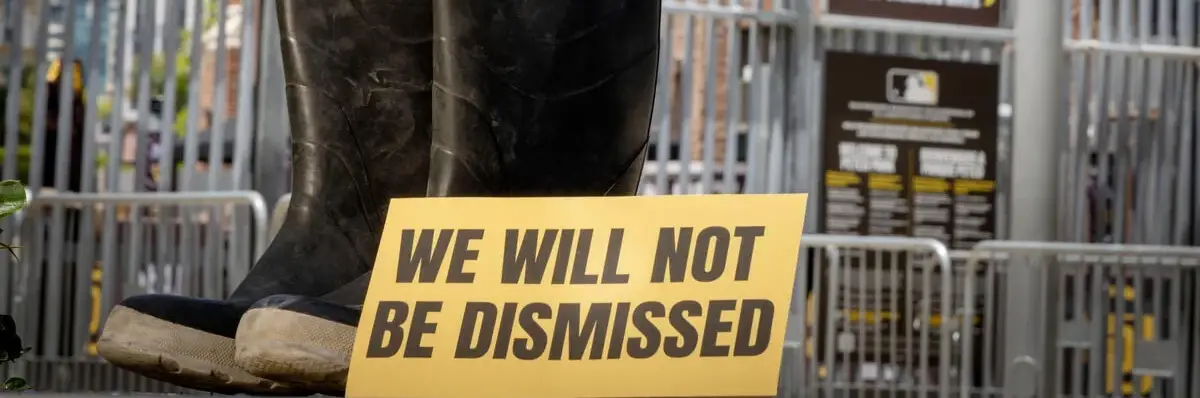
Indonesian fishers who sued Bumble Bee, alleging years of forced labor while catching fish sold by the US tuna brand, responded to the company's motion to dismiss their suit, arguing in the US legal filing on July 31 that they have a right to have their allegations heard in court.
Whatever your politics, the world is finally paying attention.
Right now, more than 28 million people are trapped in forced labor, many of them making the clothes we wear, the food we eat, and the products we use every day.
We have an unprecedented opportunity to change that.
In March, the Trump administration launched an investigation into 60 of America's largest trading partners to determine whether they were doing enough to stop products made with forced labor from entering their markets. The answer was a resounding no. Using a longstanding US trade law designed to combat unfair trading practices, the administration imposed tariffs of 10-12.5% in July on most imports from all 60 economies, which together account for more than 99% of all goods imported into the United States.
We must, while we have the chance, support efforts to embed forced labor prohibitions into the laws of as many countries around the world as we can.
I've spent 30 years leading human rights organizations, and today I serve as executive director of Transparentem, which investigates and remedies hidden labor and environmental abuses in global supply chains. In the six months since this government action, I've seen more attention to forced labor on a global scale than ever before. More than a quarter of all countries in the world now have a forced labor import ban, with many more under consideration. US trade agreements also increasingly include forced labor prohibitions.
Forced labor is one of the few issues where Republicans and Democrats find common ground. There is agreement that it is morally reprehensible and that American companies should not have to compete against foreign producers whose business model depends on preying on precarious workers trapped in abusive workplaces.
A coalition of state governors and attorneys general, along with several small businesses and importers, is suing the Trump administration, alleging it used forced-labor concerns as a pretext to bypass Congress and recreate tariffs after its emergency trade policies were struck down by the Supreme Court. The US Court of International Trade (CIT) is currently deliberating on these arguments in In re Section 301 Forced Labor Cases.
Those of us working to eradicate forced labor should not waste this fertile moment arguing about politics or motives. We should be razor focused on translating the global attention to forced labor into binding legislation that outlasts any political cycle. We must embrace the rare opportunity to make forced labor economically costly rather than economically advantageous. And we must ensure that the lives of workers, in the United States and globally, are ultimately better as a result.
For years, forced labor has remained deeply embedded in global supply chains, from apparel and agriculture to manufacturing and fishing. Of the more than 28 million people in forced labor, nearly 40% are women and girls, and 12% are children. Companies have made commitments to ensure their products aren't made with forced labor, but voluntary initiatives won't solve the problem. In our investigations around the world, we find it in almost every country, often hidden in the lower tiers of supply chains—like cotton fields or mining sites—where visibility is weakest, workers are the most vulnerable, and accountability is easiest to avoid.
Workers continue to take on debt to pay for jobs, have their identification confiscated while working overseas, face coercion, endure discrimination, and work without access to representation and with little ability to challenge the system. These conditions are behind many of the products we use every day.
At Transparentem, we've seen firsthand how import bans, when coupled with other policies to ensure forced labor is addressed rather than simply shifted, have proven to be effective tools. In Mauritius, we uncovered migrant workers from Bangladesh shelling out huge recruitment fees for jobs that did not match what they had been promised, leaving them indebted and trapped. Some apparel factories we named in our report took action to make workers whole again. The only one that did not, got hit with a US import ban.
In Taiwan, following several Transparentem investigations into the manufacturing sector and a parallel independent investigation, US Customs blocked Giant Bicycles imports. At the same time, we partnered with community organizations, local industry groups, and international brands, collectively pushing industry associations to adopt recruitment-fee restrictions and securing signatures from over 50 brands on a reform petition to Taiwan's government. Taiwan has since committed to implementing a forced labor import ban in its US trade agreement.
On a larger scale, US Customs has detained thousands of shipments suspected of links to forced labor in Xinjiang, China because of the Uyghur Forced Labor Prevention Act (UFLPA). Entire sectors—from cotton to polysilicon—have had to reassess their sourcing practices. UFLPA has done what years of voluntary corporate commitments did not.
We must, while we have the chance, support efforts to embed forced labor prohibitions into the laws of as many countries around the world as we can. At the same time, we know through experience that without the right accompanying policies, import bans (and accompanying tariffs) on their own can ultimately hurt workers more than they help them. To be truly effective, laws to abolish forced labor must give workers the power to speak up, organize, and act without fear. Without the freedom to organize and bargain collectively, forced labor will persist—no matter how many laws are passed or shipments are blocked. Worker voice is the only durable check on the conditions that enable exploitation.
Countries need a published, achievable path to showing they are cracking down on forced labor, translating into reduced tariffs. Governments, unions, business, and civil society need the training and resources to detect, prevent, and eliminate forced labor. Companies must double down on their own commitment to prevent forced labor in their production chains and investors must ensure their portfolio companies are taking heed. The US also needs to sharpen enforcement of its own ban.
We must recognize this moment for the opportunity it is and push to eradicate forced labor in our lifetimes.
This country and this world are at a monumental crossroads. US voters have an opportunity to beat back the forces of fascism and confront the billionaires who are rigging the economy, our media system, and our democracy, making it increasingly impossible for ordinary people to get by. We’re not just talking about the election. We’re talking about what must be done once these fascist elements are vanquished from power. We need a bolder set of solutions than what either major party has so far been willing to offer and a working-class movement ready to fight like hell for it. Trump didn't emerge from nowhere. The conditions that fueled MAGA authoritarianism were created by decades of radical neoliberal economic policies and a corrupt political system dominated by corporate interests. They slashed taxes on the super-rich, promising that the benefits would trickle down. They said giveaways to the corporate titans would make life more affordable for the rest of us. It was all bullshit. And when a bitter, betrayed populace searches for someone to blame, right-wing demagogues have little trouble finding scapegoats. People know when they're being lied to, but you won't hear any of this from the corporate media. Only independent journalism—powered and funded by people who believe in building a better world—can deliver truly trustworthy daily news. If you share our vision, please contribute whatever you can to sustain our work. |
Right now, more than 28 million people are trapped in forced labor, many of them making the clothes we wear, the food we eat, and the products we use every day.
We have an unprecedented opportunity to change that.
In March, the Trump administration launched an investigation into 60 of America's largest trading partners to determine whether they were doing enough to stop products made with forced labor from entering their markets. The answer was a resounding no. Using a longstanding US trade law designed to combat unfair trading practices, the administration imposed tariffs of 10-12.5% in July on most imports from all 60 economies, which together account for more than 99% of all goods imported into the United States.
We must, while we have the chance, support efforts to embed forced labor prohibitions into the laws of as many countries around the world as we can.
I've spent 30 years leading human rights organizations, and today I serve as executive director of Transparentem, which investigates and remedies hidden labor and environmental abuses in global supply chains. In the six months since this government action, I've seen more attention to forced labor on a global scale than ever before. More than a quarter of all countries in the world now have a forced labor import ban, with many more under consideration. US trade agreements also increasingly include forced labor prohibitions.
Forced labor is one of the few issues where Republicans and Democrats find common ground. There is agreement that it is morally reprehensible and that American companies should not have to compete against foreign producers whose business model depends on preying on precarious workers trapped in abusive workplaces.
A coalition of state governors and attorneys general, along with several small businesses and importers, is suing the Trump administration, alleging it used forced-labor concerns as a pretext to bypass Congress and recreate tariffs after its emergency trade policies were struck down by the Supreme Court. The US Court of International Trade (CIT) is currently deliberating on these arguments in In re Section 301 Forced Labor Cases.
Those of us working to eradicate forced labor should not waste this fertile moment arguing about politics or motives. We should be razor focused on translating the global attention to forced labor into binding legislation that outlasts any political cycle. We must embrace the rare opportunity to make forced labor economically costly rather than economically advantageous. And we must ensure that the lives of workers, in the United States and globally, are ultimately better as a result.
For years, forced labor has remained deeply embedded in global supply chains, from apparel and agriculture to manufacturing and fishing. Of the more than 28 million people in forced labor, nearly 40% are women and girls, and 12% are children. Companies have made commitments to ensure their products aren't made with forced labor, but voluntary initiatives won't solve the problem. In our investigations around the world, we find it in almost every country, often hidden in the lower tiers of supply chains—like cotton fields or mining sites—where visibility is weakest, workers are the most vulnerable, and accountability is easiest to avoid.
Workers continue to take on debt to pay for jobs, have their identification confiscated while working overseas, face coercion, endure discrimination, and work without access to representation and with little ability to challenge the system. These conditions are behind many of the products we use every day.
At Transparentem, we've seen firsthand how import bans, when coupled with other policies to ensure forced labor is addressed rather than simply shifted, have proven to be effective tools. In Mauritius, we uncovered migrant workers from Bangladesh shelling out huge recruitment fees for jobs that did not match what they had been promised, leaving them indebted and trapped. Some apparel factories we named in our report took action to make workers whole again. The only one that did not, got hit with a US import ban.
In Taiwan, following several Transparentem investigations into the manufacturing sector and a parallel independent investigation, US Customs blocked Giant Bicycles imports. At the same time, we partnered with community organizations, local industry groups, and international brands, collectively pushing industry associations to adopt recruitment-fee restrictions and securing signatures from over 50 brands on a reform petition to Taiwan's government. Taiwan has since committed to implementing a forced labor import ban in its US trade agreement.
On a larger scale, US Customs has detained thousands of shipments suspected of links to forced labor in Xinjiang, China because of the Uyghur Forced Labor Prevention Act (UFLPA). Entire sectors—from cotton to polysilicon—have had to reassess their sourcing practices. UFLPA has done what years of voluntary corporate commitments did not.
We must, while we have the chance, support efforts to embed forced labor prohibitions into the laws of as many countries around the world as we can. At the same time, we know through experience that without the right accompanying policies, import bans (and accompanying tariffs) on their own can ultimately hurt workers more than they help them. To be truly effective, laws to abolish forced labor must give workers the power to speak up, organize, and act without fear. Without the freedom to organize and bargain collectively, forced labor will persist—no matter how many laws are passed or shipments are blocked. Worker voice is the only durable check on the conditions that enable exploitation.
Countries need a published, achievable path to showing they are cracking down on forced labor, translating into reduced tariffs. Governments, unions, business, and civil society need the training and resources to detect, prevent, and eliminate forced labor. Companies must double down on their own commitment to prevent forced labor in their production chains and investors must ensure their portfolio companies are taking heed. The US also needs to sharpen enforcement of its own ban.
We must recognize this moment for the opportunity it is and push to eradicate forced labor in our lifetimes.