SUBSCRIBE TO OUR FREE NEWSLETTER
Daily news & progressive opinion—funded by the people, not the corporations—delivered straight to your inbox.
5
#000000
#FFFFFF
To donate by check, phone, or other method, see our More Ways to Give page.
Daily news & progressive opinion—funded by the people, not the corporations—delivered straight to your inbox.
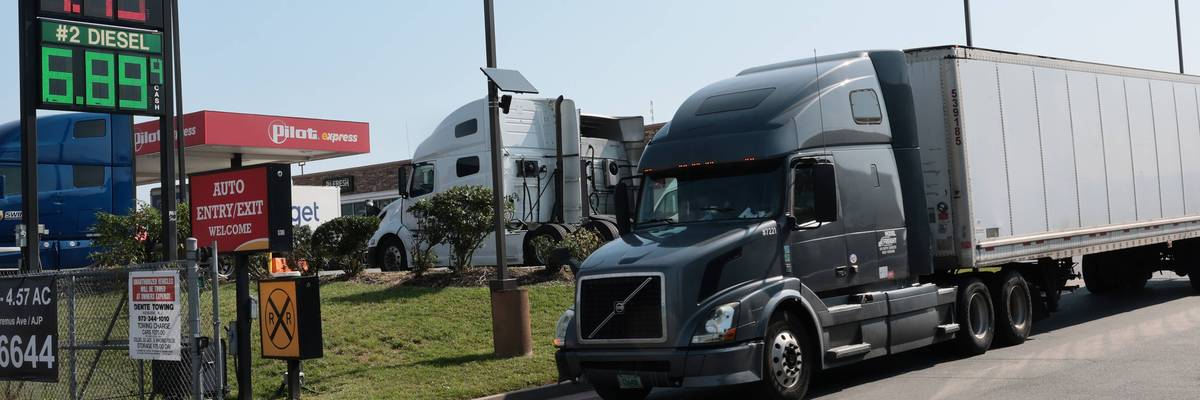
Gas prices are displayed at a Pilot gas station on September 17, 2026 in Newark, New Jersey.
With that additional $930 per household spent on energy, the analysis says the total cost due to higher prices from the war is closer to $1760.
A recently published economic analysis estimates that President Donald Trump’s illegal war with Iran has cost US consumers an average of $1,760 per household—including a total of $121 billion in extra spending on energy alone—since the conflict began less than 8 months ago.
The war, which Trump launched without congressional authorization in February, has sent energy prices spiking across the world, as Iran responded to US attacks by shutting down commercial shipping traffic in the Strait of Hormuz.
According to the estimate by Moody’s Analytics, US consumers have spent over $121 billion—or $930 per household—more on energy since the start of the war, accounting for more than half of the total added expenses imposed by the conflict.
Mark Zandi, chief economist at Moody’s, told CNBC in an interview published Wednesday that the analysis reflects the fact that "consumers are under a lot of financial pressure."
The analysis also finds that the average US household has spent an additional $425 due to higher interest rates caused by the war, as well as $405 for higher military spending, which Zandi explained to CNBC would come from footing the bill through either national debt expansion or increased taxes.
Karthik Sankaran, senior research fellow in geoeconomics at the Quincy Institute for Responsible Statecraft, argued in an analysis published Thursday that relief for US energy consumers could be a long way off given recent developments in the Middle East, including Houthi fighters seizing a key port city along the Red Sea and a drone strike on a Saudi oil pipeline.
Sankaran warned that nations worldwide have far fewer options now to cushion against energy shocks than they did at the start of the war.
"Seaborne storage on tankers has been depleted," Sankaran wrote, "the US Strategic Petroleum Reserve has released about 130 million barrels, and the world’s largest importer, China, is increasing imports to 7.2 million barrels per day, up from a low of 6 million barrels in June."
Sankaran noted that, as uncomfortable as high energy prices are for Americans, the situation is even more dire in the Global South.
"The spike in diesel prices is likely to hit countries in the Global South especially hard," Sankaran explained. "The higher energy density of diesel means that it is used to power trucks, buses, and agricultural equipment, making it the most important fuel in poorer countries where individual ownership of automobiles is much less widespread."
A Tuesday report from CNN highlighted how high fuel prices have led to protests across the globe, including in Syria, Guatemala, France, Portugal, and the Philippines.
The protests in Syria have been particularly intense, CNN noted, as demonstrators on Sunday "blocked the Hasaka–Deir ez-Zor highway, where they burned tires and stopped oil tankers."
Muaz Al Abdullah, Syria analyst at global conflict monitor Armed Conflict Location and Event Data (ACLED), told CNN that "fuel availability, rising prices, falling purchasing power, and poor services are all reasons that have accumulated public resentment," which have led to demands that the country oust its energy minister.
Dear Common Dreams reader, It’s been nearly 30 years since I co-founded Common Dreams with my late wife, Lina Newhouser. We had the radical notion that journalism should serve the public good, not corporate profits. It was clear to us from the outset what it would take to build such a project. No paid advertisements. No corporate sponsors. No millionaire publisher telling us what to think or do. Many people said we wouldn't last a year, but we proved those doubters wrong. Together with a tremendous team of journalists and dedicated staff, we built an independent media outlet free from the constraints of profits and corporate control. Our mission has always been simple: To inform. To inspire. To ignite change for the common good. Building Common Dreams was not easy. Our survival was never guaranteed. When you take on the most powerful forces—Wall Street greed, fossil fuel industry destruction, Big Tech lobbyists, and uber-rich oligarchs who have spent billions upon billions rigging the economy and democracy in their favor—the only bulwark you have is supporters who believe in your work. But here’s the urgent message from me today. It's never been this bad out there. And it's never been this hard to keep us going. At the very moment Common Dreams is most needed, the threats we face are intensifying. We need your support now more than ever. We don't accept corporate advertising and never will. We don't have a paywall because we don't think people should be blocked from critical news based on their ability to pay. Everything we do is funded by the donations of readers like you. When everyone does the little they can afford, we are strong. But if that support retreats or dries up, so do we. Will you donate now to make sure Common Dreams not only survives but thrives? —Craig Brown, Co-founder |
A recently published economic analysis estimates that President Donald Trump’s illegal war with Iran has cost US consumers an average of $1,760 per household—including a total of $121 billion in extra spending on energy alone—since the conflict began less than 8 months ago.
The war, which Trump launched without congressional authorization in February, has sent energy prices spiking across the world, as Iran responded to US attacks by shutting down commercial shipping traffic in the Strait of Hormuz.
According to the estimate by Moody’s Analytics, US consumers have spent over $121 billion—or $930 per household—more on energy since the start of the war, accounting for more than half of the total added expenses imposed by the conflict.
Mark Zandi, chief economist at Moody’s, told CNBC in an interview published Wednesday that the analysis reflects the fact that "consumers are under a lot of financial pressure."
The analysis also finds that the average US household has spent an additional $425 due to higher interest rates caused by the war, as well as $405 for higher military spending, which Zandi explained to CNBC would come from footing the bill through either national debt expansion or increased taxes.
Karthik Sankaran, senior research fellow in geoeconomics at the Quincy Institute for Responsible Statecraft, argued in an analysis published Thursday that relief for US energy consumers could be a long way off given recent developments in the Middle East, including Houthi fighters seizing a key port city along the Red Sea and a drone strike on a Saudi oil pipeline.
Sankaran warned that nations worldwide have far fewer options now to cushion against energy shocks than they did at the start of the war.
"Seaborne storage on tankers has been depleted," Sankaran wrote, "the US Strategic Petroleum Reserve has released about 130 million barrels, and the world’s largest importer, China, is increasing imports to 7.2 million barrels per day, up from a low of 6 million barrels in June."
Sankaran noted that, as uncomfortable as high energy prices are for Americans, the situation is even more dire in the Global South.
"The spike in diesel prices is likely to hit countries in the Global South especially hard," Sankaran explained. "The higher energy density of diesel means that it is used to power trucks, buses, and agricultural equipment, making it the most important fuel in poorer countries where individual ownership of automobiles is much less widespread."
A Tuesday report from CNN highlighted how high fuel prices have led to protests across the globe, including in Syria, Guatemala, France, Portugal, and the Philippines.
The protests in Syria have been particularly intense, CNN noted, as demonstrators on Sunday "blocked the Hasaka–Deir ez-Zor highway, where they burned tires and stopped oil tankers."
Muaz Al Abdullah, Syria analyst at global conflict monitor Armed Conflict Location and Event Data (ACLED), told CNN that "fuel availability, rising prices, falling purchasing power, and poor services are all reasons that have accumulated public resentment," which have led to demands that the country oust its energy minister.
A recently published economic analysis estimates that President Donald Trump’s illegal war with Iran has cost US consumers an average of $1,760 per household—including a total of $121 billion in extra spending on energy alone—since the conflict began less than 8 months ago.
The war, which Trump launched without congressional authorization in February, has sent energy prices spiking across the world, as Iran responded to US attacks by shutting down commercial shipping traffic in the Strait of Hormuz.
According to the estimate by Moody’s Analytics, US consumers have spent over $121 billion—or $930 per household—more on energy since the start of the war, accounting for more than half of the total added expenses imposed by the conflict.
Mark Zandi, chief economist at Moody’s, told CNBC in an interview published Wednesday that the analysis reflects the fact that "consumers are under a lot of financial pressure."
The analysis also finds that the average US household has spent an additional $425 due to higher interest rates caused by the war, as well as $405 for higher military spending, which Zandi explained to CNBC would come from footing the bill through either national debt expansion or increased taxes.
Karthik Sankaran, senior research fellow in geoeconomics at the Quincy Institute for Responsible Statecraft, argued in an analysis published Thursday that relief for US energy consumers could be a long way off given recent developments in the Middle East, including Houthi fighters seizing a key port city along the Red Sea and a drone strike on a Saudi oil pipeline.
Sankaran warned that nations worldwide have far fewer options now to cushion against energy shocks than they did at the start of the war.
"Seaborne storage on tankers has been depleted," Sankaran wrote, "the US Strategic Petroleum Reserve has released about 130 million barrels, and the world’s largest importer, China, is increasing imports to 7.2 million barrels per day, up from a low of 6 million barrels in June."
Sankaran noted that, as uncomfortable as high energy prices are for Americans, the situation is even more dire in the Global South.
"The spike in diesel prices is likely to hit countries in the Global South especially hard," Sankaran explained. "The higher energy density of diesel means that it is used to power trucks, buses, and agricultural equipment, making it the most important fuel in poorer countries where individual ownership of automobiles is much less widespread."
A Tuesday report from CNN highlighted how high fuel prices have led to protests across the globe, including in Syria, Guatemala, France, Portugal, and the Philippines.
The protests in Syria have been particularly intense, CNN noted, as demonstrators on Sunday "blocked the Hasaka–Deir ez-Zor highway, where they burned tires and stopped oil tankers."
Muaz Al Abdullah, Syria analyst at global conflict monitor Armed Conflict Location and Event Data (ACLED), told CNN that "fuel availability, rising prices, falling purchasing power, and poor services are all reasons that have accumulated public resentment," which have led to demands that the country oust its energy minister.