March, 27 2023, 01:47pm EDT

For Immediate Release
Contact:
Lisa Frank, Environment America Washington Legislative Office Executive Director, lfrank@environmentamerica.org
Matt Casale, U.S. PIRG Environment Campaigns Director, mcasale@pirg.org
Statement: Energy bill would wreak havoc on lands, waters and taxpayers
Public lands, clean energy at risk
The U.S. House of Representatives is expected to vote this week on H.R. 1, a major energy package focused on fossil fuels. The sprawling bill would:
- Expand oil and gas drilling on public lands and in the ocean
- Speed the construction of polluting projects, including gas pipelines, while limiting the ability of the public, private landowners and states to weigh in
- Expand mining without requiring companies to clean up or compensate communities for toxic mining waste
- Exempt many sources of pollution, including petroleum refineries, from some Clean Air Act and hazardous waste requirements
- Undo bipartisan reforms to the Toxic Substances Control Act (TSCA)
- Lower the rates companies must pay for extraction on public lands and allow non-competitive lease sales
- Repeal programs that cut energy waste, including the Methane Emissions Reduction Program and rebates for energy efficient and electric home appliances.
The legislation introduced by Majority Leader Steve Scalise of Louisiana is co-sponsored by Reps. McMorris Rodgers, Westerman, Graves and dozens of other House members. According to the Congressional Budget Office, it would increase the deficit by $2.4 billion from 2023-2033.
In response to H.R. 1, Lisa Frank, executive director of Environment America’s Washington Legislative Office released the following statement:
“This bill leads America in so many wrong directions at once, it’s making me dizzy. Instead of protecting the Great American Outdoors, it gives our public lands away to oil, mining and gas companies. Instead of cleaning up toxic pollution, it guarantees more drilling and more spilling, on land and in our oceans. And instead of slowing climate change or helping Americans save energy, it increases our dependence on dirty, expensive fuels.
“It’s 2023. We have so many better options available to us, from the sun shining down on our roofs to the wind blowing off our shores and across our plains. Congress should reject this outdated and unnecessary push to sacrifice our lands, waters and health in the name of energy production.”
Matt Casale, U.S. PIRG environment campaigns director, issued the following statement:
“This legislation hands taxpayers the bill for expanded fossil fuel extraction and toxic waste clean-up, takes resources away from global warming solutions, and limits Americans’ freedom to save energy in their own homes. Given how unpopular its provisions are, it’s not surprising H.R. 1’s authors also seek to limit public input and legal challenges to wrongheaded energy projects.
“Our over-reliance on fossil fuels continues to hold us all over a barrel. This bill looks for short-term fixes by doubling down on the energy sources of the past, but contains more hidden costs that we can count, including more energy waste, more pollution, and a more dangerous future for our kids and grandkids. To protect ourselves now and in the future, we need to think beyond short-term solutions and take steps to end our fossil fuel dependence once and for all.”
With Environment America, you protect the places that all of us love and promote core environmental values, such as clean air to breathe, clean water to drink, and clean energy to power our lives. We're a national network of 29 state environmental groups with members and supporters in every state. Together, we focus on timely, targeted action that wins tangible improvements in the quality of our environment and our lives.
(303) 801-0581LATEST NEWS
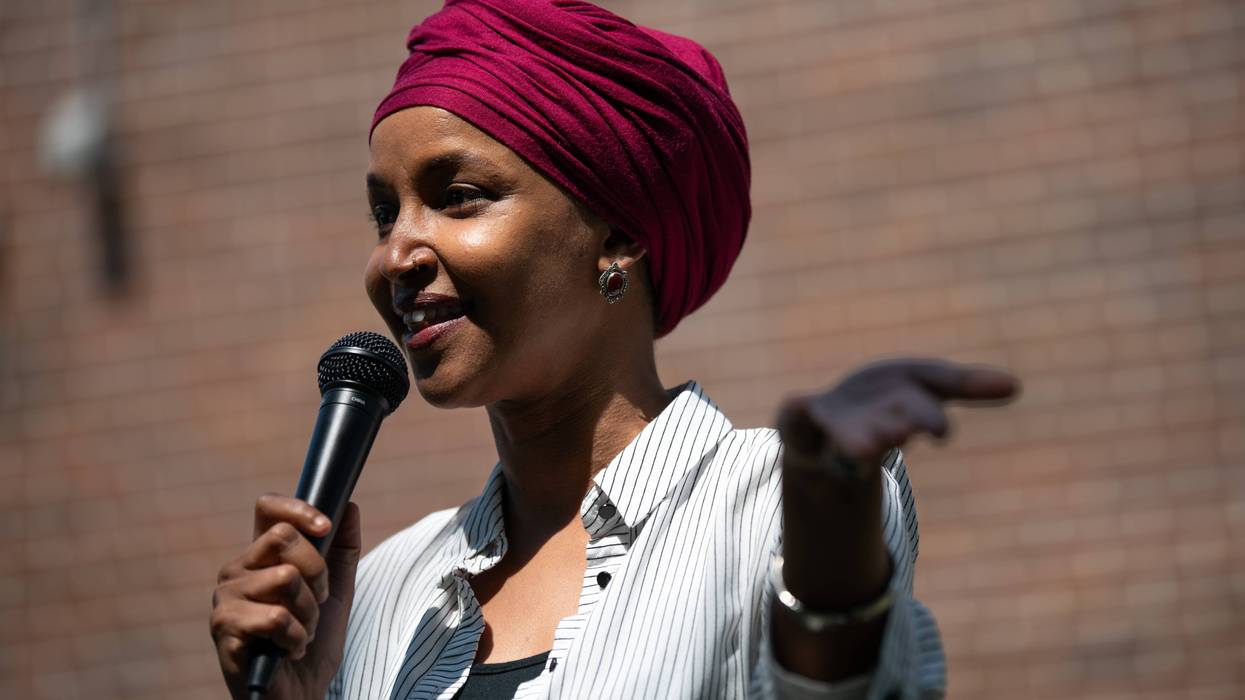
'My Name Has Always Been Ilhan Omar': Congresswoman Calls Out 'Creep' Trump
Amid efforts to deport the congresswoman, Trump amplified an unproven claim that Omar is living under a false name.
Oct 23, 2026
As the Trump administration tries to have her deported, US Rep. Ilhan Omar shot back at President Donald Trump on Friday after he accused her of having lived under a false identity.
In a post to Truth Social, Trump referenced a federal court filing by the US Department of Justice (DOJ) that referred to the Minnesota congresswoman as "Ilhan Nur Said Elmi" without explanation.
"It was just revealed that Ilhan Omar’s name is not Ilhan Omar, the one she used to get elected and sworn into Congress, but rather, it’s an entirely different name, Ilhan Nur Said Elmi, and that her last name is, incredibly, also the exact name of her brother, Ahmed Nur Said Elmi, the person they said she married and had children with," Trump wrote on Thursday night, referencing another unproven conspiracy theory that Omar has long denied.
"Because she used a fake name to be sworn in, I assume she must IMMEDIATELY resign from Congress. Please inform the Speaker of the House of Representatives, James Michael Johnson, that the Dumocrat Party has just conceded her seat."
A spokesperson for Omar told Fox News that the allegation that she was living under an alias is "completely false."
Fox 9 Minneapolis-St. Paul confirmed that the 44-year-old congresswoman has gone by the name “Ilhan Omar” as early as age 17, when she was listed in her Edison High School yearbook as a junior. The Associated Press found that she also used the name Ilhan Omar in marriage licenses, divorce proceedings, voter registrations, and other public records dating back nearly two decades.
"The pedophile protection party’s president is laundering right-wing conspiracy theories through the most corrupt DOJ in American history," Omar wrote on social media. "Whenever the news turns bad, this creep reaches for one name: mine. So let’s make it crystal clear. My name has always been Ilhan Omar."
"Maybe you should focus on what your VP’s real name is," she said, referencing the fact that Vice President JD Vance, born James Donald Bowman, has changed his legal name twice.
The dispute comes after last week’s raid on Omar’s home as part of a highly politicized investigation into her citizenship by the US Department of Homeland Security.
The investigation reportedly focuses not on the allegation about Omar’s brother, but on whether she or members of her family falsified information when they immigrated to the US and subsequently obtained citizenship.
Investigators are reportedly examining whether Omar or her father falsified her birth date, listing her as 17 rather than 18 so she could obtain citizenship through him as a minor. Omar has not been charged with a crime, and investigators have not yet publicly provided evidence of the claim.
Trump has regularly launched racist attacks against Somali Americans during his presidency, saying they should all be deported and referring to them as “garbage” with “low IQs.” While pushing to deport Omar, he has often demonized her based on her Somali heritage.
"She’s been a scammer for a long time. I’m pretty good at watching that stuff, and she comes from a non-country, basically. Somalia has no government, has no nothing," he said during a campaign rally in Iowa this week. "All they do is run around shooting each other. Then she comes over here."
Rep. Randy Fine (R-Fla.)—who has previously described Omar as a “terrorist” and called for the mass deportation of all Muslim immigrants from the US—announced plans to introduce a resolution on Friday to expel Omar from Congress if she is found to have broken the law.
Keep ReadingShow Less
'We May Do Another Little Epic Fury,' Trump Says After Claiming Not to Know About Possible Strike on Iran
The president previously said he wouldn't take any more military action in Iran until after the midterms.
Oct 23, 2026
When President Donald Trump landed in Florida for a Friday campaign rally, he dismissed comments from one of his own ambassadors that the US could strike Iran this weekend as part of his illegal nearly eight-month war—but once the commander-in-chief took the stage, he changed his tune, threatening more bloodshed.
In an interview with online commentator Mario Nawfal published earlier Friday, US Ambassador to Turkey Tom Barrack, who is also Trump's special envoy to Syria and Iraq, said: "Could there be a strike this weekend? Absolutely."
"The president is very clear. He's open and available and accessible to a deal. And we've been at the table for months and months and months," he continued, noting that in addition to the nuclear priorities and aiming to reopen the Strait of Hormuz, the US is "in a bargain for unfreezing assets, releasing sanctions, no more kinetic engagement, [and] supplying the needed help to Israel, our ally."
Trump had said on his Truth Social platform earlier this month that "we are having productive discussions with the Islamic Republic of Iran. I want to make it clear to everybody that, while Iran is in very bad condition, both Economically and Militarily, and while the Blockade will remain in full force and effect, with Oil flowing in Record Numbers of Barrels through the Hormuz Strait (22 Million Barrels, last night alone, with not one barrel coming from, or going to, Iran!), we will not be attacking Iran at any time prior to the Midterm Elections to be held in the United States on November 3rd."
Asked about Barrack's suggestion that a US attack could come soon while on a Florida runway, and whether it meant Trump was rethinking that position, the president responded: "That was my ambassador? He's a pretty powerful man, I guess. Well, if that's the case, I don't know anything about it."
While replying to the reporter, Trump exchanged a glance with Republican Florida Gov. Ron DeSantis, who giggled at the president's answer.
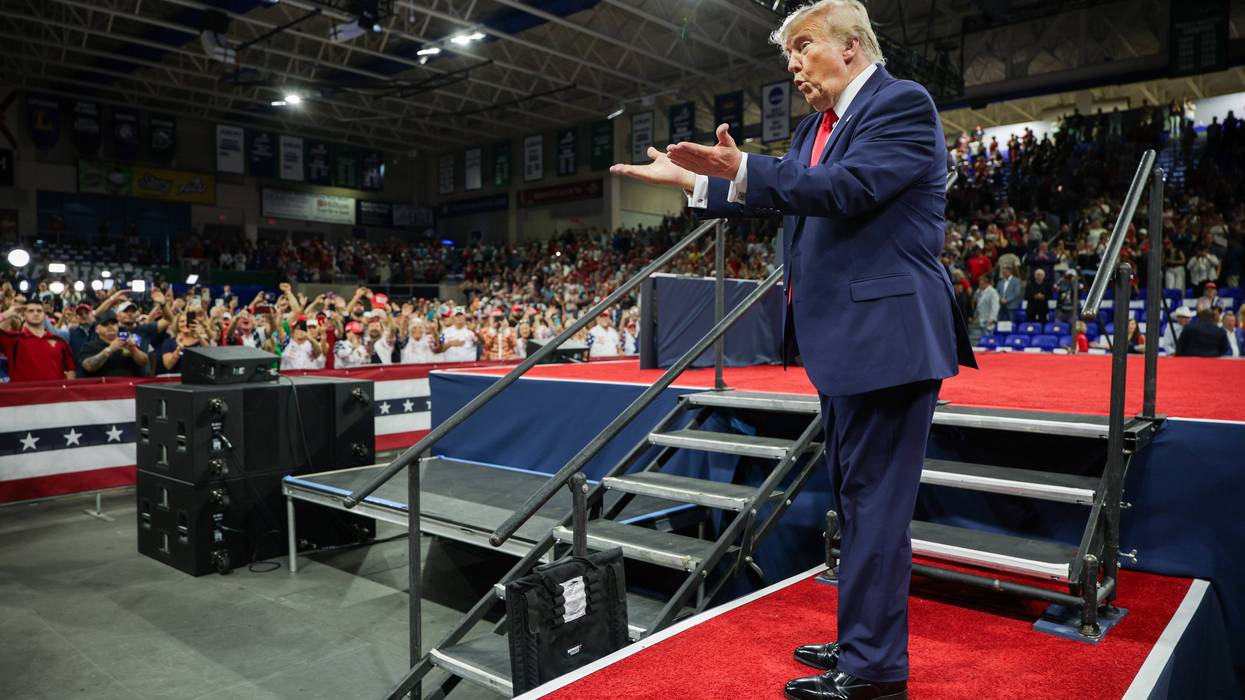
Once Trump was onstage at Florida Gulf Coast University's Alico Arena, he bragged about ditching the Obama administration's Iran nuclear deal, and overseeing two military operations: Midnight Hammer, the June 2025 strike on Iranian nuclear facilities, and Epic Fury, the war he and Israel launched in February, in violation of the US Constitution and international law.
"We may do another little Epic Fury, or they'll agree," Trump told the crowd. "If they're smart, they'll just say, 'Let's get down to business.' But, you know, I doubt they'll do that because perhaps they're not smart—but we did a number on them."
Trump's illegal war—which has killed thousands of people across the Middle East—and its resulting economic impact have been key topics for Democrats hoping to reclaim control of both chambers of Congress, and potentially impeach him a historic third time.
Keep ReadingShow Less
Trump-Ordered DOJ Lawsuit in Alaska Seen as First Salvo in GOP Effort to Undermine Midterm Elections
"I'm the one that said do it," Trump said of the lawsuit, which seeks to block certification of Alaska's Senate election if the Democrat wins.
Oct 23, 2026
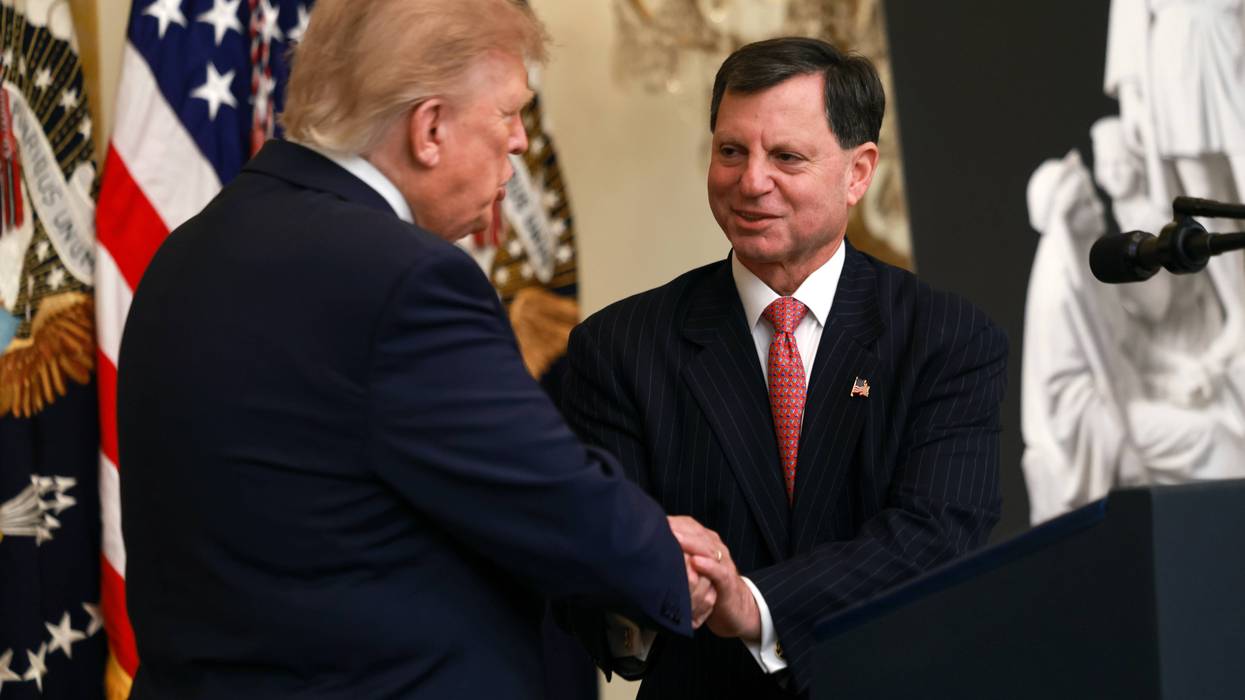
On the same day that Attorney General Todd Blanche declared the US Department of Justice would not "improperly" try to block states from certifying their elections, the DOJ appears to have taken its boldest step yet to do just that—at the apparent direction of President Donald Trump.
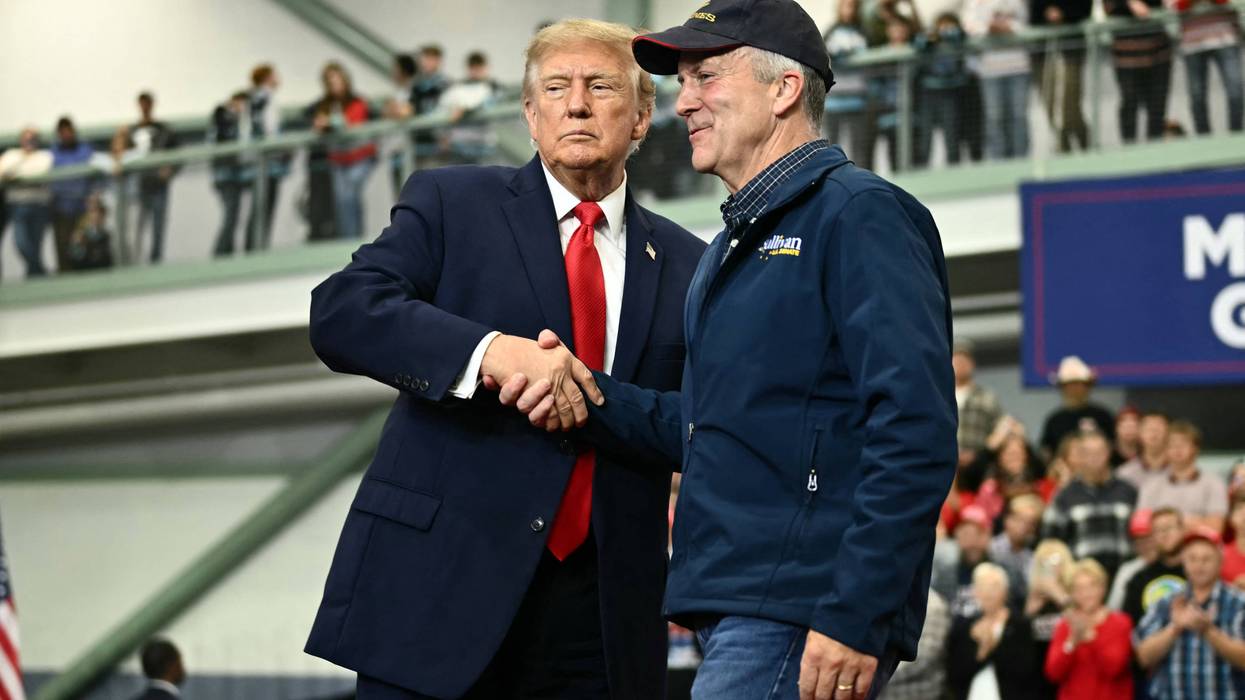
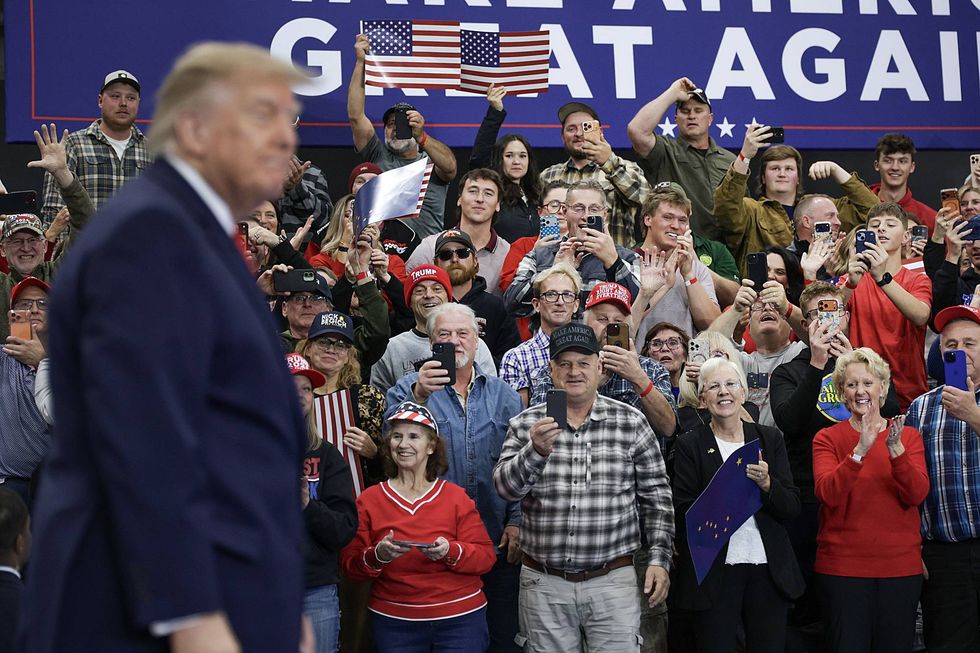
The DOJ on Thursday filed an unprecedented complaint in Alaska asking a federal judge to block the certification of its Senate election results if Republican Sen. Dan Sullivan narrowly loses to his Democratic challenger, former US Rep. Mary Peltola. The race could determine control of the chamber.
Filed just 12 days before Election Day and after voting had begun, the lawsuit claims voters intending to support the Republican incumbent may be confused into voting for a different person on the ballot, a retired teacher who is also named Dan Sullivan.
The second Sullivan, a registered Republican from Petersburg, Alaska, was initially kicked off the ballot over fears that he was trying to fool voters. But that decision was later reversed by a judge, whose decision was upheld by the Alaska Supreme Court.
Alaska's ballots distinguish between the two Dans Sullivan, with the senator listed as "registered Republican" and "incumbent," and the other listed without any identifiers.
"It's clearly marked which one is the GOP candidate and which one is just a guy," argued journalist Dave Weigel.
In its lawsuit, the DOJ claimed that the "sole purpose" of the other Sullivan's candidacy is to sow confusion and "benefit the Peltola campaign by reducing the number of votes for Sen. Sullivan."
As evidence of this, it points to Sullivan's statements that he voted for Democrats in the last three election cycles and supported Peltola's candidacy for the US House of Representatives, though it does not allege he directly coordinated with the Democratic candidate.
Instead of seeking to boot the alleged Sullivan impostor from the ballot again, the DOJ is pursuing a different remedy: It wants Alaska to delay the certification of a Peltola victory if giving all of the other Sullivan's votes to the senator would change the election outcome. Certification would remain on hold while investigators determine whether those voters meant to support the incumbent.
The latest polling average from FiftyPlusOne shows Peltola leading Sen. Sullivan by a margin of roughly two percentage points. The other Sullivan is currently polling at about 4%.
However, Alaska's ranked-choice voting system makes it considerably less likely that name-based confusion would actually cost Sen. Sullivan the election. Voters who mistakenly selected the wrong Sullivan as their first choice could still support the incumbent by ranking him second, reducing the potential for the two candidates to split the GOP vote.
University of Notre Dame law professor Derek Muller said the DOJ's legal argument to suspend the certification of Alaska's election was "one of the worst ones I’ve ever seen."
In a blog post, he said the DOJ's request to probe whether voters accidentally cast their ballots for the wrong Sullivan was "essentially impossible" to fulfill because "the best evidence that voters preferred one Sullivan over another is how they marked their ballots."
"Some, in a panic, might react that the department is trying to deny certification of an election in a state," he said. "Of course that’s what the department is trying to do. But the legal claim is so absurdly thin, there’s essentially no likelihood of success."
Though the Alaska lawsuit is the first direct request to block an election result in 2026, Alaska is not the first state where Blanche's DOJ has filed an eleventh-hour lawsuit that critics argue is meant to interfere with election results.
The department sued California earlier this month, seeking to have the state exclude the ballots of around 20,000 voters it claimed were noncitizens based on a database known to be riddled with errors.
Election experts have pushed back on Blanche's assertion that the DOJ can intervene in states' election certification processes, even in what he described as a "doomsday scenario," since the US Constitution explicitly grants the power to run elections to states.
In stark contrast to previous US attorneys general, who have stressed their legal independence, Blanche said plainly earlier this week, "I work for President Trump."
Asked about the Alaska lawsuit on Friday, Trump told reporters directly, "I'm the one that said do it."
With Republicans projected to suffer heavy losses in the House and Senate, DOJ lawsuits represent one of several ways Trump administration officials have suggested they may interfere with elections.
Blanche and Homeland Security Secretary Markwayne Mullin have floated the idea of dispatching armed agents to polling places in violation of federal law. Trump has raised the possibility of seizing voting machines, and he has ordered the US Postal Service to block mail ballots from being delivered in some states, an effort that has been halted in court.
Devan Barber, executive director of the Democratic Senatorial Campaign Committee, told The Associated Press that the Alaska lawsuit was yet another form of meddling.
"Donald Trump knows that Dan Sullivan is going to lose the election," Barber said, "so now his Department of Justice is filing a sham lawsuit to overturn the will of Alaska voters and steal an election when he loses."
Keep ReadingShow Less
Social Security Agency Accused—Once Again—of Illegally Using Federal Resources to Praise Trump
"Here we are, watching the SSA join a list of politicized agencies being used as partisan tools in the White House’s political toolbox."
Oct 23, 2026
The US Social Security Administration on Friday was accused yet again of unlawfully using federal resources for the overtly political purpose of celebrating President Donald Trump—this time less than two weeks out from the midterm elections.
On Thursday, SSA—headed by Trump nominee Frank Bisignano—sent out an email praising the "historic tax cut" that Trump signed into law last summer, a reference to the Republican budget law that gutted Medicaid and federal nutrition assistance while damaging Social Security's finances.
The SSA email noted that the law "also created Trump Accounts, individual investment accounts for America’s children designed to grow with the US economy and build long-term savings."
"Trump Accounts are one of the most significant investments in the next generation of Americans in our nation’s history, by giving every American child a stake in our country’s success and a strong financial foundation for the future," the email gushes, not mentioning that Trump's treasury secretary and one of the president's top Republican allies have described the accounts as a backdoor way to privatize Social Security.
Now the Social Security Administration is using taxpayer funds to campaign for Trump and his candidates in the midterms—an obvious violation of federal law but a classic authoritarian move https://t.co/qVoyB4lIvl
— Berin Szóka (@BerinSzoka) October 22, 2026
SSA sent its email weeks after the Trump administration faced backlash for unlawfully using taxpayer funds to air political ads ahead of the midterms.
MS NOW's Steve Benen noted Thursday that the latest SSA email is part of a "broader pattern" of behavior by the Bisignano-led Social Security agency.
"In early July the Social Security Administration sent out an unsolicited email celebrating Republican tax breaks... which followed related political emails to Social Security beneficiaries in July 2025 and August 2025," Benen wrote. "When people get unsolicited official statements from the Social Security Administration, they should be able to have some confidence that the agency isn’t trying to lobby them with political messaging."
"And yet, here we are, watching the SSA join a list of politicized agencies being used as partisan tools in the White House’s political toolbox, creating a dynamic in which many Americans are likely to approach the next message they receive from the government about Social Security with some skepticism," he added.
In July, a group of Democratic senators led by Elizabeth Warren of Massachusetts wrote to Bisignano about the SSA's "partisan, politicized" messages "that heaped praise on President Trump." The senators pointed to a July 2, 2026 email to "an untold number of Americans" in which SSA "referred to President Trump six times, named him directly in reference to 'protecting and strengthening Social Security' and gave him and his administration credit for 'not only protecting Social Security, but... [also] providing meaningful and immediate relief to older Americans.'"
"It is safe to say that few presidents have done more than President Trump to damage Social Security—yet in an Orwellian twist, you are misusing official resources to heap praise on him," the senators wrote to Bisignano. "The decision to send this email raises fresh questions about your judgement and your ability to prioritize SSA beneficiaries."
Keep ReadingShow Less
'Hunger Disaster Unrolling Before Our Eyes': Alarm Grows Over Trump Food Aid Evisceration
“SNAP participation is falling because the Trump administration has intentionally kicked people off of the program—leaving Americans hungry and still struggling to afford food,” said Sen. Elizabeth Warren.
Oct 23, 2026
An analysis published Thursday showed that millions of Americans have lost critical food assistance since President Donald Trump signed last year's massive Republican tax giveaway for the superrich, with soaring grocery prices and cuts to school meals exacerbating the crisis.
According to the Center on Budget and Policy Priorities (CBPP), approximately 5.5 million people, including roughly 2 million children, have lost Supplemental Nutrition Assistance Program (SNAP) assistance since Trump signed the so-called One Big Beautiful Bill Act (OBBBA) in July 2025.
The legislation approved the deepest cuts to SNAP—also known as food stamps—and Medicaid in those programs' histories while slashing billions of dollars from other essential social programs to fund massive tax breaks for billionaires and corporations.
This, at a time when more than 47 million Americans—including 1 in 5 US children—are living in food-insecure households.
The 5.5 million people who have lost SNAP represent 13% of the program's recipients, according to CBPP. The decline is far below projections made by the Congressional Budget Office.
"The declines are especially pronounced in some states," the report noted. "SNAP participation fell in Arizona by nearly 51%... The caseload declines are 20% or more in Arizona, Florida, Illinois, Louisiana, Nebraska, Nevada, and Oklahoma, and—using more recent state data—in Indiana, Kansas, and Texas."
In absolute numbers, Texas saw the biggest loss of SNAP recipients, with 709,435 fewer enrollees. Florida lost 665,935 SNAP enrollees, while Arizona had 408,204 fewer and California lost 333,062.
The CBPP report follows an analysis released Tuesday by Unrig Our Economy and Americans for Tax Fairness that showed how Latino SNAP recipients have been disproportionately affected by food stamp cuts. The groups estimated that 1.5 million Latinos have been kicked off SNAP since Trump signed the OBBBA, with Texas (396,164) and Arizona (200,124) hardest-hit.
More cuts are highly likely, as "starting in October 2027, most states will have to pay between 5-15% of SNAP benefit costs, totaling hundreds of millions of dollars a year in many states," according to CBPP.
"The magnitude of the cost shift and the urgency surrounding error rates incentivized states to take drastic measures to reduce their payment error rates quickly and cut program costs, even if it meant delaying or improperly denying benefits to eligible people," the analysis warns.
The OBBBA's SNAP cuts, combined with stricter eligibility requirements, have forced schools across the country to scale back universal free meal programs amid declining federal reimbursements.
The Washington Post reported Thursday that school districts are experiencing ballooning unpaid lunch bills and struggling to ensure children are fed. In rural Indiana, one district’s share of students qualifying for free or reduced-price meals plunged from 66% to 44% in a year, while its lunch debt has already reached $10,000. In San Antonio, Texas, the number of schools offering free meals to every student under a federal program fell from 48 to 16. Nationwide, the average number of children receiving free school lunches dropped by 600,000 between fiscal years 2025 and 2026.
Making matters worse, many eligible immigrants are not applying for SNAP benefits out of fear it could affect their citizenship prospects.
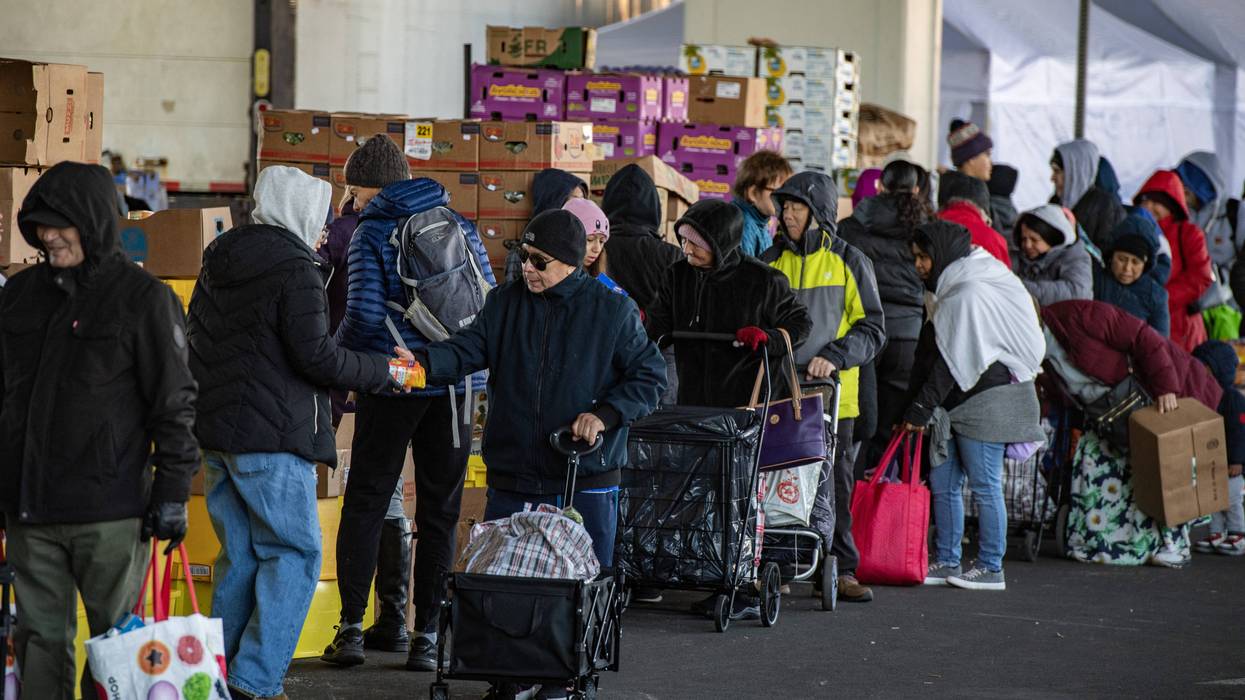
Food banks and other charities are having to meet needs the government once addressed.
“It’s been getting out of control since last year,” Paco Vélez, president and chief executive of the Feeding South Florida food bank, told the Post. “It’s all created a situation where families are needing more and more assistance.”
The CBPP and Post reports came on the same day as a "Food Misery Index," published by the office of Sen. Elizabeth Warren (D-Mass.), offered a detailed view of how the combined impact of SNAP cuts and skyrocketing grocery prices—exacerbated by Trump policies including tariffs, the deadly immigration crackdown, and the illegal war of choice on Iran—"has stripped more than $22 billion from American families since July 2025."
“SNAP participation is falling because the Trump administration has intentionally kicked people off of the program—leaving Americans hungry and still struggling to afford food,” Warren wrote Wednesday in a letter to US Agriculture Secretary Brooke Rollins.
“Instead of reaching for tools to mitigate these threats to families and working to bring down costs, the administration continues to sit idly by, peddling false narratives about the drop in SNAP participation, while delivering a one-two punch to American families who are struggling to put food on their tables," the senator continued.
"With grocery prices and food insecurity on the rise," Warren added, "I urge the administration to work with Congress to immediately reverse its harmful cuts to SNAP."
Keep ReadingShow Less
Trump Completely Dismisses Rape of 12-Year-Old Child, Calls Amy Acton's Mother a 'Smart Woman'
"There are very serious sexual abuse allegations," said an NBC reporter. "Quiet," snapped the Republican president of the United States.
Oct 23, 2026
US President Donald Trump on Friday shamelessly defended and celebrated Ohio Republican gubernatorial candidate Vivek Ramaswamy's widely condemned attack ad against his Democratic opponent, Amy Acton, while feigning ignorance about her account of the sexual abuse she experienced at the hands of her stepfather when she was a child.
"It's a mother speaking badly against Amy Acton," Trump told reporters of the Ramaswamy ad, which features Acton's estranged biological mother, Donna Arthur, calling the Democratic candidate a "liar." Acton's account of her childhood is backed by court records, which show that her stepfather, Cledith Arthur, was charged with rape in July 1978 and indicted by a grand jury later that year.
Trump said Friday that he doesn't "know anything about a stepfather," despite being made aware of Acton's past earlier this week. The president called Acton's mother a "smart woman."
"I know that recently, a mother got on television and said that her daughter should not be governor of Ohio," Trump said, after repeatedly snapping at NBC reporter Monica Alba, who tried to get the president to acknowledge Acton's account of sexual abuse.
"Do the sexual abuse allegations mean nothing to you, sir?" Alba asked. "There are very serious sexual abuse allegations."
Watch the exchange:
YIKES 😳 Trump snaps at a reporter asking him about why he's dismissing sexual abuse allegations 👇WOMAN REPORTER: Do the sexual abuse allegations mean nothing to you, sir?TRUMP: Wait. Wait! Wait wait wait. Slow down. Who are you with?REPORTER: NBC, sir. But they are very serious sexual abuse allegationsTRUMP: Quiet! Isn't she a fresh person? You're a horrible little reporter, aren't you?
— Aaron Rupar (@atrupar) October 23, 2026
Trump's comments to reporters on Friday marked just the last instance of the president defending and championing Ramaswamy's ad, which the president characterized as "very powerful" in a Thursday Truth Social post.
"The Press is trying to convince everyone that this Ad is bad, because it's so good!" Trump crowed. "Who wouldn't use such an Ad?"
HuffPost White House correspondent SV Dáte wrote Friday that Trump is "doing his damnedest to make this truly vile ad the closing argument of this midterm."
When a reporter in the gaggle once again explained to Trump that the backstory of Acton's estrangement from her mother included that her "stepfather was indicted for rape" and if that changed his position on the ad, Trump immediately cut her off and said, "No, no."
"It's a mother speaking badly of Amy Acton," Trump said, "and to me it's very easy."
Q: Now that you know the backstory about Amy Acton and her stepfather and why she hasn't talked to her mom in so long -- her stepfather was indicted for rape -- do you change your mind about the ad?TRUMP: No. No. It's a mother speaking badly against Amy Acton. You don't know anything.
— Aaron Rupar (@atrupar) October 23, 2026
The race between Ramaswamy and Acton is expected to be very close, though some analysts have shifted their assessments of the race in the Democrat's favor amid growing outcry over the ad, including from Ohio's outgoing Republican Gov. Mike DeWine—who endorsed Ramaswamy earlier this year.
Ramaswamy has shown no sign of backing away from the 60-second spot, and his campaign is expected to spend millions airing it in the days leading up to the midterm contest.
During a campaign stop on Friday, Ramaswamy accused his political opponents of "lying" about the ad and insisted that it had "nothing to do" with childhood abuse. The ad does not specifically mention Acton's account of abuse, but Arthur has previously accused Acton of lying about being raped by her stepfather—to whom Arthur remained married until his death.
Keep ReadingShow Less
Consumer Sentiment Data Another Sign Trump 'Affordability Crisis Is Getting Worse, Not Better'
"High prices and borrowing costs are making it harder for people to afford everyday necessities, and inflation expectations are rising again."
Oct 23, 2026
With early voting underway for the midterm elections and Democrats campaigning on how prices have soared under a Republican-controlled Congress and President Donald Trump, data released Friday show US consumer sentiment nearing an all-time low.
The University of Michigan's Surveys of Consumers announced that its Consumer Sentiment Index dropped to 48 this month, down from 48.1 in September and 53.6 last October. The record low was 44.8, this past May.
Surveys of Consumers director Joanne Hsu noted Friday that "increases in sentiment among Republicans and Democrats were balanced by declines among independents," and also highlighted some of the survey's other findings.
UMich consumer sentiment... 48.0... 2nd-worst in history
[image or embed]
— Mike Zaccardi, CFA, CMT (@mikezaccardi.bsky.social) October 23, 2026 at 10:02 AM
"While year-ahead business conditions improved about 14%, they stand 16% less than last October's read," she continued. "This month's decline in the Current Conditions subindex was driven entirely by buying conditions for durables, which plunged 18% on the basis of higher interest rates and rising concerns about the affordability of such purchases. Purchasing power continues to dominate consumer views of the economy. Sentiment is now 10% below a year ago and 15% less than February, just prior to the Iran conflict."
"Year-ahead inflation expectations ticked up from 4.6% last month to 4.7% this month," said Hsu, who also put out a related report on inflation. "The current reading substantially exceeds the 3.4% seen in February before the Iran conflict began, along with all 2024 readings. Long-run inflation expectations also stepped up from 3.4% in September to 3.5%, notably higher than their 2024 range of 2.8% to 3.2%. Inflation expectations over both time horizons increased for the second straight month to their highest readings since May."
Data released last week by the US Bureau of Labor Statistics show inflation grew faster than expected in September, partly due to Trump's illegal Iran War, and an online tracker published earlier this month by Sen. Elizabeth Warren (D-Mass.), ranking member of the Senate Banking Committee, highlights how costs have jumped for childcare, electricity, gasoline, groceries, healthcare, and rent.
Tonantzin Carmona, a former Biden administration adviser who now directs economic policy at The Century Foundation, a progressive think tank, called the University of Michigan's new consumer sentiment numbers "another sign that the affordability crisis is getting worse, not better."
"High prices and borrowing costs are making it harder for people to afford everyday necessities, and inflation expectations are rising again," she said. "What's more, our research shows that debt payments are eating up more than half of every dollar of real income growth, with debt payments rising more than eight times as fast as take-home income since the end of 2022."
"As inflation outpaces wage gains," she added, "workers are being squeezed from every direction—and October's consumer sentiment numbers, which are the second-lowest on record, reflect just how little families have left after paying their bills."
In 1980, inflation was 14% and unemployment was 8%. Consumer sentiment: 52.In 2026: still 52.Turns out Americans aren't just worried about the economy https://newsletter.platypuseconomics.com/p/its-not-the-economy-its-whos-running
[image or embed]
— Justin Wolfers (@justinwolfers.bsky.social) October 21, 2026 at 10:04 AM
In the lead-up to his colleagues updating consumer sentiment figures, University of Michigan economist Justin Wolfers published a Wednesday blog post noting that "every couple of weeks, someone on cable TV sits me down, points a camera at me, and asks the exact same thing. Our economic statistics look pretty good, so why are Americans so gloomy?"
"My prime suspect: An overwhelming majority of Americans rate economic policy under Trump as poor—the worst it has ever been—and they worry what this means for their economic futures," Wolfers wrote. He took "the share of people who say the government is doing a poor job" and subtracted "the share who say it's doing a good job," with a higher figure signaling a "harsher verdict."
"In late 2024, the verdict stood at +14. That means 14 percentage points more Americans thought the government was doing a poor job than a good one," he explained. By last May, when the consumer sentiment was the worst on record, "it had hit +66."
Based on his examination of the survey results over the years, Wolfers decided that "the next time someone points a camera at me and asks why Americans are so gloomy when the numbers look fine, here's my answer. They're not misreading the economy. They're reading the people running it. And their verdict today is the harshest on record."
Keep ReadingShow Less
‘Let’s Be Clear,’ Expert Says, There Is ‘No Role’ for DOJ or Todd Blanche in Election Certification
Blanche said the DOJ would not "improperly interfere" in elections, but did not rule out blocking certification of a state's election results in a hypothetical "doomsday scenario."
Oct 23, 2026
Election experts pushed back Friday after US Attorney General Todd Blanche refused to rule out the possibility that the Department of Justice could try to stop states from certifying elections in November.
Asked by reporters Thursday whether the DOJ may try to block a state from certifying its results, Blanche responded that "of course there are scenarios that we could all come up with hypothetically—some doomsday scenario, for example" in which the department may need to intervene.
"I don’t think it’s proper to make any kind of conclusory statements about what’s going to happen in the future because I have no idea what’s going to happen in the future," he continued. "It is not DOJ’s intention—and it’s never our intention—to improperly interfere with elections or the state certification process, but to say that there’s no circumstances that we would ever do that—of course I’m not going to say that.”
“But am I planning my days around the election to be somewhere to not certify? Of course not,” added Blanche, who was previously President Donald Trump's personal attorney.
Lauren Miller Karalunas, senior counsel for democracy at the Brennan Center for Justice, emphasized on Friday that regardless of what hypothetical "scenario" Blanche may have been alluding to, there is no legitimate way for the DOJ to stop the certification of election results.
"Let's be clear: The state certification process is just that—a state process," Karalunas said. "There is no role for the federal government to play that's not inherently improper."
"Rest assured, state certification processes were created to meet this moment," she continued. "Centuries ago, state legislatures recognized that bad actors could use the process to manipulate election outcomes. They built in safeguards specifically designed to stop that from happening."
Blanche's refusal to categorically rule out federal intervention alarmed many observers, especially in light of Trump's threats to meddle in elections, including by having them "nationalized" against federal law.
Trump used false claims of widespread voter fraud to pressure states to decertify unfavorable election results in 2020 and pushed the DOJ to assist those efforts. In January, FBI agents seized 2020 election ballots and records from a voting hub in Fulton County, Georgia, in an attempt to legitimize the allegations, which had already been extensively investigated.
Under Blanche—who days ago declared "I work for President Trump"—the DOJ has already sued California in an attempt to prevent ballots from more than 20,000 registered voters from being counted, based on largely unsubstantiated claims that they were noncitizens.
On Thursday, the DOJ sued Alaska to potentially block certification of its Senate election if Democrat Mary Peltola defeats Republican Sen. Dan Sullivan and votes for another candidate—also named Dan Sullivan—could have changed the outcome. The DOJ alleges that the challenger entered the race to confuse the senator’s supporters into voting for him.
Armed agents from Homeland Security Investigations, a branch of Immigration and Customs Enforcement, have been going door to door in California and other states, questioning residents about their citizenship and voting histories.
On Wednesday, a federal court ruled that these operations likely violated the Voting Rights Act's prohibition on voter intimidation.
Blanche and Homeland Security Secretary Markwayne Mullin have also declined to rule out sending immigration or other federal agents to polling places, despite federal laws banning "troops or armed men" from places where elections are being held.
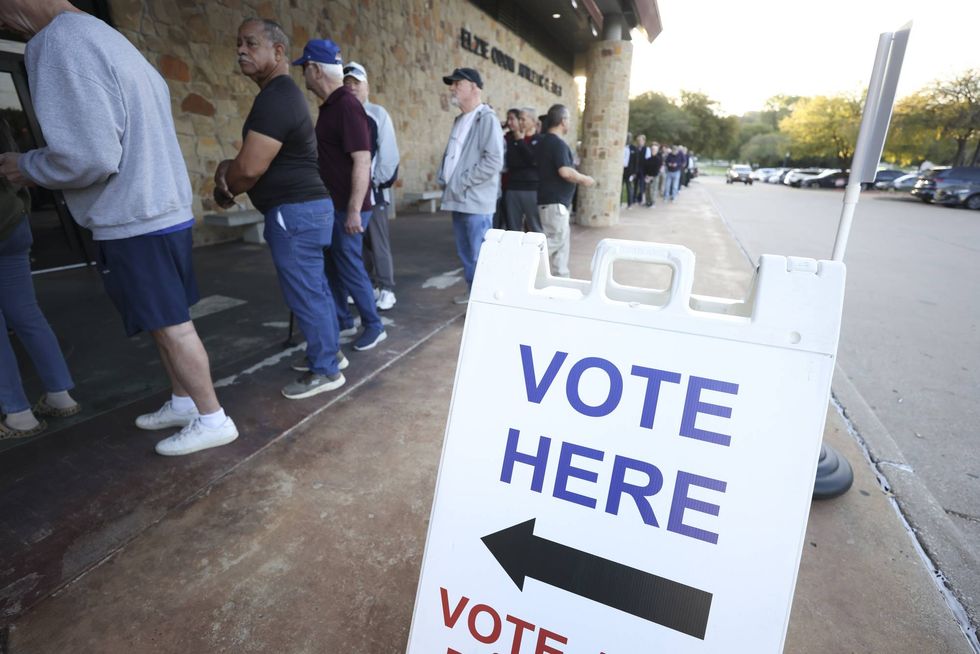
Max Flugrath, communications director for the voting rights group Fair Fight Action, said Blanche's comments on Thursday were unprecedented.
"I don’t know of another US attorney general who has publicly entertained using the DOJ to block states from certifying an election," he said.
Senate Minority Leader Chuck Schumer (D-NY) responded that "Senate Democrats have been preparing" for potential election shenanigans by the Trump administration "for months, and will be ready for whatever they try."
"As Trump and his cronies attempt to steal this election, we are fighting them at every turn," he wrote on social media.
Sen. Brian Schatz (D-Hawaii) agreed during an interview with CNN that Democrats remained "vigilant" and were "ready for any scenario."
"We've got litigators ready," he told host Kasie Hunt. "We've got... organizers ready in case things get difficult... and so we're not going to have a failure of imagination in terms of what people are capable of in terms of overturning an election."
"But I also think—it's important to remember that part of the game here is that people are desirous of making voters feel like their vote won't count," Schatz added. "And so, the best way to overcome any kind of people screwing around is to get out there and vote in large enough numbers that these little marginal moves that they could or may or may not make won't work."
Keep ReadingShow Less
Jayapal, Sanders Question Zuckerberg Over Alleged Meta Interference in Brazilian Election
"It is unacceptable for any social media platform to favor one political candidate or party over another, whether deliberately or inadvertently."
Oct 23, 2026
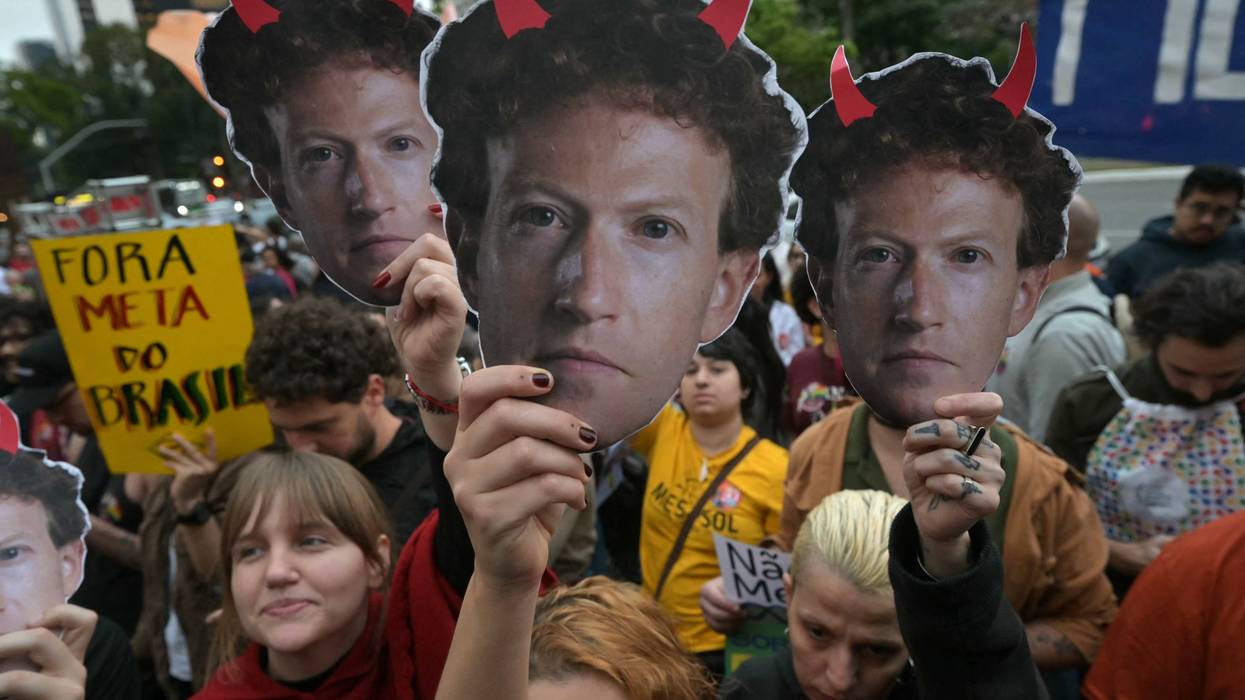
Over a dozen US lawmakers, led by Rep. Pramila Jayapal and Sen. Bernie Sanders, wrote to Meta CEO Mark Zuckerberg on Thursday to demand answers about the social media giant's alleged interference in Brazil's presidential runoff election.
Leftist Brazilian President Luiz Inácio Lula da Silva is facing far-right Sen. Flávio Bolsonaro, the son of former President Jair Bolsonaro, in Sunday's election. Lula has asked the Superior Electoral Court to probe his challenger over "improper use" of a social network and disqualify him, and Bolsonaro—an ally of US President Donald Trump—has similarly sought Lula's disqualification.
Meanwhile, US-based Meta—which owns Facebook, Instagram, and WhatsApp—claimed to the Brazilian court that it has adopted measures to ensure equal treatment of the candidates. But the members of Congress remain alarmed, and research released by the corporate accountability group Ekō on Friday, after their letter was sent, bolsters their concerns, showing that "Instagram's algorithm aggressively promoted pro-Bolsonaro and right-leaning content to a brand-new, politically neutral account."
Sanders, Jayapal, and 11 other Democrats in the House of Representatives stressed to Zuckerberg that "in democratic elections, it is incumbent upon social media companies to ensure that candidates receive equitable treatment and access with regards to distribution, moderation, and recommendation of campaign-related content across their platforms."
"We are, therefore, deeply concerned about credible reports of Meta platforms restricting or suppressing content associated with the Lula campaign while amplifying or recommending content associated with the Bolsonaro campaign, thereby creating starkly unequal conditions in the digital environment," they continued. "Given the critical role social media plays in political communication, it is unacceptable for any social media platform to favor one political candidate or party over another, whether deliberately or inadvertently."
"As US lawmakers who support free and fair elections at home and abroad, it is our responsibility to conduct oversight to ensure that US social media platforms are not influencing the outcomes of elections abroad," the lawmakers said. "We urge you to take immediate action to ensure that, going forward, candidates and their campaigns in democratic elections receive equal treatment and access on your platforms."
The lawmakers—including Democratic Reps. Greg Casar (Texas), Maxwell Alejandro Frost (Calif.), Jonathan Jackson (Ill.), Jesús "Chuy" García (Ill.), Summer Lee (Pa.), Mark Pocan (Wis.), Mike Quigley (Ill.), Delia Ramirez (Ill.), Jan Schakowsky (Ill.), Rashida Tlaib (Mich.), and Nydia Velázquez (NY)—laid out a series of "alarming reports" from late September to mid-October.
They also noted recent events at the Superior Electoral Court, and requested "an immediate briefing on Friday, October 23" from Meta about its measures to comply with a recent order from the tribunal, "including 17 different initiatives and a human review system for presidential campaign ad accounts."
The 13 US lawmakers also requested written responses to a series of detailed questions by November 4, and urged "additional action to ensure that, going forward, candidates in democratic elections at home and abroad benefit from an even playing field on Meta’s platforms."
Separately, on Friday, with the US midterm elections less than two weeks away, House Judiciary Committee Ranking Member Jamie Raskin (D-Md.) demanded answers from not only Meta, but also Google, TikTok, and X about their efforts to stop election misinformation from spreading on their platforms to American voters.
Keep ReadingShow Less
Research Shows Meta Algorithm 'Actively Boosting' Bolsonaro Ahead of Brazil Election
"Meta is interfering in Brazil’s elections in plain sight—boosting Bolsonaro and suppressing Lula content."
Oct 23, 2026
Meta has insisted that its social media algorithms treat Brazilian President Luiz Inácio Lula da Silva and right-wing challenger Flávio Bolsonaro equally, but research published Friday shows that Instagram is "actively boosting" Bolsonaro and conservative content in the days ahead of the country's high-stakes runoff election.
To test whether Meta was giving either of two presidential candidates favorable treatment, researchers with the nonprofit organization Ekō created a new Instagram account on October 14 and sought to show equal interest in Lula and Bolsonaro, the son of former far-right President Jair Bolsonaro. The researchers followed the accounts of both Lula and the younger Bolsonaro, as well as their respective parties, and viewed a selection of posts without engaging.
The researchers concluded at the end of their experiment that "Instagram’s algorithm aggressively promoted pro-Bolsonaro and right-leaning content" while "actively suppressing Lula’s official campaign account."
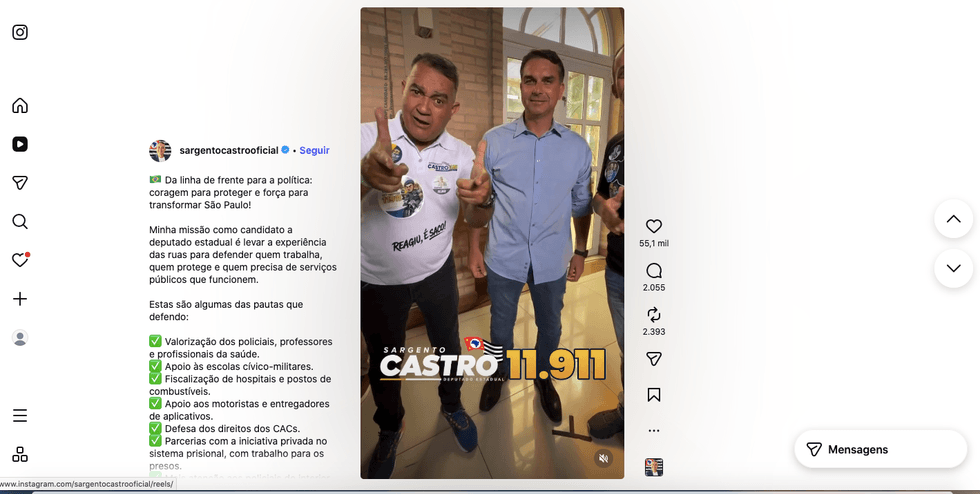
The content that Instagram's algorithm pushed toward the newly created account "was overwhelmingly political," the researchers found. "Of all 50 posts, 74%, were pro-Bolsonaro/right/leaning and only 18% were pro-Lula/left-leaning—glaring evidence of a significant right-wing bias in Instagram’s recommender systems."
"Pro-Lula/left-leaning content performed better per post on every engagement measure, yet was recommended far less often, undercutting any claim that Instagram’s algorithm is simply showing users content that is performing best," Ekō said. "Pro-Lula/left-leaning posts averaged 398,000 likes, around 64,000 comments, and 108,000 shares each—more than double the likes and over seven times the comments, and more than nine times the shares of the average pro-Bolsonaro/right-leaning post."
One of the posts that Instagram's algorithm served up to the new account features military police officer Sargento Castro standing alongside a smiling Bolsonaro.
"If you try to fight back," the caption of the post reads, "you’re going straight into a body bag."
Vanessa Lemos, a senior campaigner at Ekō, said the research shows Meta is "interfering in Brazil’s elections in plain sight—boosting Bolsonaro and suppressing Lula content."
"Meta must prove it is complying with the electoral court’s equal-treatment order, verify who pays for political ads, and make its moderation decisions appealable," said Lemos. "Unaccountable Big Tech cannot be allowed to derail democracy."
On Tuesday, Meta told Brazil's Superior Electoral Court that it "has adopted measures to ensure equal treatment," of Lula and Bolsonaro ahead of the October 25 runoff, Reuters reported. Lula has requested Bolsonaro's disqualification from the presidential race over Meta's alleged election interference. Meta employees have acknowledged internally that Lula's accounts have faced restrictions in the lead-up to the election.
Meta's conduct has drawn scrutiny from United Nations experts, who warned on Wednesday that "reports of restrictions on legitimate political expression on Meta platforms during Brazil’s elections raise concerns for freedom of expression, association, political participation and equal treatment of political viewpoints."
"Monitoring reports show thousands of accounts and posts have faced suspensions, reduced visibility, and sharing limits, including journalists, human rights defenders, civil society actors, and content creators,” the UN experts said. “Information, including from Meta employees, suggests that accounts linked to one side of the presidential race were disproportionately curtailed.”
Lawmakers from the US, where Meta is headquartered, wrote a letter to Meta CEO Mark Zuckerberg earlier this week demanding that the company "take immediate action to ensure that, going forward, candidates and their campaigns in democratic elections receive equal treatment and access on your platform."
Keep ReadingShow Less
See More
Most Popular