

SUBSCRIBE TO OUR FREE NEWSLETTER
Daily news & progressive opinion—funded by the people, not the corporations—delivered straight to your inbox.
5
#000000
#FFFFFF
To donate by check, phone, or other method, see our More Ways to Give page.
Daily news & progressive opinion—funded by the people, not the corporations—delivered straight to your inbox.

After weeks of debates that largely centered on the future of transportation spending in the state, the Wisconsin state legislature last night passed a budget for the upcoming biennium. In a strong rebuke of Governor Scott Walker, the new budget does not give the go-ahead to the controversial expansion of Interstate 94. Similarly, other highway expansions for which Governor Walker had sought up to $1.3 billion in state bonding will be delayed or scaled back. The budget also calls for an audit of the administration's record of building new and wider highways based on controversial forecasts of rapid driving growth that fail to materialize.
"For years, we've wasted billions of dollars on highway expansions based on inflated traffic forecasts, and our existing infrastructure has been left to crumble as a result," said Peter Skopec, WISPIRG Director. "The stop to the I-94 expansion is great news for taxpayers, and the audit brings much-needed scrutiny to WisDOT's methods used to justify billion-dollar projects like it. This is a crucial first step toward more responsible transportation spending and planning in Wisconsin."
"This is a big victory, not only for the people of Wisconsin, but for anyone that cares about transportation. The Wisconsin legislature made the right decision in rejecting a massive highway boondoggle and auditing the Department of Transportation's inscrutable forecasts and decision making," said John Olivieri, National Campaign Director for 21st Century Transportation at the United States Public Interest Research Group. "It's a watershed moment for regaining taxpayers' trust in transportation decision-making when a state legislature blows the whistle on the misguided highway expansion shenanigans of a Governor from the same party," he added.
The decision by the legislature to audit the driving demand projections of the Wisconsin Department of Transportation (WisDOT) comes on the heels of a May 2015 federal court decision, which similarly found WisDOT's driving demand projections were "inadequate." The court also held that the expansion of state Highway 23, previously justified on WisDOT's projections, would be ineligible for federal funding in the meantime.
The dramatic decision in Wisconsin is part of a larger trend. A similar lawsuit in Illinois recently challenged how the state projected future driving needs in justifying the now-cancelled Illiana Expressway. A federal district court in that state upheld the suit. Both Maryland and Washington have revised their future traffic forecasts to reflect the trend toward slower growth of driving. Even the federal Department of Transportation has changed their future forecast for the United States.
"Several states around the country, and even the federal government are coming around to the realization that planning for big increases in future driving can be a fool's errand," said Olivieri. "There are better ways to invest this money," he added.
The lack of justification for expanding Interstate 94 was highlighted in a study by the Wisconsin PIRG Foundation in September 2014, titled, "Fork in the Road: Will Wisconsin Waste Money on Unneeded Highway Expansion or Invest in 21st Century Transportation Priorities?"
Interstate 94 was also identified in a recent report by the U.S. Public Interest Research Group Education Fund, titled, "Highway Boondoggles: Wasted Money and America's Transportation Future." The report identified 11 seriously questionable highway projects around the country and evaluated their proposed justification.
More information about changes in driving behavior can be found in another recent report by the U.S. Public Interest Research Group Education Fund, titled, "A New Direction: Our Changing Relationship with Driving and the Implications for America's Future."
U.S. PIRG, the federation of state Public Interest Research Groups (PIRGs), stands up to powerful special interests on behalf of the American public, working to win concrete results for our health and our well-being. With a strong network of researchers, advocates, organizers and students in state capitols across the country, we take on the special interests on issues, such as product safety,political corruption, prescription drugs and voting rights,where these interests stand in the way of reform and progress.
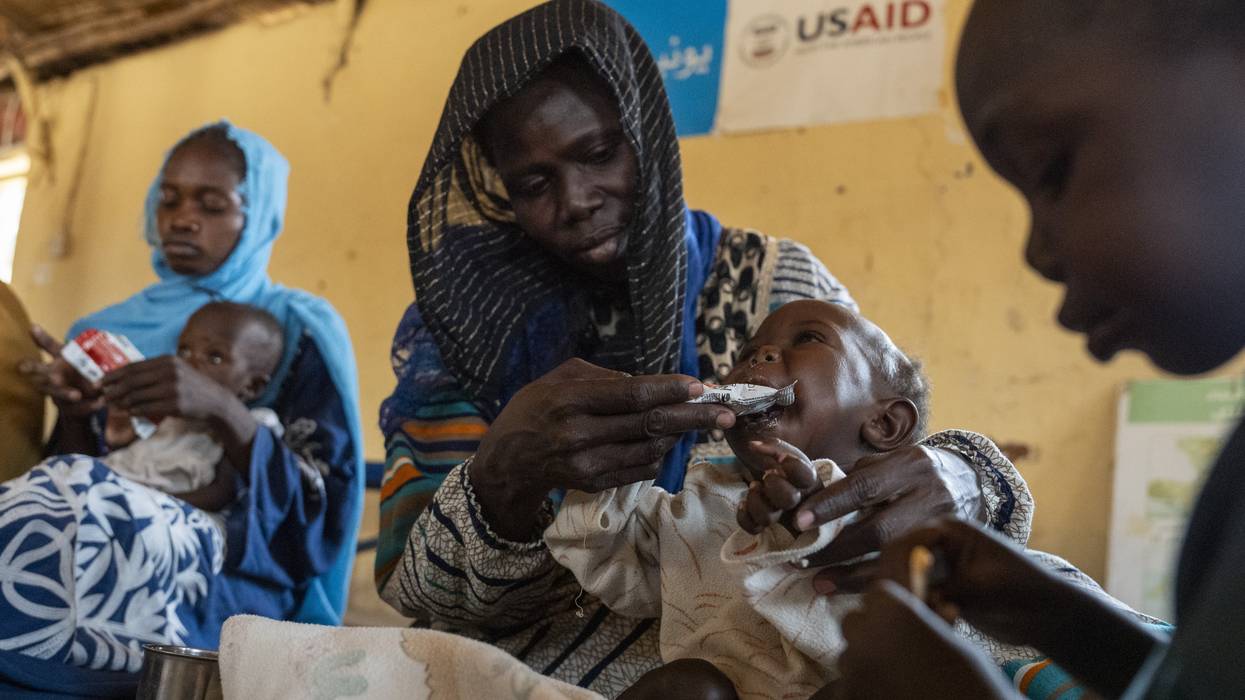
"Now in its third consecutive year of famine, Sudan received nothing."
Elon Musk's vault to trillionaire status following the public debut of his rocket company SpaceX came on the heels of an analysis showing the devastating impact of his destruction of the US Agency for International Development on millions of people in countries on the brink of famine.
The analysis, authored by Council on Foreign Relations expert and longtime aid worker Sam Vigersky, noted that Musk's targeting of USAID during his tenure as head of the Department of Government Efficiency (DOGE) resulted in the transfer of the Food for Peace program to the US Department of Agriculture (USDA), an agency "without international humanitarian or disaster-response expertise."
Vigersky found that the USDA this year chose just seven countries to receive American grain under the Food for Peace program: the Democratic Republic of Congo, Ethiopia, Guatemala, Haiti, Kenya, El Salvador, and Rwanda. The latter two countries, Vigersky noted, "do not meet an emergency threshold" for assistance.
"Meanwhile, the country facing the largest hunger crisis in the world—Sudan—did not make the list. Now in its third consecutive year of famine, Sudan received nothing. In fact, more than 40% of Sudan’s community kitchens, a lifeline for the displaced, have closed in the past six months as funding dried up, according to Islamic Relief," Vigersky reported. "Afghanistan, Lebanon, and Yemen were also passed over. Millions of people in those countries live one step from famine, according to the Integrated Food Security Phase Classification (IPC), the UN-backed monitoring system that uses a standardized five-point scale (five being famine) to measure the severity of food insecurity."
Experts assessing the global impact of USAID's decimation at the hands of billionaire US President Donald Trump and the world's first trillionaire, who bragged publicly about "feeding USAID into the wood chipper," estimate that hundreds of thousands of people have already died as a result of the large-scale loss of humanitarian assistance—and millions more will die in the coming years if swift action is not taken to restore aid.
"The impacts of the cuts were immediate and tragic," Nicholas Enrich, a former USAID employee who became a whistleblower, wrote in The Boston Globe on Friday. "Health clinics and emergency ambulance services shuttered overnight. Clinical trials were deserted. Thousands of healthcare workers lost their jobs. Lifesaving food and medicine was left to expire in warehouses. According to conservative estimates, in the year since USAID was dismantled, 750,000 people have died as a result of the cuts. For the first time in a generation, more children died in one year — 2025—than in the previous year."
Oxfam has estimated that a 10% tax on Musk's $1 trillion fortune would generate enough revenue to end extreme poverty worldwide for a year.

Trump claimed on social media that a diplomatic agreement would be signed on Sunday, but Iran's Foreign Ministry pushed back on that timeline.
President Donald Trump claimed Saturday that the US and Iran are on track to sign a diplomatic agreement this weekend, but added that "we have the ultimate alternative" if the process doesn't "work out."
"The 'ultimate alternative' sounds a lot like a nuclear threat," Sina Toossi, a senior fellow at the Center for International Policy, wrote in response to the president's Truth Social post. "Not the first time Trump has hinted at it."
The agreement Trump referenced is believed to be "memorandum of understanding" that's expected be fleshed out in "technical talks" that could begin next week, according to Pakistani Prime Minister Shehbaz Sharif, who is mediating the negotiations.
"We are closer to a peace deal than ever before," Sharif wrote on social media, echoing Iranian Foreign Minister Abbas Araghchi, who said on Friday that "the Islamabad Memorandum of Understanding has never been closer."
"Pending its finalization, the media should refrain from entering speculation about its content," Araghchi added. "In line with our responsible and transparent approach, all details will be shared with the public in due course."
On Saturday, a spokesperson for the Iranian Foreign Ministry cast doubt on the timeline put forth by Trump and Sharif.
"We will have to wait and see about the exact date of the signing of the memorandum of understanding, although it will not be tomorrow,” said Esmaeil Baqaei, as reported by Iranian state media. “The possibility of this happening in the coming days cannot be ruled out. However, due to the hesitation of the other side, we must be cautious in making any comments about this process.”
In his Truth Social post on Saturday, Trump declared that the Strait of Hormuz will be "OPEN TO ALL" immediately after the deal is signed—a condition that Iran has not confirmed.
"We look forward to working with Iran, and the entire Middle East, long into the future," Trump added. "Hopefully, this process will all work out quickly, easily, and smoothly. If it doesn’t, we have the ultimate alternative, hopefully never to be used again!"
Trump has repeatedly issued genocidal threats against Iran since launching the illegal war in late February, openly declaring his intention to target Iran's civilian infrastructure and wipe out its "whole civilization." Experts say such threats, even if they aren't acted on, constitute war crimes under international law.
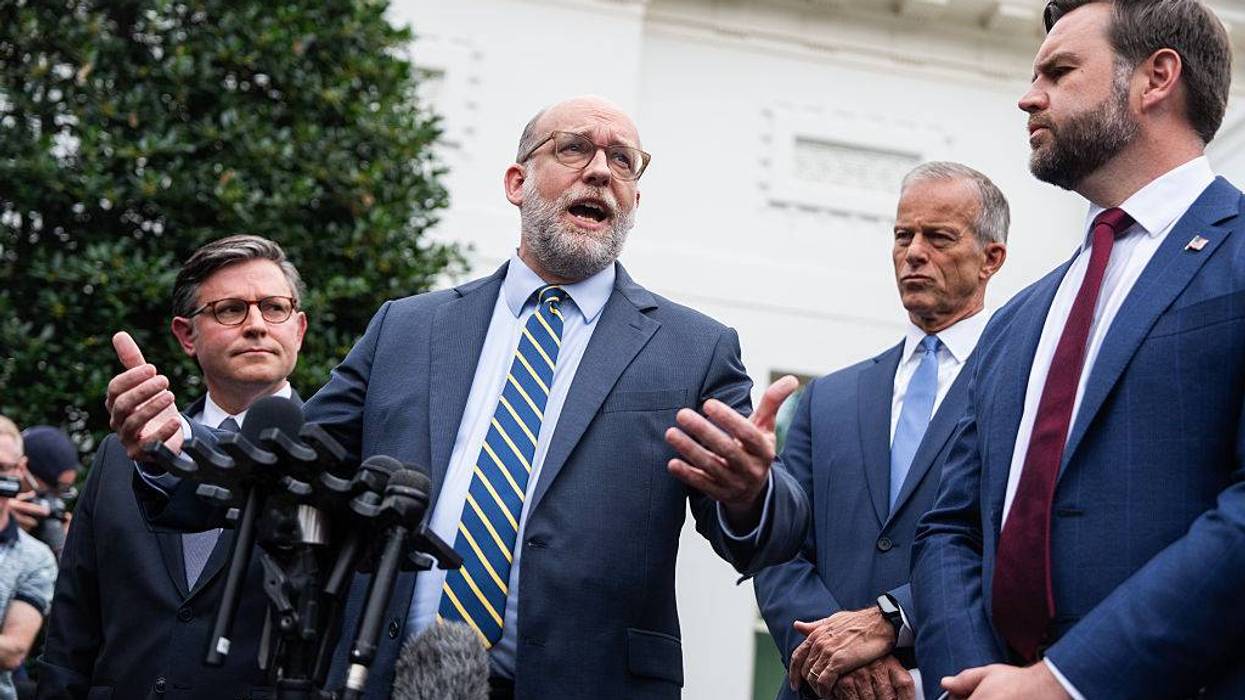
"The test will be a simple one: Are you sufficiently loyal to the president? If the answer is no, it will result in the denial of lifesaving disaster relief, funding for research into cures, the closure of Head Start offices, and more."
A Trump White House plan to give political appointees more power over federal grant money has sparked alarm among scientists, public health organizations, environmental groups, and others who fear that the proposal amounts to an attempt to subordinate critical funds to the whims of the president and his far-right allies.
More than 300 organizations signed a joint letter on Friday calling on White House budget director Russell Vought, the proposed rule's architect, to extend the public comment period that's set to end on July 13, warning that the "scope and impact of [the Office of Management and Budget's] rule is vast."
"The rule will impact the entirety of government grant-making across the United States," the groups warned. "OMB itself says the revisions suggested would relate to over $179 billion of funds to small entities."
Politico, which exclusively obtained the letter, noted that the "proposed rule has already garnered over 15,000 public comments, with many expressing alarm that the changes could undermine research across fields."
Under Vought's rule, federal agencies would be required to perform "pre-issuance reviews" of federal grants—funds appropriated by Congress—to ensure their distribution is consistent with "applicable law, federal agency priorities, and the national interest."
The rule lays out a number of standards that political appointees at federal agencies must screen for when deciding whether an organization can receive federal grant dollars. For instance, the rule would prohibit the distribution of federal grants to organizations that "promote anti-American values" or support "ideologies that deny the biological reality of sex or the sex binary in humans."
The New York Times reported that the consequences of Vought's rule "could fall hardest on health and science, a field in which [President Donald Trump] has pursued some of the steepest cuts in his second term."
"In exchange for federal assistance, researchers would face limits on the subjects that they can explore, the foreign labs with which they may collaborate and even the conferences at which they can appear," the Times noted. "Dr. Georges C. Benjamin, the chief executive of the American Public Health Association, a professional organization and advocacy group, said the policy could 'devastate innovation, science, and research' in the United States."
"This is an executive power grab that would hand presidential political appointees unchecked control over more than a trillion dollars that Congress appropriated in the interests of all Americans."
Earlier this month, Lawyers for Good Government and the Environmental Protection Network said that "if finalized, the rule would put senior political appointees in charge of approving and canceling individual grants, while stripping recipients of due process rights" while attaching "ideological conditions to nearly every federal dollar, raising First Amendment and equal-protection concerns."
The two organizations published a fact sheet warning that the proposed rule has the potential to halt billions of dollars in funding that communities across the US depend on for "health, public education, scientific research, public safety, and economic development projects."
“This is an executive power grab that would hand presidential political appointees unchecked control over more than a trillion dollars that Congress appropriated in the interests of all Americans,” said Jillian Blanchard, senior vice president for climate change and environmental justice at Lawyers for Good Government. “Conditioning funding for critical programs on ideology and viewpoint discrimination, while erasing basic due-process protections, violates freedoms of speech, equal protection, and eviscerates Congress’ power of the purse.”
Democratic lawmakers have also sounded the alarm about Vought's proposal. Rep. Rosa DeLauro (D-Conn.), the top Democrat on the House Appropriations Committee, said Thursday that she has given her Republican colleagues two opportunities to denounce Vought's rule—and they declined both times.
"Vought continues to attempt to steal from communities across the country. Now, he is trying to set a new political test on grants for a wide swath of the federal government," said DeLauro. "The test will be a simple one: Are you sufficiently loyal to the president? If the answer is no, it will result in the denial of lifesaving disaster relief, funding for research into cures, the closure of Head Start offices, and more. If you are not loyal enough, if you speak out against this administration, the president and his cronies will take away resources Congress provided."