SUBSCRIBE TO OUR FREE NEWSLETTER
Daily news & progressive opinion—funded by the people, not the corporations—delivered straight to your inbox.
5
#000000
#FFFFFF
To donate by check, phone, or other method, see our More Ways to Give page.


Daily news & progressive opinion—funded by the people, not the corporations—delivered straight to your inbox.
Alice Gillham alice.gillham@reprieve.org.uk
The father of a student from Berkshire has urged the Prime Minister to intervene to secure the release of his son from a prison in the United Arab Emirates (UAE) as part of an upcoming amnesty.
Ahmad Zeidan, 21, was jailed earlier this year in Sharjah, near Dubai, after he was forced to sign a 'confession' in Arabic - a language he cannot read - following eight days of beatings, hooding and threats of rape. At a recent appeal hearing, an Emirati court upheld Ahmad's nine-year conviction and refused to consider evidence of his torture and forced confession.
The father of a student from Berkshire has urged the Prime Minister to intervene to secure the release of his son from a prison in the United Arab Emirates (UAE) as part of an upcoming amnesty.
Ahmad Zeidan, 21, was jailed earlier this year in Sharjah, near Dubai, after he was forced to sign a 'confession' in Arabic - a language he cannot read - following eight days of beatings, hooding and threats of rape. At a recent appeal hearing, an Emirati court upheld Ahmad's nine-year conviction and refused to consider evidence of his torture and forced confession.
David Cameron has told legal charity Reprieve, which is assisting the Zeidan family, that the Government takes Ahmad's reports of mistreatment "extremely seriously", but failed to intervene directly in his case ahead of the appeal. Last year, three Britons jailed in Dubai after a similar torture ordeal were pardoned shortly after Mr Cameron raised their case with the President of the UAE.
Speaking to BBC Radio 5 Live today, Ahmad's father, Manal Zeidan, urged the Prime Minister to petition the ruler of Sharjah for his son's release as part of an upcoming amnesty on 2nd December. Mr Zeidan said the amnesty was "our last window, our last hope" for Ahmad "to have his life back".
He said his son was "just a young lad, a student", and that the ordeal had traumatised him and his family. Ahmad's health had deteriorated in prison, he said, and the family "can't imagine the prospect of him spending the next nine years in prison - we're hopeless." If his son was not included in the amnesty, he added, "I don't want to even think about what will happen".
Police torture in the UAE is widespread and well-documented; a recent study conducted in Dubai by Reprieve found that 75 per cent of prisoners experienced some form of abuse following arrest. Given this record, Reprieve recently raised concerns with the Government about its involvement in a trade fair for UK security firms hosted by the Dubai police.
Maya Foa, Director of Reprieve's death penalty team, said: "Once again, we are seeing fake 'confessions' extracted through torture, flagrantly unfair trials and extremely harsh sentences - including potential death sentences - handed down to young British men in the Emirates. Ahmad's is the latest in a string of such abuses, and David Cameron should intervene without delay to put an end to his prolonged and cruel ordeal."
Reprieve is a UK-based human rights organization that uses the law to enforce the human rights of prisoners, from death row to Guantanamo Bay.
"This suffering is being manufactured by policy, not weather," said a humanitarian aid coordinator for Oxfam.
Makeshift tents billowing furiously in the wind. Children wading through ankle-high water. A young boy futilely beating back an oncoming wave with nothing but a broom.
These are just a few of the scenes that came out of Gaza in recent days as its population of nearly 2 million people was beset by heavy rainfall and punishing winds from Storm Byron, which hit late last week.
According to the United Nations’ Office for the Coordination of Humanitarian Affairs (OCHA) in Jerusalem, more than 1.3 million Palestinians in the territory are without proper shelter following more than two years of relentless Israeli bombing, which destroyed or damaged over 90% of housing units.
"The conditions are catastrophic, I must say," Jonathan Crickx, the chief of communication for the UN Children's Fund, told PBS News. "I've been in many, many tents in the past two days, and the tents are completely flooded. I met with tens of children. Their clothes are wet, the mattresses in the tents are completely soaked. And those children, they are cold."
At least three children, including two infants and a 9-year-old, died from hypothermia or cold exposure within a 24-hour period. Another five were crushed after a house sheltering displaced civilians collapsed due to the storm. As of Friday, at least 14 people were reported dead from the storm, and several more are injured, according to Gaza’s Ministry of Interior and National Security.
"Civilians are now wading through sewage, mud, and debris, with no proper shelter," said Bushra Khalidi, the policy lead for Oxfam in the occupied Palestinian territories. "This is not a failure of preparedness or capacity; it's the direct result of the systematic obstruction of aid."
"The Israeli authorities continue to block the entry of basic shelter materials, fuel, and water infrastructure, leaving people exposed to entirely preventable harm," Khalidi continued. "When access is denied, storms become deadly. This suffering is being manufactured by policy, not weather."
Under the terms of the "ceasefire" agreement signed between Israel and Hamas in October, Israel was required to allow more than 600 trucks carrying humanitarian aid to enter Gaza each day. But according to UN data published earlier this month, just 113 trucks per day on average have been allowed to enter the strip, less than a fifth of the agreed-upon amount.
The Rafah crossing, the largest entry point for aid, still remains almost totally closed after being opened briefly during the first week of the ceasefire. Israel said earlier this month that it may soon reopen the crossing, but only to allow for the exit of Palestinians.
"Without question, the Israelis and their persistent bureaucracy have prevented us from bringing in the necessary shelter that would provide adequate dwellings for the people living in Gaza," said Chris McIntosh, Oxfam's humanitarian response adviser in the territory.
In the crowded coastal area of al-Mawasi, he said, some residents have been left with little to protect themselves from the elements but blankets and flimsy tarpaulin.
"Obviously, a blanket is not going to do much against torrential downpours and winds that are at nearly gale force," he said. "The Israelis have not permitted these tents to enter the Gaza Strip, not for many months... The population is bracing for a very, very tragic situation right now."
Official estimates put the death toll in Gaza at more than 70,600 since October 7, 2023, including more than 300 who have been killed during the ceasefire period across hundreds of attacks by Israel in violation of the agreement. But other independent studies, which take indirect effects of the genocide, like malnutrition and disease, into account, place the death toll much higher.
"Trump may give himself an A++++ on the economy, but these latest jobs numbers are failing working families."
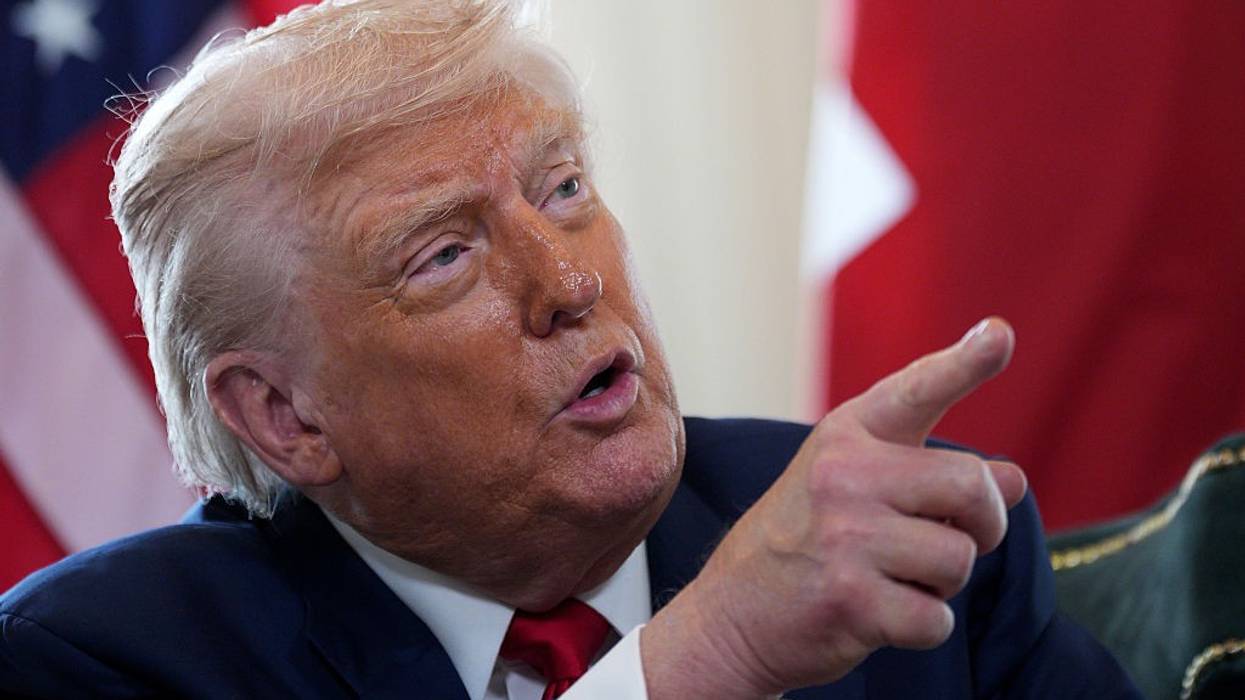
Federal data belatedly released Tuesday shows that the US unemployment rate rose to the highest level in four years last month as President Donald Trump's administration continues its assault on the government's workforce and American corporations lay off workers at a level not seen in decades.
The unemployment rate rose to 4.6% in November, up from 4.4% in September, according to the Labor Department report, whose release was delayed due to the recent government shutdown.
US employers added 64,000 jobs last month following the loss of 105,000 jobs in October, fueled by the Trump administration's large-scale layoffs of federal workers. The manufacturing sector, which Trump has promised to bolster with his tariff regime, shed 5,000 jobs in November, according to the newly published federal data.
Over the past six months, the US has averaged just 17,000 jobs added per month—a number that underscored concerns about the frailty of Trump's economy.
"Today’s long-awaited jobs report confirms what we already suspected: Trump’s economy is stalling out and American workers are paying the price," said Alex Jacquez, chief of policy and advocacy at the Groundwork Collaborative. "Far from sparking a manufacturing renaissance, Trump’s reckless trade agenda is bleeding working-class jobs, forcing layoffs, and raising prices for businesses and consumers alike. Trump may give himself an A++++ on the economy, but these latest jobs numbers are failing working families.”
Another notable trend in today's payroll release is the gradual slowdown in nominal wage growth. As the unemployment rate rises, workers struggle to find jobs and have less leverage when it comes to demand higher wages. Both indicate a slowdown in affordability for workers and their families.
[image or embed]
— Elise Gould (@elisegould.bsky.social) Dec 16, 2025 at 10:17 AM
The new figures were released after Trump kicked off a tour of battleground states in an effort to defend his economic policies, which voters—including many of the president's own—increasingly blame for driving up prices. Trump and White House officials have insisted, despite mounting evidence to the contrary, that the US economy is stronger than it's ever been.
Julie Su, a senior fellow at the Century Foundation and former acting head of the Labor Department, said Tuesday that "for months, Donald Trump and his administration have been hiding data about the economy, leaving workers and employers in the dark when trying to make critical hiring decisions."
"But you can’t hide the reality every American knows," said Su. "An economy where costs are too high for people to afford the basic necessities and also can’t find jobs is an economic crisis that requires massive change so that working people can actually come out on top."
Historian Greg Grandin argued that Trump's foreign policy will likely result in "more confrontation, more brinkmanship, more war."
Yale historian Greg Grandin believes that President Donald Trump's foreign policy is putting the US on a dangerous course that could lead to a new world war.
Writing in The New York Times on Monday, Grandin argued that the Trump administration seems determined to throw out the US-led international order that has been in place since World War II.
In its place, Grandin said, is "a vision of the world carved up into garrisoned spheres of competing influence," in which the US has undisputed control over the Western Hemisphere.
As evidence, he pointed to the Trump White House's recently published National Security Strategy that called for reviving the so-called Monroe Doctrine that in the past was used to justify US imperial aggression throughout Latin America, and that the Trump administration is using to justify its own military adventures in the region.
Among other things, Grandin said that the Trump administration has been carrying out military strikes against purported drug smuggling boats in the Caribbean and the Pacific Ocean, and has also been "meddling in the internal politics of Brazil, Argentina, and Honduras, issuing scattershot threats against Colombia and Mexico, menacing Cuba and Nicaragua, increasing its influence over the Panama Canal, and seizing an oil tanker off the coast of Venezuela."
Most ominously, Grandin said, is how the US Department of Defense has been "carrying out a military buildup in the Caribbean that is all but unprecedented in its scale and concentration of firepower, seemingly aimed at effecting regime change in Venezuela."
A large problem with dividing the globe into spheres controlled by major powers, Grandin continued, is that these powers inevitably come into violent conflict with one another.
Citing past statements and actions by the British Empire, Imperial Japan, and Nazi Germany, Grandin argued that "as the world marched into a second global war, many of its belligerents did so citing the Monroe Doctrine."
This dynamic is particularly dangerous in the case of Trump, who, according to Grandin, sees Latin America "as a theater of global rivalry, a place to extract resources, secure commodity chains, establish bulwarks of national security, fight the drug war, limit Chinese influence, and end migration."
The result of this policy shift, Grandin concluded, "will most likely be more confrontation, more brinkmanship, more war."