

SUBSCRIBE TO OUR FREE NEWSLETTER
Daily news & progressive opinion—funded by the people, not the corporations—delivered straight to your inbox.
5
#000000
#FFFFFF
To donate by check, phone, or other method, see our More Ways to Give page.
Daily news & progressive opinion—funded by the people, not the corporations—delivered straight to your inbox.

Catherine Kilduff, (415) 644-8580
More
than 20,000 people have agreed to boycott bluefin tuna as part of the Center
for Biological Diversity's campaign to save this fish, driven to the
brink of extinction to supply the sushi market. In the first week of the
boycott, consumers from all 50 states and 91 countries signed a pledge not to
eat bluefin or spend money at restaurants where it's on the menu.
"By
voting with their wallets, consumers are saving bluefin tuna by keeping it off
their plates and steering clear of sushi restaurants with the rare fish on
their menu," said Catherine Kilduff, a staff attorney at the Center,
which in May sought Endangered Species Act protections for Atlantic bluefin.
"Eating bluefin tuna is handing out a death sentence to the last
remaining survivors of this majestic marine species."
Prized
as a high-value dish at sushi restaurants, bluefin are being pushed to
extinction by decades of overfishing. The western Atlantic stock of bluefin,
for instance, has dropped by more than 80 percent since 1970. The eastern
Atlantic stock dropped by 74 percent between 1957 and 2007. Still, bluefin
remains on the menu of some restaurants. High market prices -- a single
bluefin tuna sold for $177,000 earlier this year -- spur rampant illegal
and unreported fishing.
"Bluefin
tuna are on the path to extinction, yet overfishing continues. The
international community has failed to protect bluefin, so thousands of
consumers are now demanding action by boycotting the endangered fish,"
Kilduff said. "Together, consumers and restaurant owners have a real
chance to drastically reduce demand for this imperiled fish and keep it from
slipping into oblivion."
The
boycott, launched Nov. 30, also calls on chefs and restaurant owners to sign a
pledge not to buy or serve bluefin. Five restaurants in the United States that advertised bluefin tuna on
their online menus in November, including Nobu in New York
City, Las Vegas and Los
Angeles, Sushitaro in Washington, D.C. and Kabuto Sushi in San Francisco, received hand-delivered
requests to stop serving bluefin. As of this week, none of the five have
stopped serving bluefin, although one restaurant, D.C.'s Sushitaro, no
longer specifies online that its "fatty tuna" is bluefin.
Background
Bluefin tuna are oceangoing fish that grow up to 10 feet long and can weigh
1,200 pounds. Unlike almost all other fish, they are warm-blooded and able to
regulate their body temperature, which helps during their epic journeys across
the Atlantic. Bluefin tuna are top ocean
predators and sometimes hunt cooperatively, much like wolves. With streamlined
bodies and retractable fins, they can bolt through the water at speeds of 50
mph and cross oceans in the course of only a few weeks.
The
International Union for the Conservation of Nature classifies the western
Atlantic bluefin tuna population and the southern bluefin tuna as critically
endangered with an extremely high risk of extinction in the wild in the
immediate future. IUCN classifies eastern Atlantic bluefin tuna as endangered,
meaning that it faces a very high risk of extinction in the wild in the near
future.
To
learn more, visit bluefinboycott.org and share the
Facebook page (https://www.facebook.com/pages/Bluefin-Tuna-Boycott-Join-the-Bluefin-Brigade/107330386001726).
At the Center for Biological Diversity, we believe that the welfare of human beings is deeply linked to nature — to the existence in our world of a vast diversity of wild animals and plants. Because diversity has intrinsic value, and because its loss impoverishes society, we work to secure a future for all species, great and small, hovering on the brink of extinction. We do so through science, law and creative media, with a focus on protecting the lands, waters and climate that species need to survive.
(520) 623-5252
A Michigan congresswoman called El-Sayed "anti-American" in an interview Thursday in what one progressive lawmaker said was a "racist" attack.
With a number of recent polls finding former public health official Abdul El-Sayed with a strong lead against Rep. Haley Stevens in the Michigan US Senate race, establishment Democrats are resorting this week to attacks that some critics said amounted to racism.
The latest survey, out Thursday from the highly respected, non-partisan Emerson College Polling along with WLNS/WOODTV, found El-Sayed with 54% support, while Stevens had 39%.
Six percent of respondents said they were undecided about the primary election, in which Michigan voters will go to the polls on August 4, and 2% said they backed state Sen. Mallory McMorrow (D-8), who suspended her campaign earlier this summer.
El-Sayed had the support of voters under 50 by 42 percentage points, as well as voters age 50-60 by 12 points.
The poll came on the heels of another survey by Tavern Research, which found El-Sayed—who has built his campaign around the pledge, "Money out of politics, money in your pocket, and Medicare for All"—leading Stevens by 11 points.
Outside groups' spending on behalf of Stevens, including roughly $60 million in funding from a super political action committee affiliated with the increasingly unpopular American Israel Public Affairs Committee (AIPAC), has become a major topic of discussion in the race, with El-Sayed arguing that his opponent's reliance on such outsized spending is proof that she is far less "electable" than her supporters in the Democratic establishment have argued.
Sen. Bernie Sanders (I-Vt.) said Wednesday that billionaires are clearly "panicked" by the possibility of a Democratic Senate candidate whose victory would "make it clearer than ever that the American people are sick and tired of the same-old, same-old establishment politics and policies."
Even with money pouring into Michigan to back Stevens, who has praised US Immigration and Customs Enforcement and said she would not support any conditions on military aid to Israel—further distancing herself from Democratic voters' views—the congresswoman's supporters have resorted to attacks on El-Sayed, with Rep. Hillary Scholten (D-Mich.) recently making numerous media appearances to portray him—without evidence—as "sexist" and "un-American."
Scholten told Semafor Thursday that El-Sayed "has allowed distinctly anti-American sentiment to enter our public dialogue"—an apparent reference to his earlier campaigning with commentator Hasan Piker, an outspoken critic of Israel who once said the US "deserved" the September 11 attacks, a remark he later clarified and apologized for.
Georgia state Rep. Ruwa Romman (D-97) said Scholten's vague comment ignored El-Sayed's own clear statements about his love for and belief in the potential of the United States.
"She’s just racist," Romman said of the remark. "All people have to do is listen to Abdul speak for barely a few minutes, and they’ll hear a deep love for our country."
The United Democracy Project, the super PAC tied to AIPAC, has also attacked El-Sayed for his association with Piker and baselessly claimed in one commercial that the candidate “expressed sympathy for a terrorist." Scholten's comment also echoed the campaign of Republican candidate Mike Rogers, a former US House member who said in a call with supporters, “I don’t think he likes America, candidly.”
AIPAC-funded ads have also claimed El-Sayed's rhetoric is "uniquely sexist."
The commentary from both Democrats and Republicans are "reproducing tropes that have just been around for centuries" about Muslims, Nancy Khalil, an anthropologist at University of Michigan, told The Intercept this week, referring to stereotypes painting Arab and Muslim men as "controlling of women."
“We’re seeing it come from within his own party," said Khalil.
Dr. Adam Hamawy, a surgeon who won the Democratic primary race in New Jersey’s 12th Congressional District in June after also campaigning on Medicare for All and other popular progressive policies, told The Intercept that he faced similar attacks.
"They’re questioning his loyalty, they are not talking about issues,” Hamawy said. “And that was the same thing here as well: They didn’t attack me on issues, they attacked me for who I was.”
While making negative claims about El-Sayed's character, some in the Democratic establishment have refused to say they would vote for the Medicare for All advocate in the general election if he wins the primary. Scholten refused to commit to backing him in an interview with CNN last week, while Michael LaRosa, the former press secretary for First Lady Jill Biden during the Biden administration, said Wednesday that he would "do everything I can to make sure he loses" the general election, due to comments El-Sayed made about supporting primary challenges of Democrats including Sen. John Fetterman (D-Pa.).
Sanders said Wednesday on CNN that he was committed to supporting whichever candidate wins the primary, in the interest of securing a Democratic Senate seat in the crucial election.
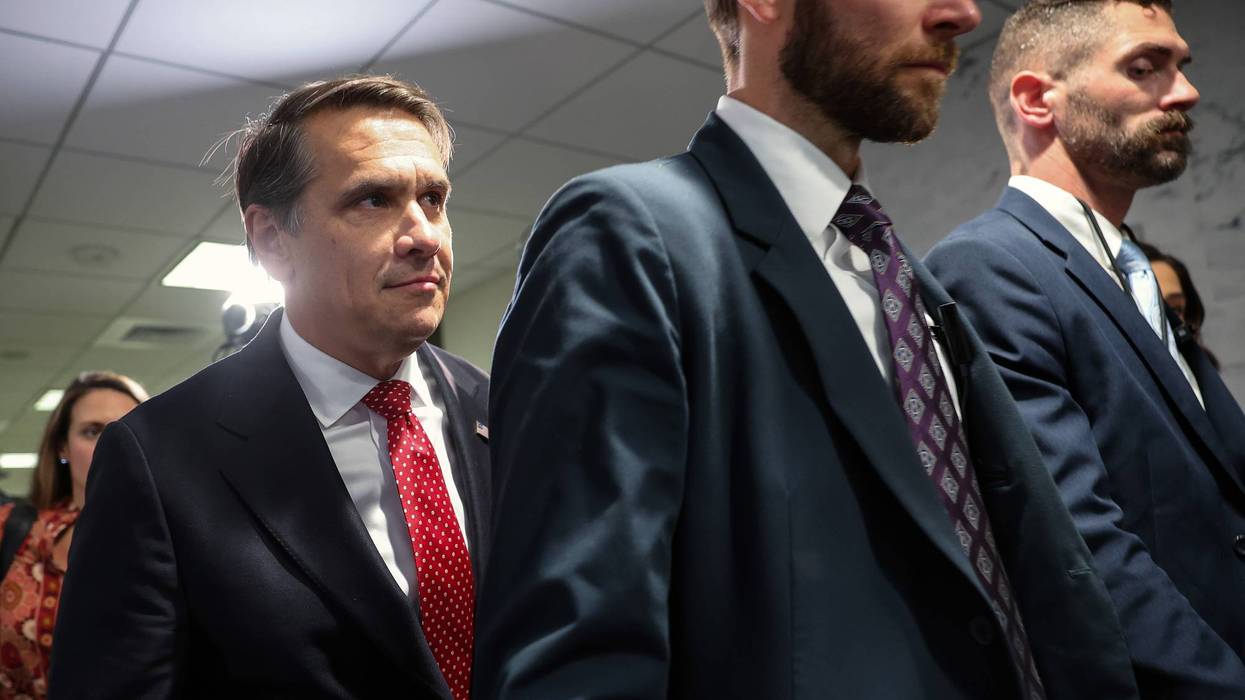
"Blanche had months to deliver on the demands both senators and the people have had of him, and he has failed, proving he only serves President Trump," said one advocacy group.
The Senate Judiciary Committee on Wednesday delayed its planned vote to advance Todd Blanche's nomination as US attorney general as the Justice Department—which he currently leads in an acting capacity—refused to commit to kill elements of a legal deal that he reached to settle President Donald Trump's $10 billion lawsuit against the Internal Revenue Service.
Sen. Chuck Grassley (R-Iowa), chair of the judiciary panel, announced that the scheduled Thursday vote on Blanche's nomination was "postponed as work continues to secure sufficient support in committee." Two key Republicans, John Cornyn of Texas and Thom Tillis of North Carolina, are demanding written commitments from Blanche that the Justice Department will not move forward with a $1.8 billion "slush fund" for Trump's political allies and will limit the reach of IRS audit protections for the Trump family—central elements of the IRS settlement.
Cornyn and Tillis appeared convinced that the so-called "anti-weaponization fund" was dead and would not be revived, but the senators expressed concern that Blanche is committed to upholding provisions of the IRS settlement that would permanently insulate Trump and his family members from tax audits. The New York Times reported that Cornyn, who lost reelection in May to corrupt Trump-backed challenger Ken Paxton, "had received no written assurances from Mr. Blanche that the audit shield would not apply to future tax liabilities or be extended to a wider circle of people."
"Maybe they think they can roll me," Cornyn told CNN, expressing astonishment at the Justice Department's foot-dragging. "We actually sent them a red line strikeout of what we need, and they just need to make a decision, and if they do, then we’ll proceed with the markup."
"We’re trying to make it easy for them," the senator added. "They won’t take the help."
Blanche's nomination has faced widespread opposition—including from the New York City Bar Association—over his handling of the Epstein files, treatment of the late sex offender's victims, and willingness to target the president's political opponents and carry out his assault on voting rights. (Blanche previously worked as Trump's personal attorney and said, "I'm his lawyer," during a confirmation hearing earlier this month.)
Omar Noureldin, senior vice president of policy and litigation at Common Cause, said in a statement late Wednesday that "Blanche had months to deliver on the demands both senators and the people have had of him, and he has failed, proving he only serves President Trump."
"Blanche should show humility and withdraw immediately," said Noureldin.

"As humans," explained one psychologist, "we can be both victims and perpetrators."
Two more Israeli soldiers killed themselves over the past two days, bringing renewed scrutiny to what experts say is a worsening mental health emergency inside the Israel Defense Forces during 33 months of genocidal war on Gaza and enduring stigma around seeking treatment.
According to the Israeli newspaper Haaretz, two female IDF troops—a combat soldier and an intelligence officer—died by suicide this week. Israeli Military Police said they are investigating both deaths, which bring the number of active duty IDF troops who have killed themselves this year to at least 16. Haaretz said that at least nine former IDF soldiers have also committed suicide after completing their military service in 2026.
The latest deaths underscore what military officials, mental health professionals, and veterans have increasingly described as one of the most severe psychological crises the Israeli military has faced in decades.
Earlier this year, Haaretz reported that Israeli military suicides reached 21 in 2024 and 22 in 2025—the highest annual totals in roughly 15 years. Israel's oldest daily newspaper also found that the military had reduced the number of mental health officers available to soldiers despite unprecedented demand for psychological services.
The crisis has been exacerbated by repeated troop deployments since the October 7, 2023 Hamas-led attack—itself the cause of tremendous trauma and some suicides by survivors—and Israel's subsequent assault on Gaza, which has been characterized by what prosecutors at the International Criminal Court in The Hague say are crimes against humanity and war crimes, and what a United Nations panel of experts said is a genocide.
More than 250,000 Palestinians have been killed or wounded by Israeli forces in Gaza, some of them reportedly executed at close range.
IDF troops and Israeli and international medical workers have described the deliberate and indiscriminate shooting of Palestinian civilians, including women and children, some of whom were reportedly executed. Former Palestinian prisoners and Israeli troops and doctors have also reported torture and sexual abuse of detainees, and of civilians including children and even a toddler. Such carnage and abuse has taken a toll on the perpetrators as well as their victims.
A persistent stigma surrounding mental health treatment also discourages many soldiers from seeking the care they need. Some fear being viewed as weak or worry that treatment could adversely affect their military service or relationships, despite ongoing efforts to destigmatize the issue.
A senior IDF commander told the Israeli public broadcaster Kan last year that "most of the suicides resulted from the complex reality created by the war," adding, "War has consequences."
Earlier this year, Reuters reported that the IDF had recorded a nearly 40% increase in post-traumatic stress disorder among its troops since September 2023, with 60% of the 22,300 people being treated for war wounds experiencing PTSD. The news agency cited an Israeli parliamentary committee's finding that 279 soldiers had attempted to kill themselves in the period from January 2024 to July 2025, and that IDF combat soldiers comprised 78% of all suicides in Israel in 2024.
Some observers—especially Palestine defenders—have little sympathy for IDF soldiers who kill themselves, pointing to the widespread crimes being committed in Gaza and throughout illegally occupied Palestine, including apartheid, settler colonization, and ethnic cleansing.
Others, recognizing their humanity and the moral injury that experts say afflicts many participants in war, mourn these deaths while maintaining that compassion for soldiers must never eclipse accountability for crimes against Palestinians.
After Eliran Mizrahi, a 40-year-old Israeli father of four, killed himself in 2024, his sister told CNN, “He always said no one will understand what [he] saw."
Mizrahi's mother said that "he saw a lot of people die. Maybe he even killed someone. [But] we don’t teach our children to do things like this… so, when he did this, something like this, maybe it was a shock for him.”
US psychologist Rachel Kabasakalian-McKay coined the term “complex implication” to define how “history often implicates us in networks of harm, even as we carry our own traumas."
"As humans," she explained in a 2025 interview with Psychology Today, "we can be both victims and perpetrators.”

"There's a 2-month-old baby there and four pregnant women there," said the Texas Democrat. "It's no place for a 2-month-old baby to be, or even a 1- or 5-year-old kid."
Democratic Texas Congressman Joaquin Castro appeared on MS NOW early Wednesday to discuss his recent trip to and persistent efforts to shut down what he called a "trailer prison" where US Immigration and Customs Enforcement is holding families in Dilley.
After leading a letter signed by over 100 other Democrats calling for the closure of the Dilley Immigration Processing Center, Castro on Tuesday conducted a congressional oversight visit of the facility with members of the Democratic Women's Caucus, including Reps. Yassamin Ansari (Ariz.), Lizzie Fletcher (Texas), Ayanna Pressley (Mass.), and Luz Rivas (Calif.).
During the interview on "Morning Joe," Castro said that Americans have watched in horror as ICE has killed and brutalized US citizens and immigrants in the streets, "but there's a brutality behind the prison walls of these detention centers that almost no one gets to see except for members of Congress who have an opportunity to go inspect them."
While touring the Dilley center seven times recently, "I've seen a lot of desperate children. I've seen traumatized children. There is a system there that is abusive of people," Castro said, citing complaints of worms in food, yellow drinking water, and inadequate medical care.
"When I asked, they said the youngest person there is 2 months old—so there's a 2-month-old baby there and four pregnant women there right now. And, you know, I can tell you that it's no place for a 2-month-old baby to be, or even a 1- or 5-year-old kid," he said.
Noting that the Texas facility is run by a private prison company—CoreCivic—and condemning the "commodification of child imprisonment," Castro declared that "we want the Dilley detention center shut down."
His comments on MS NOW mirrored those he and other lawmakers delivered outside the facility, also known as the South Texas Family Residential Center, and during a press conference with the organizations FWD.us and Families Belong Together.
The center is currently detaining 539 individuals, from 84 families, according to Pressley. She said that "these are law-abiding people that are our neighbors—people we love, people we live next to, we work and worship with, who were just going about their lives and met with such an aggressive disruption that they will be recovering from for the rest of their lives."
"Dilley must be shut down. We have to abolish ICE. And then I'm gonna take it one step further and say any of those agents that have contributed to and caused the injury, the harm, and even fatalities, they must also be held accountable, and we should abolish qualified immunity for these federal law enforcement officers," she argued.
FWD.us president Todd Schulte also called for "shutting down Dilley and releasing these children and families immediately."
"Dilley reflects a broader pattern that should not be expanded with additional, unprecedented taxpayer funding," he stressed, denouncing the hundreds of thousands of dollars that the Republican-controlled Congress has poured into President Donald Trump's mass detention and deportation campaign, led by ICE and US Customs and Border Protection.
"This will only cause irreparable harm to children and communities," Schulte warned. "Thank you to the members who continue to call for the release of families, and we join them in their calls for Dilley's closure."
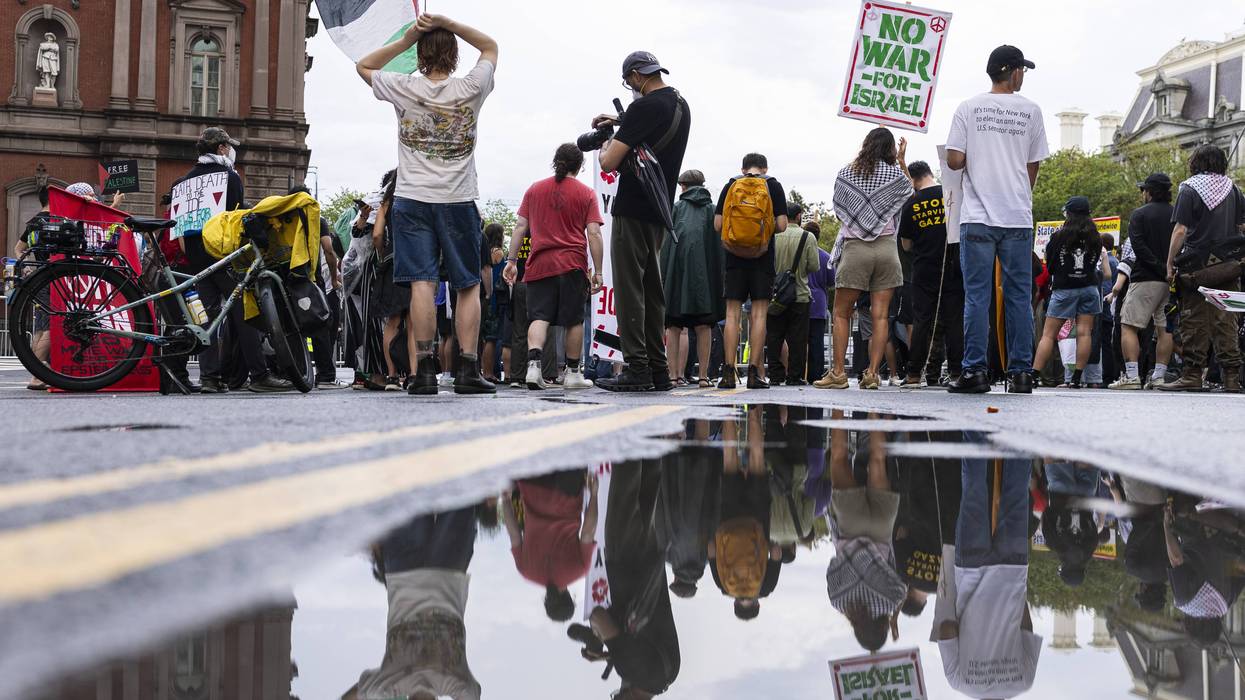
Israel’s prime minister has been met with relentless chants and jeers of “war criminal” and “genocide” around the US capital.
As Israeli Prime Minister Benjamin Netanyahu has traversed Washington, DC this week amid talks with US President Donald Trump, scores of angry protesters have rarely been far behind.
Across the nation's capital, relentless chants and jeers have followed Israel's leader, who has been accused of war crimes by the International Criminal Court (ICC) and whom numerous human rights organizations say has committed genocide in Gaza.
American support for Israel has only continued to curdle as Trump has plunged deeper into a war with Iran that Netanyahu has goaded him to escalate; Israeli settlers have rampaged across the West Bank committing what have been described as "pogroms" against Palestinians; and the Israel Defense Forces have flattened entire neighborhoods in Lebanon, displacing over a million people.
Polls from YouGov earlier this week found that Americans believe Israel is committing genocide by a 19-point margin. By a margin of 22 points, they said they wanted to see American authorities arrest Netanyahu in accordance with the ICC warrant.
As Netanyahu's motorcade arrived near the White House on Monday, protesters were there to let him know, waving Palestinian flags and pepper him with expletives.
"That's our tax dollars going right there, to protect a fucking war criminal!" shouted one man as a squadron of black SUVs escorted Netanyahu, one video from Al Jazeera shows.
Outside his government-provided residence, Blair House, more protesters gathered, pounding drums, blowing whistles, and holding signs calling to "expose Israel's control of Washington" and "stop the US/Israel war machine."
One keffiyeh-clad protester, identified as Joey, said he was taking part because "the only place [Netanyahu] belongs is locked up at the ICC." He said he did not want his tax dollars being used by the US government "to defend someone like that."
The Trump administration has not only refused to enforce the warrant, but aggressively sanctioned the ICC and those who cooperate with it as part of what Secretary of State Marco Rubio described as an effort to "dismantle" the court.
While he appears immune from legal justice on US soil, protesters have taken it upon themselves to remind him that he's still on trial in the court of public opinion.
As the prime minister joined members of Congress for a dinner at the Four Seasons hotel honoring the late war hawk Sen. Lindsey Graham (R-SC) on Monday night, more protesters stormed the hotel lobby.
"Bibi, Bibi, you can’t hide! You’re committing genocide!" they chanted before they were escorted out by armed security.
The protests continued the next day as Netanyahu met with Trump at the White House, where they reportedly discussed negotiations with Iran regarding its nuclear program and its control over the Strait of Hormuz, US attempts to increase economic pressure on Iran, and the possibility of Israel once again joining US attacks.
At the height of rush hour, a group of protesters braved the pouring rain to occupy a roadway in an attempt to block Netanyahu's motorcade.
According to Bloomberg reporter Emily Birnbaum, the "unreal scene" occurred "because the White House erected extra black fencing that prevented the protest from setting up where they usually do, in front of Lafayette Square."
Video posted by the social media account Eye on Palestine shows police forming a barricade and forcibly dispersing the protesters.
"Despite an ICC war crimes warrant," the account said, "the Trump administration and local authorities allowed his free movement, fencing off a sprawling section of the city to shield him from demonstrators' arrest demands."
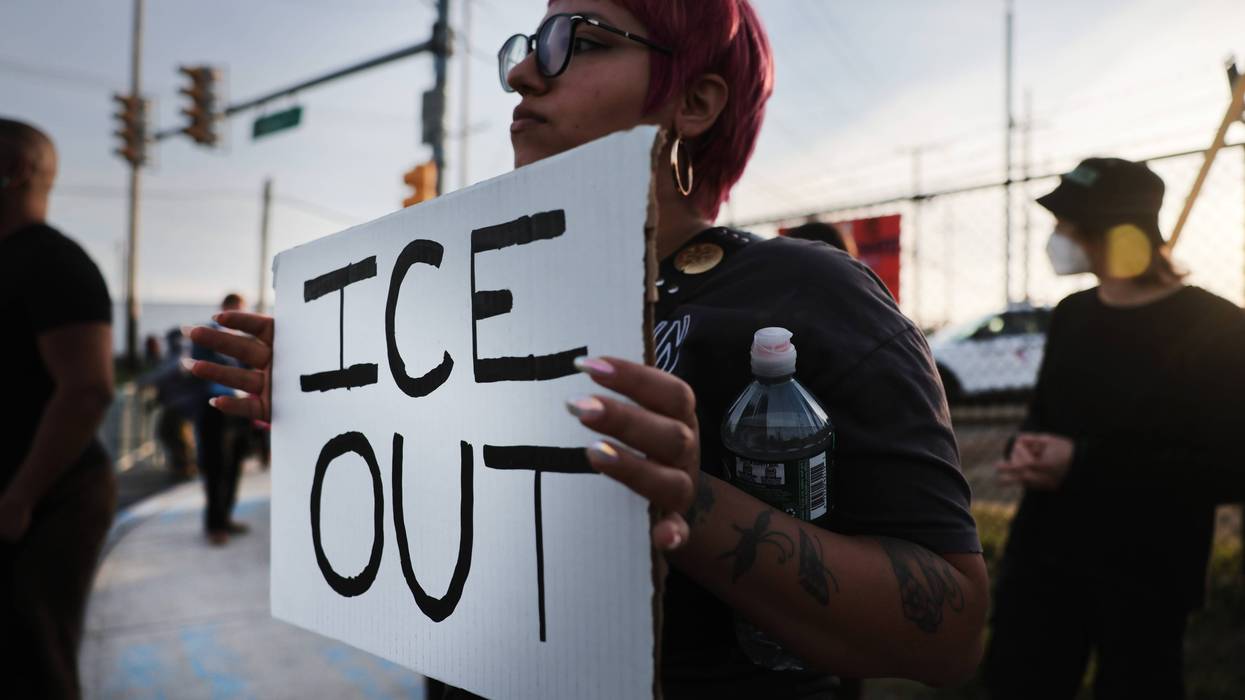
"They knew this stuff was going to happen and are sending people back anyway."
"Deportation is a life-or-death matter."
That was one immigration attorney's response to the news this week that a couple who had lived in the St. Louis suburb of Overland, Missouri was found fatally shot in a sugarcane field near Retalhuleu, Guatemala, after the husband, Nixon Giovanni Pérez Paz, was deported there last year.
The couple's 14-month-old baby, Giovanni, was found crying next to the body of Pérez Paz's wife, Glendy Marisol González de la Cruz.
Pérez Paz, 43, and González de la Cruz, 25, showed signs of physical trauma and had apparently been bound and gagged before being killed. Police in Guatemala, where officials declared a state of emergency earlier this year over gang violence, are investigating the killings. Reuters reported that murders have spiked in the Central American country over the past week, with the government blaming organized crime.
In the US, observers including US Rep. Seth Moulton (D-Mass.) directed anger at the Trump administration, which has overseen a mass deportation campaign in which roughly 28,000 people were deported to Guatemala in the first six months of 2026, while hundreds of thousands more have been sent to other countries, including ones where they may face persecution, violence, and other security concerns.
"This is not immigration enforcement," said Moulton of President Donald Trump's deportation of Pérez Paz. "This is a body count. And every member of Congress and Senate enabling MAGA’s mass deportation police state owns it too."
According to St. Louis Public Radio, Pérez Paz and his brother were stopped by US Immigration and Customs Enforcement (ICE) agents in Overland as they were driving to their roofing jobs. The two brothers were "swarmed" by agents before being handcuffed and shackled and taken to a local jail.
The agents told them they had no warrant for their arrest, but that they were being deported for entering the country without authorization.
Pérez Paz's brother, Rolando Pérez Paz, told St. Louis Public Radio from Guatemala, where he was also deported, that they did not have legal status in the US and had fled poverty and violence in their home country.
A spokesperson for ICE told the outlet that Pérez Paz had been convicted twice for drunk driving in Overland and had a 2010 open-container charge in Palm Beach, Florida, which had been dropped by prosecutors. No records were found in Missouri's court database to support the claim about the drunk driving conviction.
Court records show Pérez Paz had pleaded guilty to driving without a valid driver’s license in May 2024 and had paid a fine for the traffic violation.
"This isn’t due process," said Moulton. "This isn’t deporting the worst of the worst or whatever lies MAGA campaigned on."
González de la Cruz was pregnant when Pérez Paz was deported and remained in Overland, giving birth to Giovanni in June 2025; they also had two older daughters. She eventually returned to Guatemala to reunite the family after financial struggles and fears of deportation mounted, according to a local immigrant rights group called Missouri Workers Center Fuerza—even though she had a court date set for 2027 for her asylum case.
"Glendy came to our Fuerza meetings three weeks after giving birth. She was working two jobs, bringing new members, showing up—even as her world was being torn apart," said the group in a Facebook post inviting community members to a candlelight vigil for the couple on August 2. "The cruelty of this administration meant her husband could not be by her side for the birth."
The couple was reported missing on July 20 after leaving their home to register a motorcycle. They had faced "several months of struggles with financial hardships, run-ins with the federal government, and violence" before their deaths.
Reuters reported that a red striped motorcycle was found at the scene outside Retalhuleu. Their children are in the custody of Pérez Paz's brother.
"They knew this stuff was going to happen and are sending people back anyway," said one St. Louis resident of the Trump administration's mass deportation campaign.
The deaths were reported as the White House directed ICE to ramp up operations targeting Haitians; Temporary Protected Status expired for Haitian refugees this week following a Supreme Court ruling last month. Hundreds of people could be forced onto deportation flights to the poverty-stricken country each week, according to the director-general of Haiti’s National Office of Migration. Like Guatemala, Haiti faces a crisis of violence by armed gangs.

"What ICE is doing is illegal and disturbing."
Sen. Patty Murray on Wednesday accused federal immigration enforcement officials of attempting to coerce a longtime Seattle resident to sign a voluntary deportation form using threats of violence.
In a video posted on social media, Murray (D-Wash.) delivered an update on Eduardo Aguirre Esparza, who was detained by US Immigration and Customs Enforcement (ICE) agents last week.
The senator said that Aguirre Esparza, whom she described as "a local Seattle small business owner with no criminal history" and the husband of a US citizen, was taken to an ICE office in Tukwila, Washington, where he was held in a room for 10 hours.
ICE agents threatened to beat up a Seattle small business owner, married to a citizen, with NO criminal record unless he signed a "voluntary" departure.
I'm told there were cameras in the room.
I'm demanding any video and that Eduardo be brought home immediately. https://t.co/jMpYSh08WC pic.twitter.com/1GViRDhbmU
— Senator Patty Murray (@PattyMurray) July 29, 2026
"He was surrounded by 20 ICE agents, who were pressuring him to sign a voluntary departure," said Murray. "They physically pushed him and threatened to beat him up if he didn't sign it. This is disgusting."
Murray said that she has learned that there are security cameras in the room where Aguirre Esparza was being held, and she demanded that ICE hand over any footage in its possession.
"What ICE is doing is illegal and disturbing," Murray emphasized. "Eduardo is now being held in Texas, away from his family and his lawyers. I am demanding that [the US Department of Homeland Security] return Eduardo to Washington state now so he can get the due process everyone should expect in America."
In a separate statement, Murray said that Aguirre Esparza has "deep ties to our local community" and "was working hard to pursue a legal pathway to lawful permanent residence."
Aaron Reichlin-Melnick, senior fellow at the American Immigration Council, commented that Murray's account of Aguirre Esparza's detention "is a good reminder that some 'voluntary' departures people sign while detained by ICE are the product of coercion."
"The worst incidents I've heard of over the years involve agents grabbing a person's hands and forcing them to sign a piece of paper they can't read," Reichlin-Melnick added. "It's a 'voluntary' removal."

"This would put untold species directly in harm's way," the Center for Biological Diversity warned.
Under pressure from companies owned by billionaires like Elon Musk and Jeff Bezos, the Trump administration announced this week that it will waive what it called "unnecessary environmental laws and regulations" in order to expedite the approval of commercial rocket launches.
The US Department of Transportation's (USDOT) Federal Aviation Administration (FAA) is proposing to waive numerous environmental review requirements and related federal laws that currently apply to commercial space launches, citing legal authority Congress granted to the secretary of transportation.
The proposed changes—on which the public has 30 days to comment—would make it much faster and easier for space profiteers to get permission to launch rockets or operate commercial spaceports in the United States by allowing the FAA to waive part or all of over a dozen laws and rules, including National Environmental Policy Act, the Endangered Species Act, the Clean Water and Clean Air acts, the National Historic Preservation Act, and the Marine Mammal Protection Act.
“America won the first space race, and we can do it again—but only if we get government red tape out of the way,” US Transportation Secretary Sean Duffy said on Tuesday. "That’s why President [Donald] Trump has charged USDOT with unlocking the final frontier and reestablishing the United States’ dominance in space."
Trump’s FAA announced today that it intends to exempt #space launches and spacecraft reentries from complying with environmental laws like the #EndangeredSpeciesAct. This will put untold species directly in harm’s way.You can be sure we’ll fight this obscene giveaway to special interests 🚀🚀
— Center for Biological Diversity (@biologicaldiversity.org) July 28, 2026 at 4:08 PM
The USDOT said that other federal agencies, such as the National Aeronautics and Space Administration (NASA) or the US military, may still be required to conduct environmental reviews under the law for launches on some federal property.
The proposal follows Trump's August 2025 executive order, "Enabling Competition in the Commercial Space Industry," which critics charge was issued to benefit Musk, the world's richest person, and his company SpaceX, which is seeking to dramatically increase launches and landings and has suffered a series of rocket explosions. Trump has boosted other companies—including X and Tesla—led by Musk, who served for a period last year as de facto head of the president's so-called Department of Government Efficiency, or DOGE.
Opponents warn that, if approved, the proposed changes mean that the FAA would generally no longer require environmental studies or consultations before issuing commercial space licenses.
“NASA has conducted space launches for decades in a responsible way, but now Trump wants to gut even the most basic environmental safeguards to enrich some of the world’s wealthiest people,” said Brett Hartl, government affairs director at the Center for Biological Diversity (CBD). “We’ve seen real environmental damage from the exploding rocket toys of the superrich. You can be damn sure we’ll fight this obscene giveaway to special interests.”
In 2024, SpaceX was punished with a paltry $150,000 in fines for violating the Clean Water Act after it discharged tens of thousands of gallons of industrial waste from a launch pad in Boca Chica, Texas.
CBD and other green and Indigenous groups last month sued the US Fish and Wildlife Service in a bid to stop the Trump administration from handing over 715 acres of the Lower Rio Grande Valley National Wildlife Refuge in South Texas to SpaceX in exchange for 683 acres elsewhere.
On Wednesday, CNBC revealed that six US lawmakers from both major parties—including five who sit on committees that regulate SpaceX—had or have family investments in the company, raising concerns over apparent conflicts of interest.
In addition to environmental concerns, Trump has also come under fire for militarizing space in contravention of the Outer Space Treaty—which the US has ratified—by launching the Space Force as an official service branch during his first term.

Democratic Rep. Summer Lee said the new spending was yet another reason “it’s time to get money out of politics.”
As corporations spend record sums to influence this November's elections, new campaign finance data shows a powerful new interest fueling the trend: sports gambling companies.
FanDuel, DraftKings, and others in the sports betting industry have spent $72 million seeking to influence the upcoming election cycle, according to a report from Reuters on Tuesday.
The industry's historic spending blitz faces growing scrutiny from state and federal lawmakers, and seeks to protect its turf against rising competitors in the prediction market business, such as Polymarket and Kalshi, which are financially tied to the Trump administration.
Sports gambling companies have become the third-largest corporate election donor in the country during this cycle behind just the technology and cryptocurrency sectors, according to a June report by the consumer watchdog group Public Citizen. These two industries have spent over $100 million promoting their interests in the upcoming midterms.
That same report found that the 2026 election cycle has been influenced by more corporate money than any since 2010, when the Supreme Court's Citizens United decision opened the floodgates for companies to spend unlimited sums promoting their preferred candidates via super political action committees (PACs).
These groups are not legally allowed to coordinate with candidates or give them money directly, but are allowed to advocate on their behalf, sometimes spending tens of millions of dollars to run ads aimed at influencing a single race.
As of last month, the report found that corporations have spent $517 million, mainly through super PACs, to influence the 2026 election, accounting for nearly one-third of all corporate election spending since 2010.
According to Reuters, major sportsbooks have channeled their money into the super PAC Win For America, which launched last year, and distributed it to affiliated PACs: the Republican-focused American Conservative Fund and the Democrat-focused American Future.
DraftKings has given at least $34 million to Win for America, FanDuel has given at least $27 million, and Fanatics and the UK-based bet365 have given $5.5 million apiece.
Separately, DraftKings, FanDuel, Fanatics, and BetMGM created the Sports Betting Alliance in 2021 to lobby Congress and state legislatures.
Since 2018, when the Supreme Court struck down a federal law barring sports betting in most states, at least 39 states, as well as the District of Columbia, have legalized it in some form.
While crypto and tech have directed more attention to federal races, the battles over sports betting are raging mostly at the state level, and that’s where most of Win for America’s focus is going.
According to Reuters:
The money's impact is already evident in some state races.
Win for America spent more than $12 million in Georgia state races through two smaller PACs—Republican-focused American Conservative Fund and Democrat-focused American Future—as the legislature there weighs bills that would legalize gambling, state campaign finance records show.
The money went into 34 legislative races ahead of the primary. All but two of the candidates supported by the industry won, The Atlanta Journal-Constitution reported in May...
Win for America is also spending heavily on races in Pennsylvania, where there was a push to raise taxes on the online sports betting industry to boost state aid for public transportation, election records show.
Rep. Summer Lee (D-Pa.), who introduced legislation in May that would apply the same contribution limits to super PACs that already apply to direct donations, argued that the huge sums spent by the sports betting industry were yet another reason that "it's time to get money out of politics."
"Crypto. Big tech. Now big sports betting," she wrote on social media Wednesday. "Another industry pouring tens of millions into our elections to protect its profits. Democracy shouldn't be auctioned off to the highest bidder."

The organization has "provided affordable sexual and reproductive healthcare, including birth control, STI testing and treatment, cancer screenings, and wellness exams to millions of people through Title X."
Planned Parenthood Federation of America on Wednesday sued over the Trump administration's attempt to abuse a federal program "for an overtly political and ideological agenda that is at odds with Title X's statutory purpose of funding comprehensive family planning care for those who cannot afford it."
"Title X of the Public Health Service Act is the only domestic federal program devoted solely to family planning for uninsured, underinsured, and low-income people," notes the complaint, filed in federal court in Washington, DC by lawyers at PPFA, Democracy Forward, and Wilmer Cutler Pickering Hale and Dorr.
After the US Department of Health and Human Services' Office of Population Affairs in April announced changes to how it chooses Title X grantees for the 2027-32 cycle, the National Family Planning and Reproductive Health Association and the Family Health Council of Central Pennsylvania sued last month, backed by the ACLU.
The office then updated the policy earlier this month. However, as Wednesday's complaint explains, the updated version still says that "in evaluating and awarding Title X grants," the office "will consider the extent to which applicants 'advance' and 'align with' a series of political priorities."
PPFA's attorneys argued that the administration's approach is unlawful and puts the group's members "at a competitive disadvantage," which could ultimately impact people seeking care, from contraception to testing for sexually transmitted infections (STIs).
Democracy Forward president and CEO Skye Perryman—whose organization has repeatedly sued over Trump policies—said in a statement that "people should be able to receive the healthcare that is right for them, their lives, and their values, and that requires support for providing critically needed family planning services for people who cannot afford it."
Accusing the administration of "once again putting politics over people," she said that "the unlawful, ideologically driven changes to Title X threaten devastating consequences for lower income Americans nationwide who rely on the program for essential healthcare, including birth control, cancer screenings, and STI testing."
"Title X was created so a person's income would never determine whether they could access the medically appropriate family planning care that is right for them," Perryman emphasized. "We will aggressively pursue legal action on behalf of our clients until the administration stops undermining that promise and follows the law."
Highlighting the potential impact of the administration's policy for people throughout the United States, PPFA pointed out that from October 2024 through September 2025, its health centers provided over 1.3 million Title X visits across 33 states.
"Planned Parenthood health centers have provided affordable sexual and reproductive healthcare, including birth control, STI testing and treatment, cancer screenings, and wellness exams to millions of people through Title X," said PPFA president and CEO Alexis McGill Johnson. "We are suing the Trump administration because, yet again, it is trying to make it harder for people to get the vital care they need at Planned Parenthood."
The new lawsuit comes after Planned Parenthood and other reproductive health clinics regained access to Medicaid funding earlier this month, following the expiration of a provision in the One Big Beautiful Bill Act, which President Donald Trump signed last July.
The passage of that provision was a victory for forced pregnancy advocates, who have long targeted Planned Parenthood for providing abortion care. An analysis from the organization found that the "defunding" effort led to the closure of nearly 30 health centers, all of which were located in "contraceptive deserts" and two-thirds of which were in areas defined as rural, medically underserved, or experiencing health professional shortages.
The group also called the Medicaid provision a "backdoor abortion ban," noting that 64% of Planned Parenthood health center closures were in states where such care is legal, and the shuttered facilities had previously served over 10,000 abortion patients annually.
"By deliberately targeting Planned Parenthood, President Trump and his allies in Congress worsened a public health crisis, making it harder for people to get the essential and lifesaving care they needed at their trusted provider," McGill Johnson said in early July.
"Still, anti-abortion lawmakers are trying to make 'defund' permanent because Planned Parenthood health centers provide abortion care where it's legal," she stressed. "They are willing to sacrifice the lives and health of people across the country if it gets them closer to their goal of banning abortion everywhere and shutting down Planned Parenthood."
"We're in a fight for survival—not just for Planned Parenthood health centers, but for everyone to get high-quality, affordable healthcare from their trusted provider," she added. "And know this: Planned Parenthood will never stop fighting to ensure everyone can get the care they need."