August, 10 2010, 10:30am EDT

National Security Letter Recipient Can Speak Out For First Time Since FBI Demanded Customer Records From Him
FBI Partially Lifts Gag Order In ACLU Case
NEW YORK
The FBI has partially lifted a gag it
imposed on American Civil Liberties Union client Nicholas Merrill in
2004 that prevented him from disclosing to anyone that he received a
national security letter (NSL) demanding private customer records.
Merrill, who received the NSL as the president of an Internet service
provider (ISP), can now reveal his identity and speak about his
experience for the first time since receiving the NSL. The ACLU and New
York Civil Liberties Union filed a lawsuit challenging the NSL statute
and the gag order on behalf of Merrill (then called John Doe) in April
2004, which resulted in numerous court rulings finding the NSL statute
unconstitutional. Merrill was the first person ever to challenge an NSL
in court.
"After six long years of not being
able to tell anyone at all what happened to me - not even my family -
I'm grateful to finally be able to talk about my experience of being
served with a national security letter," said Merrill. "Internet users
do not give up their privacy rights when they log on, and the FBI should
not have the power to secretly demand that ISPs turn over
constitutionally protected information about their users without a court
order. I hope my successful challenge to the FBI's NSL gag power will
empower others who may have received NSLs to speak out."
NSLs are secret record demands the
FBI issues to obtain access to personal customer records from ISPs,
libraries, financial institutions and credit reporting agencies without
court approval or even suspicion of wrongdoing. Because the FBI can gag
NSL recipients to prohibit them from disclosing anything about the
record demands they receive, the FBI's use and potential abuse of the
NSL power has been shrouded in excessive secrecy. While the NSL served
on Merrill stated that he was prohibited from telling anyone about it,
he decided to challenge the demand in court because he believed that the
FBI was ordering him to turn over constitutionally protected
information about one of his clients. Because of the FBI-imposed gag,
Merrill was prohibited from talking about the NSL or revealing his
identity and role in the lawsuit until today, even though the FBI
abandoned its demand for records from Merrill more than three years ago.
In December 2008, the Second Circuit
Court of Appeals, ruling in Merrill's case, found that some of the NSL
statute's gag provisions were unconstitutional because they wrongly
placed the burden on NSL recipients to challenge gag orders, narrowly
limited judicial review of gag orders and required courts to defer
entirely to the executive branch. The appeals court sent the case back
to the U.S. District Court for the Southern District of New York and
ordered the government to justify the constitutionality of the gag on
Merrill. On July 30, the parties reached a settlement in the case. As
part of that settlement, the FBI agreed that Merrill could now identify
himself as the John Doe NSL recipient.
"We are thrilled that Nick will
finally be able to speak out about why he took the courageous step of
challenging the FBI's NSL power. Thanks to Nick's actions, courts have
now recognized the need for judicial oversight of the government's
dangerous NSL gag power," said Melissa Goodman, staff attorney with the
ACLU National Security Project. "But even though this case has resulted
in significant improvements to NSL procedures, innocent Americans'
private records remain too vulnerable to secret and warrantless data
collection by the FBI. At a minimum, the FBI should have to show
individual suspicion before it issues an NSL for an individual's
personal information and invades Americans' right to privacy and free
speech on the Internet."
While misuse and abuse of the NSL
power has been widely documented, the Obama administration is now
seeking to expand the statute to allow the FBI to demand even more
records without court approval. In July, the Obama administration
proposed to expand the statute to allow the FBI to get Americans'
Internet activity records without court approval or even suspicion of
wrongdoing.
In 2009, Congressmen Jerrold Nadler
(D-NY) and Jeff Flake (R-AZ) reintroduced the National Security Letters
Reform Act, aimed at reigning in abuse of the power. The ACLU has called
on Congress to reform the remaining constitutional defects of the NSL
gag power and reject Obama proposals to expand the NSL statute.
In addition to Goodman, attorneys on
the case are Jameel Jaffer of the national ACLU and Arthur Eisenberg of
the NYCLU.
More information about the case is
available online at: www.aclu.org//national-security/doe-v-holder
The American Civil Liberties Union was founded in 1920 and is our nation's guardian of liberty. The ACLU works in the courts, legislatures and communities to defend and preserve the individual rights and liberties guaranteed to all people in this country by the Constitution and laws of the United States.
(212) 549-2666LATEST NEWS
'RFK Jr. Lied to Congress': Criminal Probe Sought Over Samoa Trip Linked to 83 Measles Deaths
"He told us his Samoa trip had nothing to do with vaccines—now this letter shows that was false," Sen. Ed Markey said of President Donald Trump's health and human services secretary.
Aug 27, 2026
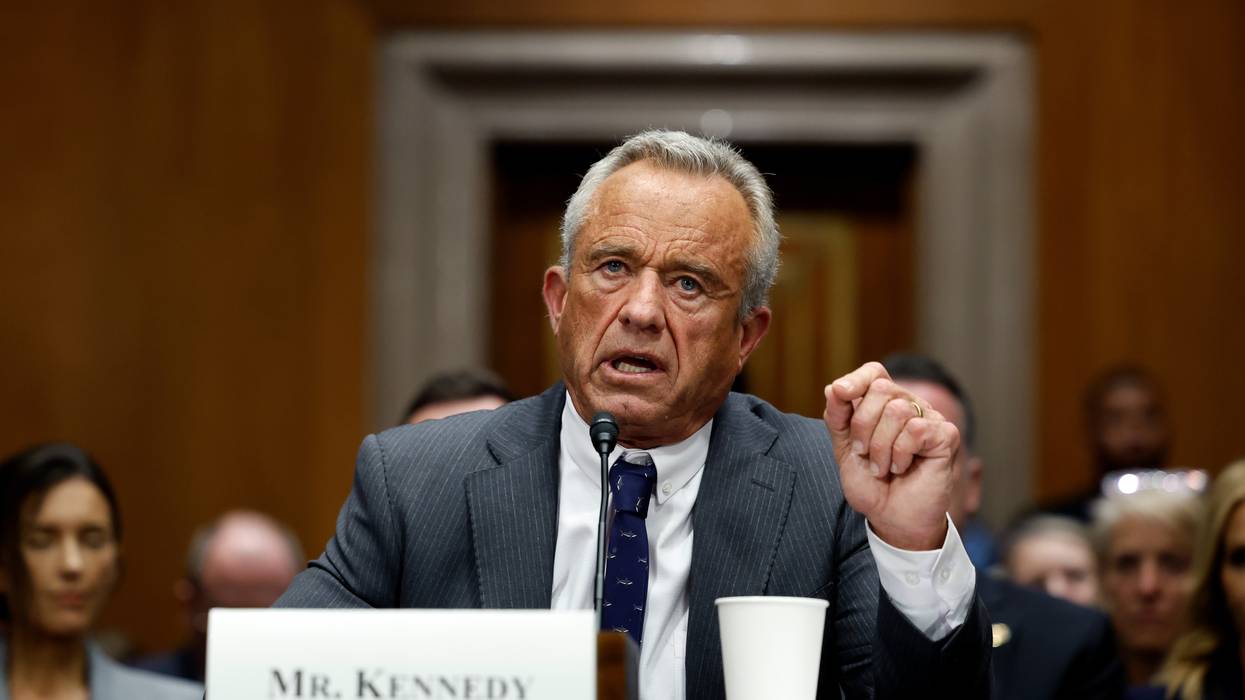
US Health and Human Services Secretary Robert F. Kennedy Jr. on Thursday faced calls for a criminal investigation after newly published documents appear to contradict his repeated testimony during Senate confirmation hearings that his 2019 trip to Samoa, which is linked to 83 measles deaths, “had nothing to do with vaccines.”
The advocacy group American Oversight on Thursday asked the US Department of Justice to investigate whether Kennedy knowingly made materially false statements during his 2025 Senate confirmation hearings. The request follows the publication of a January 2019 letter, signed by Kennedy and addressed to Samoa’s then-prime minister, Tuilaʻepa Saʻilele Malielegaoi, that explicitly proposed a vaccine-focused assessment of the Pacific island nation’s measles, mumps, and rubella (MMR) program.
“Robert F. Kennedy Jr. repeatedly testified before two separate Senate committees that his trip to Samoa had nothing to do with vaccines. But a letter he wrote to Samoa’s prime minister six years earlier appears to contradict that testimony,” American Oversight executive director Chioma Chukwu said Thursday in a statement.
“Congress relies on truthful testimony to do its job, particularly on matters as consequential as public health," Chukwu added. "If Kennedy lied to the Senate while seeking confirmation as the nation’s top health official, the Justice Department must investigate and hold him accountable.”
Questioned by Sen. Ron Wyden (D-Ore.) before the Senate Finance Committee, Kennedy said his trip had “nothing to do with vaccines,” describing it instead as an effort to introduce a medical informatics system to digitize the nation's health records.
The following day, when Sen. Ed Markey (D-Mass.) pressed him on the same issue before the Senate Health, Education, Labor, and Pensions Committee, Kennedy again said his trip had “nothing to do with vaccines.”
Markey's office released a statement Thursday noting that Kennedy "traveled to Samoa in 2019 to promote disinformation about the measles vaccine. Shortly after his trip, Samoa experienced a deadly outbreak of measles that killed over 80 people and has been attributed to mass vaccine disinformation."
My statement on new reporting that RFK Jr. lied to me in his Senate confirmation hearing.
[image or embed]
— Senator Ed Markey (@markey.senate.gov) August 27, 2026 at 1:47 PM
Of the 83 measles deaths during the outbreak, 72 were children under the age of 5. More than 1,860 hospitalizations in Samoa have been linked to the outbreak.
“New documents confirm what we already knew: RFK Jr. lied to Congress," Markey said. "He told us his Samoa trip had nothing to do with vaccines—now this letter shows that was false, just like it was false when he denied his role in the deadly outbreak that followed."
"This is a pattern, not a slip," he added. "RFK Jr. has lied to the Senate, lied to the American people, and jeopardized the health of children to advance his anti-vaccine agenda. He should never have been confirmed, and he cannot be trusted to run [the US Department of Health and Human Services] for even one more day."
Democratic Hawaii Gov. Josh Green, who is a physician, was invited by the Samoan government to help lead the measles response and recovery in the South Pacific archipelago.
“Misinformation and measles are a deadly combination—I saw that firsthand in Samoa," Green said on Thursday. "The truth is, this is a disease we know how to prevent. The MMR shot is the only proven and effective way to prevent the spread of measles."
"Vaccines save lives," he added. "Our public health decisions must be guided by doctors, scientists, and evidence—not conspiracy theories or political convenience. We owe it to every family to protect our children and communities, and make sure no one else dies from a preventable disease.”
The group 314 Action, which recruits, trains, and works to elect Democrats with expertise in science, published a statement Thursday noting that "now, America is facing its worst measles crisis in decades, and two more Americans have lost their lives to a disease we have long known how to prevent."
Public health experts have warned that the US is on track to lose its measles elimination status, which the country achieved in 2000, and blame the regression on declining vaccination driven by misinformation and conspiracy theories, including that vaccines are dangerous and even deadly.
Earlier this month, President Donald Trump signed an executive order overhauling federal recommendations for children that calls for separating the MMR vaccine into three individual shots.
"The only thing ‘lethal’ about vaccines is listening to RFK Jr.’s lies about them," said 314 Action. "America needs more leaders like Gov. Green who are willing to stand up to Trump and RFK Jr. and put public health over politics. We won’t stop fighting until RFK Jr. is fired or removed from office.”
Keep ReadingShow Less
Study Suggests Climate Crisis Is Supercharging 'Godzilla' El Niños
"We are seeing a trend of stronger El Niños, and the one we have now is consistent with that trend," said the lead author. "That is bad news for climate hazards and for people."
Aug 27, 2026
As the flooding disaster in Tibet and Nepal demonstrates the deadly consequences of the climate emergency, experts wrote Thursday in the journal Science that fossil fuel-driven global heating has intensified the warm phase of a key pattern in the Pacific Ocean.
The El Niño-Southern Oscillation (ENSO) has a warm phase, called El Niño, as well as a neutral phase and a cold one, La Niña. In June, scientists declared the start of a warm event nicknamed "Godzilla," which helped push last month's average global ocean surface temperature to the hottest ever recorded in July.
The current event is expected to become not only a super El Niño, but the most intense one on record—and it could contribute to 2027 possibly being the hottest year humanity has ever endured.
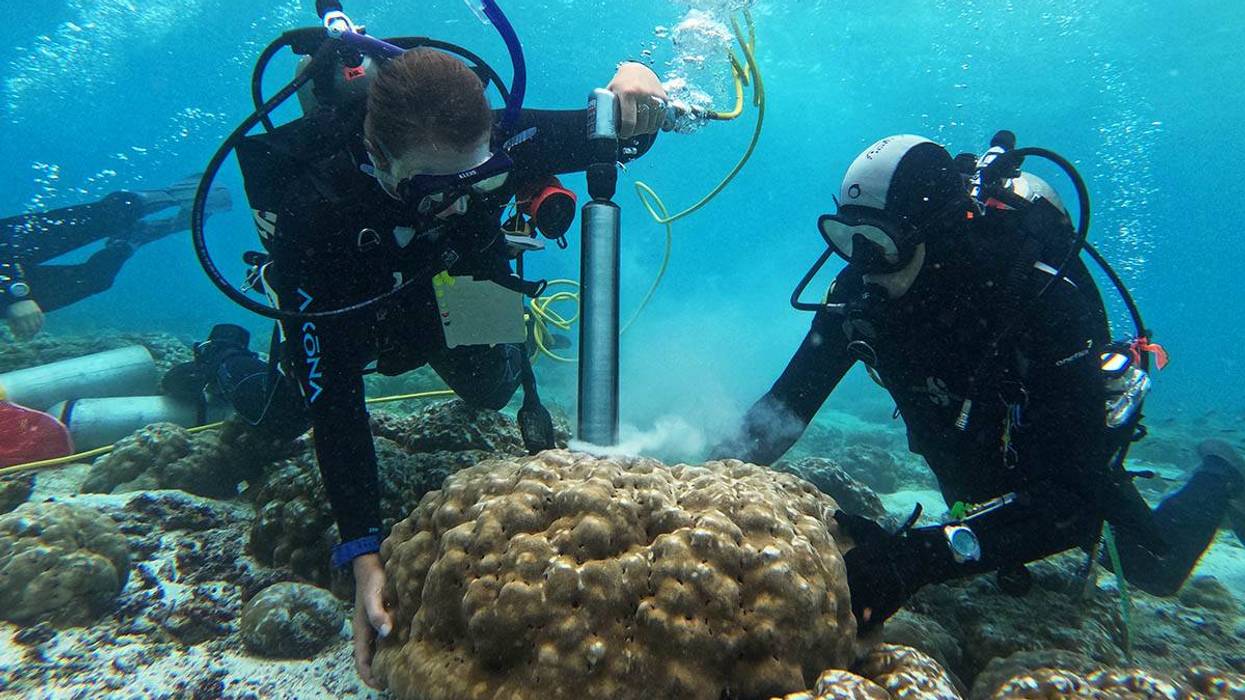
While ENSO is a naturally occurring phenomenon, the scientists behind the new paper studied coral skeletons from the Galápagos Islands and concluded that global warming—tied to humans continuing to burn fossil fuels—has intensified El Niño phases.
"Our findings suggest El Niño can supercharge global warming, but also global warming can supercharge El Niño—that is what we are seeing," said lead author Julia Cole, who chairs the University of Michigan's Department of Earth and Environmental Sciences.
The scientist also spoke with Inside Climate News, which noted that "the first documented super El Niño in 1982-83 killed about 95% of the shallow-water corals around the Galápagos Islands, right around the time Cole began her research career."
Based on the team's analysis, "after the El Niño in 1982, we start seeing much more variability; it's a lot more extreme and looks like nothing in the previous 1,000 years," Cole told The Guardian. "What surprised me was how consistent it was. There is just such a large, distinct difference between what has been happening in the last 40 years compared to preindustrial times."
As Inside Climate News reported:
When Cole visited the islands in 1989, many of the large mapped corals that could have served as sample material were gone, wiped out by the El Niño early in the decade and then decomposed quickly by organisms in the biologically active waters. But in 2006, her team discovered fossil coral remnants, often perched as boulders near remote east-facing coastlines, tossed inland by large waves or tsunamis.
Cole said the signal of El Niños intensified by human-caused warming would have been even stronger if the study had included the most recent occurrences. All the events categorized as super El Niños have occurred since the 1980s and have triggered flooding in East Africa, led to disease outbreaks, and intensified tropical storms. This year’s El Niño is intensifying drought in Indonesia, fueling widespread fires that are sending smoke and hazardous air pollution across Southeast Asia, Cole said. Her team is currently analyzing corals to show the changes from the El Niños in 2015-16 and 2023-24, she added.
"We are seeing a trend of stronger El Niños, and the one we have now is consistent with that trend—it's not a fluke. We are seeing a shift where El Niño doesn't look like what it did prior to industrial times," Cole said. "That is bad news for climate hazards and for people, particularly those who are badly impacted and yet have done little to cause climate change."
According to the United States' National Oceanic and Atmospheric Administration, consequences of El Niño include "increased rainfall across the southern tier of the US and in Peru, which has caused destructive flooding, and drought in the West Pacific, sometimes associated with devastating brush fires in Australia."
Dalhousie University marine scientist Boris Worm wasn't involved with the new study but told The Associated Press on Thursday that "El Niño is the most violent aspect of climate variability worldwide, with effects ranging from local fisheries collapse, to widespread coral die-offs to severe droughts, and food shortages around the world."
Experts are already worried about the latest El Niño's impact on food security and prices, with the United Nations World Food Program projecting earlier this month that almost 50 million more people worldwide face the prospect of acute hunger.
Pointing to late climate scientist Wallace Broecker's warning that "the climate system is an angry beast and we are poking it with sticks," Worm said that "human emissions are the stick, and El Niño is [one] of the 'angry' outbursts that can be so threatening to our collective safety."
Keep ReadingShow Less
Investigation Exposes Massive New Jersey Data Center Operating Army of Polluting Generators Without Permits
“It seems that this industry, in particular, values speed to market more than almost anything else."
Aug 27, 2026
A joint investigative report published by Floodlight and The Guardian on Thursday revealed that one of the largest planned artificial intelligence data centers on the East Coast is operating dozens of gas-powered generators without permits in a possible violation of federal law.
Using a thermal drone to take footage of the Microsoft-backed DataOne facility in Vineland, New Jersey last week, Floodlight determined that the data center was operating 45 generators at once.
The investigation noted that the generators were operating roughly one mile from two different schools, and that the gas-powered generators used as the facility "emit substantial amounts of health-harming air pollution linked to asthma, heart attacks, and even premature death."
Bruce Buckheit, who previously served as air enforcement chief at the Environmental Protection Agency (EPA), told Floodlight that DataOne is likely violating federal law with its unpermitted generators, and he said the government should make the facility pay a fine for "illegal emissions."
Buckheit added that DataOne's apparent disregard for regulations appeared to be a common trait in the AI industry.
“It seems that this industry, in particular, values speed to market more than almost anything else,” he said.
A New Jersey Department of Environmental Protection spokesperson told Floodlight that the agency is investigating DataOne's use of gas generators but has yet to reach "a full compliance determination."
Local residents told Floodlight that they have for months complained about the nonstop humming produced by the facility, which they suspect is being caused by the generators.
"It's just constant," resident Andrew Groetsch told Floodlight of the noise coming from the facility. "It never goes away."
DataOne, which is projected to cover 2.5 million square feet upon its completion, has long been controversial.
In an interview with NBC Philadelphia published earlier this month, Vineland resident Peggy Schumacher said that the noise from the data center has gotten so bad that it's making her neighborhood "unlivable."
"We are a mile away," Schumacher explained, "and the vibration in our house is horrible now."
Fellow Vineland resident Tallis West offered a similar description of living near DataOne in an interview with CBS News published in May.
"Outside is not even enjoyable to sit outside because of the noise sometimes," West said. "We can't enjoy being outside anymore."
Despite the objections of many local residents, the Vineland Planning Board earlier this month voted to approve the second phase of construction at the facility.
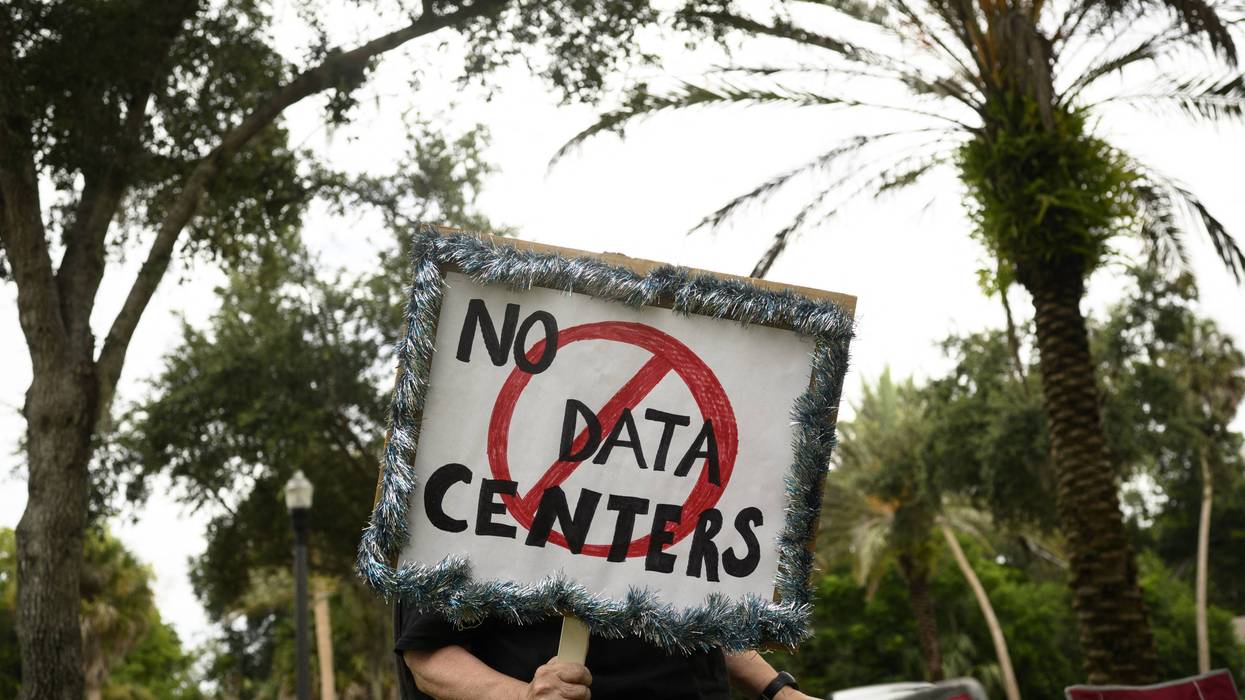
The tech industry's rapid buildout of AI data centers is getting major pushback from voters across the US, as residents issue complaints about both pollution and energy consumption that has been raising their utility bills.
Sen. Bernie Sanders (I-Vt.) and Rep. Alexandria Ocasio-Cortez (D-NY) earlier this year proposed a moratorium on new data center construction.
Keep ReadingShow Less
'Democracy Is Under Attack': Civil Rights Lawsuit Aims to Block Trump Assault on Mail-In Voting
“These mail-in ballot restrictions threaten to disenfranchise millions of eligible voters who rely on mail voting to participate in our democracy," said one advocate.
Aug 27, 2026
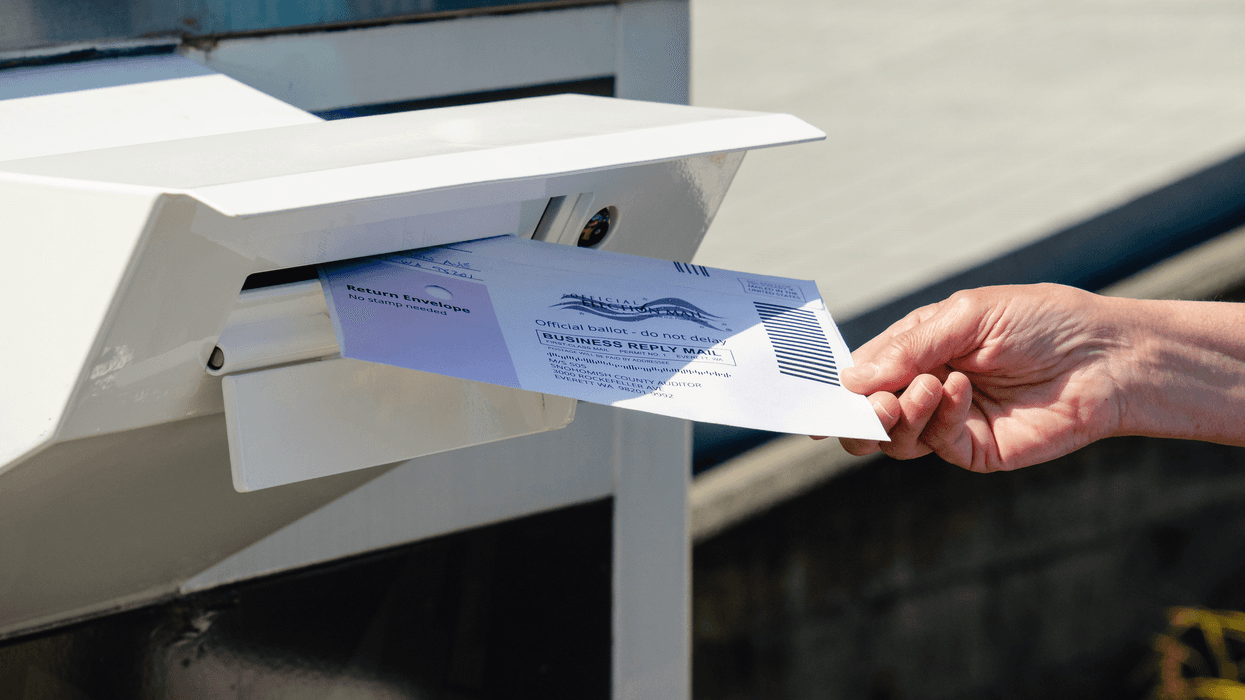
A day after a federal judge lifted her injunction on President Donald Trump's executive order targeting mail-in ballots, a quartet of civil rights groups on Thursday filed fresh claims in their lawsuit challenging the administration's weaponization of the US Postal Service to attack the right to vote under the pretense of fighting nearly nonexistent fraud.
The Lawyers’ Committee for Civil Rights Under Law, NAACP, Common Cause, and Black Voters Matter Fund argued in the US District Court for the District of Columbia that Trump’s March 31 executive order unlawfully attempts to federalize important parts of election administration—especially voter eligibility verification and mail-ballot delivery—by presidential fiat, without authorization from Congress, while creating serious risks of disenfranchisement and misuse of personal data.
The plaintiffs—and many legal experts—argue that the US Constitution gives the states and Congress the authority to regulate federal elections, not the president.
"Our democracy is under attack," NAACP president and CEO Derrick Johnson said Thursday in a statement. "No federal entity should be allowed to implement last-minute rules that disenfranchise voters and override state election laws."
"This new USPS rule is a direct assault on the fundamental freedoms of millions of Americans—particularly Black voters, communities of color, seniors, military members, and rural residents—just weeks before a critical election,” Johnson added, referring to November's pmidterms. "We will not stand idly by while the voices of the people are silenced. We must protect every eligible citizen’s right to cast their ballot.”
Damon Hewitt, president and executive director of the Lawyers’ Committee for Civil Rights Under Law, warned that “these mail-in ballot restrictions threaten to disenfranchise millions of eligible voters who rely on mail voting to participate in our democracy while balancing work, caregiving responsibilities, disabilities, and other realities of daily life."
"The Trump administration is trying to limit access to the ballot, sow confusion at the polls, and to use the ensuing chaos as an excuse to exert power over agencies and processes in a politicized way," Hewitt added. “We will not let this or any administration further undermine our democratic process. We will fight to ensure our elections are free and fair, and that eligible voters are not shut out—especially Black voters and other voters of color, who are frequently targeted by voter suppression schemes.”
Several courts had ruled against Trump's order. But this week, the US Supreme Court cleared the way for the administration to proceed with its plans, and on Wednesday US District Judge Indira Talwani, an appointee of former President Barack Obama, was compelled to lift her injunction on the executive order as a result of the high court's decision.
Also on Wednesday, the groups behind the case before Talwani moved to block the Postal Service rule, as did a coalition of two dozen Democratic state attorneys general, whose initial challenge had resulted in the ruling from the Supreme Court—which found that the AGs filed their first suit prematurely.
Republicans including Trump—who has repeatedly voted by mail—have used fearmongering and disinformation to push the nearly nonexistent “threat” of voter fraud, especially in regard to mailed ballots, and noncitizens voting in US elections.
“Mail-in voting is so safe that even the president has used it twice this year,” Common Cause president and CEO Virginia Kase Solomón said on Thursday. “The Postal Service exists to deliver our mail, not to be weaponized by this administration to silence voters. Common Cause will keep fighting to protect a democracy where people choose their leaders—not the other way around.”
Trump’s March order is part of a broader attack on voting rights that includes pushing an updated version of Republicans’ so-called SAVE America Act, which would mandate proof of citizenship and strict photo ID requirements to register to vote in federal elections. The legislation, which was passed by the House of Representatives in February, is stalled in the narrowly split Senate, where it lacks the support of 60 lawmakers needed to avoid a Democrat filibuster.
"Mail-in voting gives people the freedom and flexibility to participate in our democracy, and we should be honest about what these efforts to restrict it are really doing: creating barriers to the ballot under the guise of election security," Black Voters Matter Fund co-founders Cliff Albright and LaTosha Brown said in a joint statement Thursday. "We are not fooled. This is the same old playbook—manufacture confusion, create unnecessary hurdles, and chip away at voting access."
“When the same politicians who defend their own access to mail-in voting move to restrict that access for others, the hypocrisy is hard to ignore," Albright and Brown continued. "We cannot allow voter suppression to be repackaged as voter protection or allow political interference to determine who gets to participate and whose voice counts."
"This is not about making democracy more secure; it is about reshaping who can fully participate in it," they added. "We will continue to call these efforts what they are and fight for every eligible voter’s freedom to make their voice heard.”
Keep ReadingShow Less

Senate Resolution Will Demand Answers on Extremist Israeli Settler Violence Against US Citizens
"The United States cannot keep bankrolling this violence and looking the other way—it’s time to end our complicity, once and for all," said US Sen. Bernie Sanders.
Aug 27, 2026
A group of Senate Democrats on Thursday announced plans to introduce a privileged resolution requiring the Trump administration to give Congress more information about violence carried out by extremist settlers in the Israeli-occupied West Bank.
Led by Sens. Chris Van Hollen (D-Md.), Tim Kaine (D-Va.), and Bernie Sanders (I-Vt.), who caucuses with Democrats, the lawmakers are demanding the US Department of State produce reports detailing investigations into the killings of nine US citizens at the hands of Israeli settlers in recent years, as well as assessments on the human rights impact of Israeli policies such as the detention of Palestinian children.
Van Hollen said the resolution was necessary because the Trump administration has done nothing to hold the Israeli government accountable for the deaths of US citizens.
"As we've seen violence rise in the West Bank, American citizens have been killed time and again, and they have received no justice and no accountability," said Van Hollen. "It’s past time we get answers on their deaths—and on the growing violent instability in the West Bank and the injustices facing Palestinian civilians on a daily basis."
Sanders accused the Israeli government of offering "impunity" to settlers who carry out "horrific violence" against Palestinian civilians regularly.
"Enough is enough," said Sanders. "The United States cannot keep bankrolling this violence and looking the other way—it’s time to end our complicity, once and for all."
Kaine described the Israeli government's "lack of response" to the settler violence as "unacceptable," saying it "threatens the long-term safety and security of the entire region."
"Friends need to listen to each other," said Kaine, "and my colleagues and I have repeatedly urged Israeli leaders to take firmer action to curtail illegal settlements in the West Bank, prosecute violent settlers, and protect Palestinian residents as well as American citizens living in or visiting the West Bank."
Sen. Elizabeth Warren (D-Mass.), who is also supporting the resolution, slammed the Trump White House's complicity in the Israeli settler attacks, nothing that the administration "has even gone so far as to reverse sanctions against individuals connected to this pattern of horrific violence."
"It's long past time for the US government to stand up for human rights," said Warren, "investigate this violence against Americans and Palestinian civilians, provide full information to Congress, and hold the perpetrators accountable."
By introducing the measure as a privileged resolution, the Democrats can force a vote on it on the floor of the US Senate if the chamber's Foreign Relations Committee fails to act on it within 10 days of its introduction.
Human rights organizations for months have been sounding the alarm about the situation in the West Bank, where Israeli settlers have routinely attacked Palestinians at their own homes.
An analysis published by the Carter Center last month found that "settler attacks are now the leading cause of Palestinian injuries in the West Bank," as "more than 3,200 Palestinians have been displaced by settler attacks and home demolitions this year—double the daily rate of the previous three years."
Keep ReadingShow Less
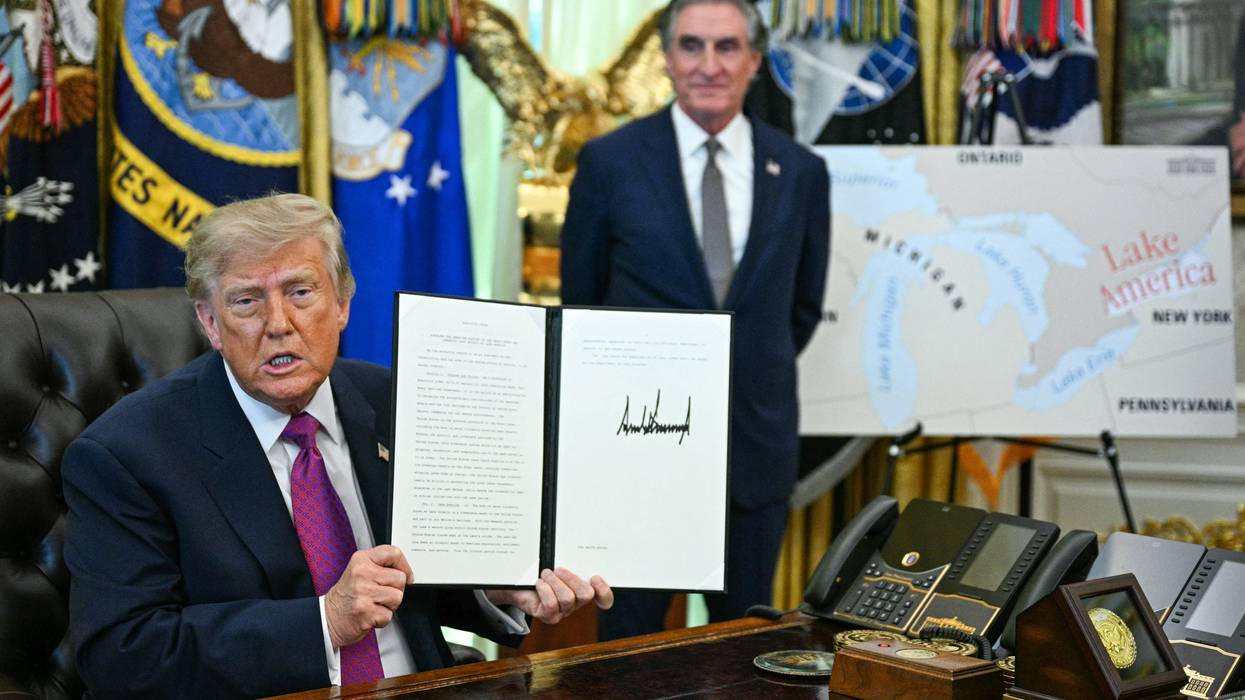
'We'd Really Prefer Affordable Healthcare': Trump 'Lake America' Order Ridiculed as Inane Distraction
"The American people don’t want to rename Lake Ontario Lake America," said Sen. Bernie Sanders. "They want affordable healthcare, childcare, housing, education, nutrition assistance—all of which you have massively cut."
Aug 27, 2026
The United States is locked in another Middle East quagmire, the American economy is shedding jobs, wage growth is decelerating, and the costs of essentials are rising, but President Donald Trump on Thursday took time to hold an Oval Office event for the signing of an executive order renaming Lake Ontario to "Lake America," as his damaging trade war with Canada intensifies.
"We'd really prefer affordable healthcare," the consumer advocacy group Public Citizen wrote in response to the president's order, which was widely derided as idiotic and pointless, particularly amid skyrocketing health insurance premiums, large-scale loss of food aid, and other crises sparked by Trump and his Republican allies in Congress.
"No, President Trump," Sen. Bernie Sanders (I-Vt.) wrote following the White House event. "The American people don’t want to rename Lake Ontario Lake America. They want affordable healthcare, childcare, housing, education, nutrition assistance—all of which you have massively cut in order to pay for your $1 trillion tax break to the top 1%."
Trump—who recently admitted that he doesn't "think about Americans’ financial situation" when considering the impacts of waging war on Iran—said Thursday that the "Lake America" name change was something he had been "thinking about for a long time, actually."
Trump: We have a gulf, a lake.. now all we need is an ocean. Maybe we’ll have to change the name of the Atlantic and the Pacific. pic.twitter.com/DadFb9xIv9
— Acyn (@Acyn) August 27, 2026
Trump's order instructs the US interior secretary to, within 30 days, "take all appropriate actions to rename as 'Lake America' the body of water currently named as Lake Ontario."
"We’re on it, Mr. President!" Interior Secretary Doug Burgum wrote on social media in response to Trump's directive.
After Trump floated the name change earlier this week, Canadian Industry Minister Mélanie Joly responded that "we'll always call it Lake Ontario."
"We're proud of the Great Lakes... and we'll stand up for what we have," said Joly. "I really think that, with all these shenanigans happening, we'll just be smart and we'll be strategic, and we'll fight back."
New York Gov. Kathy Hochul, who leads the only US state that touches Lake Ontario, said Wednesday that the Trump administration "should be focusing on ways to mend relationships with Canada so our farmers and our consumers and our families do not continue suffering from this inane war over tariffs."
"The fact that [the name change] is even part of the conversation shows how absurd the Trump administration is," said Hochul.
Keep ReadingShow Less
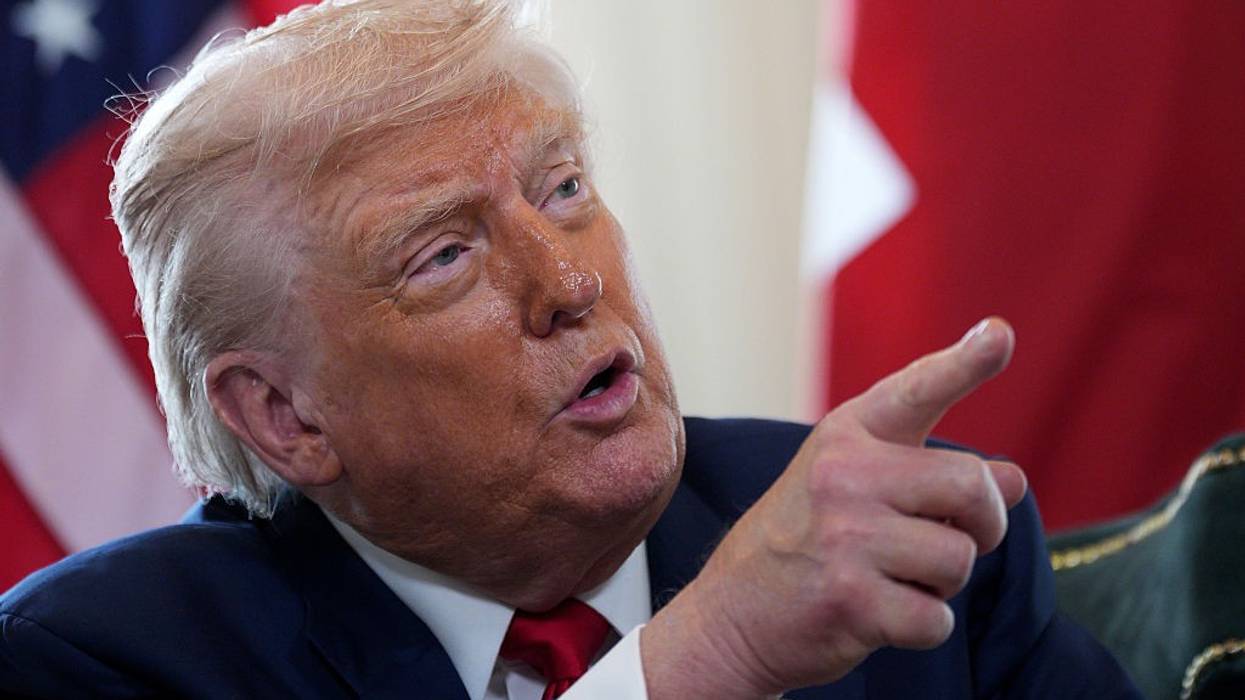
Big Oil Stocks Surged Due to Iran War—and New Filings Show How President Trump Cashed In
The president is making "significant profits on the global instability he's inciting," said one government ethics expert. "It's profoundly unethical."
Aug 27, 2026
In a mandated filing with the Office of Government Ethics released Thursday, President Donald Trump was found to have made more than 1,000 stock transactions in June, including thousands of dollars invested in energy companies that were reaping record profits from the war Trump started with Iran.
Trump submitted financial disclosure forms to the OGE covering the second quarter of 2026, during which the Iran War continued, was paused for a ceasefire, and restarted again.
CBS News pointed to a "notable large transaction" on April 7, the day Trump declared a ceasefire with Iran after having threatened to destroy the country's "entire civilization." His investment accounts sold between $500,000 and $1 million of ExxonMobil stock that same day.
The filings were submitted days after Democrats on the Joint Economic Committee (JEC) estimated that Trump's oil and gas stocks have soared in value since before he began attacking Iran in February—an act that raised oil prices due to Iran's retaliatory closing of the Strait of Hormuz. The holdings were estimated at $13 million to $46 million at the start of 2026 and $17 million to $61 million this month.
"President Trump saw his wealth go up by as much as $15.5 million just through stocks he owned in oil and gas companies at the end of 2025," said the JEC Democrats. "These companies’ profits and stock values are rising because Trump’s reckless war in Iran has caused gas and oil prices to skyrocket."
The JEC's estimates were based on his holdings in 2025 and did not account for the trades he continued to make as the war dragged on.
"Trump's war in Iran has inflicted higher energy and gas prices on the American people," said Citizens for Responsibility and Ethics in Washington (CREW). "Meanwhile, Trump's brokers have been trading oil and gas stocks for him, helping him profit on the global instability he's inciting. It's profoundly unethical."
The White House said the president does not make trades himself, but CREW president Donald Sherman told CBS News that Trump should not be making "significant profits on the global instability he's inciting."
"President Trump's war of choice in Iran has cost the American people in the form of higher energy and gas prices and higher shipping costs," Sherman said. "Meanwhile, Trump's brokers have been trading oil and gas stocks for him... It doesn't matter whether he's trading the stocks himself—the president has a duty to avoid conflicts of interest between his finances and what's best for the American people."
Unlike other US presidents, Trump has refused to place his assets in a blind trust, instead continuing to hold stocks that are visible to him in all 11 sectors involved in the stock market.
In June, the president's stock portfolio made a series of energy trades, including two sales and one purchase of ExxonMobil stock that were valued between $1,001 and $15,000. He also bought and sold Chevron stocks three times and made three sales of ConocoPhillips holdings.
Sen. Kirsten Gillibrand (D-NY) said that the new filings show "Trump's only focus is enriching himself at the expense of the American people."
Keep ReadingShow Less
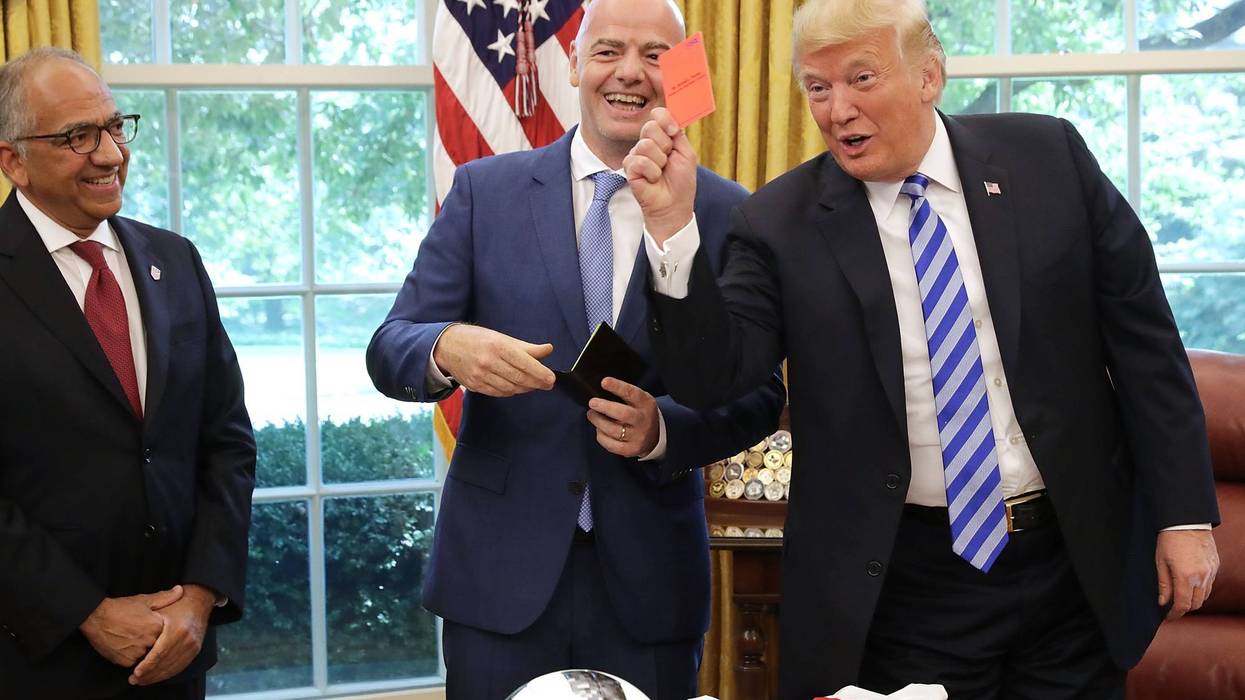
Trump-Loving FIFA Boss Faces Criminal Probe for Scheme to Sell World Cup Profits to Jared Kushner's Brother
Gianni Infantino has long been a target of criticism from football fans, in no small part due to his relationship with President Donald Trump.
Aug 27, 2026
Gianni Infantino, president of the Fédération Internationale de Football Association, is facing a criminal probe over his ill-fated scheme to sell profits generated by the World Cup to private equity investors.
According to a Thursday report in The Associated Press, attorneys representing the Union of European Football Associations (UEFA), the governing body of European football, filed discovery requests with two US courts seeking documents related to the scheme, which Infantino abandoned earlier this month after near-universal pushback from other football organizations.
In New York, UEFA asked the court to subpoena Thrive Capital Management, a venture capital firm founded by Josh Kushner, the younger brother of Jared Kushner, President Donald Trump's son-in-law.
"Thrive and Kushner were to be the anchor investors intending to pay FIFA $4.2 billion for a 20% stake in a subsidiary that would run the soccer body’s commercial events, including the World Cup," reported the AP.
In Florida, UEFA requested subpoenas for files held by FIFA Americas and FWC2026, two FIFA businesses based in the state.
UEFA attorneys revealed that they "are contemplating a Swiss criminal proceeding against Infantino and possibly other FIFA officials for criminal mismanagement" related to the failed sell-off scheme.
The attorneys also accused the FIFA boss of creating a vehicle so that he and his allies could "acquire a permanent stake in and otherwise profit from FIFA’s most valuable assets to the detriment of FIFA, its members, and other parties within the football family."
Infantino has long been a target of criticism from football fans, in no small part due to his relationship with Trump.
The FIFA boss was widely ridiculed last year when he awarded Trump the first-ever "FIFA Peace Prize" less than two months before the president would launch an illegal war against Iran.
And during this year's World Cup, Trump and his administration led a pressure campaign that successfully got FIFA to drop a one-game ban for Folarin Balogun, a top player on the US Men’s National Team, drawing widespread accusations of corruption and favoritism.
Keep ReadingShow Less
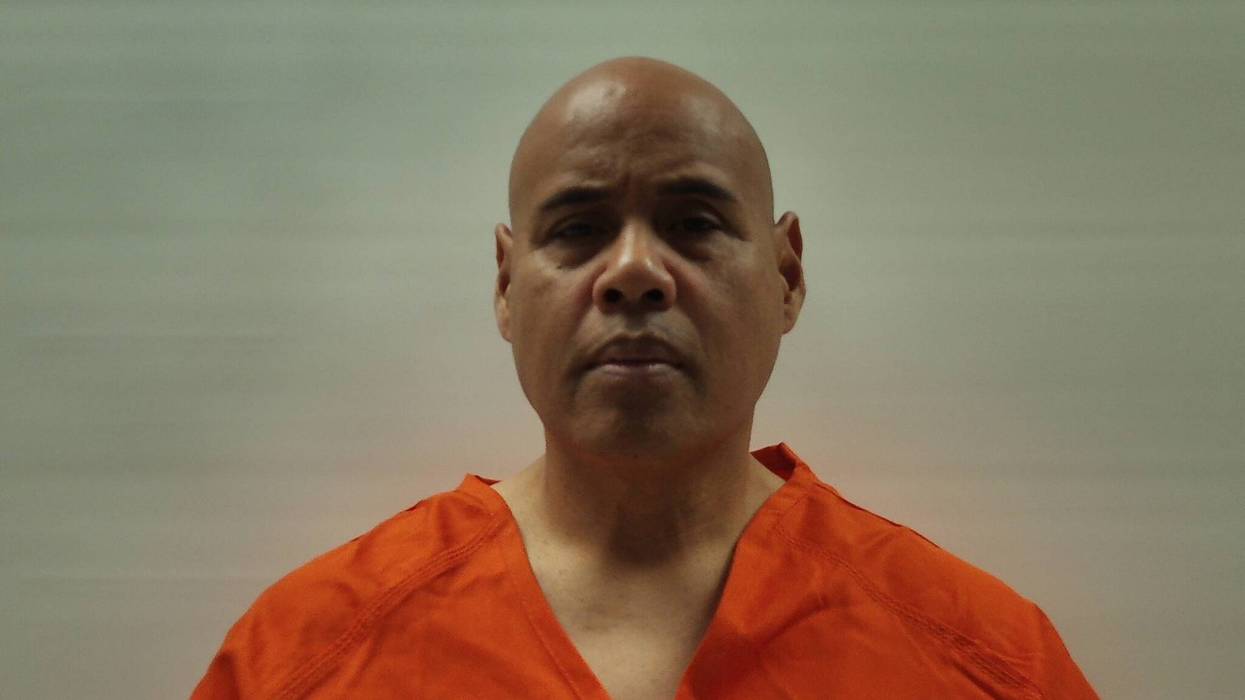
'Playing With Constitutional Fire': Texas Gov. Abbott Lets ICE Agent Wanted in Minnesota Walk Free
"By refusing to extradite Castro, Greg Abbott is turning Texas into a sanctuary state for violent criminals," said Minnesota Attorney General Keith Ellison.
Aug 27, 2026
A US Immigration and Customs Enforcement officer accused of shooting an unarmed man in Minneapolis and then lying about the incident walked free from a jail in Texas on Thursday as Gov. Greg Abbott refuses to honor Minnesota's extradition request.
Christian Castro, 52, was released from the Cameron County jail shortly after dawn, roughly three months after his May 29 arrest on a Minnesota warrant. Castro faces four felony counts of second-degree assault and one misdemeanor count of falsely reporting a crime.
Hennepin County, Minnesota prosecutors allege that Castro fired through the front door of a Minneapolis home, striking 24-year-old Venezuelan immigrant Julio César Sosa-Celis in the leg on January 14 during the Operation Metro Surge enforcement blitz in the Twin Cities Area, part of the Trump administration's deadly mass deportation effort.
Castro claimed afterward that Sosa-Celis and another man had attacked an ICE officer with a broom and snow shovel—an account investigators say was contradicted by surveillance footage, witness statements, and physical evidence. Criminal charges initially filed against Sosa-Celis were later dismissed.
On Wednesday, US District Judge Fernando Rodriguez Jr. of the Southern District of Texas—an appointee of President Donald Trump—denied Minnesota's request for a temporary restraining order that would have prevented Castro's release and declined to compel Abbott to sign the extradition warrant. The Republican governor has so far not yet formally responded Minnesota's extradition request.
Abbott has argued that Castro did not flee Minnesota to escape prosecution but was instead ordered back to Texas by federal authorities. And while Rodriguez acknowledged the possibility that Castro could flee to Mexico, the judge concluded that the court lacked any authority to force Abbott to act before he makes his decision on extradition.
The Texas governor has also attempted to condition resolution of the extradition request upon Minnesota officials' acknowledgment of the alleged fraud Trump used as a pretext for Operation Metro Surge.
Minnesota Attorney General Keith Ellison, a Democrat, denounced Castro's release in a social media post asserting that "Greg Abbott has a black-letter legal and constitutional duty to sign the rendition warrant to return fugitive Christian Castro to Minnesota—full stop."
"By refusing to extradite Castro, Greg Abbott is turning Texas into a sanctuary state for violent criminals," Ellison added. "Regardless of today’s ruling, I will keep fighting so that Agent Castro will face justice in Minnesota."
Abbott retorted: "You guys are such bad lawyers. You showed up unprepared, uninformed, and unpersuasive. You don't know the law, and it showed."
Minnesota "is the literal definition of a sanctuary state because you refuse to assist in enforcing immigration laws," the Texas governor said. Minnesota does not have a statewide sanctuary law.
"I'll put Minneapolis at the top of the list for future bus drop-offs if we ever have a president like Joe Biden again," Abbott added, referring to his deadly campaign of busing migrants to Democrat-led sanctuary cities and even the home of former Vice President Kamala Harris at a cost to Texas taxpayers of over $221 million.
Anders Folk, a former federal prosecutor now running for Hennepin County attorney, agreed with Ellison, writing on X that "Gov. Abbott is playing political games."
"Christian Castro should be extradited to Minnesota to stand trial," he added. "Accountability requires nothing less. This ruling essentially makes Texas a sanctuary state for ICE agents accused of violating state law."
Keep ReadingShow Less
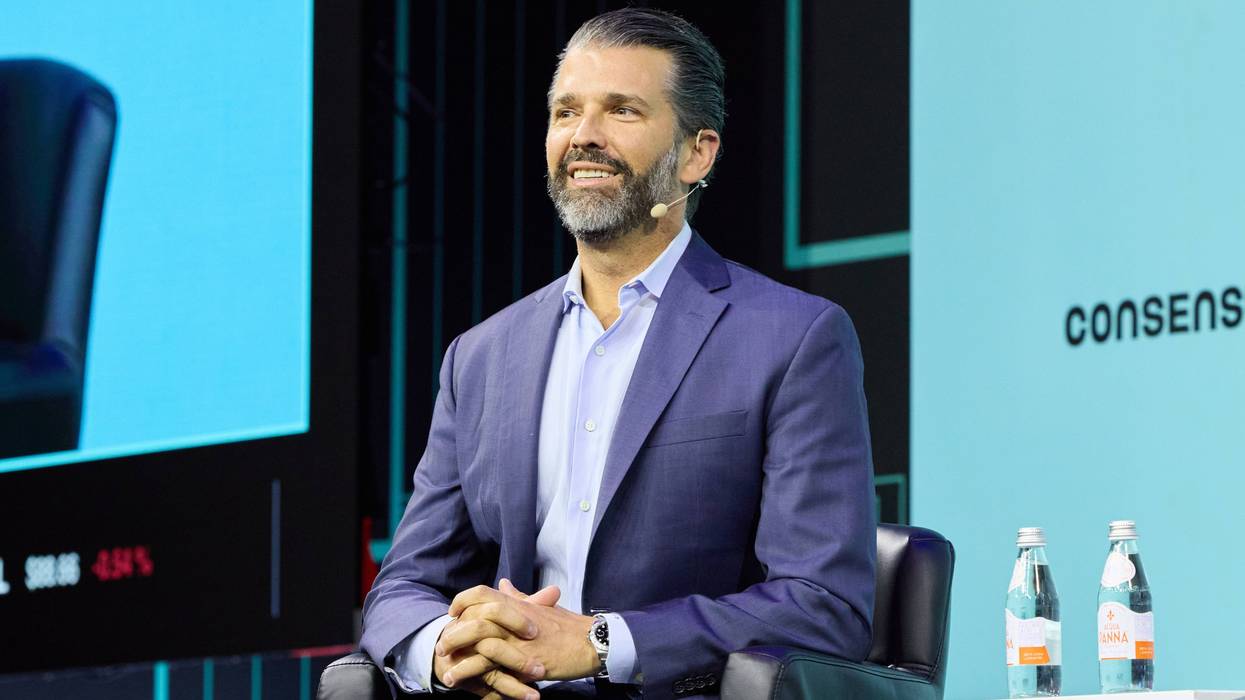
Suspecting 'Insider' Dealings and 'Corruption,' Raskin Probes Donald Trump Jr.'s Venture Capital Firm
After the president's son came on board, "a trio of businessmen with heretofore lackluster records in the market was suddenly running the hottest firm in the United States."
Aug 27, 2026
Just two years ago, 1789 Capital Management "was a struggling venture capital firm that earned consistently disappointing results by serially investing in total market flops," but after recruiting President Donald Trump's eldest son in the wake of the 2024 US election, it "suddenly had the Midas touch," a key congressional Democrat highlighted this week, launching an investigation.
House Judiciary Committee Ranking Member Jamie Raskin (D-Md.)—a lawyer who managed the historic second impeachment of the president—revealed Thursday that the previous day he had sent a letter demanding answers from Donald Trump Jr., who is a partner at 1789 Capital, as well as company president Omeed Malik and chief investment officer Christopher Buskirk.
After the president's son joined the firm, just four days post-election, Raskin wrote, "you became the overnight darling of the venture capital world, rocketing from $150 million in assets under management to an astonishing $3 billion. A trio of businessmen with heretofore lackluster records in the market was suddenly running the hottest firm in the United States, picking out with almost clairvoyant accuracy winner after winner by investing in companies that would soon come to win hugely lucrative federal government contracts and grants and favorable regulatory actions."
"How did this miraculous transformation in the fortunes of your LLC come about?" he wondered. "Was it indeed magic? Or was it rank corruption, a toxic blend of trading on insider knowledge, and the use of insider political influence to steer major federal contracts and other financial benefits to Donald Trump Jr.'s new favorite businesses?"
"Based on his own personal business resume, Don Jr. may have been an unlikely choice to originate investments for an upstart venture capital company. His rare solo ventures—outside the paternal eye of the Trump Organization—have been well-documented flops, including investing in dry oil wells, hydroponic lettuce farms, and an African mining company," Raskin noted. "But despite his proven record of business investment failure, Don Jr. has become the lucky charm for 1789 Capital."
Raskin's letter provides a series of examples in which 1789 Capital has identified "companies that are about to receive massive influxes of cash from the Trump administration or to benefit from significant changes in federal policies and regulations."
"On the day Donald Trump was elected, Vulcan Elements was a small startup with no active manufacturing facilities and no history of fulfilling government contracts," he detailed. "Then 1789 Capital invested several million dollars. Soon after this investment, Vulcan Elements boasted that it had been raking in federal dollars throughout its capital raise, securing nine different government contracts in the past eight months."
"While the list of 1789 Capital portfolio companies that have benefited from favorable administration decisions is too long to explore in full here, three additional companies with strikingly similar success stand out," he wrote.
There's Anduril Industries, "an American technology company founded in 2017 by Palmer Luckey, a prominent Trump donor who has been dubbed 'the godfather of Republican fundraising on the West Coast,'" which got an enormous $22 billion contract that was previously assigned to Microsoft just weeks after Trump's inauguration, the letter notes. Then, it was reported that the VC firm was acquiring a stake in the company, which in March won another $20 billion contract from the US Army.
The letter also points out Juul, which "notoriously ushered in an epidemic of youth vaping in the United States by aggressively marketing its e-cigarettes to young people" and "had suffered a series of setbacks that nearly bankrupted the company" before Trump's return to office. Just months after 1789 Capital quietly acquired a $5 million stake in the company, the Food and Drug Administration ditched previous efforts to ban its products and allowed the marketing of five products.
Raskin's final example is the online prediction market Polymarket—which, at the time Trump was reelected, was banned from operating in the country by the Commodity Futures Trading Commission and faced a federal investigation. Last summer, the Department of Justice closed that probe and the CFTC signed off on an acquisition that allowed the company to enter the US market. The letter notes that "a few short weeks later, it was revealed that 1789 Capital had already acquired a sizable stake in Polymarket."
"Alas, it is now impossible to believe that your firm's astonishing growth and success are due to anything other than insider political influence and thoroughgoing corruption," the congressman wrote to the trio. "Indeed, President Trump recently admitted that his oldest sons have 'inside information' with 'almost anything they do.'"
In a statement to MS NOW, which had early access to Raskin's letter, counsel AJ Merton dismissed the accusations as "unsubstantiated talking points," adding that "repackaging press clippings on congressional letterhead does not turn news headlines into evidence, and that practice is a hallmark of partisan stunts and politically motivated harassment, not oversight."
However, Raskin still wants answers from 1789 Capital by September 9. He's demanding a list of investments, communications with federal officials or contractors, records on how government policies may impact the firm, documents on the hiring of Trump's son, and more. He also told the firm to preserve all communications between its employees and the administration.
Keep ReadingShow Less
See More
Most Popular