SUBSCRIBE TO OUR FREE NEWSLETTER
Daily news & progressive opinion—funded by the people, not the corporations—delivered straight to your inbox.
5
#000000
#FFFFFF
To donate by check, phone, or other method, see our More Ways to Give page.
Daily news & progressive opinion—funded by the people, not the corporations—delivered straight to your inbox.
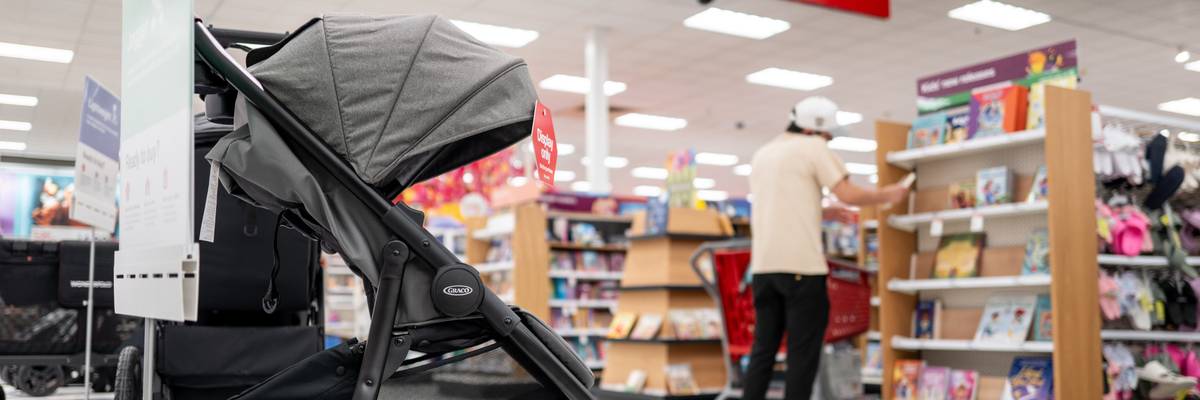
A stroller is displayed for sale at a Target store on June 16, 2025 in Austin, Texas. The cost of various baby accessories rose 24% in the spring due to President Donald Trump's tariff policies.
"The president’s tax on American families is simply making things more expensive.”
As President Donald Trump persistently claims the economy is working for Americans, Democrats in the US House and Senate on Thursday released an analysis that puts a number to the recent polling that's found many Americans feel squeezed by higher prices: $1,200.
That's how much the average household in the US has paid in tariff costs over the past 10 months, according to the Joint Economic Committee—and costs are expected to continue climbing.
The Democrats, including Ranking Member Sen. Maggie Hassan (D-NH), Sen. Martin Heinrich (D-NM), and Rep. Sean Casten (D-Ill.), analyzed official US Treasury Department data on the amount of tariff revenue collected since the beginning of Trump's second term as he's imposed tariffs across the European Union and on dozens of other countries—some as high as 50%.
The White House has insisted the tariffs on imports will "pry open foreign markets" and force exporters overseas to pay more, resulting in lower prices for US consumers.
But the JEC combined the Treasury data with independent estimates of the percent of each tariff dollar that is paid by consumers, as companies pass along their higher import prices to them.
At first, US families were paying an average of less than $60 in tariff costs when Trump began the trade war in February and March.
But that amount shot up to more than $80 per family in April when he expanded the tariffs, and monthly costs have steadily increased since then.
In November, a total of $24.04 billion was paid by consumers in tariff costs—or $181.29 per family.
“While President Trump promised that he would lower costs, this report shows that his tariffs have done nothing but drive prices even higher for families."
From February-November, families have paid an average of $1,197.50 each, according to the JEC analysis.
“While President Trump promised that he would lower costs, this report shows that his tariffs have done nothing but drive prices even higher for families,” said Hassan.
If costs remain as high as they were over the next 12 months, families are projected to pay $2,100 per year as a result of Trump's tariffs.
The analysis comes a week after Republicans on a House Ways and Means subcommittee attempted to avoid the topic of tariffs—which have a 61% disapproval rating among the public, according to Pew Research—at a hearing on global competitiveness for workers and businesses.
"Rep. Jimmy Gomez [D-Calif.] read several quotes from [former Rep. Kevin] Brady [R-Texas] during his time in Congress stating that tariffs are taxes that impede economic growth. Brady, who chaired the Ways and Means Committee and drafted Trump’s first tax law in 2017 (and now works as a lobbyist), had no desire to discuss those quotes or the topic of tariffs," wrote Steve Warmhoff, federal policy director at the Institute on Taxation and Economic Policy. "Nor did Republicans address the point made by the Democrats’ witness, Kimberly Clausing, when she explained that Trump’s tariffs are the biggest tax increase on Americans (measured as a share of the economy) since 1982."
Clausing estimated that the tariffs will amount "to an annual tax increase of about $1,700 for an average household" if they stay at current levels, while Trump's decision to lower tariffs on goods such as meat, vegetables, fruits, and coffee last month amounted to just $35 in annual savings per household.
The JEC has also recently released analyses of annual household electricity costs under Trump, which were projected to go up by $100 for the average family despite the president's campaign pledge that "your energy bill within 12 months will be cut in half."
Last month the panel found that the average household is spending approximately $700 more per month on essentials like food, shelter, and energy since Trump took office.
“At a time when both parties should be working together to lower costs," said Hassan on Thursday, "the president’s tax on American families is simply making things more expensive.”
Dear Common Dreams reader, It’s been nearly 30 years since I co-founded Common Dreams with my late wife, Lina Newhouser. We had the radical notion that journalism should serve the public good, not corporate profits. It was clear to us from the outset what it would take to build such a project. No paid advertisements. No corporate sponsors. No millionaire publisher telling us what to think or do. Many people said we wouldn't last a year, but we proved those doubters wrong. Together with a tremendous team of journalists and dedicated staff, we built an independent media outlet free from the constraints of profits and corporate control. Our mission has always been simple: To inform. To inspire. To ignite change for the common good. Building Common Dreams was not easy. Our survival was never guaranteed. When you take on the most powerful forces—Wall Street greed, fossil fuel industry destruction, Big Tech lobbyists, and uber-rich oligarchs who have spent billions upon billions rigging the economy and democracy in their favor—the only bulwark you have is supporters who believe in your work. But here’s the urgent message from me today. It's never been this bad out there. And it's never been this hard to keep us going. At the very moment Common Dreams is most needed, the threats we face are intensifying. We need your support now more than ever. We don't accept corporate advertising and never will. We don't have a paywall because we don't think people should be blocked from critical news based on their ability to pay. Everything we do is funded by the donations of readers like you. When everyone does the little they can afford, we are strong. But if that support retreats or dries up, so do we. Will you donate now to make sure Common Dreams not only survives but thrives? —Craig Brown, Co-founder |
As President Donald Trump persistently claims the economy is working for Americans, Democrats in the US House and Senate on Thursday released an analysis that puts a number to the recent polling that's found many Americans feel squeezed by higher prices: $1,200.
That's how much the average household in the US has paid in tariff costs over the past 10 months, according to the Joint Economic Committee—and costs are expected to continue climbing.
The Democrats, including Ranking Member Sen. Maggie Hassan (D-NH), Sen. Martin Heinrich (D-NM), and Rep. Sean Casten (D-Ill.), analyzed official US Treasury Department data on the amount of tariff revenue collected since the beginning of Trump's second term as he's imposed tariffs across the European Union and on dozens of other countries—some as high as 50%.
The White House has insisted the tariffs on imports will "pry open foreign markets" and force exporters overseas to pay more, resulting in lower prices for US consumers.
But the JEC combined the Treasury data with independent estimates of the percent of each tariff dollar that is paid by consumers, as companies pass along their higher import prices to them.
At first, US families were paying an average of less than $60 in tariff costs when Trump began the trade war in February and March.
But that amount shot up to more than $80 per family in April when he expanded the tariffs, and monthly costs have steadily increased since then.
In November, a total of $24.04 billion was paid by consumers in tariff costs—or $181.29 per family.
“While President Trump promised that he would lower costs, this report shows that his tariffs have done nothing but drive prices even higher for families."
From February-November, families have paid an average of $1,197.50 each, according to the JEC analysis.
“While President Trump promised that he would lower costs, this report shows that his tariffs have done nothing but drive prices even higher for families,” said Hassan.
If costs remain as high as they were over the next 12 months, families are projected to pay $2,100 per year as a result of Trump's tariffs.
The analysis comes a week after Republicans on a House Ways and Means subcommittee attempted to avoid the topic of tariffs—which have a 61% disapproval rating among the public, according to Pew Research—at a hearing on global competitiveness for workers and businesses.
"Rep. Jimmy Gomez [D-Calif.] read several quotes from [former Rep. Kevin] Brady [R-Texas] during his time in Congress stating that tariffs are taxes that impede economic growth. Brady, who chaired the Ways and Means Committee and drafted Trump’s first tax law in 2017 (and now works as a lobbyist), had no desire to discuss those quotes or the topic of tariffs," wrote Steve Warmhoff, federal policy director at the Institute on Taxation and Economic Policy. "Nor did Republicans address the point made by the Democrats’ witness, Kimberly Clausing, when she explained that Trump’s tariffs are the biggest tax increase on Americans (measured as a share of the economy) since 1982."
Clausing estimated that the tariffs will amount "to an annual tax increase of about $1,700 for an average household" if they stay at current levels, while Trump's decision to lower tariffs on goods such as meat, vegetables, fruits, and coffee last month amounted to just $35 in annual savings per household.
The JEC has also recently released analyses of annual household electricity costs under Trump, which were projected to go up by $100 for the average family despite the president's campaign pledge that "your energy bill within 12 months will be cut in half."
Last month the panel found that the average household is spending approximately $700 more per month on essentials like food, shelter, and energy since Trump took office.
“At a time when both parties should be working together to lower costs," said Hassan on Thursday, "the president’s tax on American families is simply making things more expensive.”
As President Donald Trump persistently claims the economy is working for Americans, Democrats in the US House and Senate on Thursday released an analysis that puts a number to the recent polling that's found many Americans feel squeezed by higher prices: $1,200.
That's how much the average household in the US has paid in tariff costs over the past 10 months, according to the Joint Economic Committee—and costs are expected to continue climbing.
The Democrats, including Ranking Member Sen. Maggie Hassan (D-NH), Sen. Martin Heinrich (D-NM), and Rep. Sean Casten (D-Ill.), analyzed official US Treasury Department data on the amount of tariff revenue collected since the beginning of Trump's second term as he's imposed tariffs across the European Union and on dozens of other countries—some as high as 50%.
The White House has insisted the tariffs on imports will "pry open foreign markets" and force exporters overseas to pay more, resulting in lower prices for US consumers.
But the JEC combined the Treasury data with independent estimates of the percent of each tariff dollar that is paid by consumers, as companies pass along their higher import prices to them.
At first, US families were paying an average of less than $60 in tariff costs when Trump began the trade war in February and March.
But that amount shot up to more than $80 per family in April when he expanded the tariffs, and monthly costs have steadily increased since then.
In November, a total of $24.04 billion was paid by consumers in tariff costs—or $181.29 per family.
“While President Trump promised that he would lower costs, this report shows that his tariffs have done nothing but drive prices even higher for families."
From February-November, families have paid an average of $1,197.50 each, according to the JEC analysis.
“While President Trump promised that he would lower costs, this report shows that his tariffs have done nothing but drive prices even higher for families,” said Hassan.
If costs remain as high as they were over the next 12 months, families are projected to pay $2,100 per year as a result of Trump's tariffs.
The analysis comes a week after Republicans on a House Ways and Means subcommittee attempted to avoid the topic of tariffs—which have a 61% disapproval rating among the public, according to Pew Research—at a hearing on global competitiveness for workers and businesses.
"Rep. Jimmy Gomez [D-Calif.] read several quotes from [former Rep. Kevin] Brady [R-Texas] during his time in Congress stating that tariffs are taxes that impede economic growth. Brady, who chaired the Ways and Means Committee and drafted Trump’s first tax law in 2017 (and now works as a lobbyist), had no desire to discuss those quotes or the topic of tariffs," wrote Steve Warmhoff, federal policy director at the Institute on Taxation and Economic Policy. "Nor did Republicans address the point made by the Democrats’ witness, Kimberly Clausing, when she explained that Trump’s tariffs are the biggest tax increase on Americans (measured as a share of the economy) since 1982."
Clausing estimated that the tariffs will amount "to an annual tax increase of about $1,700 for an average household" if they stay at current levels, while Trump's decision to lower tariffs on goods such as meat, vegetables, fruits, and coffee last month amounted to just $35 in annual savings per household.
The JEC has also recently released analyses of annual household electricity costs under Trump, which were projected to go up by $100 for the average family despite the president's campaign pledge that "your energy bill within 12 months will be cut in half."
Last month the panel found that the average household is spending approximately $700 more per month on essentials like food, shelter, and energy since Trump took office.
“At a time when both parties should be working together to lower costs," said Hassan on Thursday, "the president’s tax on American families is simply making things more expensive.”