SUBSCRIBE TO OUR FREE NEWSLETTER
Daily news & progressive opinion—funded by the people, not the corporations—delivered straight to your inbox.
5
#000000
#FFFFFF
To donate by check, phone, or other method, see our More Ways to Give page.
Daily news & progressive opinion—funded by the people, not the corporations—delivered straight to your inbox.
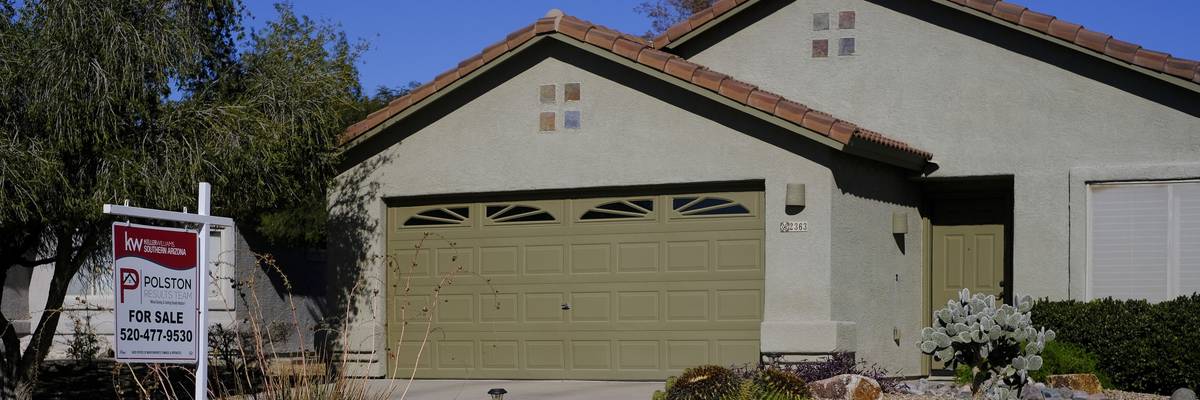
A ''for sale'' sign is seen outside a residential home in Oro Valley, Arizona, on December 12, 2025.
"Buying a home has never been less affordable. Trump has made it worse."
With mortgage rates climbing and the median income a family needs to afford a home ballooning by nearly 50% in just the past five years, the advocacy group Groundwork Collaborative on Wednesday called on the federal government to take targeted, concrete actions to reverse the affordability crisis that President Donald Trump's policies are only making worse.
Groundwork's senior adviser for economic policy, Emily DiVito, joined former deputy director of the National Economic Council Bharat Ramamurti to release a report titled Unraveling the Mortgage Maze: How Government Can Make Homeownership More Affordable for American Families. The paper emphasizes that "at a time when American families are struggling with a severe housing affordability crisis, relief for overburdened consumers requires the federal government to reshape and strengthen its role in the mortgage financing system."
Because interest rates have been elevated since 2022, homeowners are "locked in" to their existing mortgages, with many young families feeling stuck in their "starter homes" even as they outgrow them. In addition to the impact on families, the "lock-in effect" is suppressing turnover, reducing supply, and contributing to more expensive houses.
Those consequences "ripple across generations and regions," wrote DiVito and Ramamurti in the report. "Today, younger families disproportionately confront a market in which suitable homes are scarce, mobility is costly, and the financial advantages once associated with homeownership are increasingly out of reach."
While the federal government intervened during the Great Depression and established new housing agencies and mortgage financing programs, homebuyers now have to contend with a "hybrid" system, with the government providing liquidity for financial firms and consumers relying on private loan services, lenders, and brokers to find an affordable mortgage and navigate the purchasing process.
Reducing home prices was part of the platform Trump campaigned on, but as with his tariffs' impact on grocery prices and the effect on electricity bills that his aggressive push for artificial intelligence expansion is having, the president's proposals would make the housing affordability crisis worse, DiVito and Ramamurti explained.
Trump and his Federal Housing Finance Agency (FHFA) director, Bill Pulte, "impulsively introduced a 50-year mortgage proposal in early November 2025 that would lower a family’s monthly payment on a median-priced home by less than $120, while saddling homeowners with higher interest rates and a slower path to equity," reads the report.
The administration is also working to privatize government-sponsored entities, which would raise mortgage rates and restrict credit "while generating huge windfalls for hedge funds and billionaires."
No other detailed proposals have been released by the White House for reducing costs for homebuyers, according to DiVito and Ramamurti.
The report offers four proposals that would provide families with "material relief":
Without congressional action, says the report, the Trump administration could lower the rate at which the mortgage insurance premium (MIP) is charged to borrowers—a step the federal government has taken before, as recently as 2023 when it saved an average of $453 annually for 1.1 million borrowers.
The government could also shorten the lifetime of MIP payments by requiring automatic termination earlier than currently required:
If a borrower puts down less than 10% on government-backed loans, the MIP will be assessed for the lifetime of the loan or until the borrower can refinance. If a borrower puts down more than 10%, MIP payments are automatically canceled after 11 years. [Private mortgage insurance] on the other hand, is supposed to be canceled automatically at 78% [loan-to-value], and borrowers can request early cancellation at 80%. However, many borrowers report that servicers fail to terminate their payments when they hit the threshold. Policymakers can amend Section 4902 of the Homeowners Protection Act (12 U.S. Code § 4902) to enable earlier cancellation of PMI, which is enforced by the [Consumer Financial Protection Bureau].
Policymakers can also expand offerings for mobile mortgages, "an underutilized home loan product that could deliver thousands in cost savings to homeowners each year." Allowing buyers to assume the existing rate of a seller or bring their current rate with them to their new home would alleviate the lock-in effect, "freeing up existing housing supply and making it easier for families to move affordably and when they want—no matter the interest rate environment."
Mobilizing a mobile mortgage could save a family up to $5,078 annually, and with Baby Boomers owning 28% of the nation's largest homes, "more affordable and flexible mortgage financing could free up millions of existing homes for younger buyers or large families," wrote DiVito and Ramamurti.
Government-provided direct loans at the cost of borrowing is named in the report as "the most direct role" the Trump administration could take in the mortgage market.
"Doing so would extend the benefits of the government’s cheaper financing directly to consumers," reads the report. "To ensure that the program targets the low- and middle-income homeowners who are most likely to need and benefit from cheaper financing, awards could be pegged to the median purchase price of single-family homes in any given area. Income and credit thresholds could also be established, as they already are for government-backed mortgages, to allow for more efficient underwriting."
Policymakers could also create a centralized online platform listing all mortgage lenders' terms, fees, eligibility requirements, and customer service information, bringing "closely held industry information out of the shadows, [and] equipping consumers with the knowledge necessary to navigate the mortgage market successfully."
The CFPB found that 30% of borrowers do not comparison-shop for their mortgage and more than 75% apply for a mortgage at just one lender—costing the average homebuyer about $300 per year.
Making a centralized database available to borrowers would stop lenders from colluding on mortgage rates as Wells Fargo, Rocket Mortgage, and JPMorgan Chase have been accused of doing in a recent class action lawsuit.
"By leveraging the government’s unique financing power and regulatory authority to craft a mortgage system that is simpler, less costly, and more responsive to households’ needs," wrote DiVito and Ramamurti, "millions of families who feel buying a home is out of reach may finally be able to achieve and maintain homeownership."
Dear Common Dreams reader, It’s been nearly 30 years since I co-founded Common Dreams with my late wife, Lina Newhouser. We had the radical notion that journalism should serve the public good, not corporate profits. It was clear to us from the outset what it would take to build such a project. No paid advertisements. No corporate sponsors. No millionaire publisher telling us what to think or do. Many people said we wouldn't last a year, but we proved those doubters wrong. Together with a tremendous team of journalists and dedicated staff, we built an independent media outlet free from the constraints of profits and corporate control. Our mission has always been simple: To inform. To inspire. To ignite change for the common good. Building Common Dreams was not easy. Our survival was never guaranteed. When you take on the most powerful forces—Wall Street greed, fossil fuel industry destruction, Big Tech lobbyists, and uber-rich oligarchs who have spent billions upon billions rigging the economy and democracy in their favor—the only bulwark you have is supporters who believe in your work. But here’s the urgent message from me today. It's never been this bad out there. And it's never been this hard to keep us going. At the very moment Common Dreams is most needed, the threats we face are intensifying. We need your support now more than ever. We don't accept corporate advertising and never will. We don't have a paywall because we don't think people should be blocked from critical news based on their ability to pay. Everything we do is funded by the donations of readers like you. When everyone does the little they can afford, we are strong. But if that support retreats or dries up, so do we. Will you donate now to make sure Common Dreams not only survives but thrives? —Craig Brown, Co-founder |
With mortgage rates climbing and the median income a family needs to afford a home ballooning by nearly 50% in just the past five years, the advocacy group Groundwork Collaborative on Wednesday called on the federal government to take targeted, concrete actions to reverse the affordability crisis that President Donald Trump's policies are only making worse.
Groundwork's senior adviser for economic policy, Emily DiVito, joined former deputy director of the National Economic Council Bharat Ramamurti to release a report titled Unraveling the Mortgage Maze: How Government Can Make Homeownership More Affordable for American Families. The paper emphasizes that "at a time when American families are struggling with a severe housing affordability crisis, relief for overburdened consumers requires the federal government to reshape and strengthen its role in the mortgage financing system."
Because interest rates have been elevated since 2022, homeowners are "locked in" to their existing mortgages, with many young families feeling stuck in their "starter homes" even as they outgrow them. In addition to the impact on families, the "lock-in effect" is suppressing turnover, reducing supply, and contributing to more expensive houses.
Those consequences "ripple across generations and regions," wrote DiVito and Ramamurti in the report. "Today, younger families disproportionately confront a market in which suitable homes are scarce, mobility is costly, and the financial advantages once associated with homeownership are increasingly out of reach."
While the federal government intervened during the Great Depression and established new housing agencies and mortgage financing programs, homebuyers now have to contend with a "hybrid" system, with the government providing liquidity for financial firms and consumers relying on private loan services, lenders, and brokers to find an affordable mortgage and navigate the purchasing process.
Reducing home prices was part of the platform Trump campaigned on, but as with his tariffs' impact on grocery prices and the effect on electricity bills that his aggressive push for artificial intelligence expansion is having, the president's proposals would make the housing affordability crisis worse, DiVito and Ramamurti explained.
Trump and his Federal Housing Finance Agency (FHFA) director, Bill Pulte, "impulsively introduced a 50-year mortgage proposal in early November 2025 that would lower a family’s monthly payment on a median-priced home by less than $120, while saddling homeowners with higher interest rates and a slower path to equity," reads the report.
The administration is also working to privatize government-sponsored entities, which would raise mortgage rates and restrict credit "while generating huge windfalls for hedge funds and billionaires."
No other detailed proposals have been released by the White House for reducing costs for homebuyers, according to DiVito and Ramamurti.
The report offers four proposals that would provide families with "material relief":
Without congressional action, says the report, the Trump administration could lower the rate at which the mortgage insurance premium (MIP) is charged to borrowers—a step the federal government has taken before, as recently as 2023 when it saved an average of $453 annually for 1.1 million borrowers.
The government could also shorten the lifetime of MIP payments by requiring automatic termination earlier than currently required:
If a borrower puts down less than 10% on government-backed loans, the MIP will be assessed for the lifetime of the loan or until the borrower can refinance. If a borrower puts down more than 10%, MIP payments are automatically canceled after 11 years. [Private mortgage insurance] on the other hand, is supposed to be canceled automatically at 78% [loan-to-value], and borrowers can request early cancellation at 80%. However, many borrowers report that servicers fail to terminate their payments when they hit the threshold. Policymakers can amend Section 4902 of the Homeowners Protection Act (12 U.S. Code § 4902) to enable earlier cancellation of PMI, which is enforced by the [Consumer Financial Protection Bureau].
Policymakers can also expand offerings for mobile mortgages, "an underutilized home loan product that could deliver thousands in cost savings to homeowners each year." Allowing buyers to assume the existing rate of a seller or bring their current rate with them to their new home would alleviate the lock-in effect, "freeing up existing housing supply and making it easier for families to move affordably and when they want—no matter the interest rate environment."
Mobilizing a mobile mortgage could save a family up to $5,078 annually, and with Baby Boomers owning 28% of the nation's largest homes, "more affordable and flexible mortgage financing could free up millions of existing homes for younger buyers or large families," wrote DiVito and Ramamurti.
Government-provided direct loans at the cost of borrowing is named in the report as "the most direct role" the Trump administration could take in the mortgage market.
"Doing so would extend the benefits of the government’s cheaper financing directly to consumers," reads the report. "To ensure that the program targets the low- and middle-income homeowners who are most likely to need and benefit from cheaper financing, awards could be pegged to the median purchase price of single-family homes in any given area. Income and credit thresholds could also be established, as they already are for government-backed mortgages, to allow for more efficient underwriting."
Policymakers could also create a centralized online platform listing all mortgage lenders' terms, fees, eligibility requirements, and customer service information, bringing "closely held industry information out of the shadows, [and] equipping consumers with the knowledge necessary to navigate the mortgage market successfully."
The CFPB found that 30% of borrowers do not comparison-shop for their mortgage and more than 75% apply for a mortgage at just one lender—costing the average homebuyer about $300 per year.
Making a centralized database available to borrowers would stop lenders from colluding on mortgage rates as Wells Fargo, Rocket Mortgage, and JPMorgan Chase have been accused of doing in a recent class action lawsuit.
"By leveraging the government’s unique financing power and regulatory authority to craft a mortgage system that is simpler, less costly, and more responsive to households’ needs," wrote DiVito and Ramamurti, "millions of families who feel buying a home is out of reach may finally be able to achieve and maintain homeownership."
With mortgage rates climbing and the median income a family needs to afford a home ballooning by nearly 50% in just the past five years, the advocacy group Groundwork Collaborative on Wednesday called on the federal government to take targeted, concrete actions to reverse the affordability crisis that President Donald Trump's policies are only making worse.
Groundwork's senior adviser for economic policy, Emily DiVito, joined former deputy director of the National Economic Council Bharat Ramamurti to release a report titled Unraveling the Mortgage Maze: How Government Can Make Homeownership More Affordable for American Families. The paper emphasizes that "at a time when American families are struggling with a severe housing affordability crisis, relief for overburdened consumers requires the federal government to reshape and strengthen its role in the mortgage financing system."
Because interest rates have been elevated since 2022, homeowners are "locked in" to their existing mortgages, with many young families feeling stuck in their "starter homes" even as they outgrow them. In addition to the impact on families, the "lock-in effect" is suppressing turnover, reducing supply, and contributing to more expensive houses.
Those consequences "ripple across generations and regions," wrote DiVito and Ramamurti in the report. "Today, younger families disproportionately confront a market in which suitable homes are scarce, mobility is costly, and the financial advantages once associated with homeownership are increasingly out of reach."
While the federal government intervened during the Great Depression and established new housing agencies and mortgage financing programs, homebuyers now have to contend with a "hybrid" system, with the government providing liquidity for financial firms and consumers relying on private loan services, lenders, and brokers to find an affordable mortgage and navigate the purchasing process.
Reducing home prices was part of the platform Trump campaigned on, but as with his tariffs' impact on grocery prices and the effect on electricity bills that his aggressive push for artificial intelligence expansion is having, the president's proposals would make the housing affordability crisis worse, DiVito and Ramamurti explained.
Trump and his Federal Housing Finance Agency (FHFA) director, Bill Pulte, "impulsively introduced a 50-year mortgage proposal in early November 2025 that would lower a family’s monthly payment on a median-priced home by less than $120, while saddling homeowners with higher interest rates and a slower path to equity," reads the report.
The administration is also working to privatize government-sponsored entities, which would raise mortgage rates and restrict credit "while generating huge windfalls for hedge funds and billionaires."
No other detailed proposals have been released by the White House for reducing costs for homebuyers, according to DiVito and Ramamurti.
The report offers four proposals that would provide families with "material relief":
Without congressional action, says the report, the Trump administration could lower the rate at which the mortgage insurance premium (MIP) is charged to borrowers—a step the federal government has taken before, as recently as 2023 when it saved an average of $453 annually for 1.1 million borrowers.
The government could also shorten the lifetime of MIP payments by requiring automatic termination earlier than currently required:
If a borrower puts down less than 10% on government-backed loans, the MIP will be assessed for the lifetime of the loan or until the borrower can refinance. If a borrower puts down more than 10%, MIP payments are automatically canceled after 11 years. [Private mortgage insurance] on the other hand, is supposed to be canceled automatically at 78% [loan-to-value], and borrowers can request early cancellation at 80%. However, many borrowers report that servicers fail to terminate their payments when they hit the threshold. Policymakers can amend Section 4902 of the Homeowners Protection Act (12 U.S. Code § 4902) to enable earlier cancellation of PMI, which is enforced by the [Consumer Financial Protection Bureau].
Policymakers can also expand offerings for mobile mortgages, "an underutilized home loan product that could deliver thousands in cost savings to homeowners each year." Allowing buyers to assume the existing rate of a seller or bring their current rate with them to their new home would alleviate the lock-in effect, "freeing up existing housing supply and making it easier for families to move affordably and when they want—no matter the interest rate environment."
Mobilizing a mobile mortgage could save a family up to $5,078 annually, and with Baby Boomers owning 28% of the nation's largest homes, "more affordable and flexible mortgage financing could free up millions of existing homes for younger buyers or large families," wrote DiVito and Ramamurti.
Government-provided direct loans at the cost of borrowing is named in the report as "the most direct role" the Trump administration could take in the mortgage market.
"Doing so would extend the benefits of the government’s cheaper financing directly to consumers," reads the report. "To ensure that the program targets the low- and middle-income homeowners who are most likely to need and benefit from cheaper financing, awards could be pegged to the median purchase price of single-family homes in any given area. Income and credit thresholds could also be established, as they already are for government-backed mortgages, to allow for more efficient underwriting."
Policymakers could also create a centralized online platform listing all mortgage lenders' terms, fees, eligibility requirements, and customer service information, bringing "closely held industry information out of the shadows, [and] equipping consumers with the knowledge necessary to navigate the mortgage market successfully."
The CFPB found that 30% of borrowers do not comparison-shop for their mortgage and more than 75% apply for a mortgage at just one lender—costing the average homebuyer about $300 per year.
Making a centralized database available to borrowers would stop lenders from colluding on mortgage rates as Wells Fargo, Rocket Mortgage, and JPMorgan Chase have been accused of doing in a recent class action lawsuit.
"By leveraging the government’s unique financing power and regulatory authority to craft a mortgage system that is simpler, less costly, and more responsive to households’ needs," wrote DiVito and Ramamurti, "millions of families who feel buying a home is out of reach may finally be able to achieve and maintain homeownership."