
SUBSCRIBE TO OUR FREE NEWSLETTER
Daily news & progressive opinion—funded by the people, not the corporations—delivered straight to your inbox.
5
#000000
#FFFFFF
To donate by check, phone, or other method, see our More Ways to Give page.


Daily news & progressive opinion—funded by the people, not the corporations—delivered straight to your inbox.
"Trump could not care less about the health consequences and costs of giving teenagers access to addictive flavored poison if it means his tobacco industry donors can make record profits," said one public health advocate.
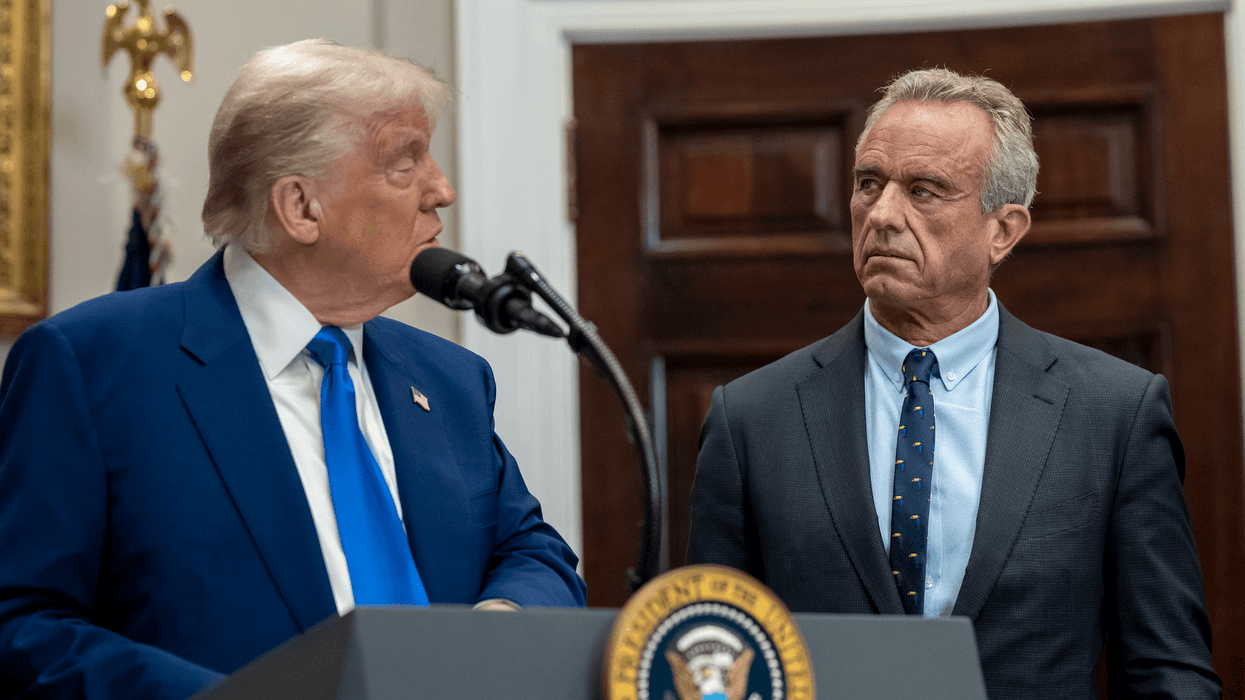
The resignation of a pair of top health officials in the Trump administration this week has brought to light efforts by the president to help Big Tobacco executives and lobbyists sell addictive flavored e-cigarettes that could be marketed to children.
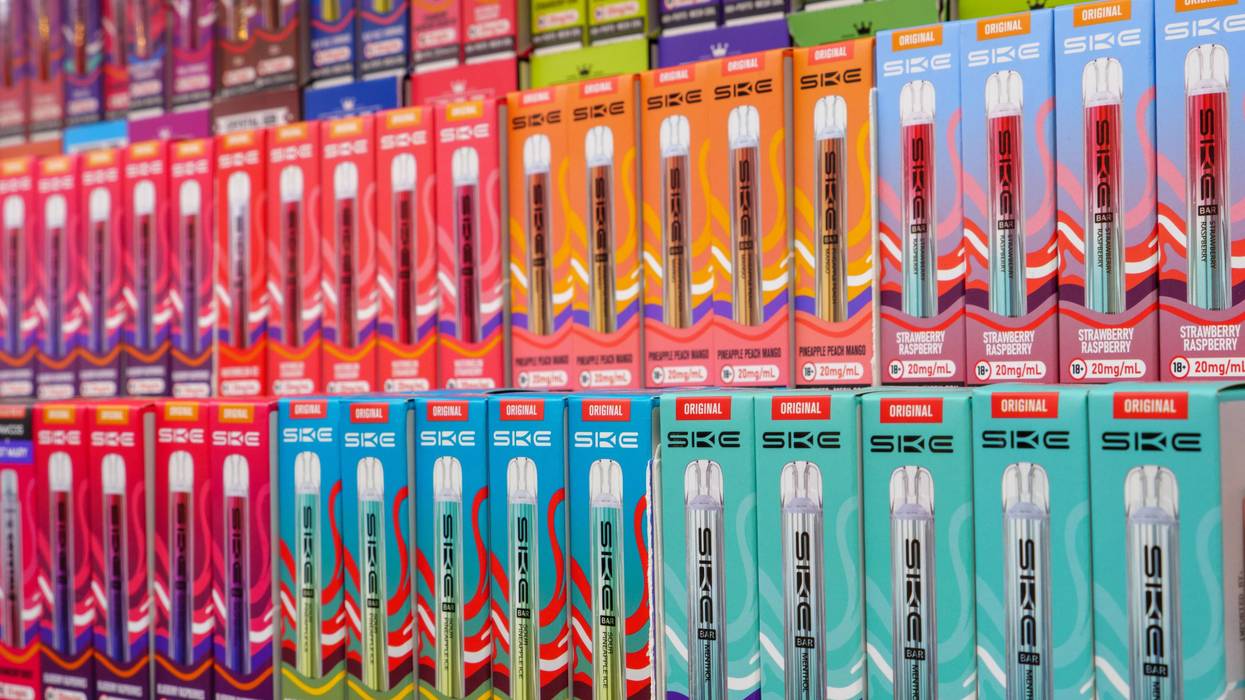
On Friday, the Food and Drug Administration (FDA) issued new guidance allowing cigarette makers to begin marketing and selling fruit- and candy-flavored vape products on store shelves, which were banned under previous administrations due to evidence that they were driving youth vaping.
The policy was enacted despite the strong opposition of then-FDA Commissioner Marty Makary, who resigned on Tuesday, reportedly because he could not in good conscience support it.
Makary's resignation was followed by the departure of Rich Danker, the chief spokesperson for Health and Human Services (HHS) Secretary Robert F. Kennedy Jr., who similarly warned that the policy "would appeal to children and expose them to nicotine addiction, lung damage, and higher risk of cancer" in a letter addressed to Trump on Wednesday.
Danker did not blame Trump for the policy in his letter; instead, he attributed it to "senior HHS officials in the immediate office of the secretary."
This is despite the fact that The Wall Street Journal reported last week that Trump had personally berated Makary over his hesitation to enact the policy and had signed off on a plan to fire him.
A New York Times report on Wednesday confirms the extent of Trump's direct involvement in strong-arming the FDA into enacting the policy. It found that he pressured higher-ups in HHS to move the policy forward amid a tongue-lashing from tobacco industry lobbyists and executives angry that they could not get in on the highly profitable sale of fruit- and candy-flavored vapes. Despite being illegal and mostly imported to the US from China, these vapes make up about 60% of the total e-cigarette market.
Trump, who ran in 2024 on a pledge to "save vaping" as part of an effort to appeal to young voters, has raked in huge sums of money from the tobacco industry. According to data from OpenSecrets, his inaugural committee took over $3 million from vaping special interests, including $1.25 million from the Vapor Technology Association, and $1 million apiece from Altria and Breeze Smoke.
Altria, which owns Marlboro maker Philip Morris, and Reynolds American, which owns Lucky Strike and Camel, have also offered donations to Trump's $400 million White House ballroom project. Reynolds, the biggest producer of menthol cigarettes, also gave $10 million to the super PAC backing Trump in 2024.
According to The New York Times, executives for Altria and Reynolds were turning the screws on Trump over lunch at his golf club in Jupiter, Florida, in early May because they were "unhappy with the way the Food and Drug Administration was regulating their industry."
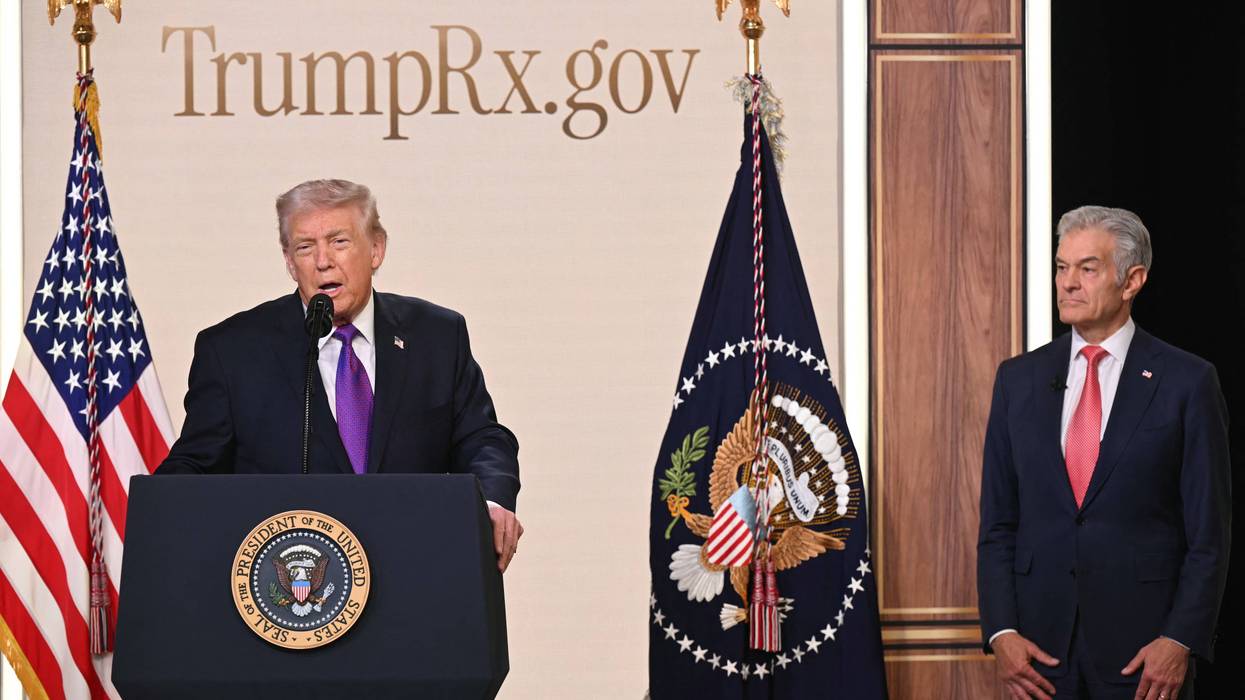
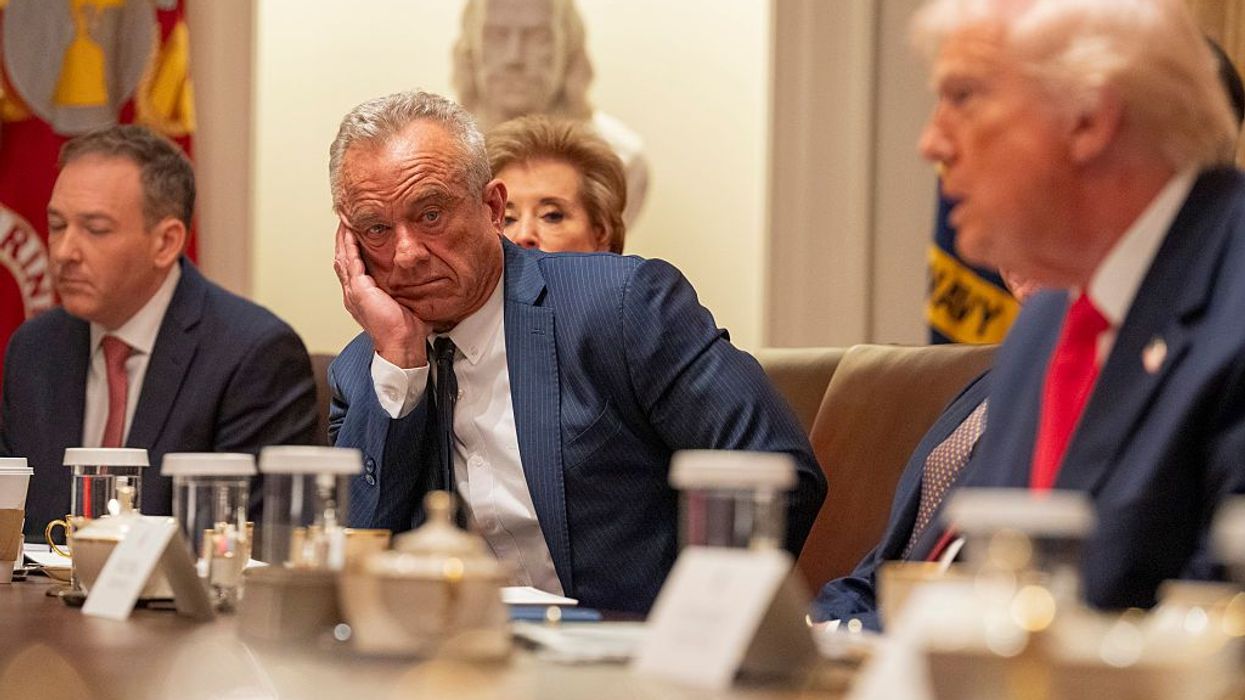
Trump interrupted the conversation to call up RFK Jr. and Mehmet Oz, the head of the Centers for Medicare and Medicaid Services (CMS), and complained to them about the FDA's regulation of e-cigarettes.
Within a week, the new policy had been enacted, and its leading opponent, Makary, was gone. He has since been replaced by Kyle Diamantas, whom the healthcare advocacy group Protect Our Care described as "a 30-something lawyer whose qualifications for such a critical public health role seem to begin and end at being Donald Trump Jr.’s 'hunting buddy.'”
"Donald Trump’s fury at FDA head Makary was motivated by gross political opportunism and fat checks from the big vape industry," said Jeremy Funk, the deputy director of Protect Our Care's Public Health Watch team. "Trump could not care less about the health consequences and costs of giving teenagers access to addictive flavored poison if it means his tobacco industry donors can make record profits."
While youth vaping is at a 10-year low, about 1.6 million middle and high school students were estimated to use vape products in the Centers for Disease Control and Prevention's 2024 National Youth Tobacco Survey. Nearly 90% of them said they used fruit and candy-flavored vapes.
Dr. Jerome Adams, a physician and professor at Purdue University, said in a post on social media that the rise of vaping has fueled a rebound in nicotine usage among college-aged adults.
"Youth combustible cigarette smoking was already at an all-time low and consistently dropping before vaping came on the scene. There is literally no reason to believe that the majority of young people who are now vaping would have otherwise been smoking combustible cigarettes," he said. "Amongst college-age and young adults, nicotine use is going back up to incredibly high rates—largely due to vaping."
The new policy enacted by the FDA has so far only authorized the sale of flavored products by one company, the Los Angeles-based Glas Inc., which will be allowed to sell vapes in flavors like mango and blueberry under names like "Gold" and "Sapphire."
The FDA sought to assuage fears of underage use by pointing to the Glas' digital age-verification system, which requires the product to be connected to the Bluetooth of a phone owned by a person over the age of 21. However, it is expected that, especially amid industry pressure, more companies will have their products approved soon.
Kayla Hancock, director of Protect Our Care’s Public Health Project, said that while Makary had a "terrible record" as FDA commissioner, having taken actions that slowed vaccine development and launched dubious, politically charged "reviews" of abortion pills long found to be safe, "apparently, it wasn’t terrible enough for Donald Trump."
"Hesitating to approve flavored vapes and not put American teens on a fast-track to lifelong addiction to harmful nicotine products is the bare minimum anyone could hope for from the Trump FDA," she said. "But that was a bridge too far for Donald Trump, who sees young people as disposable political pawns that he can appeal to with poison while lining the pockets of his big vape donors."
She said the ouster of Makary and his replacement with Diamantas "all but guarantees an FDA further consumed by chaos and driven by the wish lists of special interests that want profits put before public health."
“In the longer term, we must finally pass Medicare for All, an actually great healthcare plan," said one campaigner.
US President Donald Trump on Thursday announced a "Great Healthcare Plan" that critics panned for being "short on details," arguing that—contrary to White House claims—the scheme will lead to higher consumer costs and less care.
Trump called on Congress to pass his proposal, which he said will "lower drug prices, lower insurance premiums, hold big insurance companies accountable, and maximize price transparency."
However, the advocacy group Protect Our Care called the proposal a "joke healthcare plan" and a "sad attempt to continue gaslighting the American people."
"Since taking office, President Trump and his cronies in Congress have taken a hammer to American healthcare to enrich billionaires and big corporations," the group said. "First, they slashed $1 trillion dollars from Medicaid, and then they doubled, tripled, and quadrupled health premiums for nearly 22 million Americans already struggling to get by in Trump’s unaffordable America."
"Now that it is clear that busting working families’ budgets is bad policy and bad politics, Trump is scrambling for a lifeline," Protect Our Care added. "The solution to ending the Trump-GOP premium disaster isn’t rocket science. It is the three-year, clean extension of the Affordable Care Act tax credits that the House passed. This commonsense solution that Trump callously threatened to veto is now sitting on Senate Republican Leader John Thune’s (SD) desk."
Trump’s new health care plan doesn’t help people facing skyrocketing ACA premiums.No fix for affordability. No solution for families struggling to stay covered.Just another empty framework while costs climb.
[image or embed]
— Protect Our Care (@protectourcare.org) January 15, 2026 at 12:57 PM
The Senate—which last month voted down a similar three-year-extension to what House lawmakers passed—has yet to schedule a vote on the extension. An attempt to advance the bill through a unanimous consent agreement was blocked by Republicans on Wednesday.
Congressman Brendan Boyle (D-Pa.), ranking member of the House Budget Committee, said in a statement Thursday that “Trump’s half-baked healthcare ‘plan’ is a con that does nothing to help Americans facing soaring costs and would raise healthcare expenses while cutting coverage."
"That’s no surprise from a president who is taking healthcare away from 15 million Americans to pay for tax breaks for billionaires," he added. "If the White House is serious about lowering healthcare costs right now, they should support legislation to extend the enhanced Affordable Care Act (ACA) tax credits that already passed the House with bipartisan support. The American people deserve real solutions, not gimmicks.”
The nonpartisan Congressional Budget Office estimates that a three-year extension of the enhanced ACA premium tax credits would increase the number of Americans with health insurance by millions, including approximately 3 million in 2027 and 4 million in 2028.
Eagan Kemp, healthcare policy advocate at the consumer watchdog group Public Citizen, said in a statement Thursday that “Trump’s Great Healthcare Plan is impressive only in the fact that it isn’t great, wouldn’t substantively improve healthcare, and isn’t even detailed enough to be considered a plan."
“Trump and his cronies have had more than a decade to come up with something beyond ‘concepts of a plan’ but have failed time and time again," Kemp continued. "The American people are suffering under a broken healthcare system that has been made worse by Trump and his MAGA allies."
“By passing tax cuts for billionaires and paying for them through healthcare cuts for tens of millions of people, Trump and Republicans showed their disdain for everyday Americans. In the short run, the Senate must follow the lead of the House and pass a clean three-year extension of the ACA subsidies," he said.
“In the longer term," Kemp added, "we must finally pass Medicare for All, an actually great healthcare plan, to finally guarantee everyone in the US can get the care they need throughout their lives without financial barriers."
"Working families simply can't afford to pay more money for worse care. We need to extend ACA tax credits to lower costs."
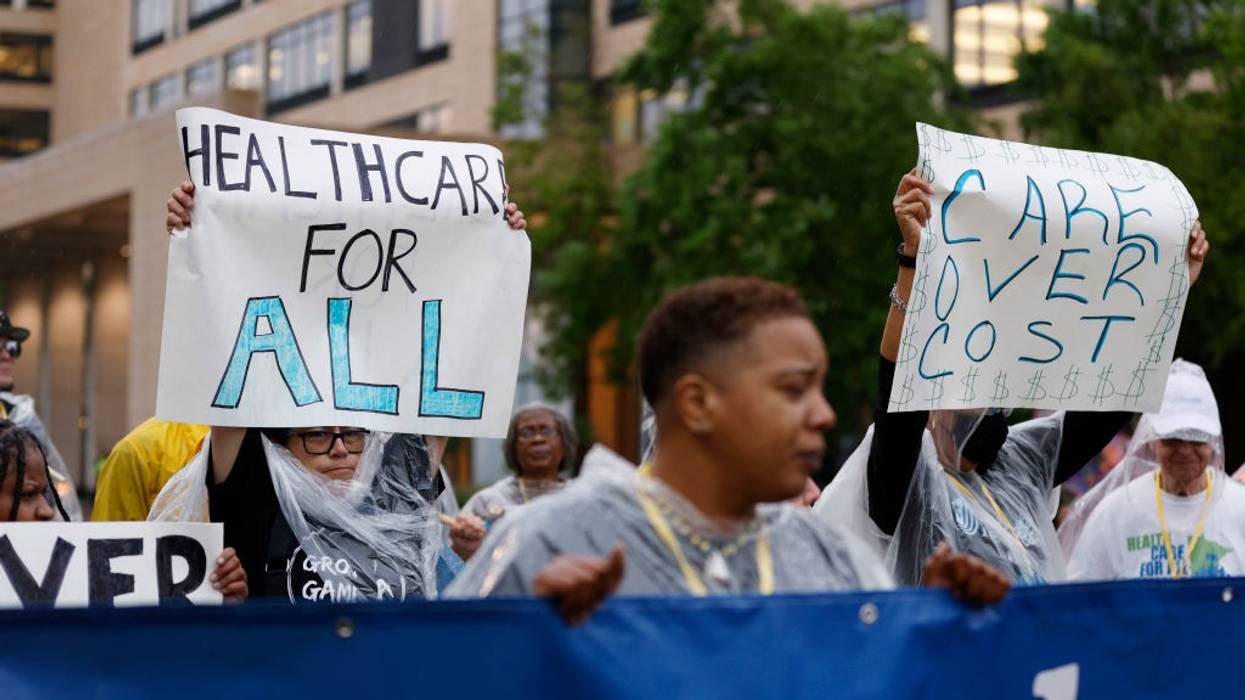
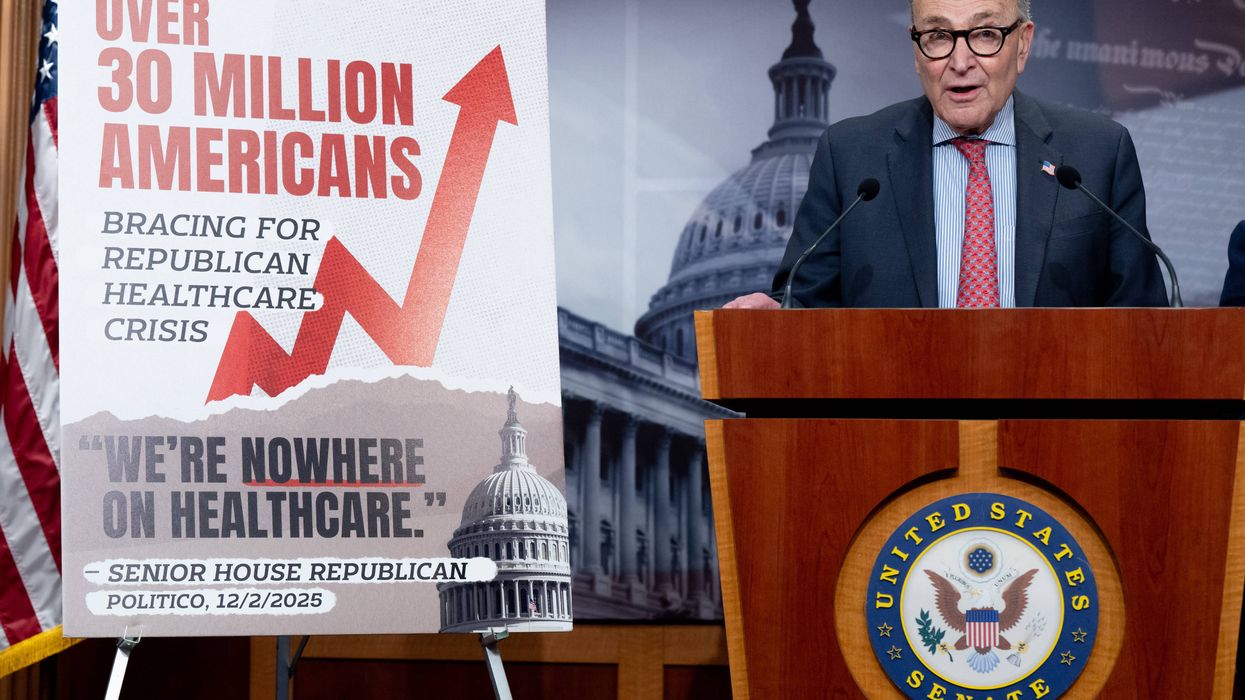
With millions of Americans facing health insurance premium hikes and Affordable Care Act tax credits expiring at midnight, critics, including congressional Democrats, called out Republicans on Capitol Hill for kicking off 2026 with a nationwide healthcare crisis.
"When the clock strikes midnight, the fallout of the GOP's premium hikes will ripple throughout the nation," Protect Our Care chair Leslie Dach said in a Wednesday statement. "This new year brings a healthcare catastrophe unlike anything this nation has ever seen. Hardworking Americans will be sent into crippling medical debt, emptying out their savings just to see a doctor. Others will be forced to live without the life-saving coverage they need. Untold tens of thousands will die from preventable causes."
"And hundreds of hospitals, nursing homes, and maternity wards will shutter or be at risk of disappearing out of thin air," Dach warned. "When the American people go to the ballot box in November, they won't forget who's responsible for all of this chaos and carnage. They won't forget who's responsible for their skimpier coverage, sky-high premiums, and vanishing hospitals."
Republican lawmakers declined to extend ACA subsidies in their so-called One Big Beautiful Bill Act (OBBBA), which is also expected to slash an estimated $1 trillion in Medicaid spending over the next decade, leading to health clinic closures, while giving more tax breaks to the ultrawealthy. Even the longest federal government shutdown in history—which a handful of moderate Senate Democrats ultimately ended without any real concessions—couldn't convince the GOP to extend the expiring tax credits.
Senate Minority Leader Chuck Schumer (D-NY), who has faced calls to step down over his handling of both shutdowns this year, stressed in a Wednesday statement that the healthcare crisis beginning Thursday "was entirely preventable—caused by Republican obstruction and total inaction."
"Millions of Americans will lose their healthcare, and millions more will see their costs spike by thousands of dollars," he continued. "Millions of hardworking families, small business owners and employees, older Americans, and farmers and ranchers will face impossible choices."
Specifically, about 22 million people who receive subsidies face higher premiums next year, and experts warn nearly 5 million people could become uninsured if the tax credits aren't extended. That's on top of the at least 10 million people expected to lose Medicaid coverage over the next decade, thanks to the OBBBA that President Donald Trump signed into law this summer.
Noting that the expiring subsidies are set to leave millions of Americans without health insurance, House Minority Leader Hakeem Jeffries (D-NY) declared on social media Wednesday, "Republicans don't give a damn."
The Chicago Tribune on Wednesday shared the story of Eleanor Walsh, of St. John, Indiana. She and her husband, who are both self-employed, paid around $9,100 for health insurance this year. In 2026, it will increase to $23,400. To save money, they are going with another plan, which has a $10,130 deductible for each of them, she told the newspaper.
"We're going through every expense we have," said Walsh, whose family has over $10,000 in medical debt from her husband's recent open-heart surgery. "It's going to be a rough year."
In Alta, Wyoming, Stacy Newton and her husband similarly run small businesses and buy health insurance through the ACA marketplace. She was diagnosed with chronic leukemia last year. The cheapest option to cover the couple and their teenage kids next year includes a $3,573 monthly premium, or nearly $43,000 for the year, with a $21,200 deductible.
"It's terrifying... We're not rich, we're not poor. We're a standard, middle-class family, and somehow now I can't afford health insurance," Newton told the Washington Post. "If my leukemia acts up, I'm up a creek... I just don't have a solution yet."
"I just officially canceled my ACA marketplace insurance for 2026," she told the paper earlier this week. "How on Earth is this going to unfold for millions of people in America?"
While Americans are forced to make coverage decisions before open enrollment ends in mid-January, without any promise of the subsidies returning, Schumer signaled that Democrats are still fighting for a fix in Washington, DC.
"Senate Republicans had multiple chances to work with Democrats to stop premiums from skyrocketing—and every time, they blocked action," he said. "While Republicans chose to do nothing and ignore the pain families will feel starting tomorrow, Senate Democrats are fighting to lower costs, protect coverage, and make life more affordable—not harder—for American families."
Four Republicans in the House of Representatives have signed on to a discharge petition to force a January vote on Democratic legislation to extend the credits for three years. Roll Call reported Tuesday that "with the knowledge that a procedural vote on a similar bill was rejected in the Senate, a bipartisan group of senators is working on a compromise to extend the credits."
However, as the outlet also pointed out, Senate Majority Leader John Thune (R-SD) has called Democrats' three-year extension of the tax credits a "waste of money."
Sen. Chris Van Hollen (D-Md.)—one of the lawmakers who has used the current healthcare debate to renew demands for Medicare for All—took aim at Thune on social media Monday.
Other lawmakers have kept up the battle for universal healthcare this week. Sen. Jeff Merkley (D-Ore.) said Tuesday that "everyone in America—no matter what their ZIP code is—should have access to the quality healthcare they need, when they need it. That's why I'm fighting to put us on the path to Medicare for All."
Sen. Bernie Sanders (I-Vt.)—who reintroduced the Medicare for All Act in April with Democratic Reps. Pramila Jayapal (Wash.) and Debbie Dingell (Mich.)—highlighted Sunday that "millions of Americans remain at jobs they hate for one reason: the health insurance they receive."
"That's absurd," he said. "Universal healthcare will give Americans the freedom to choose the work they want without worrying about healthcare coverage. Another reason for Medicare for All."
Absent any real progress on the ACA, let alone Medicare for All, in DC, "at least a dozen states are working to shield people from soaring health insurance costs following Congress' failure to extend Obamacare subsidies for tens of millions of Americans," Politico reported Monday.
Elected officials are taking action in states including California, Colorado, Connecticut, Maryland, and New Mexico, the last of which is the only one so far to cover all expiring subsidies, according to the outlet.
"We can carry the cost for a little bit, but at some point, we will need Congress to act," said the speaker of New Mexico House of Representatives, Javier Martínez (D-11). "No state can withstand to plug in every single budget hole that the Trump administration leaves behind."