SUBSCRIBE TO OUR FREE NEWSLETTER
Daily news & progressive opinion—funded by the people, not the corporations—delivered straight to your inbox.
5
#000000
#FFFFFF
To donate by check, phone, or other method, see our More Ways to Give page.
Daily news & progressive opinion—funded by the people, not the corporations—delivered straight to your inbox.
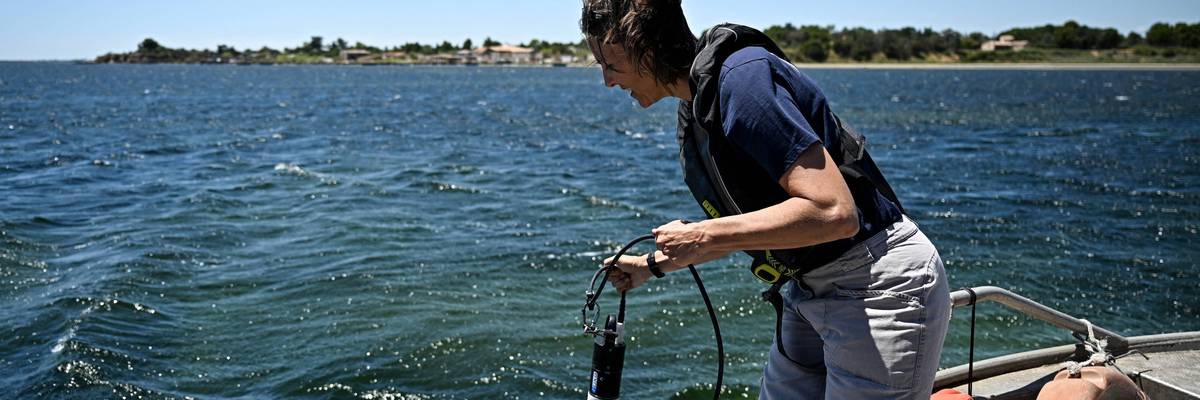
A researcher analyses temperatures and oxygen levels of the waters of the Etang de Thau, off Sète, France on July 2, 2026.
New data from Copernicus Climate Change Service, said one campaigner, shows that the "natural systems we depend on are being pushed closer to their limits.”
Last month's average global ocean surface temperature was the hottest ever recorded in the month of July, fueled in part by uniquely intense, fossil fuel-driven El Niño conditions that have wreaked deadly havoc around the world this summer.
The European Union's Copernicus Climate Change Service (C3S) said Monday that last month—which ranked as the second warmest July on record—"saw exceptionally high temperatures for the month across a large portion of the tropical Pacific, an area where El Niño conditions are present and forecast to further strengthen in the coming months." Average global sea surface temperatures (SSTs) were 20.96°C last month, surpassing the July 2023 record of 20.89°C.
"Around Europe, SSTs reached record highs for July along the Atlantic coast and western Mediterranean, associated with widespread strong or severe marine heatwave conditions," C3S said.
Brian O'Donnell, director of the Campaign for Nature, said the latest Copernicus data "is more than another climate milestone; it is a warning that the natural systems we depend on are being pushed closer to their limits."
"Governments have become very good at documenting these records. Now they need to become much better at safeguarding the forests, wetlands, and oceans that help regulate the climate and protect communities from the impacts of warming world," said O'Donnell. "With land and ocean temperatures across Europe breaching records, governments should be investing far more and delivering on their global commitment to protect at least 30% of land and ocean by 2030."
The new analysis was released as western Europe and other regions faced deadly heat, wildfires, drought, and other extreme weather as the international community, including the US and other leading polluters, fails to rein in fossil fuel use—and as oil and gas giants reap record profits.
“Our leaders’ response has to be swifter and stronger than El Niño," Anne Jellema, executive director of the environmental group 350.org, said Monday. "We already know that global heating is supercharging extreme weather damage, and the public wants polluters to pay for it. With Big Oil’s earnings skyrocketing while a global food crisis looms, now is the time to act. The only way to stave off a humanitarian disaster is to make those causing it pay upfront—before even more damage is done.”
Scientists have characterized this year's El Niño, which officially began on June 11, as historically strong and dangerous, earning it the informal "Super El Niño" label.
The Washington Post reported Monday that the 2026 El Niño is "on track to become the strongest ever recorded, with cascading effects on global climate peaking late this year and into next."
"El Niño’s effects have already been felt around the planet," the Post observed. "The higher frequency of heat domes worldwide, the nonstop temperature records in Peru and deadly storms in Chile can all be linked to this pattern. As can the destructive typhoons in the western Pacific Ocean and the relative calm of the Atlantic hurricane season so far."
United Nations Secretary-General António Guterres warned in remarks to reporters last month that El Niño is no longer just "on our doorstep."
"It is inside the house—and turning up the heat," said Guterres. "We have already endured a summer of extremes—record-shattering heat domes, apocalyptic wildfires raging in Spain, France, and far beyond. Thousands of lives lost in the scorching conditions.”
“But according to the latest science," he added, "this is only a warm-up act."
Dear Common Dreams reader, It’s been nearly 30 years since I co-founded Common Dreams with my late wife, Lina Newhouser. We had the radical notion that journalism should serve the public good, not corporate profits. It was clear to us from the outset what it would take to build such a project. No paid advertisements. No corporate sponsors. No millionaire publisher telling us what to think or do. Many people said we wouldn't last a year, but we proved those doubters wrong. Together with a tremendous team of journalists and dedicated staff, we built an independent media outlet free from the constraints of profits and corporate control. Our mission has always been simple: To inform. To inspire. To ignite change for the common good. Building Common Dreams was not easy. Our survival was never guaranteed. When you take on the most powerful forces—Wall Street greed, fossil fuel industry destruction, Big Tech lobbyists, and uber-rich oligarchs who have spent billions upon billions rigging the economy and democracy in their favor—the only bulwark you have is supporters who believe in your work. But here’s the urgent message from me today. It's never been this bad out there. And it's never been this hard to keep us going. At the very moment Common Dreams is most needed, the threats we face are intensifying. We need your support now more than ever. We don't accept corporate advertising and never will. We don't have a paywall because we don't think people should be blocked from critical news based on their ability to pay. Everything we do is funded by the donations of readers like you. When everyone does the little they can afford, we are strong. But if that support retreats or dries up, so do we. Will you donate now to make sure Common Dreams not only survives but thrives? —Craig Brown, Co-founder |
Last month's average global ocean surface temperature was the hottest ever recorded in the month of July, fueled in part by uniquely intense, fossil fuel-driven El Niño conditions that have wreaked deadly havoc around the world this summer.
The European Union's Copernicus Climate Change Service (C3S) said Monday that last month—which ranked as the second warmest July on record—"saw exceptionally high temperatures for the month across a large portion of the tropical Pacific, an area where El Niño conditions are present and forecast to further strengthen in the coming months." Average global sea surface temperatures (SSTs) were 20.96°C last month, surpassing the July 2023 record of 20.89°C.
"Around Europe, SSTs reached record highs for July along the Atlantic coast and western Mediterranean, associated with widespread strong or severe marine heatwave conditions," C3S said.
Brian O'Donnell, director of the Campaign for Nature, said the latest Copernicus data "is more than another climate milestone; it is a warning that the natural systems we depend on are being pushed closer to their limits."
"Governments have become very good at documenting these records. Now they need to become much better at safeguarding the forests, wetlands, and oceans that help regulate the climate and protect communities from the impacts of warming world," said O'Donnell. "With land and ocean temperatures across Europe breaching records, governments should be investing far more and delivering on their global commitment to protect at least 30% of land and ocean by 2030."
The new analysis was released as western Europe and other regions faced deadly heat, wildfires, drought, and other extreme weather as the international community, including the US and other leading polluters, fails to rein in fossil fuel use—and as oil and gas giants reap record profits.
“Our leaders’ response has to be swifter and stronger than El Niño," Anne Jellema, executive director of the environmental group 350.org, said Monday. "We already know that global heating is supercharging extreme weather damage, and the public wants polluters to pay for it. With Big Oil’s earnings skyrocketing while a global food crisis looms, now is the time to act. The only way to stave off a humanitarian disaster is to make those causing it pay upfront—before even more damage is done.”
Scientists have characterized this year's El Niño, which officially began on June 11, as historically strong and dangerous, earning it the informal "Super El Niño" label.
The Washington Post reported Monday that the 2026 El Niño is "on track to become the strongest ever recorded, with cascading effects on global climate peaking late this year and into next."
"El Niño’s effects have already been felt around the planet," the Post observed. "The higher frequency of heat domes worldwide, the nonstop temperature records in Peru and deadly storms in Chile can all be linked to this pattern. As can the destructive typhoons in the western Pacific Ocean and the relative calm of the Atlantic hurricane season so far."
United Nations Secretary-General António Guterres warned in remarks to reporters last month that El Niño is no longer just "on our doorstep."
"It is inside the house—and turning up the heat," said Guterres. "We have already endured a summer of extremes—record-shattering heat domes, apocalyptic wildfires raging in Spain, France, and far beyond. Thousands of lives lost in the scorching conditions.”
“But according to the latest science," he added, "this is only a warm-up act."
Last month's average global ocean surface temperature was the hottest ever recorded in the month of July, fueled in part by uniquely intense, fossil fuel-driven El Niño conditions that have wreaked deadly havoc around the world this summer.
The European Union's Copernicus Climate Change Service (C3S) said Monday that last month—which ranked as the second warmest July on record—"saw exceptionally high temperatures for the month across a large portion of the tropical Pacific, an area where El Niño conditions are present and forecast to further strengthen in the coming months." Average global sea surface temperatures (SSTs) were 20.96°C last month, surpassing the July 2023 record of 20.89°C.
"Around Europe, SSTs reached record highs for July along the Atlantic coast and western Mediterranean, associated with widespread strong or severe marine heatwave conditions," C3S said.
Brian O'Donnell, director of the Campaign for Nature, said the latest Copernicus data "is more than another climate milestone; it is a warning that the natural systems we depend on are being pushed closer to their limits."
"Governments have become very good at documenting these records. Now they need to become much better at safeguarding the forests, wetlands, and oceans that help regulate the climate and protect communities from the impacts of warming world," said O'Donnell. "With land and ocean temperatures across Europe breaching records, governments should be investing far more and delivering on their global commitment to protect at least 30% of land and ocean by 2030."
The new analysis was released as western Europe and other regions faced deadly heat, wildfires, drought, and other extreme weather as the international community, including the US and other leading polluters, fails to rein in fossil fuel use—and as oil and gas giants reap record profits.
“Our leaders’ response has to be swifter and stronger than El Niño," Anne Jellema, executive director of the environmental group 350.org, said Monday. "We already know that global heating is supercharging extreme weather damage, and the public wants polluters to pay for it. With Big Oil’s earnings skyrocketing while a global food crisis looms, now is the time to act. The only way to stave off a humanitarian disaster is to make those causing it pay upfront—before even more damage is done.”
Scientists have characterized this year's El Niño, which officially began on June 11, as historically strong and dangerous, earning it the informal "Super El Niño" label.
The Washington Post reported Monday that the 2026 El Niño is "on track to become the strongest ever recorded, with cascading effects on global climate peaking late this year and into next."
"El Niño’s effects have already been felt around the planet," the Post observed. "The higher frequency of heat domes worldwide, the nonstop temperature records in Peru and deadly storms in Chile can all be linked to this pattern. As can the destructive typhoons in the western Pacific Ocean and the relative calm of the Atlantic hurricane season so far."
United Nations Secretary-General António Guterres warned in remarks to reporters last month that El Niño is no longer just "on our doorstep."
"It is inside the house—and turning up the heat," said Guterres. "We have already endured a summer of extremes—record-shattering heat domes, apocalyptic wildfires raging in Spain, France, and far beyond. Thousands of lives lost in the scorching conditions.”
“But according to the latest science," he added, "this is only a warm-up act."