5
#000000
#FFFFFF
To donate by check, phone, or other method, see our More Ways to Give page.
Daily news & progressive opinion—funded by the people, not the corporations—delivered straight to your inbox.
"This visit is also a PR opportunity for Hegseth following the impeachment attempt and ahead of his congressional appearance," said one former diplomat, anticipating "a US military base in Caracas soon."
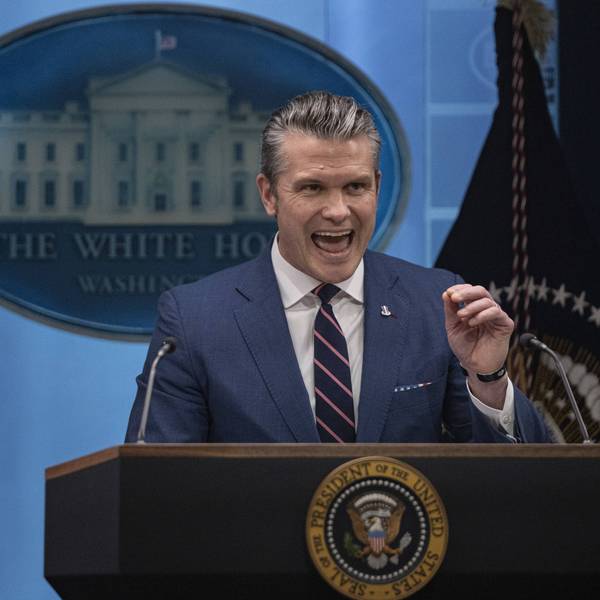
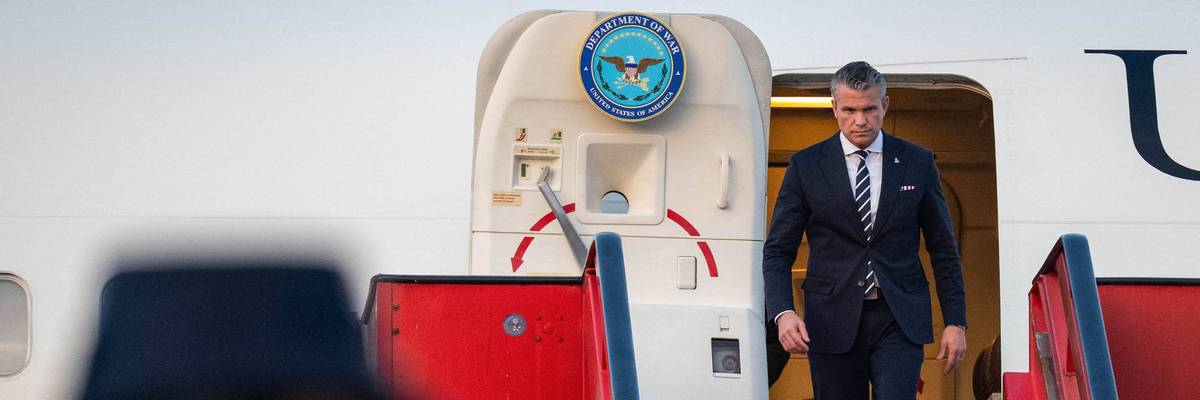
While Colombia's right-wing government on Wednesday rejected joint military operations with the United States, US Defense Secretary Pete Hegseth signed a sweeping deal with authorities in Venezuela—and bragged about American forces invading that country in January to abduct Venezuelan President Nicolás Maduro and his wife.
"It's a great honor to be here as the first United States secretary of war this century to set foot in Venezuela. The weight of this moment does not escape me. Just one year ago, my presence here, our presence here, would have been deemed impossible—almost unimaginable," Hegseth said. "But it was made possible for one simple reason: President Donald J. Trump had the courage to do what no president before him was willing to do."
"The Department of War, in support of US law enforcement, brought Maduro and Celia Flores to American justice," he continued, using Trump's preferred name for the Pentagon. The Venezuelan couple is being held at Brooklyn's Metropolitan Detention Center ahead of a trial scheduled for June. Maduro has called himself a "prisoner of war," and both he and Flores have pleaded not guilty to narco-terrorism charges. Last month, the US added torture charges.
"Operation Absolute Resolve showed that the United States will not allow narco-terrorists to threaten Americans, erode our borders, nor run rampant throughout the Western Hemisphere. That is the Donroe Doctrine," Hegseth declared. He celebrated the "close cooperation" with Venezuela's interim president, Delcy Rodríguez, since the abduction and "a historic oil deal... that is bringing energy dominance for the benefit of Americans and for Venezuelans for decades to come."
Hegseth also laid out the broad strokes of the newly signed deal that reestablishes a military partnership between the United States and Venezuela: "Training together, partnering together, sharing intelligence, more defense equipment and capabilities together."
As The Guardian reported:
During her five-minute address, Rodríguez, whose oil-rich country is widely seen to have become a US protectorate after January’s invasion, made no mention of Maduro, who is behind bars in New York City.
But referring indirectly to his capture and the subsequent reconciliation with Washington, she told Hegseth: "Thanks to the political and geopolitical maturity of our governments, we have—in a very short period of time, just a few months—turned what were very difficult and very tough times for our people, into an extraordinary space for cooperation and mutual benefit."
Rodríguez hailed the "historic" energy deal her government recently struck with Trump, who has called it "the biggest oil deal in world history" as well as "the spoils" of his "conquest" of Venezuela.
Journalists and other critics called out the secrecy around the trip on social media.
Wall Street Journal national security reporter Lara Seligman said: "Hegseth is in Venezuela—but the Pentagon refused to confirm or give out any information about his trip. I've never seen anything like this before."
Zachary Cohen, who covers the Defense Department for CNN, replied to Seligman that "as a result, the Pentagon has largely punted coverage of Hegseth's trip to Venezuelan state TV."
New York Times foreign correspondent Anatoly Kurmanaev told Cohen: "This is the most bizarre part of this trip to me, even more than that it happened or that these countries are now officially allies. It really takes a LOT to cede comms initiative to Venezuelan state TV."
Former US Marine fighter pilot and Democratic congressional candidate Amy McGrath asked: "Remember when Pete Hegseth promised us the most transparent Pentagon in history? Why are we learning about new US military agreements with Venezuela's authoritarian government from Venezuelan state television?"
Imdat Oner, a former Turkish diplomat who served in the embassy in Caracas and is now a senior fellow at Florida International University's Jack D. Gordon Institute for Public Policy, noted that "two years ago, this very week, Iran's defense minister visited Venezuela and signed a military cooperation deal. Today, Maduro's former VP, Delcy Rodríguez, welcomes the US defense secretary to deepen military ties. The same military officers now work with the US."
Oner said that he expects "to see a US military base in Caracas soon," and also pointed to Congress' recent unsuccessful effort to impeach Hegseth—whose department just failed its ninth straight audit while waging Trump's illegal war on Iran.
"This visit is also a PR opportunity for Hegseth following the impeachment attempt and ahead of his congressional appearance," Oner suggested. "As things in Iran gets further complicated, Venezuela will remain the Trump administration's poster child for success."
As for the administration's rejection by Colombia on Wednesday, The New York Times reported that the "decision prompted the American defense secretary, Pete Hegseth, to alter the four-country trip he is now making to Latin America. Originally, he had been expected to meet on Wednesday with Colombian officials in Bogotá, the capital, to discuss the bilateral military agreement."
"Instead, Mr. Hegseth was expected to touch down briefly to meet with Colombian officials after stopping in Caracas, Venezuela, where he met with the acting president and other officials," the newspaper detailed. "The military agreement with Colombia, known as Title 10, would have enabled US forces to operate in that country and carry out joint airstrikes and ground operations."
This country and this world are at a monumental crossroads. US voters have an opportunity to beat back the forces of fascism and confront the billionaires who are rigging the economy, our media system, and our democracy, making it increasingly impossible for ordinary people to get by. We’re not just talking about the election. We’re talking about what must be done once these fascist elements are vanquished from power. We need a bolder set of solutions than what either major party has so far been willing to offer and a working-class movement ready to fight like hell for it. Trump didn't emerge from nowhere. The conditions that fueled MAGA authoritarianism were created by decades of radical neoliberal economic policies and a corrupt political system dominated by corporate interests. They slashed taxes on the super-rich, promising that the benefits would trickle down. They said giveaways to the corporate titans would make life more affordable for the rest of us. It was all bullshit. And when a bitter, betrayed populace searches for someone to blame, right-wing demagogues have little trouble finding scapegoats. People know when they're being lied to, but you won't hear any of this from the corporate media. Only independent journalism—powered and funded by people who believe in building a better world—can deliver truly trustworthy daily news. If you share our vision, please contribute whatever you can to sustain our work. |
While Colombia's right-wing government on Wednesday rejected joint military operations with the United States, US Defense Secretary Pete Hegseth signed a sweeping deal with authorities in Venezuela—and bragged about American forces invading that country in January to abduct Venezuelan President Nicolás Maduro and his wife.
"It's a great honor to be here as the first United States secretary of war this century to set foot in Venezuela. The weight of this moment does not escape me. Just one year ago, my presence here, our presence here, would have been deemed impossible—almost unimaginable," Hegseth said. "But it was made possible for one simple reason: President Donald J. Trump had the courage to do what no president before him was willing to do."
"The Department of War, in support of US law enforcement, brought Maduro and Celia Flores to American justice," he continued, using Trump's preferred name for the Pentagon. The Venezuelan couple is being held at Brooklyn's Metropolitan Detention Center ahead of a trial scheduled for June. Maduro has called himself a "prisoner of war," and both he and Flores have pleaded not guilty to narco-terrorism charges. Last month, the US added torture charges.
"Operation Absolute Resolve showed that the United States will not allow narco-terrorists to threaten Americans, erode our borders, nor run rampant throughout the Western Hemisphere. That is the Donroe Doctrine," Hegseth declared. He celebrated the "close cooperation" with Venezuela's interim president, Delcy Rodríguez, since the abduction and "a historic oil deal... that is bringing energy dominance for the benefit of Americans and for Venezuelans for decades to come."
Hegseth also laid out the broad strokes of the newly signed deal that reestablishes a military partnership between the United States and Venezuela: "Training together, partnering together, sharing intelligence, more defense equipment and capabilities together."
As The Guardian reported:
During her five-minute address, Rodríguez, whose oil-rich country is widely seen to have become a US protectorate after January’s invasion, made no mention of Maduro, who is behind bars in New York City.
But referring indirectly to his capture and the subsequent reconciliation with Washington, she told Hegseth: "Thanks to the political and geopolitical maturity of our governments, we have—in a very short period of time, just a few months—turned what were very difficult and very tough times for our people, into an extraordinary space for cooperation and mutual benefit."
Rodríguez hailed the "historic" energy deal her government recently struck with Trump, who has called it "the biggest oil deal in world history" as well as "the spoils" of his "conquest" of Venezuela.
Journalists and other critics called out the secrecy around the trip on social media.
Wall Street Journal national security reporter Lara Seligman said: "Hegseth is in Venezuela—but the Pentagon refused to confirm or give out any information about his trip. I've never seen anything like this before."
Zachary Cohen, who covers the Defense Department for CNN, replied to Seligman that "as a result, the Pentagon has largely punted coverage of Hegseth's trip to Venezuelan state TV."
New York Times foreign correspondent Anatoly Kurmanaev told Cohen: "This is the most bizarre part of this trip to me, even more than that it happened or that these countries are now officially allies. It really takes a LOT to cede comms initiative to Venezuelan state TV."
Former US Marine fighter pilot and Democratic congressional candidate Amy McGrath asked: "Remember when Pete Hegseth promised us the most transparent Pentagon in history? Why are we learning about new US military agreements with Venezuela's authoritarian government from Venezuelan state television?"
Imdat Oner, a former Turkish diplomat who served in the embassy in Caracas and is now a senior fellow at Florida International University's Jack D. Gordon Institute for Public Policy, noted that "two years ago, this very week, Iran's defense minister visited Venezuela and signed a military cooperation deal. Today, Maduro's former VP, Delcy Rodríguez, welcomes the US defense secretary to deepen military ties. The same military officers now work with the US."
Oner said that he expects "to see a US military base in Caracas soon," and also pointed to Congress' recent unsuccessful effort to impeach Hegseth—whose department just failed its ninth straight audit while waging Trump's illegal war on Iran.
"This visit is also a PR opportunity for Hegseth following the impeachment attempt and ahead of his congressional appearance," Oner suggested. "As things in Iran gets further complicated, Venezuela will remain the Trump administration's poster child for success."
As for the administration's rejection by Colombia on Wednesday, The New York Times reported that the "decision prompted the American defense secretary, Pete Hegseth, to alter the four-country trip he is now making to Latin America. Originally, he had been expected to meet on Wednesday with Colombian officials in Bogotá, the capital, to discuss the bilateral military agreement."
"Instead, Mr. Hegseth was expected to touch down briefly to meet with Colombian officials after stopping in Caracas, Venezuela, where he met with the acting president and other officials," the newspaper detailed. "The military agreement with Colombia, known as Title 10, would have enabled US forces to operate in that country and carry out joint airstrikes and ground operations."