SUBSCRIBE TO OUR FREE NEWSLETTER
Daily news & progressive opinion—funded by the people, not the corporations—delivered straight to your inbox.
5
#000000
#FFFFFF
To donate by check, phone, or other method, see our More Ways to Give page.
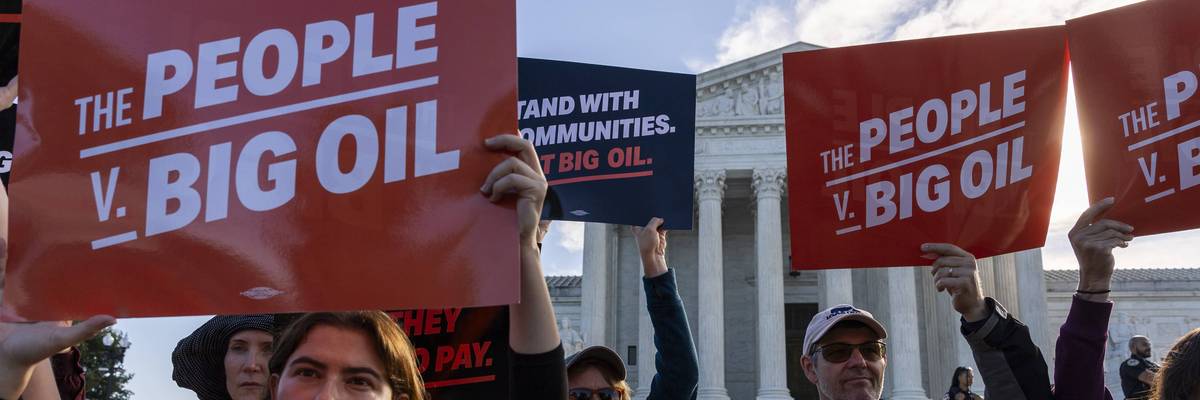
President Donald Trump and Republicans in Congress have sought to stop state-level lawsuits aimed at holding oil and gas companies responsible for climate-related damage. But most voters don't think they should be immune from accountability.
In a poll released last week by Data for Progress, 75% of likely voters said they would oppose legislation that would give fossil fuel companies "legal immunity from having to pay for the damages they have caused by worsening climate change."
Just 20% said they would either "somewhat" or "strongly" support such legislation. Meanwhile, more than half (53%) said they would "strongly" oppose it.
Opposition was strong across political affiliations: 83% of Democrats and 76% of independents said they opposed giving oil companies immunity from lawsuits, but so did 67% of Republicans.
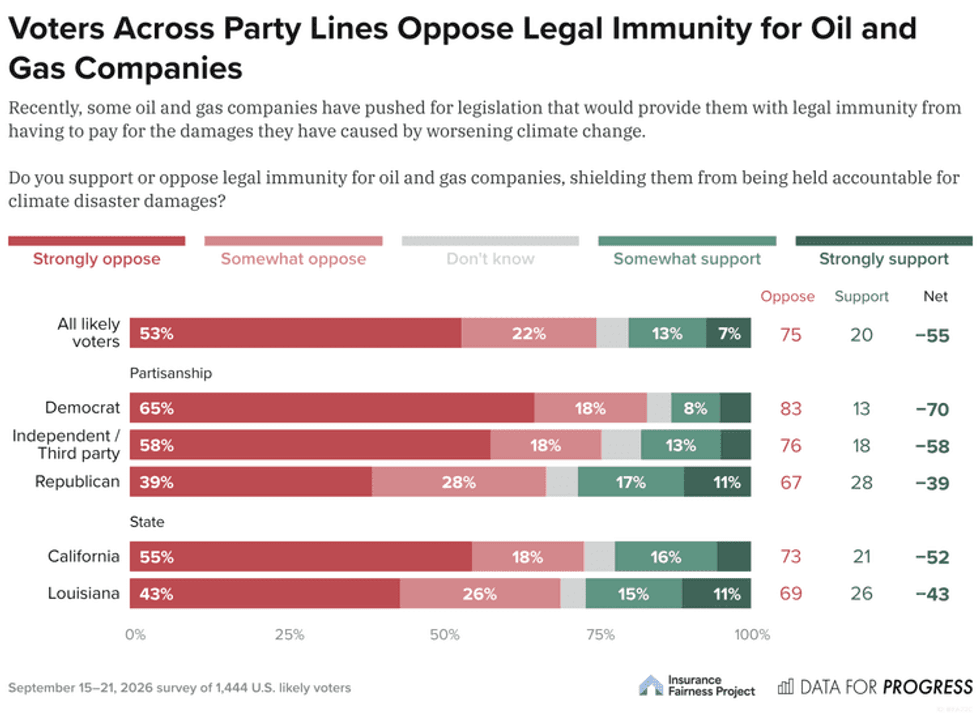 (Graphic by Data for Progress)
In recent years, states and municipalities have sued fossil fuel companies over their well-documented history of misleading the public about their products' role in warming the planet. These lawsuits have sought compensation for damages from worsening floods, wildfires, droughts, and other climate-related disasters.
Eleven US states—California, Connecticut, Delaware, Hawaii, Maine, Massachusetts, Michigan, Minnesota, New Jersey, Rhode Island, and Vermont—as well as the District of Columbia, have active lawsuits, as do at least two tribal governments and dozens of municipalities around the country, according to a tracker by the Center for Climate Integrity.
The new poll suggests voters are even more opposed to shielding oil companies from these lawsuits than they were five months ago. Another Data for Progress poll in May showed just 65% opposed legislation to shield oil companies, compared with 75% now.
"Big Oil is desperate to secure legal immunity and escape accountability for its role in the climate crisis—and the billions of dollars of damages that have followed," said Iyla Shornstein, the political director at the Center for Climate Integrity. "These poll results show that Americans across the political spectrum are opposed to putting Big Oil above the law.”
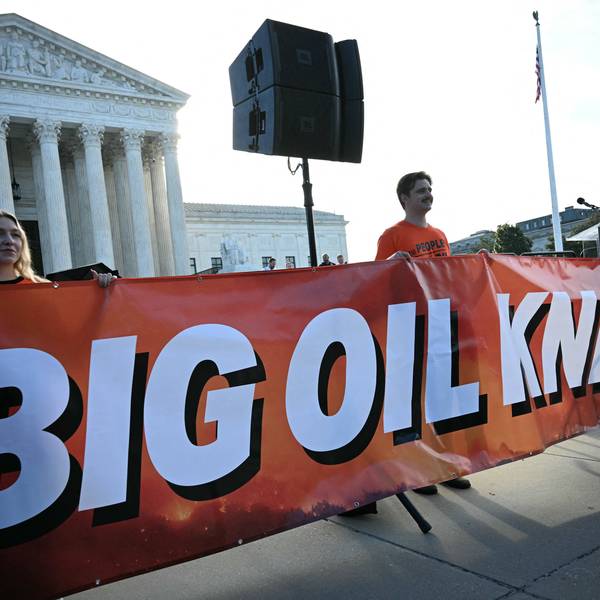
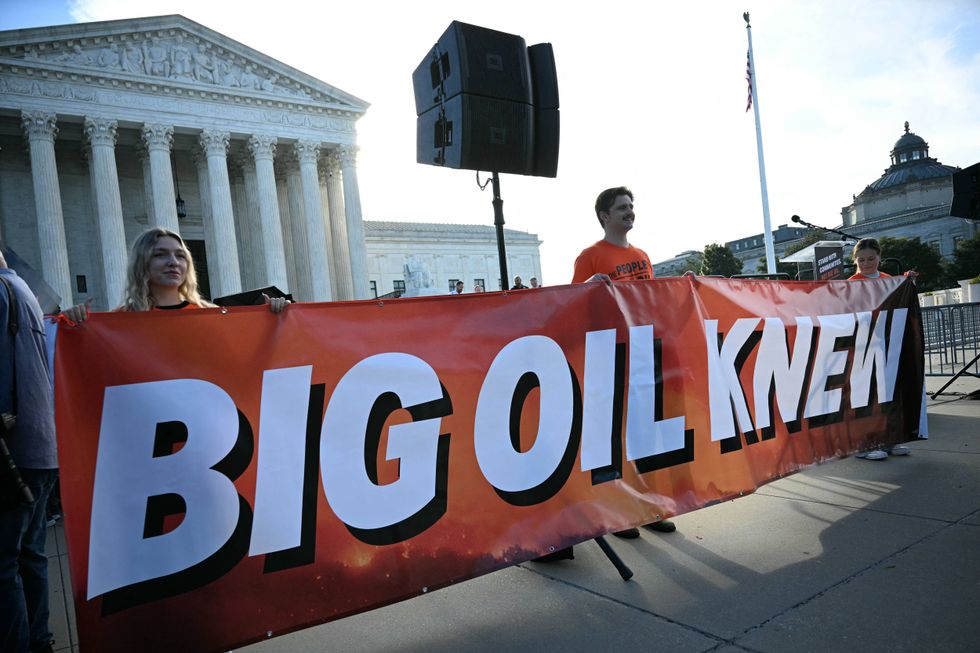 Protesters hold a banner outside the US Supreme Court as it considers the Suncor v. Boulder case in Washington, DC, on October 5, 2026. (Photo by Jim Watson/AFP via Getty Images)
The oil industry's lobbying arm, the American Petroleum Institute, has described stopping state climate lawsuits as a top priority for 2026. Their Republican allies have pushed at all levels of government to advance that goal.
In April, Sen. Ted Cruz (R-Texas) and several GOP cosponsors joined Rep. Harriet Hageman (R-Wyo.) to introduce legislation that would shield fossil fuel companies from any climate-related lawsuits, dismiss pending cases, and overturn state "superfund" laws requiring the industry to pay for climate damages.
That bill failed to pass out of the House Judiciary Committee last month but could be brought forth again during the "lame-duck" session after the midterm elections in November.
ProPublica has identified at least 15 bills across 11 states that have either been enacted or proposed to shield companies, either by granting them broad immunity from liability for greenhouse gas emissions or restricting the ability of communities to sue over climate-related damages. Groups linked to Leonard Leo, the co-chair of the right-wing Federalist Society, have coordinated many of these efforts.
Republican attorneys general in 16 states have proposed creating a "liability shield" for fossil fuel companies modeled on the one that protects gun manufacturers from liability for the misuse of their products. The American Legislative Exchange Council (ALEC), a leading conservative policy shop, approved a model bill in August aiming to establish this shield in state legislatures nationwide.
The oil industry has also pushed for the right-wing Supreme Court to step in to block these lawsuits. Earlier this month, during oral arguments, oil giants ExxonMobil and Suncor urged the court to block a lawsuit brought by Boulder, Colorado, that accused oil companies of deceiving the public about climate change and sought to hold them financially responsible.
If the court blocks the Boulder suit before it gets to trial, it could set a precedent that derails dozens of similar lawsuits around the country.
Meanwhile, Trump, who pledged to help Big Oil executives in exchange for their donations to his presidential campaign, signed an executive order last year directing the Department of Justice (DOJ) to identify and challenge state lawsuits that seek to impose financial penalties on fossil fuel companies.
His DOJ has weighed in on the Suncor v. Boulder case on the side of the oil industry and has sued at least five states that have sought to hold fossil fuel companies accountable.
The question about climate lawsuits was part of a broader set of questions Data for Progress asked voters about rising insurance costs and corporate accountability in partnership with the Insurance Fairness Project. Other results showed that many Americans want legal recourse against insurers and other companies that impose costs on consumers.
"As rising home insurance costs directly threaten housing affordability for the majority of Americans, voters are tired of their prices rising while insurance companies, energy providers, and the oil and gas industry go unchecked," said Grace Adcox, senior climate strategist for the Insurance Fairness Project. "There is a strong appetite for holding corporations accountable, both for their role in driving up costs and their role in contributing to the climate crisis."
President Donald Trump and Republicans in Congress have sought to stop state-level lawsuits aimed at holding oil and gas companies responsible for climate-related damage. But most voters don't think they should be immune from accountability.
In a poll released last week by Data for Progress, 75% of likely voters said they would oppose legislation that would give fossil fuel companies "legal immunity from having to pay for the damages they have caused by worsening climate change."
Just 20% said they would either "somewhat" or "strongly" support such legislation. Meanwhile, more than half (53%) said they would "strongly" oppose it.
Opposition was strong across political affiliations: 83% of Democrats and 76% of independents said they opposed giving oil companies immunity from lawsuits, but so did 67% of Republicans.
(Graphic by Data for Progress)
In recent years, states and municipalities have sued fossil fuel companies over their well-documented history of misleading the public about their products' role in warming the planet. These lawsuits have sought compensation for damages from worsening floods, wildfires, droughts, and other climate-related disasters.
Eleven US states—California, Connecticut, Delaware, Hawaii, Maine, Massachusetts, Michigan, Minnesota, New Jersey, Rhode Island, and Vermont—as well as the District of Columbia, have active lawsuits, as do at least two tribal governments and dozens of municipalities around the country, according to a tracker by the Center for Climate Integrity.
The new poll suggests voters are even more opposed to shielding oil companies from these lawsuits than they were five months ago. Another Data for Progress poll in May showed just 65% opposed legislation to shield oil companies, compared with 75% now.
"Big Oil is desperate to secure legal immunity and escape accountability for its role in the climate crisis—and the billions of dollars of damages that have followed," said Iyla Shornstein, the political director at the Center for Climate Integrity. "These poll results show that Americans across the political spectrum are opposed to putting Big Oil above the law.”
Protesters hold a banner outside the US Supreme Court as it considers the Suncor v. Boulder case in Washington, DC, on October 5, 2026. (Photo by Jim Watson/AFP via Getty Images)
The oil industry's lobbying arm, the American Petroleum Institute, has described stopping state climate lawsuits as a top priority for 2026. Their Republican allies have pushed at all levels of government to advance that goal.
In April, Sen. Ted Cruz (R-Texas) and several GOP cosponsors joined Rep. Harriet Hageman (R-Wyo.) to introduce legislation that would shield fossil fuel companies from any climate-related lawsuits, dismiss pending cases, and overturn state "superfund" laws requiring the industry to pay for climate damages.
That bill failed to pass out of the House Judiciary Committee last month but could be brought forth again during the "lame-duck" session after the midterm elections in November.
ProPublica has identified at least 15 bills across 11 states that have either been enacted or proposed to shield companies, either by granting them broad immunity from liability for greenhouse gas emissions or restricting the ability of communities to sue over climate-related damages. Groups linked to Leonard Leo, the co-chair of the right-wing Federalist Society, have coordinated many of these efforts.
Republican attorneys general in 16 states have proposed creating a "liability shield" for fossil fuel companies modeled on the one that protects gun manufacturers from liability for the misuse of their products. The American Legislative Exchange Council (ALEC), a leading conservative policy shop, approved a model bill in August aiming to establish this shield in state legislatures nationwide.
The oil industry has also pushed for the right-wing Supreme Court to step in to block these lawsuits. Earlier this month, during oral arguments, oil giants ExxonMobil and Suncor urged the court to block a lawsuit brought by Boulder, Colorado, that accused oil companies of deceiving the public about climate change and sought to hold them financially responsible.
If the court blocks the Boulder suit before it gets to trial, it could set a precedent that derails dozens of similar lawsuits around the country.
Meanwhile, Trump, who pledged to help Big Oil executives in exchange for their donations to his presidential campaign, signed an executive order last year directing the Department of Justice (DOJ) to identify and challenge state lawsuits that seek to impose financial penalties on fossil fuel companies.
His DOJ has weighed in on the Suncor v. Boulder case on the side of the oil industry and has sued at least five states that have sought to hold fossil fuel companies accountable.
The question about climate lawsuits was part of a broader set of questions Data for Progress asked voters about rising insurance costs and corporate accountability in partnership with the Insurance Fairness Project. Other results showed that many Americans want legal recourse against insurers and other companies that impose costs on consumers.
"As rising home insurance costs directly threaten housing affordability for the majority of Americans, voters are tired of their prices rising while insurance companies, energy providers, and the oil and gas industry go unchecked," said Grace Adcox, senior climate strategist for the Insurance Fairness Project. "There is a strong appetite for holding corporations accountable, both for their role in driving up costs and their role in contributing to the climate crisis."
President Donald Trump and Republicans in Congress have sought to stop state-level lawsuits aimed at holding oil and gas companies responsible for climate-related damage. But most voters don't think they should be immune from accountability.
In a poll released last week by Data for Progress, 75% of likely voters said they would oppose legislation that would give fossil fuel companies "legal immunity from having to pay for the damages they have caused by worsening climate change."
Just 20% said they would either "somewhat" or "strongly" support such legislation. Meanwhile, more than half (53%) said they would "strongly" oppose it.
Opposition was strong across political affiliations: 83% of Democrats and 76% of independents said they opposed giving oil companies immunity from lawsuits, but so did 67% of Republicans.
(Graphic by Data for Progress)
In recent years, states and municipalities have sued fossil fuel companies over their well-documented history of misleading the public about their products' role in warming the planet. These lawsuits have sought compensation for damages from worsening floods, wildfires, droughts, and other climate-related disasters.
Eleven US states—California, Connecticut, Delaware, Hawaii, Maine, Massachusetts, Michigan, Minnesota, New Jersey, Rhode Island, and Vermont—as well as the District of Columbia, have active lawsuits, as do at least two tribal governments and dozens of municipalities around the country, according to a tracker by the Center for Climate Integrity.
The new poll suggests voters are even more opposed to shielding oil companies from these lawsuits than they were five months ago. Another Data for Progress poll in May showed just 65% opposed legislation to shield oil companies, compared with 75% now.
"Big Oil is desperate to secure legal immunity and escape accountability for its role in the climate crisis—and the billions of dollars of damages that have followed," said Iyla Shornstein, the political director at the Center for Climate Integrity. "These poll results show that Americans across the political spectrum are opposed to putting Big Oil above the law.”
Protesters hold a banner outside the US Supreme Court as it considers the Suncor v. Boulder case in Washington, DC, on October 5, 2026. (Photo by Jim Watson/AFP via Getty Images)
The oil industry's lobbying arm, the American Petroleum Institute, has described stopping state climate lawsuits as a top priority for 2026. Their Republican allies have pushed at all levels of government to advance that goal.
In April, Sen. Ted Cruz (R-Texas) and several GOP cosponsors joined Rep. Harriet Hageman (R-Wyo.) to introduce legislation that would shield fossil fuel companies from any climate-related lawsuits, dismiss pending cases, and overturn state "superfund" laws requiring the industry to pay for climate damages.
That bill failed to pass out of the House Judiciary Committee last month but could be brought forth again during the "lame-duck" session after the midterm elections in November.
ProPublica has identified at least 15 bills across 11 states that have either been enacted or proposed to shield companies, either by granting them broad immunity from liability for greenhouse gas emissions or restricting the ability of communities to sue over climate-related damages. Groups linked to Leonard Leo, the co-chair of the right-wing Federalist Society, have coordinated many of these efforts.
Republican attorneys general in 16 states have proposed creating a "liability shield" for fossil fuel companies modeled on the one that protects gun manufacturers from liability for the misuse of their products. The American Legislative Exchange Council (ALEC), a leading conservative policy shop, approved a model bill in August aiming to establish this shield in state legislatures nationwide.
The oil industry has also pushed for the right-wing Supreme Court to step in to block these lawsuits. Earlier this month, during oral arguments, oil giants ExxonMobil and Suncor urged the court to block a lawsuit brought by Boulder, Colorado, that accused oil companies of deceiving the public about climate change and sought to hold them financially responsible.
If the court blocks the Boulder suit before it gets to trial, it could set a precedent that derails dozens of similar lawsuits around the country.
Meanwhile, Trump, who pledged to help Big Oil executives in exchange for their donations to his presidential campaign, signed an executive order last year directing the Department of Justice (DOJ) to identify and challenge state lawsuits that seek to impose financial penalties on fossil fuel companies.
His DOJ has weighed in on the Suncor v. Boulder case on the side of the oil industry and has sued at least five states that have sought to hold fossil fuel companies accountable.
The question about climate lawsuits was part of a broader set of questions Data for Progress asked voters about rising insurance costs and corporate accountability in partnership with the Insurance Fairness Project. Other results showed that many Americans want legal recourse against insurers and other companies that impose costs on consumers.
"As rising home insurance costs directly threaten housing affordability for the majority of Americans, voters are tired of their prices rising while insurance companies, energy providers, and the oil and gas industry go unchecked," said Grace Adcox, senior climate strategist for the Insurance Fairness Project. "There is a strong appetite for holding corporations accountable, both for their role in driving up costs and their role in contributing to the climate crisis."