SUBSCRIBE TO OUR FREE NEWSLETTER
Daily news & progressive opinion—funded by the people, not the corporations—delivered straight to your inbox.
5
#000000
#FFFFFF
To donate by check, phone, or other method, see our More Ways to Give page.
Daily news & progressive opinion—funded by the people, not the corporations—delivered straight to your inbox.
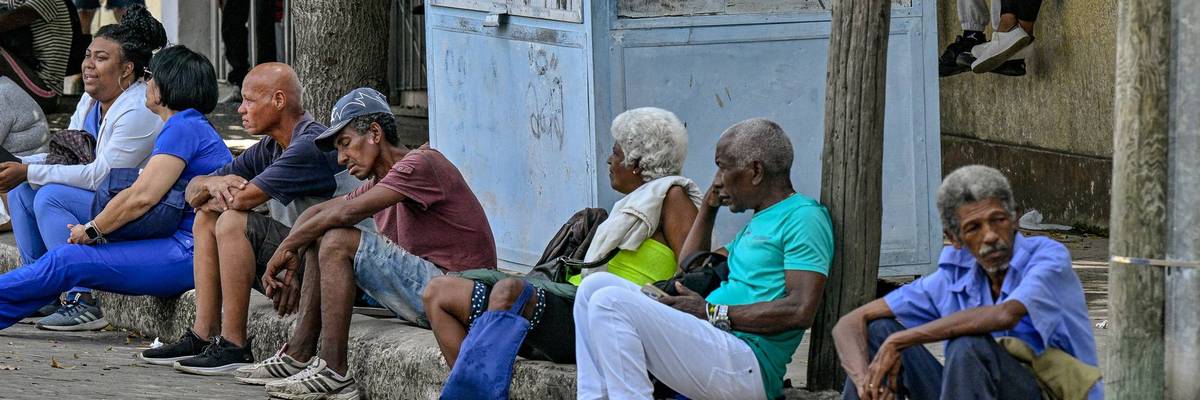
People wait at a bus stop in Havana during a blackout on March 16, 2026.
Instead of threatening the island further, the president must ask Congress to end the embargo that began in 1960 so that the economic reconstruction of the country can begin.
President Donald Trump told reporters at the White House, “I think I can do anything I want with it” referring to Cuba. His remarks are reminiscent of his recorded Access Hollywood statement to host Billy Bush, “When you're a star they let you do it. You can do anything... Grab them by the *****.” No, Mr. President, you have no right to despoil Cuba as you please.
Cuba is being choked by this administration’s sadistic policies. The best we can do for the 10 million people living there is not to rape the island but rather end the embargo—and reset the opening of relations that had been the hallmark of progress during the Obama administration.
I led educational tours to Cuba before Trump destroyed rapprochement, increased sanctions, and suffocated the blossoming of enterprises tied to tourism and small business entrepreneurship. Unfortunately, the Biden administration chose to follow Trump rather than returning to Barack Obama’s approach aimed at improving relations between the two countries and supporting the emerging free market economy.
There is growing popular sentiment in Canada, Mexico, Spain, and other countries that are providing humanitarian aid to Cuba for their governments to show their independence from Trump’s chaos by breaking the blockade and dispatching lifesaving fuel. It is time to end the embargo of Cuba.
Decades of US policies aimed at destabilizing Cuba hurt ordinary citizens and set back progress within Cuba.
Vermont’s Sen. Peter Welch has been a leading voice of reason with respect to Cuba. He is clearly concerned about the terrible price ordinary people are paying as a result of the blockade of fuel supplies. I urge readers to listen to Sen. Welsh’s recent speech.
Senator Welch has proposed a forthright plan to end the suffering of the Cuban people:
First, Trump should end restrictions on the rights of Americans to travel to Cuba. Welch says, “The American and Cuban people should freely interact with one another.”
Second, the president should maximize support to Cuba’s private sector, particularly small businesses.
Third, Cuba must be removed from the list of state sponsors of terrorism. As Sen. Welch pointed out, “No other country agrees that it applies.”
Fourth, the president must ask Congress to end the embargo that began in 1960 so that the economic reconstruction of the country can begin.
Sen. Welch does not mince words about the need for political reforms in Cuba, beginning with the release of political prisoners and the right to speak freely about the society and government. But he also makes it clear that decades of US policies aimed at destabilizing Cuba hurt ordinary citizens and set back progress within Cuba and in the development of healthy relations between the US and Cuba.
This country and this world are at a monumental crossroads. US voters have an opportunity to beat back the forces of fascism and confront the billionaires who are rigging the economy, our media system, and our democracy, making it increasingly impossible for ordinary people to get by. We’re not just talking about the election. We’re talking about what must be done once these fascist elements are vanquished from power. We need a bolder set of solutions than what either major party has so far been willing to offer and a working-class movement ready to fight like hell for it. Trump didn't emerge from nowhere. The conditions that fueled MAGA authoritarianism were created by decades of radical neoliberal economic policies and a corrupt political system dominated by corporate interests. They slashed taxes on the super-rich, promising that the benefits would trickle down. They said giveaways to the corporate titans would make life more affordable for the rest of us. It was all bullshit. And when a bitter, betrayed populace searches for someone to blame, right-wing demagogues have little trouble finding scapegoats. People know when they're being lied to, but you won't hear any of this from the corporate media. Only independent journalism—powered and funded by people who believe in building a better world—can deliver truly trustworthy daily news. If you share our vision, please contribute whatever you can to sustain our work. |
President Donald Trump told reporters at the White House, “I think I can do anything I want with it” referring to Cuba. His remarks are reminiscent of his recorded Access Hollywood statement to host Billy Bush, “When you're a star they let you do it. You can do anything... Grab them by the *****.” No, Mr. President, you have no right to despoil Cuba as you please.
Cuba is being choked by this administration’s sadistic policies. The best we can do for the 10 million people living there is not to rape the island but rather end the embargo—and reset the opening of relations that had been the hallmark of progress during the Obama administration.
I led educational tours to Cuba before Trump destroyed rapprochement, increased sanctions, and suffocated the blossoming of enterprises tied to tourism and small business entrepreneurship. Unfortunately, the Biden administration chose to follow Trump rather than returning to Barack Obama’s approach aimed at improving relations between the two countries and supporting the emerging free market economy.
There is growing popular sentiment in Canada, Mexico, Spain, and other countries that are providing humanitarian aid to Cuba for their governments to show their independence from Trump’s chaos by breaking the blockade and dispatching lifesaving fuel. It is time to end the embargo of Cuba.
Decades of US policies aimed at destabilizing Cuba hurt ordinary citizens and set back progress within Cuba.
Vermont’s Sen. Peter Welch has been a leading voice of reason with respect to Cuba. He is clearly concerned about the terrible price ordinary people are paying as a result of the blockade of fuel supplies. I urge readers to listen to Sen. Welsh’s recent speech.
Senator Welch has proposed a forthright plan to end the suffering of the Cuban people:
First, Trump should end restrictions on the rights of Americans to travel to Cuba. Welch says, “The American and Cuban people should freely interact with one another.”
Second, the president should maximize support to Cuba’s private sector, particularly small businesses.
Third, Cuba must be removed from the list of state sponsors of terrorism. As Sen. Welch pointed out, “No other country agrees that it applies.”
Fourth, the president must ask Congress to end the embargo that began in 1960 so that the economic reconstruction of the country can begin.
Sen. Welch does not mince words about the need for political reforms in Cuba, beginning with the release of political prisoners and the right to speak freely about the society and government. But he also makes it clear that decades of US policies aimed at destabilizing Cuba hurt ordinary citizens and set back progress within Cuba and in the development of healthy relations between the US and Cuba.