SUBSCRIBE TO OUR FREE NEWSLETTER
Daily news & progressive opinion—funded by the people, not the corporations—delivered straight to your inbox.
5
#000000
#FFFFFF
To donate by check, phone, or other method, see our More Ways to Give page.
Daily news & progressive opinion—funded by the people, not the corporations—delivered straight to your inbox.
"Warsh showed his true colors during the 2008 global financial crisis, helping bail out big banks while millions of families lost their jobs and homes," said one critic.
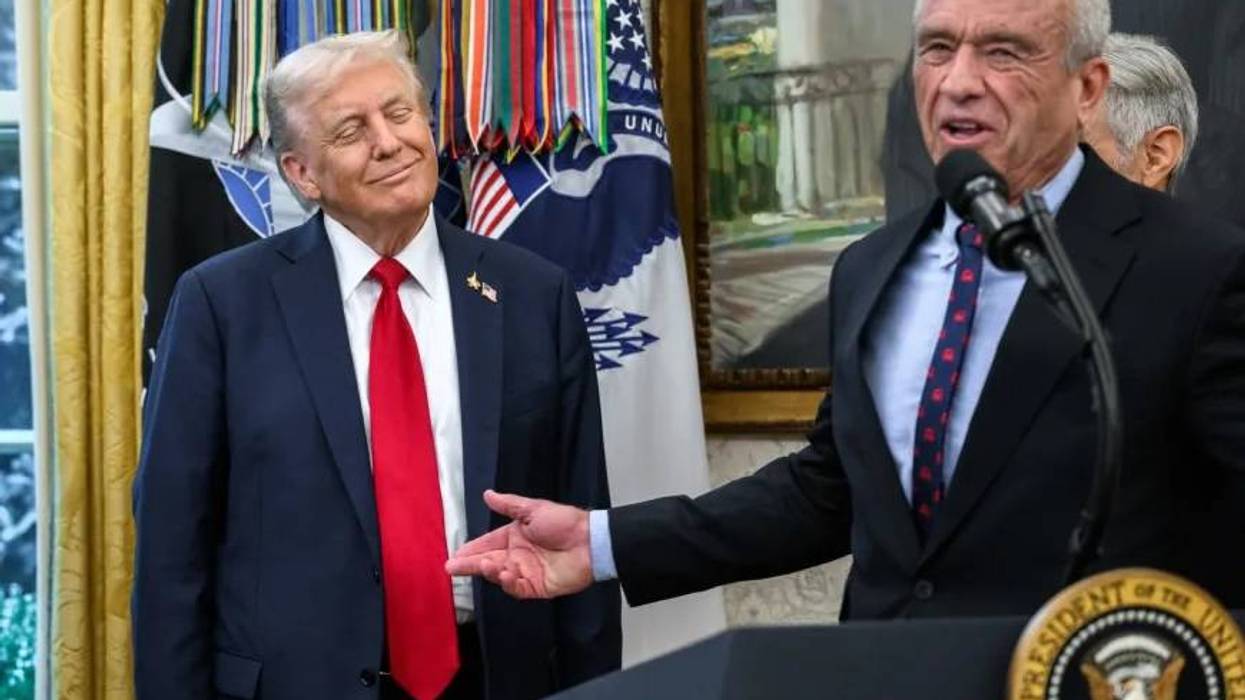
Kevin Warsh, a former Federal Reserve governor, evidently "passed the loyalty test" put forward by President Donald Trump, said US Sen. Elizabeth Warren on Friday after Warsh was named the president's nominee to lead the central bank.
Trump selected Warsh amid his longtime push for the Federal Reserve to aggressively cut interest rates as the labor market remains weak and inflation is persistently high.
During his time at the Fed from 2006-11, Warsh was seen as a monetary policy hawk, opposing policies aimed at stimulating the economy.
But in recent weeks, as Trump has considered several potential successors to Federal Reserve Chair Jerome Powell, whose term is up in May, the president has indicated that Warsh has changed his views on lowering borrowing costs to match those of the White House.
"He thinks you have to lower interest rates," Trump said in December.
Warsh called for “regime change in the conduct of policy" at the central bank last year as the president was considering him as well as longtime economic adviser Kevin Hassett, Fed Gov. Christopher Waller, and BlackRock executive Rick Rieder.
With families across the US struggling to afford the rising cost of groceries, electricity, and other essentials, the progressive advocacy group Groundwork Collaborative emphasized that Trump selected a nominee "with a record of siding with financiers over workers."
Warsh played a key role in coordinating the Fed's response to the 2008 financial crisis, arranging the bailout of the insurance giant American International Group and brokering the sale of Bear Stearns to JPMorgan Chase.
"Warsh showed his true colors during the 2008 global financial crisis, helping bail out big banks while millions of families lost their jobs and homes," said Alex Jacquez, chief of policy and advocacy at Groundwork. “Kevin Warsh is a disastrous choice to oversee monetary policy.”
Now that Warsh appears to have changed his views on interest rates to match Trump's, his nomination "is the latest step in Trump’s plan to ensure the Fed does what he tells it to, not what’s best for American families," said Jacquez, a former Obama administration official.
"Trump chose Kevin Warsh for Fed chair because his father-in-law is a billionaire donor, the brains behind Trump’s idiotic scheme to invade Greenland. He also chose him because Warsh has shown willingness to wildly alter his views on monetary policy based on who is in the White House."
The nomination was announced weeks after Powell issued a stinging rebuke to Trump's Department of Justice following the news that the DOJ was threatening him with criminal charges over his testimony regarding renovations at the Federal Reserve building—charges that Powell said were a pretext for punishing him over his refusal to bend to Trump's demand for lowered interest rates.
Trump has also tried to fire Lisa Cook, a member of the Fed's board of governors. The Supreme Court heard arguments this month in the case regarding the attempted dismissal, and appeared skeptical that it could legally move forward.
This week, the Fed opted to hold interest rates at 3.5-3.75%, above the 1% level Trump has called for.
Warsh is currently a senior fellow at the conservative Hoover Institution at Stanford University and works with billionaire investor Stanley Druckenmiller.
After the DOJ launched its criminal probe into Powell this month, Sen. Thom Tillis (R-NC) said he would not support any nominee to succeed the chairman until the DOJ's investigation was resolved.
Warren (D-Mass.) said Friday that "no Republican purporting to care about Fed independence should agree to move forward with this nomination until Trump drops his witch hunts" that have targeted Powell and Cook.
Rep. Don Beyer (D-Va.) also pointed out that the selection of Warsh could be Trump's latest move in his push for US control of Greenland. Warsh is married to Jane Lauder, a daughter of longtime Trump friend and Estée Lauder Companies heir Ronald Lauder, who first proposed that the vast, strategically located Arctic island should belong to the US instead of the kingdom of Denmark.
"Trump chose Kevin Warsh for Fed chair because his father-in-law is a billionaire donor, the brains behind Trump’s idiotic scheme to invade Greenland," Beyer said. "He also chose him because Warsh has shown willingness to wildly alter his views on monetary policy based on who is in the White House."
"The Senate should note these bad qualifications and remember Warsh’s awful track record at the Fed during the 2008 financial crisis and Great Recession," the congressman added. "These concerns along with Trump’s attacks on the Fed mean this nominee must face hard questions about independence and monetary policy. Warsh can’t just get a rubber stamp."
"When taking into account predicted downward revisions, the data says we’re losing jobs," said one economic analyst.
Although President Donald Trump has given himself glowing marks for his economic record, the US job market has continued showing signs of weakness amid recent layoffs from some major employers.
The Associated Press on Thursday published a roundup of corporate layoffs that have been announced in recent months, highlighted by Amazon, which announced it was cutting an additional 16,000 jobs on Wednesday; United Parcel Service, which on Tuesday revealed plans to slash 30,000 jobs; and chemical maker Dow, which on Thursday said it would be reducing its workforce by 3,000.
And as reported by CNBC, retailer Home Depot announced on Wednesday that it was eliminating 800 positions as it struggles with slower sales that company executives blame on a dampened housing market caused by high interest rates.
The latest layoffs are not merely anecdotal data, but symbolic of a labor market that has been stuck in a rut for several months. As noted by economic analyst Steve Rattner in a Thursday social media post, average monthly employment growth has been "slightly above zero" ever since Trump first announced his market-shaking tariffs in April.
"When taking into account predicted downward revisions," Rattner added, "the data says we’re losing jobs."
This week's announced Amazon layoffs drew the ire of Americans for Tax Fairness, which pointed out that the Jeff Bezos-founded online retail giant has been the beneficiary of several big-ticket tax breaks for more the last several years.
"We've given Amazon $9.5 BILLION in tax breaks over the last 7 years," the group explained. "And for what? Their CEO made $263 million from 2018-2024. Since 2013, they've spent $857 million on stock buybacks and $161 million on lobbying. And they just announced they're laying off 16,000 workers."
The Washington Post, which is owned by Bezos, is reportedly bracing for layoffs of its own.
A Thursday report from Semafor revealed that the Post's White House reporters wrote a letter to Bezos imploring him to back off a plan to make substantial cuts throughout the paper's staff.
"The effort from the Washington Post’s White House reporters comes as staffers are scrambling to preserve their jobs, with layoffs set to hit the newsroom hard in the coming weeks," Semafor reported. "Unconfirmed rumors have circulated in recent days about the scope of the cuts, which are expected to be as high as 300."
We're not to going create conditions, said the billionaire president who inherited his wealth, "so that somebody that didn't work very hard can buy a home."
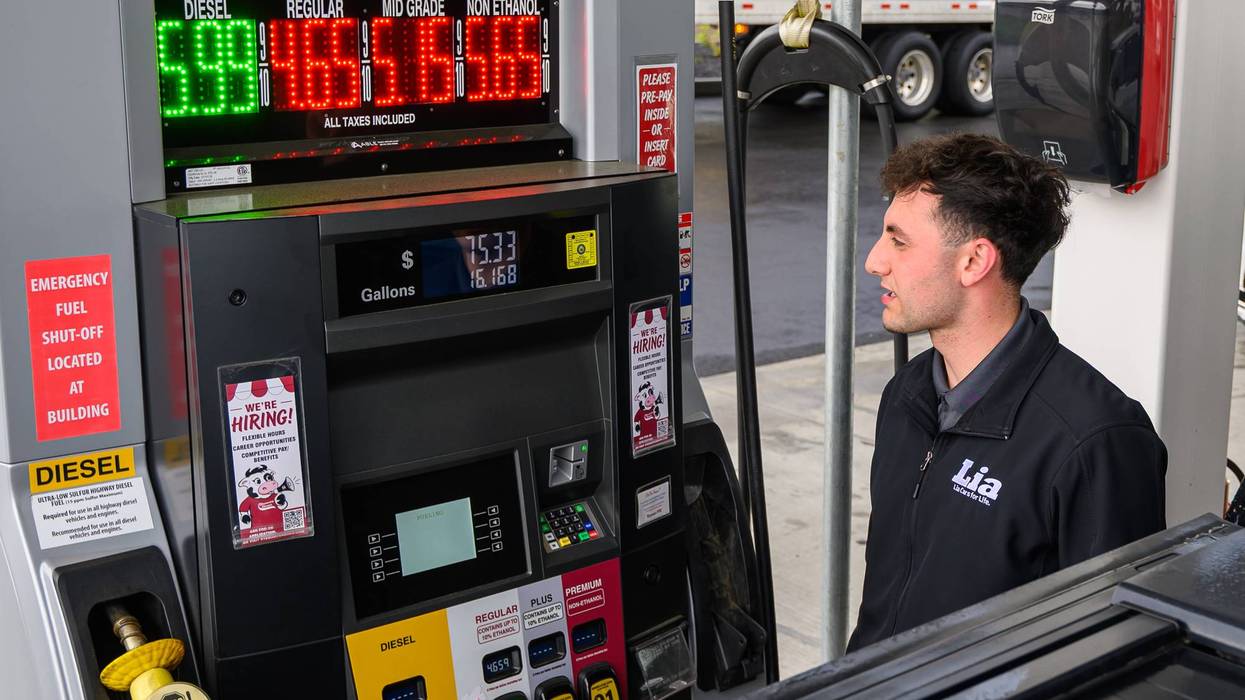
President Donald Trump in recent weeks has vowed to make living in the US more affordable, as polls have consistently shown voters are giving him low marks on both his handling of the economy and inflation.
However, Trump undercut this pledge during a Cabinet meeting on Thursday in which he said he wanted—despite a nationwide housing crisis—to actively make housing even more expensive than it is today.
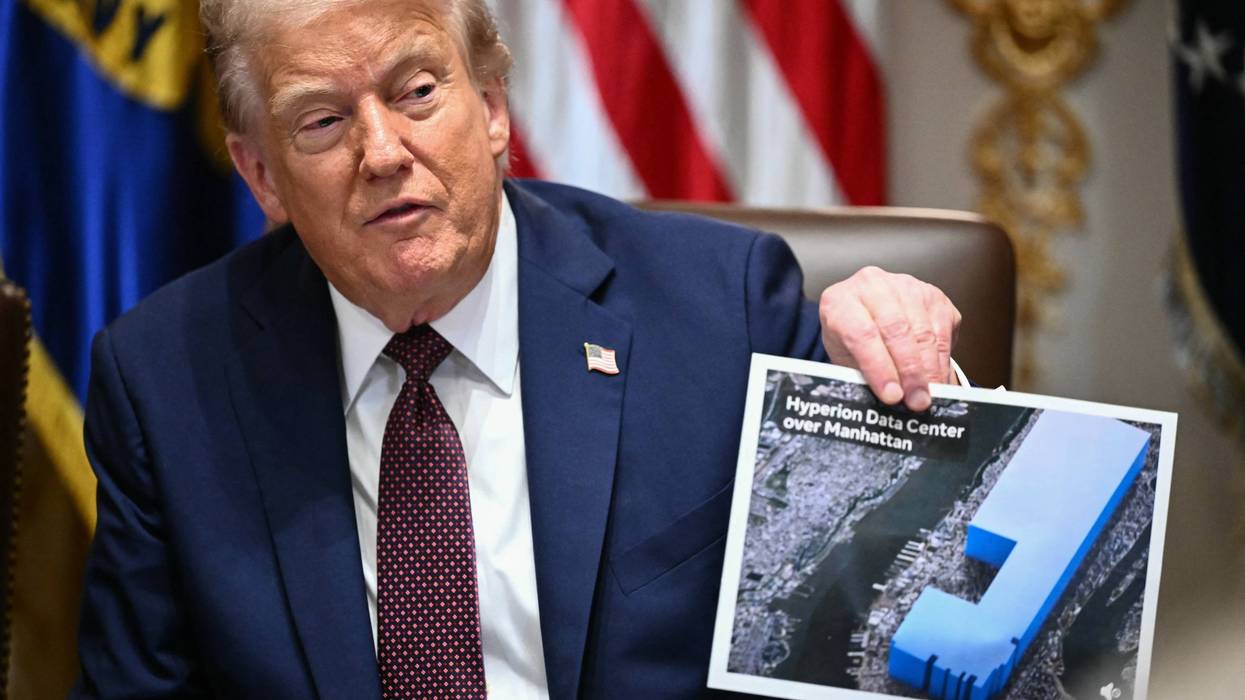
"Existing housing, people that own their home, we're going to keep them wealthy, we're going to keep those prices up," Trump said. "We're not going to destroy the value of their homes so that somebody that didn't work very hard can buy a home."
Trump: I don’t want to drive housing prices down. I want to drive housing prices up for people who own their homes. You can be sure that will happen pic.twitter.com/9BupkUmXss
— Acyn (@Acyn) January 29, 2026
Trump added that his administration wanted to "make it easier to buy" a house by lowering interest rates, but then reiterated that he wanted to make houses themselves more expensive.
"There's so much talk of, 'Oh, we're going to drive housing prices down,'" Trump said. "I don't want to drive housing prices down, I want to drive housing prices up for people that own their homes. And they can be assured that's what's going to happen."
The implications of the president's remarks were obvious to those concerned about the nation's affordable housing crisis and the struggle of working people trying to get by.
As Melanie D'Arrigo, executive director for the Campaign for New York Health, put it: "54% of Americans struggle to afford housing, and over 770,000 Americans are homeless—and Trump doesn't think those numbers are high enough."
A Fox News poll released on Wednesday found that 54% of Americans think the US is worse off now than it was a year ago, while just 31% say the country is in better shape. Just 25% of voters surveyed said they are better off now than they were a year ago, and more than 40% said that Trump's economic policies have personally hurt them.
Given Trump's already low numbers on economic performance, many observers were quick to ridicule him for his pledge to make existing houses less affordable for prospective buyers.
"Hello Donald this is your political strategist speaking," George Pearkes, global macro strategist for Bespoke Investment Group, sarcastically wrote. "I am advising you today to please keep saying this stuff."
Rep. Teresa Leger Fernández (D-N.M.) argued that Trump's views on housing prices put him well out of touch with most US voters.
"Trump only sees the world as a rich developer," she wrote in a social media post. "He has never, and will never, care about creating affordable homeownership for working and middle class Americans."
Vox writer Eric Levitz posted a not-so-subtle dig at Trump for straying so easily off message.
https://t.co/qnR9wJiaBX pic.twitter.com/zrafC50Bea
— Eric Levitz (@EricLevitz) January 29, 2026
Polling analyst G. Elliott Morris, meanwhile, said that Trump's inability to stay on message was entirely predictable given his notorious unpredictability.
"Trump launched an affordability-focused midterm campaign for Republicans this week, traveling to Iowa to give a speech about how good his presidency has been for the cost of living," he wrote. "That's going about as well as you'd think. Here POTUS is saying he is going to keep housing prices high."
The Trump administration and Republicans in Congress "have allowed a hugely profitable corporation to avoid paying even a dime of federal income tax on their 2025 US profits."
Tesla, the electric car company led by former Trump administration special government employee Elon Musk, released its annual financial report Thursday, showing that it doubled its yearly income in 2025 over the previous year and brought in $5.7 billion.
The company, whose CEO spent several months rooting out what he claimed was fraud and waste across the federal government, reported "precisely zero current federal income tax" on the billions it made, according to an analysis by the Institute on Taxation and Economic Policy (ITEP).
The group explained that Tesla used accelerated depreciation, reducing the value of its capital assets, while also slashing its tax bill with tax breaks for its executive stock options.
Research and development tax credits netted $352 million in additional tax savings, and the company used "net operating losses stored up from previous years to offset current year income, although it’s hard to know how much of that affects US income rather than foreign income," said ITEP.
Analyzing the financial report, ITEP found that Tesla received over $1.1 billion in federal income tax breaks, paid for by US taxpayers, last year alone—after paying 0.4% of its US profits in federal income taxes over the previous three years.
Over that time period, said ITEP, "the Elon Musk-led company reported $12.58 billion of U.S. income on which its current federal tax was just $48 million... The company reported an effective federal income tax rate of 0.4%. This is a tiny fraction of the 21% tax rate profitable corporations are supposed to pay under the law."
The most it paid in taxes over the past three years was in 2023, when Tesla paid $48 million, at the federal effective tax rate of 1.2%. That was still just a fraction of the $823 million it would have paid if it had paid the federal corporate tax rate. In 2023, the company enjoyed $775 million in tax breaks.
The company's income tax payments worldwide in 2025 totaled $1.2 billion, with more than $1 billion going to China and other foreign governments. Tesla paid $28 million to the US government, "presumably related to tax years before 2025," said ITEP.
The organization noted that the "billion-dollar tax break" enjoyed by Tesla does not appear to be illegal.
However, ITEP said, it illustrates how the Trump administration and Republicans in Congress, by passing changes to corporate tax laws in the One Big Beautiful Bill Act (OBBBA) last summer, "have allowed a hugely profitable corporation to avoid paying even a dime of federal income tax on their 2025 US profits."
The organization warned last summer that special business tax breaks included in the OBBBA, including a reinstatement of bonus depreciation and new international rules, would cost the US government $165 billion in revenue in 2026.