

SUBSCRIBE TO OUR FREE NEWSLETTER
Daily news & progressive opinion—funded by the people, not the corporations—delivered straight to your inbox.
5
#000000
#FFFFFF
To donate by check, phone, or other method, see our More Ways to Give page.
Daily news & progressive opinion—funded by the people, not the corporations—delivered straight to your inbox.
Zoe Bridges-Curry, 904-476-8681, zoe@berlinrosen.com
Lynsey Kryzwick, 646-200-5311, lynsey@berlinrosen.com
Derrick Plummer, 202.251.9459, dplummer@ufcw.org
Jamie Way, 202-256-9974, jway@ufcw.org
Striking workers believe in Walmart, but they - along with business analysts, economists, shareholders, and human rights activists - also believe the company must address deep-rooted issues affecting workers, customer service and sales, and they are raising their concerns at this year's shareholder meeting. After visiting home office to call for change earlier this week, calling on the Walton family to address income inequality and informing customers at more than 100 stores nationwide today, Walmart associate and OUR Walmart leader Janet Sparks and former Bangladeshi garment Worker Kalpona Akter presented resolutions in front of an arena of thousands of shareholders this morning.
Janet Sparks, who works at Walmart in Baker, LA, presented shareholder resolution #6 to tie the interests of Walmart executives to the interests of shareholders by requiring that senior executives hold on to a large portion of their shares until they reach retirement age.
"Most of the $20 million you received came from bonuses," said Sparks, addressing Walmart CEO Mike Duke. "But at the store where I work associates have only received two quarterly bonus in the past five years and one was only $26.17. The bonuses you and I get are supposed to be tied to the performance of our stores and our company. But we all see the understaffing of our stores and the out of stocks that result. I think we can do better, and the first step is to remember what Sam Walton said: Listen to the Associates!"
Kalpona Akter, an internationally recognized sweatshop critic and former child garment worker, presented a resolution that would allow shareholders to call meetings as needed to respond to critical issues such as the recent tragedies at factories producing goods for Walmart in Bangladesh. Akter arrived in the United States Monday after hundreds of supporters raised funds to bring her to Walmart's annual shareholder meeting to share her concerns with executives and shareholders.
"What happened at Rana Plaza and Tazreen should never have happened, and we can never let it happen again," said Akter, the executive director of the Bangladeshi Center for Worker Solidarity. "Time and again, Walmart has broken its public commitments to workers throughout the supply chain. If the world's largest retailer refuses to improve the state of workers' rights and labor standards, things will not change."
Despite Walmart workers' struggle to support their families, plummeting customer service ratings and weak store sales due to understaffing, and preventable tragedies in the supply chain, Walmart has attempted to silence these voices through illegal retaliation, meritless lawsuits, and even firing workers. But support for workers' calls for change has only grown since the historic Black Friday strikes and protests at 1,000 Walmart stores last fall. Last week, more than 100 Walmart workers went on strike and joined a nationwide caravan to Bentonville to speak out against Walmart's illegal retaliation directly to executives and shareholders--bravely taking a stand for themselves, their families, and their coworkers.
"Last year Wal-Mart enjoyed $16.9 billion in profits and paid $5.4 billion in dividends, of which nearly half went just to the Walton family," said Dr. Sylvia Allegretto, an economist at the University of California at Berkeley. "Yet many of Wal-Mart's workers don't earn enough to make ends meet; many must rely on taxpayer-funded programs such as food stamps. As the single largest employer of U.S. workers, Wal-Mart could easily take the high road with respect to its workforce.
"Wal-Mart is also the single largest employer worldwide--and as such, they along with other multi-national corporations hold the power to implement real change to address safety and work related issues concerning workers around the globe," Allegretto said.
With community supporters echoing their calls nationally, members of the Organization United for Respect at Walmart (OUR Walmart)--a national organization of Walmart associates speaking out for a stronger company and economy--have been calling on the nation's largest private employer to publicly commit to creating better jobs. With more than $16 billion in annual profits and executives making 1,000 times more than the average Walmart employee, a growing number of associates and supporters nationwide are calling for the company to end retaliation against employees and publicly commit to providing full-time work with a minimum salary of $25,000 a year so workers don't have to rely on tax-payer funded programs to support their families. A new report released by the Democratic staff of the U.S. House Committee on Education and the Workforce found that the costs to taxpayers at just one store as a result of Walmart's inadequate wages and benefits is about $1 million.
For photos and video of strikers and their community supporters, visit https://changewalmart.tumblr.com. Or follow the conversation and see photos on Twitter at #Walmartstrikers.
OUR Walmart works to ensure that every Associate, regardless of his or her title, age, race, or sex, is respected at Walmart. We join together to offer strength and support in addressing the challenges that arise in our stores and our company everyday.

A Maine woman accused the Democratic US Senate candidate of drunkenly assaulting her at her home in 2021, which he denied.
US Senate candidate Graham Platner on Monday denied allegations of sexual assault, but the Maine Democrat also said his campaign is considering the "best path forward" in the wake of Politico's reporting.
Jenny Racicot told The New York Times in an article published last month that Platner's behavior was "reckless" and "unsettling" during their on-and-off relationship in 2019-21, and she cut off contact after he arrived at her Maine home drunk, despite her telling him not to come over. Politico reported Monday that the 41-year-old had told the newspaper off the record that he assaulted her.
Racicot told Politico that Platner came into her home uninvited that night and forced himself on her while she repeatedly told him to stop. She said that she was conflicted about publicly accusing him in part because she agrees with the candidate politically, but decided to speak out after much of the reaction to the Times focused on another ex with ties to the Republican Party. The outlet reviewed documents, including emails with her therapist, and spoke with sources Racicot had previously told about her experience.
In a two-minute video shared on social media Monday, Platner called Racicot's allegations "troubling, serious, and false," and said that "any accusation of nonconsensual behavior is categorically false." He also said that, "mindful of the political reality" that the reporting will inflict, "we are taking the time to reflect on the best path forward."
Platner decisively won his primary last month, after his opponent, Democratic Gov. Janet Mills, suspended her campaign in late April. The oyster farmer and combat veteran is a political newcomer who has championed progressive policies and called out the ultrarich, as well as the politicians who serve them—including longtime Republican Sen. Susan Collins, whom he's running to unseat in November.
While Platner has traveled Maine, speaking and rallying with working-class voters, he's also faced a series of controversies, including concerns over his offensive posts on Reddit, and the skull and crossbones tattoo he got with fellow Marines in Croatia, which he claimed he did not know closely resembled a Nazi symbol and got covered up during the campaign.
There was also the allegation from the GOP-affiliated ex interviewed by the Times, Lyndsey Fifield, that Platner was physically aggressive during their relationship, which he denied, and reporting that Platner's wife, Amy Gertner, told a senior campaign staffer that he had exchanged sexual messages with other women during their marriage, which Gertner responded to with a video.
In a statement to Politico on Monday, Platner's campaign pointed to previous controversies, saying:
These allegations are very serious and Graham vigorously denies them. They are also coached and coordinated by out-of-state establishment operatives. For a year, opponents of this campaign have thrown everything they can at Graham—calling him a Nazi, a war criminal, and a communist. None of it has been true, and this is no different. It is not a coincidence that this story comes a week before the ballot deadline, just as the previous false allegations came a week before the primary. Graham began this campaign to fight for a Maine where everyone is treated with dignity and where Mainers are put first, and no amount of desperate smears will stop this movement from seeing that vision through.
Following Politico's reporting, Platner has lost some key support. At least two members of Congress who backed him—Rep. Ro Khanna (D-Calif.) and Sen. Ruben Gallego (D-Ariz.)—withdrew their endorsements, and the Maine Democratic Party's chair, vice chair, and executive director issued a joint statement urging him to withdraw as the party nominee.
The US National Domestic Violence Hotline can be reached at 1-800-799-SAFE (7233), by texting "START" to 88788, or through chat at thehotline.org. It offers 24/7, free, and confidential support. DomesticShelters.org has a list of global and national resources.

"Children are not incidental victims; they are directly affected, facing forced recruitment, sexual violence, unlawful detention, torture, and a lack of medical care," Amnesty International USA stressed.
Demands for a ceasefire in Sudan's three-year civil war mounted this week amid reports that more than 300 children have been killed or injured in the northeastern African nation this year alone, mostly by drone strikes.
The United Nations Children's Fund (UNICEF) said Modaysu that "children across Sudan continue to bear the brunt of a war that is becoming increasingly deadly, with at least 330 children reported killed or injured during the first six months of 2026. Darfur and Kordofan states continued to record the highest levels of child casualties."
"The situation in and around al-Obeid, and more broadly across North Kordofan, is particularly alarming," UNICEF continued. "Since May 2026, drone strikes and other attacks have reportedly resulted in more than 35 child casualties in the state, including at least 18 children killed and more than 17 injured. The affected children ranged in age from just 2 months to 17 years. According to reports, drone attacks accounted for 60% of these casualties, highlighting the growing impact of this method of warfare on children and families."
"Repeated drone strikes and shelling have also damaged civilian infrastructure, including homes, schools, health facilities, water systems, and markets; disrupted supply routes; and placed essential services under increasing strain," the agency added. "With an estimated 500,000 civilians at risk in and around al-Obeid and across North Kordofan, any further deterioration could expose even more children to death, injury, displacement, and other grave protection risks."
Amnesty International USA said Monday that both the Sudanese Armed Forces (SAF) and Rapid Support Forces (RSF) rebels "have committed numerous human rights violations, including deliberate attacks on civilians."
"Ethnic targeting has resulted in assaults on non-Arab communities, with women and girls subjected to sexual violence and exploitation," Amnesty added. "Children are not incidental victims; they are directly affected, facing forced recruitment, sexual violence, unlawful detention, torture, and a lack of medical care."
On Monday, the United Nations Human Rights Council approved a measure proposed by five European countries—Germany, Ireland, the Netherlands, Norway, and the United Kingdom—condemning escalating RSF-led violence in and around al-Obeid.
While both the SAF adnd RSF have committed documented human rights crimes, an independent United Nations panel released a report earlier this year detailing allegedly genocidal crimes committed by RSF rebels during last October's offensive in Darfur, where thousands of people were killed and others tortured, raped, and starved during the capture of el-Fasher.
The UN experts found that “genocidal intent is the only reasonable inference that can be drawn” from RSF's actions.
The ceasefire demands from UNICEF and Amnesty follow similar calls from governments, including France and the United Arab Emirates, as well as other UN agencies.
On Friday, UN High Commissioner for Human Rights Volker Türk warned that "another human rights catastrophe is unfolding" in al-Obeid.
"The signs from #ElObeid are clear & unmistakable: another human rights catastrophe is unfolding in #Sudan," @volker_turk told the @UN Human Rights Council.
"This is not a drill. It is a red alert that needs to land on the desks of Heads of State & Government around the world." pic.twitter.com/zH3bVIpX34
— UN Human Rights Council (@UN_HRC) July 3, 2026
“Civilians have been subjected to siege-like conditions for 18 months, battered by relentless drone attacks as the Sudanese Armed Forces and the Rapid Support Forces battle for control over areas surrounding the city," Türk noted.
“Some people are selling their belongings to finance their escape from the city," he continued. "For many, the exorbitant cost of transport and constant attacks on vehicles along exit routes, make leaving impossible."
"We have documented patterns of summary executions, abductions, torture and ill-treatment, sexual violence, and looting along the routes taken by displaced people across the Kordofan region," Türk added. "This is not a drill. It is a red alert that needs to land on the desks of heads of state and government around the world."
Since April 2023, Sudan's conflict has killed at least 59,000 people, displaced around 13 million others, and fueled famine in different parts of the country of approximately 52 million inhabitants. More than 30 million Sudanese are also in need of humanitarian assistance.
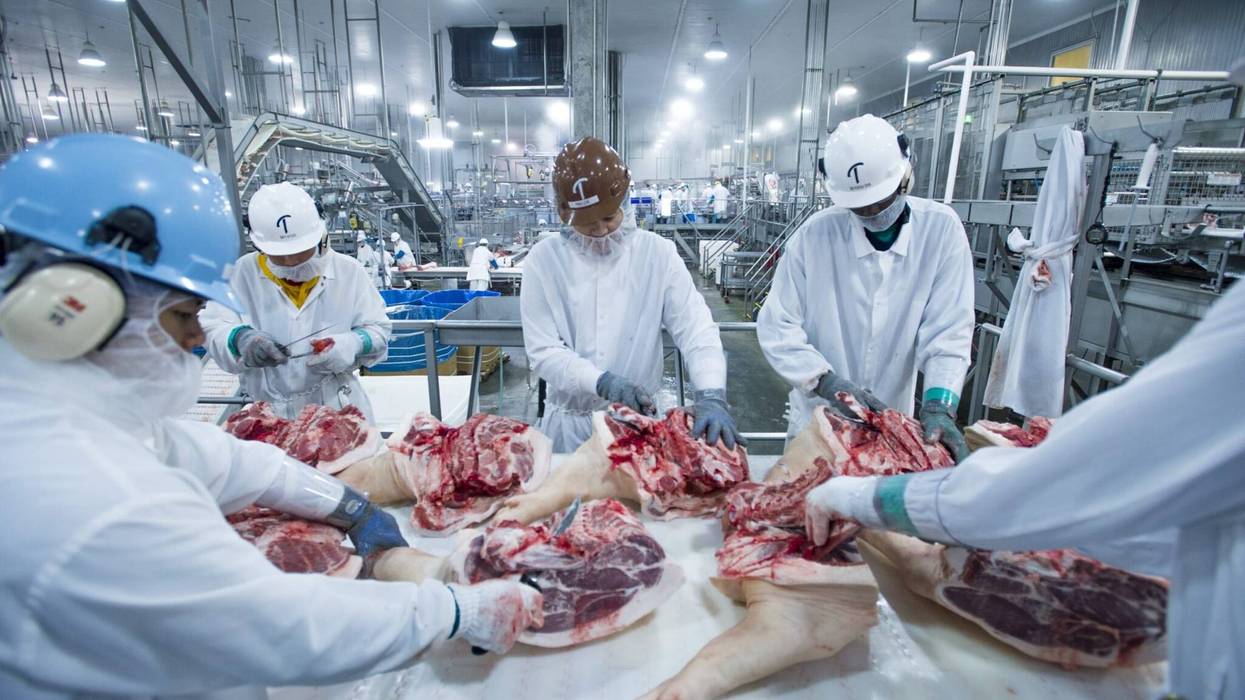
"We need robust enforcement of antitrust and fair trade practice laws to finally protect producers from meatpackers’ fundamentally unfair and illegal practices," said one campaigner.
A leading government accountability watchdog group on Monday ripped the Trump administration's move to rescind Biden-era rules enacted to protect ranchers and farmers from abuse by meatpacking corporations and boost competition in the key industry.
The US Department of Agriculture (USDA) has announced the reversal of three Biden administration rules under the Packers and Stockyards Act of 1921. One of the rules prohibits meatpackers, swine contractors, and poultry companies from retaliating against producers for actions like joining associations, speaking with regulators, or seeking other buyers.
Another rule mandated improved transparency in poultry grower contracts. The third rule‚ which was set to take effect this month, would have limited how poultry companies use the tournament payment system.
USDA said it plans to start the revocation process with proposed rulemakings scheduled for later this month and October.
Farm groups and antitrust advocates argue the move removes protections against monopolistic, deceptive, and retaliatory practices by dominant meatpacking and poultry companies.
“For years, meat corporations have abused hardworking farmers and ranchers. Now, the Trump administration is proposing to undo long-overdue progress made to level the playing field," Emily Miller, staff attorney at Food & Water Watch, said Monday in a statement. "This move is a slap in the face to all those who have long fought for fair treatment in livestock and poultry markets."
The USDA's move comes amid increased meat sector consolidation, which studies by Food & Water Watch, More Perfect Union, and others have found results in higher consumer prices and lower farmer profits.
Over the course of his two terms in office, Trump has boosted the meatpacking industry at the expense of worker rights, competition, and public health. His administration refused to issue binding rules requiring businesses to institute safety measures amid the Covid-19 pandemic, and he invoked the Defense Production Act to classify meatpacking plants as critical infrastructure and force them to stay open even as the coronavirus ravaged industry workers.
Trump has also supported corporate monopolization in meatpacking, and his administration has shut down a Department of Justice antitrust probe of alleged industry collusion. Just four meatpackers control approximately 80% of the market. Meanwhile, cattle producers who in 1980 received 63 cents for every dollar paid by consumers for beef were receiving just 37 cents four decades later.
"We need robust enforcement of antitrust and fair trade practice laws to finally protect producers from meatpackers’ fundamentally unfair and illegal practices," Miller said on Monday. "These rollbacks will do the opposite. We won’t rest until USDA does its job by putting producers above corporations.”