SUBSCRIBE TO OUR FREE NEWSLETTER
Daily news & progressive opinion—funded by the people, not the corporations—delivered straight to your inbox.
5
#000000
#FFFFFF
To donate by check, phone, or other method, see our More Ways to Give page.
A two-step solution to climate change: Fire all the men. Replace them with women.
If you think this proposal is hyperbolic, just look at the data. Women invest more in health, security, and our children's future than men do. When American women got the vote in 1920--a time when the vast majority of babies were born at home--local governments increased public health spending by 45 percent within one year. Some of those funds paid for nurses to go door-to-door and for the first time record every birth, and also help mothers care for their children. The program saved 20,000 children from premature death each year, reducing child mortality by as much as 15 percent.
When you take the next step, putting women in government, they tend to prioritize education, health, and family programs. Beginning in 1993, India mandated that women hold one-third of all seats on local government councils. Soon after, female citizens became more likely to speak up in village meetings and be taken seriously, and the councils began to increase investments in clean drinking water and other public goods. Many other studies have found similar results: Female politicians expand programs and funding for education, health, and infrastructure.
Now look at the polling data. In the United States--embarrassingly, a hotbed of climate change denial--male deniers outnumber females two to one. An American woman is 50 percent more likely to completely accept climate change science than is the average man.
A group of about 20 female leaders gathered this week on the sidelines of the Paris climate conference to discuss the marginalization of women, the silencing of indigenous mothers and sisters, and possible solutions to these problems. They came from Sweden and the Maldives, from the United States and Ireland, from Canada and Congo. They were women from around the world.
Osprey Orielle Lake, founder of the U.S.-based Women's Earth & Climate Action Network, opened by recounting a conversation she'd had with an indigenous Sarayaku mother from the Ecuadorian Amazon. "We carry our babies on our backs at night through the jungle," the woman told her. "We can do anything."
Lake pointed out that 80 percent of the people displaced by climate change are women. When forced into refugee camps, they are vulnerable to sexual abuse and trafficking. From Thailand to Honduras, women who have stood up for the environment have been targeted for mistreatment, and worse.
But women are also responsible for much of global food production and control a large proportion of families' purchasing power. In these ways and others, Lake insisted, women hold the power to change the world.
We pulled aside two of the speakers, who are leading similar fights on separate sides of the globe, to hear their stories.
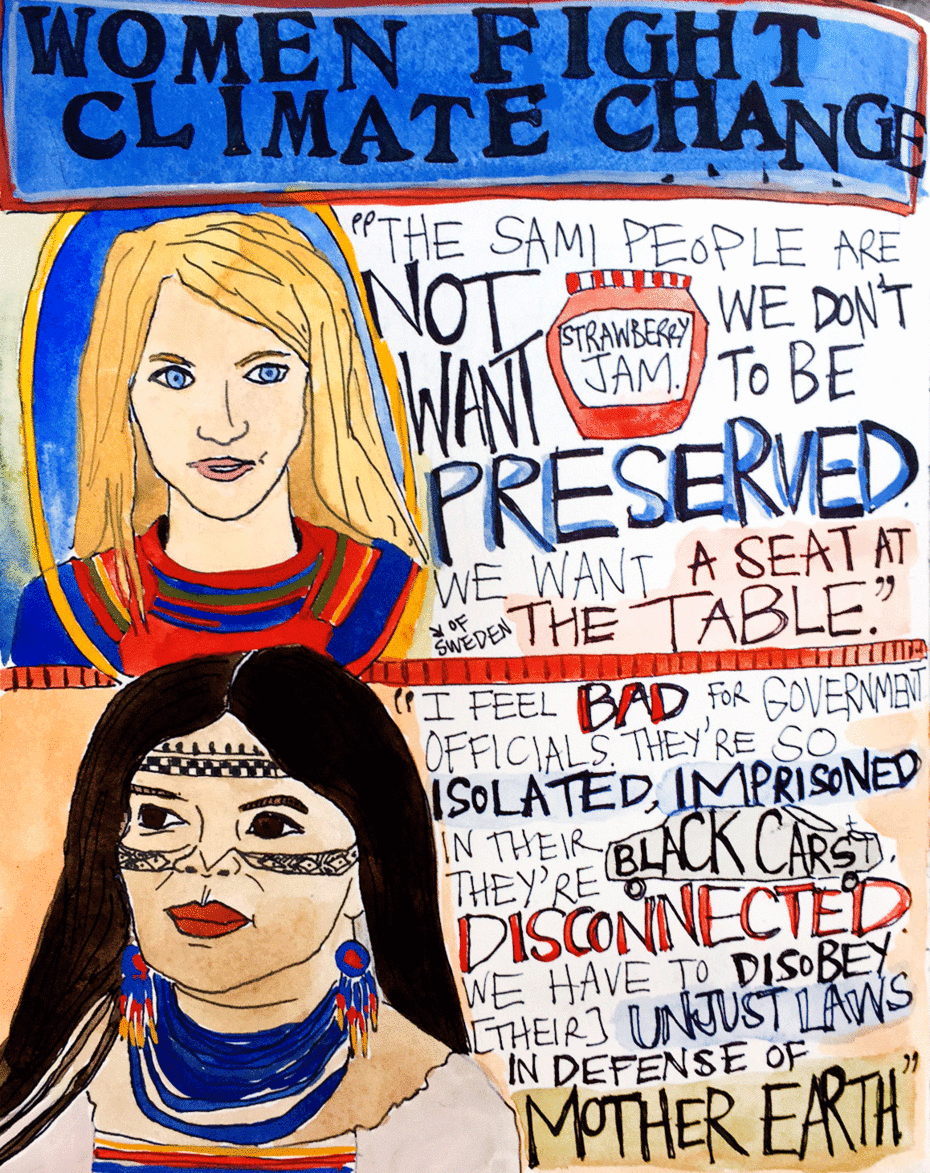
Josefina Skerk, Sweden
Josefina Skerk has been a political activist for the Sami people of northern Sweden since the age of 19. Now 28, Skerk is the vice president of the Sami Parliament, where she fights to protect a way of life that relies heavily on the seasonal ice that allows her people and the animals they hunt to move across the landscape. Her family has fished and hunted sustainably for generations, but that tradition is now at risk of disappearing.
"A two degree increase will mean eight degrees in our part of the Arctic," she said. "We are losing our winter."
Climate change has altered the number and type of animals available to sustain the Sami, Skerk added. Her neighbors who herd reindeer may soon lose their livelihoods as melting permafrost, tundra fires, mining activity, and other environmental disruptions threaten traditional practices.
"The bond we have with nature is that of a family member," she continued. "Right now our family member, our Mother Nature, is screaming."
Patricia Gualinga, Amazon
Patricia Gualinga is a fierce defender of the world's largest tropical rainforest. From the Sarayaku territory of Ecuador, Gualinga is a leader in the fight to stop oil and mineral extraction in one of the last great wildernesses on the planet. In 2012, she helped win a landmark case in the Inter-American Court of Human Rights, which convicted the Ecuadorian government of violating her people's rights by opening their land to oil exploration.
"We know how to read the plants, we know how to read the earth, we know how to read the environment," she said. "We're connected to the earth, the plants, the spiders."
Gualinga, who is the international relations director for the Kichwa people, arrived in Paris with the Kawsak Sacha ("Living Forest") proposal, which promotes an economic system that functions more like an ecological web, balancing the needs of all living things.
"We are all united," she told the crowd. "This isn't a struggle of indigenous peoples. It's not only those who are on the front lines. It's all of us. We have to respect all life. We have to respect our future generations."
A two-step solution to climate change: Fire all the men. Replace them with women.
If you think this proposal is hyperbolic, just look at the data. Women invest more in health, security, and our children's future than men do. When American women got the vote in 1920--a time when the vast majority of babies were born at home--local governments increased public health spending by 45 percent within one year. Some of those funds paid for nurses to go door-to-door and for the first time record every birth, and also help mothers care for their children. The program saved 20,000 children from premature death each year, reducing child mortality by as much as 15 percent.
When you take the next step, putting women in government, they tend to prioritize education, health, and family programs. Beginning in 1993, India mandated that women hold one-third of all seats on local government councils. Soon after, female citizens became more likely to speak up in village meetings and be taken seriously, and the councils began to increase investments in clean drinking water and other public goods. Many other studies have found similar results: Female politicians expand programs and funding for education, health, and infrastructure.
Now look at the polling data. In the United States--embarrassingly, a hotbed of climate change denial--male deniers outnumber females two to one. An American woman is 50 percent more likely to completely accept climate change science than is the average man.
A group of about 20 female leaders gathered this week on the sidelines of the Paris climate conference to discuss the marginalization of women, the silencing of indigenous mothers and sisters, and possible solutions to these problems. They came from Sweden and the Maldives, from the United States and Ireland, from Canada and Congo. They were women from around the world.
Osprey Orielle Lake, founder of the U.S.-based Women's Earth & Climate Action Network, opened by recounting a conversation she'd had with an indigenous Sarayaku mother from the Ecuadorian Amazon. "We carry our babies on our backs at night through the jungle," the woman told her. "We can do anything."
Lake pointed out that 80 percent of the people displaced by climate change are women. When forced into refugee camps, they are vulnerable to sexual abuse and trafficking. From Thailand to Honduras, women who have stood up for the environment have been targeted for mistreatment, and worse.
But women are also responsible for much of global food production and control a large proportion of families' purchasing power. In these ways and others, Lake insisted, women hold the power to change the world.
We pulled aside two of the speakers, who are leading similar fights on separate sides of the globe, to hear their stories.
Josefina Skerk, Sweden
Josefina Skerk has been a political activist for the Sami people of northern Sweden since the age of 19. Now 28, Skerk is the vice president of the Sami Parliament, where she fights to protect a way of life that relies heavily on the seasonal ice that allows her people and the animals they hunt to move across the landscape. Her family has fished and hunted sustainably for generations, but that tradition is now at risk of disappearing.
"A two degree increase will mean eight degrees in our part of the Arctic," she said. "We are losing our winter."
Climate change has altered the number and type of animals available to sustain the Sami, Skerk added. Her neighbors who herd reindeer may soon lose their livelihoods as melting permafrost, tundra fires, mining activity, and other environmental disruptions threaten traditional practices.
"The bond we have with nature is that of a family member," she continued. "Right now our family member, our Mother Nature, is screaming."
Patricia Gualinga, Amazon
Patricia Gualinga is a fierce defender of the world's largest tropical rainforest. From the Sarayaku territory of Ecuador, Gualinga is a leader in the fight to stop oil and mineral extraction in one of the last great wildernesses on the planet. In 2012, she helped win a landmark case in the Inter-American Court of Human Rights, which convicted the Ecuadorian government of violating her people's rights by opening their land to oil exploration.
"We know how to read the plants, we know how to read the earth, we know how to read the environment," she said. "We're connected to the earth, the plants, the spiders."
Gualinga, who is the international relations director for the Kichwa people, arrived in Paris with the Kawsak Sacha ("Living Forest") proposal, which promotes an economic system that functions more like an ecological web, balancing the needs of all living things.
"We are all united," she told the crowd. "This isn't a struggle of indigenous peoples. It's not only those who are on the front lines. It's all of us. We have to respect all life. We have to respect our future generations."
A two-step solution to climate change: Fire all the men. Replace them with women.
If you think this proposal is hyperbolic, just look at the data. Women invest more in health, security, and our children's future than men do. When American women got the vote in 1920--a time when the vast majority of babies were born at home--local governments increased public health spending by 45 percent within one year. Some of those funds paid for nurses to go door-to-door and for the first time record every birth, and also help mothers care for their children. The program saved 20,000 children from premature death each year, reducing child mortality by as much as 15 percent.
When you take the next step, putting women in government, they tend to prioritize education, health, and family programs. Beginning in 1993, India mandated that women hold one-third of all seats on local government councils. Soon after, female citizens became more likely to speak up in village meetings and be taken seriously, and the councils began to increase investments in clean drinking water and other public goods. Many other studies have found similar results: Female politicians expand programs and funding for education, health, and infrastructure.
Now look at the polling data. In the United States--embarrassingly, a hotbed of climate change denial--male deniers outnumber females two to one. An American woman is 50 percent more likely to completely accept climate change science than is the average man.
A group of about 20 female leaders gathered this week on the sidelines of the Paris climate conference to discuss the marginalization of women, the silencing of indigenous mothers and sisters, and possible solutions to these problems. They came from Sweden and the Maldives, from the United States and Ireland, from Canada and Congo. They were women from around the world.
Osprey Orielle Lake, founder of the U.S.-based Women's Earth & Climate Action Network, opened by recounting a conversation she'd had with an indigenous Sarayaku mother from the Ecuadorian Amazon. "We carry our babies on our backs at night through the jungle," the woman told her. "We can do anything."
Lake pointed out that 80 percent of the people displaced by climate change are women. When forced into refugee camps, they are vulnerable to sexual abuse and trafficking. From Thailand to Honduras, women who have stood up for the environment have been targeted for mistreatment, and worse.
But women are also responsible for much of global food production and control a large proportion of families' purchasing power. In these ways and others, Lake insisted, women hold the power to change the world.
We pulled aside two of the speakers, who are leading similar fights on separate sides of the globe, to hear their stories.
Josefina Skerk, Sweden
Josefina Skerk has been a political activist for the Sami people of northern Sweden since the age of 19. Now 28, Skerk is the vice president of the Sami Parliament, where she fights to protect a way of life that relies heavily on the seasonal ice that allows her people and the animals they hunt to move across the landscape. Her family has fished and hunted sustainably for generations, but that tradition is now at risk of disappearing.
"A two degree increase will mean eight degrees in our part of the Arctic," she said. "We are losing our winter."
Climate change has altered the number and type of animals available to sustain the Sami, Skerk added. Her neighbors who herd reindeer may soon lose their livelihoods as melting permafrost, tundra fires, mining activity, and other environmental disruptions threaten traditional practices.
"The bond we have with nature is that of a family member," she continued. "Right now our family member, our Mother Nature, is screaming."
Patricia Gualinga, Amazon
Patricia Gualinga is a fierce defender of the world's largest tropical rainforest. From the Sarayaku territory of Ecuador, Gualinga is a leader in the fight to stop oil and mineral extraction in one of the last great wildernesses on the planet. In 2012, she helped win a landmark case in the Inter-American Court of Human Rights, which convicted the Ecuadorian government of violating her people's rights by opening their land to oil exploration.
"We know how to read the plants, we know how to read the earth, we know how to read the environment," she said. "We're connected to the earth, the plants, the spiders."
Gualinga, who is the international relations director for the Kichwa people, arrived in Paris with the Kawsak Sacha ("Living Forest") proposal, which promotes an economic system that functions more like an ecological web, balancing the needs of all living things.
"We are all united," she told the crowd. "This isn't a struggle of indigenous peoples. It's not only those who are on the front lines. It's all of us. We have to respect all life. We have to respect our future generations."