SUBSCRIBE TO OUR FREE NEWSLETTER
Daily news & progressive opinion—funded by the people, not the corporations—delivered straight to your inbox.
5
#000000
#FFFFFF
To donate by check, phone, or other method, see our More Ways to Give page.
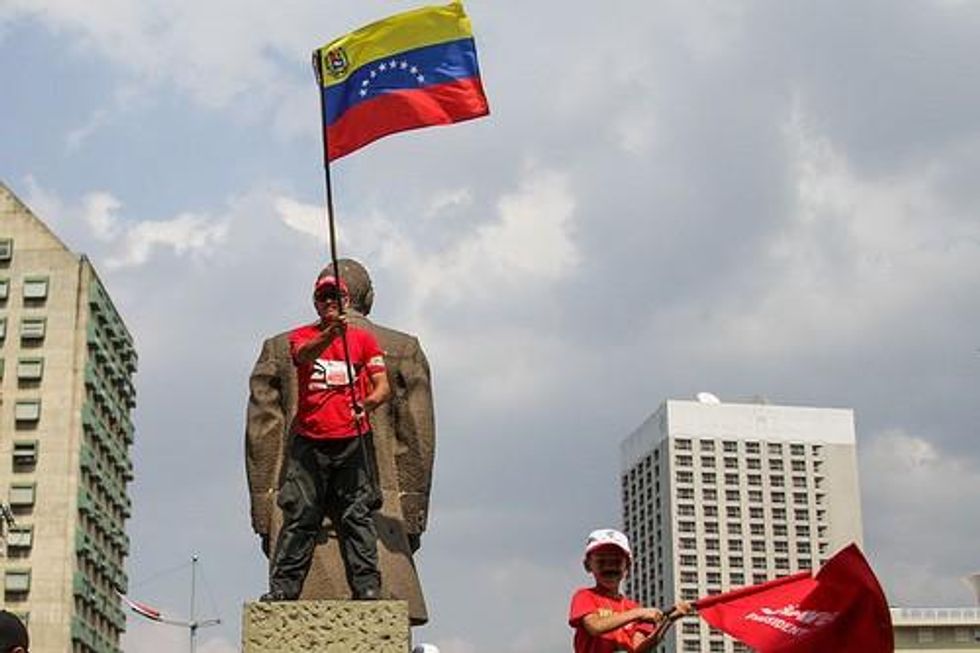
Venezuela's latest round of violent protests appears to fit a pattern, and represents the tug-and-pull nature of the country's divided opposition. Several times over the past 15 years since the late, former president Hugo Chavez took office in 1999, the political opposition has launched violent protests aimed at forcing the current president out of office. Most notably, such protests were a part of the April 2002 coup that temporarily deposed Chavez, and then accompanied the 2002/2003 oil strike. In February of 2004, a particularly radical sector of the
Following Maduro's electoral victory in April last year (with much of the opposition crying "fraud" despite there being no reasonable doubts about the validity of the results), the opposition looked to the December municipal elections as a referendum on Maduro's government, vowing to defeat governing party PSUV and allied candidates. The outcome, which left the pro-Maduro parties with a 10 point margin of victory, was a stunning defeat for the opposition, and this time they did not even bother claiming the elections were rigged. According to the opposition's own pre-election analysis, support for Maduro had apparently grown over the months preceding the election. As we have pointed out, this may be due in part to the large reduction in poverty in 2012 and other economic and social gains that preceded the more recent economic problems.
Defeated at the polls, the anti-democratic faction of the opposition prepared for a new attempt at destabilizing the elected government, and promoted relatively small, but often violent student protests in early February. They then called for a massive protest on February 12, Venezuela's Youth Day in the center of Caracas. The demonstrations have been accompanied by a social media campaign that has spread misinformation in an attempt to depict the Maduro administration as a violent dictatorship instead of a popular elected government. Images of police violence from other countries and past protests - some several years old - have been presented on social media as having occurred in recent days in Venezuela. A YouTube video that has been watched by almost 2 million viewers presents a one-sided portrayal of the situation and falsely states that the Venezuelan government controls all radio and television in the country, among other distortions. Similar disinformation occurred in April 2002 and in other past incidents in Venezuela, most notably when manipulated video footage was used to provide political justification for the coup d'etat.
While some in Washington foreign policy circles may attempt to portray the leaders of this new wave of protests as persecuted pro-democracy heroes, they in fact have histories of supporting anti-democratic and unconstitutional efforts to oust the government. Both Leopoldo Lopez and Maria Corina Machado supported the 2002 coup; in Lopez's case he participated in it by supervising the arrest of then-Minister of Justice and the Interior Ramon Rodriguez Chacin, when Lopez was mayor of Chacao. Police dragged Rodriguez Chacin out of the building where he had sought refuge into an angry mob, who physically attacked him. Corina Machado notably was present when the coup government of Pedro Carmona was sworn in, and signed the infamous "Carmona decree" dissolving the congress, the constitution and the Supreme Court. The Christian Science Monitor reported yesterday:
the opposition has a touchy protest history in Venezuela. Early on in former President Hugo Chavez's administration, the opposition was consistently on the streets calling for an end to his presidency. In 2002, they organized a coup that briefly unseated the president. Though the opposition leadership is not calling for a coup, the reputation the group made for itself barely a decade ago may be haunting it as it vocally pushes back against Maduro's administration.
Venezuela's opposition receives funding from U.S. "democracy promotion" groups including the National Endowment for Democracy (NED) and core grantees such as the International Republican Institute (IRI) and the National Democratic Institute (NDI). The NED, which the Washington Post noted was set up to conduct activities "much of" which "[t]he CIA used to fund covertly" has made a number of grants directed at empowering youth and students in Venezuela in recent years, and USAID has also given money to IRI, NDI and other groups for Venezuela programs. These organizations have a history of destabilizing elected governments and working to unify and strengthen political opposition to left-wing parties and governments. IRI notably played a key role in destabilizing Haiti ahead of the 2004 coup there, and also has engaged in activities aimed at weakening Brazil's governing Workers' Party, to name a few. In Venezuela, they funded groups involved in the 2002 coup, and IRI spokespersons infamously praised the coup after it happened.
The Haiti example is instructive. The parallels are numerous: notably, a key part of the strategy was to exaggerate and fabricate killings and other human rights abuses, which were blamed on the elected government (while truly horrific atrocities committed by the armed wing of the opposition were generally ignored). Researchers - including some from the U.N. -- have since debunked the most widely-circulated accounts of rights violations, but of course the democratically-elected president (Jean-Bertrand Aristide) had long since been forced from office by then.
The U.S.-funded destabilization of Haiti in the early 2000s also offers lessons as to the endgame of this strategy. As the New York Times reported and as scholars such as Peter Hallward and Jeb Sprague have documented, the IRI counseled its Haitian partners not to accept any compromises from the Aristide government (which made many concessions, including agreeing to a power-sharing arrangement), but to continue to press further.
But the Maduro government is of course in a much stronger position than Haiti's government ten years ago. A key factor is that while Aristide was relatively isolated politically, Latin American governments, through UNASUR and MERCOSUR, have condemned the violent protests and the opposition's calls for Maduro to leave office and have expressed support for the Venezuelan government. In this case, when the Obama administration continues to signal that it sides with the violent protests, it is an outlier in the region.
Venezuela's latest round of violent protests appears to fit a pattern, and represents the tug-and-pull nature of the country's divided opposition. Several times over the past 15 years since the late, former president Hugo Chavez took office in 1999, the political opposition has launched violent protests aimed at forcing the current president out of office. Most notably, such protests were a part of the April 2002 coup that temporarily deposed Chavez, and then accompanied the 2002/2003 oil strike. In February of 2004, a particularly radical sector of the
Following Maduro's electoral victory in April last year (with much of the opposition crying "fraud" despite there being no reasonable doubts about the validity of the results), the opposition looked to the December municipal elections as a referendum on Maduro's government, vowing to defeat governing party PSUV and allied candidates. The outcome, which left the pro-Maduro parties with a 10 point margin of victory, was a stunning defeat for the opposition, and this time they did not even bother claiming the elections were rigged. According to the opposition's own pre-election analysis, support for Maduro had apparently grown over the months preceding the election. As we have pointed out, this may be due in part to the large reduction in poverty in 2012 and other economic and social gains that preceded the more recent economic problems.
Defeated at the polls, the anti-democratic faction of the opposition prepared for a new attempt at destabilizing the elected government, and promoted relatively small, but often violent student protests in early February. They then called for a massive protest on February 12, Venezuela's Youth Day in the center of Caracas. The demonstrations have been accompanied by a social media campaign that has spread misinformation in an attempt to depict the Maduro administration as a violent dictatorship instead of a popular elected government. Images of police violence from other countries and past protests - some several years old - have been presented on social media as having occurred in recent days in Venezuela. A YouTube video that has been watched by almost 2 million viewers presents a one-sided portrayal of the situation and falsely states that the Venezuelan government controls all radio and television in the country, among other distortions. Similar disinformation occurred in April 2002 and in other past incidents in Venezuela, most notably when manipulated video footage was used to provide political justification for the coup d'etat.
While some in Washington foreign policy circles may attempt to portray the leaders of this new wave of protests as persecuted pro-democracy heroes, they in fact have histories of supporting anti-democratic and unconstitutional efforts to oust the government. Both Leopoldo Lopez and Maria Corina Machado supported the 2002 coup; in Lopez's case he participated in it by supervising the arrest of then-Minister of Justice and the Interior Ramon Rodriguez Chacin, when Lopez was mayor of Chacao. Police dragged Rodriguez Chacin out of the building where he had sought refuge into an angry mob, who physically attacked him. Corina Machado notably was present when the coup government of Pedro Carmona was sworn in, and signed the infamous "Carmona decree" dissolving the congress, the constitution and the Supreme Court. The Christian Science Monitor reported yesterday:
the opposition has a touchy protest history in Venezuela. Early on in former President Hugo Chavez's administration, the opposition was consistently on the streets calling for an end to his presidency. In 2002, they organized a coup that briefly unseated the president. Though the opposition leadership is not calling for a coup, the reputation the group made for itself barely a decade ago may be haunting it as it vocally pushes back against Maduro's administration.
Venezuela's opposition receives funding from U.S. "democracy promotion" groups including the National Endowment for Democracy (NED) and core grantees such as the International Republican Institute (IRI) and the National Democratic Institute (NDI). The NED, which the Washington Post noted was set up to conduct activities "much of" which "[t]he CIA used to fund covertly" has made a number of grants directed at empowering youth and students in Venezuela in recent years, and USAID has also given money to IRI, NDI and other groups for Venezuela programs. These organizations have a history of destabilizing elected governments and working to unify and strengthen political opposition to left-wing parties and governments. IRI notably played a key role in destabilizing Haiti ahead of the 2004 coup there, and also has engaged in activities aimed at weakening Brazil's governing Workers' Party, to name a few. In Venezuela, they funded groups involved in the 2002 coup, and IRI spokespersons infamously praised the coup after it happened.
The Haiti example is instructive. The parallels are numerous: notably, a key part of the strategy was to exaggerate and fabricate killings and other human rights abuses, which were blamed on the elected government (while truly horrific atrocities committed by the armed wing of the opposition were generally ignored). Researchers - including some from the U.N. -- have since debunked the most widely-circulated accounts of rights violations, but of course the democratically-elected president (Jean-Bertrand Aristide) had long since been forced from office by then.
The U.S.-funded destabilization of Haiti in the early 2000s also offers lessons as to the endgame of this strategy. As the New York Times reported and as scholars such as Peter Hallward and Jeb Sprague have documented, the IRI counseled its Haitian partners not to accept any compromises from the Aristide government (which made many concessions, including agreeing to a power-sharing arrangement), but to continue to press further.
But the Maduro government is of course in a much stronger position than Haiti's government ten years ago. A key factor is that while Aristide was relatively isolated politically, Latin American governments, through UNASUR and MERCOSUR, have condemned the violent protests and the opposition's calls for Maduro to leave office and have expressed support for the Venezuelan government. In this case, when the Obama administration continues to signal that it sides with the violent protests, it is an outlier in the region.
Venezuela's latest round of violent protests appears to fit a pattern, and represents the tug-and-pull nature of the country's divided opposition. Several times over the past 15 years since the late, former president Hugo Chavez took office in 1999, the political opposition has launched violent protests aimed at forcing the current president out of office. Most notably, such protests were a part of the April 2002 coup that temporarily deposed Chavez, and then accompanied the 2002/2003 oil strike. In February of 2004, a particularly radical sector of the
Following Maduro's electoral victory in April last year (with much of the opposition crying "fraud" despite there being no reasonable doubts about the validity of the results), the opposition looked to the December municipal elections as a referendum on Maduro's government, vowing to defeat governing party PSUV and allied candidates. The outcome, which left the pro-Maduro parties with a 10 point margin of victory, was a stunning defeat for the opposition, and this time they did not even bother claiming the elections were rigged. According to the opposition's own pre-election analysis, support for Maduro had apparently grown over the months preceding the election. As we have pointed out, this may be due in part to the large reduction in poverty in 2012 and other economic and social gains that preceded the more recent economic problems.
Defeated at the polls, the anti-democratic faction of the opposition prepared for a new attempt at destabilizing the elected government, and promoted relatively small, but often violent student protests in early February. They then called for a massive protest on February 12, Venezuela's Youth Day in the center of Caracas. The demonstrations have been accompanied by a social media campaign that has spread misinformation in an attempt to depict the Maduro administration as a violent dictatorship instead of a popular elected government. Images of police violence from other countries and past protests - some several years old - have been presented on social media as having occurred in recent days in Venezuela. A YouTube video that has been watched by almost 2 million viewers presents a one-sided portrayal of the situation and falsely states that the Venezuelan government controls all radio and television in the country, among other distortions. Similar disinformation occurred in April 2002 and in other past incidents in Venezuela, most notably when manipulated video footage was used to provide political justification for the coup d'etat.
While some in Washington foreign policy circles may attempt to portray the leaders of this new wave of protests as persecuted pro-democracy heroes, they in fact have histories of supporting anti-democratic and unconstitutional efforts to oust the government. Both Leopoldo Lopez and Maria Corina Machado supported the 2002 coup; in Lopez's case he participated in it by supervising the arrest of then-Minister of Justice and the Interior Ramon Rodriguez Chacin, when Lopez was mayor of Chacao. Police dragged Rodriguez Chacin out of the building where he had sought refuge into an angry mob, who physically attacked him. Corina Machado notably was present when the coup government of Pedro Carmona was sworn in, and signed the infamous "Carmona decree" dissolving the congress, the constitution and the Supreme Court. The Christian Science Monitor reported yesterday:
the opposition has a touchy protest history in Venezuela. Early on in former President Hugo Chavez's administration, the opposition was consistently on the streets calling for an end to his presidency. In 2002, they organized a coup that briefly unseated the president. Though the opposition leadership is not calling for a coup, the reputation the group made for itself barely a decade ago may be haunting it as it vocally pushes back against Maduro's administration.
Venezuela's opposition receives funding from U.S. "democracy promotion" groups including the National Endowment for Democracy (NED) and core grantees such as the International Republican Institute (IRI) and the National Democratic Institute (NDI). The NED, which the Washington Post noted was set up to conduct activities "much of" which "[t]he CIA used to fund covertly" has made a number of grants directed at empowering youth and students in Venezuela in recent years, and USAID has also given money to IRI, NDI and other groups for Venezuela programs. These organizations have a history of destabilizing elected governments and working to unify and strengthen political opposition to left-wing parties and governments. IRI notably played a key role in destabilizing Haiti ahead of the 2004 coup there, and also has engaged in activities aimed at weakening Brazil's governing Workers' Party, to name a few. In Venezuela, they funded groups involved in the 2002 coup, and IRI spokespersons infamously praised the coup after it happened.
The Haiti example is instructive. The parallels are numerous: notably, a key part of the strategy was to exaggerate and fabricate killings and other human rights abuses, which were blamed on the elected government (while truly horrific atrocities committed by the armed wing of the opposition were generally ignored). Researchers - including some from the U.N. -- have since debunked the most widely-circulated accounts of rights violations, but of course the democratically-elected president (Jean-Bertrand Aristide) had long since been forced from office by then.
The U.S.-funded destabilization of Haiti in the early 2000s also offers lessons as to the endgame of this strategy. As the New York Times reported and as scholars such as Peter Hallward and Jeb Sprague have documented, the IRI counseled its Haitian partners not to accept any compromises from the Aristide government (which made many concessions, including agreeing to a power-sharing arrangement), but to continue to press further.
But the Maduro government is of course in a much stronger position than Haiti's government ten years ago. A key factor is that while Aristide was relatively isolated politically, Latin American governments, through UNASUR and MERCOSUR, have condemned the violent protests and the opposition's calls for Maduro to leave office and have expressed support for the Venezuelan government. In this case, when the Obama administration continues to signal that it sides with the violent protests, it is an outlier in the region.