SUBSCRIBE TO OUR FREE NEWSLETTER
Daily news & progressive opinion—funded by the people, not the corporations—delivered straight to your inbox.
5
#000000
#FFFFFF
To donate by check, phone, or other method, see our More Ways to Give page.
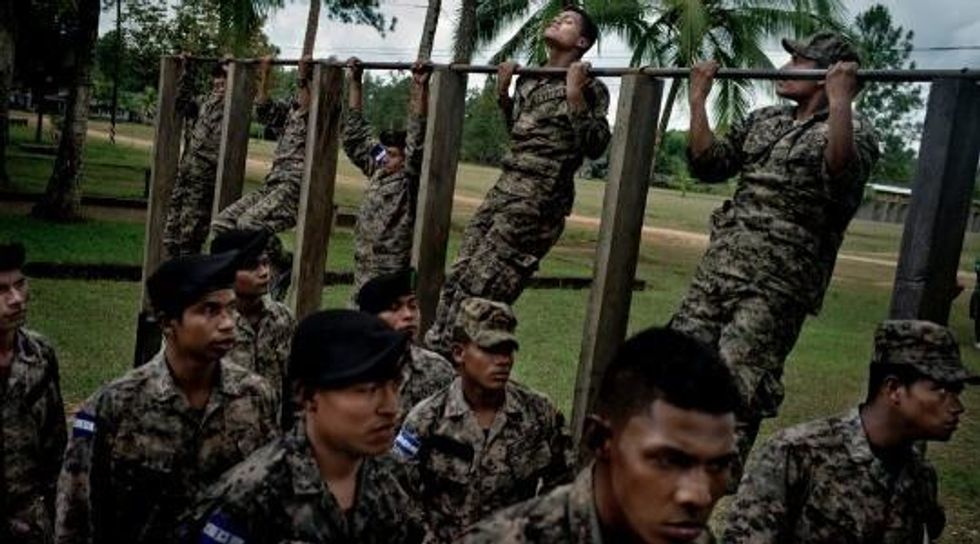
Human rights organizations from North America and Central America have a very different impression of the administration's regional security policy. In a letter sent to Obama and the other region's presidents on April 30th, over 145 civil society organizations [PDF] from the U.S., Mexico and the countries of Central America called out U.S. policies that "promote militarization to address organized crime." These policies, the letter states, have only resulted in a "dramatic surge in violent crime, often reportedly perpetrated by security forces themselves." The letter presents a scathing indictment of the U.S.-backed so-called "war on drugs" throughout the region:
Human rights abuses against our families and communities are, in many cases, directly attributable to failed and counterproductive security policies that have militarized our societies in the name of the "war on drugs." The deployment of our countries' armed forces to combat organized crime and drug-trafficking, and the increasing militarization of police units, endanger already weak civilian institutions and leads to increased human rights violations.
In Mexico, the letter says, "drug-related violence and the militarized response has killed an estimated 80,000 men, women, and children in the past six years. More than 26,000 have been disappeared, and countless numbers have been wounded and traumatized." The letter also discusses the situation in Guatemala, where violence is "reaching levels only seen during the internal armed conflict" and "controversial 'security' policies have placed the military back onto the streets. And, in Honduras:
Since the coup d'etat that forced the elected president into exile in 2009, the rule of law has disintegrated while violence and impunity have soared. We are witnessing a resurgence of death squad tactics with targeted killings of land rights advocates, journalists, LGBT activists, lawyers, women's rights advocates, political activists and the Garifuna's community. Both military and police are allegedly involved in abuses and killings but are almost never brought to justice.
Though Obama claims that he has sought to avoid "militarizing the struggle against drug trafficking", the opposite trend has been observed throughout his administration. As the "Just the Facts" database of U.S. military spending in the Western Hemisphere shows, military assistance to Central American countries has significantly increased under Obama, from $51.8 million in 2009, to $76.5 million in 2013 and an anticipated $90 million in 2014.
The U.S. sale of arms and military equipment to the region has also soared. According to a recent Associated Press investigation by Martha Mendoza , "the U.S. authorized the sale of a record $2.8 billion worth of guns, satellites, radar equipment and tear gas to Western Hemisphere nations in 2011, four times the authorized sales 10 years ago, according to the latest State Department reports."
The presence of the U.S military in the region, and the U.S. promotion of military tactics in law enforcement, has also increased under Obama. A New York Times investigative report from May 5, 2012 described how the U.S. military had recently established forward operating bases in the remote Moskitia region of Honduras and was providing support to drug interdiction efforts. A heavily armed DEA Foreign-deployed Advisory Support Team (FAST) previously deployed in Afghanistan was conducting operations with a U.S.-trained and vetted Honduran Tactical Response Team. Six days after the article was published, FAST and TRT killed four indigenous Miskitu villagers during an early morning operation. As we showed in a report published last month jointly with Rights Action, the victims' families continue to wait for some form of justice and compensation for the killings.
Human rights organizations from North America and Central America have a very different impression of the administration's regional security policy. In a letter sent to Obama and the other region's presidents on April 30th, over 145 civil society organizations [PDF] from the U.S., Mexico and the countries of Central America called out U.S. policies that "promote militarization to address organized crime." These policies, the letter states, have only resulted in a "dramatic surge in violent crime, often reportedly perpetrated by security forces themselves." The letter presents a scathing indictment of the U.S.-backed so-called "war on drugs" throughout the region:
Human rights abuses against our families and communities are, in many cases, directly attributable to failed and counterproductive security policies that have militarized our societies in the name of the "war on drugs." The deployment of our countries' armed forces to combat organized crime and drug-trafficking, and the increasing militarization of police units, endanger already weak civilian institutions and leads to increased human rights violations.
In Mexico, the letter says, "drug-related violence and the militarized response has killed an estimated 80,000 men, women, and children in the past six years. More than 26,000 have been disappeared, and countless numbers have been wounded and traumatized." The letter also discusses the situation in Guatemala, where violence is "reaching levels only seen during the internal armed conflict" and "controversial 'security' policies have placed the military back onto the streets. And, in Honduras:
Since the coup d'etat that forced the elected president into exile in 2009, the rule of law has disintegrated while violence and impunity have soared. We are witnessing a resurgence of death squad tactics with targeted killings of land rights advocates, journalists, LGBT activists, lawyers, women's rights advocates, political activists and the Garifuna's community. Both military and police are allegedly involved in abuses and killings but are almost never brought to justice.
Though Obama claims that he has sought to avoid "militarizing the struggle against drug trafficking", the opposite trend has been observed throughout his administration. As the "Just the Facts" database of U.S. military spending in the Western Hemisphere shows, military assistance to Central American countries has significantly increased under Obama, from $51.8 million in 2009, to $76.5 million in 2013 and an anticipated $90 million in 2014.
The U.S. sale of arms and military equipment to the region has also soared. According to a recent Associated Press investigation by Martha Mendoza , "the U.S. authorized the sale of a record $2.8 billion worth of guns, satellites, radar equipment and tear gas to Western Hemisphere nations in 2011, four times the authorized sales 10 years ago, according to the latest State Department reports."
The presence of the U.S military in the region, and the U.S. promotion of military tactics in law enforcement, has also increased under Obama. A New York Times investigative report from May 5, 2012 described how the U.S. military had recently established forward operating bases in the remote Moskitia region of Honduras and was providing support to drug interdiction efforts. A heavily armed DEA Foreign-deployed Advisory Support Team (FAST) previously deployed in Afghanistan was conducting operations with a U.S.-trained and vetted Honduran Tactical Response Team. Six days after the article was published, FAST and TRT killed four indigenous Miskitu villagers during an early morning operation. As we showed in a report published last month jointly with Rights Action, the victims' families continue to wait for some form of justice and compensation for the killings.
Human rights organizations from North America and Central America have a very different impression of the administration's regional security policy. In a letter sent to Obama and the other region's presidents on April 30th, over 145 civil society organizations [PDF] from the U.S., Mexico and the countries of Central America called out U.S. policies that "promote militarization to address organized crime." These policies, the letter states, have only resulted in a "dramatic surge in violent crime, often reportedly perpetrated by security forces themselves." The letter presents a scathing indictment of the U.S.-backed so-called "war on drugs" throughout the region:
Human rights abuses against our families and communities are, in many cases, directly attributable to failed and counterproductive security policies that have militarized our societies in the name of the "war on drugs." The deployment of our countries' armed forces to combat organized crime and drug-trafficking, and the increasing militarization of police units, endanger already weak civilian institutions and leads to increased human rights violations.
In Mexico, the letter says, "drug-related violence and the militarized response has killed an estimated 80,000 men, women, and children in the past six years. More than 26,000 have been disappeared, and countless numbers have been wounded and traumatized." The letter also discusses the situation in Guatemala, where violence is "reaching levels only seen during the internal armed conflict" and "controversial 'security' policies have placed the military back onto the streets. And, in Honduras:
Since the coup d'etat that forced the elected president into exile in 2009, the rule of law has disintegrated while violence and impunity have soared. We are witnessing a resurgence of death squad tactics with targeted killings of land rights advocates, journalists, LGBT activists, lawyers, women's rights advocates, political activists and the Garifuna's community. Both military and police are allegedly involved in abuses and killings but are almost never brought to justice.
Though Obama claims that he has sought to avoid "militarizing the struggle against drug trafficking", the opposite trend has been observed throughout his administration. As the "Just the Facts" database of U.S. military spending in the Western Hemisphere shows, military assistance to Central American countries has significantly increased under Obama, from $51.8 million in 2009, to $76.5 million in 2013 and an anticipated $90 million in 2014.
The U.S. sale of arms and military equipment to the region has also soared. According to a recent Associated Press investigation by Martha Mendoza , "the U.S. authorized the sale of a record $2.8 billion worth of guns, satellites, radar equipment and tear gas to Western Hemisphere nations in 2011, four times the authorized sales 10 years ago, according to the latest State Department reports."
The presence of the U.S military in the region, and the U.S. promotion of military tactics in law enforcement, has also increased under Obama. A New York Times investigative report from May 5, 2012 described how the U.S. military had recently established forward operating bases in the remote Moskitia region of Honduras and was providing support to drug interdiction efforts. A heavily armed DEA Foreign-deployed Advisory Support Team (FAST) previously deployed in Afghanistan was conducting operations with a U.S.-trained and vetted Honduran Tactical Response Team. Six days after the article was published, FAST and TRT killed four indigenous Miskitu villagers during an early morning operation. As we showed in a report published last month jointly with Rights Action, the victims' families continue to wait for some form of justice and compensation for the killings.