SUBSCRIBE TO OUR FREE NEWSLETTER
Daily news & progressive opinion—funded by the people, not the corporations—delivered straight to your inbox.
5
#000000
#FFFFFF
To donate by check, phone, or other method, see our More Ways to Give page.


Daily news & progressive opinion—funded by the people, not the corporations—delivered straight to your inbox.
"In the end, after he has felt the full force of our justice system, what will be remembered are the good people who were impacted by this tragedy," President Obama said this week in Aurora, Colo., after the shootings.

That's probably not true.
From Charles Whitman up to the present day, the collective American memory preserves the name of the killer . . . the lone psycho, the shadow hero. We're far too fascinated with violence not to mythologize its perpetrators. And just as we all know (because the media tell us) that there will be a "next war," we know, oh God, in the deep churnings of the heart, that there will be more murder victims -- schoolchildren, college students, shoppers, churchgoers, theatergoers, bystanders. We know because we live in a culture that tolerates and perpetuates violence.
James Holmes may have been a "loner," but, like his predecessors, he acted in a complex American context. He wasn't alone at all.
The U.S. is far more violent than other developed countries, for reasons seldom addressed or even looked at in anything like a holistic way. The root of the matter, as I see it, is our false distinction between "good violence" and "bad violence." We don't address the issue systemically because of our social investment in "good violence" and the enormous payoff it delivers to some. But good violence -- the authorized, glorified, "necessary" kind -- inevitably morphs into bad violence from time to time, and thus we are delivered jolts of headline-grabbing horror on a regular basis.
The factors that make up our culture of violence include, but are hardly limited to, the following:
A. The easy availability of guns, including semiautomatic weapons, ammunition and other paraphernalia. Holmes, for instance, not only purchased some 6,000 rounds of ammo on the Internet but "a high-capacity 'drum magazine' large enough to hold 100 rounds and capable of firing 50 or 60 rounds per minute -- a purchase that would have been restricted under proposed legislation that has been stalled in Washington for more than a year," according to the New York Times.
A culture of fear and the popular association of guns with personal empowerment guarantee that simply stanching the availability of high-capacity killing equipment to angry loners slipping into mental illness isn't likely anytime soon. Indeed, we're going the wrong direction. The AR-15 semiautomatic rifle Holmes used had been illegal under the federal ban on assault weapons that Congress allowed to expire in 2004. One unaddressed question: To what extent does easy access to military weaponry inspire lost souls even to consider mass murder as their ticket to glory and public attention?
B. The media -- entertainment and news -- feed the popularity of "good violence." Violence is the driving plot device for thousands of forgettable, special-effects-permeated flicks. Its opposite is wimpiness. Movie and TV violence is abstract and consequence-free: the quickest way to solve a problem, find love, attain manhood, do good. America's Army, the violent but bloodless videogame maintained by the U.S. Army, sucks in 13-year-olds. Violence occupies the American consciousness. "Why are we violent but not illiterate?" asked journalist Colman McCarthy. The answer: We're taught to read.
As our newspapers collapse and TV culture permeates American households, the distinction between news and entertainment continues to blur. Peace and nonviolence are far too complex to grab readers' and viewers' attention. Violence sells. Violence advertises. Give us a war, any war, and the media will line up behind it, at least until it starts to go bad. "I guess I was part of the groupthink," Bob Woodward lamented several years into the Iraq war, when the Washington Post examined its failure to be the least bit critical of the disaster initially. A serious part of the defense budget is public relations; it's always money well spent.
C. Violence drives government policy. We're now engaged in an endless, Orwellian war against dark-skinned, foreign evil. The "Washington consensus" is the same thing as the military-industrial complex. We torture, we carpet-bomb. We've wrecked two countries, killed civilians by the thousands or hundreds of thousands. We assassinate by drone and keep our civilian kill-count low by regarding all military-age males as combatants (by which measure, seven of Holmes' victims shouldn't count). We're continuing to develop the "next generation" of nuclear weapons.
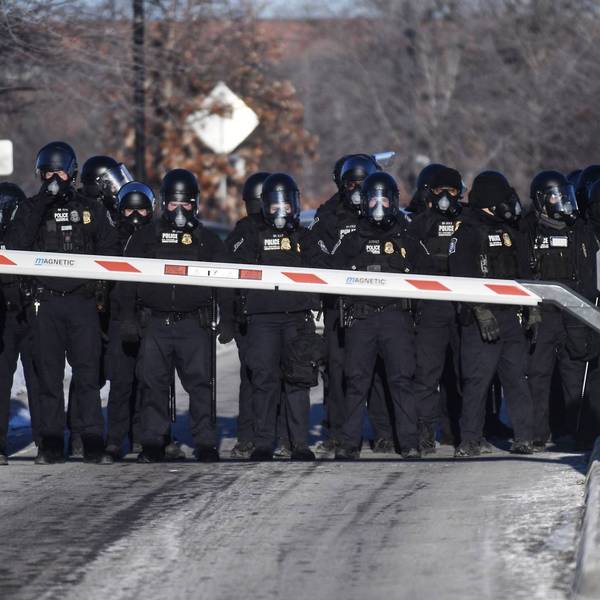
Violence also drives domestic policy. Our prison-industrial complex is the largest in the world -- and becoming privatized. We have no mercy on the poor. Social spending bears the brunt of "austerity." The police are becoming increasingly militarized. We control through punishment, which seems to be the same thing as revenge (". . . after he has felt the full force of our justice system . . .").
D. We worship winning and create unity around common enemies. Racism is endemic. We live in a domination culture; competition rules, even in education settings. The default American truism is "survival of the fittest." Everything we do is based on the military model. We go to war against all our problems rather than try to heal them. We think love means weakness. Sonia Sotomayor was mocked as the "empathy nominee" for Supreme Court justice.
Good violence is the original bait-and-switch. As we mourn the latest to die so unnecessarily, let us vow not to let our grief turn to revenge.
Dear Common Dreams reader, The U.S. is on a fast track to authoritarianism like nothing I've ever seen. Meanwhile, corporate news outlets are utterly capitulating to Trump, twisting their coverage to avoid drawing his ire while lining up to stuff cash in his pockets. That's why I believe that Common Dreams is doing the best and most consequential reporting that we've ever done. Our small but mighty team is a progressive reporting powerhouse, covering the news every day that the corporate media never will. Our mission has always been simple: To inform. To inspire. And to ignite change for the common good. Now here's the key piece that I want all our readers to understand: None of this would be possible without your financial support. That's not just some fundraising cliche. It's the absolute and literal truth. We don't accept corporate advertising and never will. We don't have a paywall because we don't think people should be blocked from critical news based on their ability to pay. Everything we do is funded by the donations of readers like you. Will you donate now to help power the nonprofit, independent reporting of Common Dreams? Thank you for being a vital member of our community. Together, we can keep independent journalism alive when it’s needed most. - Craig Brown, Co-founder |
"In the end, after he has felt the full force of our justice system, what will be remembered are the good people who were impacted by this tragedy," President Obama said this week in Aurora, Colo., after the shootings.

That's probably not true.
From Charles Whitman up to the present day, the collective American memory preserves the name of the killer . . . the lone psycho, the shadow hero. We're far too fascinated with violence not to mythologize its perpetrators. And just as we all know (because the media tell us) that there will be a "next war," we know, oh God, in the deep churnings of the heart, that there will be more murder victims -- schoolchildren, college students, shoppers, churchgoers, theatergoers, bystanders. We know because we live in a culture that tolerates and perpetuates violence.
James Holmes may have been a "loner," but, like his predecessors, he acted in a complex American context. He wasn't alone at all.
The U.S. is far more violent than other developed countries, for reasons seldom addressed or even looked at in anything like a holistic way. The root of the matter, as I see it, is our false distinction between "good violence" and "bad violence." We don't address the issue systemically because of our social investment in "good violence" and the enormous payoff it delivers to some. But good violence -- the authorized, glorified, "necessary" kind -- inevitably morphs into bad violence from time to time, and thus we are delivered jolts of headline-grabbing horror on a regular basis.
The factors that make up our culture of violence include, but are hardly limited to, the following:
A. The easy availability of guns, including semiautomatic weapons, ammunition and other paraphernalia. Holmes, for instance, not only purchased some 6,000 rounds of ammo on the Internet but "a high-capacity 'drum magazine' large enough to hold 100 rounds and capable of firing 50 or 60 rounds per minute -- a purchase that would have been restricted under proposed legislation that has been stalled in Washington for more than a year," according to the New York Times.
A culture of fear and the popular association of guns with personal empowerment guarantee that simply stanching the availability of high-capacity killing equipment to angry loners slipping into mental illness isn't likely anytime soon. Indeed, we're going the wrong direction. The AR-15 semiautomatic rifle Holmes used had been illegal under the federal ban on assault weapons that Congress allowed to expire in 2004. One unaddressed question: To what extent does easy access to military weaponry inspire lost souls even to consider mass murder as their ticket to glory and public attention?
B. The media -- entertainment and news -- feed the popularity of "good violence." Violence is the driving plot device for thousands of forgettable, special-effects-permeated flicks. Its opposite is wimpiness. Movie and TV violence is abstract and consequence-free: the quickest way to solve a problem, find love, attain manhood, do good. America's Army, the violent but bloodless videogame maintained by the U.S. Army, sucks in 13-year-olds. Violence occupies the American consciousness. "Why are we violent but not illiterate?" asked journalist Colman McCarthy. The answer: We're taught to read.
As our newspapers collapse and TV culture permeates American households, the distinction between news and entertainment continues to blur. Peace and nonviolence are far too complex to grab readers' and viewers' attention. Violence sells. Violence advertises. Give us a war, any war, and the media will line up behind it, at least until it starts to go bad. "I guess I was part of the groupthink," Bob Woodward lamented several years into the Iraq war, when the Washington Post examined its failure to be the least bit critical of the disaster initially. A serious part of the defense budget is public relations; it's always money well spent.
C. Violence drives government policy. We're now engaged in an endless, Orwellian war against dark-skinned, foreign evil. The "Washington consensus" is the same thing as the military-industrial complex. We torture, we carpet-bomb. We've wrecked two countries, killed civilians by the thousands or hundreds of thousands. We assassinate by drone and keep our civilian kill-count low by regarding all military-age males as combatants (by which measure, seven of Holmes' victims shouldn't count). We're continuing to develop the "next generation" of nuclear weapons.
Violence also drives domestic policy. Our prison-industrial complex is the largest in the world -- and becoming privatized. We have no mercy on the poor. Social spending bears the brunt of "austerity." The police are becoming increasingly militarized. We control through punishment, which seems to be the same thing as revenge (". . . after he has felt the full force of our justice system . . .").
D. We worship winning and create unity around common enemies. Racism is endemic. We live in a domination culture; competition rules, even in education settings. The default American truism is "survival of the fittest." Everything we do is based on the military model. We go to war against all our problems rather than try to heal them. We think love means weakness. Sonia Sotomayor was mocked as the "empathy nominee" for Supreme Court justice.
Good violence is the original bait-and-switch. As we mourn the latest to die so unnecessarily, let us vow not to let our grief turn to revenge.

"In the end, after he has felt the full force of our justice system, what will be remembered are the good people who were impacted by this tragedy," President Obama said this week in Aurora, Colo., after the shootings.

That's probably not true.
From Charles Whitman up to the present day, the collective American memory preserves the name of the killer . . . the lone psycho, the shadow hero. We're far too fascinated with violence not to mythologize its perpetrators. And just as we all know (because the media tell us) that there will be a "next war," we know, oh God, in the deep churnings of the heart, that there will be more murder victims -- schoolchildren, college students, shoppers, churchgoers, theatergoers, bystanders. We know because we live in a culture that tolerates and perpetuates violence.
James Holmes may have been a "loner," but, like his predecessors, he acted in a complex American context. He wasn't alone at all.
The U.S. is far more violent than other developed countries, for reasons seldom addressed or even looked at in anything like a holistic way. The root of the matter, as I see it, is our false distinction between "good violence" and "bad violence." We don't address the issue systemically because of our social investment in "good violence" and the enormous payoff it delivers to some. But good violence -- the authorized, glorified, "necessary" kind -- inevitably morphs into bad violence from time to time, and thus we are delivered jolts of headline-grabbing horror on a regular basis.
The factors that make up our culture of violence include, but are hardly limited to, the following:
A. The easy availability of guns, including semiautomatic weapons, ammunition and other paraphernalia. Holmes, for instance, not only purchased some 6,000 rounds of ammo on the Internet but "a high-capacity 'drum magazine' large enough to hold 100 rounds and capable of firing 50 or 60 rounds per minute -- a purchase that would have been restricted under proposed legislation that has been stalled in Washington for more than a year," according to the New York Times.
A culture of fear and the popular association of guns with personal empowerment guarantee that simply stanching the availability of high-capacity killing equipment to angry loners slipping into mental illness isn't likely anytime soon. Indeed, we're going the wrong direction. The AR-15 semiautomatic rifle Holmes used had been illegal under the federal ban on assault weapons that Congress allowed to expire in 2004. One unaddressed question: To what extent does easy access to military weaponry inspire lost souls even to consider mass murder as their ticket to glory and public attention?
B. The media -- entertainment and news -- feed the popularity of "good violence." Violence is the driving plot device for thousands of forgettable, special-effects-permeated flicks. Its opposite is wimpiness. Movie and TV violence is abstract and consequence-free: the quickest way to solve a problem, find love, attain manhood, do good. America's Army, the violent but bloodless videogame maintained by the U.S. Army, sucks in 13-year-olds. Violence occupies the American consciousness. "Why are we violent but not illiterate?" asked journalist Colman McCarthy. The answer: We're taught to read.
As our newspapers collapse and TV culture permeates American households, the distinction between news and entertainment continues to blur. Peace and nonviolence are far too complex to grab readers' and viewers' attention. Violence sells. Violence advertises. Give us a war, any war, and the media will line up behind it, at least until it starts to go bad. "I guess I was part of the groupthink," Bob Woodward lamented several years into the Iraq war, when the Washington Post examined its failure to be the least bit critical of the disaster initially. A serious part of the defense budget is public relations; it's always money well spent.
C. Violence drives government policy. We're now engaged in an endless, Orwellian war against dark-skinned, foreign evil. The "Washington consensus" is the same thing as the military-industrial complex. We torture, we carpet-bomb. We've wrecked two countries, killed civilians by the thousands or hundreds of thousands. We assassinate by drone and keep our civilian kill-count low by regarding all military-age males as combatants (by which measure, seven of Holmes' victims shouldn't count). We're continuing to develop the "next generation" of nuclear weapons.
Violence also drives domestic policy. Our prison-industrial complex is the largest in the world -- and becoming privatized. We have no mercy on the poor. Social spending bears the brunt of "austerity." The police are becoming increasingly militarized. We control through punishment, which seems to be the same thing as revenge (". . . after he has felt the full force of our justice system . . .").
D. We worship winning and create unity around common enemies. Racism is endemic. We live in a domination culture; competition rules, even in education settings. The default American truism is "survival of the fittest." Everything we do is based on the military model. We go to war against all our problems rather than try to heal them. We think love means weakness. Sonia Sotomayor was mocked as the "empathy nominee" for Supreme Court justice.
Good violence is the original bait-and-switch. As we mourn the latest to die so unnecessarily, let us vow not to let our grief turn to revenge.