

Nothing is certain but death and taxes, it used to be said, but in the madcap times we live in, even they're up for grabs.
No matter what proof the White House provides that Osama bin Laden indeed has had his bucket kicked -- and at this point even al Qaeda admits he's dead -- there still will be uncertainty. Whether they ever release those damned photos or not, a lunatic few will continue to insist that Osama's alive and well and running a Papa John's Pizza in Marrakesh.
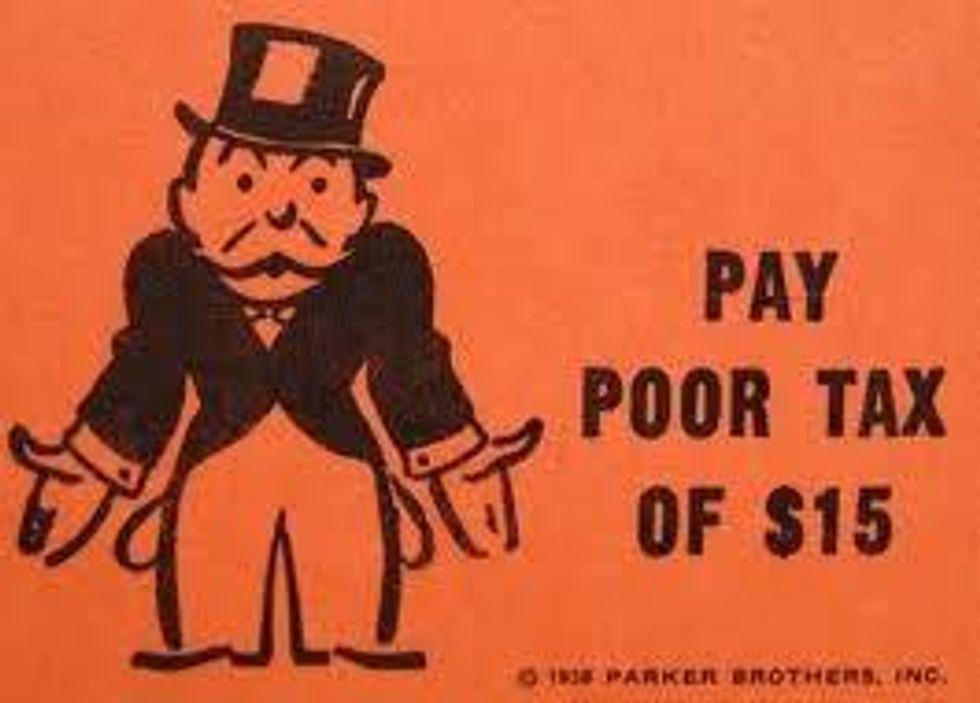
As for taxes, having to pay them is no longer a sure thing either, especially if you're a corporate giant like General Electric, with a thousand employees in its tax department, skilled in creative accounting. You'll recall recent reports that although GE made profits last year of $5.1 billion in the United States and $14.2 billion worldwide they would pay not a penny of federal income tax. Chalk it up to billions of dollar of losses at GE Capital during the financial meltdown and a government tax break that allows companies to avoid paying US taxes on profits made overseas while "actively financing" different kinds of deals.
It gets worse. In 2009, Exxon-Mobil didn't pay any taxes either, and last year, they had worldwide profits of $30.46 billion. Neither did Bank of America or Chevron or Boeing. According to a report last week from the office of the New York City Public Advocate, in 2009, the five companies, including GE, received a total of $3.7 billion in federal tax benefits.
As The New York Times' David Kocieniewski reported in March, "Although the top corporate tax rate in the United States is 35 percent, one of the highest in the world, companies have been increasingly using a maze of shelters, tax credits and subsidies to pay far less... Such strategies, as well as changes in tax laws that encouraged some businesses and professionals to file as individuals, have pushed down the corporate share of the nation's tax receipts -- from 30 percent of all federal revenue in the mid-1950s to 6.6 percent in 2009."
What's greasing the wheels for these advantages is, hold on to your hats, cash. Over the last decade, according to the NYC public advocate's report, those same five companies -- GE, Exxon-Mobil, Bank of America, Chevron and Boeing -- gave more than $43.1 million to political campaigns. During the 2009-2010 election cycle, the five spent a combined $7.86 million in campaign contributions, a 7 percent jump over their 2007-2008 political spending.
"These tax breaks were put in place to promote growth and create jobs, not bankroll the political causes of corporate executives," Public Advocate Bill de Blasio said. "... No company that can afford to spend millions of dollars to influence our elections should be pleading poverty come tax time."
And by the way, those campaign cash figures don't even include all the money those companies funneled into the 2010 campaigns via trade associations and tax-exempt non-profits. Thanks to the Supreme Court Citizens United decision, we don't know the numbers because, as per the court, the corporate biggies don't have to tell us. Imagine them sticking out their tongues and wiggling their fingers in their ears and you have a pretty good idea of their official position on this.
Meanwhile, last week Republicans like Utah's Orrin Hatch, ranking member of the US Senate Finance Committee, grabbed hold of an analysis by Congress' nonpartisan Joint Committee on Taxation and wrestled it to the ground. The brief memorandum reported that in the 2009 tax year 51 percent of all American taxpayers had zero tax liability or received a refund. So why, the Republicans asked, are Democrats and others so mean, asking corporations and the rich to pay higher taxes when lots of other people -- especially the poor and middle class -- don't pay taxes either?
Hatch told MSNBC, "Bastiat, the great economist of the past, said the place where you've got to get revenues has to come from the middle class. That's the huge number of people that are there. So the system does need to be revamped... We have an unbalanced tax code that we've got to change."
All of which flies in the face of reality. As Travis Waldron of the progressive ThinkProgress website explained, "The majority of Americans who do not pay federal income taxes don't make enough money to qualify for even the lowest tax bracket, a problem made worse by the economic recession. That includes retired Americans, who don't pay income taxes because they earn very little income, if they earn any at all.
"And while many low-income Americans don't pay income taxes, they do pay taxes. Because of payroll and sales taxes -- a large proportion of which are paid by low- and middle-income Americans -- less than a quarter of the nation's households don't contribute to federal tax receipts -- and the majority of the non-contributors are students, the elderly, or the unemployed."
What's more, ThinkProgress notes, "The top 400 taxpayers -- who have more wealth than half of all Americans combined -- are paying lower taxes than they have in a generation, as their tax responsibilities have slowly collapsed since the New Deal era." In the meantime, "working families have been asked to pay more and more."
So maybe death and taxes are no longer certain, but one thing remains as immutable as the hills. In the words of another golden oldie, there's nothing surer -- the rich get rich and the poor get poorer.
Our work is licensed under Creative Commons (CC BY-NC-ND 3.0). Feel free to republish and share widely.
Nothing is certain but death and taxes, it used to be said, but in the madcap times we live in, even they're up for grabs.
No matter what proof the White House provides that Osama bin Laden indeed has had his bucket kicked -- and at this point even al Qaeda admits he's dead -- there still will be uncertainty. Whether they ever release those damned photos or not, a lunatic few will continue to insist that Osama's alive and well and running a Papa John's Pizza in Marrakesh.
As for taxes, having to pay them is no longer a sure thing either, especially if you're a corporate giant like General Electric, with a thousand employees in its tax department, skilled in creative accounting. You'll recall recent reports that although GE made profits last year of $5.1 billion in the United States and $14.2 billion worldwide they would pay not a penny of federal income tax. Chalk it up to billions of dollar of losses at GE Capital during the financial meltdown and a government tax break that allows companies to avoid paying US taxes on profits made overseas while "actively financing" different kinds of deals.
It gets worse. In 2009, Exxon-Mobil didn't pay any taxes either, and last year, they had worldwide profits of $30.46 billion. Neither did Bank of America or Chevron or Boeing. According to a report last week from the office of the New York City Public Advocate, in 2009, the five companies, including GE, received a total of $3.7 billion in federal tax benefits.
As The New York Times' David Kocieniewski reported in March, "Although the top corporate tax rate in the United States is 35 percent, one of the highest in the world, companies have been increasingly using a maze of shelters, tax credits and subsidies to pay far less... Such strategies, as well as changes in tax laws that encouraged some businesses and professionals to file as individuals, have pushed down the corporate share of the nation's tax receipts -- from 30 percent of all federal revenue in the mid-1950s to 6.6 percent in 2009."
What's greasing the wheels for these advantages is, hold on to your hats, cash. Over the last decade, according to the NYC public advocate's report, those same five companies -- GE, Exxon-Mobil, Bank of America, Chevron and Boeing -- gave more than $43.1 million to political campaigns. During the 2009-2010 election cycle, the five spent a combined $7.86 million in campaign contributions, a 7 percent jump over their 2007-2008 political spending.
"These tax breaks were put in place to promote growth and create jobs, not bankroll the political causes of corporate executives," Public Advocate Bill de Blasio said. "... No company that can afford to spend millions of dollars to influence our elections should be pleading poverty come tax time."
And by the way, those campaign cash figures don't even include all the money those companies funneled into the 2010 campaigns via trade associations and tax-exempt non-profits. Thanks to the Supreme Court Citizens United decision, we don't know the numbers because, as per the court, the corporate biggies don't have to tell us. Imagine them sticking out their tongues and wiggling their fingers in their ears and you have a pretty good idea of their official position on this.
Meanwhile, last week Republicans like Utah's Orrin Hatch, ranking member of the US Senate Finance Committee, grabbed hold of an analysis by Congress' nonpartisan Joint Committee on Taxation and wrestled it to the ground. The brief memorandum reported that in the 2009 tax year 51 percent of all American taxpayers had zero tax liability or received a refund. So why, the Republicans asked, are Democrats and others so mean, asking corporations and the rich to pay higher taxes when lots of other people -- especially the poor and middle class -- don't pay taxes either?
Hatch told MSNBC, "Bastiat, the great economist of the past, said the place where you've got to get revenues has to come from the middle class. That's the huge number of people that are there. So the system does need to be revamped... We have an unbalanced tax code that we've got to change."
All of which flies in the face of reality. As Travis Waldron of the progressive ThinkProgress website explained, "The majority of Americans who do not pay federal income taxes don't make enough money to qualify for even the lowest tax bracket, a problem made worse by the economic recession. That includes retired Americans, who don't pay income taxes because they earn very little income, if they earn any at all.
"And while many low-income Americans don't pay income taxes, they do pay taxes. Because of payroll and sales taxes -- a large proportion of which are paid by low- and middle-income Americans -- less than a quarter of the nation's households don't contribute to federal tax receipts -- and the majority of the non-contributors are students, the elderly, or the unemployed."
What's more, ThinkProgress notes, "The top 400 taxpayers -- who have more wealth than half of all Americans combined -- are paying lower taxes than they have in a generation, as their tax responsibilities have slowly collapsed since the New Deal era." In the meantime, "working families have been asked to pay more and more."
So maybe death and taxes are no longer certain, but one thing remains as immutable as the hills. In the words of another golden oldie, there's nothing surer -- the rich get rich and the poor get poorer.
Nothing is certain but death and taxes, it used to be said, but in the madcap times we live in, even they're up for grabs.
No matter what proof the White House provides that Osama bin Laden indeed has had his bucket kicked -- and at this point even al Qaeda admits he's dead -- there still will be uncertainty. Whether they ever release those damned photos or not, a lunatic few will continue to insist that Osama's alive and well and running a Papa John's Pizza in Marrakesh.
As for taxes, having to pay them is no longer a sure thing either, especially if you're a corporate giant like General Electric, with a thousand employees in its tax department, skilled in creative accounting. You'll recall recent reports that although GE made profits last year of $5.1 billion in the United States and $14.2 billion worldwide they would pay not a penny of federal income tax. Chalk it up to billions of dollar of losses at GE Capital during the financial meltdown and a government tax break that allows companies to avoid paying US taxes on profits made overseas while "actively financing" different kinds of deals.
It gets worse. In 2009, Exxon-Mobil didn't pay any taxes either, and last year, they had worldwide profits of $30.46 billion. Neither did Bank of America or Chevron or Boeing. According to a report last week from the office of the New York City Public Advocate, in 2009, the five companies, including GE, received a total of $3.7 billion in federal tax benefits.
As The New York Times' David Kocieniewski reported in March, "Although the top corporate tax rate in the United States is 35 percent, one of the highest in the world, companies have been increasingly using a maze of shelters, tax credits and subsidies to pay far less... Such strategies, as well as changes in tax laws that encouraged some businesses and professionals to file as individuals, have pushed down the corporate share of the nation's tax receipts -- from 30 percent of all federal revenue in the mid-1950s to 6.6 percent in 2009."
What's greasing the wheels for these advantages is, hold on to your hats, cash. Over the last decade, according to the NYC public advocate's report, those same five companies -- GE, Exxon-Mobil, Bank of America, Chevron and Boeing -- gave more than $43.1 million to political campaigns. During the 2009-2010 election cycle, the five spent a combined $7.86 million in campaign contributions, a 7 percent jump over their 2007-2008 political spending.
"These tax breaks were put in place to promote growth and create jobs, not bankroll the political causes of corporate executives," Public Advocate Bill de Blasio said. "... No company that can afford to spend millions of dollars to influence our elections should be pleading poverty come tax time."
And by the way, those campaign cash figures don't even include all the money those companies funneled into the 2010 campaigns via trade associations and tax-exempt non-profits. Thanks to the Supreme Court Citizens United decision, we don't know the numbers because, as per the court, the corporate biggies don't have to tell us. Imagine them sticking out their tongues and wiggling their fingers in their ears and you have a pretty good idea of their official position on this.
Meanwhile, last week Republicans like Utah's Orrin Hatch, ranking member of the US Senate Finance Committee, grabbed hold of an analysis by Congress' nonpartisan Joint Committee on Taxation and wrestled it to the ground. The brief memorandum reported that in the 2009 tax year 51 percent of all American taxpayers had zero tax liability or received a refund. So why, the Republicans asked, are Democrats and others so mean, asking corporations and the rich to pay higher taxes when lots of other people -- especially the poor and middle class -- don't pay taxes either?
Hatch told MSNBC, "Bastiat, the great economist of the past, said the place where you've got to get revenues has to come from the middle class. That's the huge number of people that are there. So the system does need to be revamped... We have an unbalanced tax code that we've got to change."
All of which flies in the face of reality. As Travis Waldron of the progressive ThinkProgress website explained, "The majority of Americans who do not pay federal income taxes don't make enough money to qualify for even the lowest tax bracket, a problem made worse by the economic recession. That includes retired Americans, who don't pay income taxes because they earn very little income, if they earn any at all.
"And while many low-income Americans don't pay income taxes, they do pay taxes. Because of payroll and sales taxes -- a large proportion of which are paid by low- and middle-income Americans -- less than a quarter of the nation's households don't contribute to federal tax receipts -- and the majority of the non-contributors are students, the elderly, or the unemployed."
What's more, ThinkProgress notes, "The top 400 taxpayers -- who have more wealth than half of all Americans combined -- are paying lower taxes than they have in a generation, as their tax responsibilities have slowly collapsed since the New Deal era." In the meantime, "working families have been asked to pay more and more."
So maybe death and taxes are no longer certain, but one thing remains as immutable as the hills. In the words of another golden oldie, there's nothing surer -- the rich get rich and the poor get poorer.