

SUBSCRIBE TO OUR FREE NEWSLETTER
Daily news & progressive opinion—funded by the people, not the corporations—delivered straight to your inbox.
5
#000000
#FFFFFF
To donate by check, phone, or other method, see our More Ways to Give page.
Daily news & progressive opinion—funded by the people, not the corporations—delivered straight to your inbox.

"Right now, we're counting on AI corporations to voluntarily block weapons of mass destruction," said Rep. Greg Casar, who is pushing for a ban on "superintelligent" AI.
As industry insiders issue louder warnings about the catastrophic danger of unchecked artificial intelligence, Anthropic has revealed in a report out Thursday that it had to "disrupt" several attempts by scientists to use its AI models for research that could contribute to the creation of biological weapons.
In the report, titled “Detecting and Countering Misuse of AI,” Anthropic said that over the past eight months, it banned several accounts that had used its chatbot Claude for research into highly contagious diseases.
As NBC News reported:
In each of the five cases Anthropic cited, the company suspected that the researchers behind them were affiliated in some way with a government or military in a country it had banned or took deliberate steps to hide their location and identity, or both. The company declined to say where any of the researchers were based, but its terms of service allow all use from all but a few regions, including China, Iran, and Russia.
In one example, Anthropic said researchers used a third-party platform that attempted to use Claude to complete a grant application for work that would look into how to repeatedly mutate chikungunya, a mosquito-borne virus that causes severe pain and fever in humans. Anthropic said it blocked all attempts by the researchers. The research, which would be conducted at a military institute, would seek to repeatedly mutate the virus in live animals to become increasingly more infectious, Anthropic said.
Another had used Anthropic’s Claude to assist in research into how to make bird flu, which historically has a global fatality rate of around 50% in confirmed human cases, more virulent and damaging to mammals. Anthropic said the researcher only received assistance from Claude’s weakest class of models, which provided clerical help.
Anthropic clarified that it did not find any concrete instance of a scientist attempting to use its technology for nefarious purposes, and that these use cases may well have been part of beneficial scientific inquiry, like research into vaccines or other cures for disease. Nevertheless, it said it erred on the side of caution and shut down the accounts.
"Biological misuse is one of the most serious risks of frontier AI models," the report explains. "It has long been a concern that AI models might one day reach the level of capability where they can help to make existing pathogens more dangerous—or create entirely new ones. Without the correct safeguards, such capabilities could have catastrophic consequences."
The report acknowledges that even as safeguards are implemented, those with the intent to do harm are getting more savvy about how to evade them and using the appearance of legitimate science to do it.
"Sophisticated threat actors are aware that we (and other AI providers) are attempting to detect dangerous uses of our models, and they use the dual-use nature of biology to maintain a kind of 'plausible deniability' about their research," the report says. "More sophisticated actors can hide their intent, extracting assistance from an AI model in interactions that look plausibly beneficial, but when put in context and analyzed holistically, can provide clear warning signs of misuse."
The report details other ways in which actors have used its technology for malicious purposes. It found that governments like China, Iran, and Mali had used Claude to collect information about journalists and dissidents. Others used it to conduct hacking campaigns, automate identity theft operations, and create malware.
Anthropic said it hoped that by publishing the report, it would "help other developers recognize similar patterns on their own platforms, give governments and civil society a clearer view of how emerging threats take shape, and strengthen collective defenses."
The report comes amid a torrent of scrutiny directed at Anthropic and its competitor OpenAI following reports in recent months of severe security breaches involving their technology, which has been documented acting autonomously to hack into other websites and evade human detection.
Earlier this week, Anthropic researcher Jacob Coxon, who previously worked at OpenAI, resigned from his post and sounded the alarm about fears within the industry that the technology “could kill us all by the end of the decade" and that the companies are prioritizing the race toward superintelligence without regard for the potential risks.
In the wake of Coxon's resignation, several other researchers from Anthropic, OpenAI, and Google have shared similar warnings that the technology could result in an extinction-level disaster or otherwise cause severe harm to human society.
A poll published on Wednesday by Data for Progress showed that 68% of likely voters in the US support a proposal announced last week by Sen. Bernie Sanders (I-Vt.) and Rep. Greg Casar (D-Texas) for legislation that would permanently ban the development of "superintelligent" AI that can surpass human cognition and would put a pause on "advanced" AI development until a federal body is put in place to regulate the industry.
Casar said the fact that Anthropic was being relied upon to stop its own users from using its tech to potentially create bioweapons illustrated the urgent need for regulation.
"Right now, we're counting on AI corporations to voluntarily block weapons of mass destruction. Voluntarily," Casar emphasized in a post to social media on Thursday. "Congress must do the obvious thing: BAN catastrophic AI uses like creating biological or nuclear weapons."

One expert said the Trump White House is "replaying the Bush administration's greatest hits as farce."
US President Donald Trump on Monday signed an executive order designating fentanyl a "weapon of mass destruction," a move that came hours before his administration carried out another flurry of deadly strikes on vessels in the eastern Pacific accused—without evidence—of drug trafficking.
Trump's order instructs the Pentagon and other US agencies to "take appropriate action" to "eliminate the threat of illicit fentanyl and its core precursor chemicals to the United States." The order also warns of "the potential for fentanyl to be weaponized for concentrated, large-scale terror attacks by organized adversaries."
Brian Finucane, a senior adviser with the US Program at the International Crisis Group, said in response to the executive action that Trump is "replaying the Bush administration's greatest hits as farce," referencing the lead-up to the Iraq War. Trump has repeatedly threatened military attacks on Venezuela, Colombia, and Mexico, citing fentanyl trafficking as the pretext.
Ahead of the official signing of the fentanyl order, an anonymous State Department official suggested to the independent outlet The Handbasket that the directive's "purpose is a combination of designating fentanyl cartels as terrorist organizations and creating justification for conducting military operations in Mexico and Canada."
The official also suspected "that it will be used domestically as justification for rounding up homeless encampments and deporting drug users who are not citizens," reported The Handbasket's Marisa Kabas.
Hours after Trump formally announced the order, the US Southern Command said it carried out strikes on three boats in the eastern Pacific, killing at least eight people.
"The lawless killing spree continues," Finucane wrote late Monday. "The administration justifies this slaughter by claiming there’s an armed conflict. But it won’t even tell the US public who the supposed enemies are. Of course, there’s no armed conflict. And outside armed conflict, we call premeditated killing murder."
Kenneth Roth, former executive director of Human Rights Watch, argued that "Trump's classification of fentanyl as a 'weapon of mass destruction' will do nothing to salvage the blatant illegality of his summary executions off the coasts of Venezuela and Colombia because fentanyl largely enters the United States from Mexico."
On Dec. 15, at the direction of @SecWar Pete Hegseth, Joint Task Force Southern Spear conducted lethal kinetic strikes on three vessels operated by Designated Terrorist Organizations in international waters. Intelligence confirmed that the vessels were transiting along known… pic.twitter.com/IQfCVvUpau
— U.S. Southern Command (@Southcom) December 16, 2025
Monday's boat bombings brought the death toll from the Trump administration's illegal strikes in the Caribbean and eastern Pacific, which began in early September, to at least 95.
Writing for Salon last week, Drug Policy Alliance executive director Kassandra Frederique and former counternarcotics official James Saenz observed that "the US is bombing boats that have nothing to do with fentanyl or the overdose crisis devastating American communities."
"These recent military actions have negligible impact on the transshipment of illicit drugs and absolutely no impact on the production or movement of synthetic opioids. And fentanyl, the synthetic opioid responsible for most US overdoses, is not produced in Venezuela," they wrote. "These developments raise serious questions about the direction of US drug policy. We must ask ourselves: If these extrajudicial strikes are not stopping fentanyl, then what are the motives?"
"History should be a warning to us. In the Philippines under Rodrigo Duterte, the drug war became a tool of fear," Frederique and Saenz added. "Thousands were killed without trial, democratic institutions were hollowed out, and civil liberties stripped away—all while drugs continued to flow into the country."
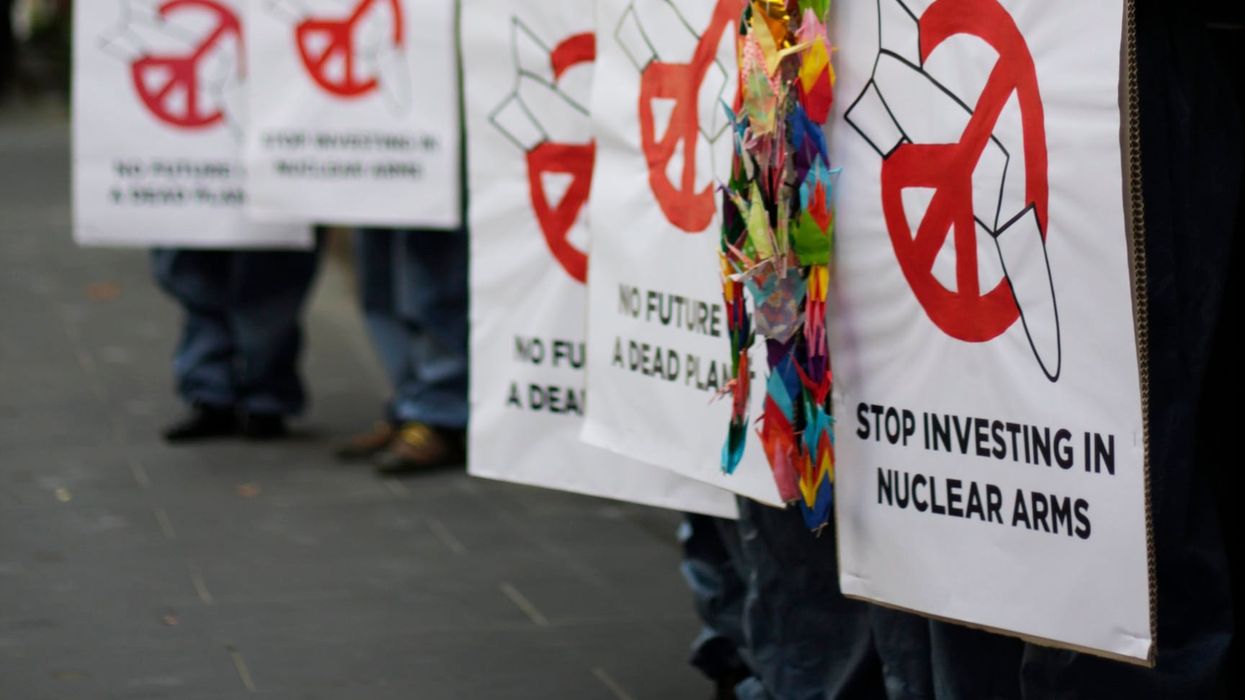
"Many investors, given a choice, would not want to profit from companies that manufacture weapons of mass destruction," said As You Sow's Andrew Behar.
Amidst what the Bulletin of Atomic Scientists calls "an exceedingly dangerous nuclear situation" facing humanity today, the largest U.S. mutual funds—which manage the retirement and other savings of tens of millions of Americans—are profiting from investments in nuclear weapons, cluster munitions, and other banned or controversial arms, an analysis by a leading shareholder advocacy group revealed Tuesday.
Measured by dollars invested, the top 25 U.S. asset managers "all earn a D grade or worse, with significant investments in arms manufacturers and major military contractors, including companies involved with nuclear weapons and controversial weapons like cluster munitions, anti-personnel landmines, incendiary weapons, and depleted uranium," Berkeley, California-based As You Sow said in its new report.
Some of the largest corporate 401(k)s like American Funds, John Hancock Funds, and Franklin Templeton Investments were among the most heavily invested in these armaments, while "fund managers that focus on sustainable investing have less exposure to military weapons, on average."
"Nearly every retirement plan has nuclear and other controversial weapons embedded in their plan."
Seven funds profiled in the analysis—Eventide Funds, Ecofin, New Alternatives, Vert Asset Management, Aspiration Funds ,Thrivent, and Kayne Anderson—held no investments in the controversial weapons.
"Many investors, given a choice, would not want to profit from companies that manufacture weapons of mass destruction," As You Sow CEO Andrew Behar said in a statement. "Yet nearly every retirement plan has nuclear and other controversial weapons embedded in their plan. Our new ratings empower investors with the tools to know what they own so they can invest their money in alignment with their values."
As You Sow's mutual fund ratings are part of the group's Weapons Free Funds investment tool, "built to help responsible investors prioritize peace and people over war and violence."
Nuclear weapons, landmines, and cluster munitions are all banned under international law. However, the United States is not a signatory to any of the bans, and none of the world's nine nuclear powers have signed the landmark Treaty on the Prohibition of Nuclear Weapons.
Common Dreams reported last month that nuclear-armed nations spent $82.9 billion on their arsenals last year, with the United States accounting for more than half of the global total, according to the Nobel Prize-winning International Campaign to Abolish Nuclear Weapons.
Meanwhile, U.S. House Republicans last week blocked a bipartisan amendment to the 2024 National Defense Authorization Act that would have banned the export of cluster munitions. This, as the Biden administration was giving final approval to transfer cluster bombs to Ukraine's military—which, like its Russian enemy, has used the weapons during the ongoing war with devastating effects.
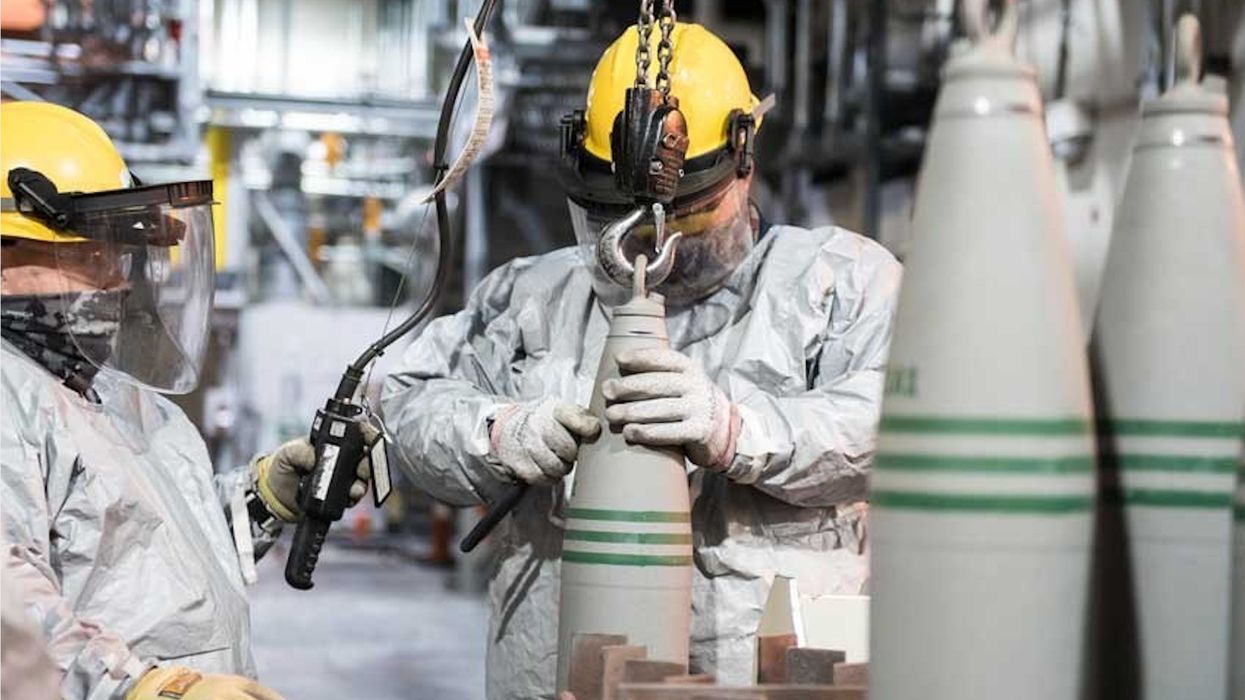
"Honestly, I never thought this day would come," said the head of the citizens advisory commission overseeing the destruction.
The White House announced Friday that the United States has destroyed what remains of its once-massive military chemical weapons arsenal, while vowing to "prevent the stockpiling, production, and use" of the internationally banned weapons of mass destruction.
"For more than 30 years, the United States has worked tirelessly to eliminate our chemical weapons stockpile. Today, I am proud to announce that the United States has safely destroyed the final munition in that stockpile—bringing us one step closer to a world free from the horrors of chemical weapons," President Joe Biden said in a statement.
"Successive administrations have determined that these weapons should never again be developed or deployed," the president continued, "and this accomplishment not only makes good on our long-standing commitment under the Chemical Weapons Convention, it marks the first time an international body has verified destruction of an entire category of declared weapons of mass destruction."
While the U.S. military no longer has a chemical stockpile, tear gas—a chemical weapon banned in war—remains an integral part of law enforcement crowd suppression arsenals.
"Today—as we mark this significant milestone—we must also renew our commitment to forging a future free from chemical weapons," Biden said. "I continue to encourage the remaining nations to join the Chemical Weapons Convention so that the global ban on chemical weapons can reach its fullest potential."
Under the treaty, the U.S. committed to destroying its chemical arsenal by 2007; that deadline was later extended to 2012.
The Organization for the Prohibition of Chemical Weapons (OPCW) confirmed Friday that "all declared chemical weapons stockpiles" around the world have now been "verified as irreversibly destroyed."
"The end of the destruction of all declared chemical weapons stockpiles is an important milestone for the organization. It is a critical step towards achieving its mission to permanently eliminate all chemical weapons," OPCW Director-General Fernando Arias said in a statement.
"Yet, more challenges lie ahead of us, which require the international community's continued attention," Arias added. "Four countries have yet to join the convention. Abandoned and old chemical weapons still need to be recovered and destroyed."
Egypt, Israel, North Korea, and South Sudan are not party to the Chemical Weapons Convention, which took effect in 1997.
As The New York Times reported Thursay:
The American stockpile, built up over generations, was shocking in its scale: Cluster bombs and landmines filled with nerve agent. Artillery shells that could blanket whole forests with a blistering mustard fog. Tanks full of poison that could be loaded on jets and sprayed on targets below.
They were a class of weapons deemed so inhumane that their use was condemned after World War I, but even so, the United States and other powers continued to develop and amass them. Some held deadlier versions of the chlorine and mustard agents made infamous in the trenches of the Western Front. Others held nerve agents developed later, like VX and Sarin, that are lethal even in tiny quantities.
American armed forces are not known to have used lethal chemical weapons in battle since 1918, though during the Vietnam War they used herbicides like Agent Orange that were harmful to humans.
The United States once also had a sprawling germ warfare and biological weapons program; those weapons were destroyed in the 1970s.
Even after the Cold War ended, the United States was drafting plans for the possible use of chemical weapons. In service of U.S. global hegemony, then-Undersecretary of Defense Paul Wolfowitz and his deputy Scooter Libby authored a 1992 strategy plan, "Defense Policy Guidance," that called for possible preemptive nuclear, biological, or chemical warfare against countries that potentially posed threats to American dominance—even if they did not have or use weapons of mass destruction.
"Honestly, I never thought this day would come," Irene Kornelly, who chairs the citizens' advisory commission that has overseen the destruction of U.S. chemical weapons at the Army's Pueblo Chemical Depot in Colorado for 30 years, told the Times. "The military didn't know if they could trust the people, and the people didn't know if they could trust the military."
As Kornelly spoke, the depot's manager blasted the rock band Europe's 1986 hit "The Final Countdown" and handed out red, white, and blue Bomb Pop popsicles.
"Most people today don't have a clue that this all happened—they never had to worry about it," Kornelly said. "And I think that's just as well."
As geopolitical tensions escalate in the Middle East and the world teeters on the brink of a new Cold War, it's clear that the only way to eliminate the threat of nuclear warfare is for governments to fulfill their long-held commitment to the "general and complete disarmament" of nuclear weapons - permanently. A bold and essential step towards this crucial goal is to decommission Trident, the UK's ineffective, unusable, and costly nuclear deterrent submarines. Renewing Trident would not only undermine international disarmament efforts for years to come, it will reinforce the hazardous belief that maintaining a functional nuclear arsenal is essential for any nation seeking to wield power on the world stage.
Needless to say, modern nuclear bombs are many times more destructive than those dropped on Japan at the end of the Second World War and would result in a host of immeasurably devastating impacts on the natural world and human life if they were deployed today. The extent to which nuclear weapons currently proliferate around the globe is, therefore, alarming and underscores the need for radical action on this critical issue. According to the Stockholm International Peace Research Institute, nine countries (the United States, Russia, the United Kingdom, France, China, India, Pakistan, Israel and North Korea) possess a total of 16,000 nuclear weapons, of which 4,300 are deployed with operational forces and 1,800 are "kept in a state of high operational alert" - which means they can be launched within a 5 to 15-minute timeframe if necessary.
However, these figures don't tell the full story. According to the International Campaign to Abolish Nuclear Weapons, five other European nations host US nuclear weapons on their territory as part of a NATO agreement, and 23 additional countries rely on US nuclear capabilities for their national security. Furthermore, the spread of nuclear technology and the illicit trade in nuclear weapons means that any state can potentially develop or purchase nuclear-grade weapons, which confirms the widely held view that a number of other nations unofficially harbor nuclear warheads, and many more could do so in the years ahead.
The abundance of nuclear weapons and related technology highlights the weakness of the international Non-Proliferation Treaty, which has only made limited progress on nuclear disarmament since its inception in 1968 despite near-universal membership. With high levels of nuclear stockpiles still in existence, there is also a very real risk of unintended but deadly consequences. According to a report by The Royal Institute of International Affairs, there have been 13 instances of nuclear bombs being 'accidently' deployed since 1962 by Russia, the US and other countries - mainly due to technical malfunctions or breakdowns in communication. As international disarmament efforts diminish, such risks are set to increase alongside the growing likelihood of targeted terrorist attacks on existing nuclear facilities.
It's clear that Trident, like every other nuclear weapons system, is a relic of a bygone age that simply cannot guarantee the safety of any nation at a time when global terrorism and climate change pose a far more urgent threat to national security than other states with nuclear weapons. As the columnist Simon Jenkins puts it, "All declared threats to Britain tend to come either from powers with no conceivable designs on conquering Britain or from forces immune to deterrence." Indeed, most countries of the world (including 25 NATO states) don't maintain their own nuclear stockpiles, and yet they have been just as successful in 'deterring' nuclear war as the UK.
Moreover, the International Court of Justice has ruled that the threat or use of nuclear weapons would be contrary to the rules of international law, which means that their use would be illegal in virtually any situation. Given that it is close to unimaginable that a so-called world leader would ever deploy nuclear weapons (on ethical and legal grounds, as well as for fear of retaliatory consequences) their value as an effective deterrent is unjustifiable and deeply flawed. The farcical arguments employed to rationalize building and maintaining such weapon systems are amusingly summarised in a Yes, Prime Minister comedy sketch from 1986, which aired soon after Margret Thatcher first inaugurated the Trident missile system in the UK:
Sir Humphrey: With Trident we could obliterate the whole of eastern Europe.
Hacker: I don't want to obliterate the whole of eastern Europe.
Sir Humphrey: But it's a deterrent.
Hacker: It's a bluff. I probably wouldn't use it.
Sir Humphrey: Yes, but they don't know that you probably wouldn't.
Hacker: They probably do.
Sir Humphrey: Yes, they probably know that you probably wouldn't. But they can't certainly know.
Hacker: They probably certainly know that I probably wouldn't.
Sir Humphrey: Yes, but even though they probably certainly know that you probably wouldn't, they don't certainly know that, although you probably wouldn't, there is no probability that you certainly would.
Given that the nine nuclear-armed governments together spend an astounding $100bn a year on nuclear forces (mainly via private corporations), those who play a significant role in sustaining this appalling industry are also likely to be profiting handsomely from it. In the UK, for example, strong support for renewing Trident comes from the lucrative and influential defense industry as well as the many banks, insurance companies, pension funds, and asset managers that invest heavily in companies producing nuclear weapon systems. According to some calculations, 15 percent of members in the UK's House of Lords "have what can be deemed as 'vested interests' in either the corporations involved in the programme or the institutions that finance them".
In both moral and economic terms, spending such vast amounts of public money on producing these weapons of mass destruction is tantamount to theft as long as austerity-driven governments profess to lack the funding needed to safeguard basic human needs and ensure that all people have sufficient access to essential public services. While estimates for the cost of renewing Trident vary considerably, it is likely that the initial outlay will be in the region of PS30-40bn ($42-56bn), although this figure could rise to as much as PS167bn ($234bn) over the course of its lifetime.
Rather than wasting these vast sums on the inhumane machinery of warfare, some of it could be used to provide emergency assistance to desperate refugees and asylum seekers that the Tory government has shamefully neglected, or to shore up overseas aid budgets that are being syphoned away to cover domestic refugee-related expenses. As the Campaign for Nuclear Disarmament (CND) calculate, if PS100bn ($140bn) from the Trident budget was spent bolstering vital public services instead, it would be enough to "fully fund A&E services for 40 years, employ 150,000 new nurses, build 1.5 million affordable homes, build 30,000 new primary schools, or cover tuition fees for 4 million students."
In light of the pressing need to decommission nuclear stockpiles and redistribute public resources in a way that truly serves the (global) common good, the upcoming vote in the UK Parliament on renewing Trident presents an important opportunity for campaigners and concerned citizens to raise our voice for a just and peaceful future. Many thousands of protesters are expected to unite on the streets of London this Saturday 27th February in a joint demand to end the UK's Trident program and share public resources more equitably. As CND point out in their scrap trident campaign, it's high time the UK government complies with its obligation under international law to eliminate our nuclear arsenal: "By doing so we would send a message to the world that spending for peace and development and meeting people's real needs is our priority, not spending on weapons of mass destruction."
Every Christmas, one toy emerges as the most-wanted, gotta-have gift -- remember Tickle Me Elmo and Beanie Babies from years past? Well, 2015's big hit has emerged: The Iraq-Syria LEGO Playset.
The set retails for three trillion dollars, though the price may have doubled by the time this is published. The standard set includes enough LEGOS to build replicas of Mosul and Fallujah, allowing a child to refight those battles repeatedly. Figures include Sunni militias, Islamic State fighters, Shia militias, one figure representing the actual Iraqi Army, American special forces with and without boots, Iranians, Kurds, Turks, Russians, Syrians (moderate and radical, though they cannot be told apart), British, French and Italian troops, shady Saudi financiers and Hezbollah soldiers.
The basic set also includes a starter pack of refugee figures, though most people will want to opt for the bonus pack if only to access the limited-edition dead children refugee figures.
Not included: any weapons of mass destruction.
While the Iraq-Syria LEGO Playset will provide any child with decades of fun, even more adventures can be played out by buying the Turkish Expansion Pack.
And parents, please note: Even after careful construction with the best intentions, the playset tends to fall apart.
The UK's long-awaited, much-delayed Chilcot Inquiry into the Iraq War, examining Britain's role in the 2003 invasion of Iraq, is finally set to be published next summer--and it's "shaping up to be a whitewash," warns one anti-war coalition.
Then-Prime Minister Gordon Brown commissioned the report in 2009; the panel heard from its last witness in February 2011. The endeavor is estimated to have cost approximately PS10 million ($15 million USD) and has been repeatedly delayed over the past six years.
According to the latest update from lead investigator Sir John Chilcot, the report is now expected to be ready for publication in June or July.
"My colleagues and I estimate that we will be able to complete the text of our report in the week commencing 18 April 2016," Chilcot wrote in a letter on Wednesday (pdf) to Prime Minister David Cameron. "At that point, National Security checking of its contents by a team of officials, who will be given confidential access to the report on your behalf, can begin."
Chilcot explained that the "considerable size" of the report, which reportedly runs over two million words, means it will take time to prepare the report for printing.
Rose Gentle, whose son Gordon, 19, was killed in a bomb attack in Basra in 2004, said she was "disappointed" by the news. "We thought it should be out a lot sooner than this," she told Sky News. "I thought it would be out by the end of the year because they have everything there."
Saying the delays were keeping grieving families of slain veterans from getting "closure," a group of 29 families threatened earlier this year to sue Chilcot if he did not set a date of publication for the report. They blamed the logjam largely on the government's "Maxwellisation" procedure, which gives individuals criticized in official reports time to respond to allegations.
"It's another let-down," Gentle declared on Thursday. "It's another few months to wait and suffer again."
Even Cameron himself, citing "the families of those who served in Iraq," said in his official response to Chilcot that he was "disappointed...that you do not believe it will be possible logistically to publish your report until early summer." The Prime Minister said he would "welcome any further steps you can take to expedite the final stages of the Inquiry."
The office of former Prime Minister Tony Blair, meanwhile--whose role in the conflict is at the center of the Inquiry and who on Sunday admitted that the invasion of Iraq helped the rise of ISIS--issued a defensive response to Chilcot's announcement.
"The reason for his delay has been the excessive care taken to allow those who are criticized in the report to respond to those criticisms before it is published, a process which has not only held up its findings but has given them an advantage in trying to get their justifications in first."
--Stop the War Coalition
"Mr. Blair...wants to make it clear that the timetable of the Inquiry and the length of time it will have taken to report is not the result either of issues over the correspondence between him as Prime Minister and President Bush; or due to the Maxwellisation process," the statement read.
Even when it is finally published, there is no guarantee that the Chilcot report will answer critical questions.
As anti-war Labour Party leader Jeremy Corbyn said in a speech earlier this year, "I think I shall be disappointed when it is published. I suspect that it will be full of redactions and that we will have to read a million words before we discover which bits have been redacted."
The Stop the War Coalition added Thursday in a press statement: "The reason for his delay has been the excessive care taken to allow those who are criticized in the report to respond to those criticisms before it is published, a process which has not only held up its findings but has given them an advantage in trying to get their justifications in first."
An additional eight or nine months before publication "will mean more spin and obfuscation," the coalition added. "Chilcot is the third British report into the Iraq war. Like its predecessors, Butler and Hutton, it is shaping up to be a whitewash. The long delay in publishing it is unlikely to hide that fact."
To that end, journalist and author Peter Oborne on Wednesday published his own, independent inquiry into the war.
Oborne's report, conducted in concert with the BBC, charges that Blair "misrepresented the evidence" on the existence, possession, and condition of weapons of mass destruction; "used vital testimony selectively to build the case for war;" stayed silent on pre-war assessments that showed invading Iraq would make the UK more vulnerable to terrorism; and blamed France "for the US/UK failure to persuade more than two other members of the UN Security Council (Spain and Bulgaria) to vote for war."
Oborne's evidence, based on publicly available testimony and "background narratives" by UK scholar David Morrison, shows plainly that "there is little reason to doubt that the Blair government misrepresented the intelligence to parliament and to the British public in order to make the case for an illegal war in which 179 British soldiers and hundreds of thousands of Iraqi civilians died," Oborne writes.
"The invasion of Iraq was intended to deal with international terrorism. It is plain that the terrorist threat to Britain has increased beyond measure as a result of the decision to go into Iraq," he continued. "Let's see if John Chilcot agrees."
I was born in Iraq, and in 2003, I was in Baghdad. My family and I spent the first weeks of March preparing for the U.S.-led invasion. I was in charge of storing gas for the generator, placing tape across windows, and hiring a contractor to dig a well in our backyard.
As we feared, President Bush launched his war of choice on March 20. We survived, but we were among the lucky ones.
Millions of Iraqis have been killed, injured or displaced. One of the most developed countries in the region at the time of the invasion, Iraq now is among the worst in terms of infrastructure and public services. Baghdad ranks lowest in the quality of life of any city in the world, according to a recent global survey from the consultant group Mercer.
Moreover, the Iraqi national identity has been replaced by ethnic and sectarian affiliations.
I am half Sunni and half Shiite -- or "Sushi," as Iraqis jokingly call kids of mixed marriages. I was never asked my sect before 2003. I did not know who from my friends was a Sunni or a Shiite until then. But now, these sectarian divisions have become a core component of Iraq's new identity, and they continue to threaten its territorial integrity and national unity.
The invasion and occupation of Iraq took a heavy toll on the United States, as well.
America must apologize to Iraq, pay for what it broke and hold the individuals behind the war accountable.
Almost 4,500 young American men and women were killed, some 32,000 were injured, and hundreds of thousands came back home with psychological trauma. According to Nobel Prize laureate Joseph Stiglitz and Harvard professor Linda Bilmes, U.S. taxpayers will end up spending $3 trillion on the Iraq invasion, occupation, and care for returning soldiers.
The Iraq fiasco also damaged America's credibility and reputation around the world.
Bush and his senior aides, supported by pundits, sold the American people a lemon. Americans were told Iraq had weapons of mass destruction, and the U.S. invasion would save the world from imminent danger. Americans were also promised a clean and swift operation that would liberate Iraq and be welcomed by Iraqis.
None of that happened.
Yet, after all this, no apology has been given to Iraqis, no politicians have been prosecuted, no pundits have been held responsible, and no compensation has been given to Iraq.
If you don't support the idea of compensating Iraq, consider this: Kuwait has been receiving compensation from a country that illegally and immorally invaded it in 1990. That country, believe it or not, is Iraq.
Ten years after Bush waged this senseless war, I am now a U.S. citizen and homeowner in Washington, D.C., where my first child was born a few weeks ago.
More than ever, I am eager to turn over a new leaf in U.S.-Iraqi relations. But for that to happen, we can't just sweep the war under the rug.
America must apologize to Iraq, pay for what it broke and hold the individuals behind the war accountable.
There is little credible discussion of just what constitutes the Iranian threat, though we do have an authoritative answer, provided by U.S. military and intelligence. Their presentations to Congress make it clear that Iran doesn't pose a military threat.
The January/February issue of Foreign Affairs featured the article "Time to Attack Iran: Why a Strike Is the Least Bad Option," by Matthew Kroenig, along with commentary about other ways to contain the Iranian threat.
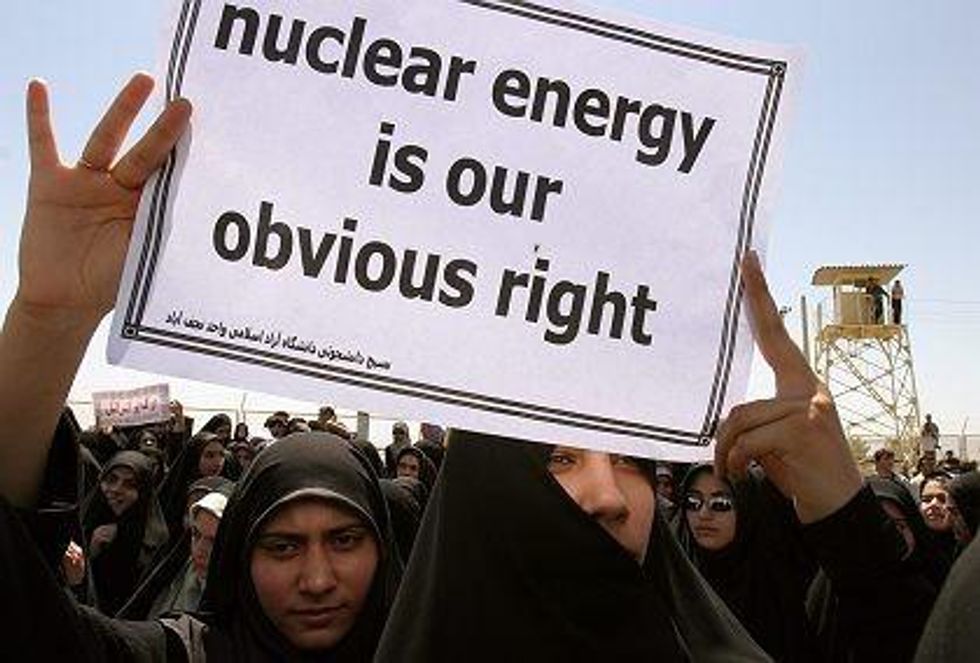
The media resound with warnings about a likely Israeli attack on Iran while the U.S. hesitates, keeping open the option of aggression--thus again routinely violating the U.N. Charter, the foundation of international law.
As tensions escalate, eerie echoes of the run-up to the wars in Afghanistan and Iraq are in the air. Feverish U.S. primary campaign rhetoric adds to the drumbeat.
Concerns about "the imminent threat" of Iran are often attributed to the "international community"--code language for U.S. allies. The people of the world, however, tend to see matters rather differently.
The nonaligned countries, a movement with 120 member nations, has vigorously supported Iran's right to enrich uranium--an opinion shared by the majority of Americans (as surveyed by WorldPublicOpinion.org) before the massive propaganda onslaught of the past two years.
China and Russia oppose U.S. policy on Iran, as does India, which announced that it would disregard U.S. sanctions and increase trade with Iran. Turkey has followed a similar course.
Europeans regard Israel as the greatest threat to world peace. In the Arab world, Iran is disliked but seen as a threat only by a very small minority. Rather, Israel and the U.S. are regarded as the pre-eminent threat. A majority think that the region would be more secure if Iran had nuclear weapons: In Egypt on the eve of the Arab Spring, 90 percent held this opinion, according to Brookings Institution/Zogby International polls.
Western commentary has made much of how the Arab dictators allegedly support the U.S. position on Iran, while ignoring the fact that the vast majority of the population opposes it--a stance too revealing to require comment.
Concerns about Israel's nuclear arsenal have long been expressed by some observers in the United States as well. Gen. Lee Butler, former head of the U.S. Strategic Command, described Israel's nuclear weapons as "dangerous in the extreme." In a U.S. Army journal, Lt. Col. Warner Farr wrote that one "purpose of Israeli nuclear weapons, not often stated, but obvious, is their `use' on the United States"--presumably to ensure consistent U.S. support for Israeli policies.
A prime concern right now is that Israel will seek to provoke some Iranian action that will incite a U.S. attack.
One of Israel's leading strategic analysts, Zeev Maoz, in "Defending the Holy Land," his comprehensive analysis of Israeli security and foreign policy, concludes that "the balance sheet of Israel's nuclear policy is decidedly negative"--harmful to the state's security. He urges instead that Israel should seek a regional agreement to ban weapons of mass destruction: a WMD-free zone, called for by a 1974 U.N. General Assembly resolution.
Meanwhile, the West's sanctions on Iran are having their usual effect, causing shortages of basic food supplies--not for the ruling clerics but for the population. Small wonder that the sanctions are condemned by Iran's courageous opposition.
The sanctions against Iran may have the same effect as their predecessors against Iraq, which were condemned as "genocidal" by the respected U.N. diplomats who administered them before finally resigning in protest.
The Iraq sanctions devastated the population and strengthened Saddam Hussein, probably saving him from the fate of a rogues' gallery of other tyrants supported by the U.S.-U.K.--tyrants who prospered virtually to the day when various internal revolts overthrew them.
There is little credible discussion of just what constitutes the Iranian threat, though we do have an authoritative answer, provided by U.S. military and intelligence. Their presentations to Congress make it clear that Iran doesn't pose a military threat.
Iran has very limited capacity to deploy force, and its strategic doctrine is defensive, designed to deter invasion long enough for diplomacy to take effect. If Iran is developing nuclear weapons (which is still undetermined), that would be part of its deterrent strategy.
The understanding of serious Israeli and U.S. analysts is expressed clearly by 30-year CIA veteran Bruce Riedel, who said in January, "If I was an Iranian national security planner, I would want nuclear weapons" as a deterrent.
An additional charge the West levels against Iran is that it is seeking to expand its influence in neighboring countries attacked and occupied by the U.S. and Britain, and is supporting resistance to the U.S.-backed Israeli aggression in Lebanon and illegal Israeli occupation of Palestinian lands. Like its deterrence of possible violence by Western countries, Iran's actions are said to be intolerable threats to "global order."
Global opinion agrees with Maoz. Support is overwhelming for a WMDFZ in the Middle East; this zone would include Iran, Israel and preferably the other two nuclear powers that have refused to join the Nuclear Non-Proliferation Treaty: India and Pakistan, who, along with Israel, developed their programs with U.S. aid.
Support for this policy at the NPT Review Conference in May 2010 was so strong that Washington was forced to agree formally, but with conditions: The zone could not take effect until a comprehensive peace settlement between Israel and its Arab neighbors was in place; Israel's nuclear weapons programs must be exempted from international inspection; and no country (meaning the U.S.) must be obliged to provide information about "Israeli nuclear facilities and activities, including information pertaining to previous nuclear transfers to Israel."
The 2010 conference called for a session in May 2012 to move toward establishing a WMDFZ in the Middle East.
With all the furor about Iran, however, there is scant attention to that option, which would be the most constructive way of dealing with the nuclear threats in the region: for the "international community," the threat that Iran might gain nuclear capability; for most of the world, the threat posed by the only state in the region with nuclear weapons and a long record of aggression, and its superpower patron.
One can find no mention at all of the fact that the U.S. and Britain have a unique responsibility to dedicate their efforts to this goal. In seeking to provide a thin legal cover for their invasion of Iraq, they invoked U.N. Security Council Resolution 687 (1991), which they claimed Iraq was violating by developing WMD.
We may ignore the claim, but not the fact that the resolution explicitly commits signers to establishing a WMDFZ in the Middle East.
At the 2004 Radio and Television Correspondents' Dinner, President George W. Bush joked about searching for WMDs under Oval Office furniture. The joke backfired when parents who had lost their children fighting in Iraq said they found the joke offensive and tasteless. Senator John Kerry said Bush displayed a "stunningly cavalier" attitude toward the war and those serving in Iraq.
So it's odd that President Obama would make a crude joke about deaths that he is responsible for. But that's just what he did at the May 1 White House Correspondents Dinner. "Jonas Brothers are here, they're out there somewhere," President Obama quipped as he looked out at the packed room. Then he furrowed his brow, pretending to send a stern message to the pop band. "Sasha and Malia are huge fans, but boys, don't get any ideas. Two words for you: predator drones. You'll never see it coming."
For people in Pakistan, where most of the drones are being used, the joke lost something in translation. According to Pakistani journalist Khawar Rizvi, few Pakistanis have ever heard of the Jonas Brothers or understood the reference to the President's daughters. "But one thing we do know: There's nothing funny about predator drones," said Rizvi. "They've killed hundreds of civilians and caused so much suffering in Pakistan. And that's no laughing matter."
The point of using attack drones, which are piloted from 6,000 miles away in the Nevada desert, is to guarantee no U.S. casualties. But the increased use of unmanned aerial vehicles has led to an increase in the killing and maiming of innocents, often while they are sleeping in their beds.
You won't get much of a chuckle by reading The New America Foundation's 2009 report "Revenge of the Drones." It shows that Obama, far from curtailing the drone program he inherited from President Bush, dramatically increased the number of U.S. drone strikes.
The report says that roughly 252 to 315 Pakistani civilians were killed by Predator and Reaper drone strikes between 2006 and 2009. Other reports place the figure much higher. Pakistani authorities released statistics indicating that over 700 civilians were killed by drones in 2009 alone, the year Obama took office. The running tally on the website PakistanBodyCount.Org is even more shocking: 1,226 civilians killed and 427 injured as of March 2010!
Equally shocking is the ratio of civilians to militants killed, which Middle East scholar Daniel Byman estimates at ten to one. It is a cruel joke indeed for the people of Pakistan that the U.S. military finds it acceptable to murder 10 innocent people for every Al Qaeda or Taliban operative killed.
The use of the drones has also expanded in Afghanistan. Every day, the Air Force now flies at least 20 Predator drones -- twice as many as a year ago. They are mostly used for surveillance, but have also carried out more than 200 strikes over the last year. "Since the start of 2009, the Predators
We will never know the true number of civilians killed by our drones in Pakistan and Afghanistan. Our military "doesn't do body counts," as General Tommy Franks famously said when questioned about Iraqi casualties. But each bomb that misses its target leaves a trail of unacceptable human suffering--young lives snuffed out, lifetime disabilities, grieving widows, orphaned children.
Like a bad joke that backfires, these cruel "mistakes" anger the local population, stoke anti-American feelings and prompt violent acts of revenge. As Pakistani-American attorney Rafia Zakaria wrote, "Somewhere in the United States, a drone operator sits in a booth with a joystick and commandeers a pilot-less aircraft armed with deadly bombs. Much like in a video game, he aims, shoots and fires at targets he sees on a satellite map....Sometimes the target is killed and sometimes the intelligence is faulty and a sleeping family or a wedding party bears the brunt of the miscalculation. At all times, however, the Taliban capitalize on the ensuing mayhem and gain new recruits and re-energize old ones. Terror thus spreads not simply in the village where the drone attack has taken place but far and wide in the bazaars of Peshawar and the streets of Lahore and the offices of Islamabad where these recruits avenge their anger against the drone attacks.
While Pakistanis and Afghans find nothing humorous about drone jokes, American businessmen like Neal Blue and Wesley Bush, the CEOs of General Atomics and Northrop Grumman, have been laughing all the way to the bank. Their companies have made a fortune producing the killer drones. General Atomics is a private company and refuses to disclose its revenue or profits, but it has sold more than $2.4 billion worth of drones and other equipment to the U.S. military in the past decade.
With the financial crisis, Obama has called for a three-year freeze on domestic spending, leading to cuts in everything from nutrition programs to national parks. But the Defense Department is exempt from the freeze and in the case of drones, the money is pouring in. The U.S. Defense Appropriations FY2011 doubles the outlay for drones. The U.S. taxpayer will now spend a mind-boggling $2.2 billion for the procurement of Predator-class aircraft, thus guaranteeing the slaughter of innocents for many years to come.
Whoever said laughter was the best medicine was never attacked by a predator drone. President Obama, just like George W. Bush before him, should not be allowed to get away with telling tasteless war jokes. But more important, he should not be allowed to keep employing weapons that, as in the case of landmines and cluster bombs, disproportionately kill civilians.