

SUBSCRIBE TO OUR FREE NEWSLETTER
Daily news & progressive opinion—funded by the people, not the corporations—delivered straight to your inbox.
5
#000000
#FFFFFF
To donate by check, phone, or other method, see our More Ways to Give page.
Daily news & progressive opinion—funded by the people, not the corporations—delivered straight to your inbox.
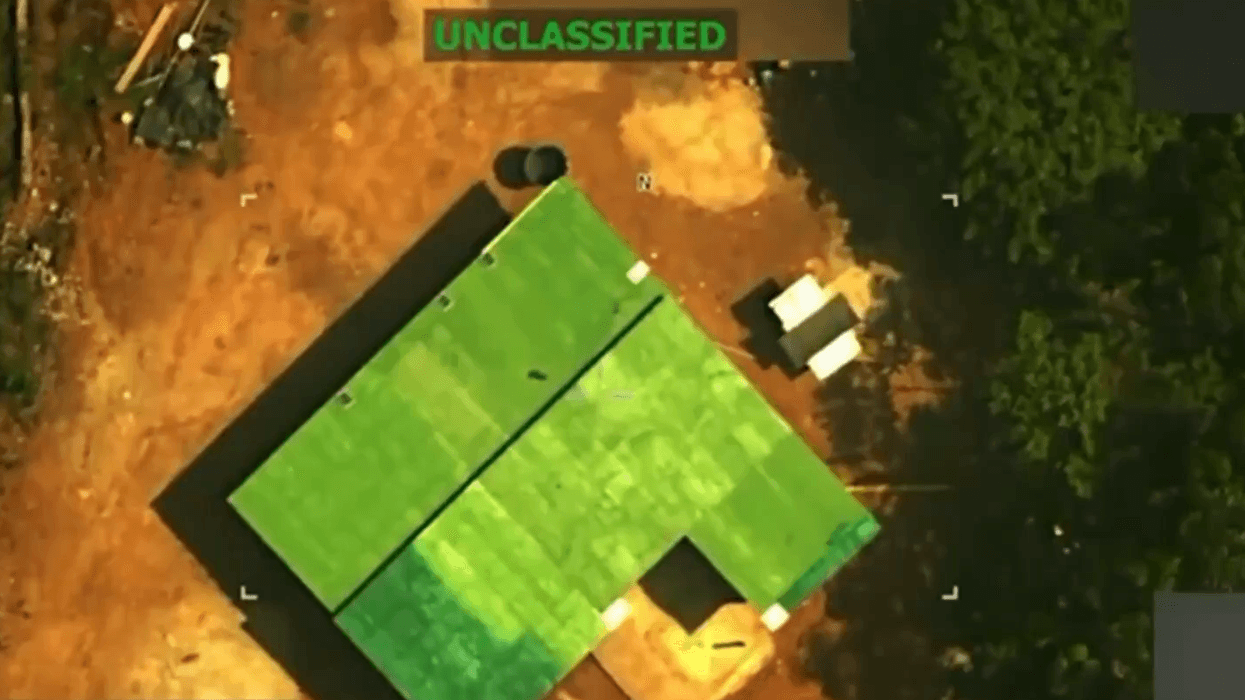
"Outside of armed conflict, premeditated killing is referred to as murder," said one expert.
US President Donald Trump and Pentagon Secretary Pete Hegseth announced in social media posts late Friday that American forces, in coordination with Venezuelan authorities, killed the alleged leader of the Tren de Aragua gang in a strike on a compound inside Venezuelan territory.
"At my direction, the United States Southern Command delivered a swift and lethal kinetic strike to successfully execute Niño Guerrero, the infamous leader of Tren de Aragua," the president wrote on his Truth Social platform, posting what appears to be footage of the strike. Hegseth later specified that the attack took place inside Venezuela earlier this week and that Héctor Rusthenford Guerrero Flores—known as Niño Guerrero—was "confirmed killed."
The strike that purportedly killed Guerrero, whom the US Justice Department charged last year with multiple crimes including "facilitating acts of terrorism," came in the context of the Trump administration's broader, deadly military campaign in South America and off its coast. Dozens of US bombings of boats in the Caribbean and eastern Pacific Ocean since last September have killed more than 200 people—including possible victims of human trafficking—with the stated goal of stemming the flow of drugs to the US (an objective that experts say has not been achieved).
Leading human rights organizations have characterized the boat bombings as "murder."
Brian Finucane, senior adviser to the US Program at the International Crisis Group, called the strike that allegedly killed Guerrero Flores "more lawless, performative killing by the Trump administration."
"Outside of armed conflict, premeditated killing is referred to as murder," Finucane wrote on social media. "There is no indication this strike occurred in an armed conflict. Including because, as best we can tell, TdA doesn't constitute an 'organized armed group.'"
The government of Venezuela, whose president was kidnapped by US forces earlier this year, issued a statement confirming its involvement in the strike this week.
“During the operation, clashes occurred with members of criminal groups, resulting in the death of Héctor Rusthenford Guerrero Flores, alias ‘Niño Guerrero,’ the leader of one of these criminal organizations,” the statement reads.
It was not immediately clear if others were killed in the military attack.
"We extend our gratitude to the Venezuelan security forces for their support to the successful joint operation against a Tren de Aragua compound that resulted in the death of the narco-terrorist organization’s leader," said Gen. Francis Donovan, the head of the US Southern Command.
The Associated Press noted that "Trump and administration officials have consistently blamed Tren de Aragua for being at the root of the violence and illicit drug dealing that plague some US cities."
"The president spent months repeating the claim—contradicted by a declassified U.S. intelligence assessment—that Tren de Aragua had operated under Venezuelan President Nicolás Maduro’s control," the AP added.
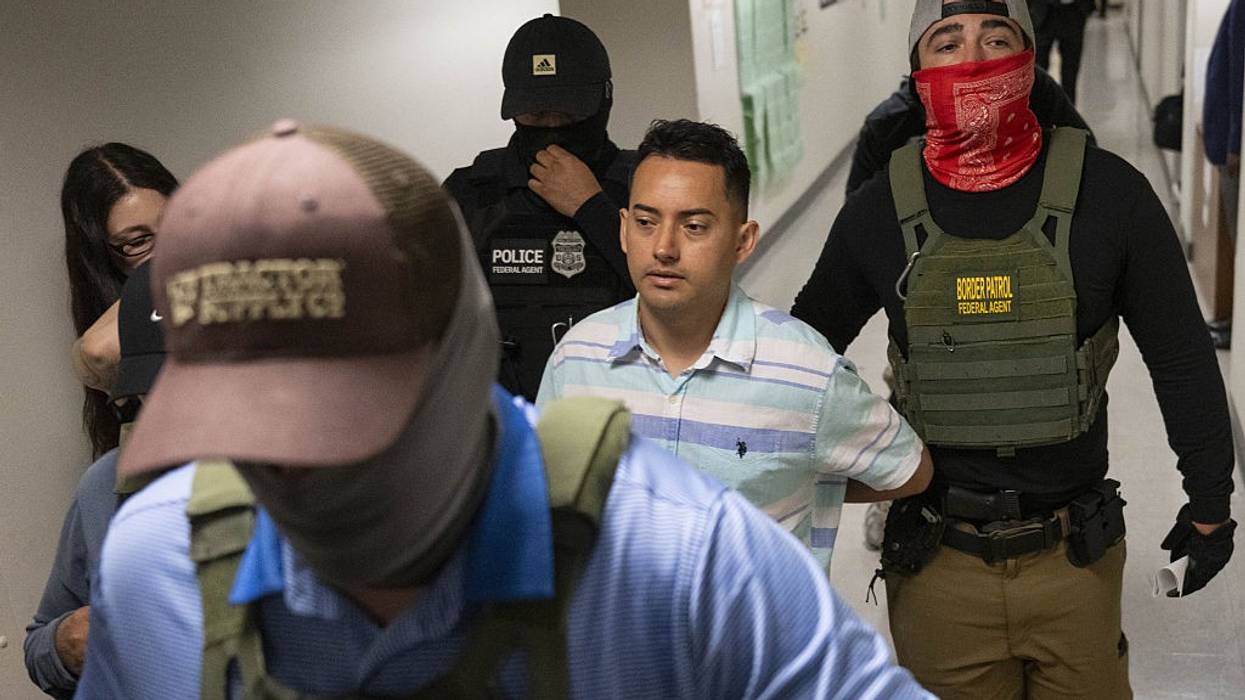
“The narrative that immigration enforcement is going after gang members in this country is a lie,” says one expert.
Amid repeated assertions by administration figures that President Donald Trump's deadly anti-immigrant blitz is "targeting the worst of the worst" among "criminal illegal aliens," critics of the crackdown this week pointed to official data belying those claims.
Take last month's invasion by federal forces of a Chicago apartment complex, during which witnesses said agents broke down doors, terrorized residents including children, smashed furniture and belongings, and dragged away dozens of zip-tied people including US citizens and minors. US citizen children were separated from their undocumented parents after the raid.
The Department of Homeland Security (DHS) released a statement calling the raid a "targeted enforcement operation" in an area "frequented" by Tren de Aragua (TDA), a transnational criminal organization from Venezuela that Trump has designated a terrorist group and targeted in a series of extrajudicial high-seas assassinations of people critics contend did not belong to the gang.
The Trump administration initially said that two people arrested during the raid were suspected of being TDA members but then quietly halved that figure to just one, without providing evidence to support even that claim.
This, after Stephen Miller, Trump's white nationalist deputy chief of staff who reportedly once advocated drone strikes on unarmed migrants, painted a picture of a neighborhood overrun by TDA gangsters.
"A few days ago, Stephen Miller was claiming the entire building was 'full of Tren de Aragua terrorists.'"
"The official DHS count of Tren de Aragua members arrested in the Chicago apartment raid has now dropped down to just ONE," Aaron Reichlin-Melnick, a senior fellow at the advocacy group American Immigration Council, said on social media Tuesday. "A few days ago, Stephen Miller was claiming the entire building was 'full of Tren de Aragua terrorists.'"
Meanwhile in Florida, where Trump administration officials and Republicans including Gov. Ron DeSantis claim that a large percentage of undocumented people arrested by Immigration and Customs Enforcement (ICE) and other law enforcement are violent criminals, just 25 people—or 0.5% of arrested undocumented individuals—have known gang affiliations, according to the state's own crime statistics.
"The narrative that immigration enforcement is going after gang members in this country is a lie," said Florida immigration advocate and Center for Community Change Action fellow Thomas Kennedy.
Data show that more than 7 in 10 people detained nationwide by ICE as of last month had no criminal conviction, and many of those who had convictions committed only minor offenses such as marijuana possession or traffic infractions. As of mid-August, two-thirds of people deported had no criminal convictions, according to government data reported by The Marshall Project.
Testifying before a House Judiciary subcommittee hearing earlier this year, former ICE Chief of Staff Jason Houser described the administration's crackdown as “designed for media optics rather than public safety.”
“When resources are diverted toward the arrest of low-priority individuals, enforcement becomes a dragnet,” Houser said. “That may generate high arrest numbers for press releases, but it pulls ICE personnel away from complex, high-risk cases that improve public safety. It creates a false sense of security while leaving human trafficking, narcotics operations, and violent criminal networks less disrupted.”
"This misalignment of mission isn’t just inefficient—it’s dangerous," he added. "When officers are used as blunt instruments of fear rather than precision tools of public safety, we create a more chaotic and combative environment for them to operate in. We reduce their ability to engage local partners, obtain reliable intelligence, and build cases that will stand up in court."
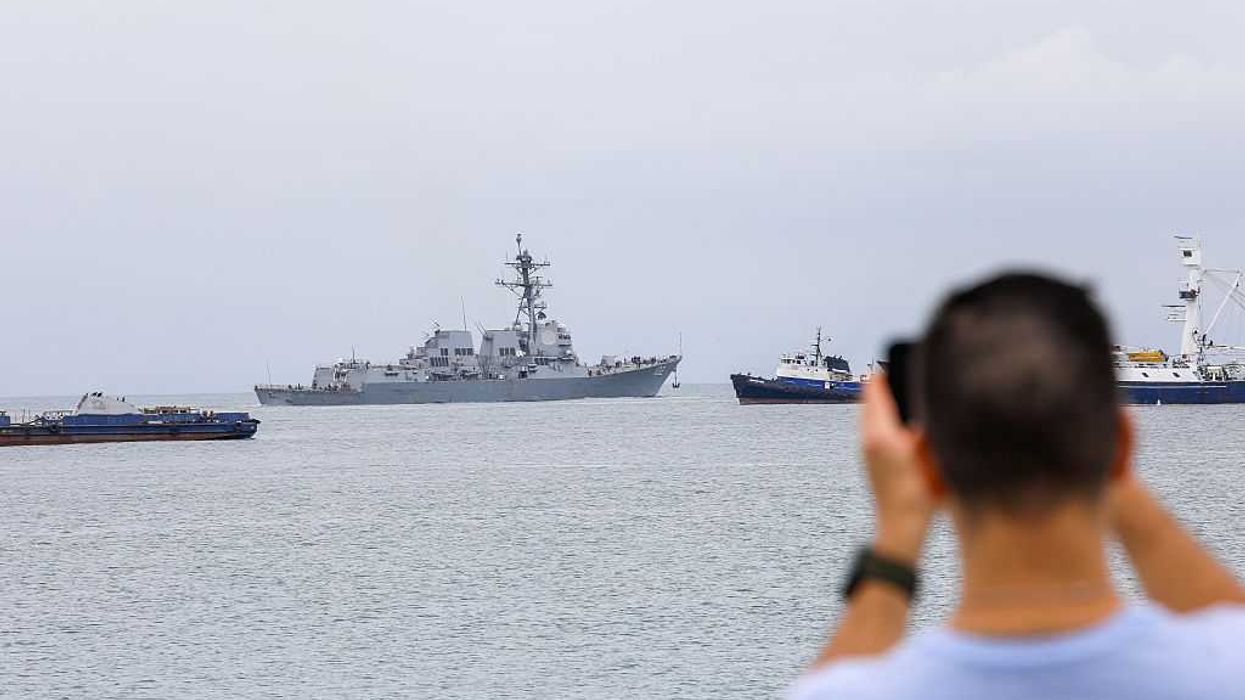
The idea of the country, rather than the reality, presents Trump with carte blanche to deploy the US military in America’s backyard and in America’s own cities.
Every autocrat needs an enemy who threatens the country—preferably from both sides of the border. Such an enemy can serve as the reason to suspend the rule of law and boost executive power.
For Turkey’s Recep Tayyip Erdogan, it’s been the Kurds. For India’s Narendra Modi, it’s been the Muslims. For Russia’s Vladimir Putin, it was first the Chechens, then Alexei Navalny and his followers, and now the Ukrainians.
President Donald Trump has built his political career—and, frankly, his entire personality—on the identification of enemies. His presidential run back in 2016 required belittling his rivals in those early Republican primaries (quite literally in the case of Marco Rubio). Later, he widened his scope to include everyone who attempted to thwart his ambitions, like the FBI’s James Comey and New York Attorney General Letitia James. These days, everything that goes wrong in the United States he blames on former president Joe Biden (who had the temerity to beat him in the 2020 presidential election) and the “radical left” (which is basically anyone more liberal than Stephen Miller).
But such “enemies” are small fry, given Trump’s desire for ever greater power. To justify his attacks on Democratic-controlled cities, which is really an effort to suppress all resistance to his policies and his consolidation of presidential authority, he needs a more fearsome monster. To find such a bogeyman, he has dug deep into the American psyche and the playbooks of the autocratic leaders he admires.
Has the United States replaced democracy promotion with a new, Trumpian form of carnage that it is exporting to the rest of the world, beginning with Venezuela?
On the road to finding the right monster and making America “great again”—a hero’s quest if there ever was one—Trump must first depict the United States as a fallen giant. During his first inaugural address, he declared that “this American carnage stops right here and stops right now.” According to Trump’s self-centered timeline, the carnage stopped during the four years of his first presidency and resumed once again when Biden took over. Carnage, for Trump, is really just a codeword for race—the fall in status of white people who have lost jobs, skin privilege, and pride of place in the history books. “Carnage” is what Black and brown people have perpetrated by asserting themselves and taking political power, most often in cities.
It’s no surprise, then, that Trump has characterized American cities as “dangerous” and, in the case of Chicago, a “war zone.” In his recent address to a stony-faced group of US military leaders, he said that cities are “very unsafe places and we’re going to straighten them out one by one.” He proposed that the military use American cities as a “training ground” to root out the “enemy within.”
Trump often refers to this “enemy within” as “violent radical left terrorism,” as in the White House’s recent statement on the deployment of the National Guard to Portland. But that doesn’t quite cover, for Trump, the clear and present dangers of drugs and gangs, which are central to justifying his tariff and immigration policies. For that, the president needs to pump up the carnage.
And that’s where Venezuela comes in.
The United States is an economically powerful country with relatively low levels of crime. It does not resemble a tropical kleptocracy (not yet). Yet, Trump has gone to great lengths to make it seem that Americans face the same kind of violence that plagued the Philippines during the tenure of Rodrigo Duterte and El Salvador under the current reign of Nayib Bukele. Both autocrats undermined the rule of law to fight drug lords and organized crime. Duterte engaged in myriad extrajudicial killings that have now landed him in The Hague on charges of crimes against humanity. Bukele has imprisoned more than 1% of the population, many of them innocent of any crimes, and has effectively declared himself president for life.
For Trump, who thinks of himself as a white savior (el salvador blanco), the key to Salvadorizing America is to depict a country rapidly going to the dogs, which necessitates sending US troops into American cities and Immigration and Customs Enforcement agents into every corner of society. Despite Trump’s claims, the US crime rate was close to a 50-year low in 2022, halfway through the Biden administration. In 2024, the rates for murder, rape, aggravated assault, and robbery all fell, according to the FBI.
Then Trump discovered Tren de Aragua, the Venezuelan gang that he could use to demonize immigrants, blame for US drug abuse, and tie to criminal activity in cities. The gang has served as the perfect pretext to remove the Temporary Protected Status of Venezuelans as well as round them up and deport them.
And now the administration is playing up the threat of groups like Tren de Aragua to attack boats near Venezuela’s coast and declare a war against drug cartels. Some voices within the administration are even pushing for a US operation to dislodge Venezuelan leader Nicolas Maduro.
Has the United States replaced democracy promotion with a new, Trumpian form of carnage that it is exporting to the rest of the world, beginning with Venezuela?
Tren de Aragua began in a Venezuela prison about a decade ago. It quickly spread to other parts of Venezuela before branching out to the rest of Latin American and eventually to the United States. It has allegedly carried out hits, kidnapped people, and engaged in extensive drug trafficking. It has been linked to an assault on two New York policemen.
It sounds like a formidable organization, and Trump has done much to build up its reputation by branding it “terrorist” and putting it at the same level as the Islamic State.
In fact, Tren de Aragua is a decentralized organization that doesn’t pose a national security threat to any country much less the United States. Its links to the Venezuelan government are tenuous. Few if any of the roughly 250 Venezuelans deported earlier this year to a prison in El Salvador had any connections to the gang. Most were arrested on the basis of “gang” tattoos when Tren de Aragua doesn’t use tattoos as identifying markers.
Trump’s war on drugs and full-court press on deportations, on the other hand, depend on this idea of Venezuela as a full-blown threat.
The Trump administration’s order terminating Temporary Protected Status for approximately 300,000 Venezuelans living in the United States makes multiple mentions of Tren de Aragua. This week the Supreme Court upheld Trump’s move. The vast majority of Venezuelans left the country to escape gangs, economic chaos and corruption, or the government’s campaign to destroy the political opposition (which has included 19 cases of incommunicado detention). And now Trump is sending them back to lives of great uncertainty.
According to one poll, nearly half of Venezuelan supporters of Donald Trump, who were key in delivering Miami-Dade county to him in the last election, are having buyer’s remorse.
It’s one thing to break US laws in going after immigrants. Now the Trump administration is breaking international laws and engaging in extrajudicial murder in its imagined pursuit of Tren de Aragua overseas.
On September 2, US Special Operations forces attacked a boat near the Venezuelan coast that the administration alleges was a drug-running operation. It claimed to have killed 11 Tren de Aragua gang members. But it hasn’t provided any proof… of anything. The administration has released videos of the attacks without identifying the people it killed, offering any evidence that there were any drugs on board, or demonstrating that the boats had any links to Tren de Aragua.
Meanwhile, despite a war of words with Colombian leader Gustavo Petro over the latter’s pushback against Trump’s aggressive moves in the region, the United States recently teamed up with Colombia (and the UK) to arrest the alleged head of Tren de Aragua’s armed wing in the Colombian city of Valledupar. This police work received considerably less attention in the press—and from the US government itself—than Trump’s clearly illegal attacks on Venezuelan boats.
Venezuelan President Nicolas Maduro, an autocrat in his own right, has predictably denounced US actions and called up reserves to prepare to defend the country against a potential attack. Less predictably, after the sinking of that first boat, he sent a letter to the Trump administration arguing that he wasn’t involved in narco-trafficking and offering to meet with the administration’s envoy Richard Grenell. The administration ignored the letter and continued its attacks, though Grenell maintained contacts with Venezuela in order to swing a deal to avoid war and facilitate US access to Venezuelan oil. This week, Trump instructed Grenell to stop this diplomatic outreach.
Meanwhile, the Trump administration has been building up the US military presence in the region. It sent advanced F-35 fighter jets to Puerto Rico. It beefed up its naval flotilla with eight warships, some Navy P-8 surveillance planes, and an attack submarine. There are nearly 7,000 US troops now deployed to the region.
This is considerably more firepower than a drug interdiction operation requires. But it’s not enough for a full-scale invasion of Venezuela.
This in-between approach may well reflect the conflict within the Trump administration between gung-ho regime-changers like Rubio and anti-interventionists like Grenell. The regime-changers, which include Stephen Miller and the head of the CIA John Ratcliffe, count on the support of Venezuelan opposition leaders like María Corina Machado, who had failed to pry Maduro from office in what was clearly a rigged presidential election last year. With many opposition figures now in jail or in exile, she views the US military as a Hail Mary pass.
Other Venezuelans are much more cautious. “You kill Maduro,” one businessman there confided, “you turn Venezuela into Haiti.” After all, the weak opposition would have a hard time holding the country together amid a scramble for power and oil.
Longtime international affairs expert Leon Hadar points out that such carnage would not just be a problem for Venezuela. “Venezuela has already produced over 7 million refugees and migrants,” he writes. “A state collapse scenario could easily double that number. Colombia, Brazil, and other neighbors are already overwhelmed. Where do Trump and his advisors think these people will go?”
Given that Trump doesn’t make plans and instead improvises like a bombastic actor, his administration has probably not yet decided how to pursue regime change in Venezuela. The president likes to pit rival factions within his administration to see what the internal carnage will produce. As the Guardian’s Simon Tisdall concludes, “Today, full-scale military intervention in Venezuela remains unlikely. More probable is an intensified pressure campaign of destabilisation, sanctions, maritime strikes, and air and commando raids.”
The reality of Venezuela—the government, the gangs, the immigrants—poses no threat to the United States. The country sends a small percent of drugs here—most fentanyl comes from Mexico, most cocaine from Colombia—while the vast majority of Venezuelans in the United States are law-abiding citizens. Maduro’s military couldn’t do much against US forces, and so far Venezuela has not struck back against what has been a clear violation of its sovereignty.
Trump’s war on drugs and full-court press on deportations, on the other hand, depend on this idea of Venezuela as a full-blown threat. Venezuela presents Trump with carte blanche to deploy the US military in America’s backyard and in America’s own cities.
Really, it’s no surprise that Trump wants such a white card. He’s been playing such trump cards all his life.
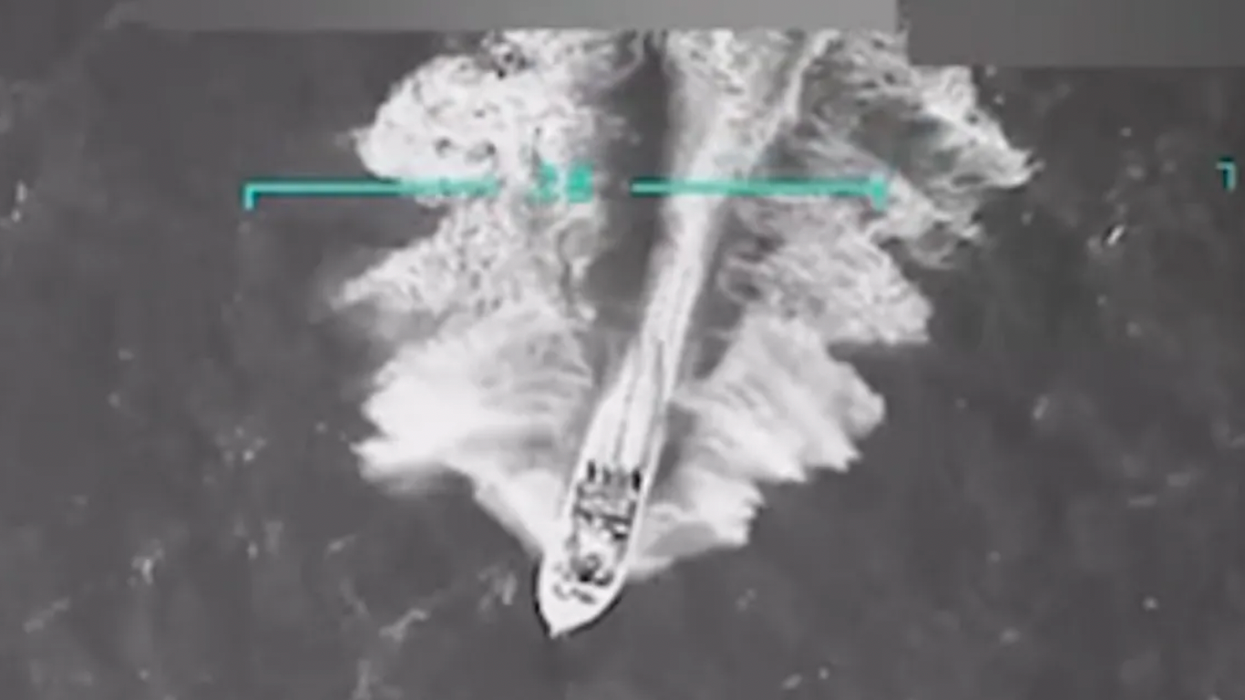
"There is no legal justification for this military strike," said one Amnesty International campaigner. "The US must be held accountable."
President Donald Trump said Monday that the US carried out a fresh strike on what he said was a boat used by Venezuelan drug gangs, killing three people in what one human rights campaigner called another "extrajudicial execution."
"This morning, on my Orders, US Military Forces conducted a SECOND Kinetic Strike against positively identified, extraordinarily violent drug trafficking cartels and narcoterrorists in the [US Southern Command] area of responsibility," Trump said on his Truth Social network. "The Strike occurred while these confirmed narcoterrorists from Venezuela were in International Waters transporting illegal narcotics (A DEADLY WEAPON POISONING AMERICANS!) headed to the US."
"These extremely violent drug trafficking cartels POSE A THREAT to US National Security, Foreign Policy, and vital US Interests," the Republican president continued. "The Strike resulted in three male terrorists killed in action. No US Forces were harmed in this Strike."
"BE WARNED—IF YOU ARE TRANSPORTING DRUGS THAT CAN KILL AMERICANS, WE ARE HUNTING YOU!" Trump added. "The illicit activities by these cartels have wrought DEVASTATING CONSEQUENCES ON AMERICAN COMMUNITIES FOR DECADES, killing millions of American Citizens. NO LONGER. Thank you for your attention to this matter!!!"
US President Trump just announced that a second drug smuggling boat from Venezuela was hit by a US airstrike in the Caribbean, killing 3 people on board the boat.#Venezuela pic.twitter.com/dO34gYr9GZ
— CNW (@ConflictsW) September 15, 2025
Responding to arguments by legal experts and Venezuelan officials that the September 2 strike was illegal, Trump said Sunday that "what's illegal are the drugs that were on the boat... and the fact that 300 million people died last year from drugs."
Only 62 million people died in the entire world of all causes last year, making Trump's claim impossibly false.
Monday's attack followed the September 2 bombing of a vessel allegedly transporting cocaine off the Venezuelan coast, a strike that killed 11 people. Venezuelan officials say none of the 11 men were members of the Tren de Aragua gang, as claimed by Trump.
On his first day back in the White House, Trump signed an executive order designating drug cartels as foreign terrorist organizations. Last month, the president reportedly signed a secret order directing the Pentagon to use military force to combat drug cartels abroad, sparking fears of renewed US aggression in a region that has endured well over 100 US attacks, invasions, occupations, and other interventions since the issuance of the dubious Monroe Doctrine in 1823.
The Intercept's Nick Turse reported Monday that the Trump administration's recently rebranded Department of War "is thwarting congressional oversight" of the September 2 attack.
“I’m incredibly disturbed by this new reporting that the Trump administration launched multiple strikes on the boat off Venezuela,” Congresswoman Sara Jacobs (D-Calif.) said in response to Turse's reporting. “They didn’t even bother to seek congressional authorization, bragged about these killings—and teased more to come.”
Common Dreams reported last week that Congresswoman Ilhan Omar (D-Minn.) introduced a war powers resolution seeking to restrain Trump from conducting attacks in the Caribbean.
Also last week, Sen. Tim Kaine (D-Va.) led a letter signed by two dozen Democratic colleagues and Sen. Bernie Sanders (I-Vt.) asserting that the Trump administration offered "no legitimate justification" for the first boat strike.
It's not just congressional Democrats who have decried Trump's September 2 attack. Last week, Sen. Rand Paul (R-Ky.) said that "the recent drone attack on a small speedboat over 2,000 miles from our shore without identification of the occupants or the content of the boat is in no way part of a declared war, and defies our longstanding Coast Guard rules of engagement."
“What a despicable and thoughtless sentiment it is to glorify killing someone without a trial," Paul later added.
Paul also mirrored Democratic lawmakers' questioning of Trump's narrative that the boat bombed on September 2 was heading to the United States.
Echoing congressional critics, Daphne Eviatar, director of Amnesty International's Security With Human Rights program, said of Monday's attack, "Today, President Trump claimed his administration carried out another lethal strike against a boat in the Caribbean."
"This is an extrajudicial execution, which is murder," Eviatar added. "There is no legal justification for this military strike. The US must be held accountable."
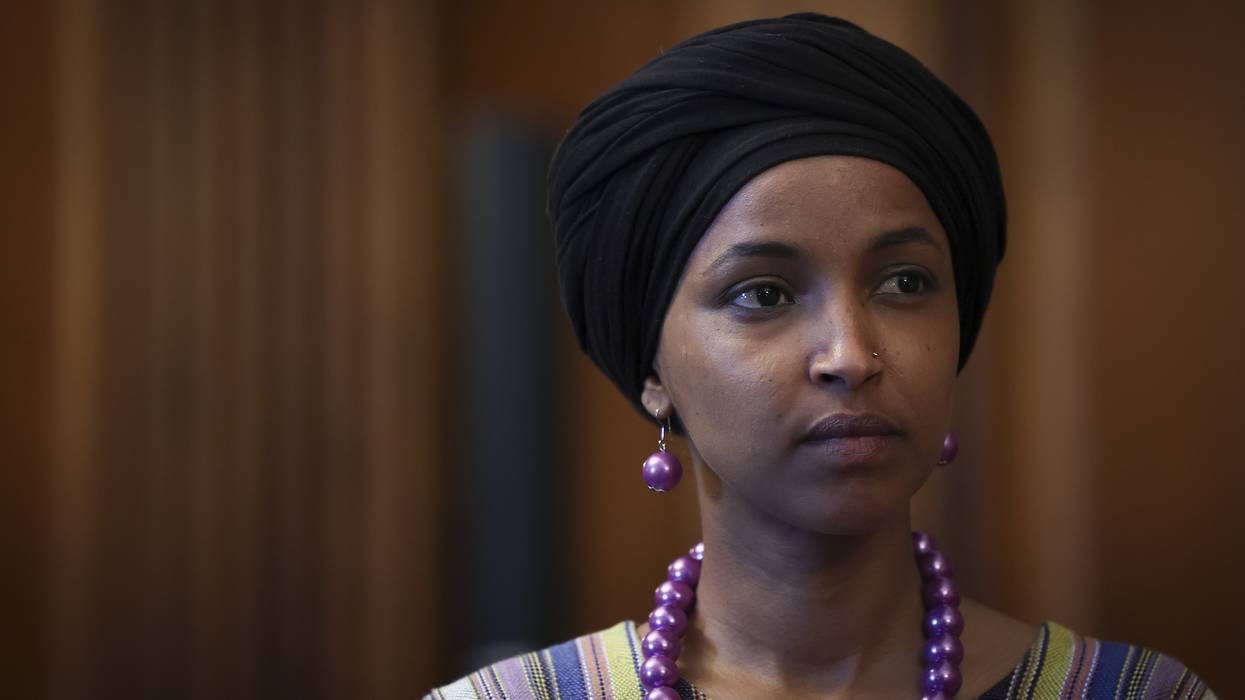
"It was not self-defense or authorized by Congress," the Minnesota congresswoman said of Trump's strike on a boat bound from Venezuela, which killed 11 people last week.
US Rep. Ilhan Omar introduced a war powers resolution in the US House of Representatives on Thursday, seeking to restrain President Donald Trump from conducting attacks in the Caribbean after he ordered a drone strike on a ship from Venezuela last week, killing 11 people.
The Trump administration has claimed, with little evidence, that the boat was a drug trafficking vessel that posed an imminent threat to the United States. But that narrative has come increasingly into doubt in recent days.
In a statement on the resolution provided to The Intercept, Omar (D-Minn.) said:
There was no legal justification for the Trump administration’s military escalation in the Caribbean... It was not self-defense or authorized by Congress. That is why I am introducing a resolution to terminate hostilities against Venezuela, and against the transnational criminal organizations that the administration has designated as terrorists this year. All of us should agree that the separation of powers is crucial to our democracy, and that only Congress has the power to declare war.
Article I, Section 8 of the US Constitution gives Congress the "sole authority to declare war," but presidents have often carried out military actions without congressional approval, citing their role as commander-in-chief of the armed forces, particularly since the passage of the Authorization for Use of Military Force in 2001.
The War Powers Act of 1973 allows Congress to check the president's war-making authority, requiring the president to report military actions to Congress within 48 hours and requiring Congress to authorize the deployment of troops after 60 days.
Omar unveiled the resolution alongside several of her fellow members of the Congressional Progressive Caucus, including Chair Greg Casar (D-Texas) and caucus whip Rep. Jesús “Chuy” García (D-Ill.).
" Donald Trump cannot be allowed to drag the United States into another endless war with his reckless actions," Casar said. "It is illegal for the president to take the country to war without consulting the people's representatives, and Congress must vote now to stop Trump from putting us at further risk."
In the days following Trump's strike on the ship, the administration's narrative that it contained members of Venezuela's Tren de Aragua gang bound for the United States has been called into question by news reports and by those briefed by the Department of Defense, which the Trump administration recently rebranded as the "Department of War."
After his staff was briefed on Tuesday, Sen. Jack Reed (D-R.I.), the ranking member of the Senate Armed Services Committee, told CNN that the Pentagon has "offered no positive identification that the boat was Venezuelan, nor that its crew were members of Tren de Aragua or any other cartel."
While Trump has stated that the boat was en route to the US, the briefers themselves acknowledged that they could not determine its destination. Secretary of State Marco Rubio contradicted the president, saying "these particular drugs were probably headed to Trinidad or some other country in the Caribbean, at which point they just contribute to the instability these countries are facing."
The New York Times, meanwhile, reported Wednesday that the boat "had altered its course and appeared to have turned around before the attack started," which further contradicts the claim of imminent harm to the US.
“There is no evidence—none—that this strike was conducted in self-defense," Reed said. "That matters, because under both domestic and international law, the US military simply does not have the authority to use lethal force against a civilian vessel unless acting in self-defense.”
Even if the people aboard the boat were carrying drugs, as the administration claims, there is no legal precedent for the crime of drug trafficking justifying such an extraordinary use of military retaliation.
The White House has attempted to argue that the president has the legal authority to summarily kill suspected drug smugglers using an unprecedented legal rationale, which labels cartel members as tantamount to enemy combatants, who are allowed to be killed in war, because the product they carry causes thousands of deaths per year in the US. Legal analysts have described this as a flimsy pretext for extrajudicial murder.
Scott R. Anderson, a senior fellow in the National Security Law Program at Columbia Law School and a former legal adviser at the US State Department, wrote for the Lawfare blog:
There is no colorable statutory authority for military action against Tren de Aragua and other similarly situated groups. Occasional suggestions in the press that the Trump administration’s description of Tren de Aragua as a terrorist organization is meant to invoke the 2001 Authorization for the Use of Military Force (AUMF) are almost certainly mistaken: That authorization extends only to the perpetrators of the 9/11 attacks and select associates, and no one—not even in the Trump administration—has accused Tren de Aragua of being that.
Marty Lederman, who served as deputy assistant attorney general in the Department of Justice's Office of Legal Counsel from 2009 to 2010, wrote for Just Security:
Regardless of which laws might have been broken, what’s more alarming, and of greater long-term concern, is that U.S. military personnel crossed a fundamental line the Department of Defense has been resolutely committed to upholding for many decades—namely, that (except in rare and extreme circumstances not present here) the military must not use lethal force against civilians, even if they are alleged, or even known, to be violating the law."
The resolution introduced by Omar is the first seeking to restrain Trump's ability to launch military strikes against Venezuela. But it's not the first seeking to rein in his wide-ranging use of unilateral warmaking authority.
In June, following his launch of airstrikes against Iran, war powers resolutions introduced in the House and Senate to limit Trump's actions in the Middle East narrowly failed despite receiving some Republican support.
Though specific attempts to rein in Trump's power have failed, the House did pass a bipartisan resolution earlier this week to repeal the AUMFs issued by Congress in the lead-up to the Iraq War, and which presidents have used for over two decades to justify a wide range of military actions across the Middle East without congressional oversight.
If passed, Omar's measure would require Trump to obtain congressional approval before using military force against Venezuela or launching more strikes on transnational criminal organizations that he has designated as terrorist groups since February, including Tren de Aragua.
García, the Progressive Caucus whip, said the resolution was an effort to begin restoring Congress' authority to check a president operating with impunity.
"The extrajudicial strike against a vessel in the Caribbean Sea is only the most recent of Trump’s reckless, deadly, and illegal military actions. Now, he’s lawlessly threatening a region already profoundly impacted by the destabilization of U.S. actions,” said García. "With this War Powers Resolution, we emphasize the total illegality of his action, and— consistent with overwhelming public opposition to forever war—reclaim Congress' sole power to authorize military action.”
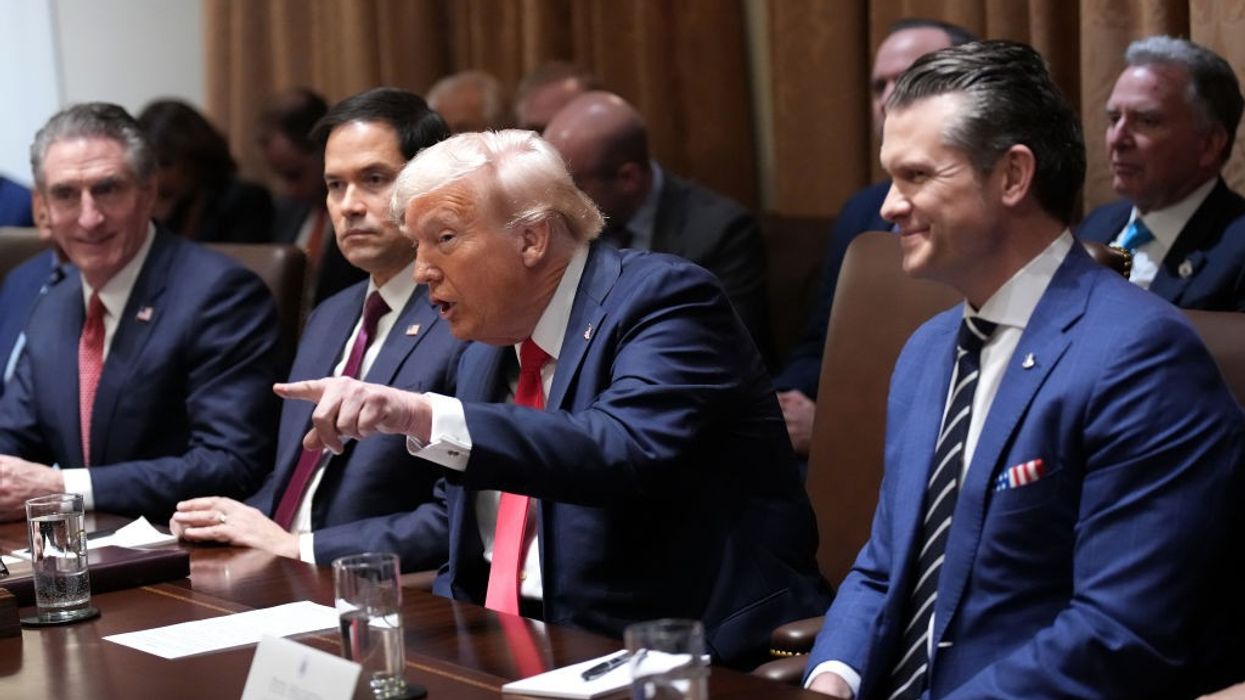
The US is considering "shooting down Venezuelan military aircraft" or "bombing Venezuelan military airfield," according to a report from independent journalist Ken Klippenstein.
US President Donald Trump's administration is considering launching military strikes on Venezuela, according to new reporting from independent journalist Ken Klippenstein.
Military sources on Tuesday told Klippenstein that the Trump administration is mulling an attack against Venezuela unless it cracks down on drug cartels that it claims are shipping fentanyl into the United States.
Contrary to the administration's claims, according to the US Drug Enforcement Administration and other agencies, Venezuela plays virtually no role in fentanyl manufacturing and trafficking.
Klippenstein's sources said the attack was likely to involve "shooting down Venezuelan military aircraft or by bombing Venezuelan military airfield," and that the US Air Force has been rehearsing for such a mission in recent weeks.
Such an attack would mark a dramatic escalation in the Trump administration's hostilities toward Venezuela, which escalated last week when the administration bombed a boat off the Venezuelan coast that it alleged was carrying drug traffickers.
Many legal experts were quick to condemn the strike as a violation of maritime law. Republican Sen. Rand Paul of Kentucky was among those who condemned the military attack on suspected drug smugglers without due process.
A leaked Department of Homeland Security memo obtained by Klippenstein gives clues as to why the administration is taking an aggressive military posture toward Venezuela.
Specifically, writes Klippenstein, the memo gives insight into the administration's view that Venezuelan leader Nicolás Maduro is actually in charge of the Tren de Aragua cartel and is giving it orders to poison American citizens by getting them addicted to drugs.
However, Klippenstein cautions that this view of Maduro as the commander of an international drug cartel is not backed up by US intelligence agencies.
"A declassified assessment prepared by the National Intelligence Council concluded in April that the Maduro regime 'probably does not have a policy of cooperating with TdA and is not directing TdA operations in the United States,'" he noted.
Klippenstein closed his report by likening the situation to the buildup to the 2003 Iraq War, but with fentanyl taking the place of "weapons of mass destruction" as the purported casus belli.
"Similar to the 'debate' about Saddam's WMD, Democrats in Congress are busy discussing whether the strike on a small drug boat was legal and complaining that they weren't briefed on the operation," he wrote. "The fundamental question—is there any evidence that the Venezuela government is directing fentanyl into the U.S.?—is hardly ever asked. And most importantly, would bombing Venezuela do anything to reduce the flow of drugs into the U.S.?"
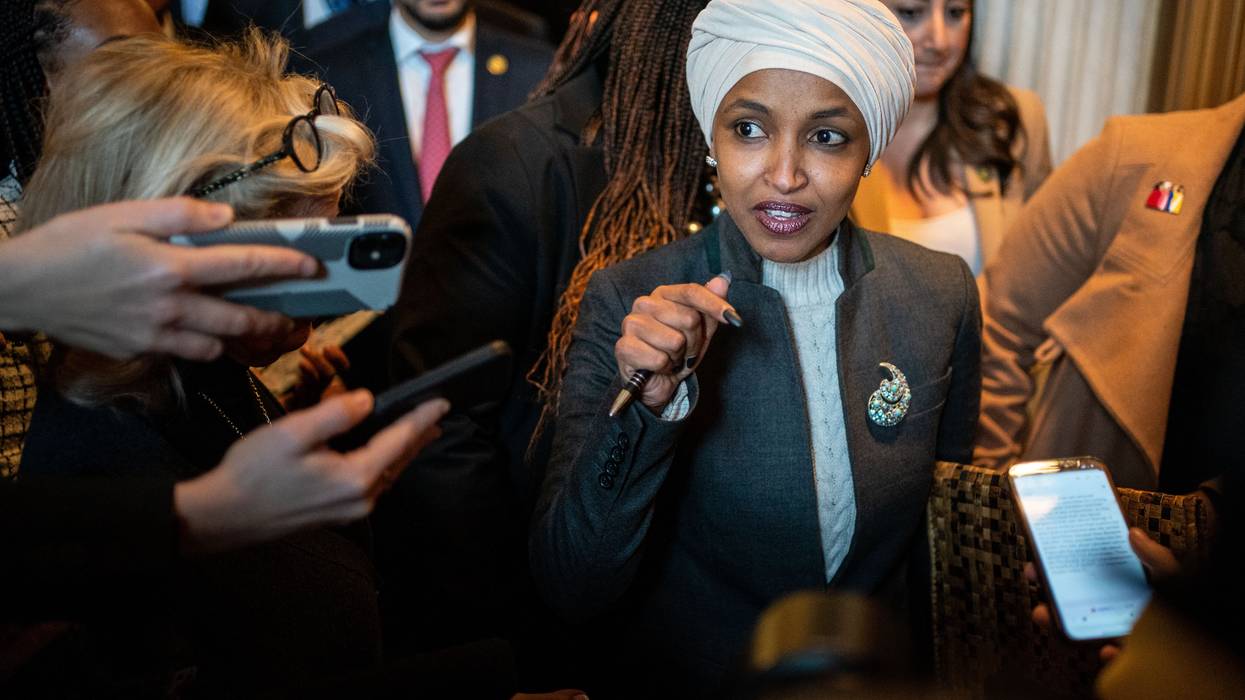
"They're now using the failed War on Drugs to justify their egregious violation of international law," the Minnesota progressive said of the Trump administration.
Congresswomen Ilhan Omar and Delia Ramirez on Thursday strongly condemned the Trump administration's deadly attack on a boat allegedly trafficking cocaine off the coast of Venezuela as "lawless and reckless," while urging the White House to respect lawmakers' "clear constitutional authority on matters of war and peace."
"Congress has not declared war on Venezuela, or Tren de Aragua, and the mere designation of a group as a terrorist organization does not give any president carte blanche," said Omar (D-Minn.), referring to President Donald Trump's day one executive order designating drug cartels including the Venezuela-based group as foreign terrorist organizations.
Trump—who reportedly signed a secret order directing the Pentagon to use military force to combat cartels abroad—said that Tuesday's US strike in international waters killed 11 people. The attack sparked fears of renewed US aggression in a region that has endured well over 100 US interventions over the past 200 years, and against a country that has suffered US meddling since the late 19th century.
"It appears that US forces that were recently sent to the region in an escalatory and provocative manner were under no threat from the boat they attacked," Omar cotended. "There is no conceivable legal justification for this use of force. Unless compelling evidence emerges that they were acting in self-defense, that makes the strike a clear violation of international law."
Omar continued:
They're now using the failed War on Drugs to justify their egregious violation of international law. The US posture towards the eradication of drugs has caused immeasurable damage across our hemisphere. It has led to massive forced displacement, environmental devastation, violence, and human rights violations. What it has not done is any damage whatsoever to narcotrafficking or to the cartels. It has been a dramatic, profound failure at every level. In Latin America, even right-wing presidents acknowledge this is true.
The congresswoman's remarks came on the same day that US Secretary of State Marco Rubio designated a pair of Ecuadorean drug gangs as terrorist organizations while visiting the South American nation. This, after Rubio said that US attacks on suspected drug traffickers "will happen again."
"Trump and Rubio's apparent solution" to the failed drug war, said Omar, is "to make it even more militarized," an effort that "is doomed to fail."
"Worse, it risks spiraling into the exact type of endless, pointless conflict that Trump supposedly opposes," she added.
Echoing critics including former Human Rights Watch director Kenneth Roth, who called Tuesday's strike a "summary execution," Ramirez (D-Ill.) said Thursday on social media that "Trump and the Pentagon executed 11 people in the Caribbean, 1,500 miles away from the United States, without a legal rationale."
"From Iran to Venezuela, to DC, LA, and Chicago, Trump continues to abuse our military power, undermine the rule of law, and erode our constitutional boundaries in political spectacles," Ramirez added, referring to the president's ordering of strikes on Iran and National Guard deployments to Los Angeles, the nation's capital, and likely beyond.
"Presidents don't bomb first and ask questions later," Ramirez added. "Wannabe dictators do that."
"Drug trafficking is a crime, not an act of war," noted one critic. "Traffickers must be arrested, not summarily executed."
Legal and human rights experts said that Tuesday's deadly US attack on a boat the Trump administration claimed was transporting cocaine off the coast of Venezuela violated international law.
"Drug trafficking is a crime, not an act of war," former Human Rights Watch director Kenneth Roth said on social media following the strike, which US President Donald Trump said killed 11 people. "Traffickers must be arrested, not summarily executed, which US forces just illegally did."
"Trump admits he ordered a summary execution—the crime of murder," Roth added. "Drug traffickers are not combatants who can be shot on sight. They are criminal suspects who must be arrested and prosecuted."
Declassified video showing the U.S. committing a war crime when it fired on a civilian vessel near Venezuela.Being suspected of carrying drugs does not carry a death sentence and certainly not without due process.
[image or embed]
— Arturo Dominguez 🇨🇺🇺🇸 (@extremearturo.bsky.social) September 2, 2025 at 4:02 PM
Michael Becker, an associate professor of international law at Trinity College, Dublin in Ireland, told the BBC Wednesday that the Trump administration's designation of the Venezuela-based Tren de Aragua and other drug trafficking groups as terrorist organizations "stretches the meaning of the term beyond its breaking point."
"The fact that US officials describe the individuals killed by the US strike as narcoterrorists does not transform them into lawful military targets," Becker said. "The US is not engaged in an armed conflict with Venezuela or the Tren de Aragua criminal organization."
"Not only does the strike appear to have violated the prohibition on the use of force, it also runs afoul of the right to life under international human rights law," Becker added.
Although the United States is not a signatory to the United Nations Convention on the Law of the Sea, US military legal advisers have asserted that the country should "act in a manner consistent with its provisions."
Luke Moffett, a professor of international law at Queens University Belfast in Northern Ireland, told the BBC that while "force can be used to stop a boat," this should generally be accomplished using "nonlethal measures."
Such action, said Moffett, must be "reasonable and necessary in self-defense where there is immediate threat of serious injury or loss of life to enforcement officials," and the US attack was likely "unlawful under the law of the sea."
"It reflects the worst of US militarism—secretive, unilateral, and contemptuous of due process, human rights, and the rule of law."
The peace group CodePink said Wednesday that "even if Washington's claims are accurate, drug trafficking does not justify a death sentence delivered by missile."
"International law is clear: The use of force is only lawful in self-defense or with explicit UN Security Council authorization," the group continued. "This strike had neither. It reflects the worst of US militarism—secretive, unilateral, and contemptuous of due process, human rights, and the rule of law."
"Under US law, it's equally indefensible," CodePink argued. "The Constitution gives Congress, not the president, the power to authorize war. Unilateral action may only be used in emergencies or self-defense, and this strike meets neither."
CodePink continued:
With the US Southern Command assets already deployed in the region, why blow up a vessel instead of capturing and interrogating the crew? If the goal were really to uncover evidence of [Venezuelan President Nicolás] Maduro's alleged involvement, this reckless approach raises only two possibilities: Either the narrative is fabricated and Washington used it as a pretext for a deadly show of force or it's real, and the US chose extrajudicial killing over law, evidence, and humanity.
CodePink called on Congressional Progressive Caucus Chair Greg Casar (D-Texas) "to lead the fight in Congress to stop this escalation," urging him to "introduce legislation to block unauthorized military force, hold hearings to expose the dangers of border militarization, insist on transparency of all relevant directives, and rally Congress to cut off funding for these reckless operations."
Tuesday's attack came amid Trump's deployment of an armada of naval warships off the coast of Venezuela, whose socialist government has long endured US threats of regime change—and sometimes more.
Infused with the notion that it has the right to meddle anywhere in the hemisphere under the Monroe Doctrine, the US has attacked, invaded, occupied, and otherwise intervened in Latin American and Caribbean nations well over 100 times since the dubious declaration was issued by President James Monroe in 1823.
Since the late 19th century, oil-rich Venezuela has seen US interventions including involvement in border disputes, help with military coups, support for dictators, and attempts to subvert the Bolivarian Revolution—including by officially recognizing opposition figures claiming to be the legitimate presidents of the country.
Critics of US imperialism highlighted Washington's hypocritical policies and practices toward Venezuela.
"Venezuela produces no cocaine, but US warships patrol its coastline under the banner of a 'drug war,'" New Hampshire Peace Action organizing director Michael "Lefty" Morrill wrote Wednesday.
Meanwhile, neighboring Colombia and nearby Peru—the world's two leading cocaine producers—get no such treatment. Nor does Ecuador, which has emerged as one of the world's leading trafficking hubs.
Morrill also briefly explored bits of the long US history of supporting narcotraffickers when strategically expedient, noting that former Panamanian President Manuel Noriega "was first a CIA asset, then branded a narco-dictator and dragged to a US prison."
"The Taliban was once a strategic partner in Afghanistan's opium trade, before being cast as the world's largest trafficker," he added. "'Drugs' are not simply powders; they are pretexts, shaped to fit the contours of empire."
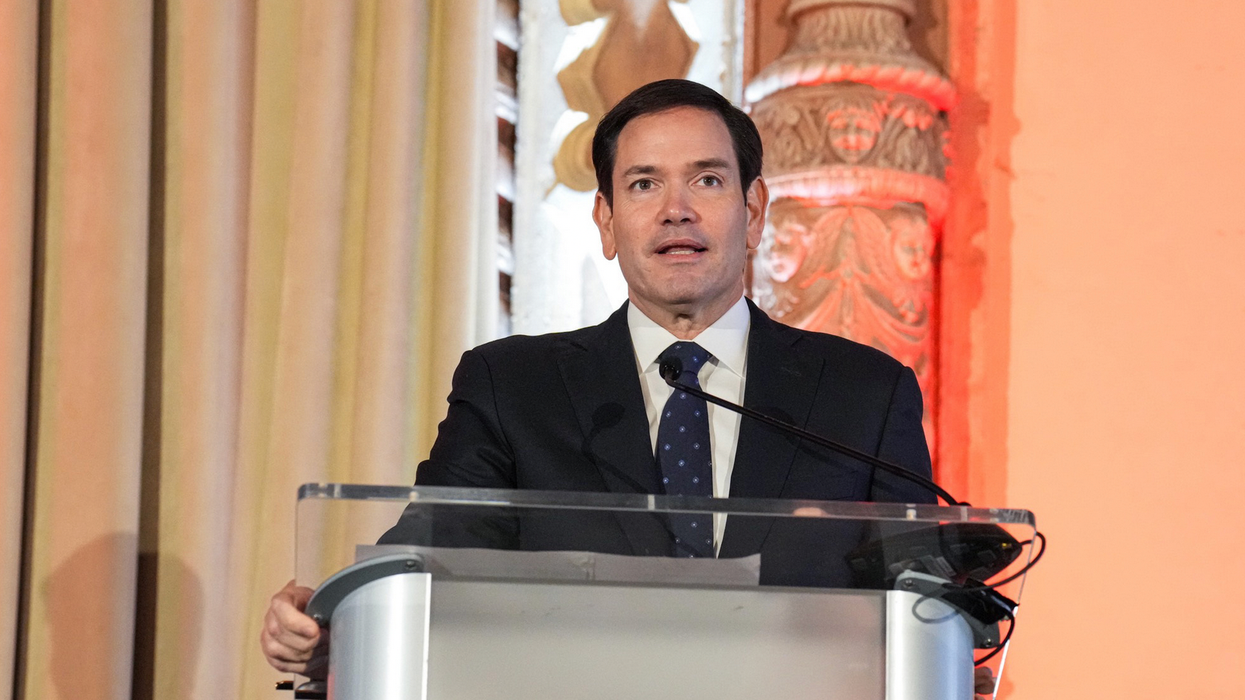
"This is not about drugs, crime, or national security," asserted one expert. "It is about oil that the US would rather not pay for."
Critics of US imperialism on Tuesday responded with skepticism after President Donald Trump and Secretary of State Marco Rubio announced a deadly military strike on what they claimed was a boat linked to a drug cartel off the coast of oil-rich Venezuela.
Trump said on his Truth Social network that 11 people were killed by a US attack in "international waters" on a boat "positively identified" as being used by the Tren de Aragua gang. Rubio said the "lethal strike" targeted "a drug vessel which had departed from Venezuela."
On the first day of his second term, Trump signed an executive order designating drug cartels as foreign terrorist organizations. Last month, the president reportedly signed a secret order directing the Pentagon to use military force to combat drug cartels abroad, sparking fears of renewed US aggression in a region that has endured well over 100 US attacks, invasions, occupations, and other interventions since the issuance of the dubious Monroe Doctrine in 1823.
shout-out to everyone who had Stupider Gulf Of Tonkin for Venezuela on their bingo cards
[image or embed]
— Kelsey Atherton (@atherton.bsky.social) September 2, 2025 at 12:30 PM
Trump has deployed numerous US warships and thousands of sailors and Marines off the coast of Venezuela, a country he has repeatedly threatened with regime change in the face of defiant anti-imperialist resistance from Venezuelan President Nicolás Maduro.
On Monday, Maduro responded to the US escalation during a press conference, telling reporters that he would declare a "republic in arms" in the event of any attack.
"In the face of this maximum military pressure, we have declared maximum preparedness for the defense of Venezuela," he said, calling the US action "an extravagant, unjustifiable, immoral, and absolutely criminal and bloody threat."
"Mr. President, Donald Trump," Maduro added, "watch out, because Mr. Rubio wants to stain your hands with blood."
Armed with the knowledge of more than a century of US meddling in Venezuelan affairs—a history that includes supporting coups and brutal dictatorships and policies of economic strangulation—anti-imperialist critics questioned the motives of Tuesday's attack.
Trump and Rubio celebrating blowing up a tiny Venezuelan boat that barely had enough cocaine for a bachelor party (if it had drugs at all!) is psychotic terrorist shit. Trump sent 7 warships and 4,500 troops to Venezuela to steal the oil and let war criminal Erik Prince occupy and plunder it.
— Secular Talk (@kylekulinskishow.bsky.social) September 2, 2025 at 3:23 PM
"If Venezuela didn't have oil, none of this would happen," one user on the social media site X contended.
Another X user asked, "What happened to Trump campaigning on 'No New Wars?'"
"This has jack shit to do with America First," they added. "Venezuela is zero threat to us. Just another attempt to divert attention away the Epstein files which implicate the rich and powerful across every strata of society."
The independent news site Venezuelanalysis responded to Rubio's announcement in a social media post asking, "Fake propaganda underway?"
"Lil' Marco claims the US military conducted a 'lethal strike' against a drug vessel," the post added, using Trump's old nickname for Rubio. "How did they know it had drugs before striking?"
In an opinion piece published Tuesday by Venezuelanalysis, former Italian parliamentarian and organized crime expert Pino Arlacchi called the latest US aggression against Venezuela a "great hoax" and "geopolitics disguised as 'War on Drugs.'"
"This is not about drugs, crime, or national security," Arlacchi asserted. "It is about oil that the US would rather not pay for."

"The humanitarian and economic impact of the court's decision will be felt immediately," said one attorney who challenged the Trump administration's push to remove Venezuelans from the country.
A lawyer who challenged the Trump administration's push to revoke protections for Venezuelan migrants said Monday that the U.S. Supreme Court had taken the "largest single action stripping any group of noncitizens of immigration status in modern U.S. history" as the justices ruled the White House could move forward with its effort.
The court issued an unsigned order with no reasoning or indication of how the justices voted, but Justice Ketanji Brown Jackson wrote that she would not have overturned a lower court decision that had kept Venezuelans' Temporary Protected Status (TPS) in place.
The decision allows President Donald Trump to repeal protections that the Biden administration provided for nearly 350,000 Venezuelan immigrants who have lived and worked in the U.S., pending appeal of the case.
"That the Supreme Court authorized this action in a two-paragraph order with no reasoning is truly shocking," said lawyer Ahilan Arulanantham, co-director of the Center for Immigration Law and Policy. "The humanitarian and economic impact of the court's decision will be felt immediately."
Venezuelans had been set to have protections from deportation through October 2026 under the action taken by former President Joe Biden at the end of his presidency.
"The administration's move to end TPS throws out people who are contributing substantially to our economy."
Homeland Security Secretary Kristi Noem rescinded the protections in February, partially over the administration's claim that many Venezuelan migrants are members of the street gang Tren de Aragua, which the White House had claimed works directly with Venezuela's government. Intelligence agencies have rejected that allegation.
The White House has also used those claims to deport hundreds of Venezuelan migrants to El Salvador's notorious Terrorism Confinement Center—but reports indicate many of the people who have been sent there are not connected to the gang.
"These are innocent people who have lawfully built lives here under TPS," said U.S. Rep. Maxwell Alejandro Frost (D-Fla.) on Monday. "Not terrorists or criminals like Donald Trump wants you to believe."
Seven Venezuelan migrants were joined by the National TPS Alliance in suing the Trump administration to block Noem's action in February; a federal judge in Northern California then paused the action, saying it was likely driven by racial bias and violated procedural rules.
The plaintiffs said in legal filings that Noem "explicitly relied on false, negative stereotypes... to justify both the vacatur and termination decisions. Her statements conflated Venezuelan TPS holders with 'dirt bags,' gang members, and dangerous criminals."
Rep. Pramila Jayapal (D-Wash.) on Monday denounced the administration's plan to move forward with deporting Venezuelans en masse following to Supreme Court ruling.
"The administration's move to end TPS throws out people who are contributing substantially to our economy," said Jayapal. "Economists have warned that the administration's cruel moves on ending TPS for those who have committed no crimes and are here working will have enormous economic consequences, disrupt businesses, increase prices for consumers, and lead to deeper labor shortages."
"It is shameful that the Trump administration would pull the rug out from so many Venezuelans who came into this country lawfully," she said, "fleeing untold violence and devastation in their home country."
Todd Schulte, president of FWD.us, noted that "country conditions still meet the legal standard for maintaining TPS" for Venezuelans.
"If you check the U.S. State Department website today, it continues to advise Americans not to travel to Venezuela, citing threats of torture, kidnapping, and civil unrest," said Schulte. "As we wait to fully understand the implications of this decision, we urge the Trump administration to keep work authorizations in place and abandon this cruel and unlawful effort to strip protections from individuals contributing to our country every single day."