
SUBSCRIBE TO OUR FREE NEWSLETTER
Daily news & progressive opinion—funded by the people, not the corporations—delivered straight to your inbox.
5
#000000
#FFFFFF
To donate by check, phone, or other method, see our More Ways to Give page.


Daily news & progressive opinion—funded by the people, not the corporations—delivered straight to your inbox.
Sen. Bernie Sanders noted that the billionaire spent $10 million on the Met Gala, $120 million on a penthouse, and $500 million on a yacht while "planning to throw 600,000 Amazon workers out on the streets and replace them with robots."
Amazon founder Jeff Bezos in recent weeks has come under fire for a wide variety of reasons, including his involvement with the 2026 Met Gala and his plans to build a robot workforce.
A Monday report from The Hollywood Reporter noted that Bezos, despite being a lead sponsor of this year's Met Gala, did not make an appearance at the event's red carpet as he had in past years.
Bezos' sponsorship of the Gala has been hit with heavy criticism in recent weeks, as many activists slammed the New York Metropolitan Museum of Art for taking the tech mogul's money despite his company's labor practices and reported involvement in helping US Immigration and Customs Enforcement (ICE) operations.
According to The Hollywood Reporter, other critics "accused the billionaire of buying influence with the major event and speculation swirled that some stars may boycott the event due to his involvement."
In addition to not appearing at the Met Gala red carpet, Bezos is reportedly trying to lower his profile by selling his $500 million luxury yacht.
The New York Post reported on Monday that Bezos has decided that the 417-foot vessel has become "too recognizable," and is also a headache to maintain, costing an estimated $30 million per year to operate.
Sen. Bernie Sanders (I-Vt.) on Tuesday argued that Bezos' lavish spending and his plan to build an army of robots to replace human workers was symbolic of American capitalism in 2026.
"The reality of American life today," Sanders wrote in a social media post. "Jeff Bezos, worth $290 billion, spent: $10 million on the Met Gala, $120 million on a penthouse, $500 million on a yacht. Meanwhile, he‘s planning to throw 600,000 Amazon workers out on the streets and replace them with robots. Unacceptable."
Warren Gunnels, Sanders' staff director, similarly made the case that Bezos' spending spree was yet another argument for raising taxes on the wealthiest Americans.
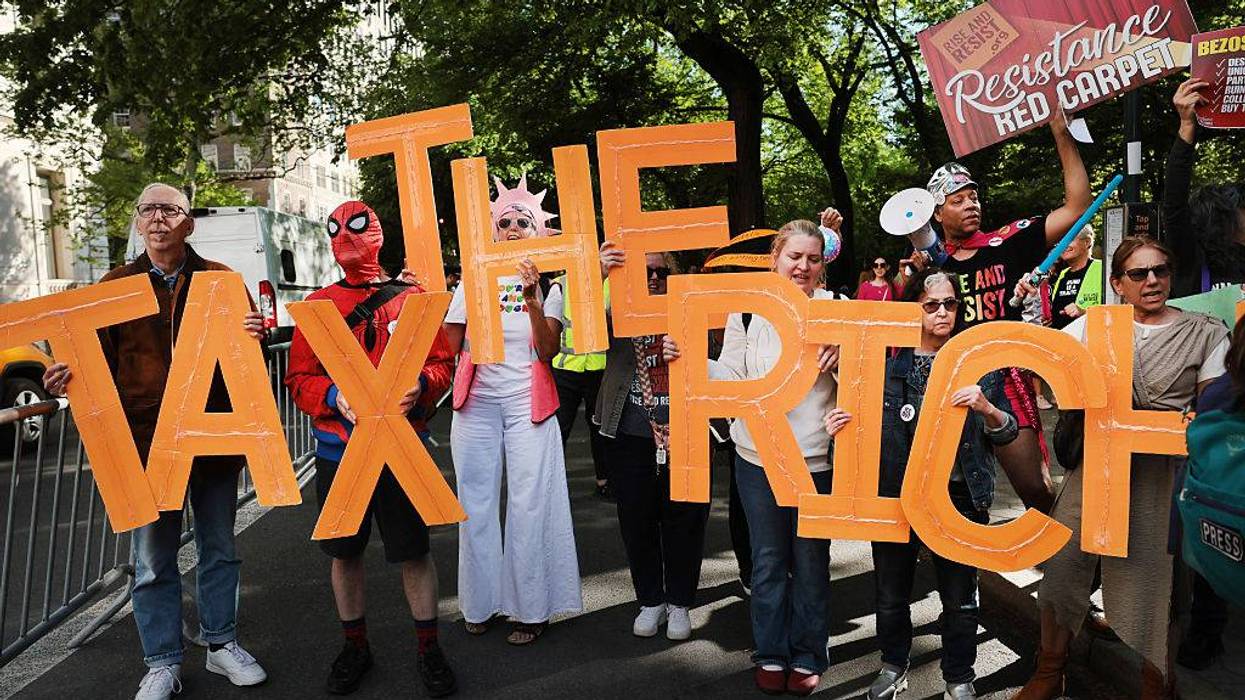
"Jeff Bezos, who paid $10 million for the Met Gala," Gunnels wrote, "got $62 billion richer since [President Donald] Trump was elected and spent $500 million on a yacht to sail to his $55 million wedding in Venice to give his wife a $5 million ring because his tax rate is less than 1%. Four words: Tax the damn rich."
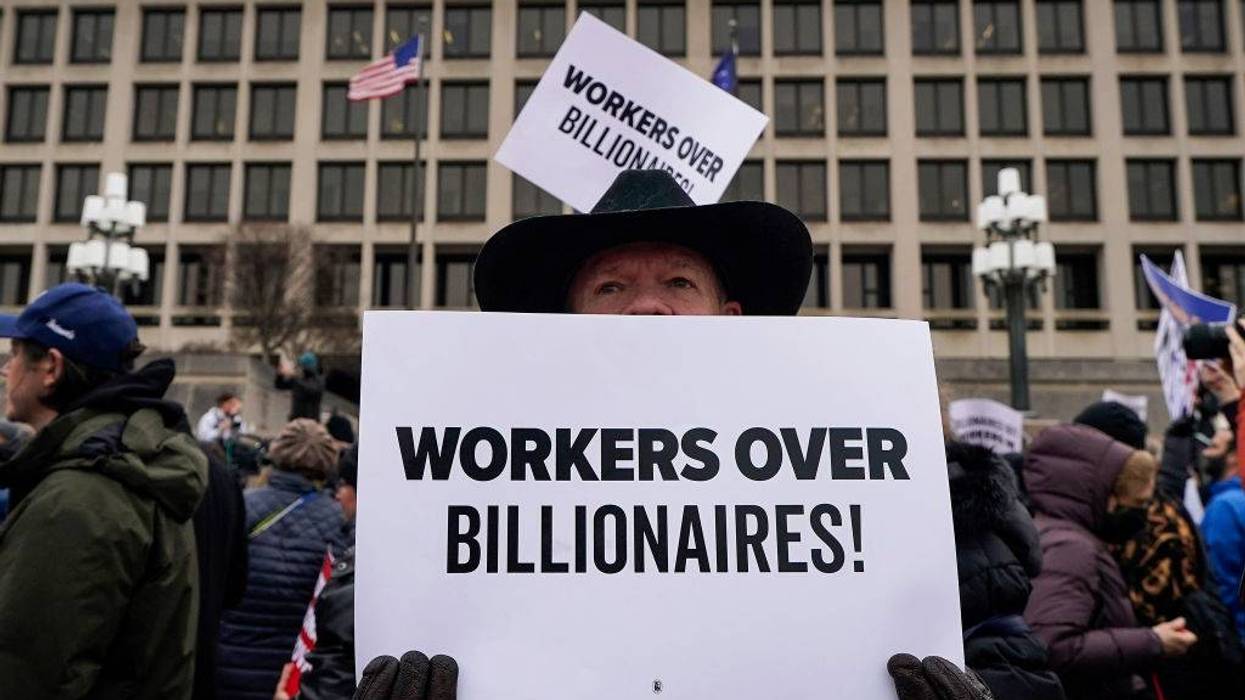
Labor unions, which have long clashed with Bezos over Amazon's aggressive union-busting tactics, held their own rival "Ball Without Billionaires" on Monday evening to protest the Bezos-funded Met Gala.
As reported by Democracy Now!, the gala featured "Amazon, Whole Foods, Washington Post, Starbucks, and Uber workers" who "walked the runway in looks by immigrant designers."
April Verrett, president of the Service Employees International Union, said the Ball Without Billionaires was "not just about fashion" but "about power" and "telling the truth that people who sew and care and drive and cook and clean and secure and those that create are the ones who make everything possible."
Workers at the New York Metropolitan Museum of Art, who earlier this year voted to unionize, registered their own disapproval of this year's Met Gala, posting a message on Instagram informing followers that "91% of hourly Met staff in our unit earn less than a living wage."
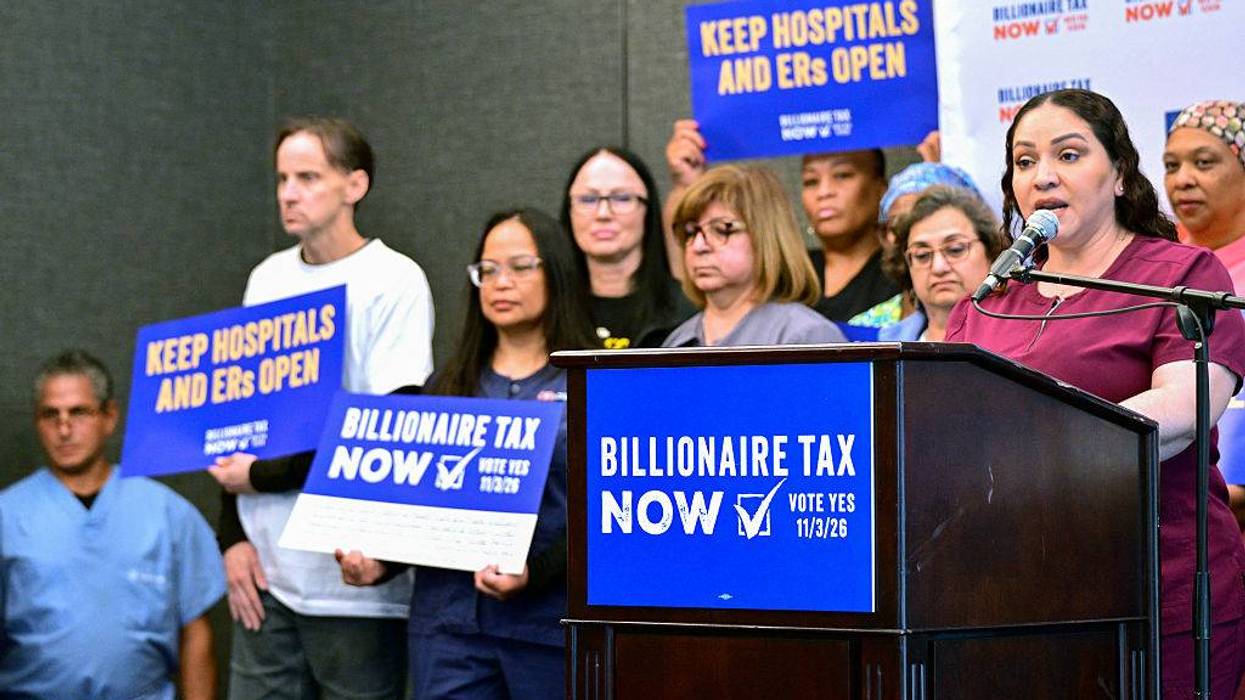
"In a nation as rich as ours, that’s the least we deserve," said one proponent of the billionaire tax.
The coalition behind a plan to tax California billionaires on Monday announced it's reached a major milestone in its efforts to get its proposed wealth tax on ballots this fall.
The California Billionaire Tax coalition revealed it has now filed more than 1.5 million signatures, or nearly twice the 875,000 signatures required to make the California Billionaire Tax Act an official state ballot initiative.
The proposed tax, which has drawn opposition from Democratic California Gov. Gavin Newsom and support from Sen. Bernie Sanders (I-Vt.), will hit the state's billionaires with a one-time 5% wealth tax that proponents say will be used to fund local hospitals, food aid, and public education.
Mayra Castañeda, an ultrasound technologist and a member of Service Employees International Union-United Healthcare Workers West (SEIU-UHW), which proposed the ballot initiative, said that the tax was essential to preserve quality of healthcare in California.
"When funding is cut, it brings a world of pain," said Castañeda. "It means longer ER waits, fewer healthcare workers, rural hospitals shutting down, delayed care, and lives lost that could have been saved. It's clear that most Californians and most billionaires recognize how reasonable and necessary this proposal is—both to keep emergency rooms open and to save California businesses from closing."
Jared Hamil, a member of Teamsters Local 396, said gathering more than 1.5 million signatures in favor of the tax means "we are one step closer to the California we deserve."
"We deserve to be able to afford to see a doctor when we’re sick," Hamil emphasized. "We deserve to know our local hospital will be open and ready to treat you in an emergency. In a nation as rich as ours, that’s the least we deserve."
A poll of California voters conducted last month by the University of California, Berkeley found that the proposed billionaire tax is broadly popular, with support outweighing opposition by a roughly two-to-one ratio.
An analysis by the Institute on Taxation and Economic Policy estimates that the tax will raise $100 billion in revenue over the next five years, which would be enough to fill the hole in California's state budget caused by the Republican-passed One Big Beautiful Bill Act that takes an ax to spending on Medicaid and the Supplemental Nutrition Assistance Program (SNAP).
"These bills are not about Jewish safety," said a Jewish Voice for Peace organizer. "New Yorkers want elected leaders to protect our constitutional rights, not limit them."
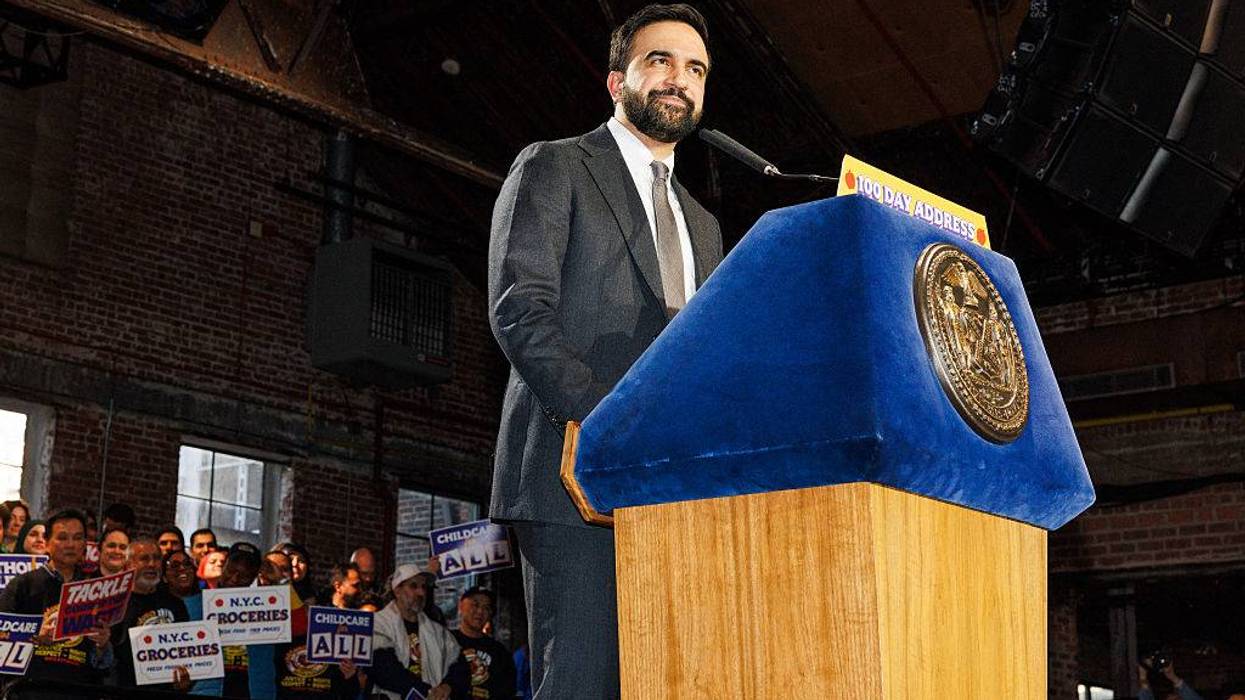
New York City Mayor Zohran Mamdani is earning plaudits for vetoing legislation passed by the New York City Council that critics say would have restricted the US Constitution's First Amendment right to peacefully protest.
According to a Friday report in The New York Times, the bill vetoed by Mamdani "would have required the New York Police Department to publicize plans to deploy security perimeters around educational facilities during protests."
In a statement explaining his veto, Mamdani said he worried that the bill as written would infringe on the rights of "workers protesting [US Immigration and Customs Enforcement], or college students demanding their school divest from fossil fuels, or demonstrating in support of Palestinian rights," among other causes.
"Nearly a dozen unions have raised the alarm about its impact on their ability to organize," said Mamdani. "That is why I am vetoing this legislation."
As noted by Gothamist, the bill drew opposition from the New York Civil Liberties Union and the 1199 Service Employees International Union, who warned it would criminalize the kinds of pickets that teachers' and nurses' unions regularly carry out at hospitals.
United Auto Workers Region 9A and Professional Staff Congress/CUNY also registered opposition to the bill and helped lead opposition to it, according to The City.
New York City Council Speaker Julie Menin (D-5), however, rejected these characterizations of the legislation, which passed the council by a 30-19 vote, just short of a veto-proof margin.
"Ensuring students can enter and exit their schools without fear of harassment or intimidation should not be controversial,” Menin said, according to the Times. “This bill simply requires the NYPD to clearly outline how it will ensure safe access when there are threats of obstruction or physical injury, while fully protecting First Amendment rights.”
According to Gothamist, Mamdani's veto drew rebukes from both the Anti-Defamation League (ADL) and the UJA Federation of New York, who accused the mayor of not taking the safety concerns of Jewish New Yorkers seriously.
However, anti-war group Jewish Voice for Peace (JVP) praised Mamdani's veto of the bill, which they said would have hindered their ability to protest outside educational institutions.
"We call on New York City's legislators to stop weaponizing our identities to justify repression of dissent—which is sacred to our Jewish tradition," said JVP. "Rather than limit our constitutional right to protest, our legislators should end the sales of stolen Palestinian land in our city."
A second bill, which the council passed by a veto-proof 44-5 margin, will place similar requirements on NYPD to create security perimeters around houses of worship that are being targeted by protests.
Eliza Klein, New York City organizer for JVP, disputed that this legislation protects the rights of Jewish New Yorkers.
"These bills are not about Jewish safety," said Klein. "Especially at a time when the federal government is attacking our cities—including specifically targeting those who speak out for Palestinian freedom—New Yorkers want elected leaders to protect our constitutional rights, not limit them."